Inside the door the bank closed — tracing the SAF mutual-aid fund's five stages, grounded in the 2025 Artist Financial Crisis Report and three years of operating data.
When a collector pays for a work at SAF, where does that money go?
This article traces the flow, in one pass. And explains why SAF uses the term "mutual-aid fund" rather than donation or sponsorship, and why it holds to the language of finance rather than welfare. The evidence is Korea Smart Cooperative's 2025 Artist Financial Crisis Report (survey of 179 artists nationwide, Oct 10–18, 2025), released October 2025.
84.9% — A Closed Door
The report's first number is short and brutal.
Artists unable to clear the first-tier bank threshold: 84.9%
In detail: 53.1% applied for a bank loan and were rejected; 31.8% never applied, resigned to "it won't work anyway." The report calls this 31.8% "Shadow Rejection" — invisible people the banks turned away before they ever entered the official statistics.
Reasons for rejection get specific.
- Income is irregular or hard to document — 62.6%
- Low credit score — 27.4%
- Classified as unemployed — 18.4%
"When I said I was a theater actor, the loan officer called me unemployed." (Actor, 50s)
48.6% — A Killing Interest Rate
The moment the bank door closes, artists are left with predatory finance.
Per the report, 83.2% of artists have used high-interest products — credit-card loans, savings banks, private lenders. Among them, 48.6% carried 15%+ annual rates; 40.8% cluster just under the legal cap of 19.9%; 7.8% experienced illegal rates above 20%.
The report names this "Forced Choice" — not a rational decision, an involuntary one made when no alternative exists.
"If only half the interest I've paid over twelve years had been saved, I could have cleared the debt. I feel trapped in a vicious cycle — focused on side jobs every month instead of on my work." (Musician, 40s)
43% — Debt Collection; 88.3% — Creative Work Stopped
The final stage is destruction.
- 43% of artists have experienced debt collection
- Among them, 72.7% reported that "dozens of calls and texts a day made daily life impossible"
- 88.3% of those who experienced debt collection reported anxiety and fear caused them to completely stop or severely contract their creative work (complete stop 33.8% + contraction 54.5%)
A poem, a song, a painting — unable to be born, disappearing because of a collection call.
The Counter-Evidence: 354 Loans, ₩700M, 95% Repayment
The crisis report ends with one decisive number.
Korea Smart Cooperative has lent ~₩700M to 354 artists over the past three years, independent of credit. Repayment rate: 95%.
Loans issued to artists conventional finance would have rejected — based not on credit score or income proof but on the trust of peers. The result, a 95% repayment rate, is not lower than comparable formal-sector lending.
The report's phrasing is blunt. "Artists are not risky. What is risky is the current financial system that leaves them to be preyed upon."
Five Stages of the SAF Mutual-Aid Fund
On this ground, the SAF mutual-aid fund flows — from artwork sale to low-interest lending — in five stages.
Stage 1 — Contribution: Voluntary Artist Solidarity
The 210 artists who contributed works to SAF are not themselves parties to the financial damage. They are allies who voluntarily contributed works to address their peers' structural exclusion. Senior, mid-career, and young artists; painting, print, photography, sculpture — all share a single contributor list.
Stage 2 — Sale: Transfer to the Fund
What the buyer pays enters the SAF mutual-aid fund without a gallery commission. Sale revenue, minus operating and personnel costs, becomes the fund's source.
Stage 3 — Matching: Private Self-Help × Public Resources
The crisis report's policy recommendation is clear. "A public–private partnership model combining private self-help with public resources must fill the gaps in welfare policy." SAF's fund is the private self-help part. Matched with public or financial-institution resources, the fund's effective lending capacity grows.
Stage 4 — Lending: Low-Interest, Credit-Independent
The matched fund is disbursed as low-interest loans to artists facing financial discrimination. Based on the trust of the artist community, not credit scores or income proof. Three years of operating data — 354 loans, ₩700M, 95% repayment — already validate the approach.
Stage 5 — Repayment: Fund Cycling
Repaid principal returns to the fund and becomes the next artist's loan. Not one-off support, but a structure that keeps circling. A single SAF work's revenue is reused over years as the oxygen mask for multiple artists.
Why "Finance," Not "Welfare"
Here SAF's language choice matters. Why mutual-aid fund, not donation or sponsorship?
The crisis report answers this way.
"If welfare is giving a fish, finance is the raft that keeps you afloat until the next chance to catch one. We need not only the fish but also the raft."
Welfare support is mostly after-the-fact support for the outcome (a state of poverty). But the core of artists' problem lies in unpredictable, repeating process. The report names this process "Income Gap" — the inevitable, recurring periods of no or minimal income between one project's harvest and the next.
For artists, a stable low-interest loan that bridges the income gap is not simply debt; it is a "Financial Buffer." The report summarizes the buffer's four functions.
- Oxygen mask — minimum survival funds to keep creative continuity
- Psychological safety net — release from "how do I pay next month's rent?" so immersion in work is possible
- Strategic springboard — seed capital not to miss overseas residencies, urgent exhibition venues, or collaboration projects
- Last shield — the negotiating power to decline discount sales or unwanted commercial work
That is why SAF's fund is finance, not welfare. Not sympathy but structure.
The Names of Participating Artists
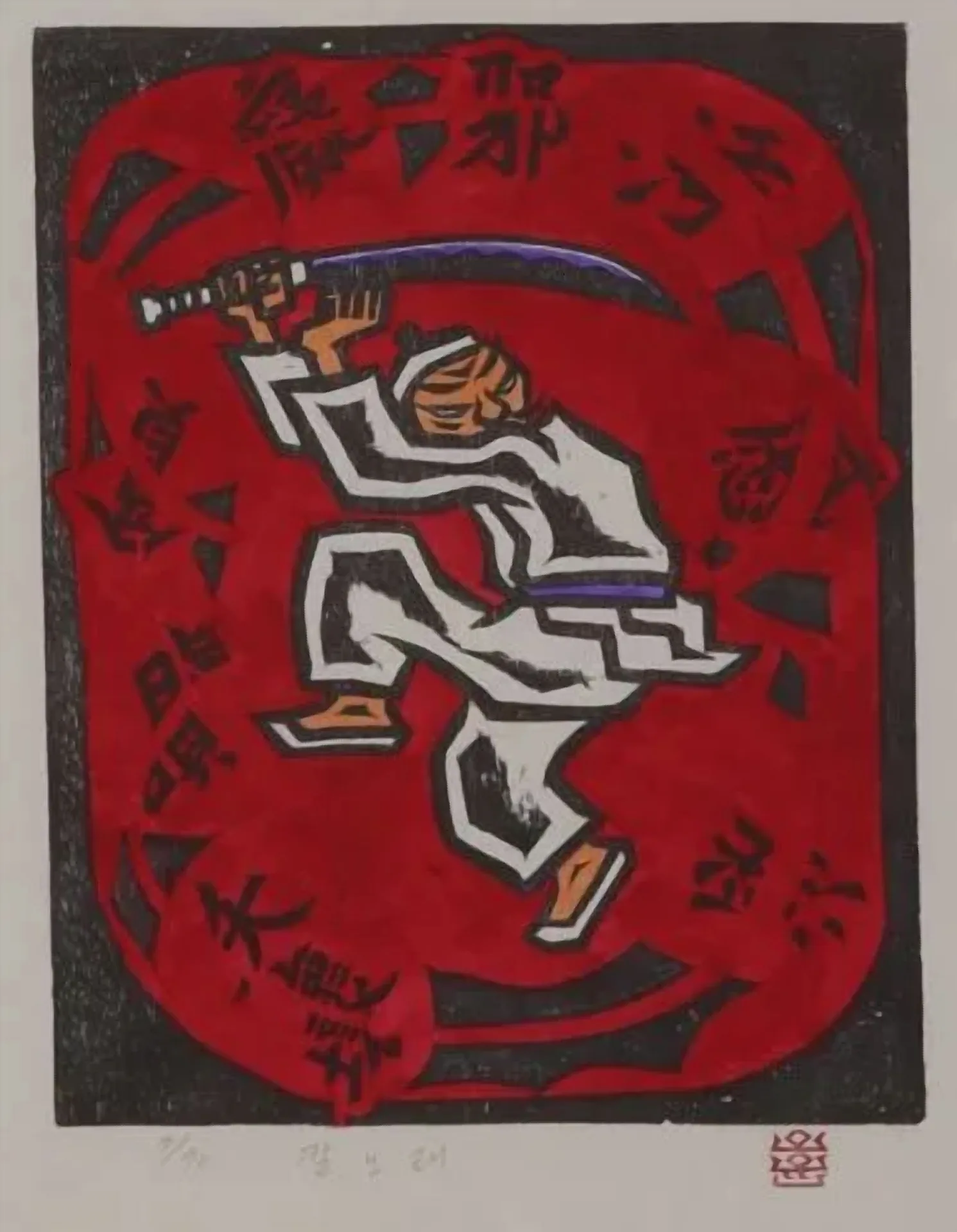
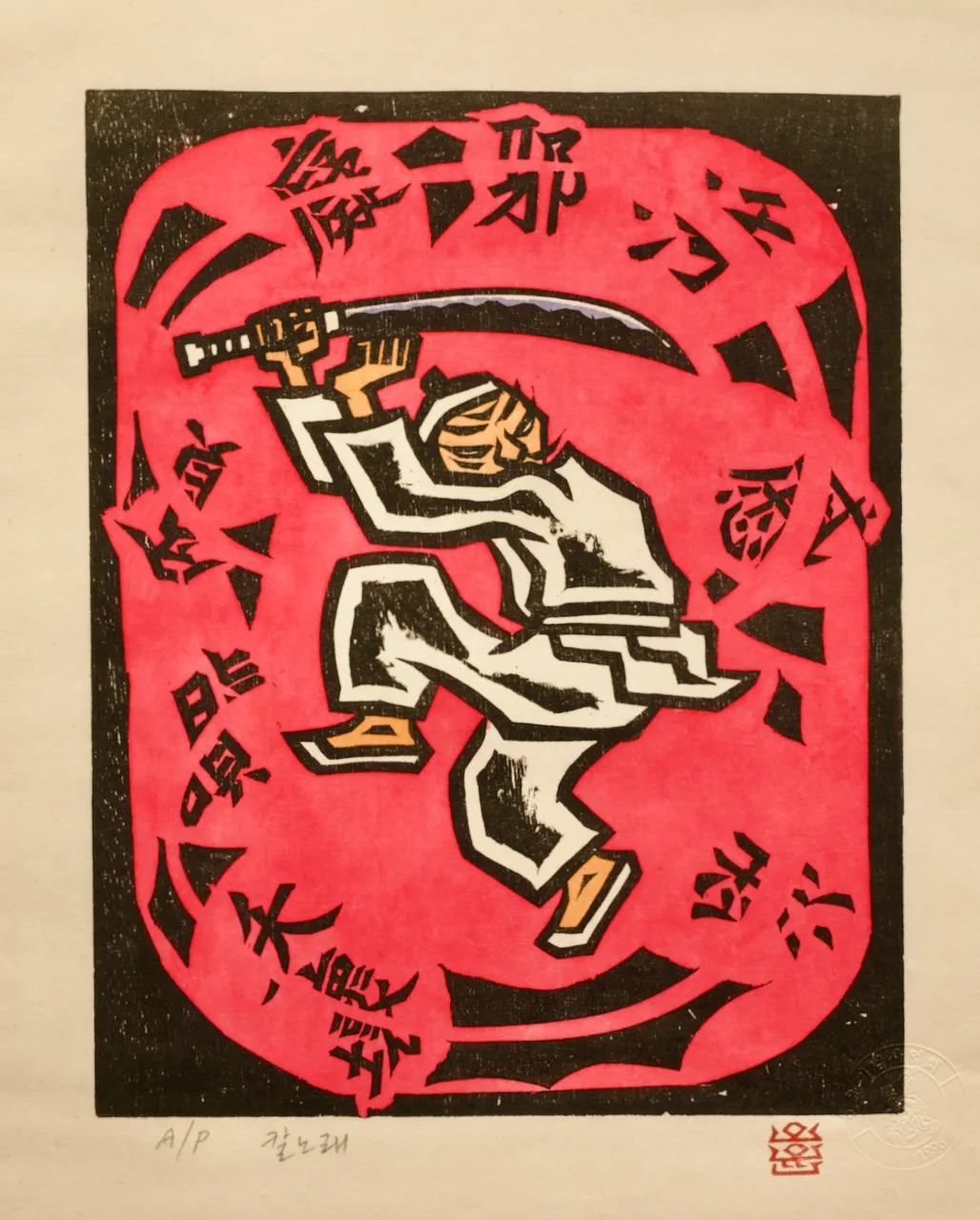
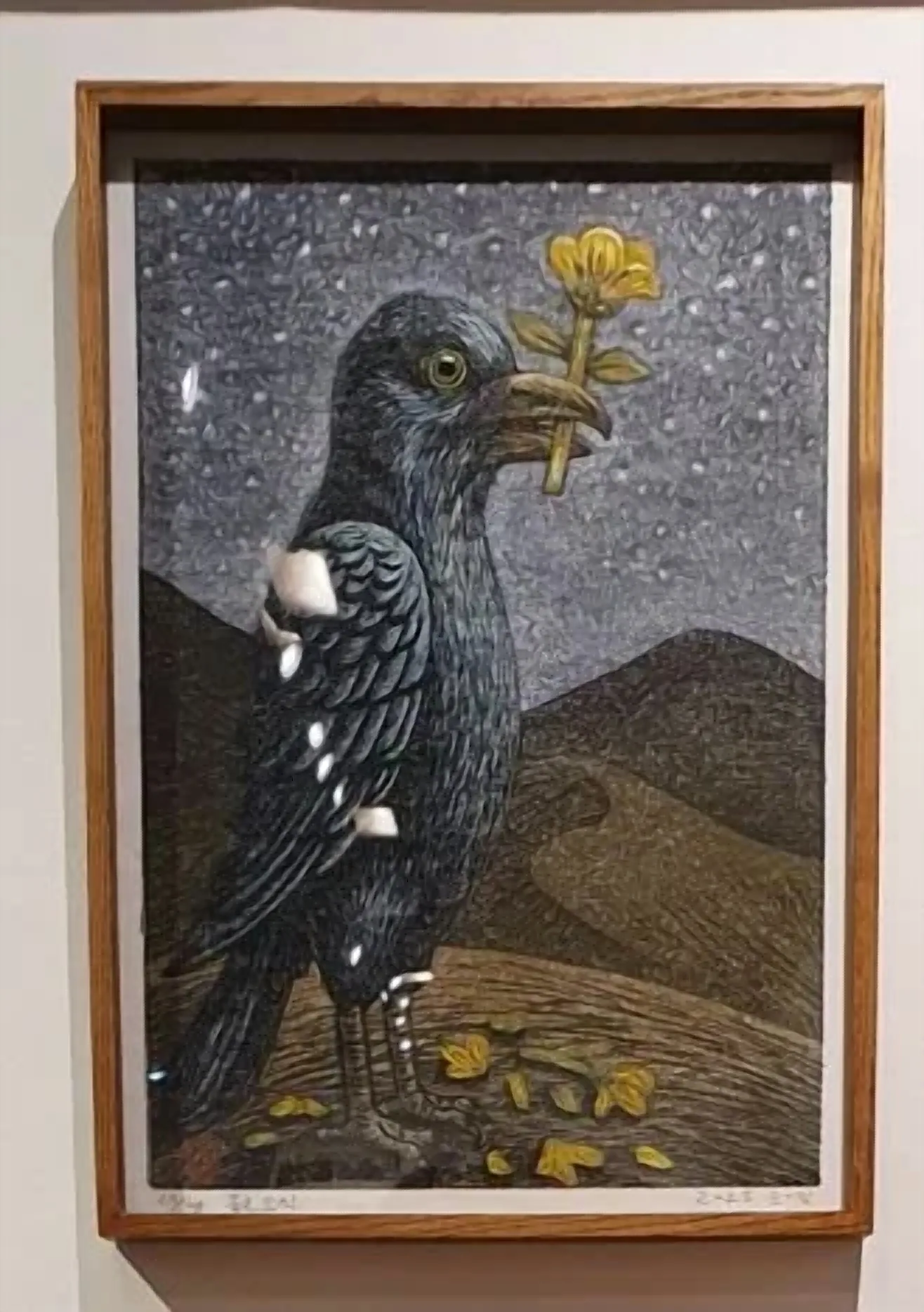
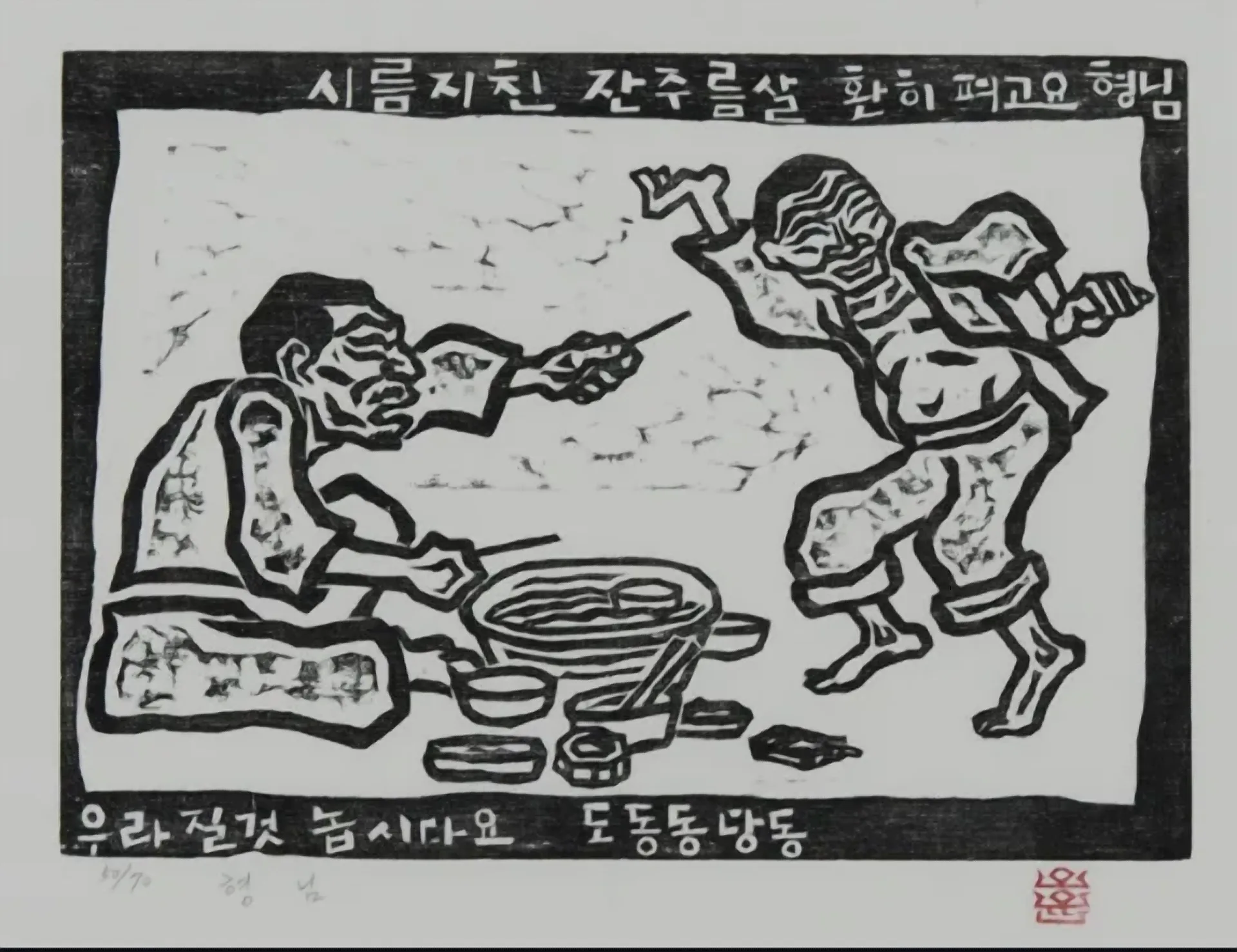
Among SAF exhibitors, Chilmoe Kim Gu joined SAF's first fund exhibition at Indipress in 2023 — a minjung artist of 40 years. Contributing again in 2026, his participation demonstrates that this fund is not one-off. → From Night Alleys to Wasteland: Chilmoe Kim Gu's 40 Years
Lee Incheol (born 1955 in Busan) opened his first solo at Grimmadang Min in 1989 — first-generation minjung art. → From Food Engineering to Grimmadang Min: Lee Incheol
Lee Iktae (1947–2025), before his passing on December 7, 2025, contributed three works to SAF 2026 as one of his last acts of solidarity — in the same autumn as the release of the crisis report. → Translator of the Unseen: In Memoriam Lee Iktae
The reason 210 senior, mid-career, and young artists share the same catalog is summarized in one sentence from the report. "On the spirit of solidarity — each of us becoming the other's support — we build, with our own hands, a 'financial safety net for artists.'"
How to Reach This Fund
Purchasing a work at the SAF online gallery enters that amount into the fund. Art prints from ₩300K to large prints at ₩5M — participation at every price band runs on the same structure. Budget-by-budget guide: From ₩100K to ₩5M.
If collecting still feels early, attending SAF 2026's main exhibition at Insa Art Center's G&J Gallery places you inside this fund's orbit.
Tears Behind the Canvas, Funds Passing Through the Canvas
The crisis report ends on a question.
"How long will we look away from the tears behind the canvas?"
SAF's answer isn't a sentence — it's a structure. The moment a collector pays for one work, that canvas is no longer a backdrop to tears but a passage of recovery. A door inside the closed bank door, made by artists themselves.
Each time this door opens — like 95% of the 354 — another artist keeps going into the next work.
Related reading
If this piece helped, you may also enjoy these related articles:
References
- Korea Smart Cooperative, 2025 Artist Financial Crisis Report (published Oct 18, 2025; survey of 179 artists nationwide)
- Contact: Korea Smart Cooperative · contact@kosmart.org · 02-764-3114
Related
Further Reading
Start Collecting
Seed Art Festival
·