Before the Color,
First Breaths
in Pencil
Drawings by the master of obangsaek — the bare structure beneath color.
May 20 – Jun 8, 2026 · M-Tower 6F, Eunpyeong · 11am–8pm.
“No nation departs from its history.
No nation departs from its tradition.
Drawing —
the most personal of all
Drawing is the oldest of visual disciplines. Britannica defines it bluntly — “the most personal of all artistic statements.” A line moves across paper; the artist's hand is the work. There is no layer of paint to mediate the moment. What you see is the moment of seeing itself.
For most of art history, drawing was a step before painting — preparation, rehearsal, hidden under color. Then, beginning around Leonardo, drawing came forward as an autonomous form, “aiming at nothing other than itself.” In 1976 MoMA's landmark Drawing Nowdeclared the medium “a major and independent means of expression.”
Korean tradition arrived at the same conviction by another road. In 필묵 (筆墨, pil-muk)— the ink-and-brush practice of East Asian painting — a single line carries the artist's breath, temperament, and sense of the world. The Korean phrase 사의 (寫意), “to depict the intent,” values not likeness but the mind behind the stroke. A drawing exhibition is, by this measure, the most intimate room in an artist's house.
From Jinju
to the Grand Palais
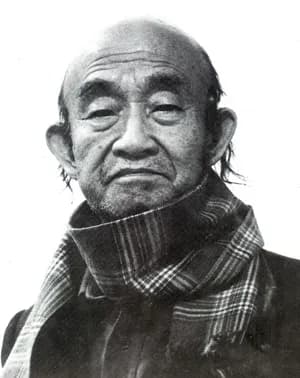
Park Saeng-gwang (朴生光, 1904–1985) was born in Jinju, South Gyeongsang Province. In 1920 he crossed to Kyoto, where he studied at the Kyoto Municipal School of Painting under the masters of shin-nihonga— Takeuchi Seihō and Murakami Kagaku. For decades he worked within their idiom, regarded by Korean critics as a painter in a “Japanese style.”
Then, in 1977, after a second period in Japan, he returned permanently to Korea. At seventy-three he upended his own practice. He set aside the Japanese palette and reached for obangsaek — the five cardinal colors of Korean tradition: blue, red, yellow, white, black. He drew his subjects from shamanic rites, Buddhist iconography, folk tales, and the history of his people: Jeon Bong-jun, the mudang, Dangun, Empress Myeongseong.
The final eight years were a transformation. In 1985, at the Grand Palais in Paris, critics greeted him as “the Korean Picasso.” That same year he died. The hundred or so works he left behind — the late paintings and the drawings beneath them — are now read as the moment when Korean colored ink painting found a new ground.
Major subjects
- 1
Shamanic rite
Mudang, gut rituals, talismans — the spirit world of Korean shamanism rendered in surging color.
- 2
History
Jeon Bong-jun, Empress Myeongseong, Yi Sun-sin — the figures of Korean history rendered with ritual color.
- 3
Folk & Buddhism
Folk paintings, Buddhist iconography, dancheong patterns — gathered into a single contemporary canvas.
The artist's timeline
- 1904Born in Jinju, South Gyeongsang Province.
- 1923Enters Kyoto Municipal School of Painting; studies under Takeuchi Seihō.
- 1977Returns permanently to Korea; turns to obangsaek and Korean subjects.
- 1981Solo exhibition at Baeksang Memorial Museum.
- 1985Le Salon Special Exhibition, Grand Palais, Paris — "the Korean Picasso." Dies in July.
- 2023Seoul Arts Center retrospective publicly shows 100 drawings — a rarely known body of work.
This exhibition —
the breath beneath color
For most of the past century the name Park Saeng-gwang has been inseparable from color. The dense reds and ultramarines of his late paintings crowd the imagination of any viewer who has met them. Yet the drawings — the bare structure beneath that color — have remained, until recently, an almost private body of work.
In March 2023, the Seoul Arts Center Hangaram Museum opened The Great Encounter: Park Saeng-gwang and Park Rae-hyun. Among Park Saeng-gwang's 181 contributions, 100 were drawings — the first time so many had been gathered for public view. Critics took the occasion to register what had been suspected: a master of Korean colored ink painting was also a draftsman of rare patience and economy.
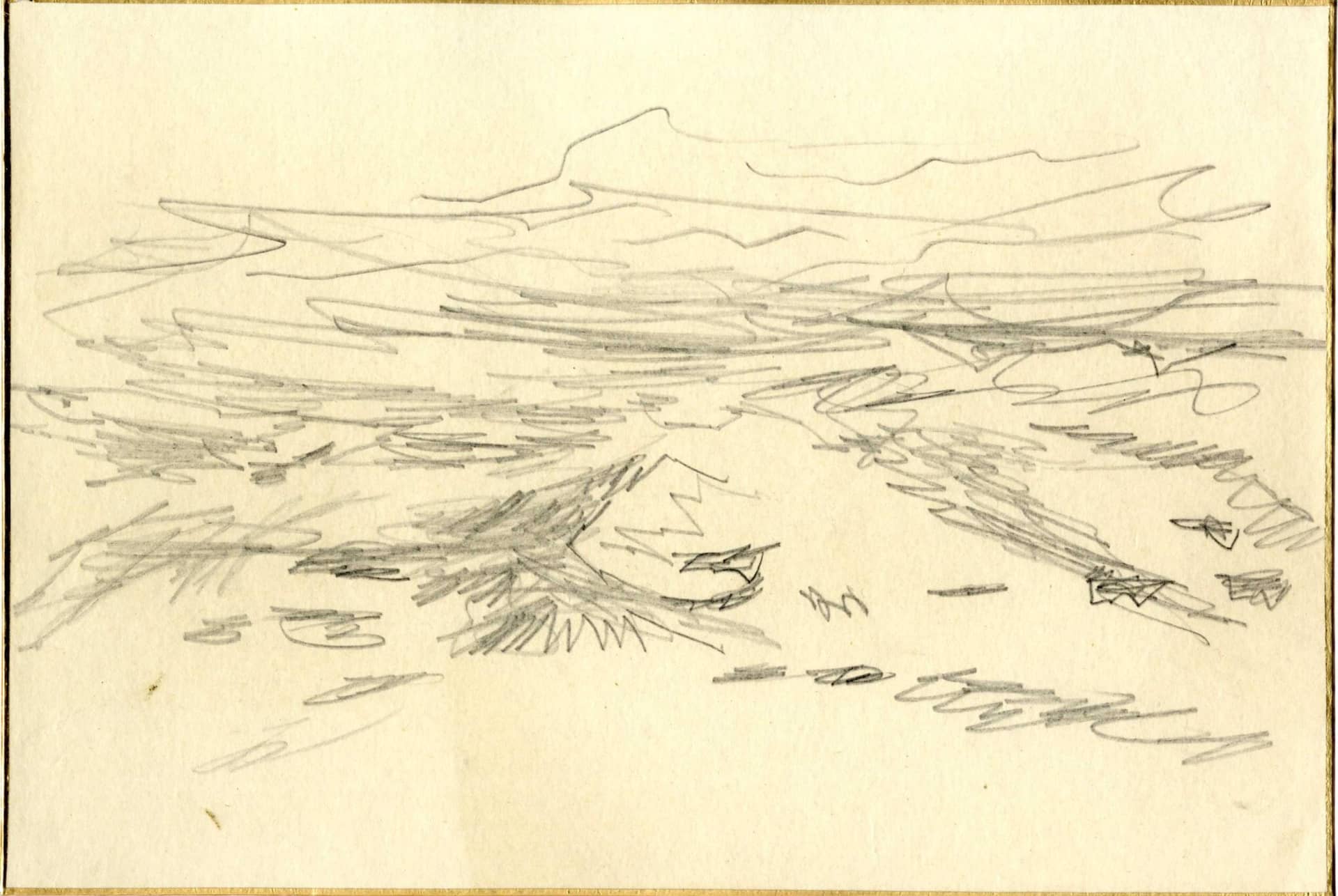
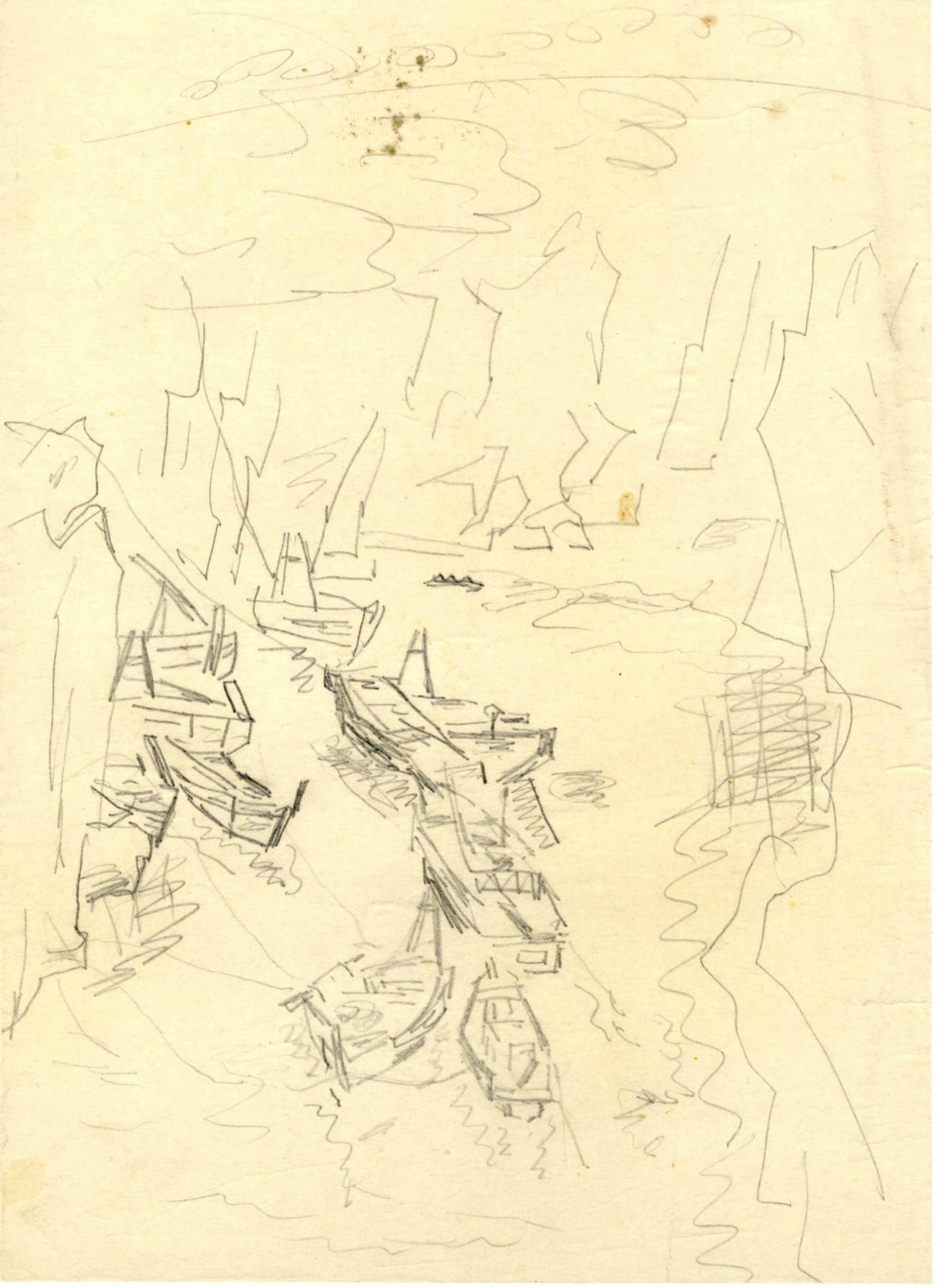
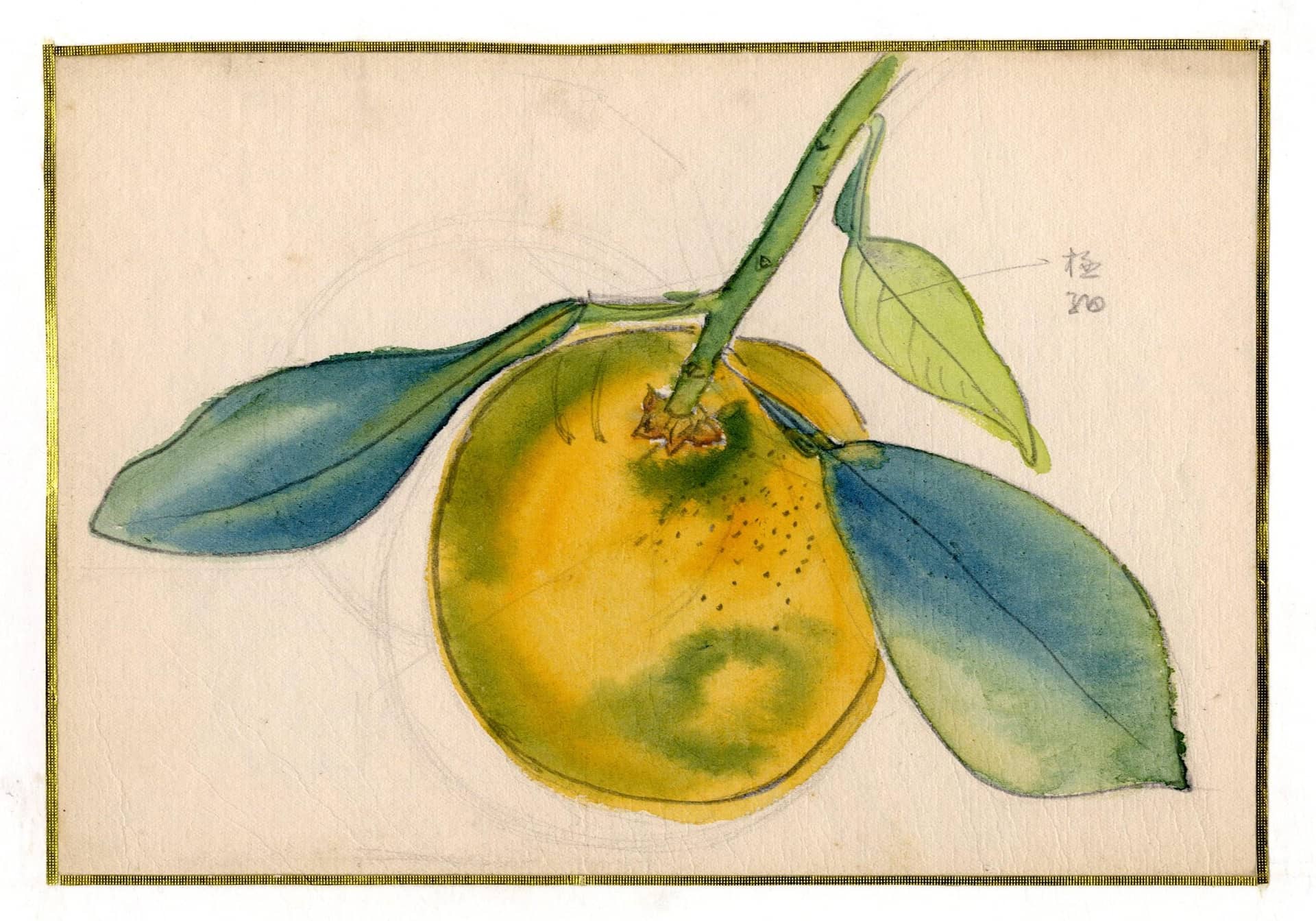
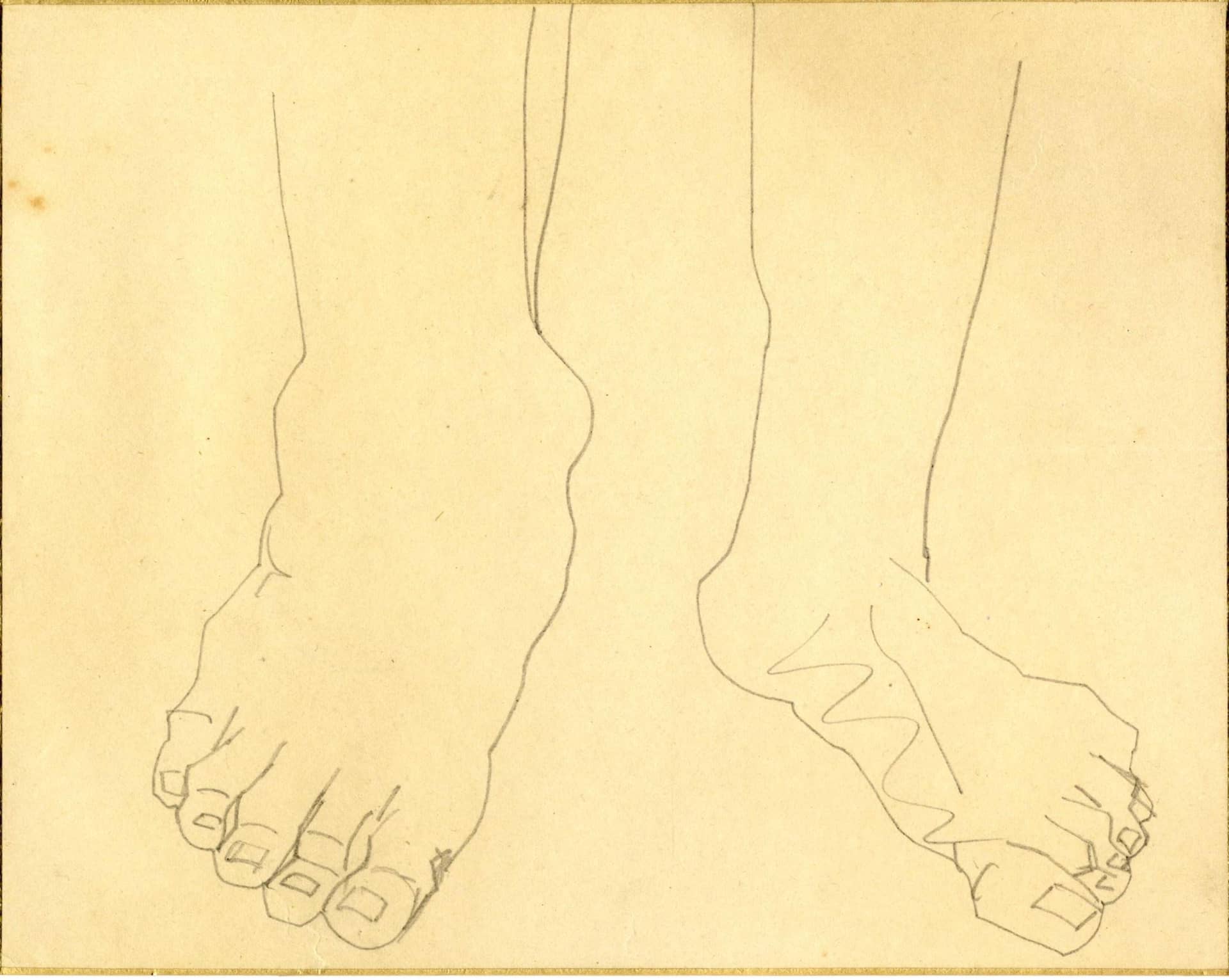
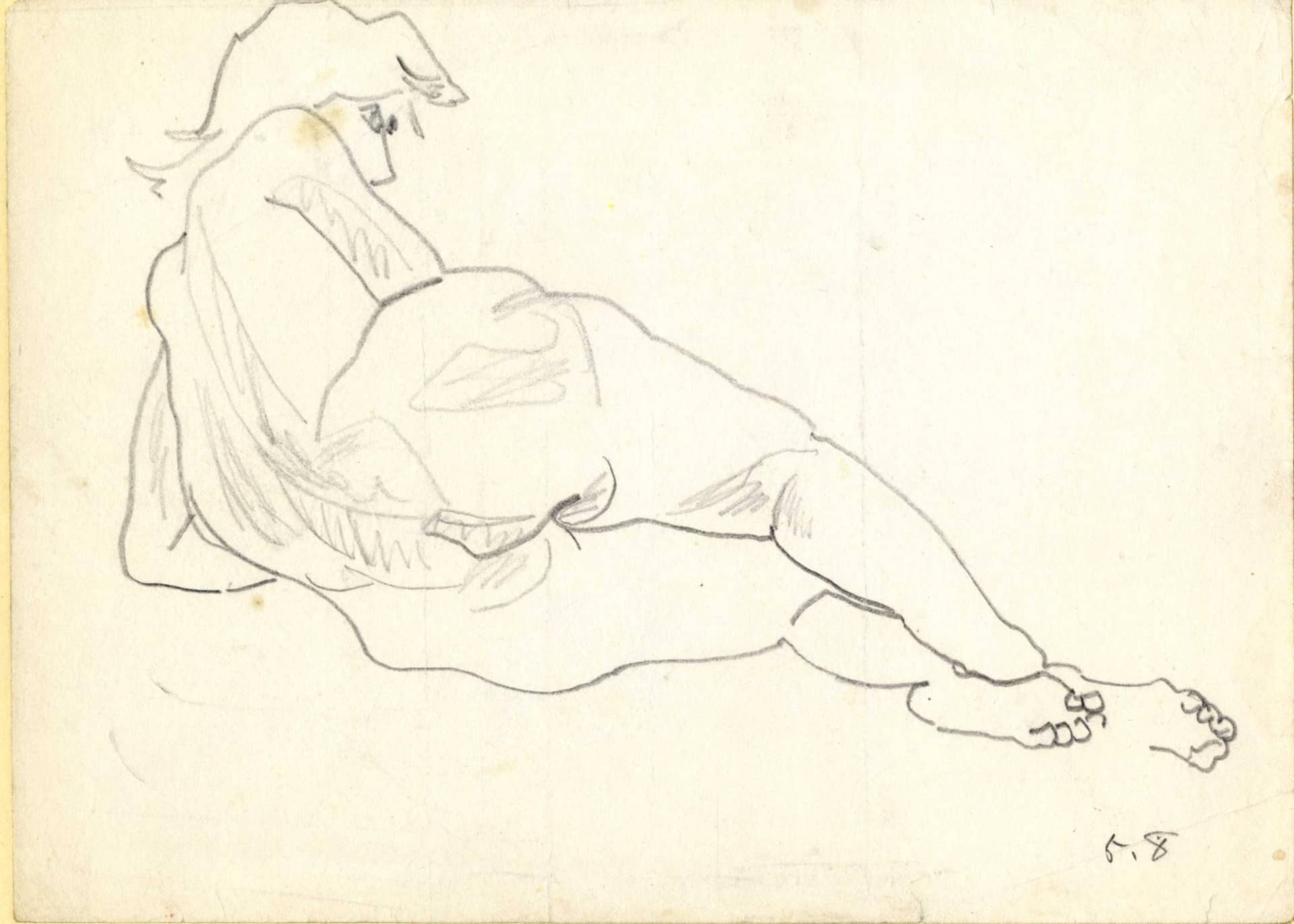
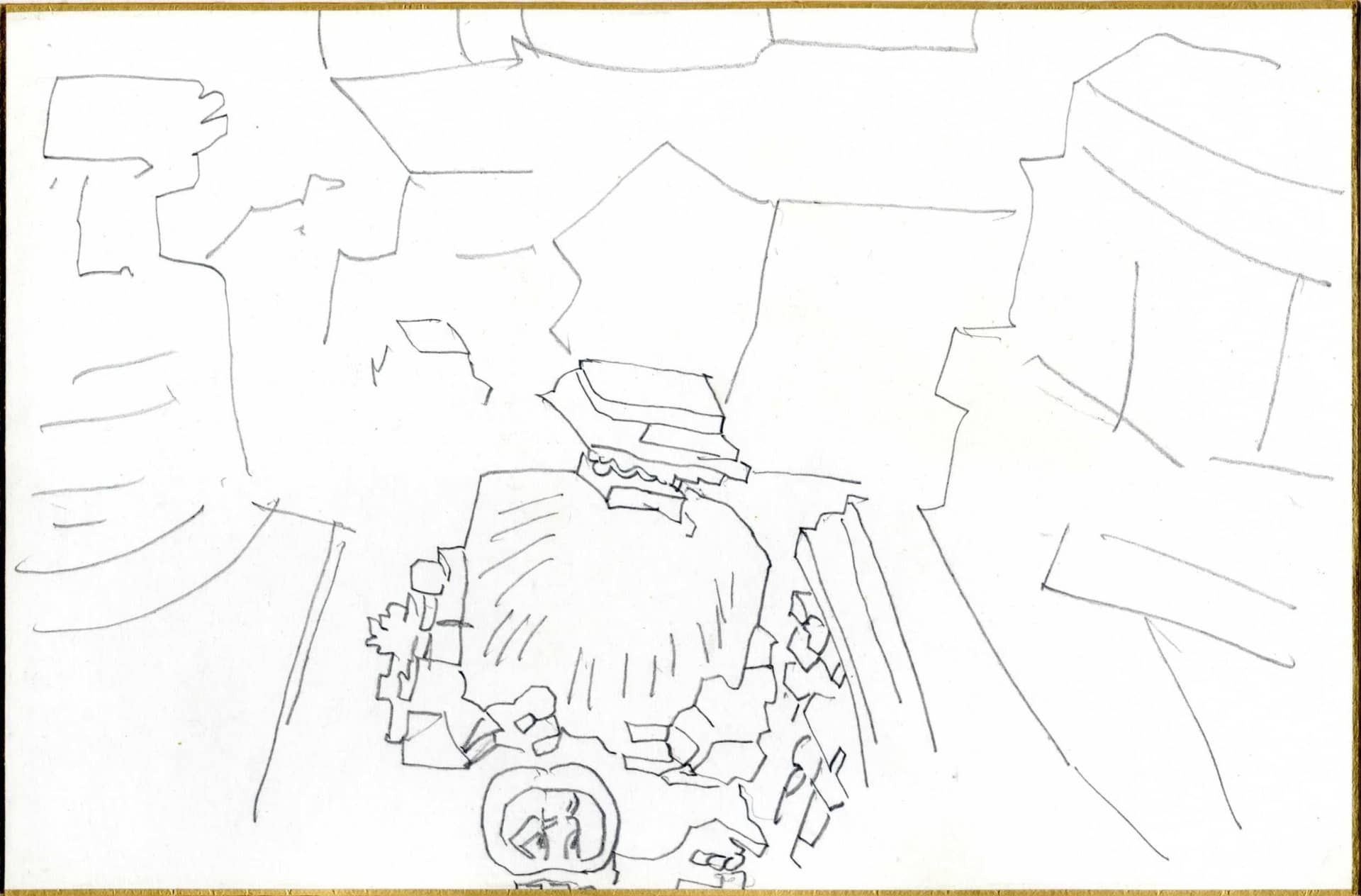
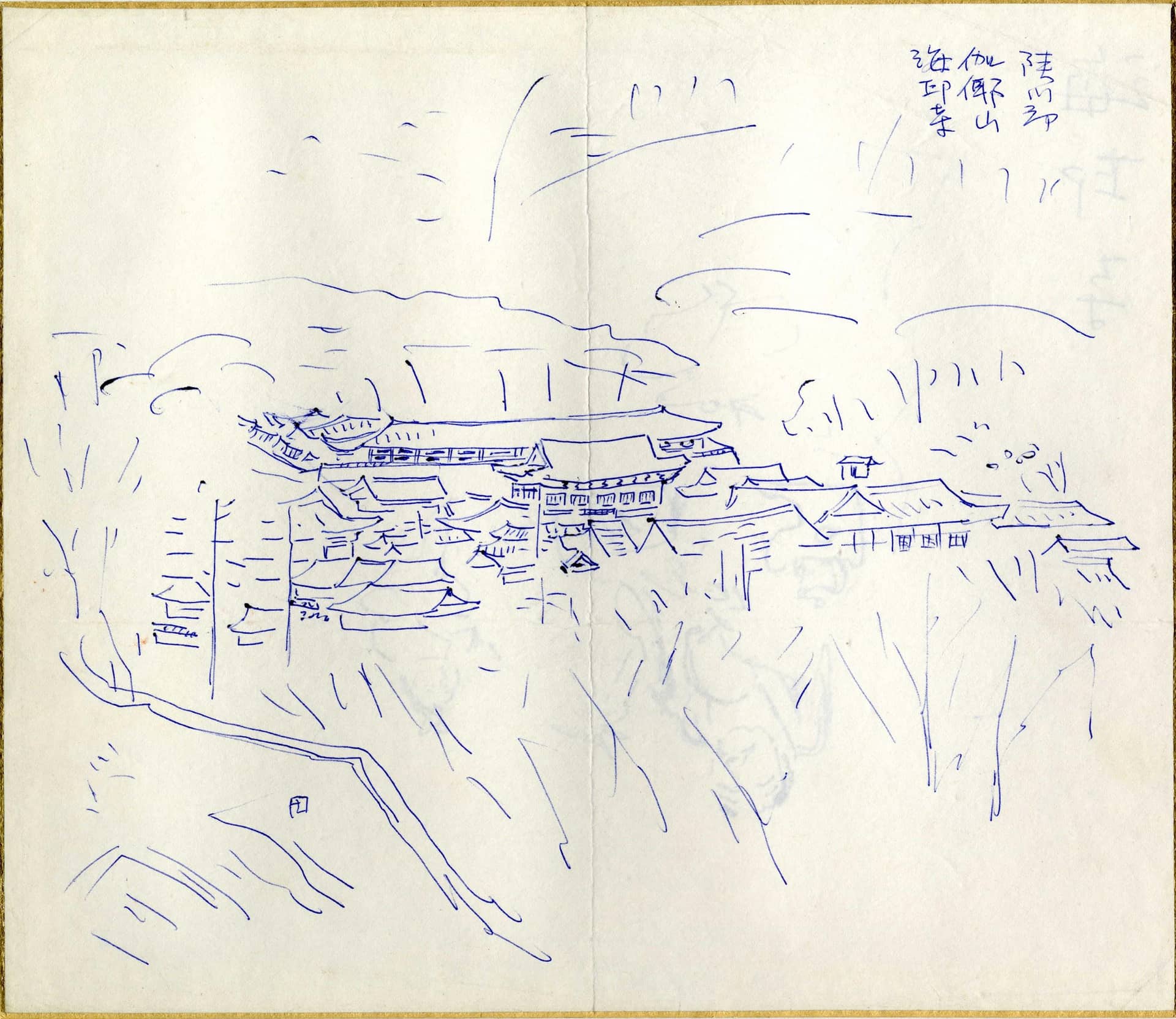
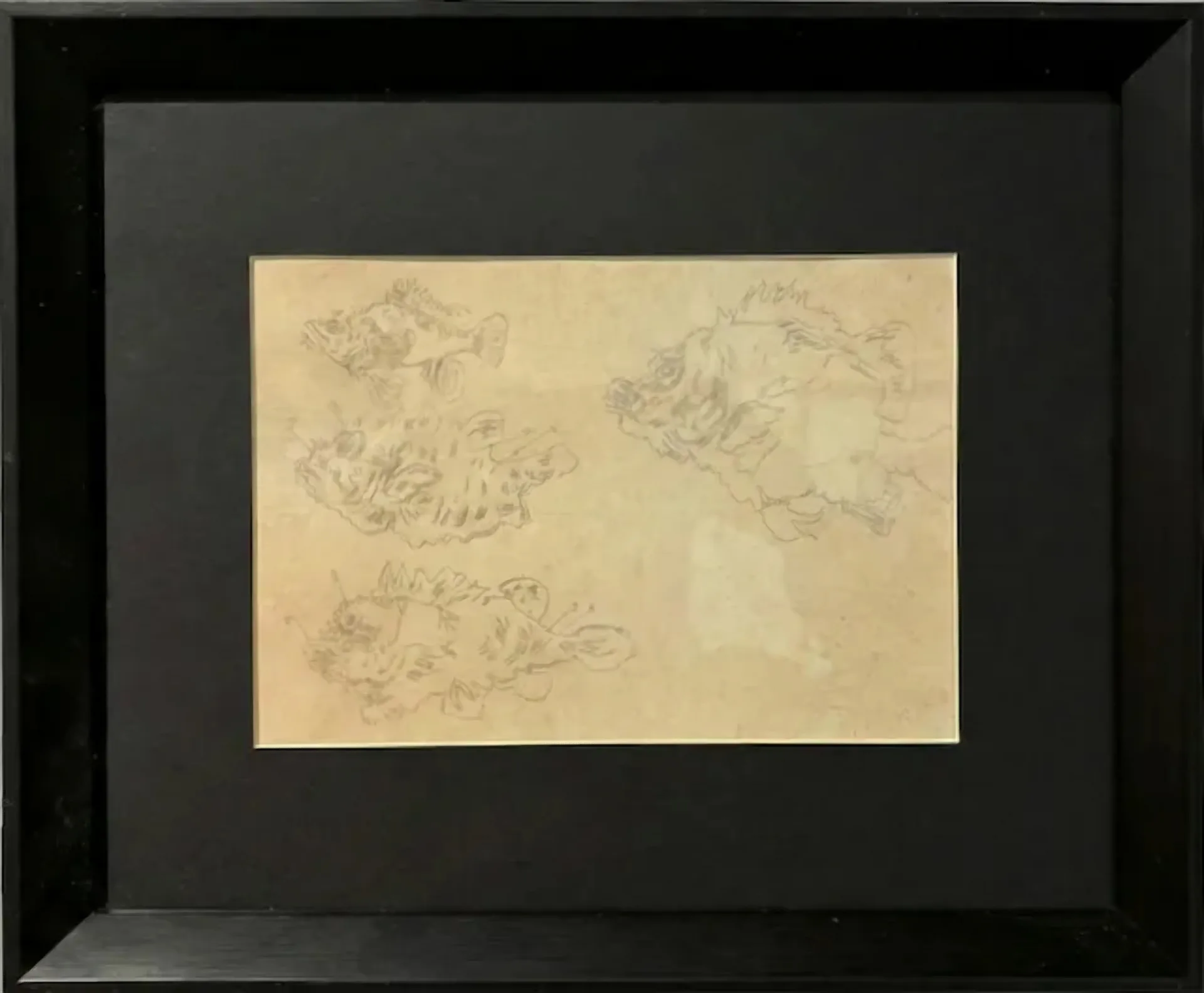
The works here are pencil on paper, small in scale — most around 25 × 18 cm — and direct in their address. They were the steps a master took to find the figure before he found the color. To see them is to stand next to him at the moment of first seeing.
Exhibition Works
38 drawings are currently on view.










Visit
Dates
May 20 (Wed)
— Jun 8 (Mon), 2026
Venue
M-Tower 6F
M-Tower 6F, 870 Tongil-ro, Eunpyeong-gu, Seoul, Korea
Hours
11:00 AM – 8:00 PM
Free admission