War Erased Everything Before.
Pencil Survived.
The First Works He Left.
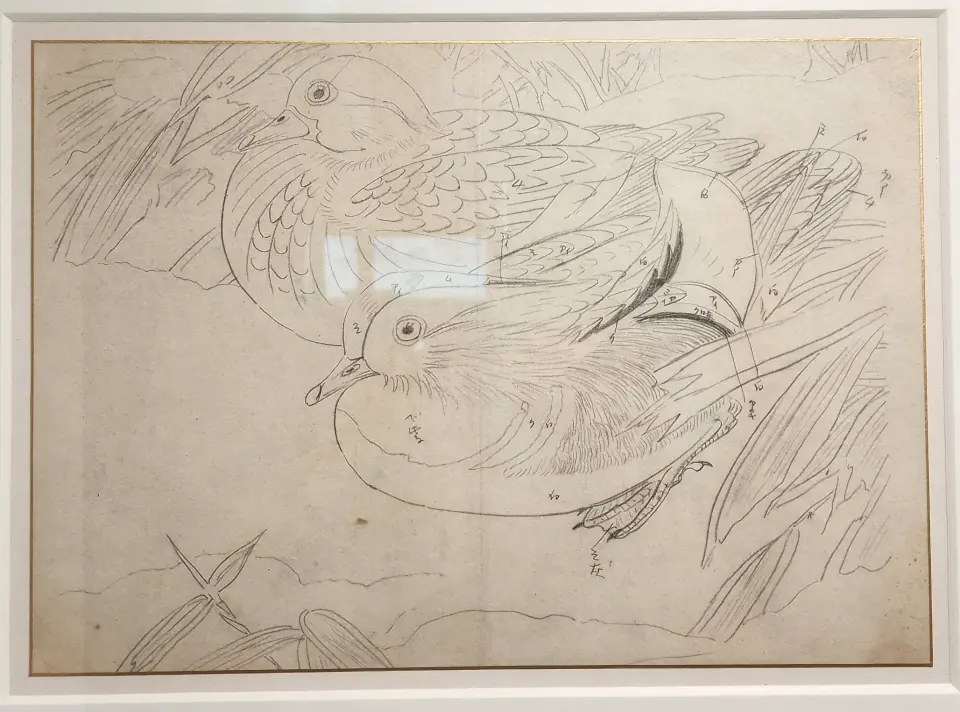
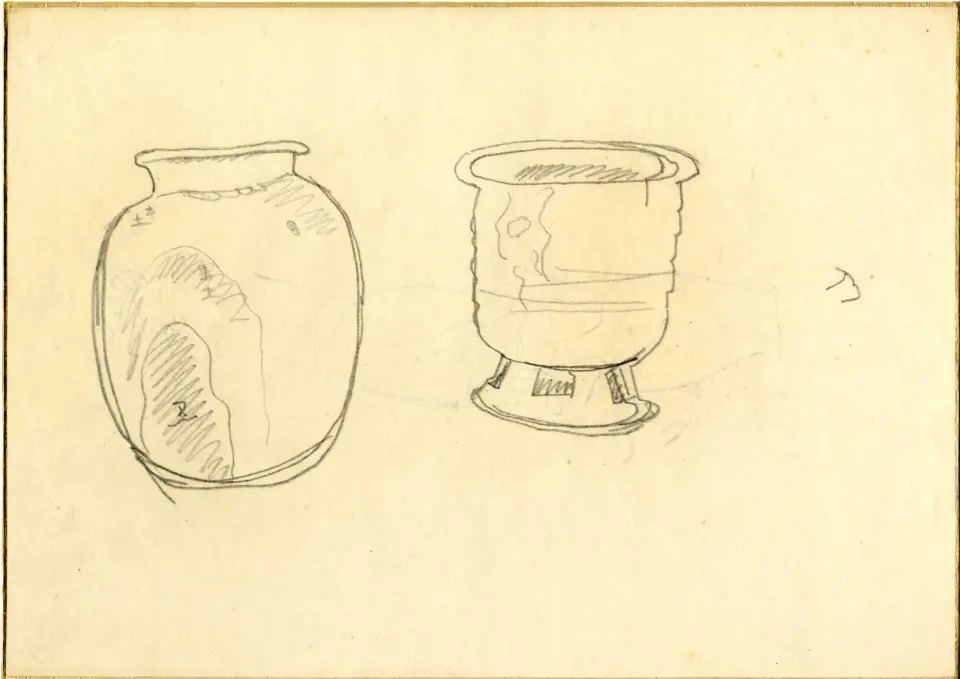
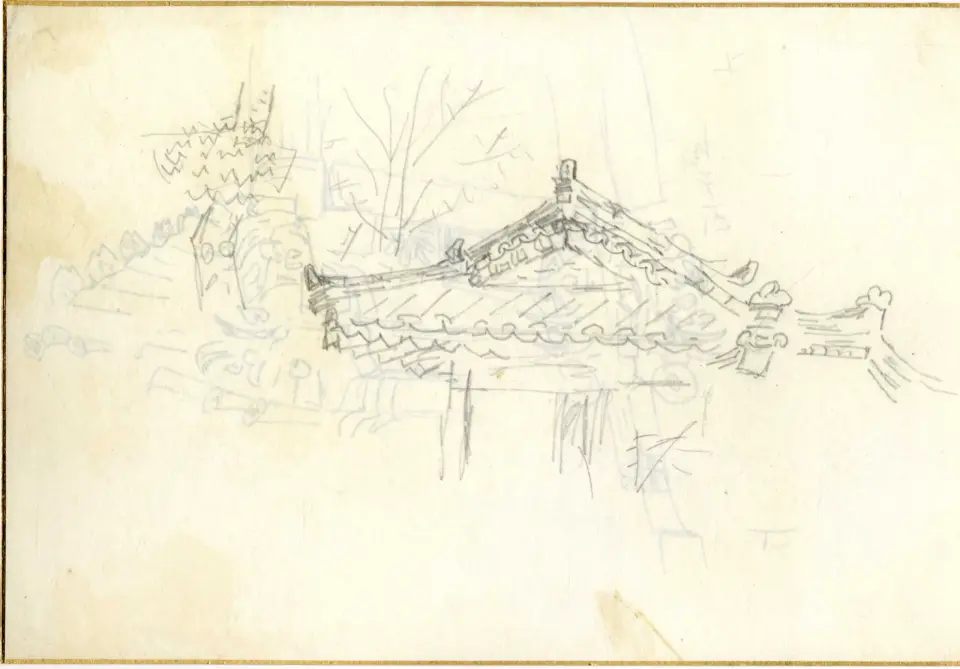
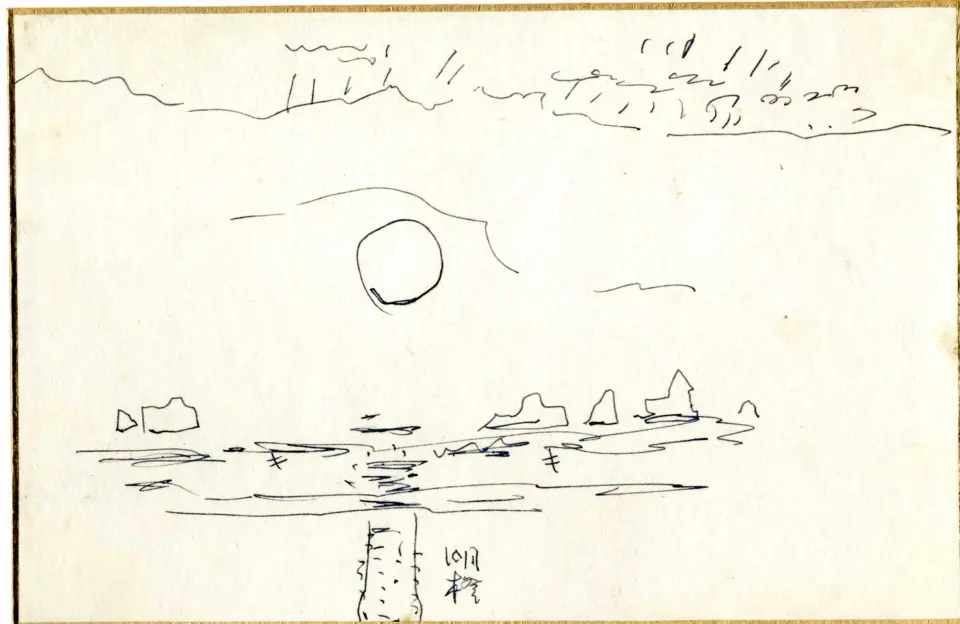
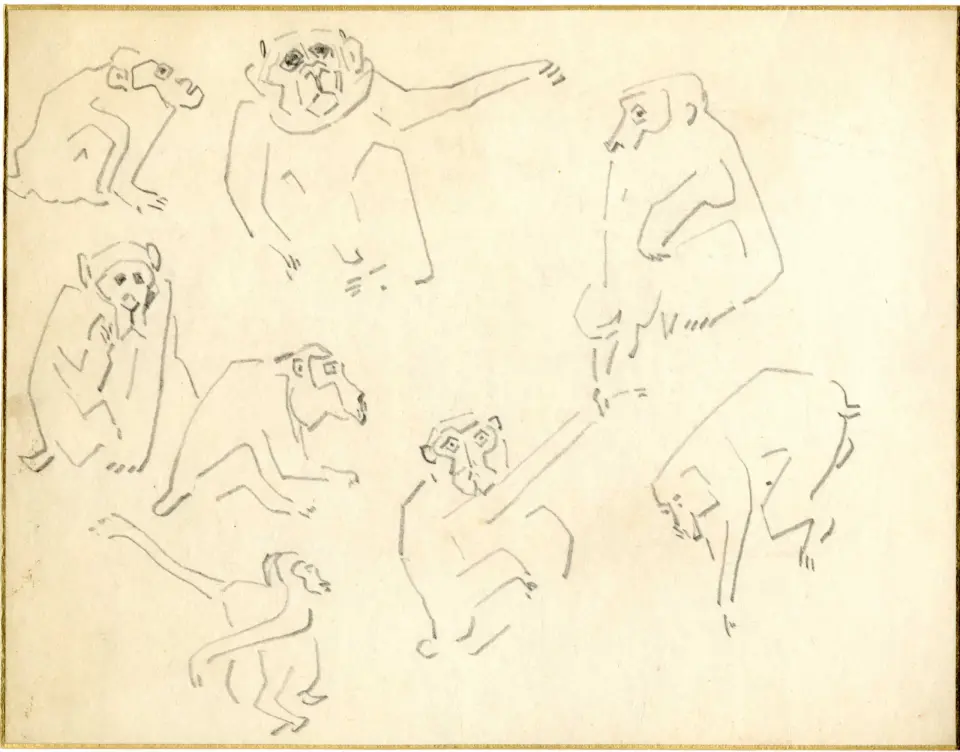
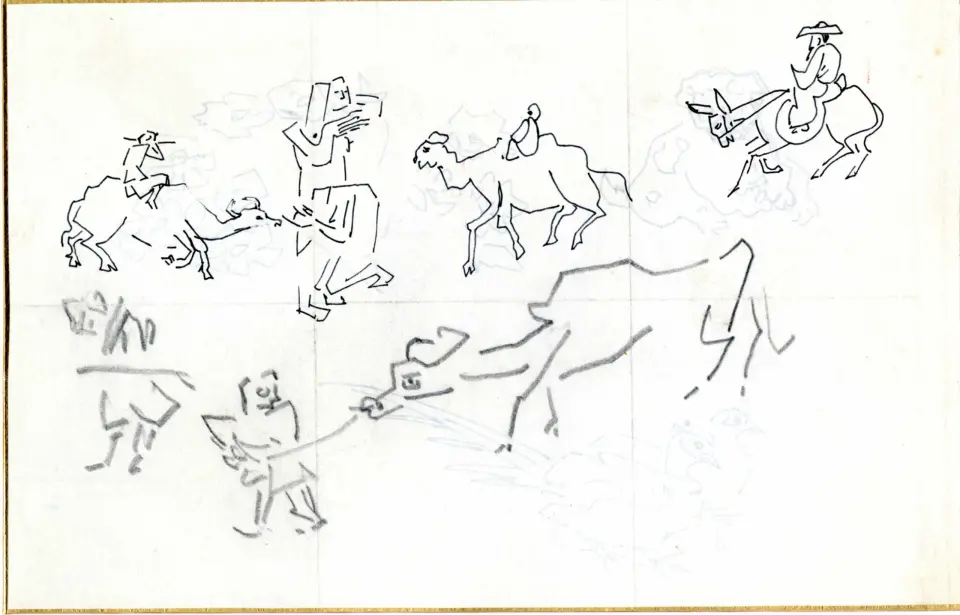
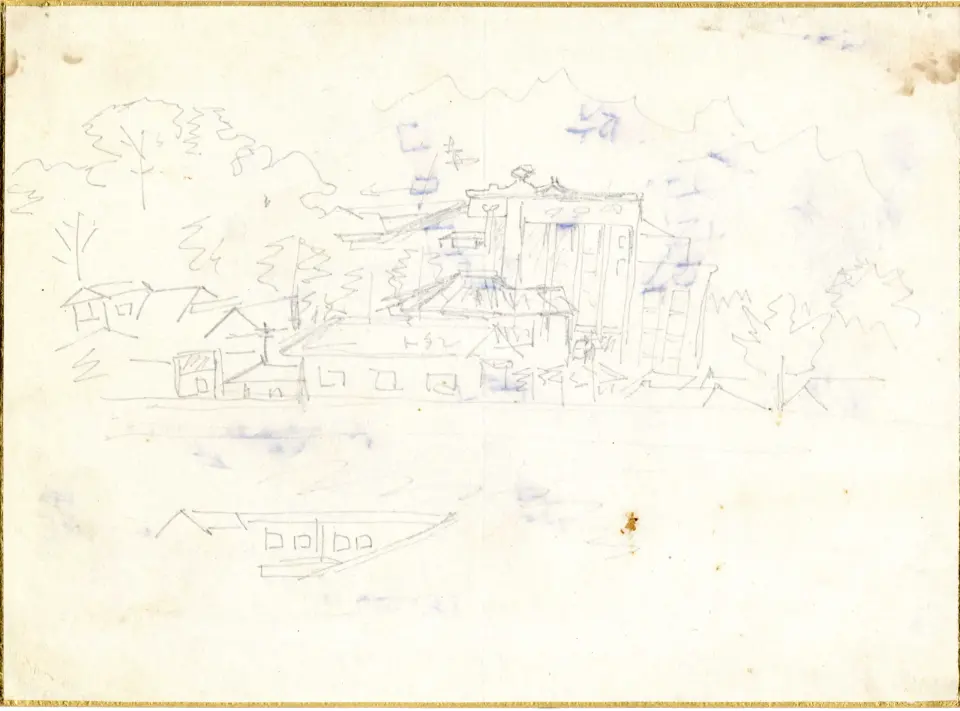
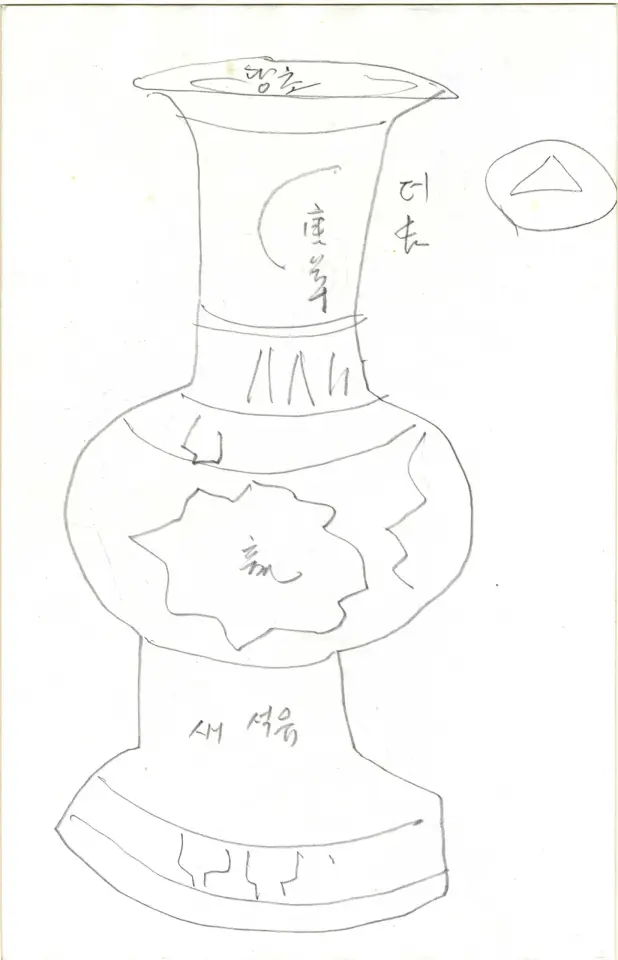
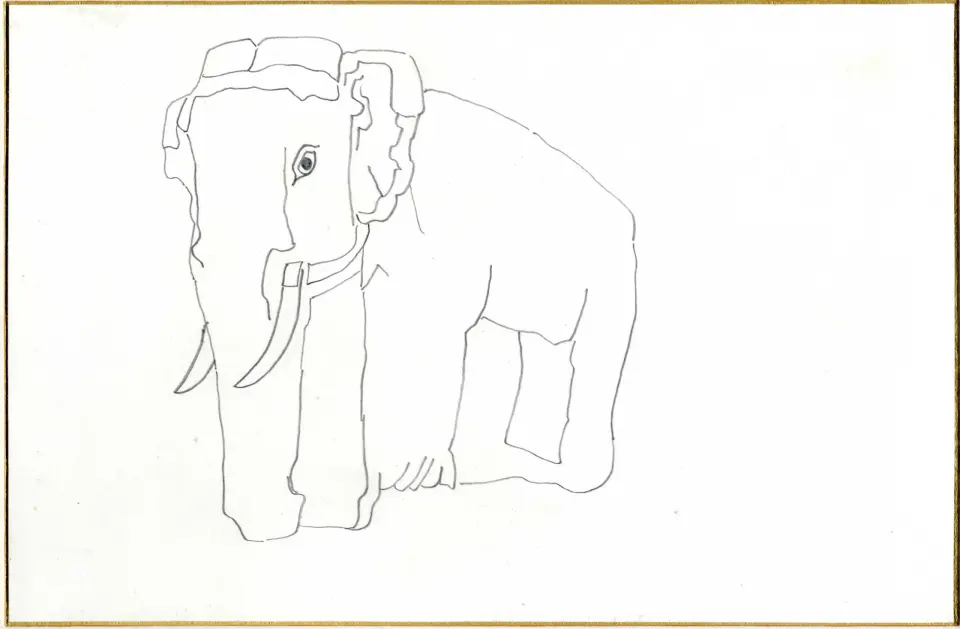
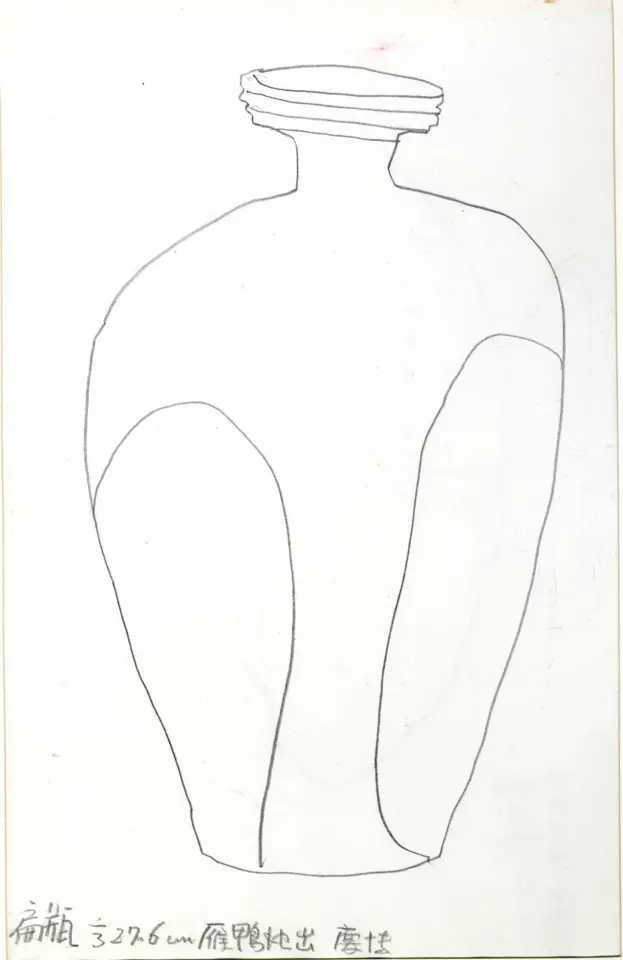
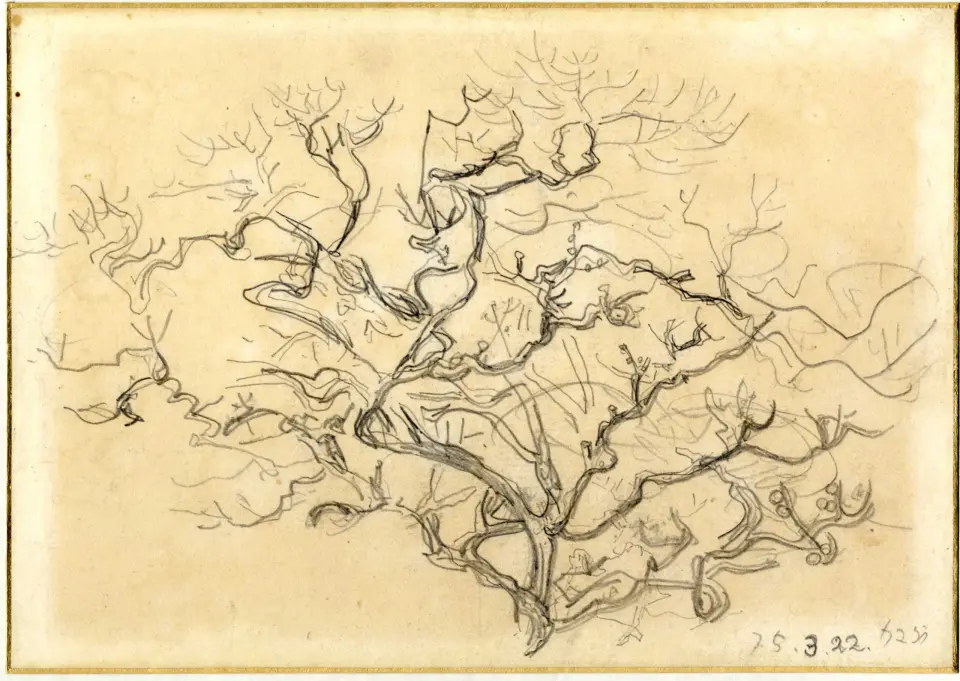
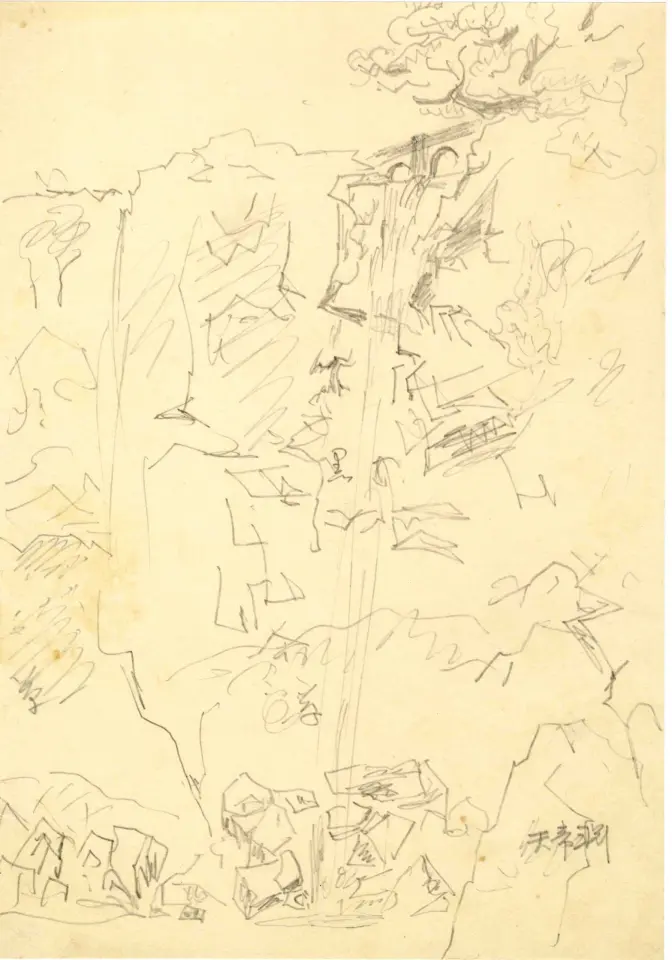
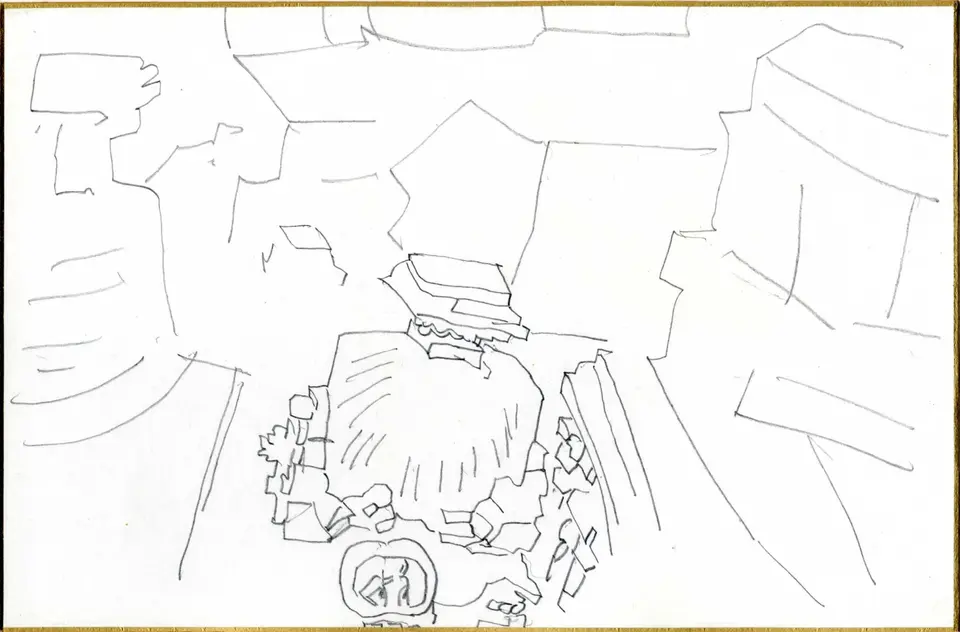
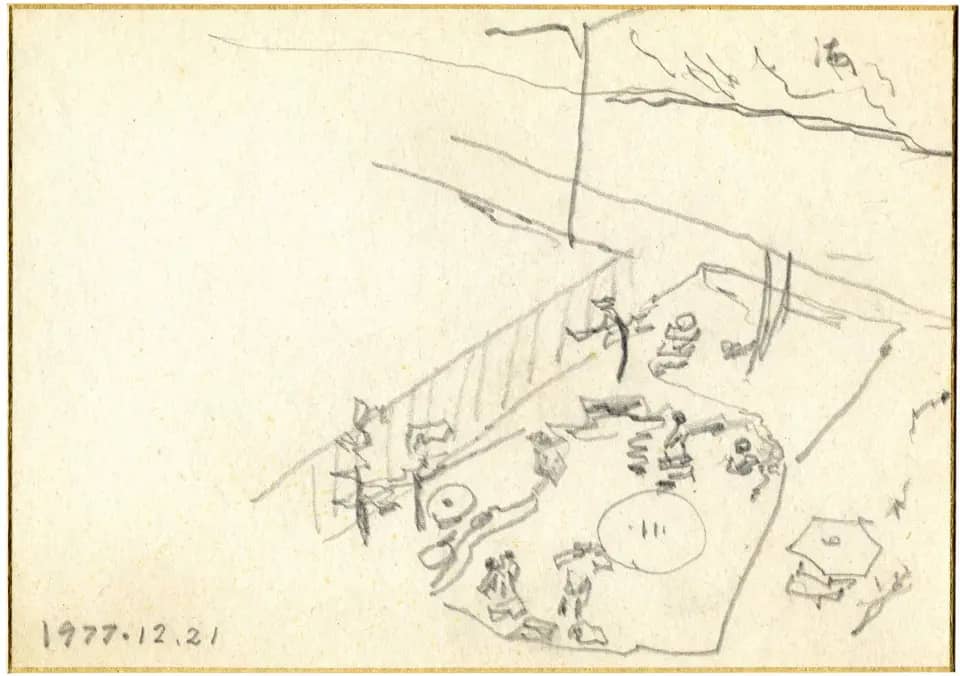
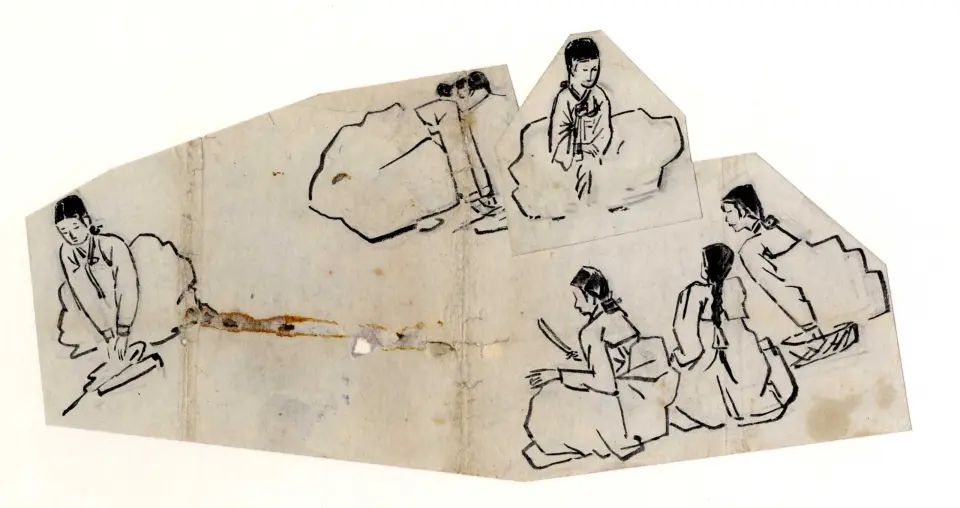
The pencil works of Park Saeng-gwang — the earliest that survive. War destroyed everything before; these drawings are where his extant oeuvre begins.May 20 – Jun 28, 2026Gallery PEG · M-Tower 6F, Eunpyeong11am–8pm
“No nation departs from its history.
No nation departs from its tradition.
Drawing —
the most personal of all
Drawing is the oldest of visual disciplines. Britannica defines it bluntly — “the most personal of all artistic statements.” A line moves across paper; the artist's hand is the work. There is no layer of paint to mediate the moment. What you see is the moment of seeing itself.
For most of art history, drawing was a step before painting — preparation, rehearsal, hidden under color. Then, beginning around Leonardo, drawing came forward as an autonomous form, “aiming at nothing other than itself.” In 1976 MoMA's landmark Drawing Now declared the medium “a major and independent means of expression.”
Korean tradition arrived at the same conviction by another road. In 필묵 (筆墨, pil-muk) — the ink-and-brush practice of East Asian painting — a single line carries the artist's breath, temperament, and sense of the world. The Korean phrase 사의 (寫意), “to depict the intent,” values not likeness but the mind behind the stroke. A drawing exhibition is, by this measure, the most intimate room in an artist's house.
From Jinju
to the Grand Palais
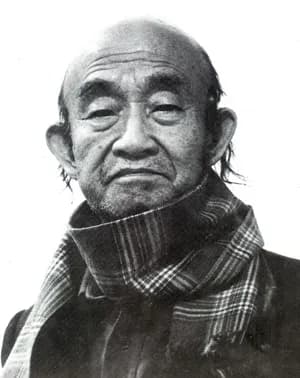
Park Saeng-gwang (朴生光, 1904–1985) was born in Jinju, South Gyeongsang Province. In 1920 he crossed to Kyoto, where he studied at the Kyoto Municipal School of Painting under the masters of shin-nihonga — Takeuchi Seihō and Murakami Kagaku. For decades he worked within their idiom, regarded by Korean critics as a painter in a “Japanese style.”
Then, in 1977, after a second period in Japan, he returned permanently to Korea. At seventy-three he upended his own practice. He set aside the Japanese palette and reached for obangsaek — the five cardinal colors of Korean tradition: blue, red, yellow, white, black. He drew his subjects from shamanic rites, Buddhist iconography, folk tales, and the history of his people: Jeon Bong-jun, the mudang, Dangun, Empress Myeongseong.
The final eight years were a transformation. In 1985, at the Grand Palais in Paris, critics greeted him as “the Korean Picasso.” That same year he died. The hundred or so works he left behind — the late paintings and the pencil drawings that ran alongside a lifetime — are now read as the moment when Korean colored ink painting found a new ground.
Major subjects
- 1
Shamanic rite
Mudang, gut rituals, talismans — the spirit world of Korean shamanism rendered in surging color.
- 2
History
Jeon Bong-jun, Empress Myeongseong, Yi Sun-sin — the figures of Korean history rendered with ritual color.
- 3
Folk & Buddhism
Folk paintings, Buddhist iconography, dancheong patterns — gathered into a single contemporary canvas.
The artist's timeline
- 1904Born in Jinju, South Gyeongsang Province.
- 1923Enters Kyoto Municipal School of Painting; studies under Takeuchi Seihō.
- 1977Returns permanently to Korea; turns to obangsaek and Korean subjects.
- 1981Solo exhibition at Baeksang Memorial Museum.
- 1985Le Salon Special Exhibition, Grand Palais, Paris — "the Korean Picasso." Dies in July.
- 2023Seoul Arts Center retrospective publicly shows 100 drawings — a rarely known body of work.
This exhibition —
the earliest works, in pencil
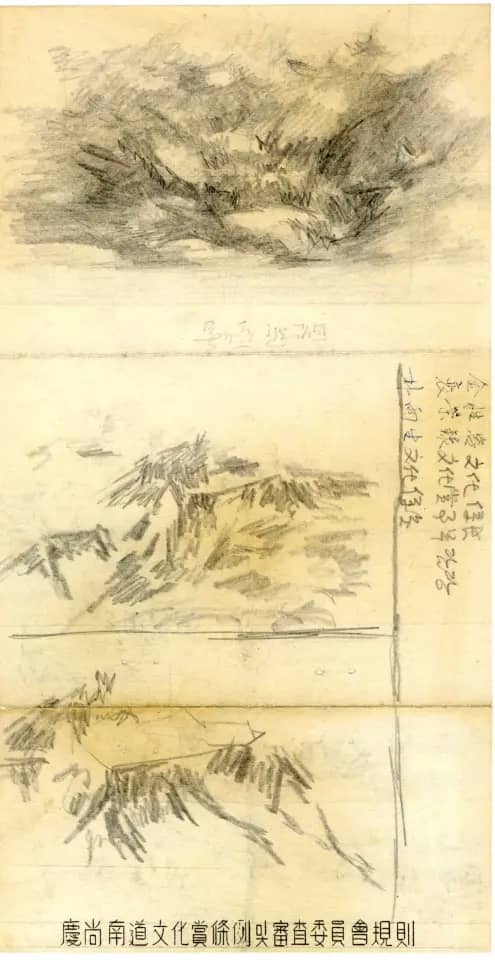
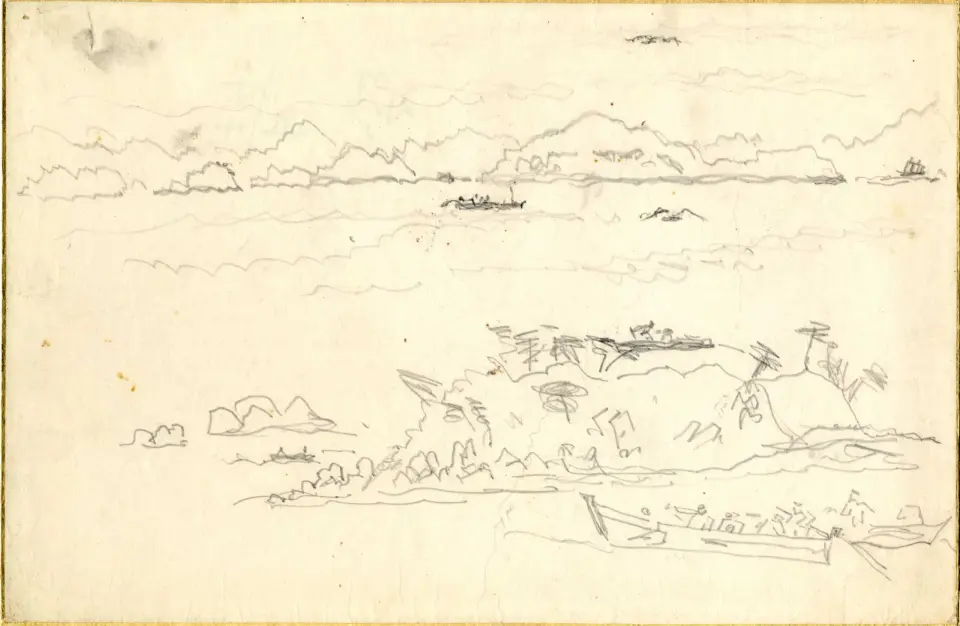
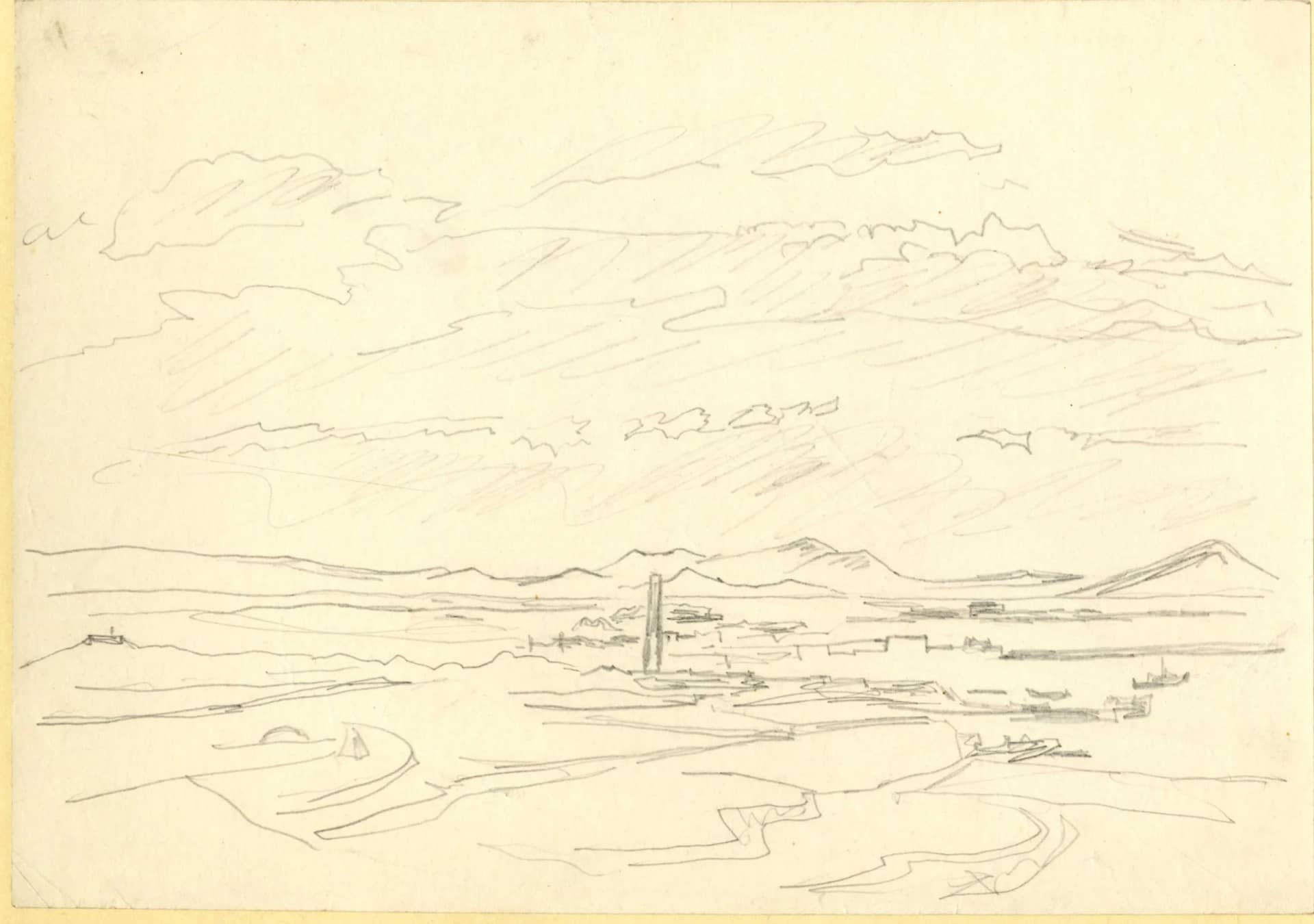
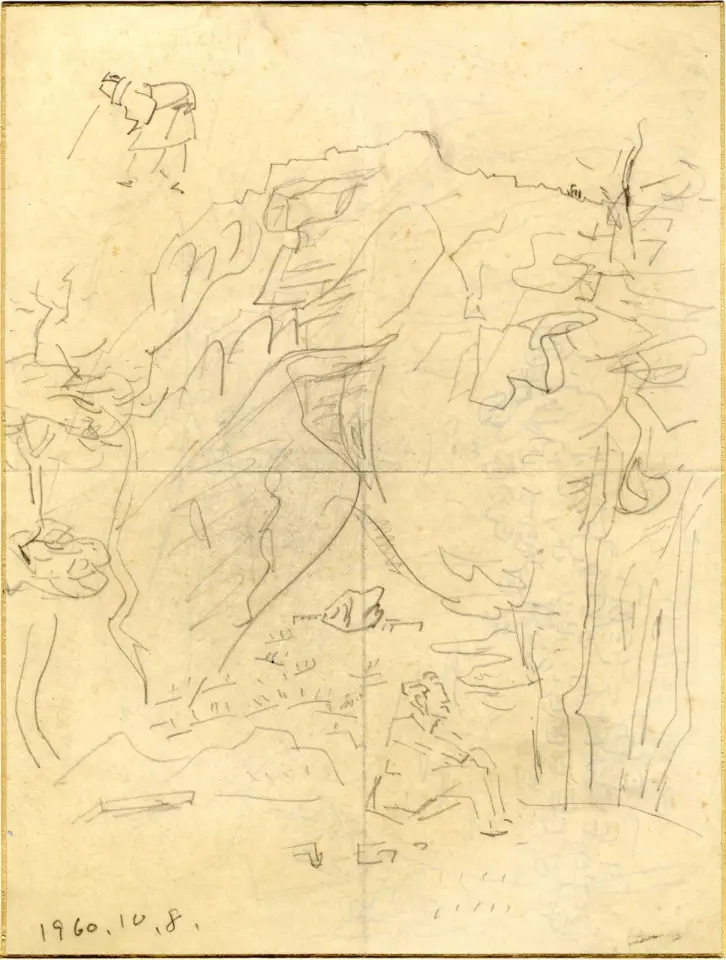
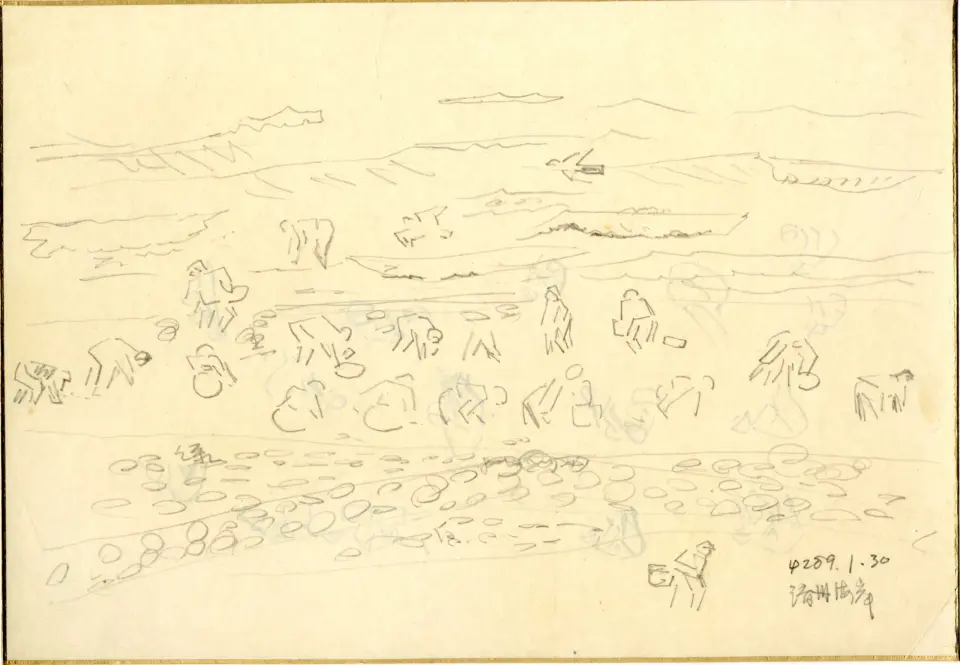
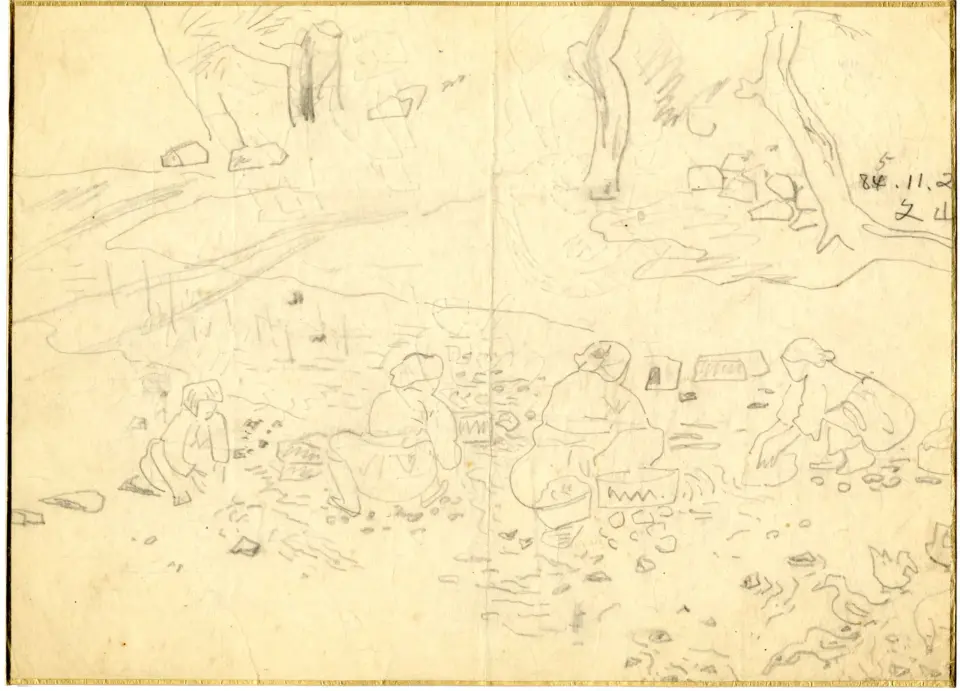
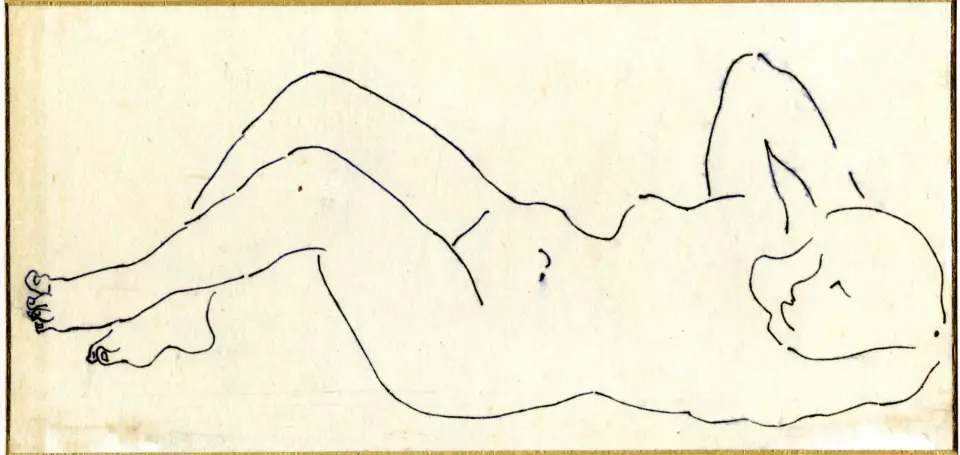
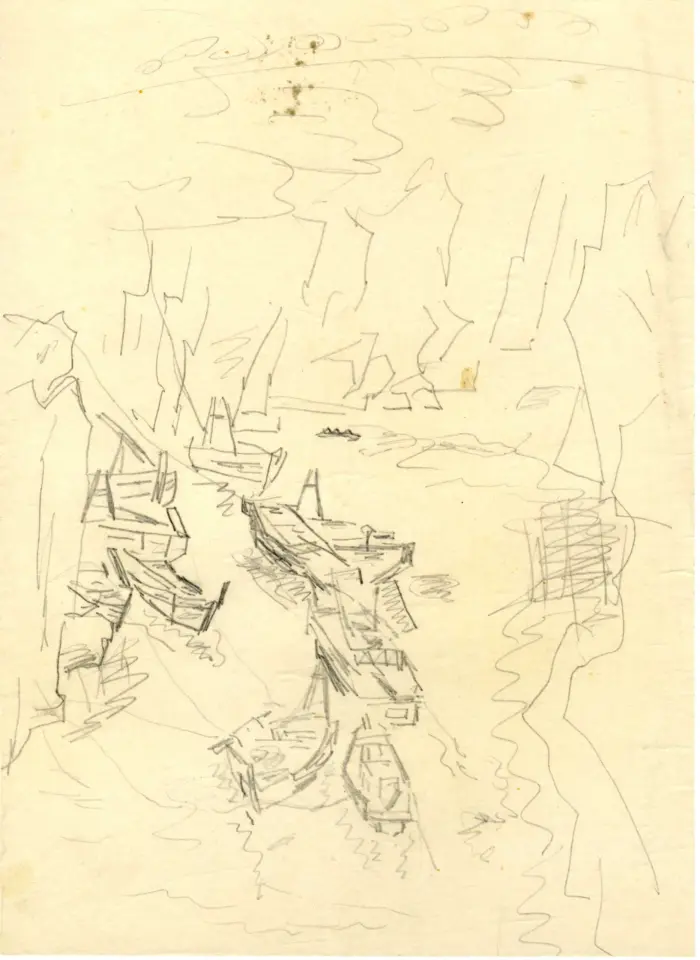
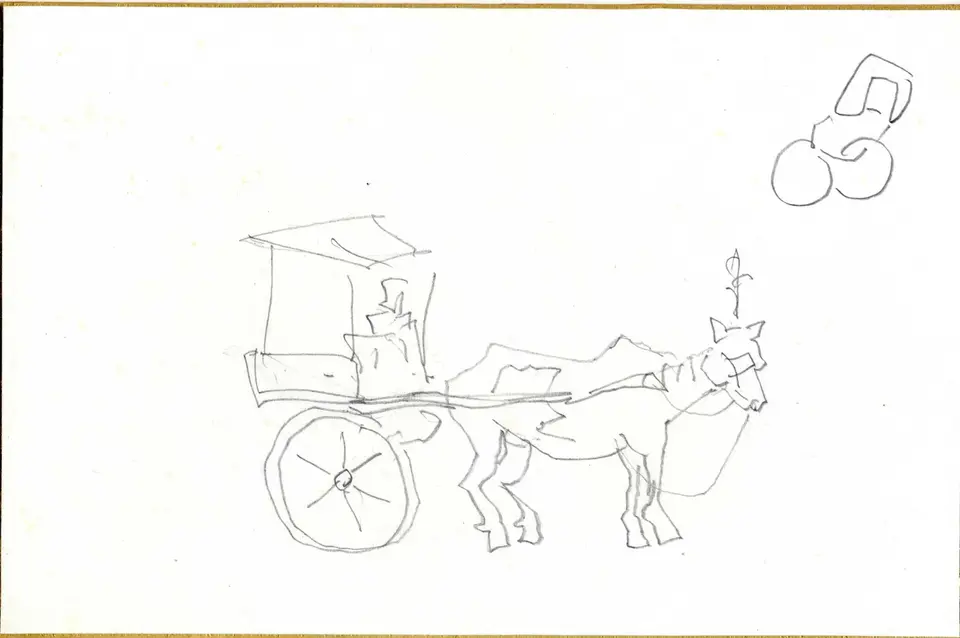
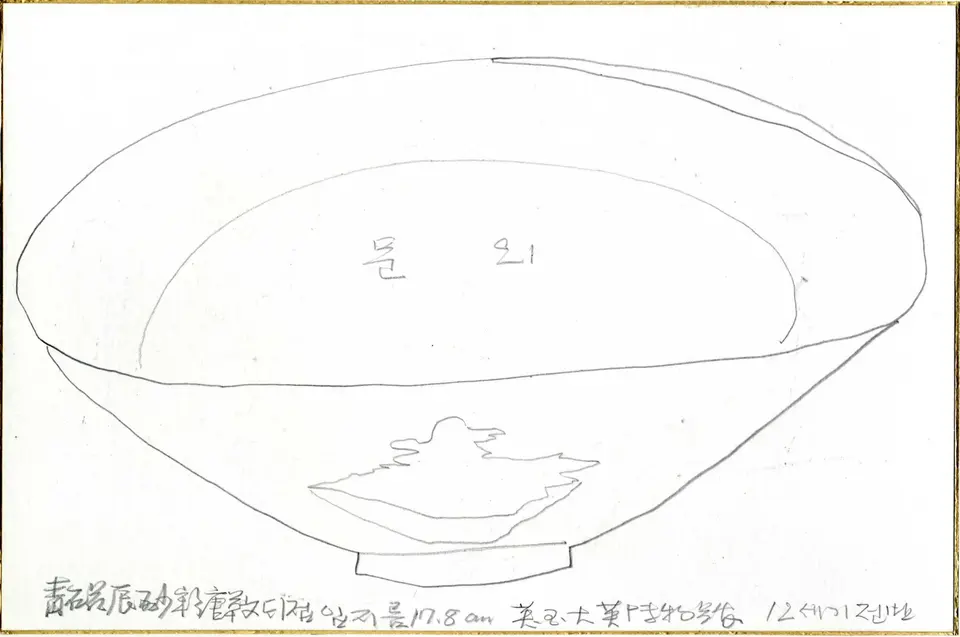
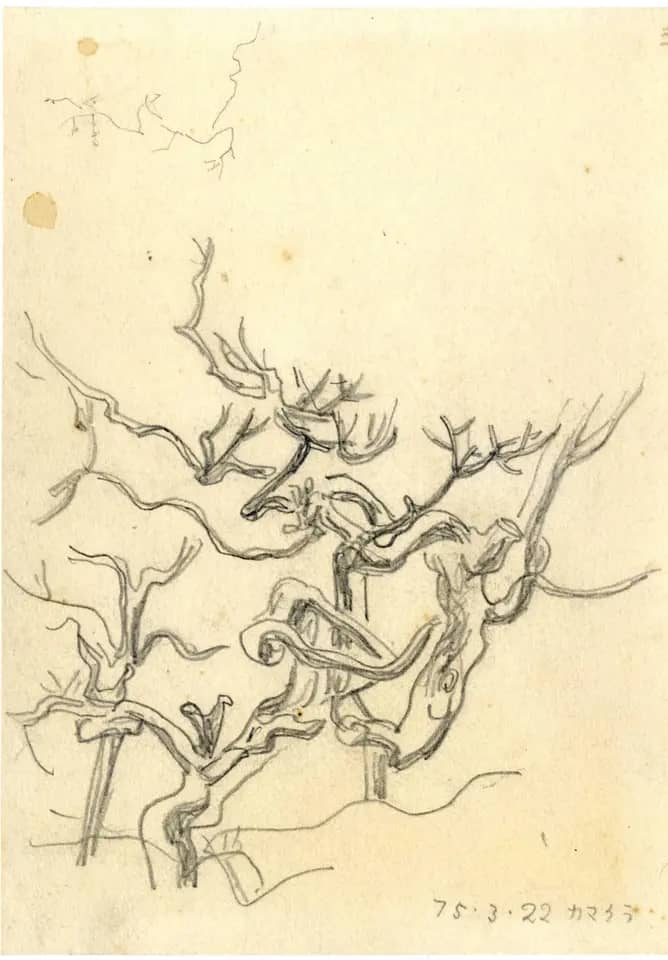
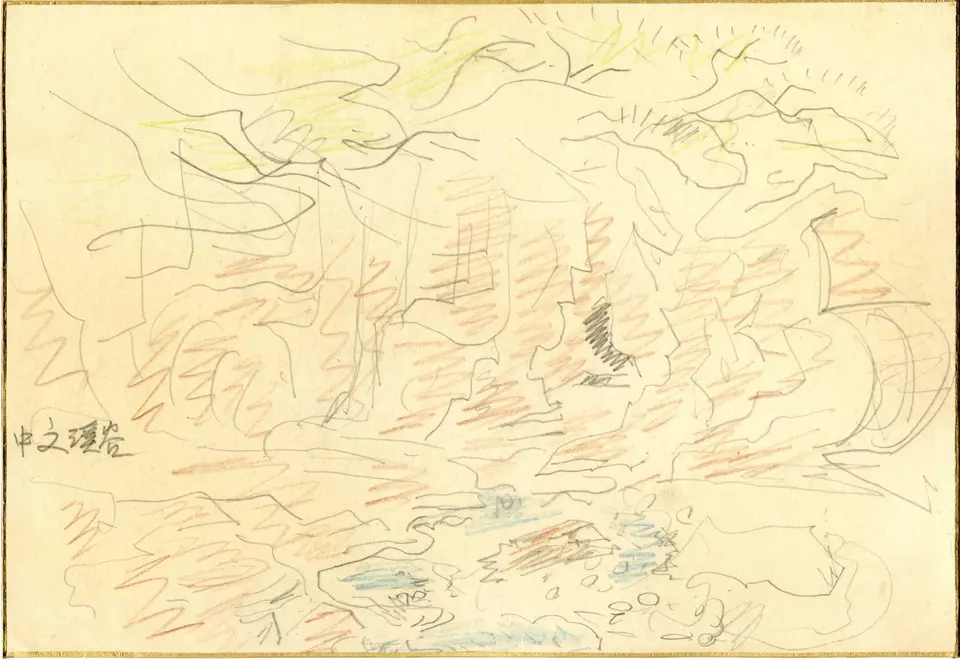
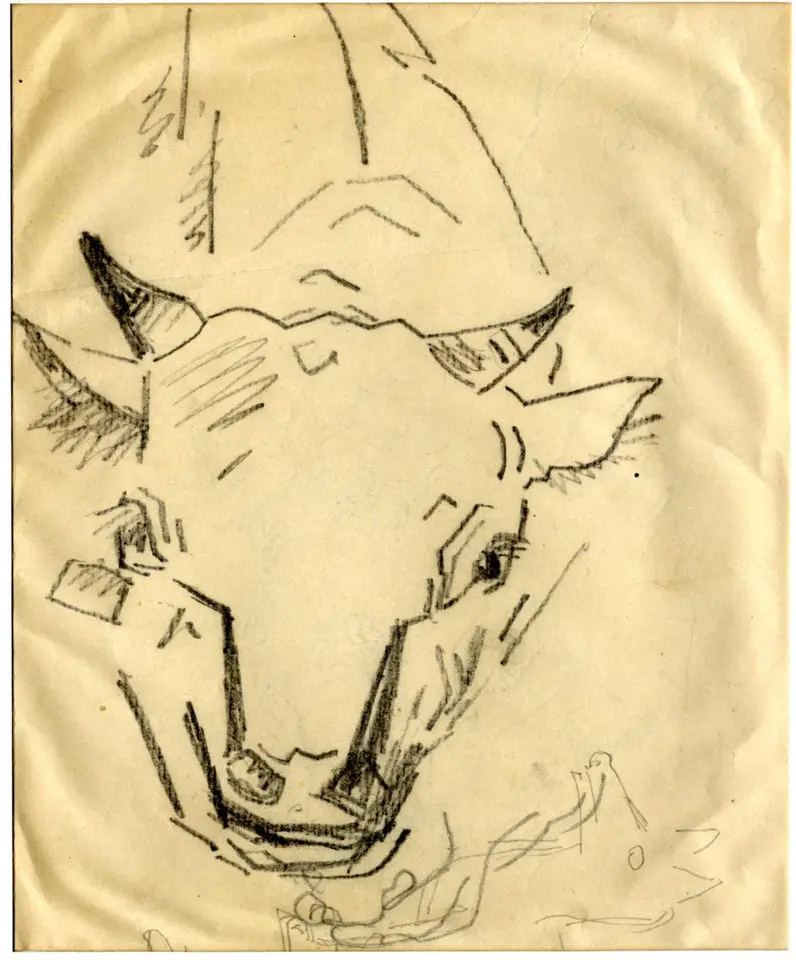
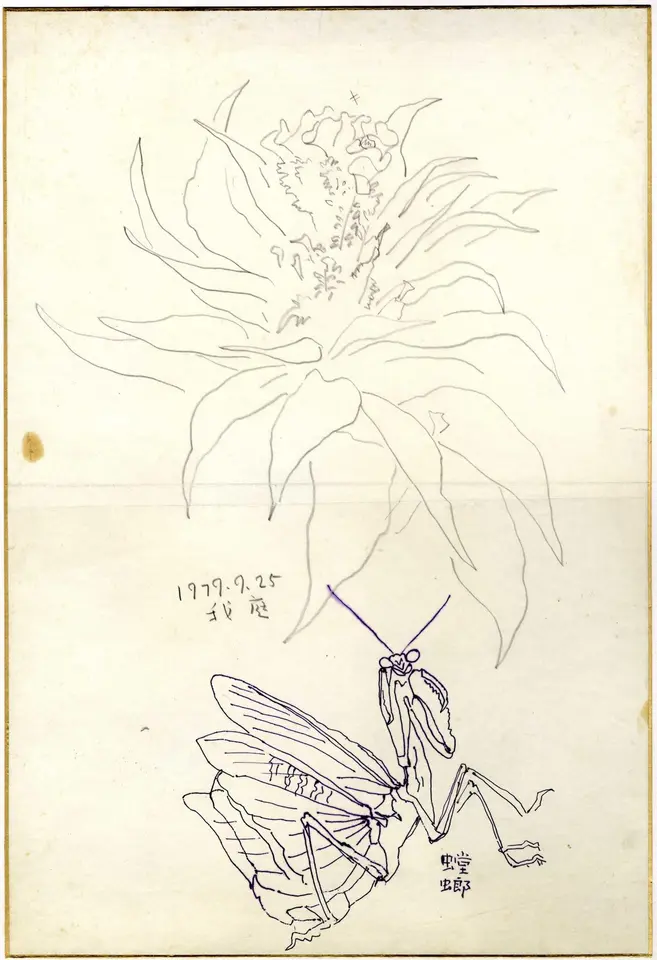
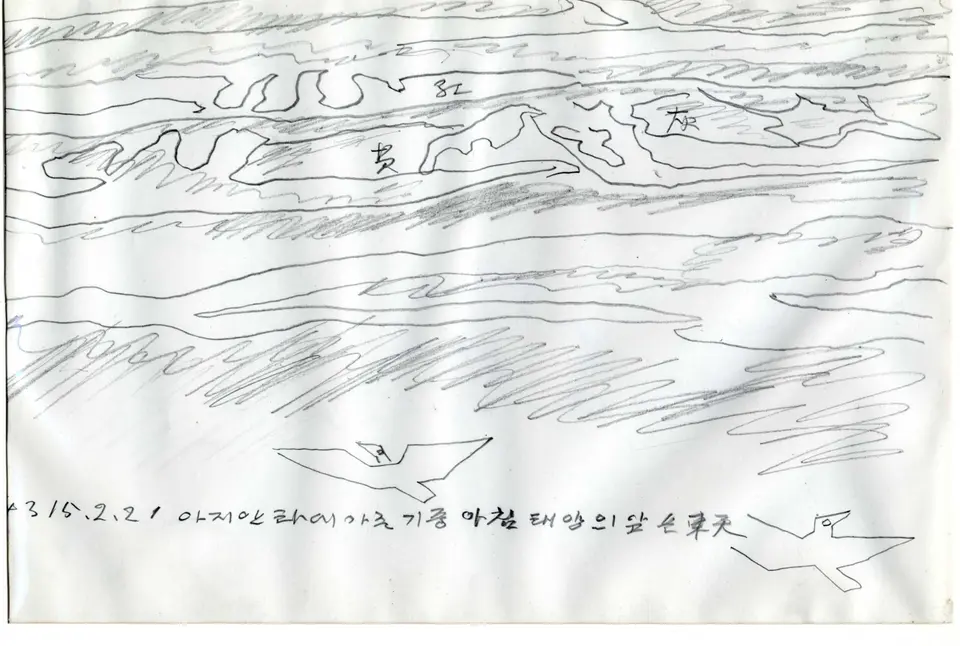
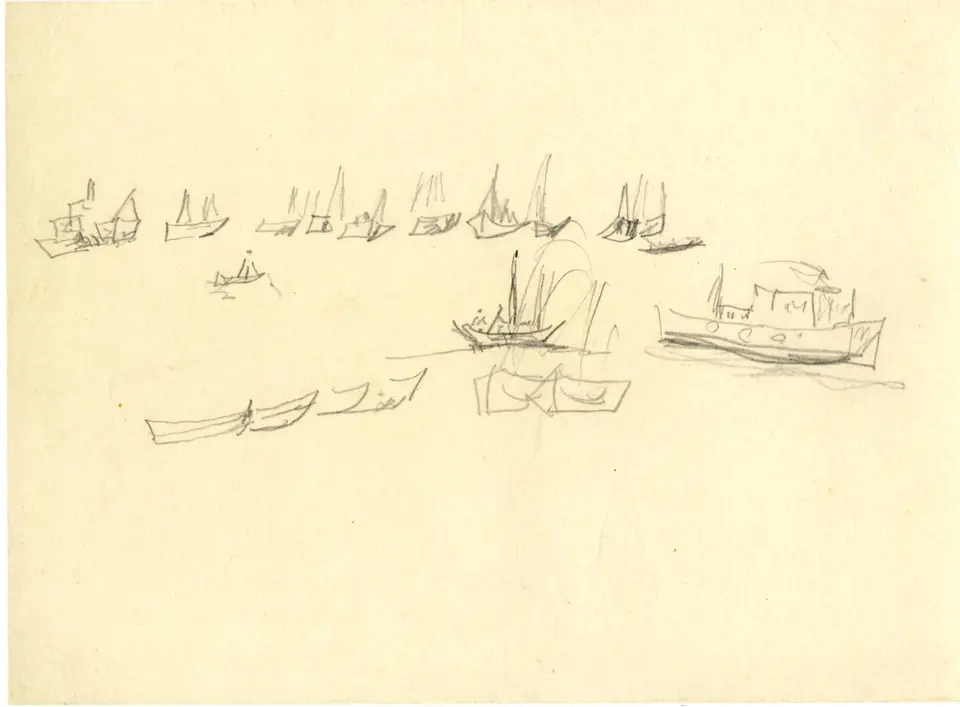
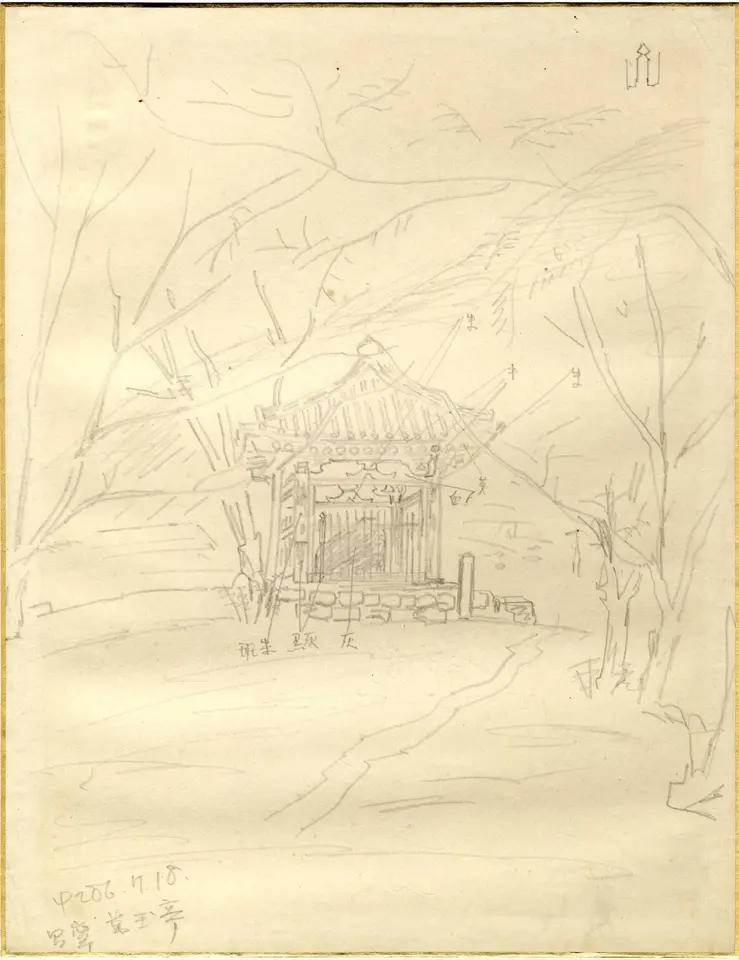
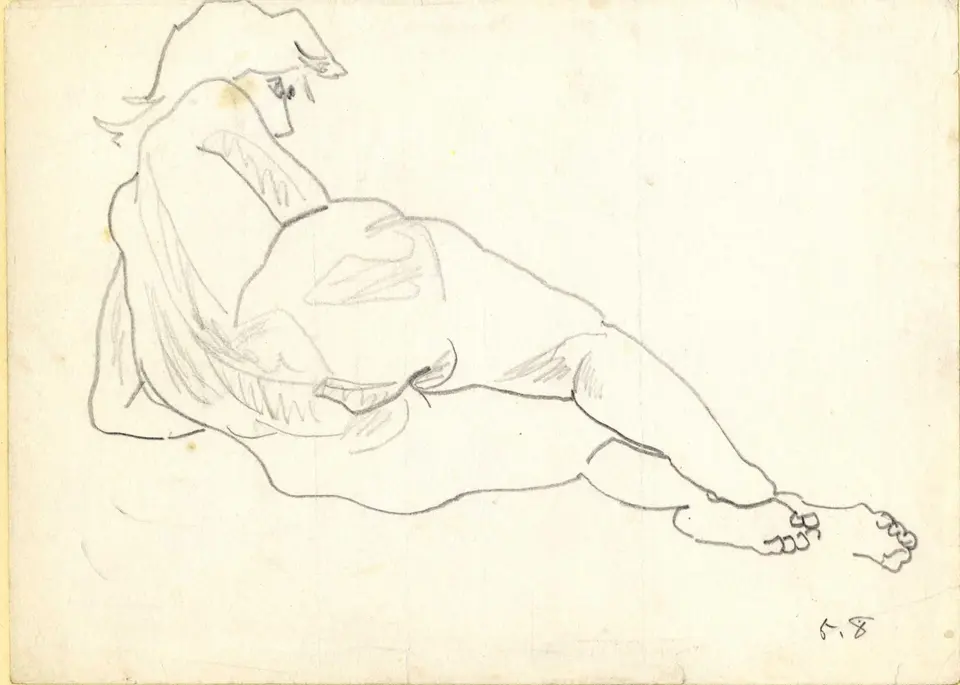
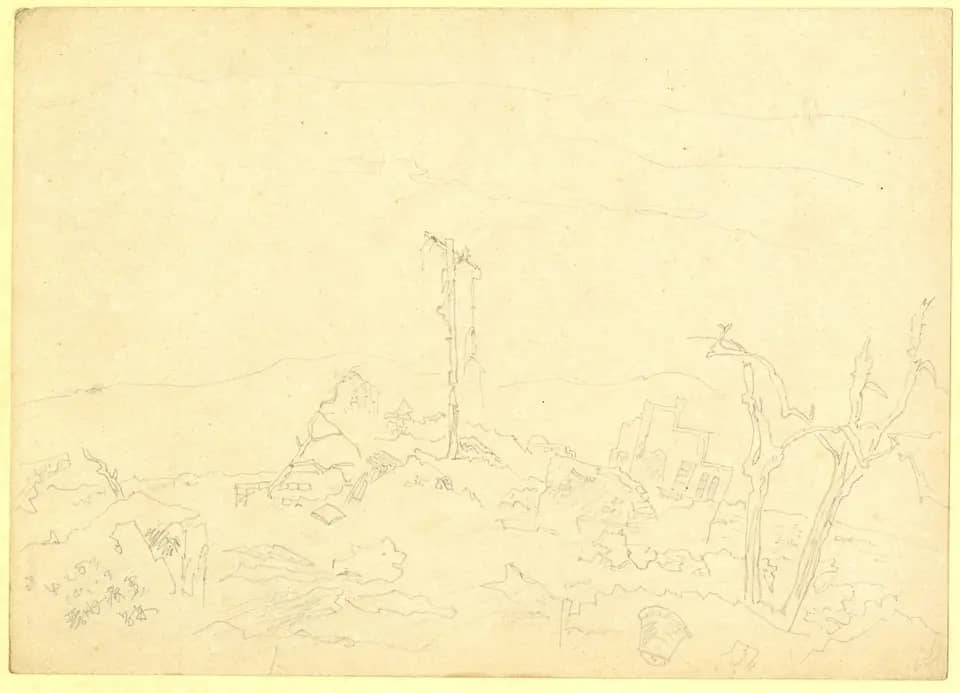
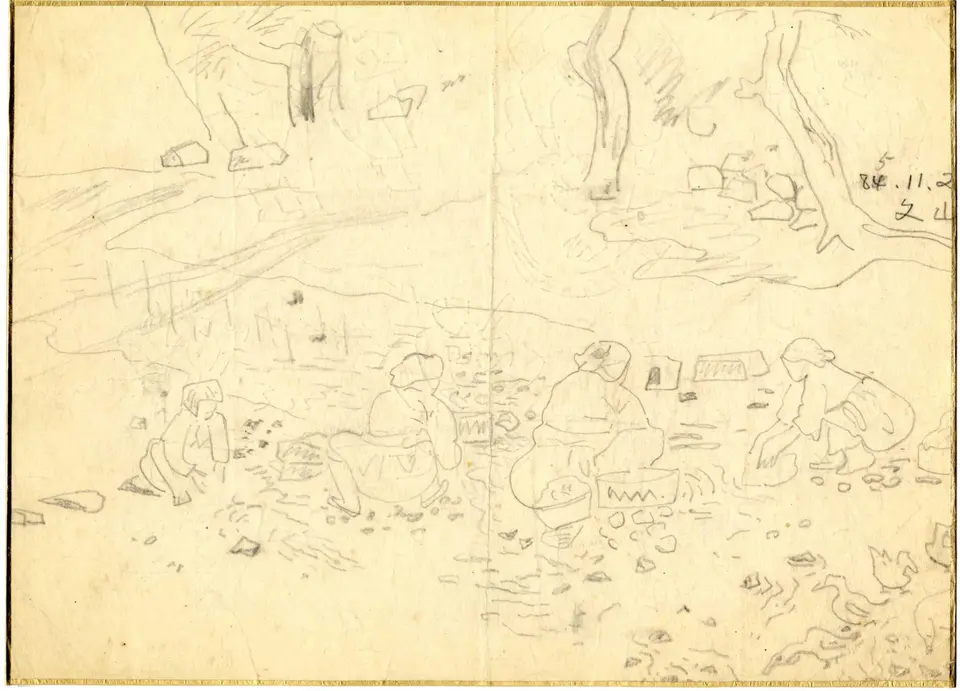
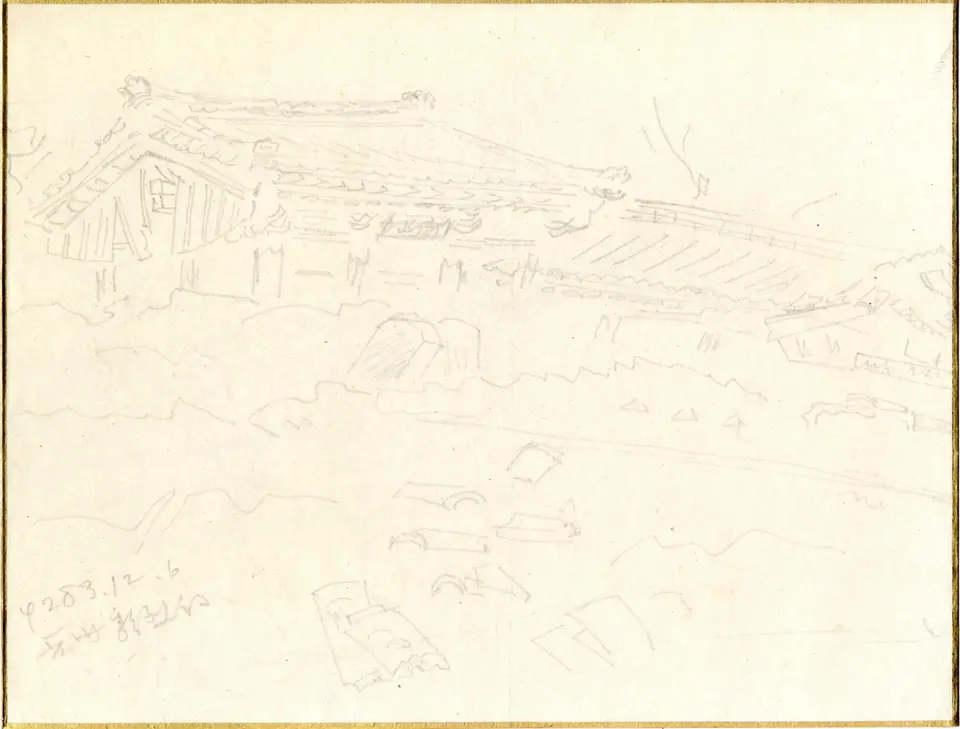
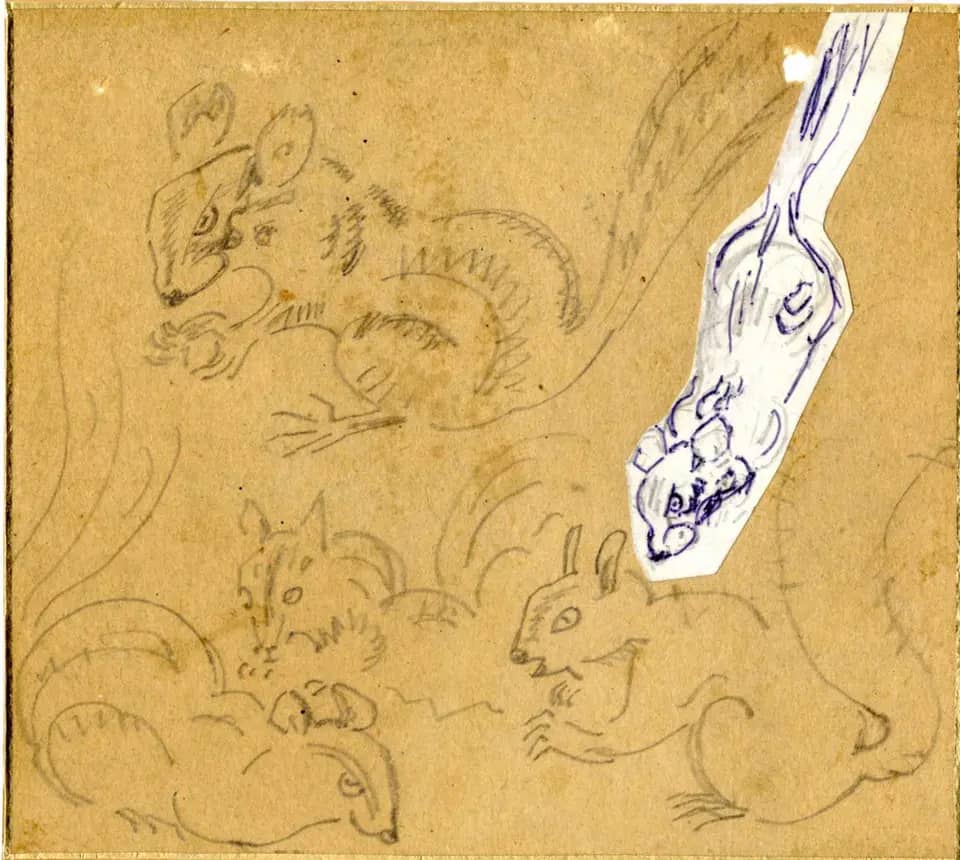
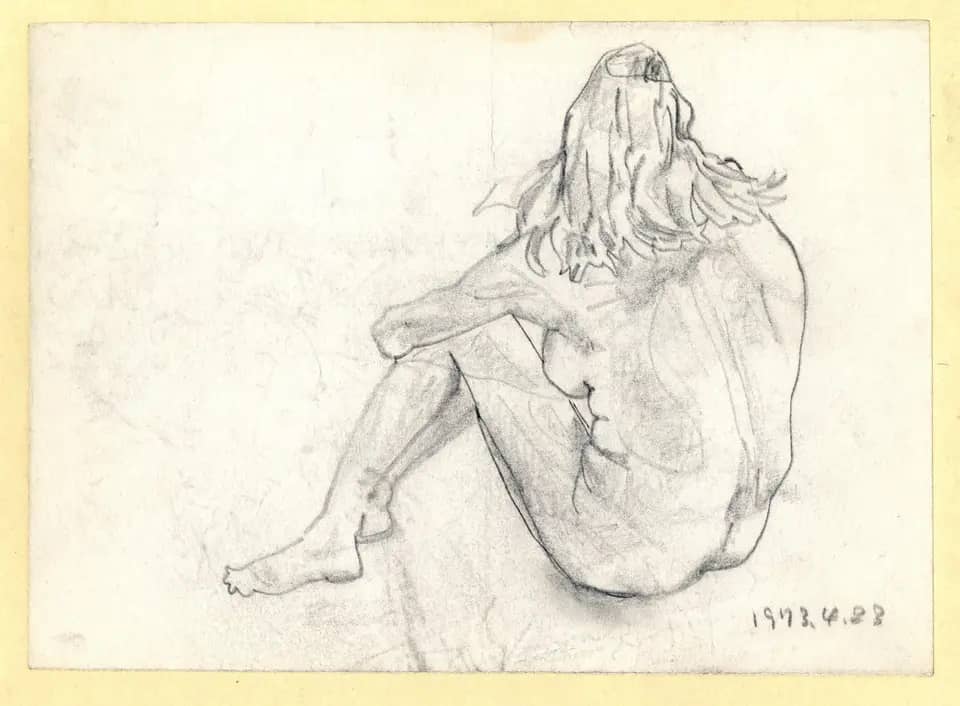
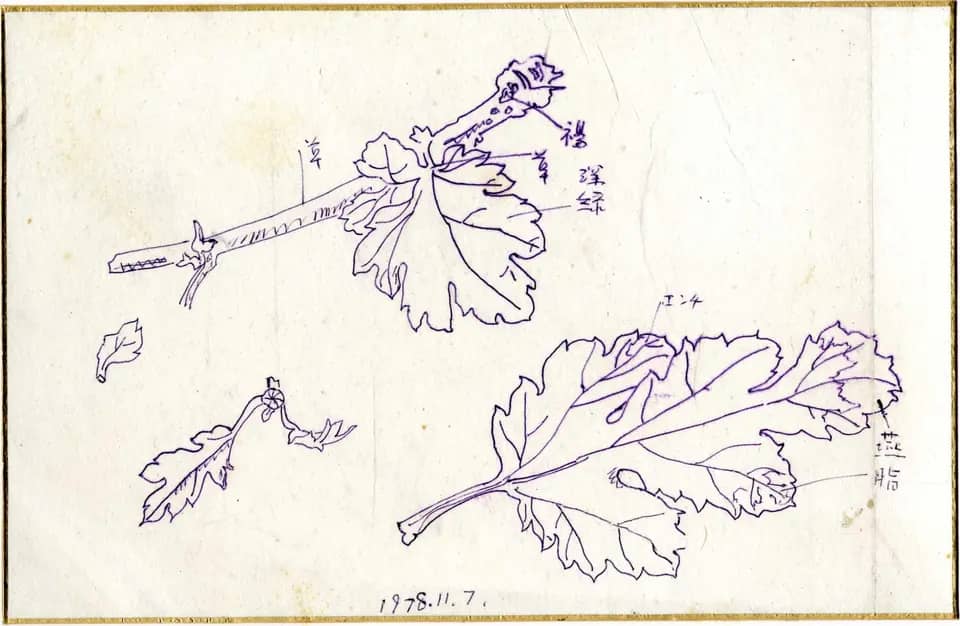
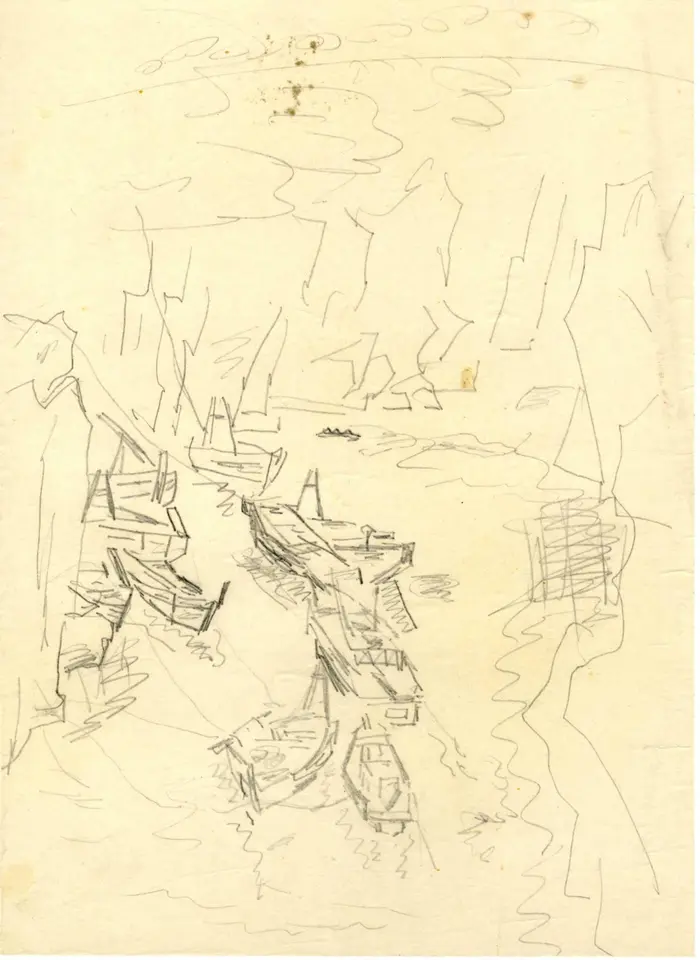
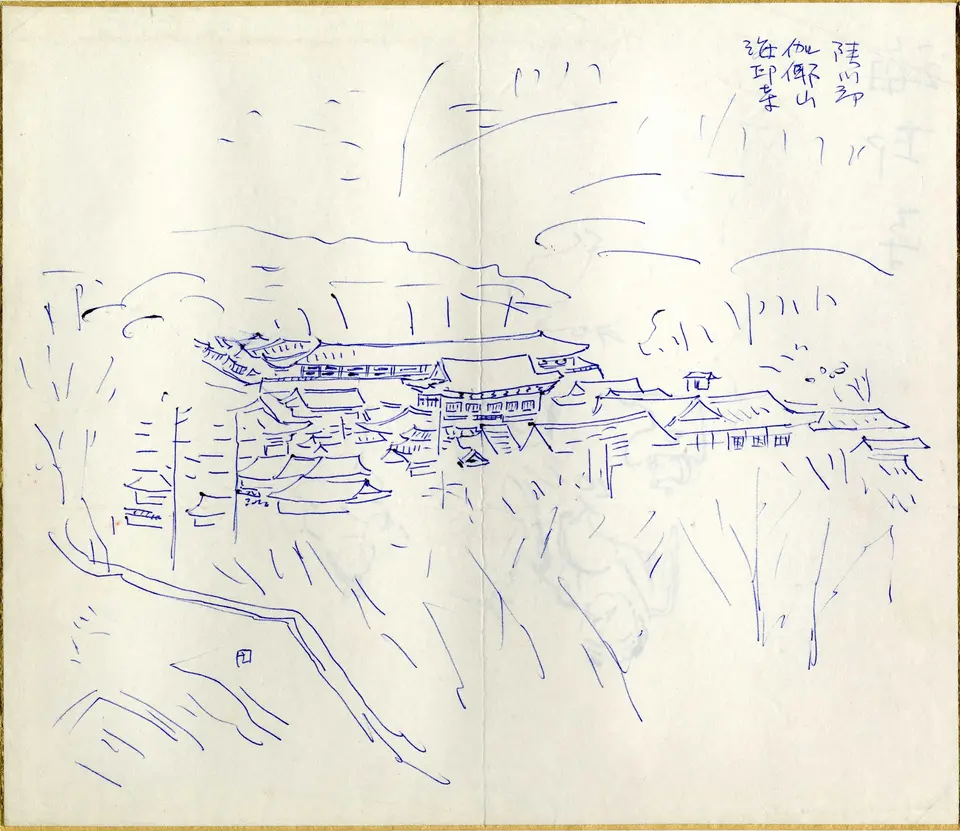
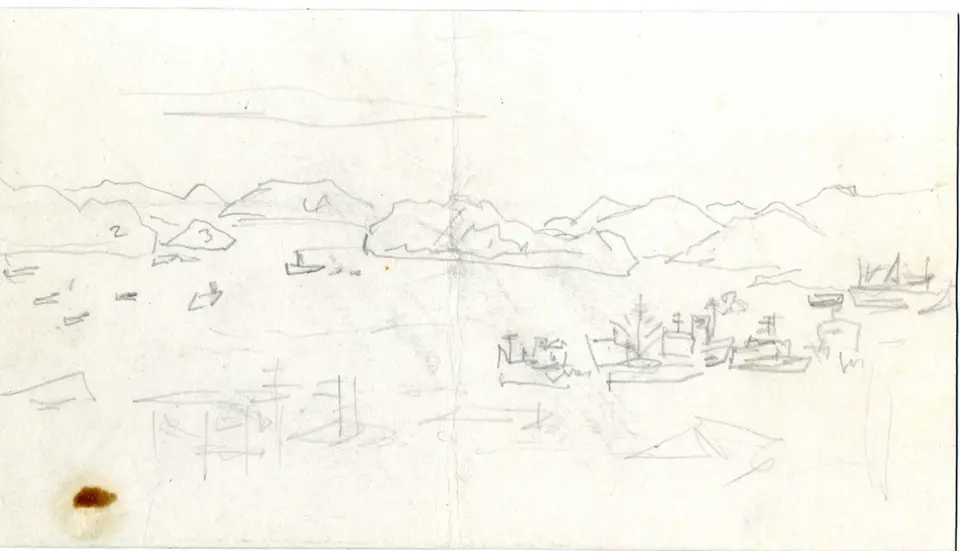
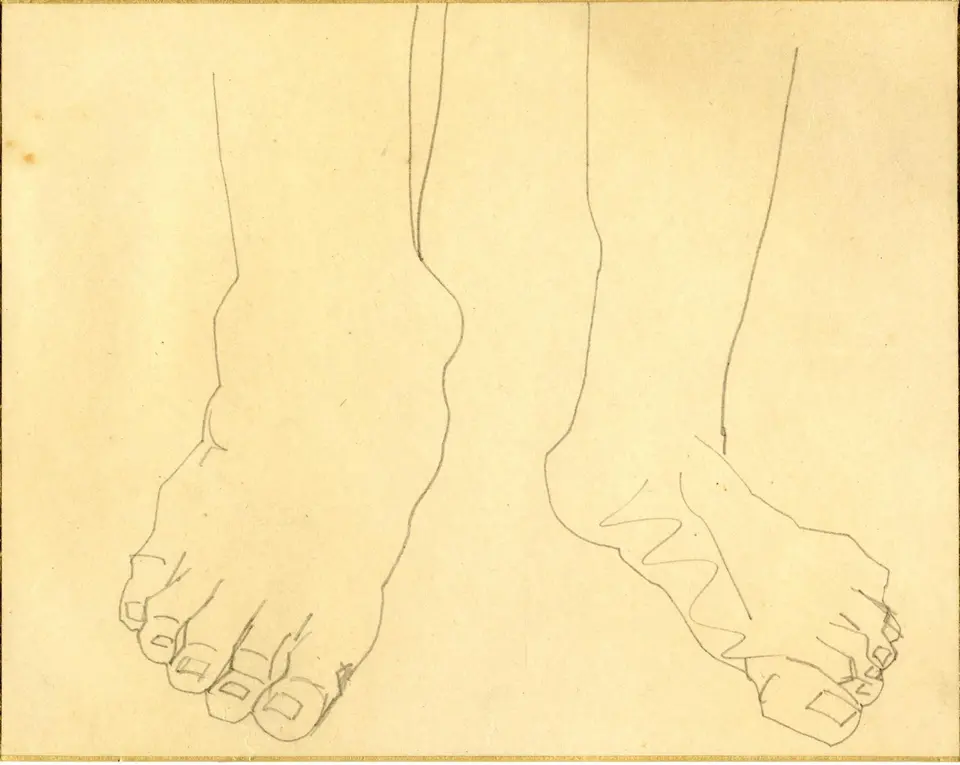
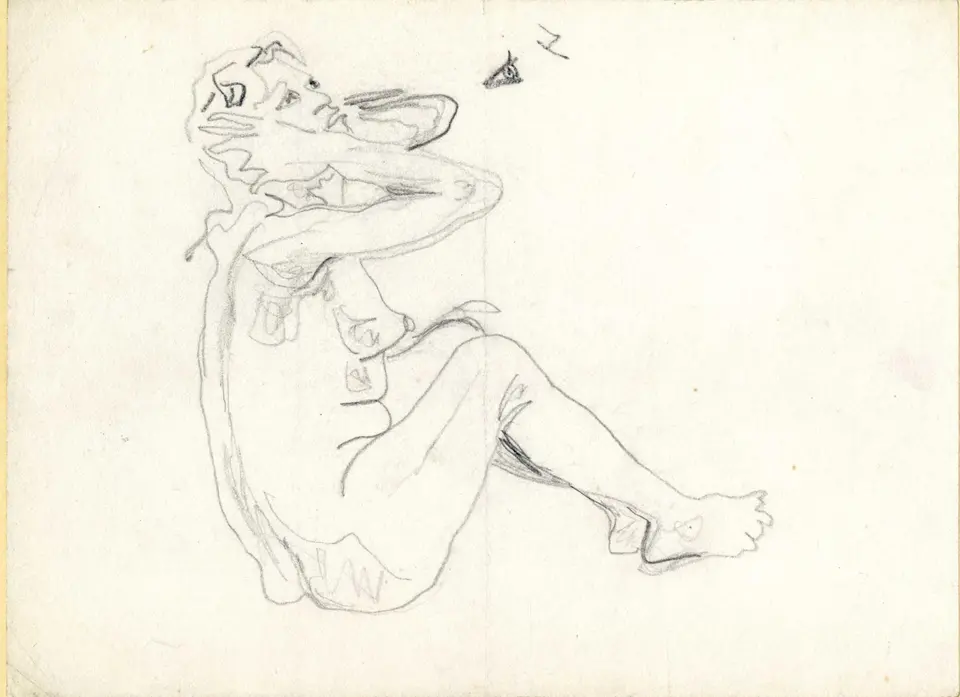
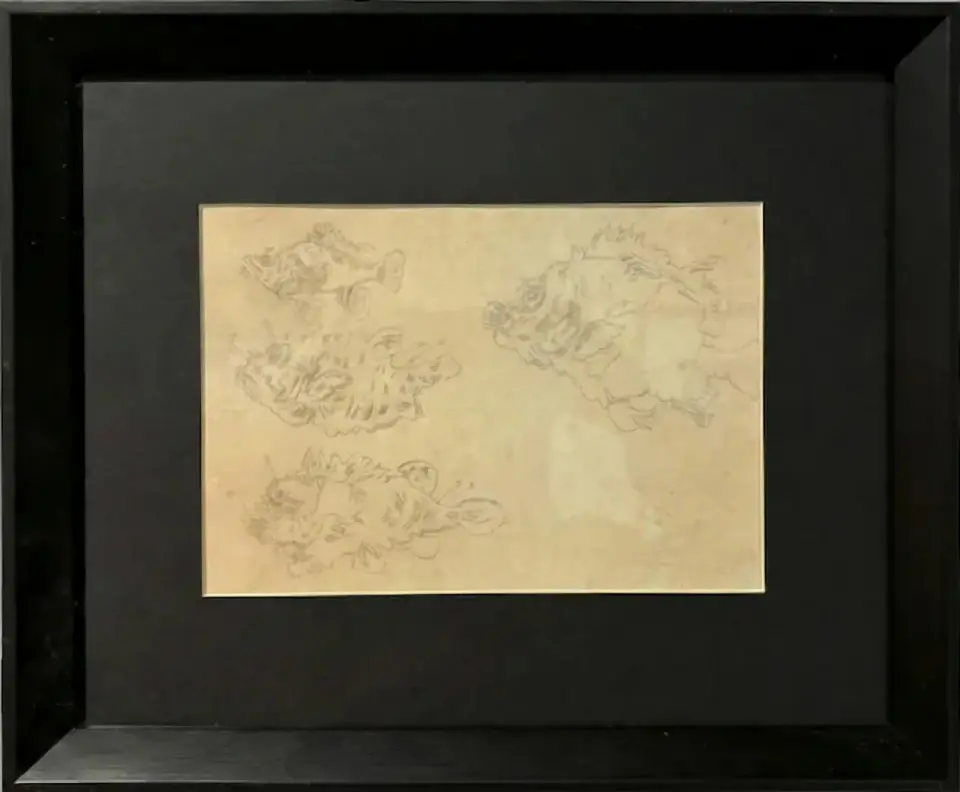
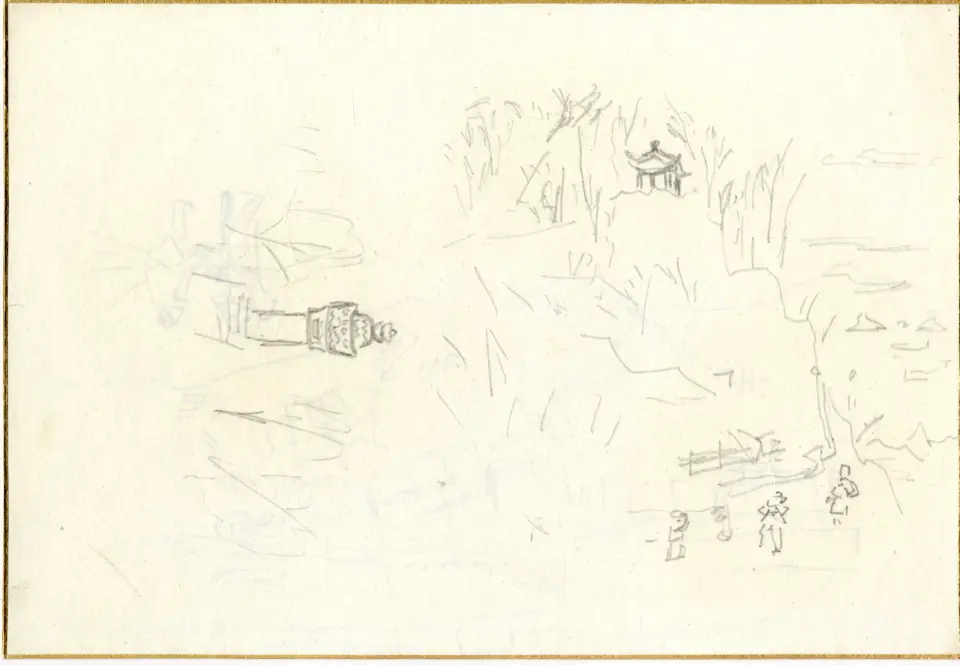
Park Saeng-gwang's name has long been inseparable from color. The deep reds and ultramarines of his late paintings crowd the memory of anyone who has met them. But the pencil works tell a different story. The 1950 war destroyed everything that came before — every canvas he had brought from Japan, every drawing he had stored. From the ruins Park began again: pencil on paper, the devastated landscape around him as his subject. Those pencil drawings are the earliest surviving works he left.
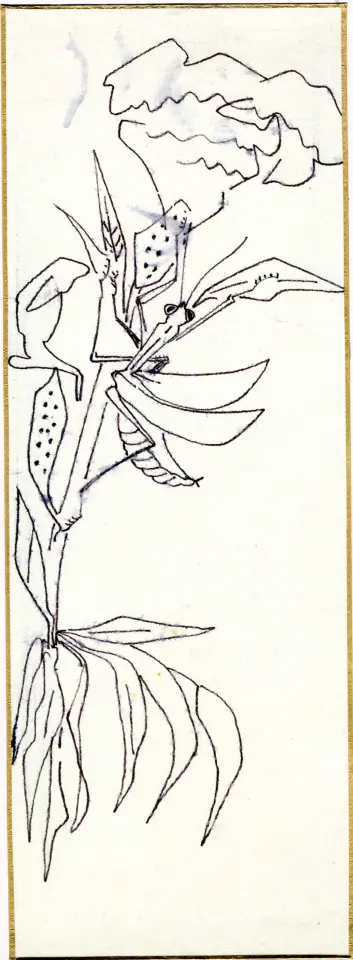
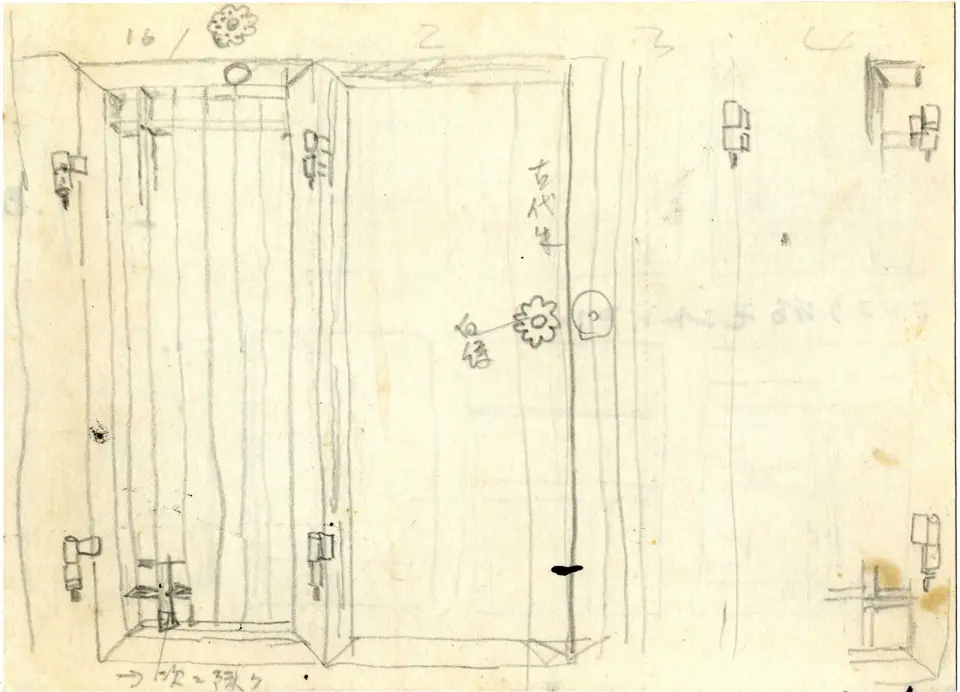
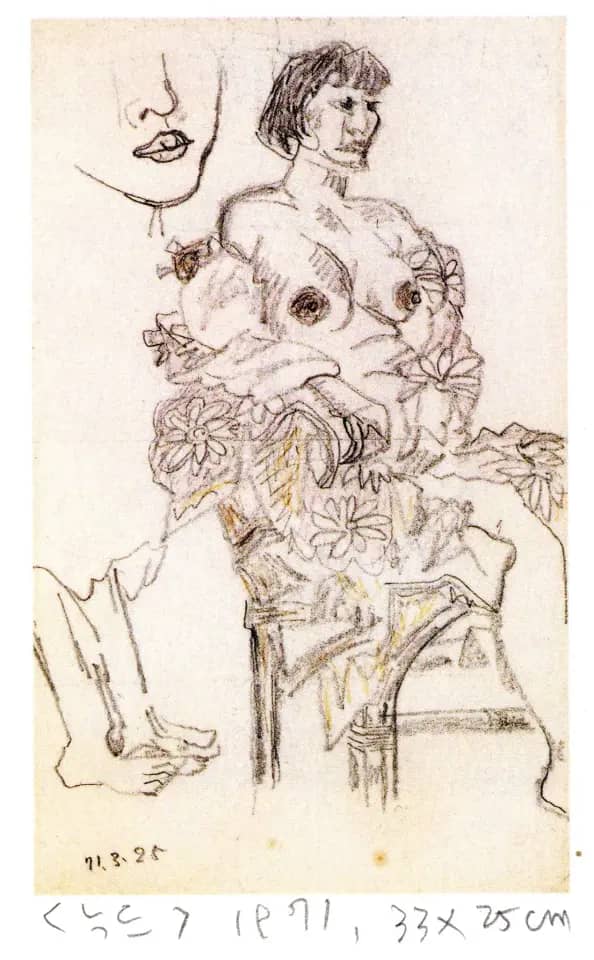
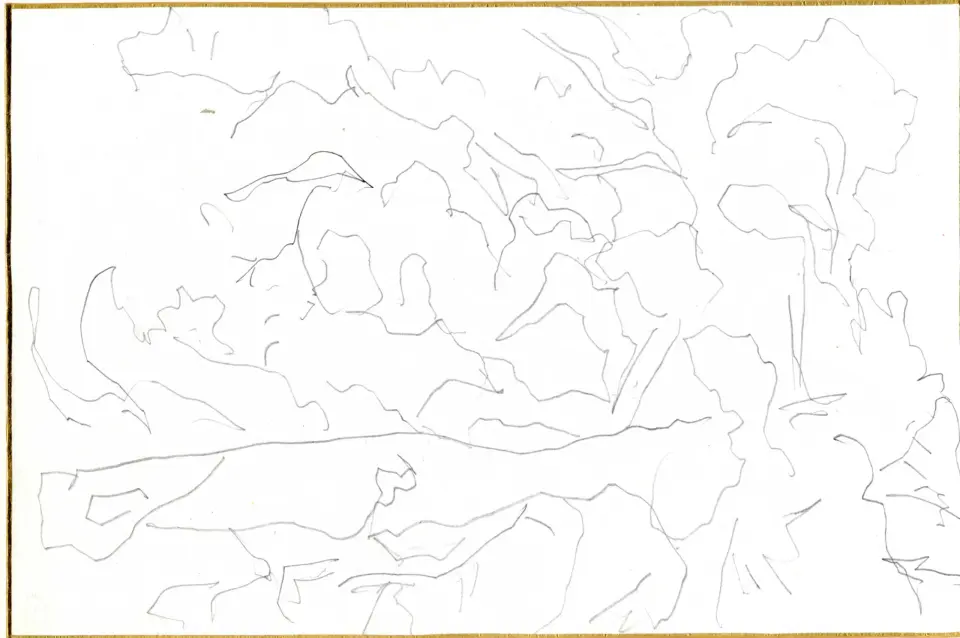
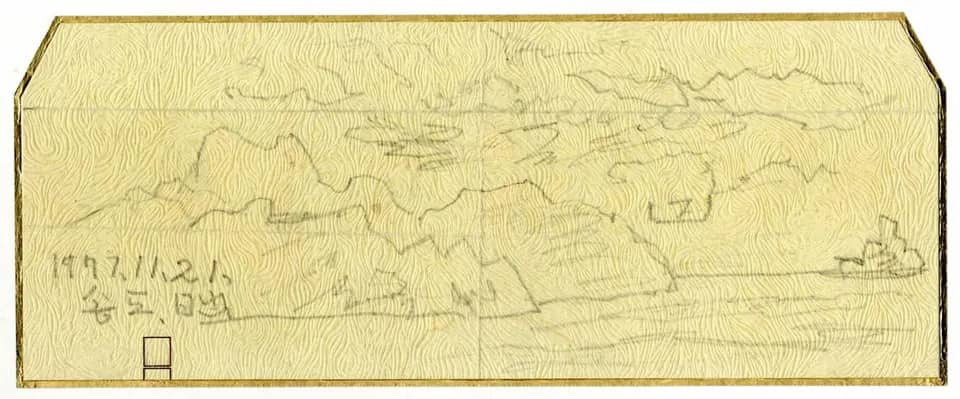
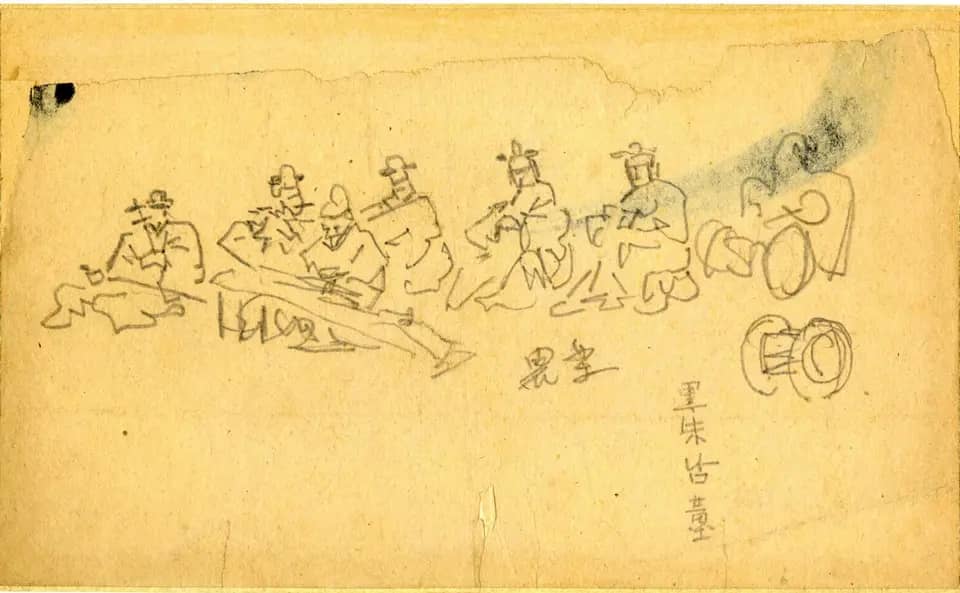
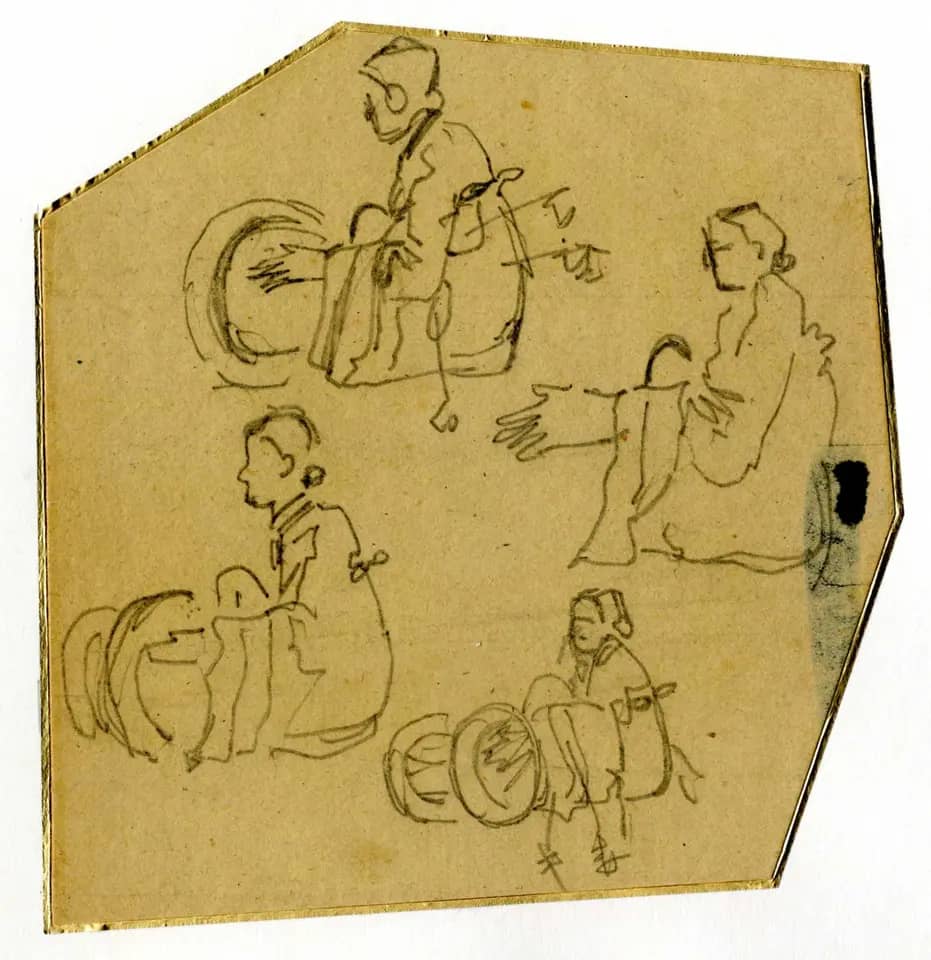
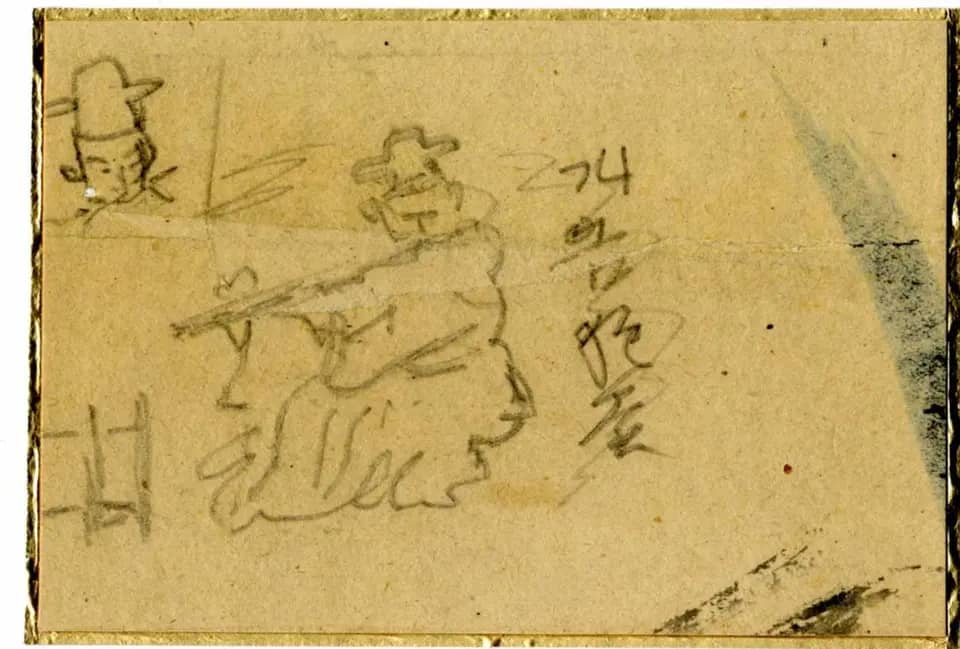
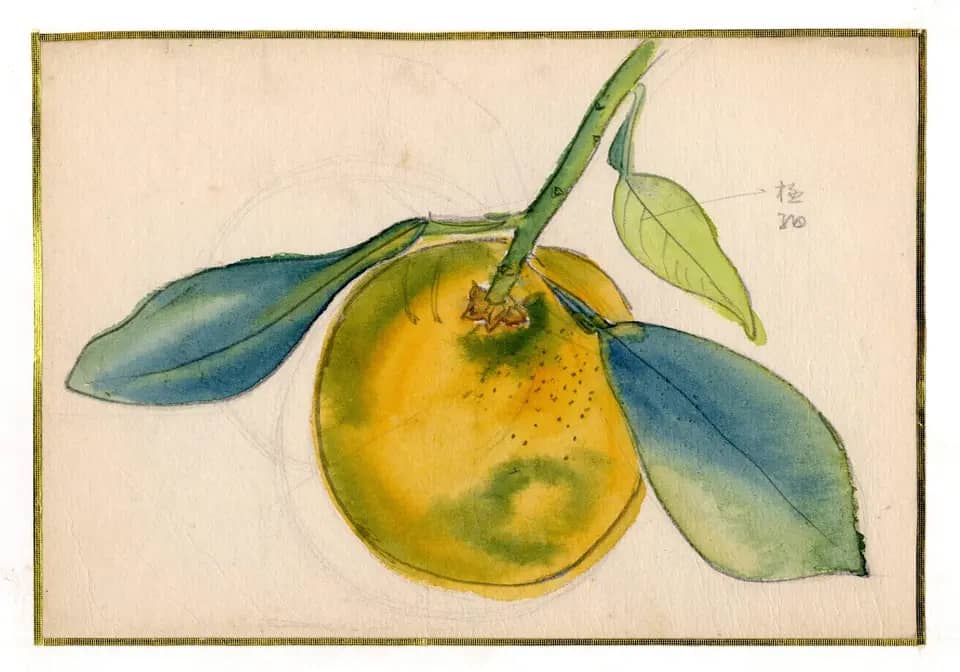
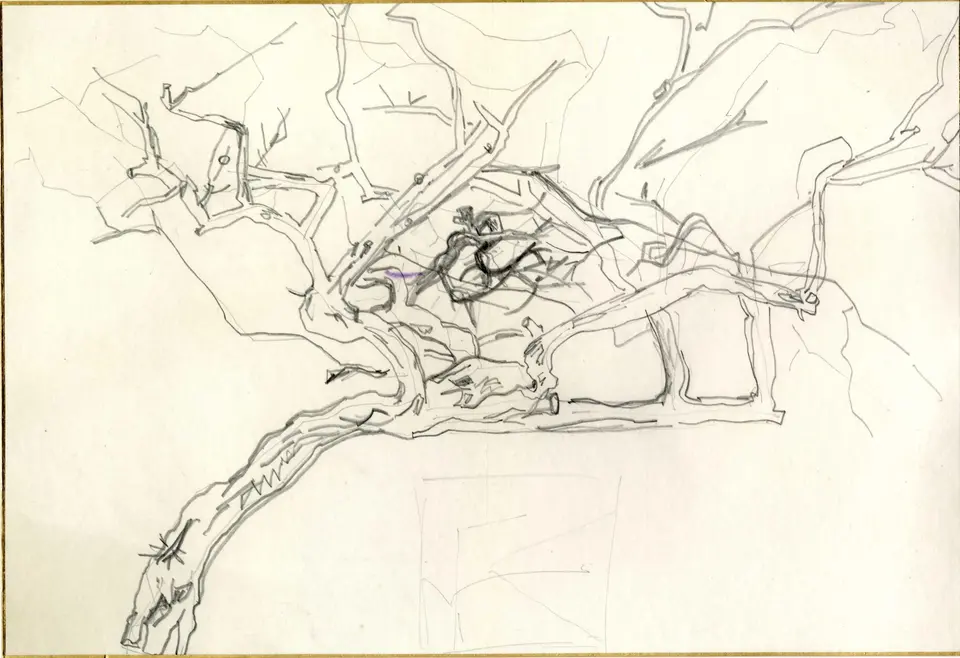
In March 2023 the Seoul Arts Center Hangaram Museum gathered 100 of these pencil works publicly for the first time, in The Great Encounter: Park Saeng-gwang and Park Rae-hyun. This showing continues that effort — pencil on paper, most around 25 × 18 cm, presented as the independent works they are.
These pencil lines trace a journey that begins in the ruins of Jinju in 1950 — through thirty years of suspicion, a landscape slowly returning to itself, and a season of renewed purpose in Japan — arriving at last at the sacred sites of India in 1979. One medium, across a lifetime.
From the ruins — drawing Jinju in rubble
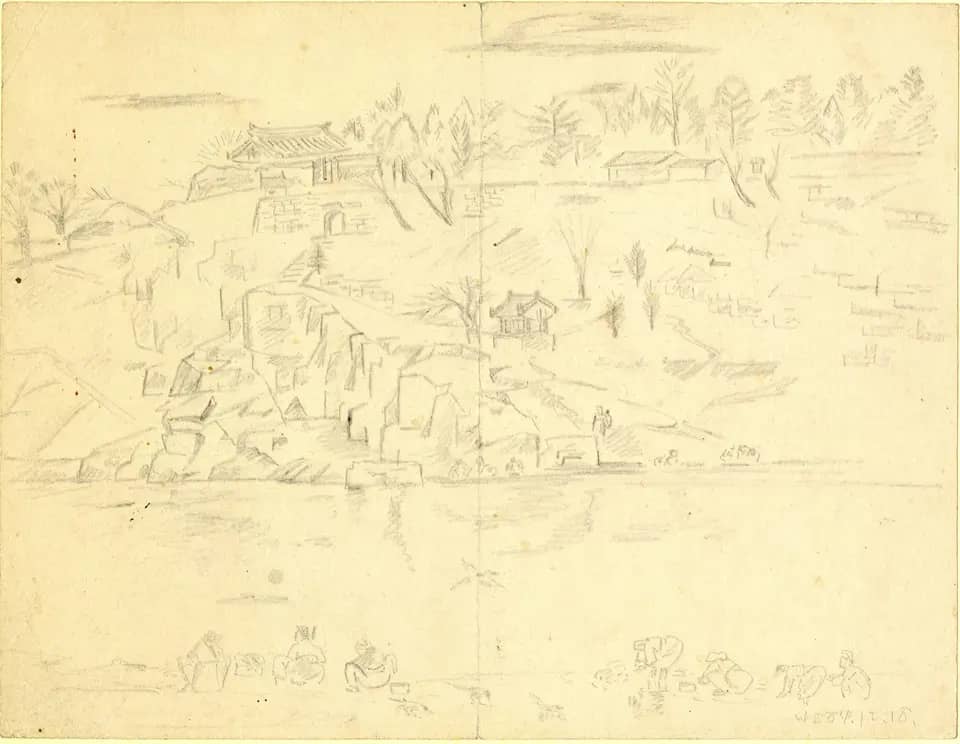
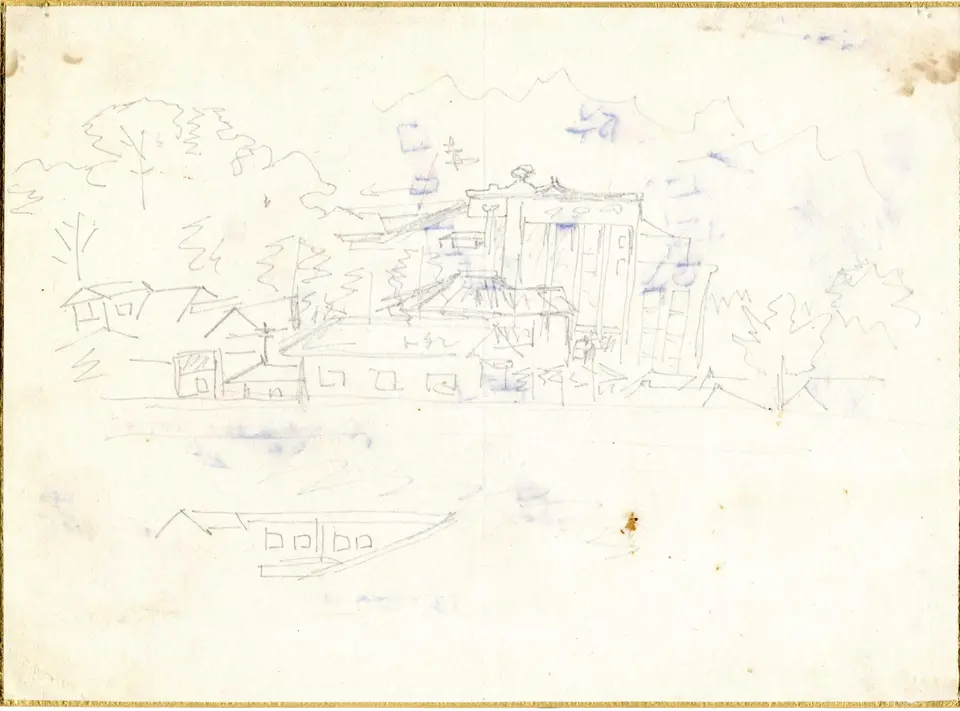
When the war reached Jinju in 1950, Park Saeng-gwang lost everything — his home, his paintings, the canvases he had carried back from Japan. He had already lived through the Tokyo firebombing. He started over. Drawing pencil lines across paper, he took the ruined landscape of Jinju as his subject. In one sketch looking across the Namgang River toward Jinju Fortress, the famous Chokseongnu pavilion is absent — it had been bombed to rubble. The Chokseongnu standing there today is a later reconstruction. These drawings are witnesses to that destruction, and they are the earliest surviving works Park Saeng-gwang left behind.
Thirty years of suspicion — but not in pencil
Throughout those years in the ruins — and carrying a weight that had begun long before — Park Saeng-gwang faced another burden. His father was a Donghak believer — a member of the guard for Jeon Bong-jun, the peasant leader, who survived when others did not. And it was this man's son who crossed to Japan to study art. Unlike most students of his generation, Park stayed long — moving from Kyoto to Tokyo, building a house with a patron's support, and eventually his staunchly anti-Japanese father came to spend his final years and die in Japan too. For thirty years after liberation, Park bore the suspicion of a so-called Japanese-color aesthetic. But nowhere in the pencil works of those decades is any such trace to be found.
Landscape returning
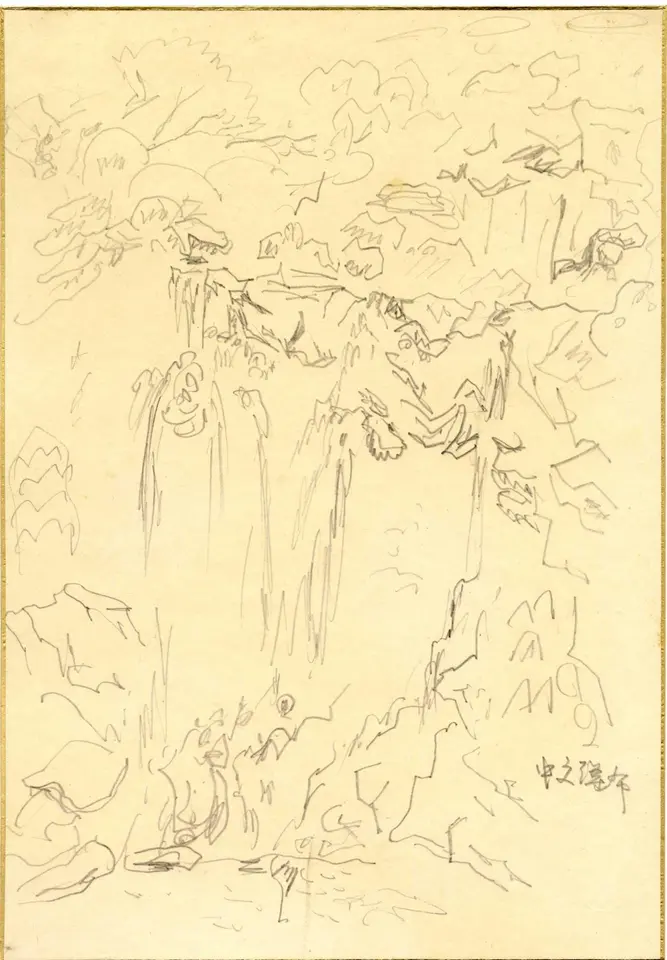
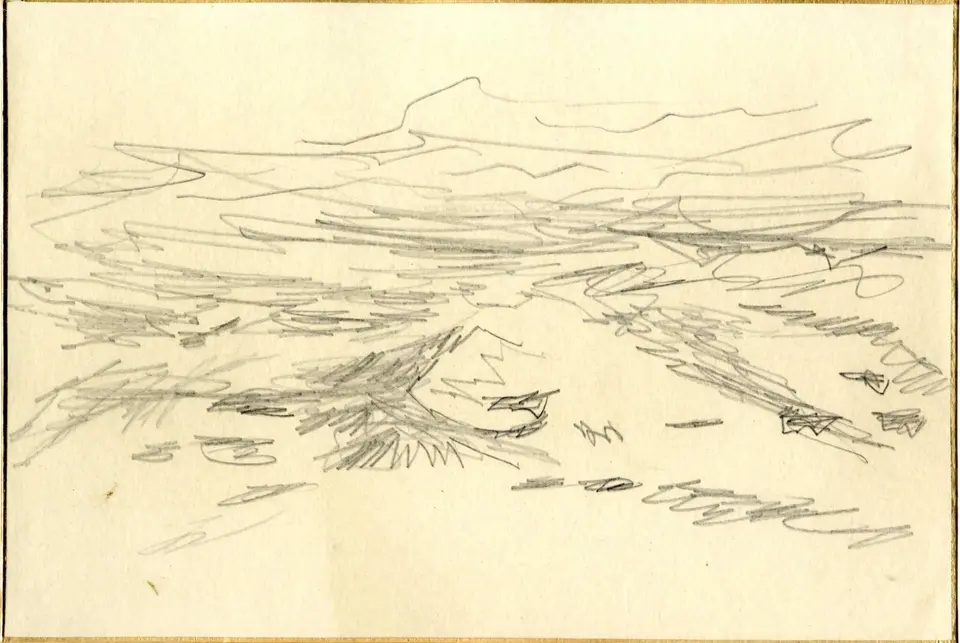
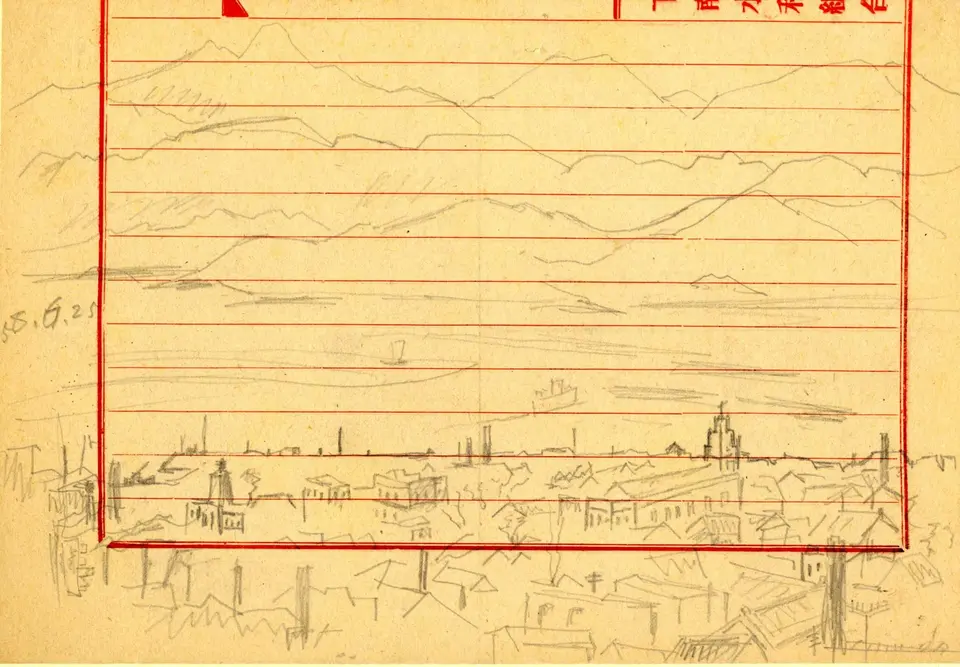
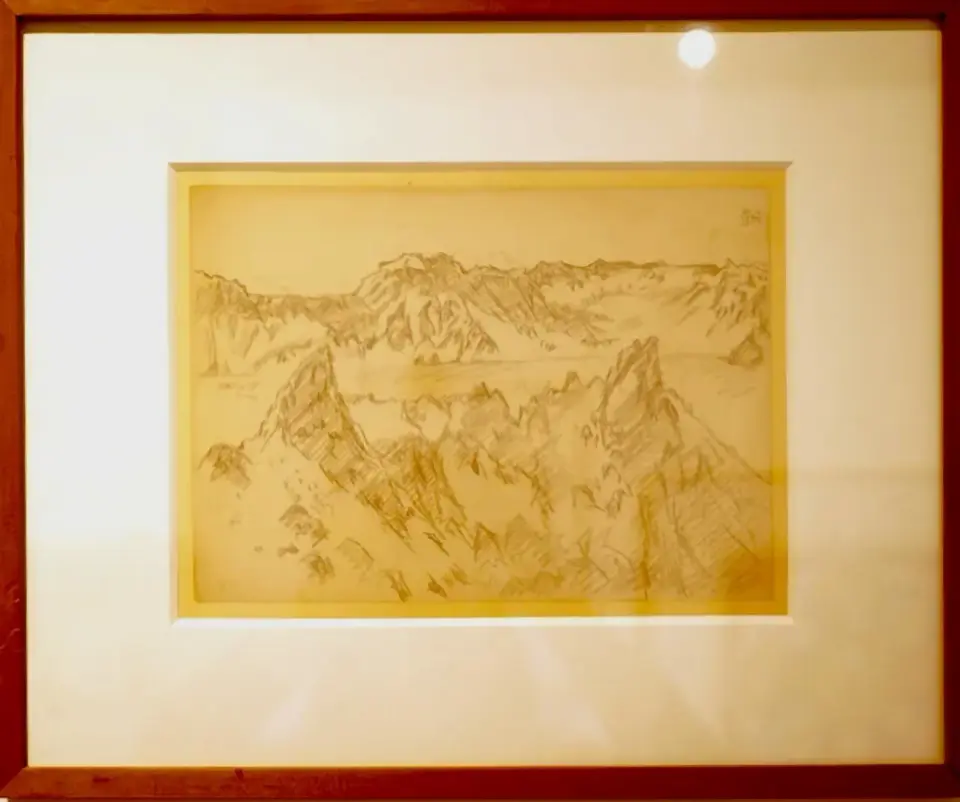
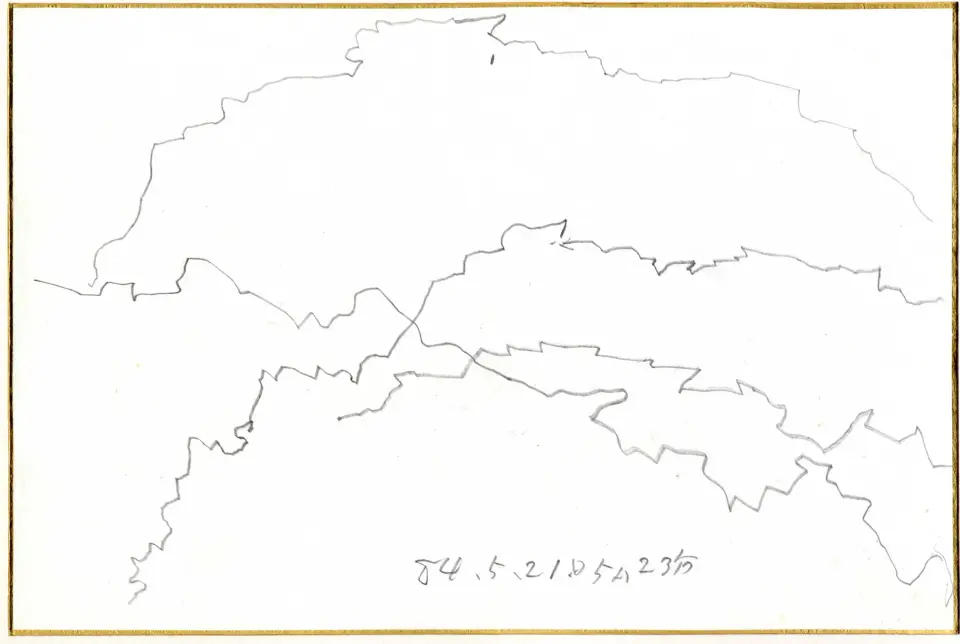
Through those decades of suspicion, Park's pencil never stopped — and his gaze widened beyond Jinju. Among the surviving works are pencil drawings of Baengnoktam, the crater lake of Hallasan on Jeju Island — a few of them were later reworked as colored paintings. There are also drawings of Haeundae in Busan. Many landscapes carry neither a place name nor a date, which is itself a kind of testimony: these were not made as documents but as acts of looking, recorded in the ordinary flow of a life being lived. And that eye, in time, was finding its way toward somewhere farther still.
Japan, once more
The Japanese painters Park had known in his youth were flourishing, their careers rebuilt on postwar prosperity. Some of them remembered their old colleague and called him back. Around the same time his youngest daughter was awarded a national scholarship to study pharmacology at the University of Tokyo. He decided to go — to support her studies, and to work. Looking back on those years, he recalled them as a return to his younger self: “years in which, for the first time in decades, I threw myself into work with the eagerness of youth.”
India — toward the source
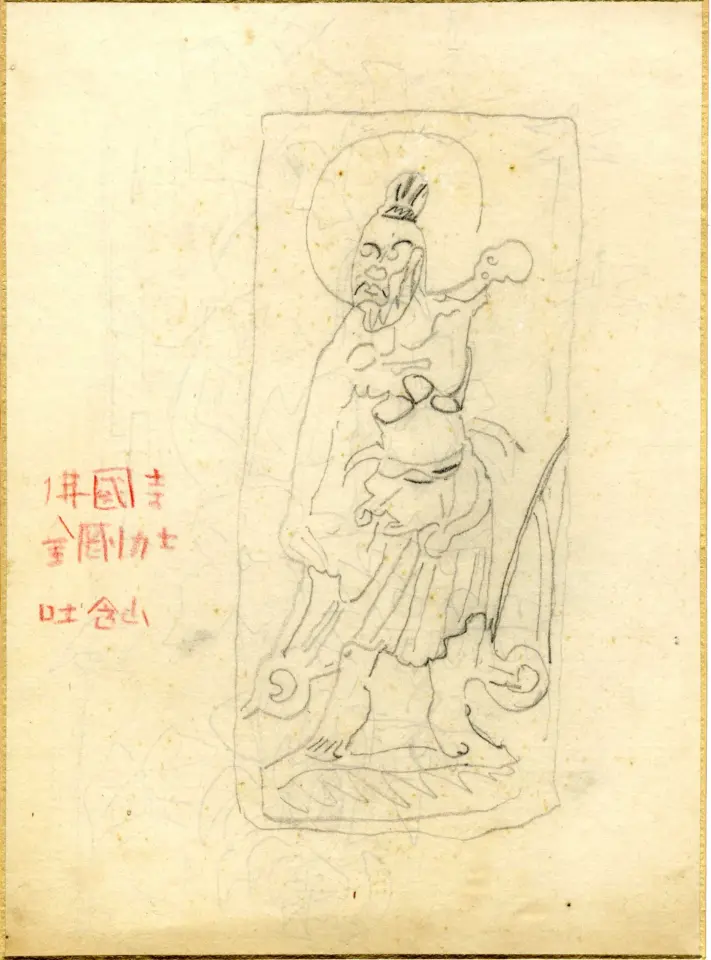
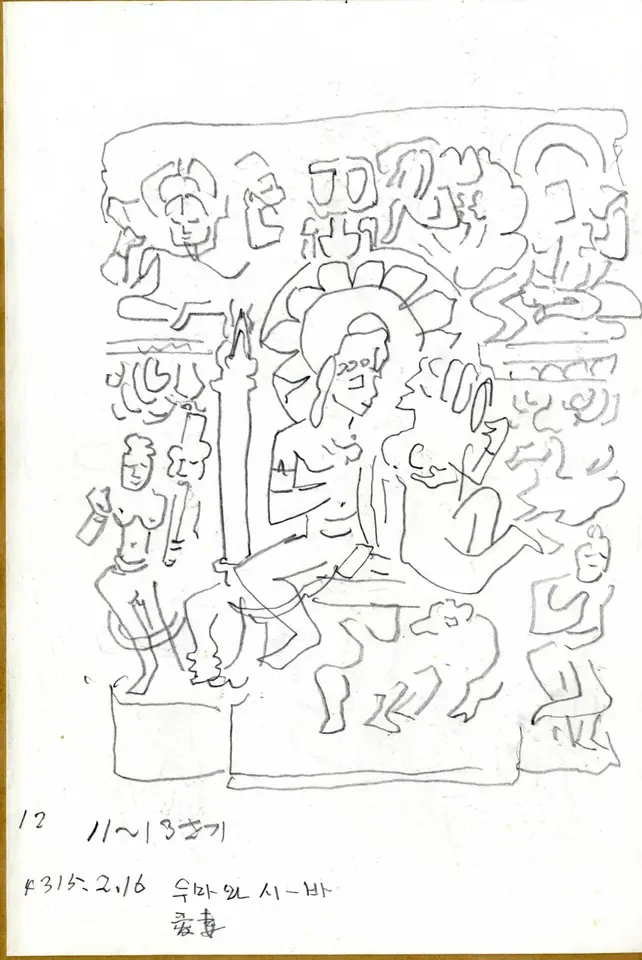
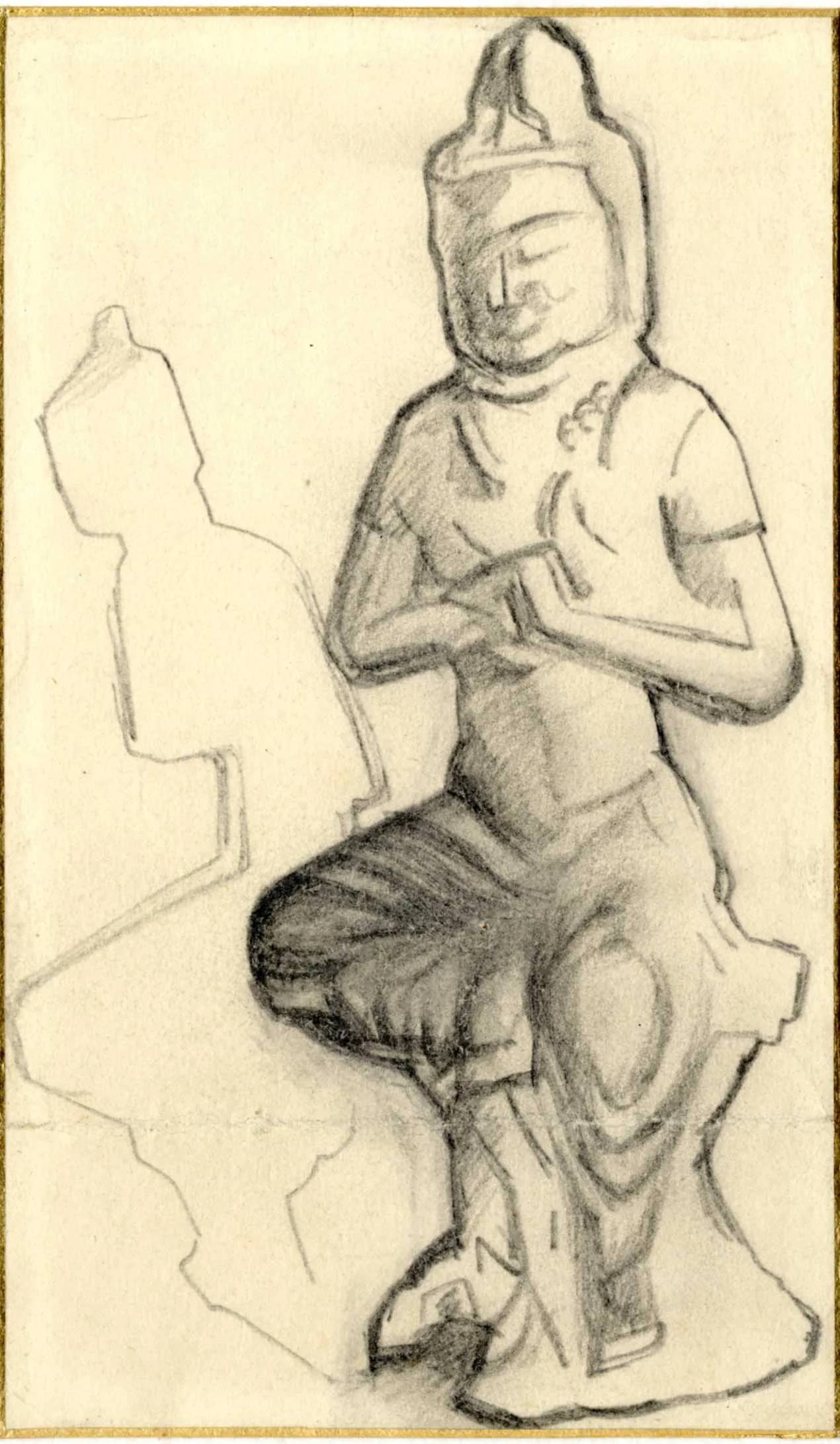
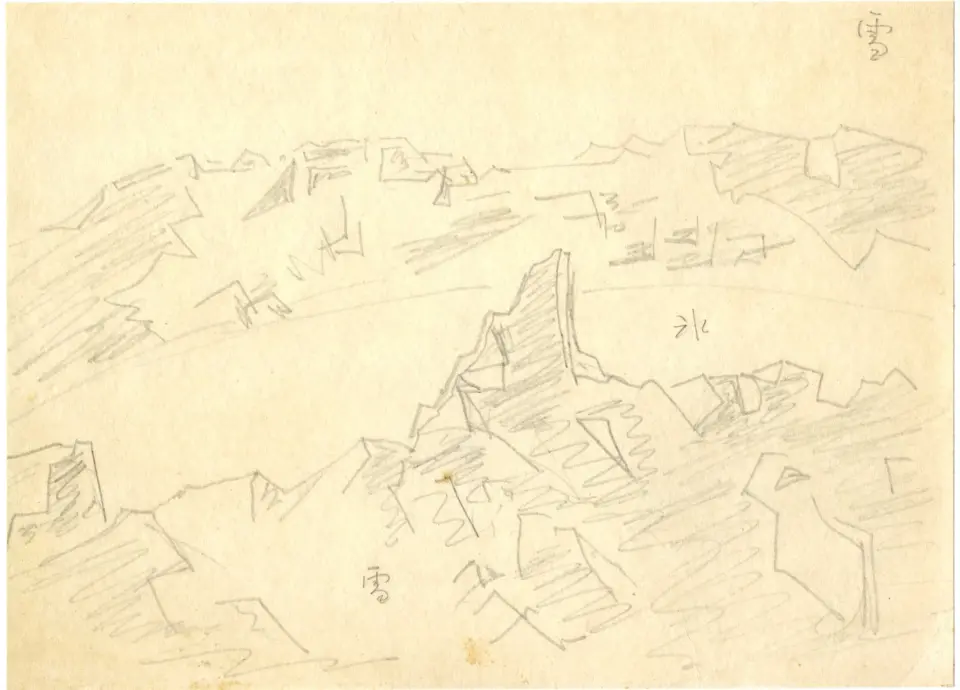
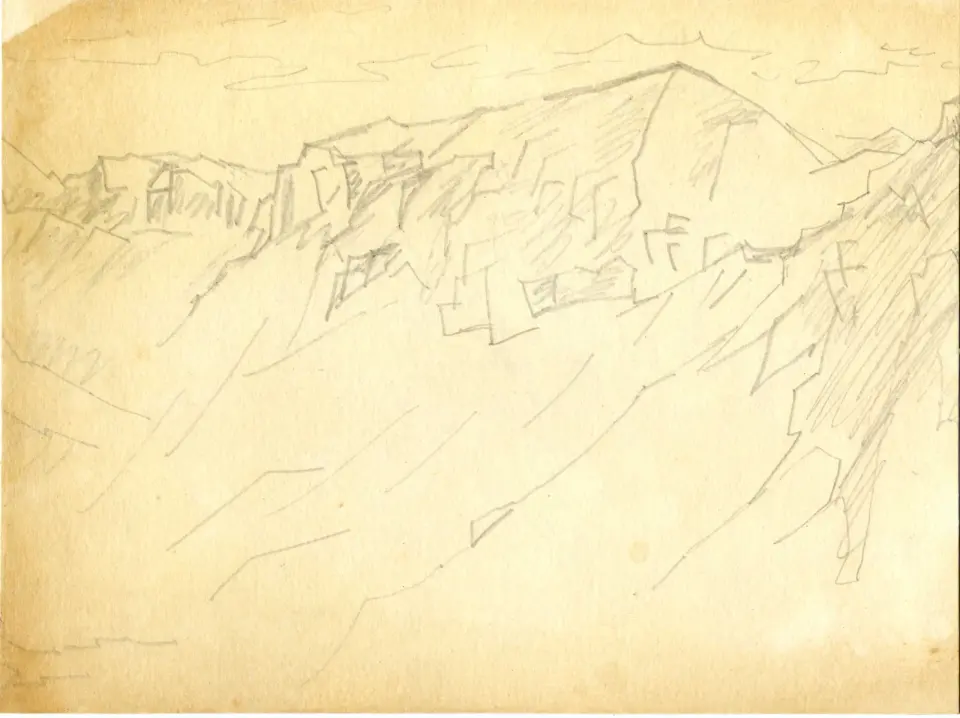
In 1979, at seventy-five, Park Saeng-gwang astonished the Korean art world with a dramatic transformation and received extraordinary acclaim. Standing at the height of his recognition, he accepted a patron's help and set out for India. The arc was long: a Japanese teacher had noticed his drawing gift in a small Jinju school and urged him toward Kyoto; in Japan he had sought traces of Chinese and Korean art in what he called the “museum of Asian civilization”; with a patron's support he had traveled to China. Now, at last, he reached the other axis of Asian civilization — the birthplace of Buddhism. In India he drew as if possessed, making pencil works everywhere his feet touched ground.
From the rubble of Jinju in 1950 to the sacred sites of India in 1979, the pencil was the one unbroken thread. If the late colored paintings announced him to the world, these pencil drawings were there before those colors, and still there after — the artist's most continuous voice. This exhibition is that voice, heard on its own terms.
Exhibition Works
71 drawings are currently on view.
Drawing
63

Other
8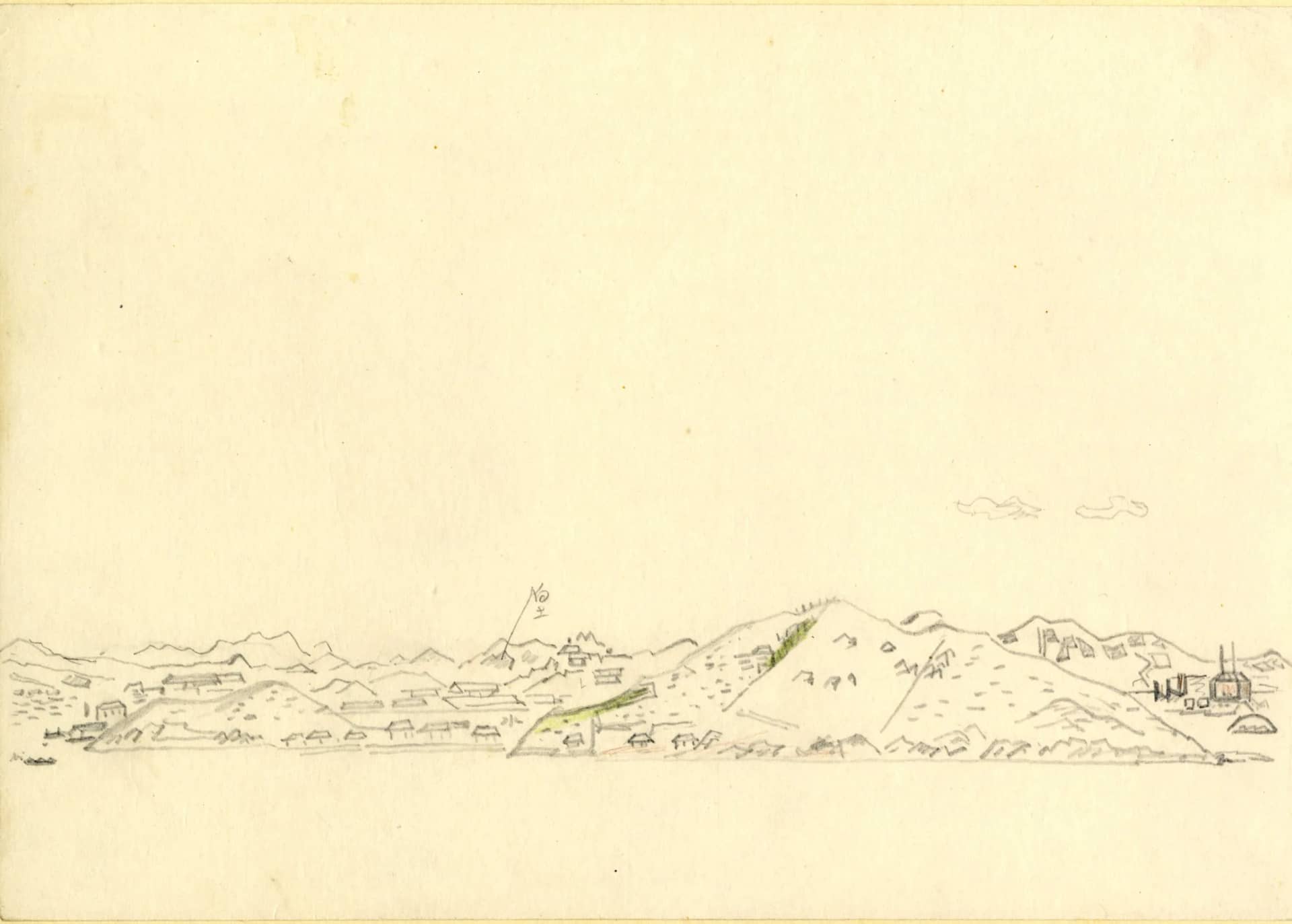
Explore Park Saeng-gwang Deeper
Continue with related Korean painting masters, traditional minhwa, and master interviews.
Visit
Dates
May 20 (Wed)— Jun 28 (Sun), 2026
Venue
Gallery PEG
M-Tower 6F, 870 Tongil-ro, Eunpyeong-gu, Seoul, Korea
Hours
11:00 AM – 8:00 PM
Free admission