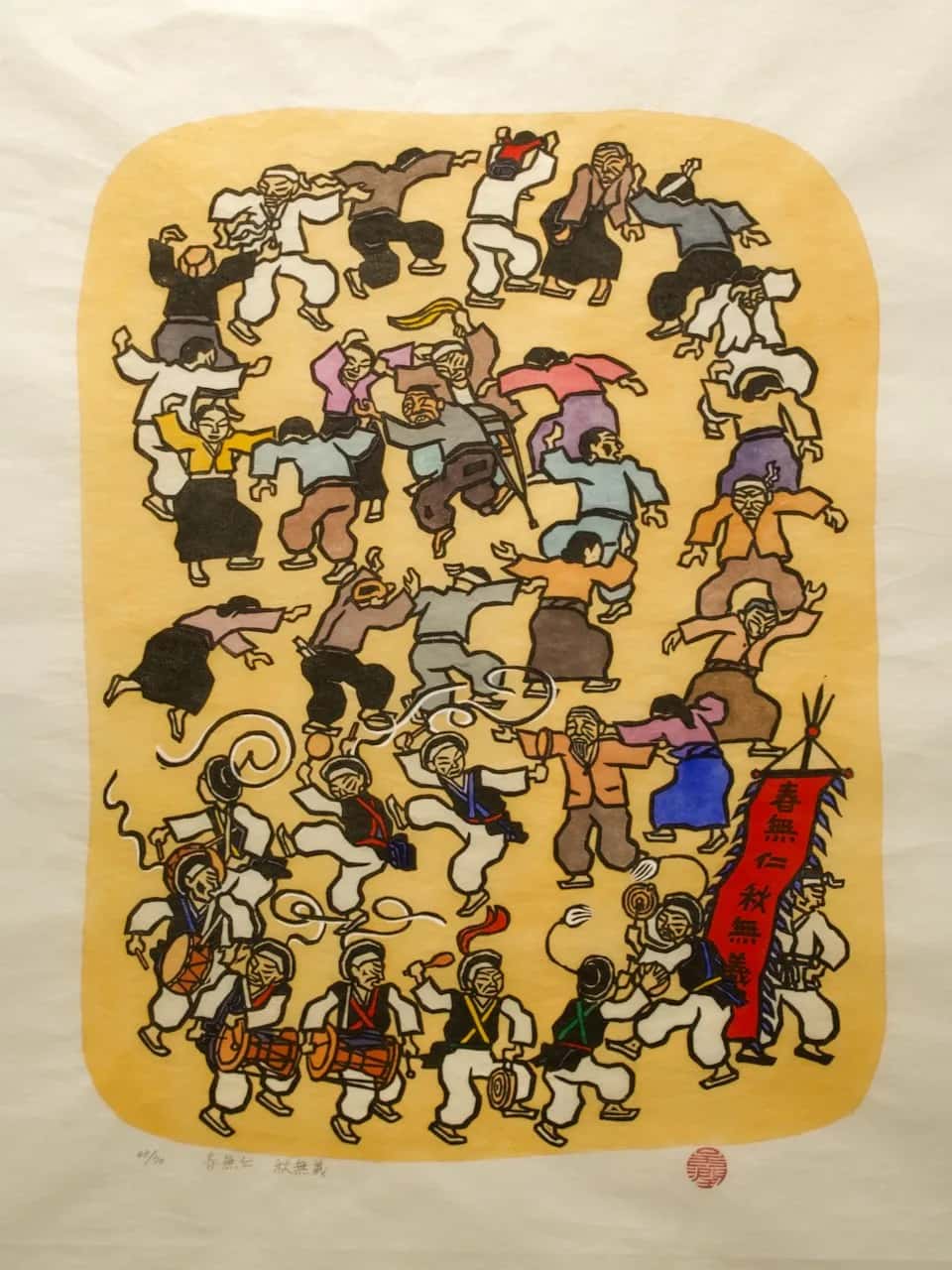
Oh Yoon 40th Memorial
Sunday, July 5, 2026 · Departing from Insadong
Register
Choose the number of attendees below and pay the fee to complete registration.
Memorial details
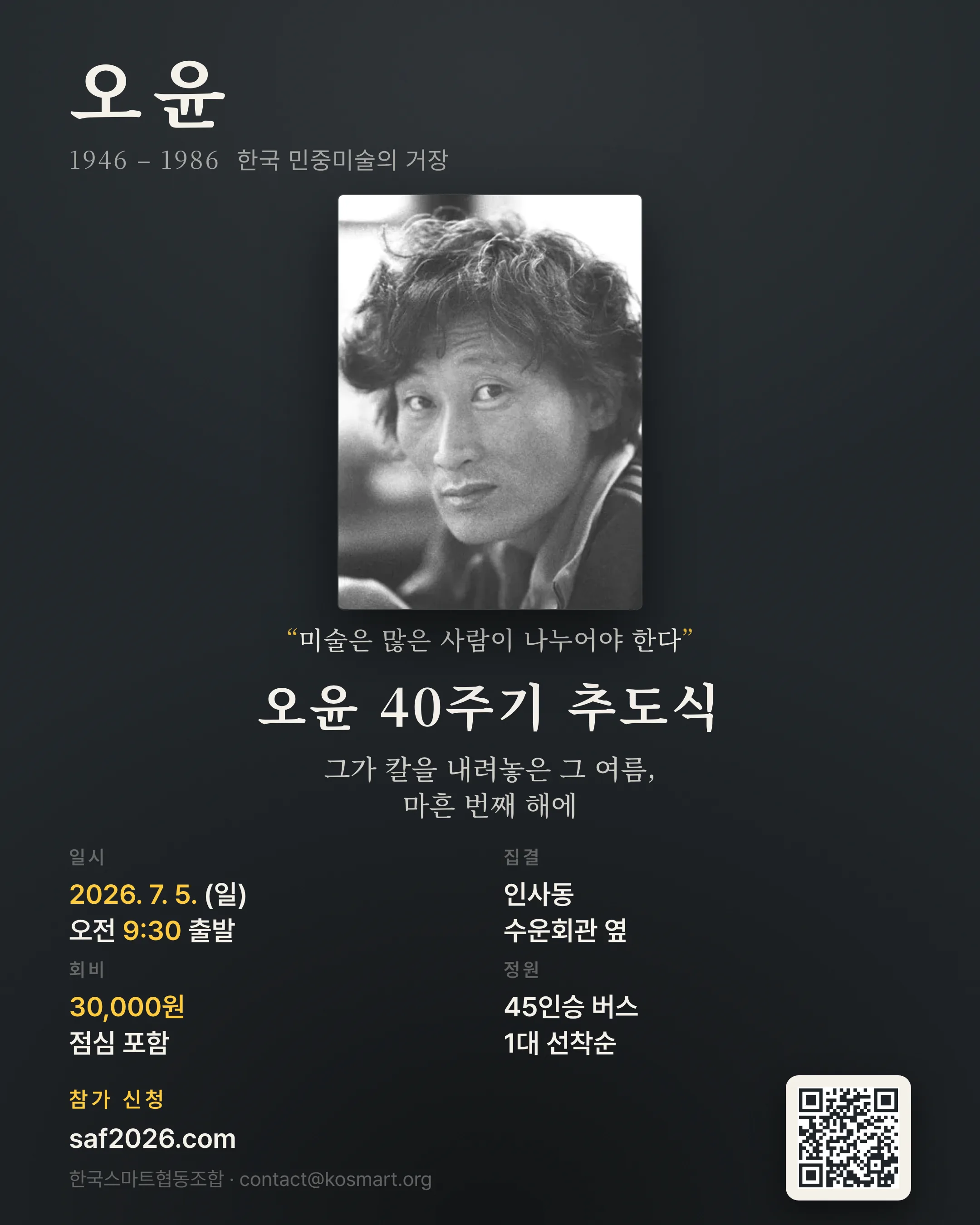
- Date
- Sun, July 5, 2026 · departs 09:30
- Meeting point
- Next to Insadong Suun Hall
- Transport
- One 45-seat bus · first-come
- Fee
- KRW 30,000 per person (lunch included)
- 09:30
Depart next to Insadong Suun Hall
- 11:00
Memorial ceremony
- 12:00
Ceremony ends
- 13:30
Lunch at Insadong Pungnyu-sarang
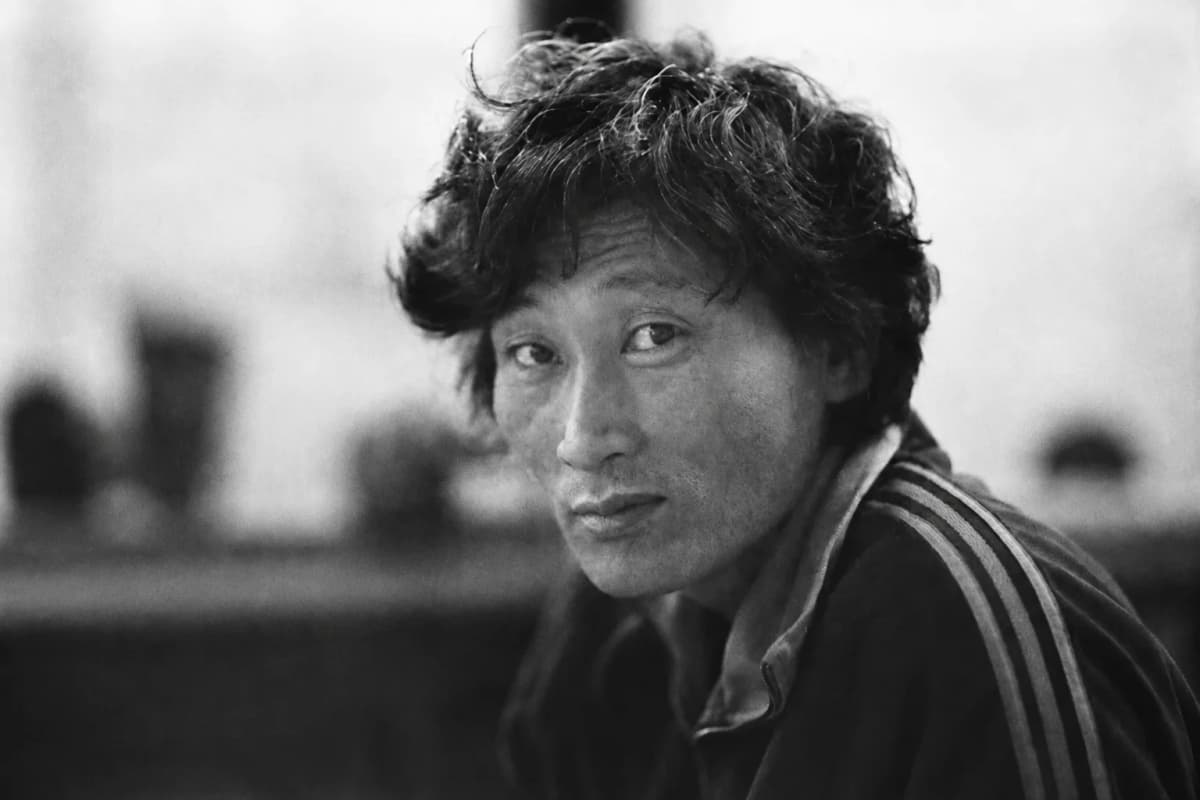
1946 — 1986
Oh Yoon
Master of Korean Minjung art
“Art must be shared by many”
Born the son of the novelist Oh Young-su, Oh Yoon chose to record his era with the tip of a knife rather than with words. He took part in founding Reality and Utterance (1979) and stood at the heart of Korea’s Minjung art movement; the woodblock prints he carved passed hand to hand through campuses, factory walls, and market alleys.
The woodblock print he chose was a resolve that could not be undone once the knife met the wood — and the most democratic vessel of all, one he could rub out by the tens of thousands with a spoon, without even a press, and give away. The hearty laughter of a Busan market, the sweat of Guro factory workers, buried sorrow released as ecstatic spirit — he kept all of it alive within those rough cuts.
In an age when censorship silenced the direct voice, he entered the shaman’s rite, carving sword dances and goblins to resist from the deepest place. Then in July 1986, not long after his first solo exhibition, he passed away at forty. The works of that brief life still touch the most aching places of our time, forty years on.
An era carved by the knife
The prints of Oh Yoon
The woodblock print Oh Yoon devoted his life to was a resolve that could not be undone once the knife touched the wood — and the most democratic art of all, one anyone could share. The faces of our time, carved by that blade.
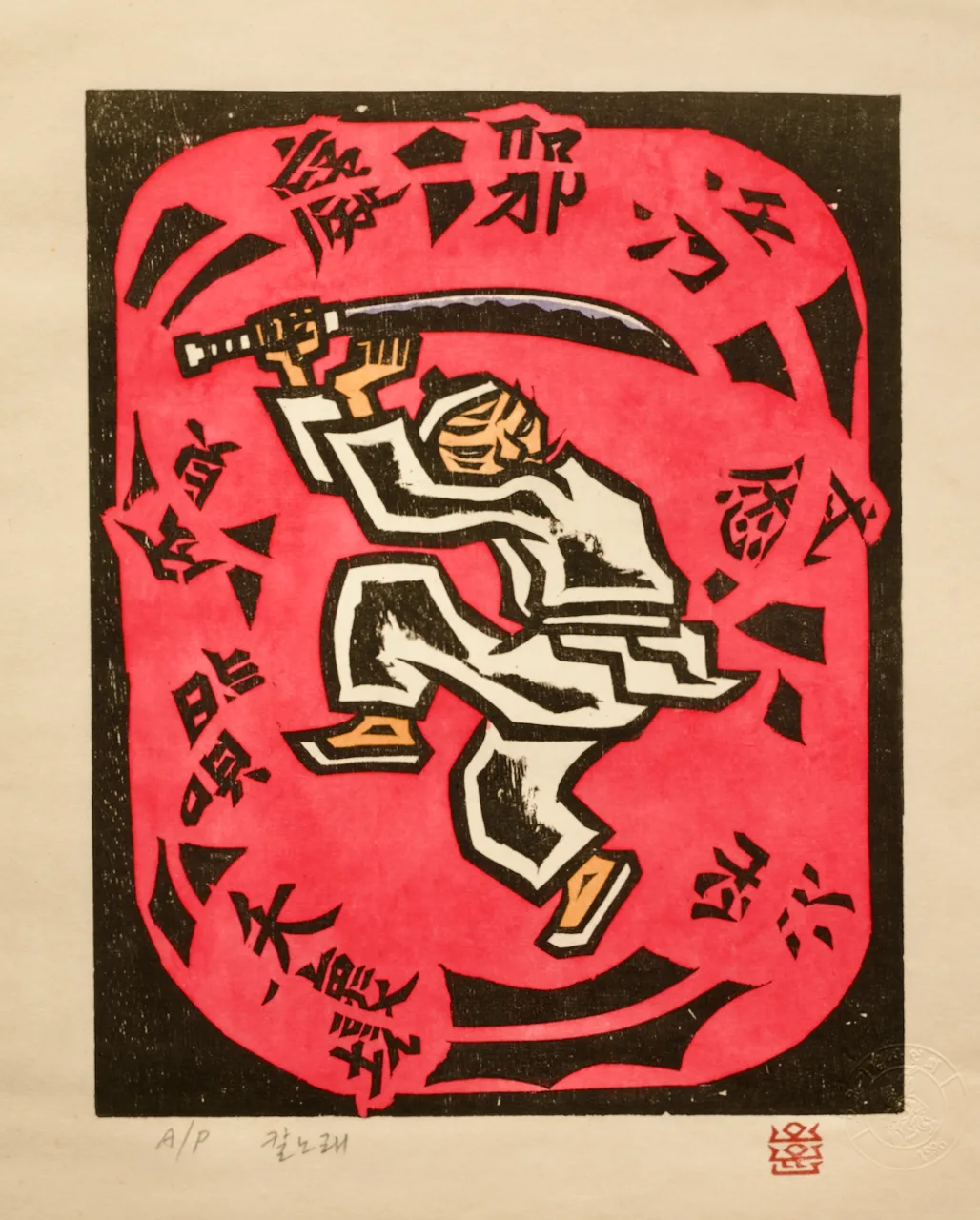
Song of the Blade
In an age of censorship he slipped into the shaman’s sword dance. The people’s sorrow and defiance carved into ritual imagery — the peak of his “shamanic resistance.”
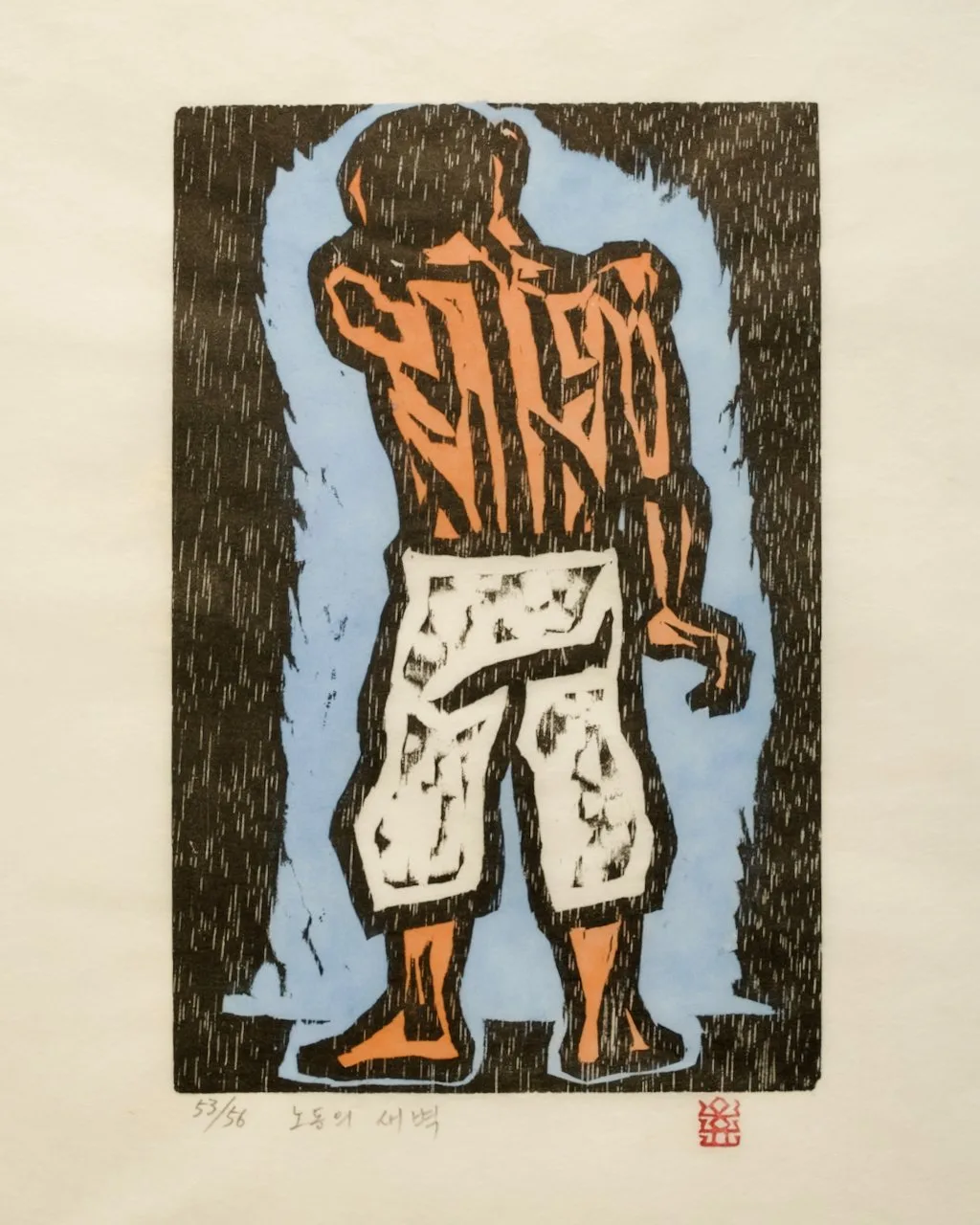
Dawn of Labor
A laborer’s dawn, pushing back the dark to begin the day. He recorded the hours of the lowest places with the tip of his knife.
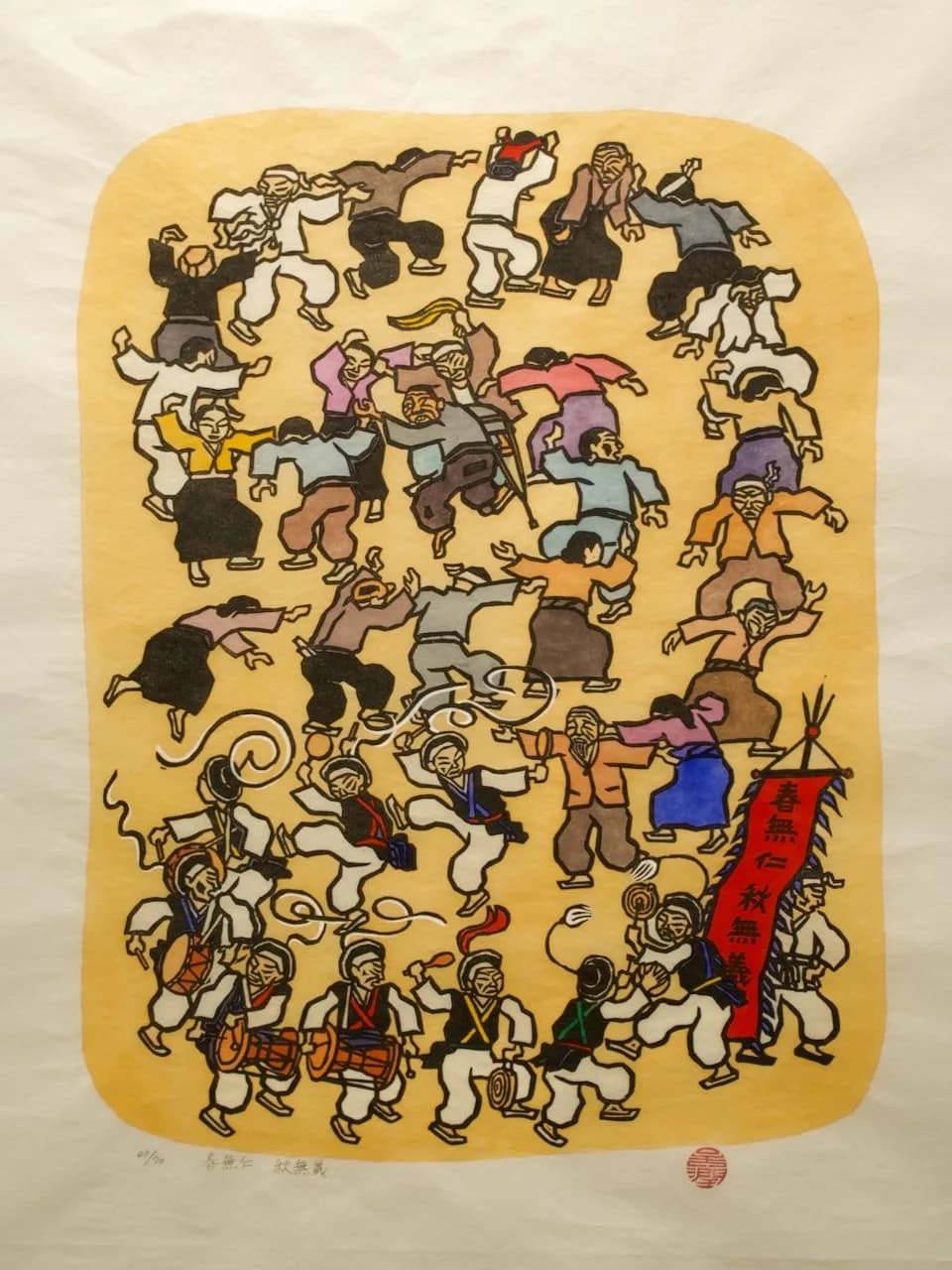
No One in Spring
“No one in spring, no will in autumn.” A large composition condensing the futility of an era into a single blade.
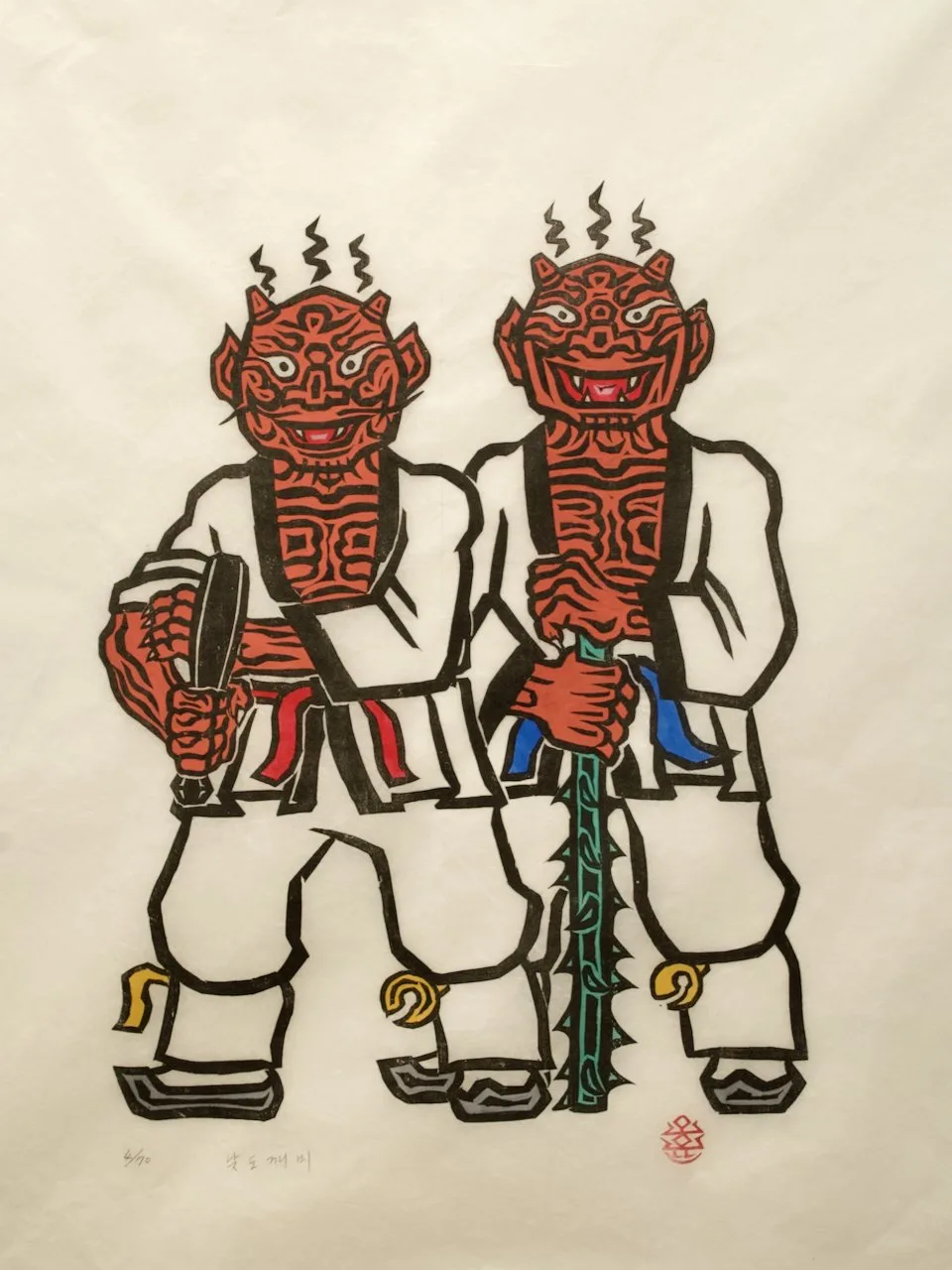
Daytime Goblin
A goblin in broad daylight. With the people’s ecstatic spirit — fear laced with humor — he twists an oppressive reality.
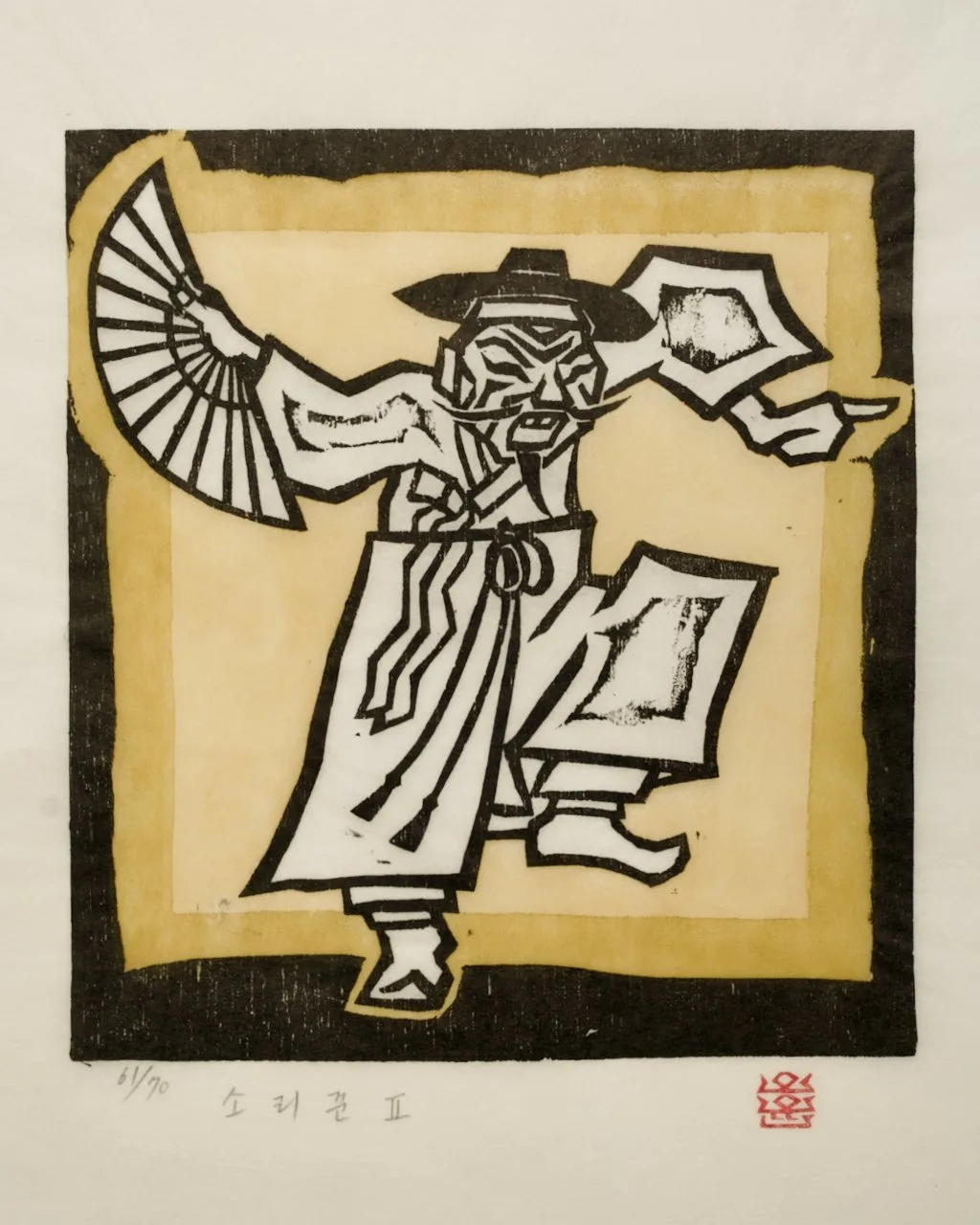
The Singer II
A singer pouring out a passage of pansori. For Oh Yoon, art was something heard before it was seen.
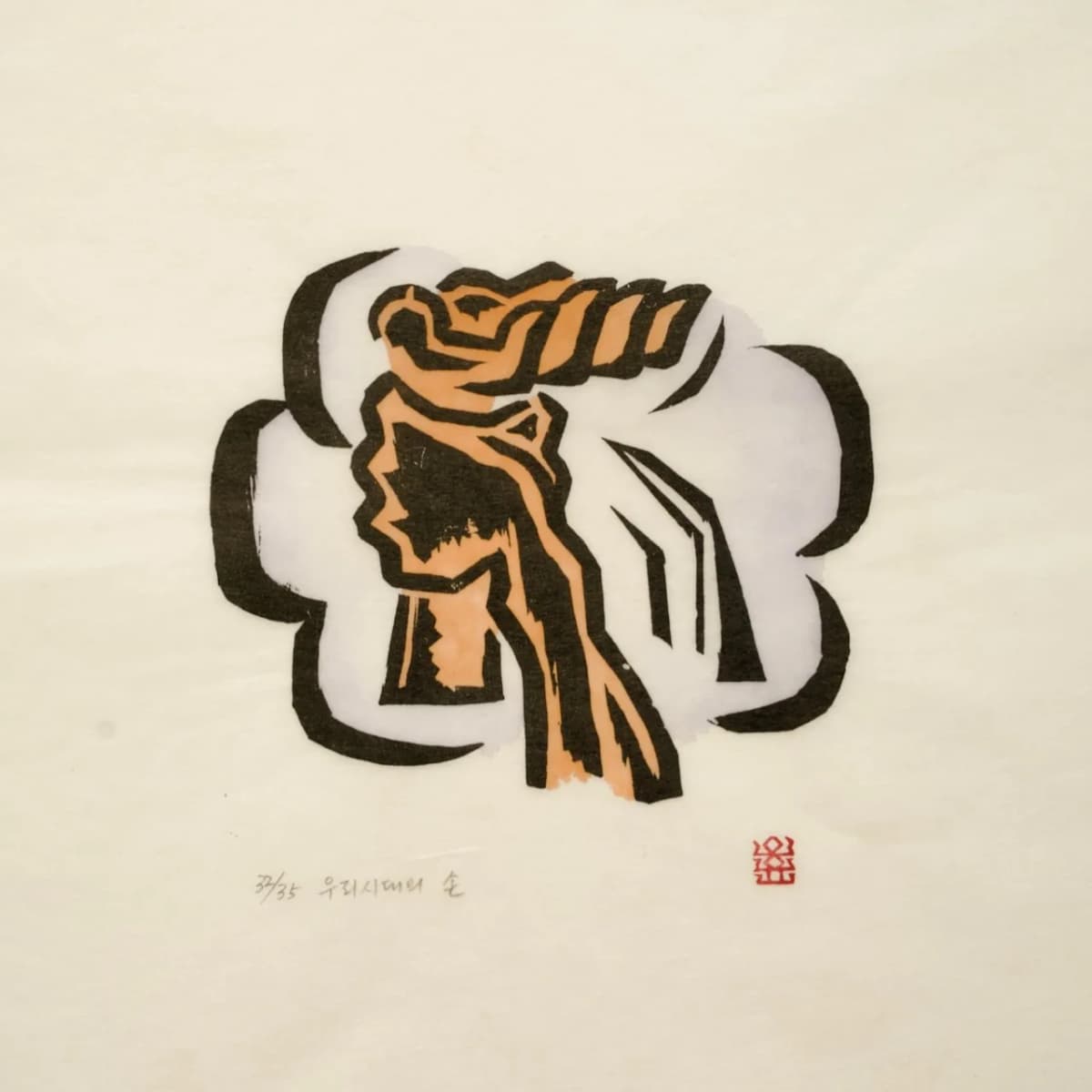
Hands of Our Time
Hands gripping earth and tools. A portrait of those who held up an era from the very bottom.
His work
The populist and artistic meaning of Oh Yoon’s work
- 01
At the heart of Minjung art
Joining the founding of the Reality Group (1969) and Reality and Utterance (1979), Oh Yoon pulled the reality of the lowest places into art at a time when ornate abstraction ruled the academy. With Park Bul-ddong, Min Jeong-gi, and Lim Ok-sang, he stood at the center of 1980s Minjung art.
- 02
The most democratic art
The woodblock print he chose was a vessel he could rub out by the tens of thousands with a spoon, without even a press. On poetry covers, on labor-site leaflets, in children’s storybooks — it reached the most hands, far beyond the museum.
- 03
The blade’s originality — an art that listens
When censorship silenced the direct voice, he entered the shaman’s sword dance and goblins, hiding resistance in ritual imagery. As in Song of the Blade and The Singer, for him art was to take down the sound of an era with the tip of a knife before it was ever seen.
Why we gather
Forty summers since he laid down the knife
To remember Oh Yoon is more than to recall an artist. His belief that “art must be shared by many” lives on today — where the proceeds of a single work become another struggling artist’s next month, in a place of mutual aid.
Forty years after the summer of 1986 when he set down his blade, on July 5 his friends, his juniors, and the citizens who loved him gather in Insadong to honor him. A place where remembering the departed keeps the living alive — we hope you will be there with us.
Frequently asked questions
- How do I pay the fee, and what does it cover?
- The fee of KRW 30,000 per person covers the round-trip chartered bus, lunch at Insadong Pungnyu-sarang after the ceremony, and the running of the memorial. When you submit the form, a card payment window (Toss Payments) opens; your seat is confirmed once payment completes. We do not accept bank transfers or on-site payment.
- Can I register with companions?
- Yes. Enter the total number of attendees including yourself under “Number of attendees.” The fee is summed accordingly and paid at once, and seats are secured for that many people. We do not collect companions’ names separately.
- What happens when it is full?
- Seats fill first-come on a single 45-seat bus (44 seats). After that we take waitlist registrations. If a seat opens through a cancellation, we contact waitlisted applicants in order with a payment link, and your place is confirmed once you pay. No fee is charged at the waitlist stage.
- Can I cancel or get a refund?
- Yes. Until 3 days before the event (July 2), you can refund yourself on the “Look up / cancel” page using your order number and phone number. After that, please contact the office (contact@kosmart.org). Cancellations close to the date may not be refundable due to bus and meal reservations.
- Where and when does the bus leave?
- The bus departs at 9:30 a.m. on Sunday, July 5, next to Insadong Suun Hall. It leaves on time, so please arrive by 9:20. Staff will guide you on site.
- How will I receive confirmation?
- Once payment is complete, we send confirmation by KakaoTalk and email (email only if you provided one). Your phone number is used for day-of contact and guidance.
Go Deeper into Oh Yoon
Carry the Oh Yoon you met at the memorial into his works and stories.