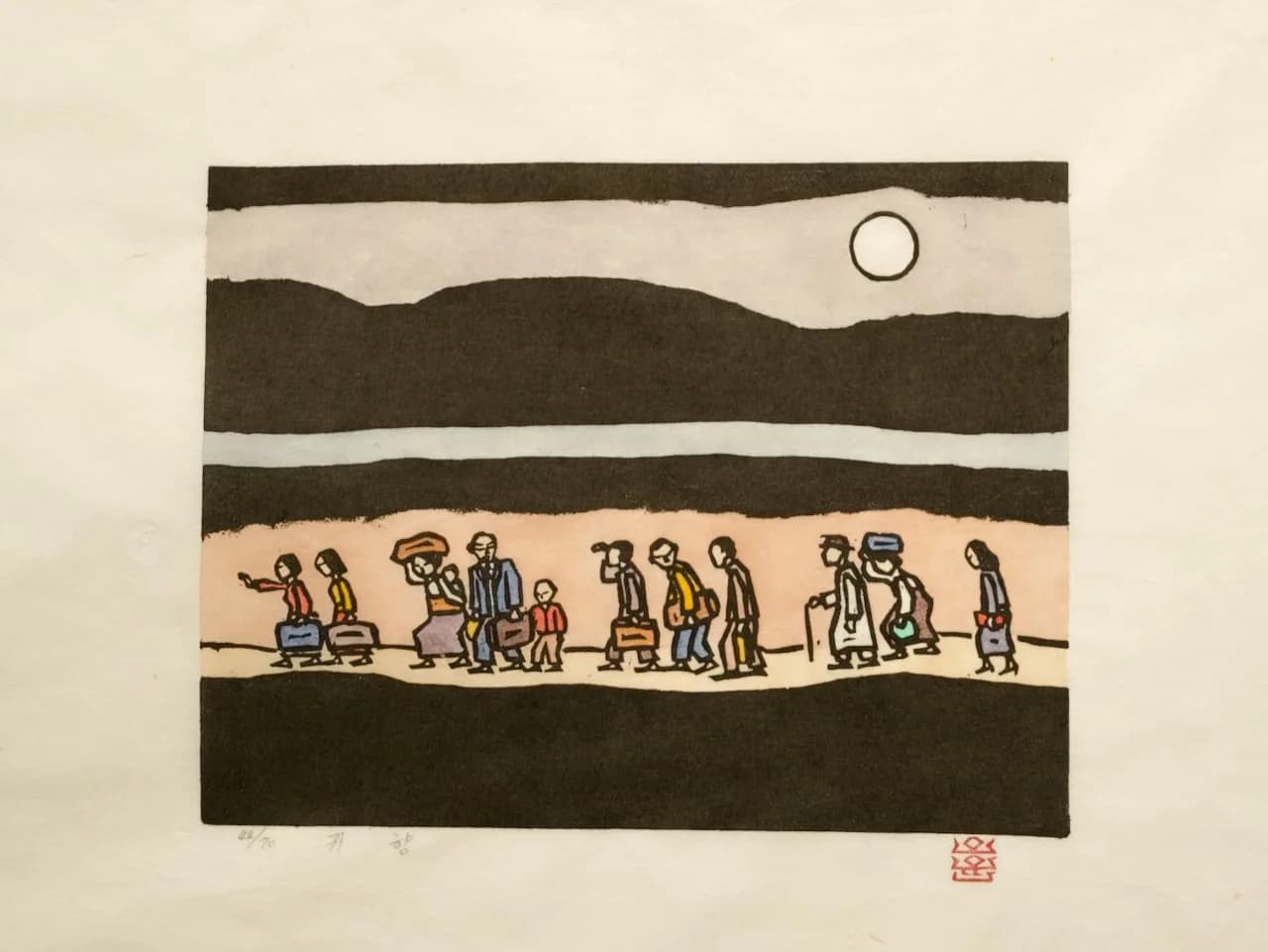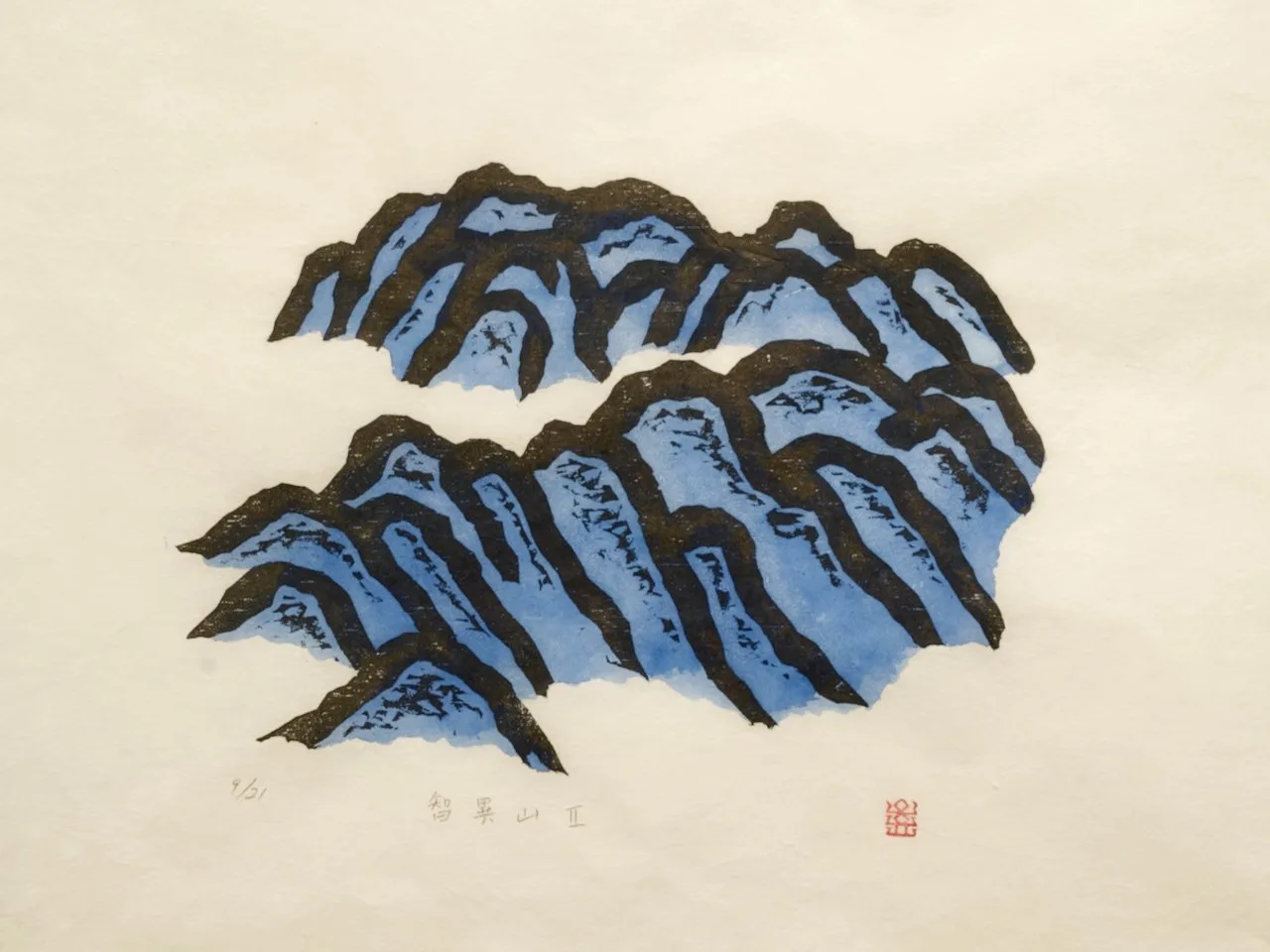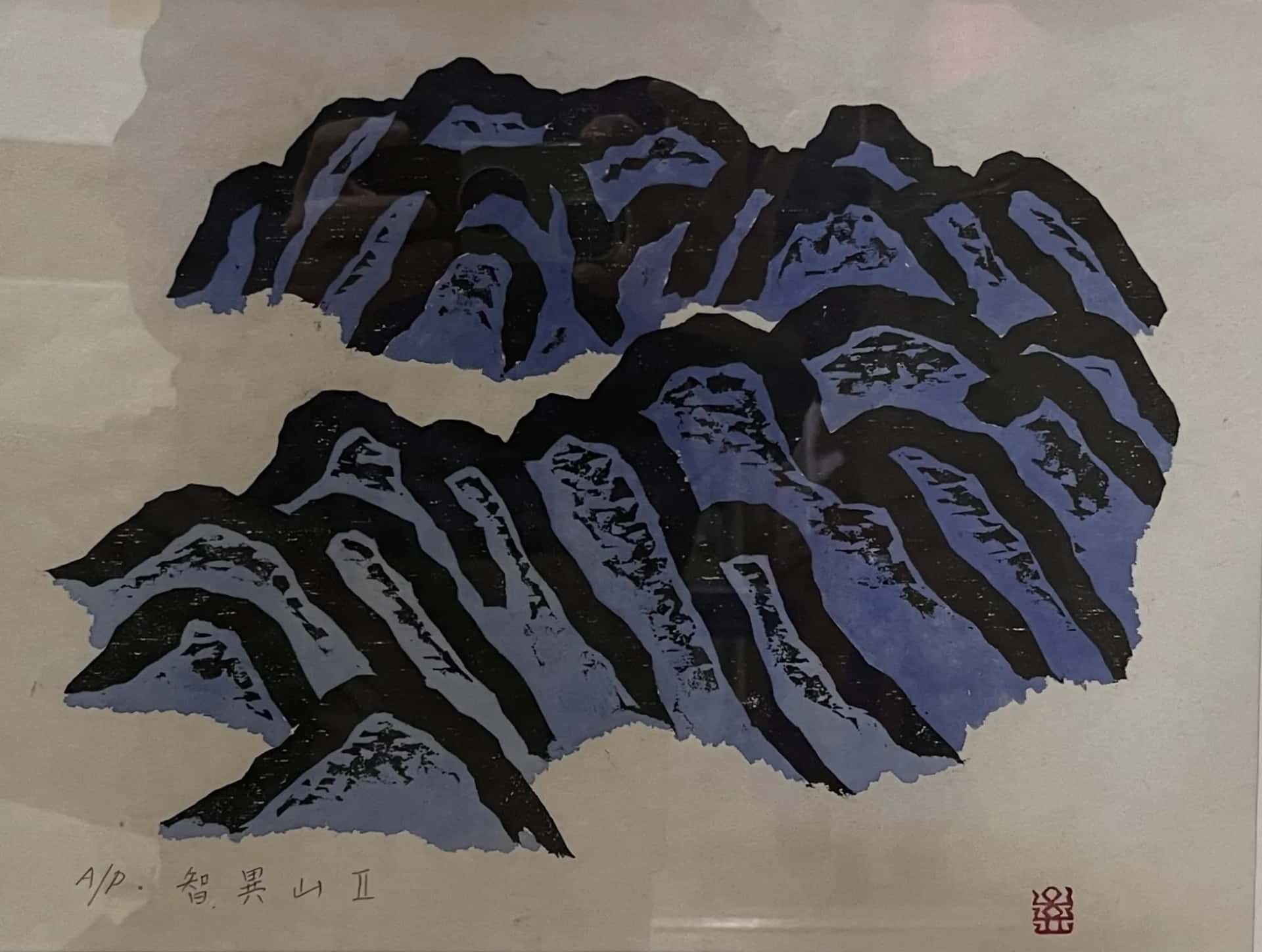
The printmaker Oh Yun died at forty-one in 1986. Forty years later, the dance he carved into wooden blocks has not stopped. Eighteen posthumous prints submitted to SAF 2026 create a paradoxical, beautiful moment — his art reborn as a financial safety net for fellow artists.
When the Son of Oh Young-soo Picked Up the Blade
Oh Young-soo, who wrote his name into Korean literary history with the novel The Coastal Village. When his son stood before a wooden block holding a carving blade, no one knew it would become a stroke that changed Korean art history.
Oh Yun (1946–1986) studied Western aesthetics at Seoul National University's Department of Sculpture. But his gaze turned the other way. Not the art behind museum glass, but the art breathing in factory walls and alleys. To find it, he came to woodblock prints.
Woodblock printing is not a simple technique. A single cut cannot be undone. What is cut away becomes white space; what remains becomes a black form. That rough, resolute nature matched Oh Yun's artistic spirit exactly.
Between Han and Shinmyeong
Look at the figures in Oh Yun's prints and one thing becomes clear. They are never weak.
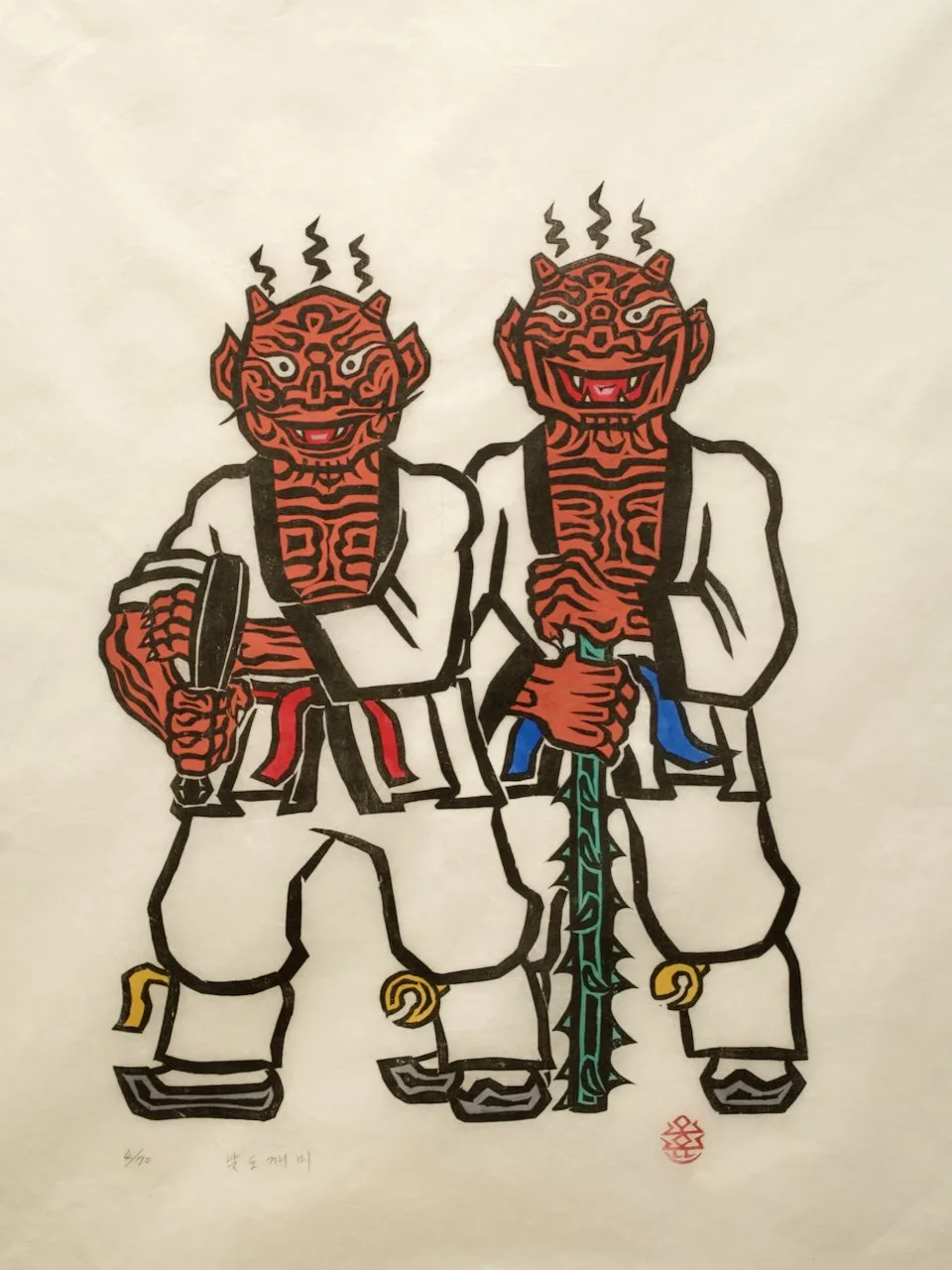
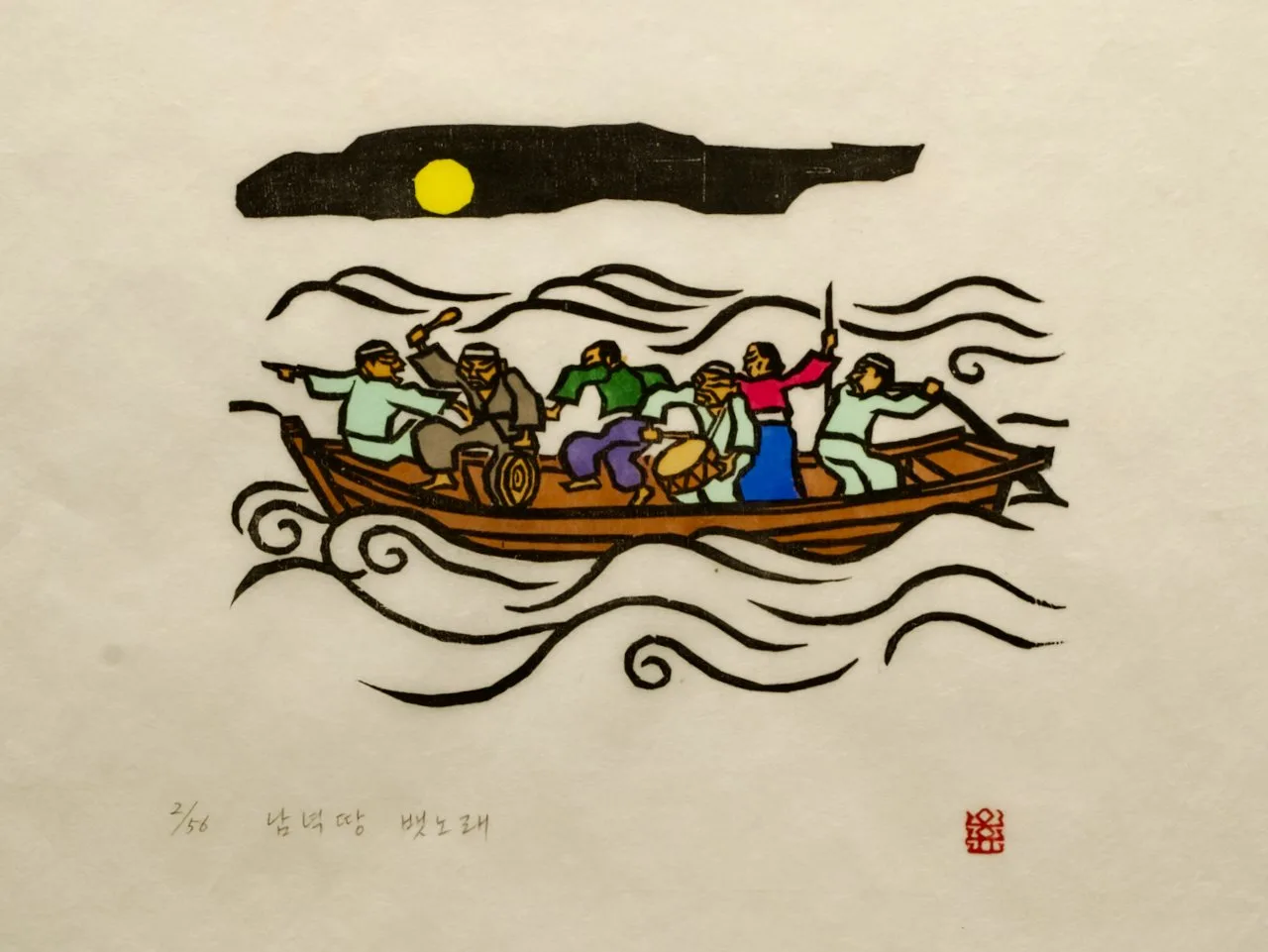
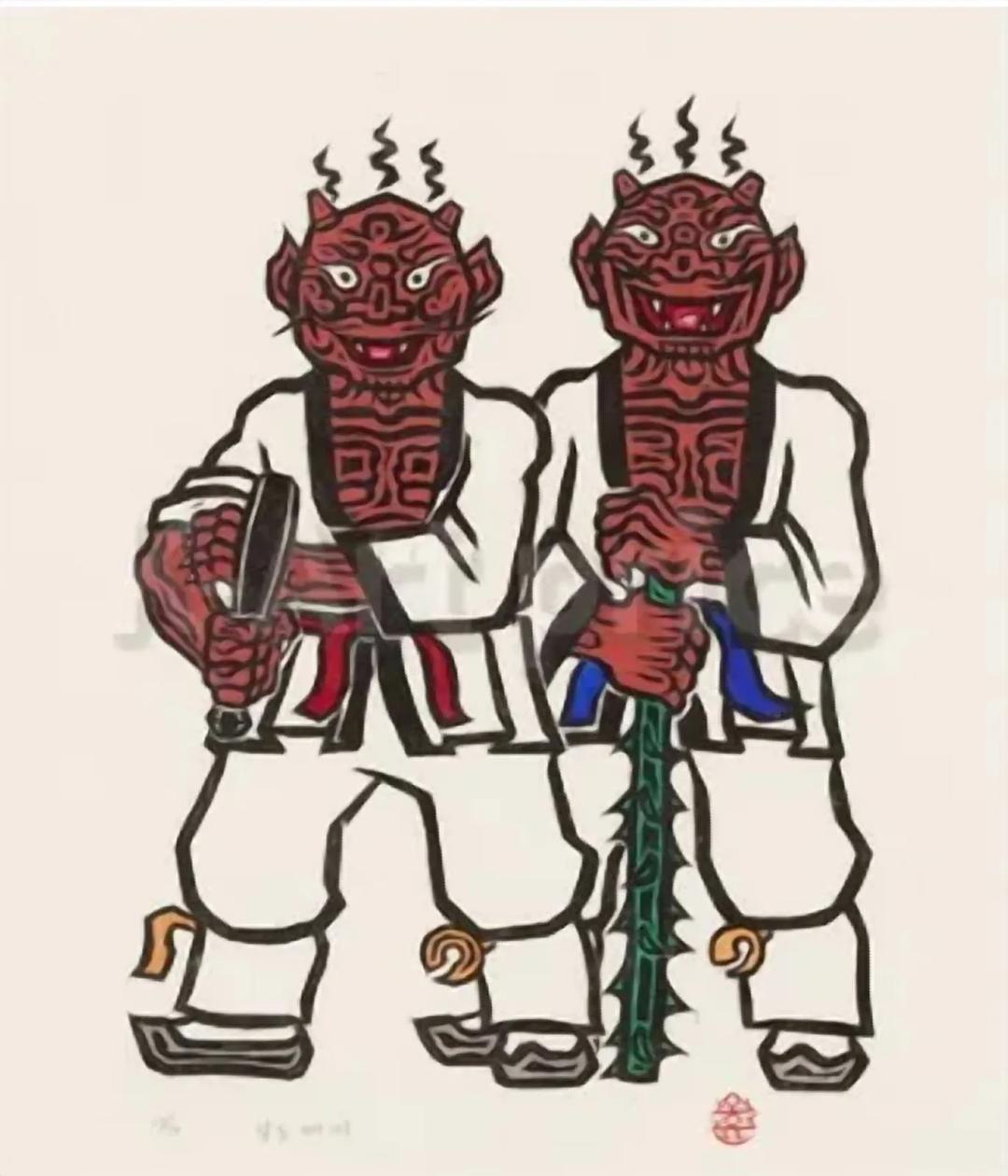
Bodily gestures drawn in thick, rough lines, shoulders rising and falling in dance. The vitality of rising up from a suppressed reality seems to leap out from the picture plane. The sharp tension of Sword Song, the humorous satire of Daytime Dokkaebi, the sweeping rhythm of Southern Land Boat Song. He drew up the "han (恨)" buried deep in Koreans, and at the same time captured the energy of "shinmyeong" — the instant release that follows.
Mask dance, shamanism, dokkaebi. Subjects the Western-influenced Korean art world turned away from. Oh Yun pulled them to the front and asked again about Korean archetypes.
"Art must be shared by many people."
This conviction did not stop at speech. He gave his prints freely to the covers of poetry collections, to the leaflets of labor protests. Without taking money. Without clinging to fame. That was, to him, the publicness of art.
The Aesthetics of Multiplicity in Printmaking
A print can be pulled many times from a single block. This is called "multiplicity." Unlike an oil painting or a sculpture, which exists as a single object.
For Oh Yun, multiplicity was not merely a technical characteristic. It was a property that touched exactly his conviction that art should not become the preserve of a few. A single print can reach many hands. A worker's hand, a student's hand — and forty years later, the hand of some stranger.
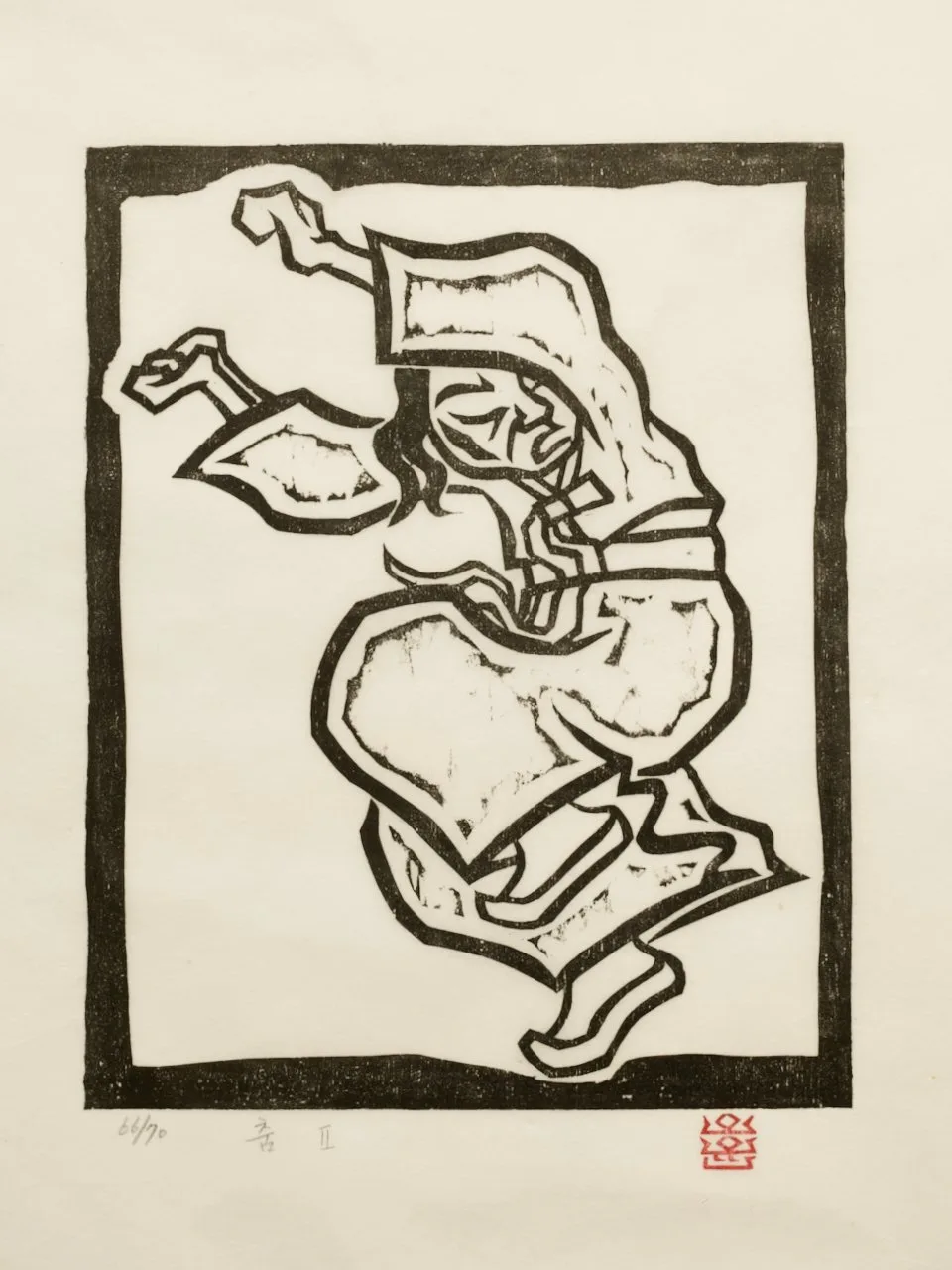
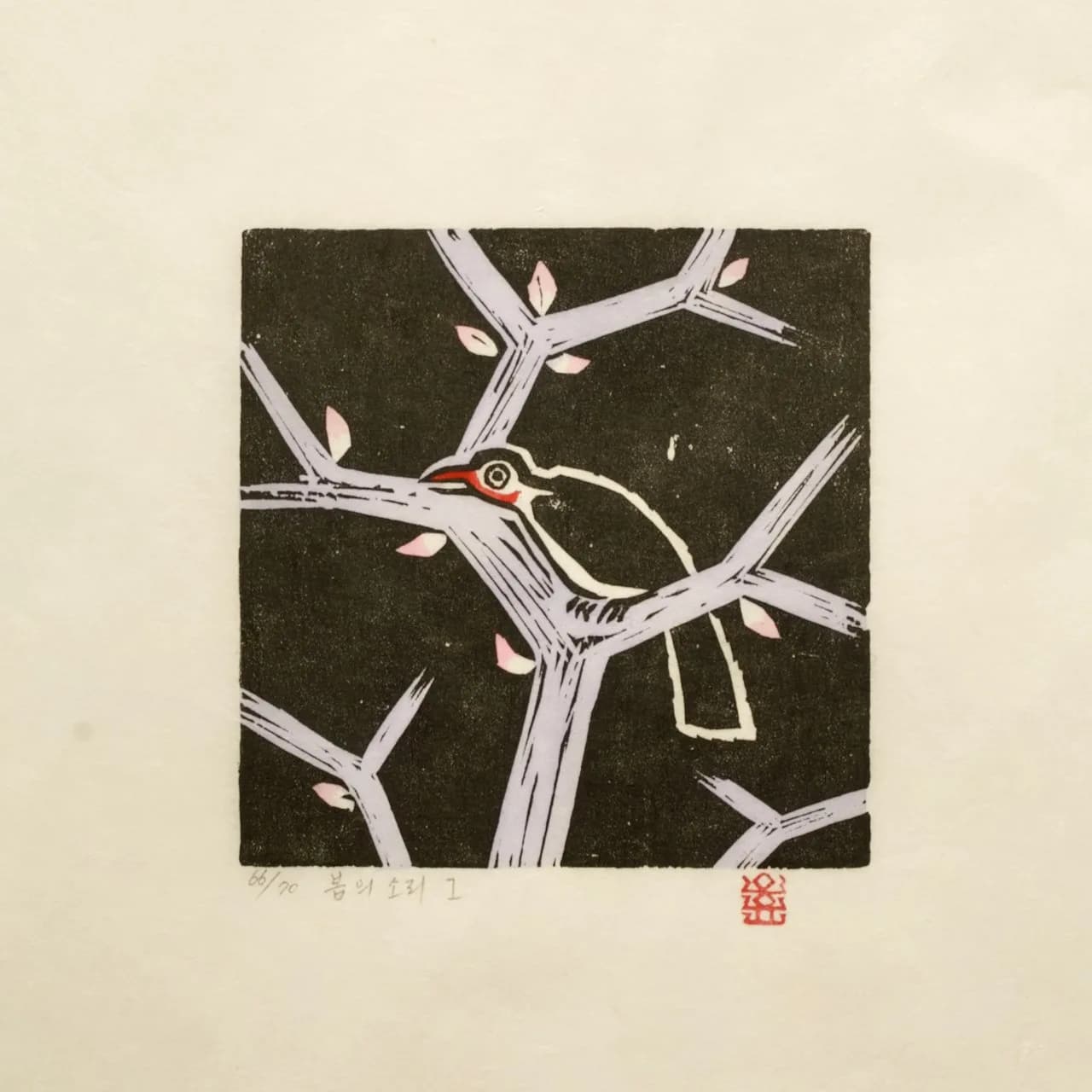
Dance 2 carved in 1982, Sound of Spring 1 in 1983, Homecoming and Jirisan 2 in 1984. The outpouring of 1985 — Sword Song, Southern Land Boat Song, Daytime Dokkaebi, Palyeopilhwa. He did not stop carving until the year before his death in 1986. Cirrhosis took him at forty-one, but the forms carved into wood remained.
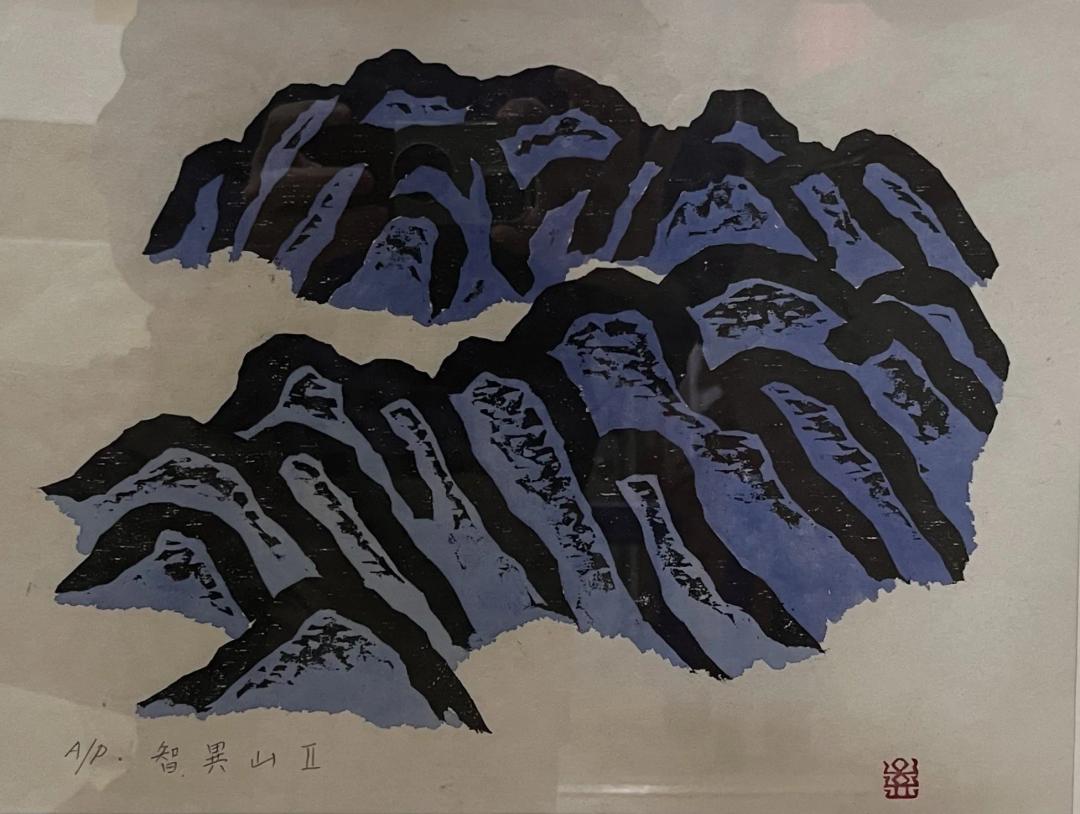
Forty Years Later, the Return of 18 Posthumous Prints
2026 — exactly forty years since Oh Yun's passing. Eighteen of his works appear in the SAF 2026 online gallery.
All are posthumous prints. In cooperation with his family and related institutions, they were pulled again from the original blocks. Older Brother (1984), Sunset (1982), Moho-do (1985), Black Bird (1980) — core works of Oh Yun's world hang at prices between ₩1,100,000 and ₩2,950,000.
Here lies a deep irony. Oh Yun was an artist who willingly released his art outside the market. Now his work is on the market. And the revenue from that sale flows into the mutual-aid fund, returning as low-interest 5% annual loans to fellow artists facing financial exclusion.
His work is being shared once more. The form has changed, but the spirit is the same.
What He Carved Forty Years Ago
The 1980s, when Oh Yun worked, were shadowed by dictatorship. His blade turned toward the people living under that shadow. The suppressed, those who lived with feet on the soil, those who wanted to dance and sing but could not.
He carved their movements into wood. With only black and white. Without complex color. But within that simplicity lay all the weight of the era.
What of 2026, the year we live in now? Technology has grown dazzling and life seems abundant. But the statistic that 84.9% of Korean artists are excluded from institutional finance has not changed. 48.6% are pushed toward high-interest loans. This is not a single artist's situation but a structural inequality that Korean society imposes on its artists.
Oh Yun endured such inequality while still sharing his art. That spirit, forty years later, lives again in the form of SAF.
A Single Cut, an Eternal Mark
The cut of a woodblock does not erase. The traces Oh Yun worked on intensively in his final year of 1985 — the seasonal cycles of Spring Without a Man, Autumn Without Meaning, the dynamic breath of Pansori Singer 1, the resonant strike of Jing 2 — lie before us today unchanged.
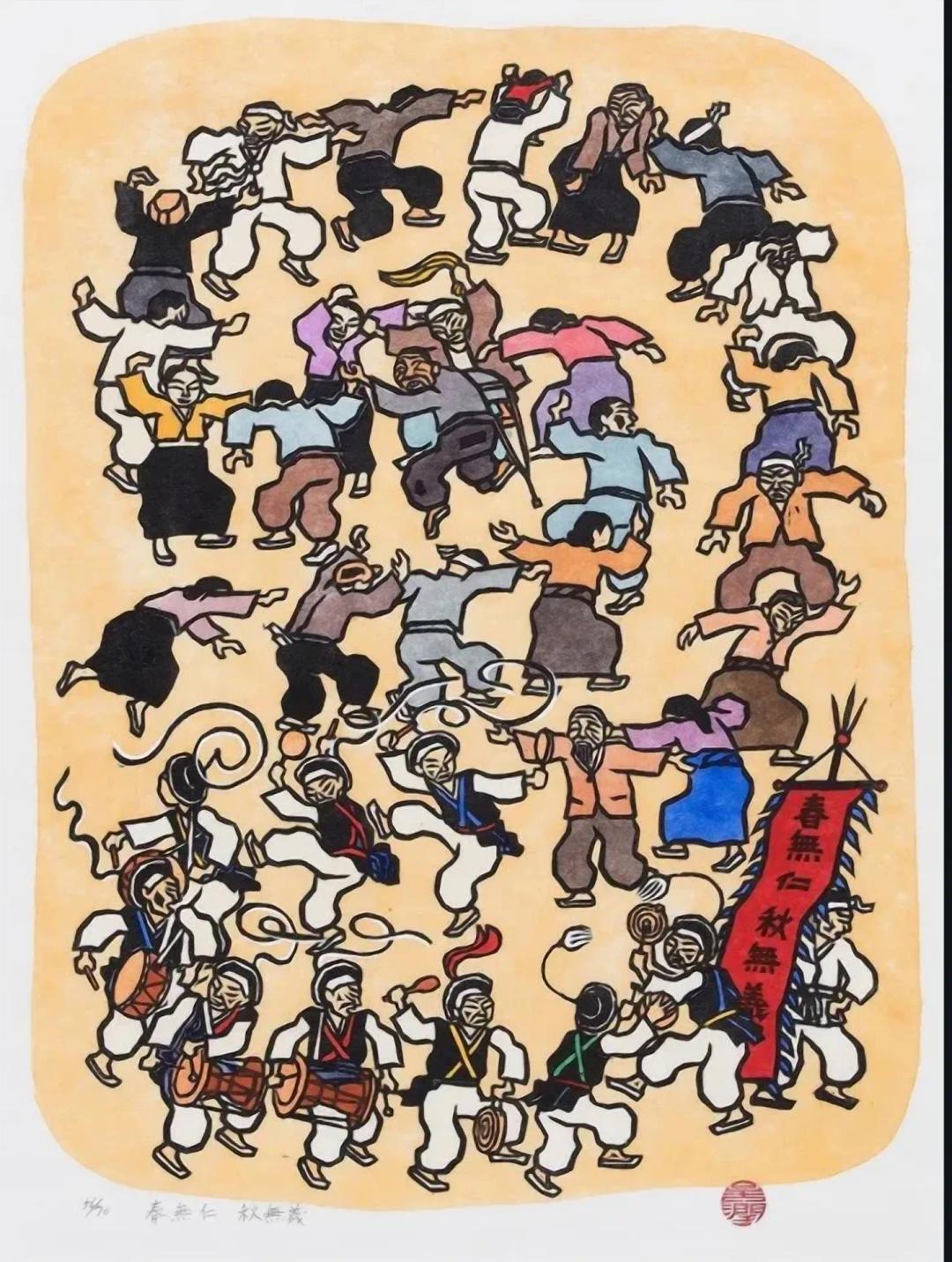
Buying these works is not simple collecting. It is participation in the publicness of art Oh Yun said "must be shared." And the fund that buying creates opens a new possibility for an artist who, at this very moment, is being turned away at the door of finance.
An artist who died at forty-one. The blade marks he left have not stopped even after forty years.
Related Reads

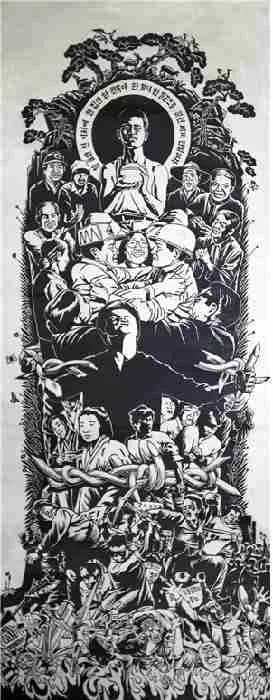
Artists on the Same Path
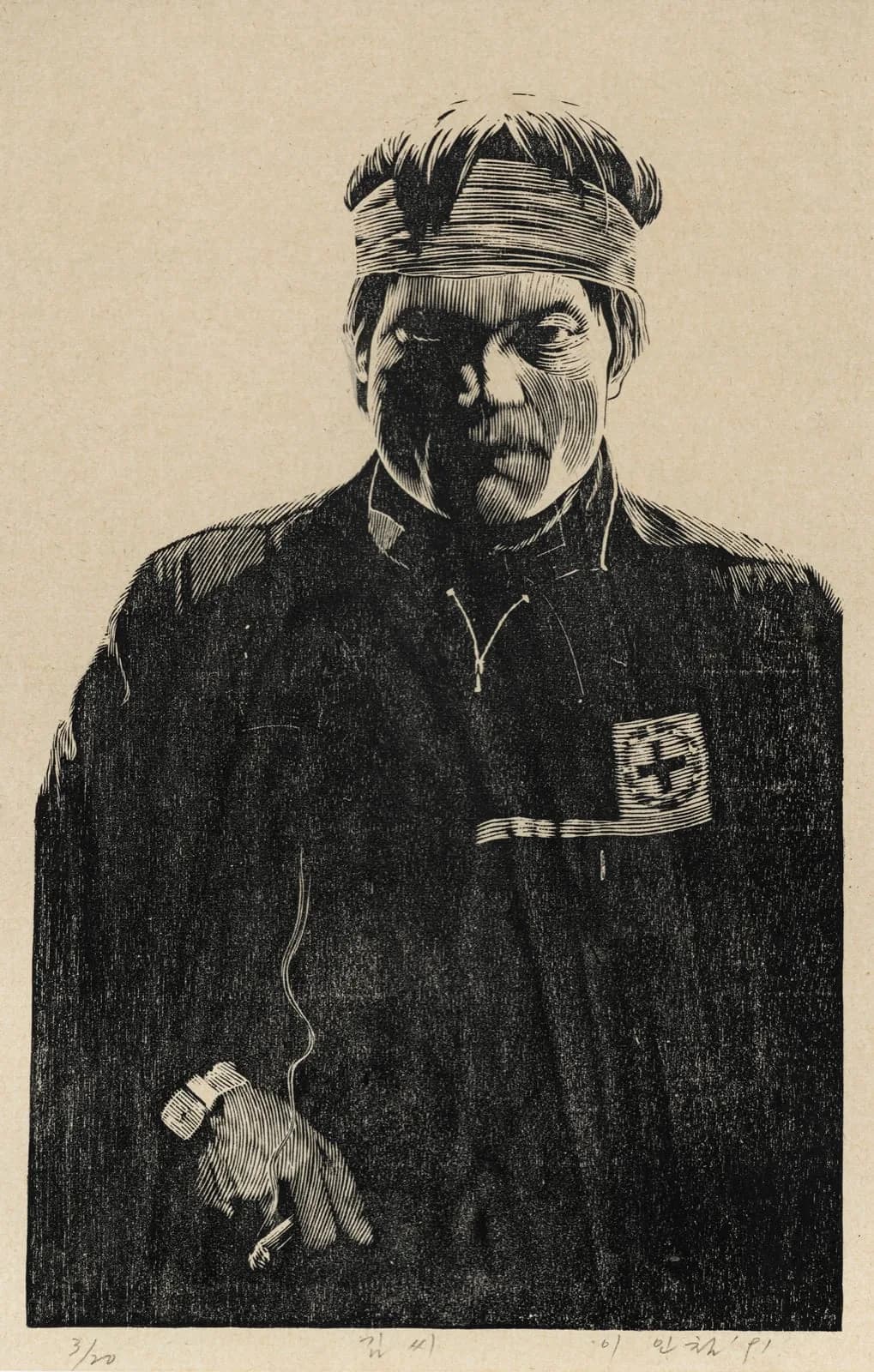

Collecting Guides
What Is Under Way
The terracotta relief Oh Yun carved into the interior wall of a bank branch in Guui-dong in 1973 is facing demolition. It was made together with Oh Kyung-hwan and Yoon Kwang-ju, and it was not public art — it was a commission from the then Commercial Bank of Korea (now Woori Bank).
- Citizens' petition for the Guui-dong terracotta — addressed to the next mayor of Seoul and the Minister of Culture, Sports and Tourism
- Preservation fund — raising the cost of conservation through citizen donations
Related reading
If this piece helped, you may also enjoy these related articles:

Seed Art Festival
·