In 1960, a young man enrolled at Hongik University's art school and left after one semester. His reason was simple: tuition money could buy more paint. That young man was Joo Jaehwan.
Tuition or Paint
- Twenty-year-old Joo Jaehwan entered Hongik University's College of Fine Arts, Western painting.
One semester passed. He quit.
Hearing the reason brings a laugh first, then a feeling of something opening. He wanted to buy more materials with the tuition money. His judgment: the materials he would purchase himself mattered more than what the school could teach.
That was the first declaration of an artist who would not compromise. A conviction about art. Not where you learn, but what you make.
Twenty Years of Wandering, Or Rather Exploration
After leaving school, Joo Jaehwan did unrelated work for a long time.
In his twenties, he became a piano salesman. Sold ice cream in front of Changgyeonggung. Worked as a neighborhood-watch guard. Reading the list, one thought comes. This is a pretty interesting person.
Entering his thirties, direction shifted a little. Helping folklorist Sim Woo-seong, he began work at magazines and publishing. Reading Life, Samsung Publishing, Art and Life, Mijinsa. Among books, texts, and people, he learned Korean society with his body.
Hakrim Tearoom in Daehak-ro, Eunseong and Songseok in Myeongdong. These are the places where he socialized. He shared tables with art critic Lee Il and poet Kim Soo-young.
What looked like twenty years of wandering was actually the widest school. He read the era outside the classroom.
1979, A First Step Into the Art World
Joo Jaehwan first entered what we call the art world in 1979, joining the formation of the Reality and Utterance collective.
Reality and Utterance was a group standing against the art establishment of its time. A declaration: against a pure art tendency that ignored reality, to paint in the languages of history, politics, and daily life.
His contributions to the 1980 founding exhibition — Mondrian Hotel and Spring Rain Descending the Stairs — are still named as signature works. Bending Mondrian's grid into the space of capitalism, hiding political message under a poetic title. A witty, humorous, sharp grammar unique to Joo Jaehwan was completed here.
An Artist Who Ran With History
Through the 1980s his practice connected deeply with the historical and political subjects of the time. 1986 Jang Jun-ha Memorial Stone; 1990 April 19 Revolution 30th Anniversary preparations. He poured time and affection into public work outside institutions.
In the 1990s the subject shifted — now critique of capital structure. Through the new era after the Berlin Wall fell and the Kim Young-sam government took office. Hymn to the US Brand, Jajangmyeon Delivery, Shopping Man. The 1990s reality captured with a different eye than the 80s.
From Venice to UNESCO
Entering the 2000s, his work stepped onto international stages.
2001 Artsonje Center solo Behold This Joyful Sir. The title itself is joyful. 2002 participation in the 4th Gwangju Biennale. That year the UNESCO Prize Special Honor. 2003 participation in the 50th Venice Biennale special exhibition — the Arsenale's Zone of Urgency section.
2001 also brought the 10th National Arts Artist Award.
A young man who left Hongik after one semester, sold pianos and ice cream, finally went to Venice. If this is not comedy, what is?
A Work Titled So Annoying...
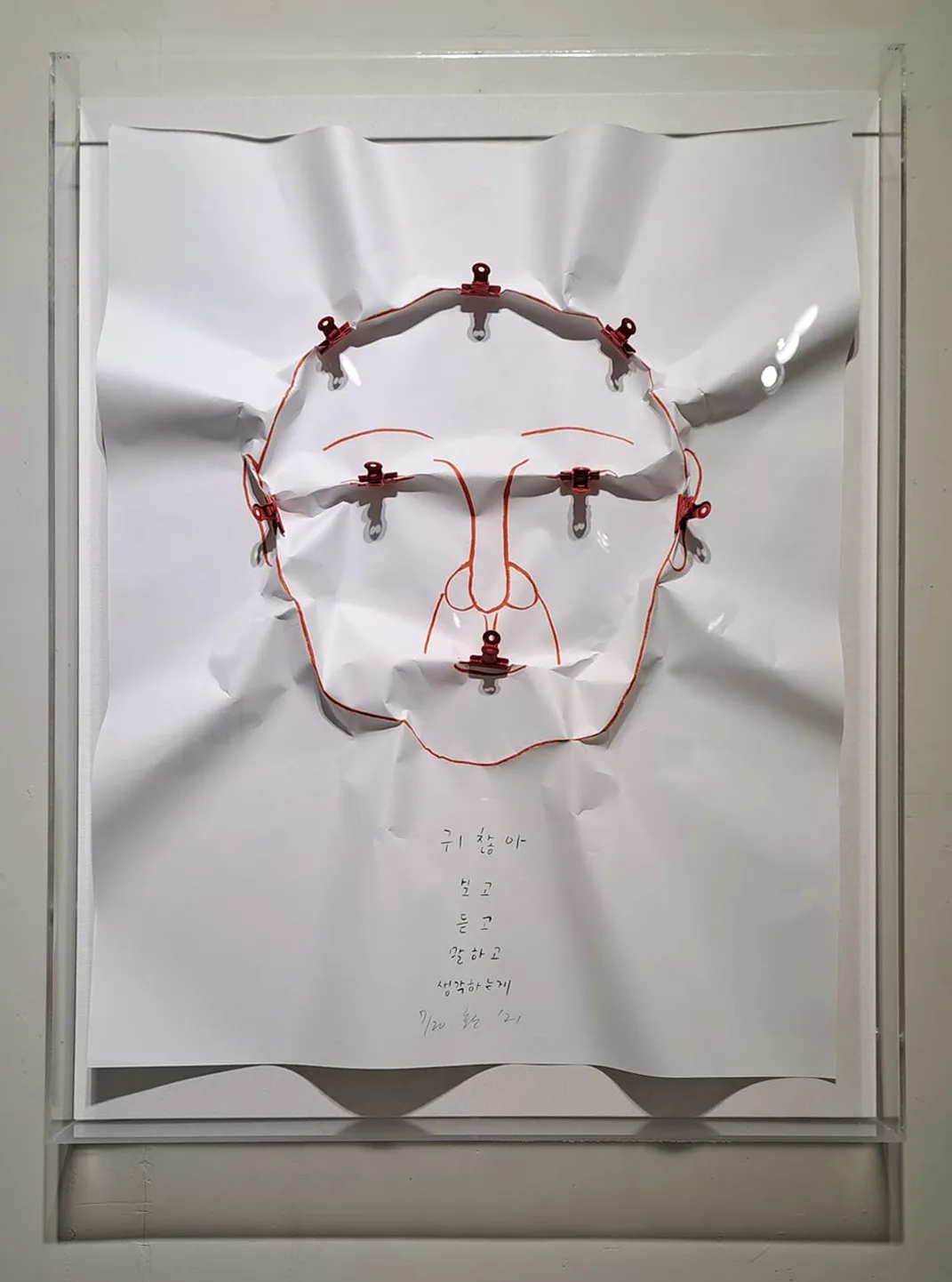
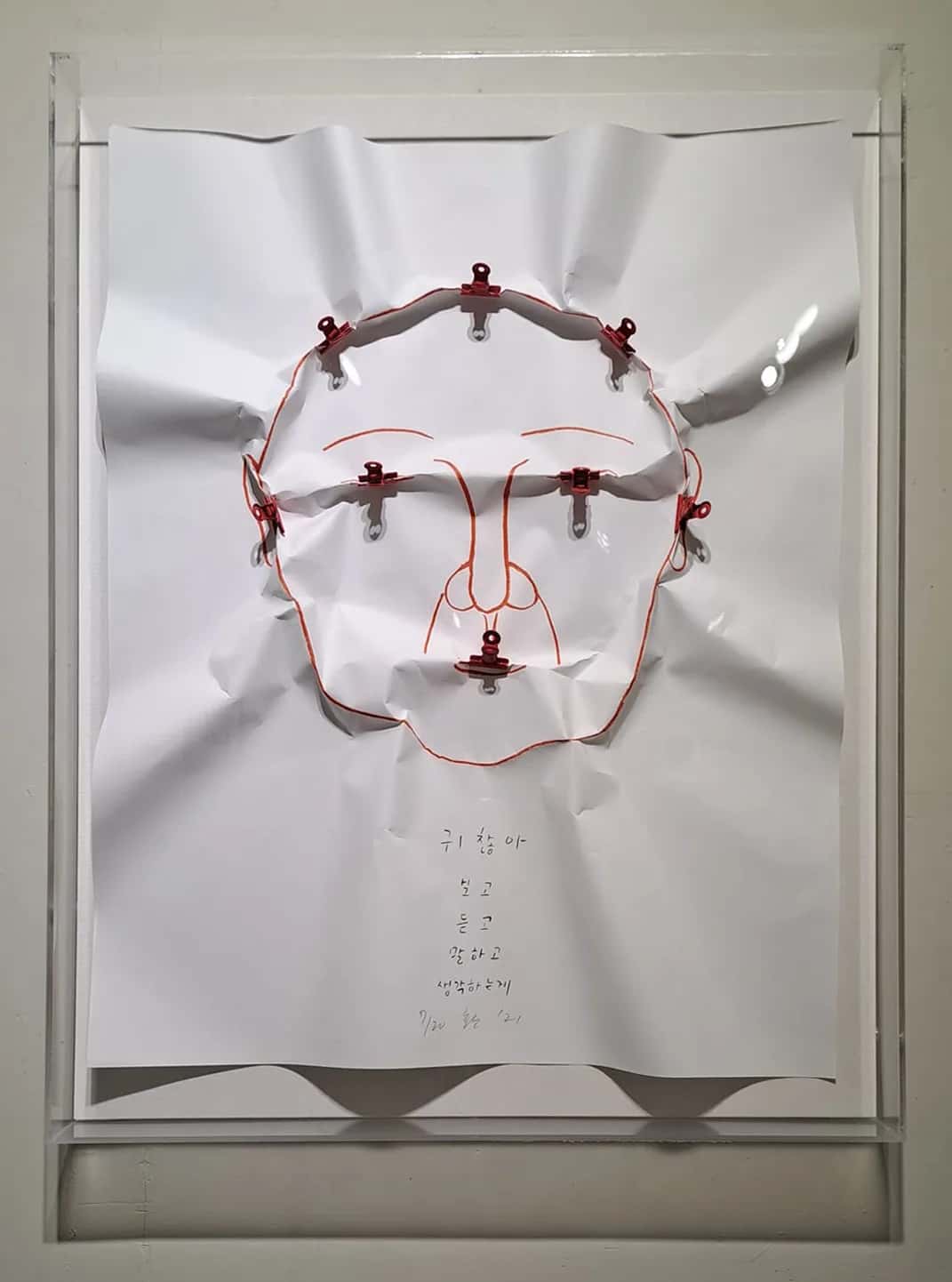
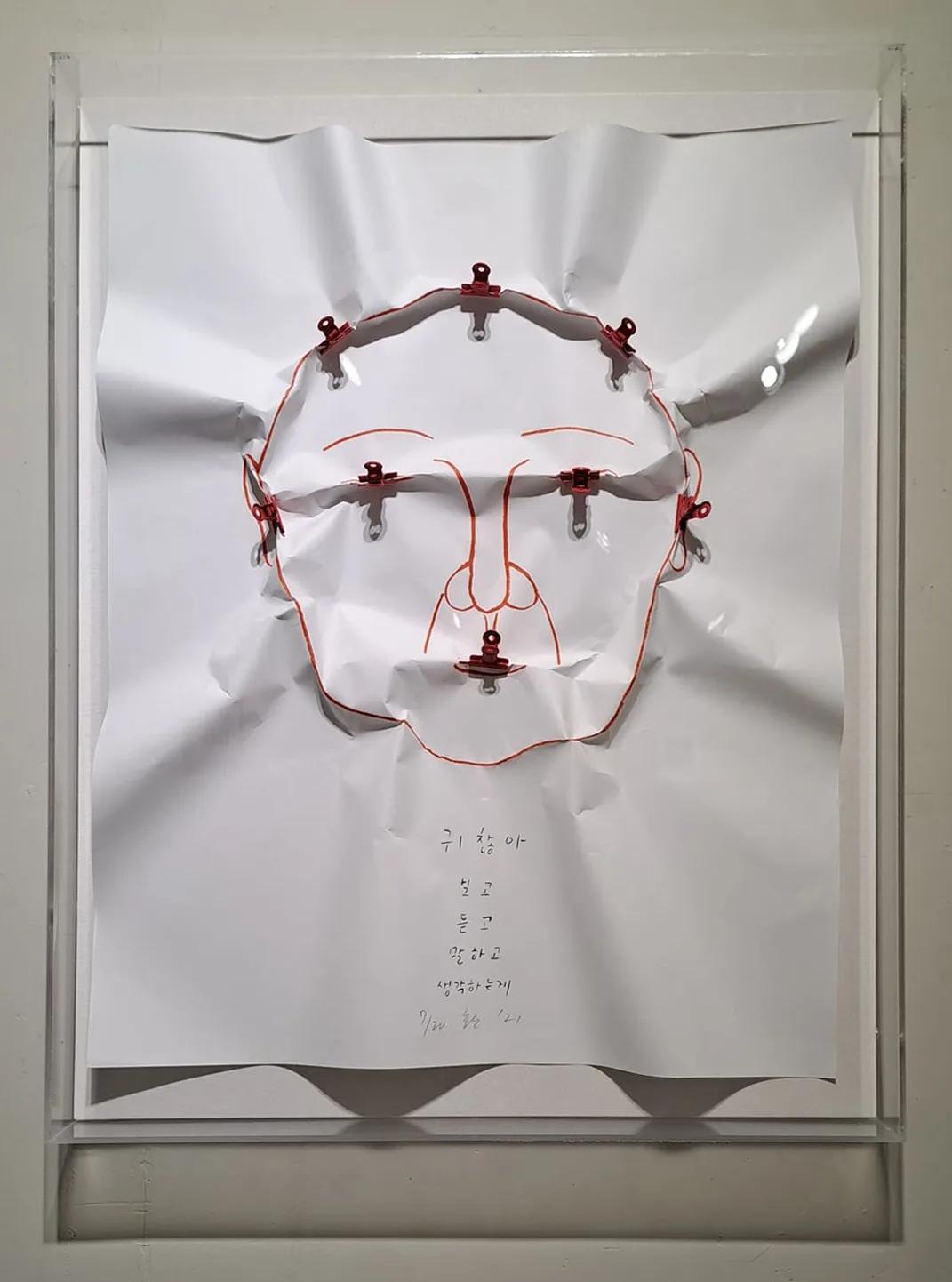
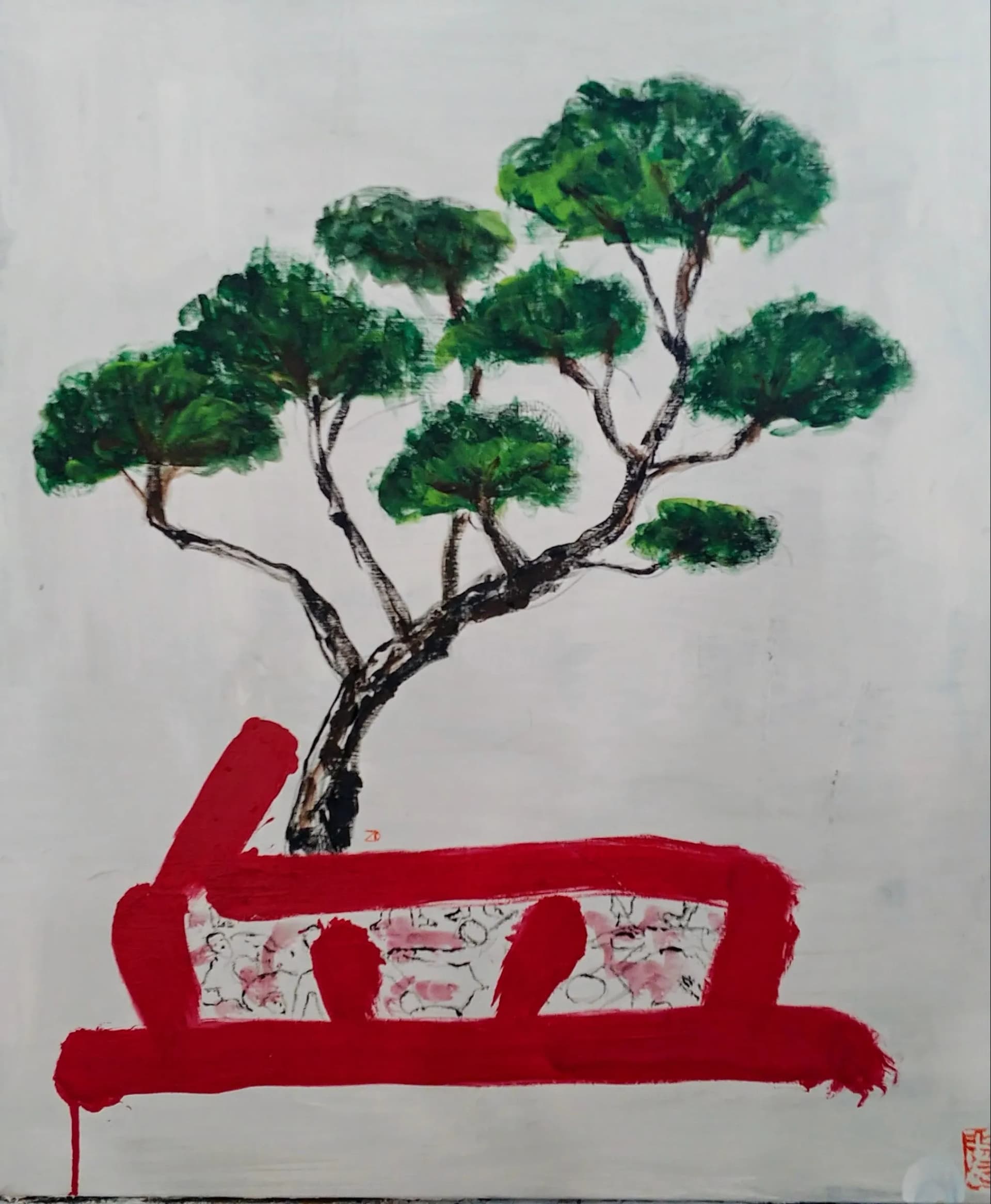
Joo Jaehwan's SAF 2026 contribution is one work. So Annoying... (2021). Mixed media on paper. ₩2.3M.
The title is everything. So Annoying... Six letters and three dots. The moment you see it, a laugh. And a moment later, the thought that this title in fact holds a great deal.
There are times being an artist feels annoying. Annoying to write a grant application. Annoying to be rejected on a loan review. The artist who made annoying the title now stands in SAF's site of solidarity.
This Is the History of Korean Artists
Read his CV again. Piano salesman, ice-cream vendor, neighborhood-watch guard. Magazines, publishers, tearooms. His twenty years orbiting outside the art world were a choice. But a structure compelled the choice.
For someone born in 1940, the institutional spaces where one could stand as an artist were very narrow. Loans didn't exist; grants were rare. Living off art was structurally difficult.
Is it different now? The statistic that 84.9% of Korean artists are excluded from mainstream finance is not old. 48.6% bear high-interest costs. This sits in the extension of Joo Jaehwan's era.
SAF is an attempt to cut that extension. Artwork-sale revenue becomes a mutual-aid fund; the fund converts into 5% fixed-rate loans; the loan reaches someone today. Since 2022, 354 cases. About ₩700M. 95% repayment.
Between 1960, when Joo Jaehwan bought paint with his Hongik tuition, and 2026, when SAF builds a fund from artwork sales, one line runs.
What Joyful Sir Left Behind
The 2001 Artsonje exhibition title was Behold This Joyful Sir. It resembles how those who know him call him.
He isn't difficult. Not heavy. And yet his work is not light. Paradox is his grammar. Pretending to be annoyed while living most diligently; twenty years outside the market and eventually to Venice.
One So Annoying... joins the SAF fund. That annoyance makes someone's new beginning. As Joo Jaehwan chose in 1960, today's artists will keep moving in their own ways.
Works by Ju Jaehwan
Related reading
If this piece helped, you may also enjoy these related articles:

View all works by Ju Jaehwan →
Related Reads
Artists on the Same Path
Collecting Guides
Seed Art Festival
·