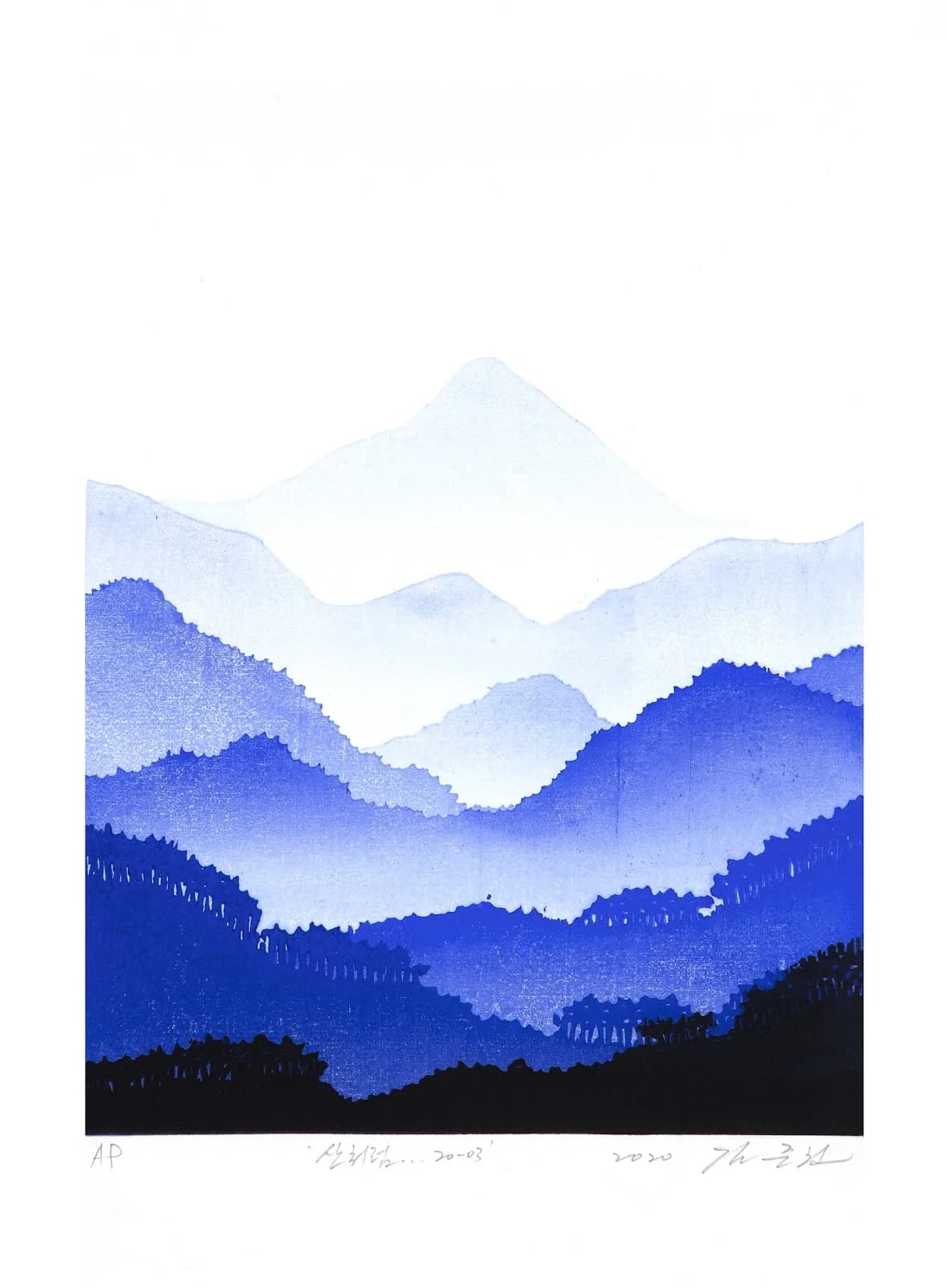
Kim Jun Kwon's *Sanun* hung behind Kim Jong Un at Panmunjom in 2018. Four decades of carving the Baekdu-daegan into wood — *Sanmun*, his language of mountains.
April 2018, When a Painting Became the Backdrop
April 27, 2018. Panmunjom's Peace House.
Kim Jong Un, Chairman of the State Affairs Commission of the DPRK, stood before a guestbook. Behind him, covering the wall of the meeting room — a large work. The grand ridge of the Baekdu-daegan flowing through the tones of ink, a woodblock. The camera caught that scene, and the next day it was printed in newspapers around the world.
That work was Kim Jun Kwon's Sanun (Rhythm of the Mountain).
A mountain a printmaker had carved with a blade for decades became the backdrop of a scene in the history of the Korean peninsula. When marks of the blade accumulate, this kind of thing can happen.
From Teacher to Printmaker — A Turning Point of Seizure and Dismissal
Kim Jun Kwon was born in 1956 in Yeongam, South Jeolla. He graduated from Hongik University (majoring in Western painting) and became a teacher in 1984.
But the following year, 1985, one exhibition changed his life. He contributed a work about the Gwangju Uprising to The Power of Korean Art in Their Twenties — and it was seized. A moment when art and reality collided. Then in 1989, after joining the Korean Teachers and Education Workers' Union, he was dismissed.
After leaving school he went deeper into printmaking.
In 1993 he settled in Jincheon, North Chungcheong. The next year he crossed over to China and worked as a researcher in woodblock at the Lu Xun Academy of Fine Arts. His research from 1994 to 1997 fundamentally changed his technique. Studying Korean, Japanese, and Chinese traditional woodblock, he synthesized methods from three countries into his own ink and color-ink woodblock.
In 1996, Lu Xun Academy appointed him honorary associate professor. Back in Korea he founded the Korean Woodblock Culture Institute and has devoted himself to printmaking research and dissemination.
Carving the Mountains of This Land
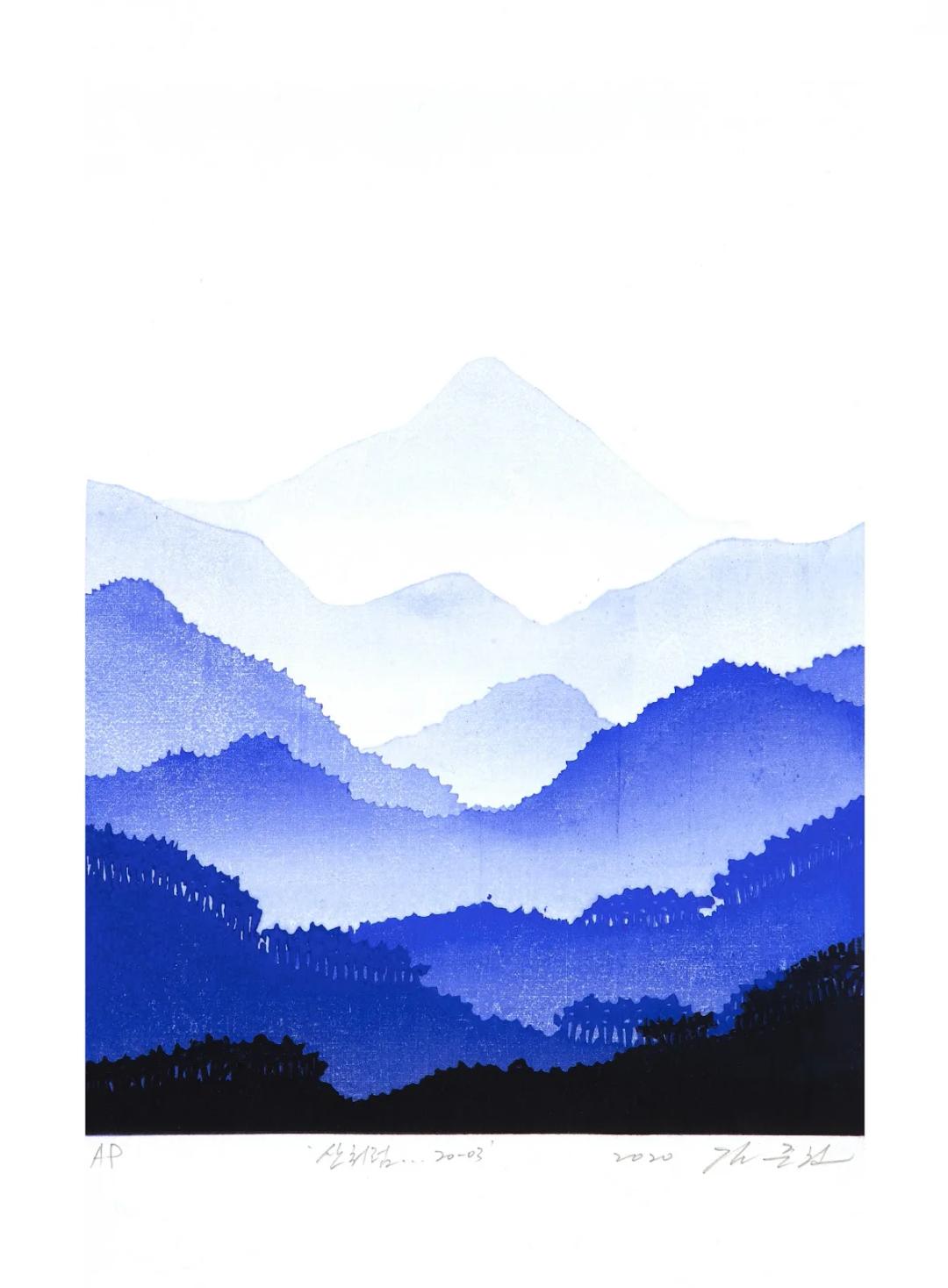
Kim Jun Kwon's water-based multi-color woodblock is evaluated as carrying the spirit of late-Joseon jingyeong sansu (real-scenery landscape) into the present. As Gyeomjae Jeong Seon and Danwon Kim Hong-do captured real scenery by walking the land on foot, he climbs mountains and walks valleys to sketch. The Baekdu-daegan has long been his theme.
He carves five or six plates for one work and overlays them. Laying color, adding ink, layering plates. Decades of accumulated technical mastery and the energy of Jincheon's land form the ground.
Since his first solo in 1984, he has held over 40 printmaking solos. From Seoul, Busan, Daegu, Cheongju to Shenyang, Tokyo, Los Angeles. His 2022 Seoul Arts Center solo Song of the Mountain presented over 100 woodblocks completed while traversing the Baekdu-daegan.
MMCA, Seoul Museum of Art, Gwangju Museum of Art, Cheongju Museum of Art, the Korean National Assembly — major institutions hold his work.
A Printmaker Roh Moo-hyun Loved
His connection with the late President Roh Moo-hyun was special. The two first met in the 1980s democracy movement. Whenever an exhibition was held, the President bought a work; during his term, one of Kim's works hung in the Blue House lobby. Hearing the news of his passing, on the day itself, the day of the funeral, and the 49-day memorial, Kim dedicated three works.
Carving mountains can, at times, become a heart directed at a person.
What the Knife Mark Says
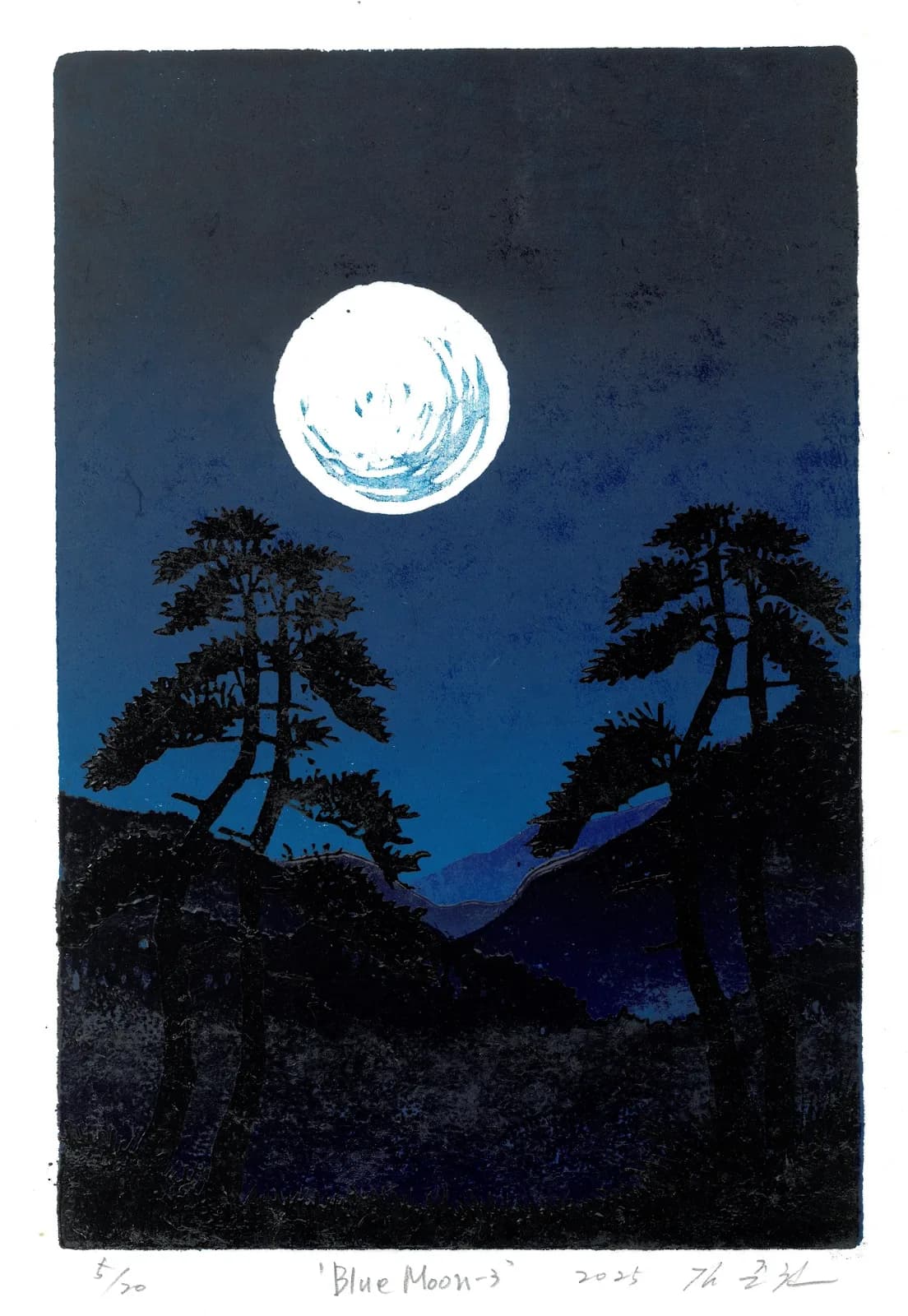
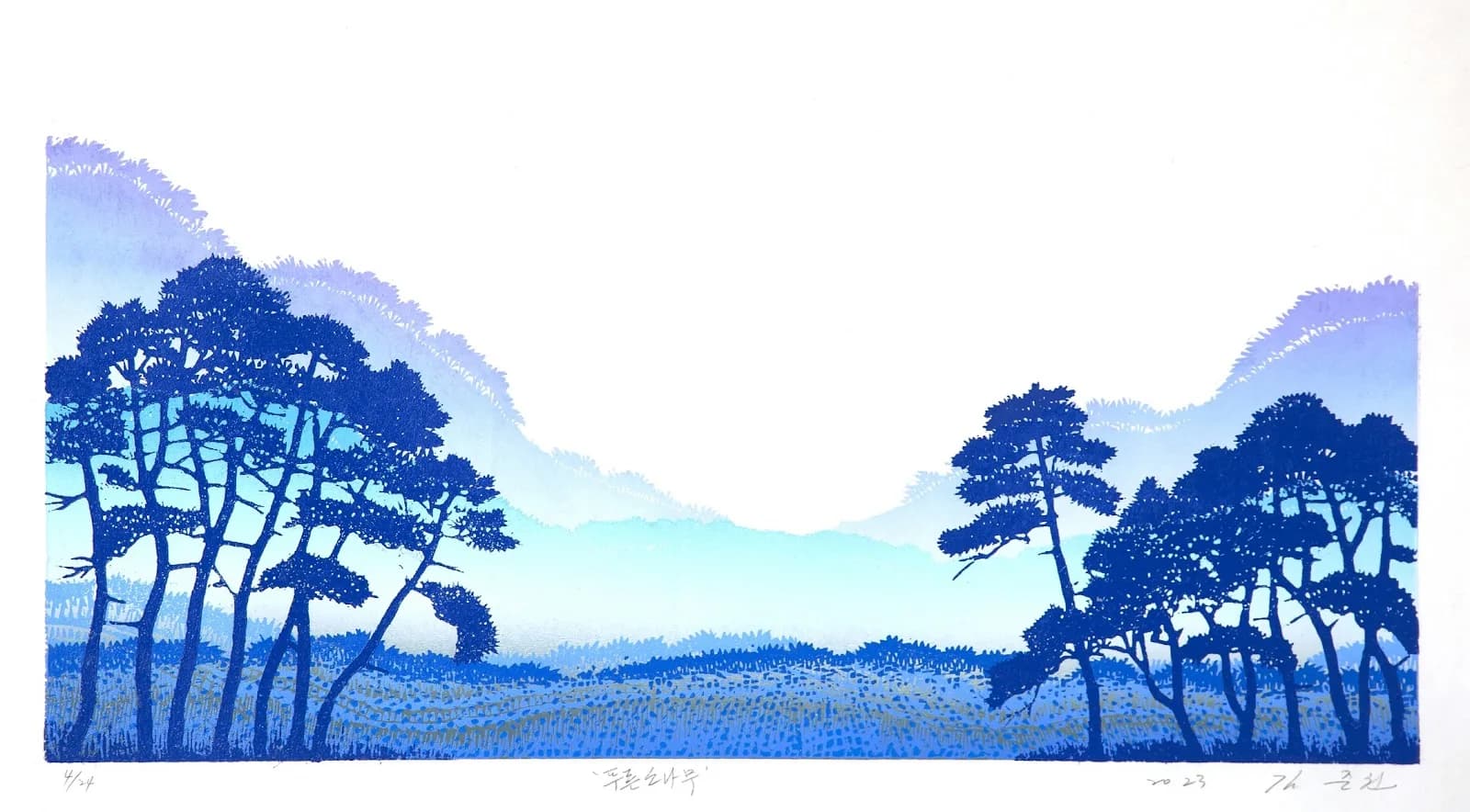
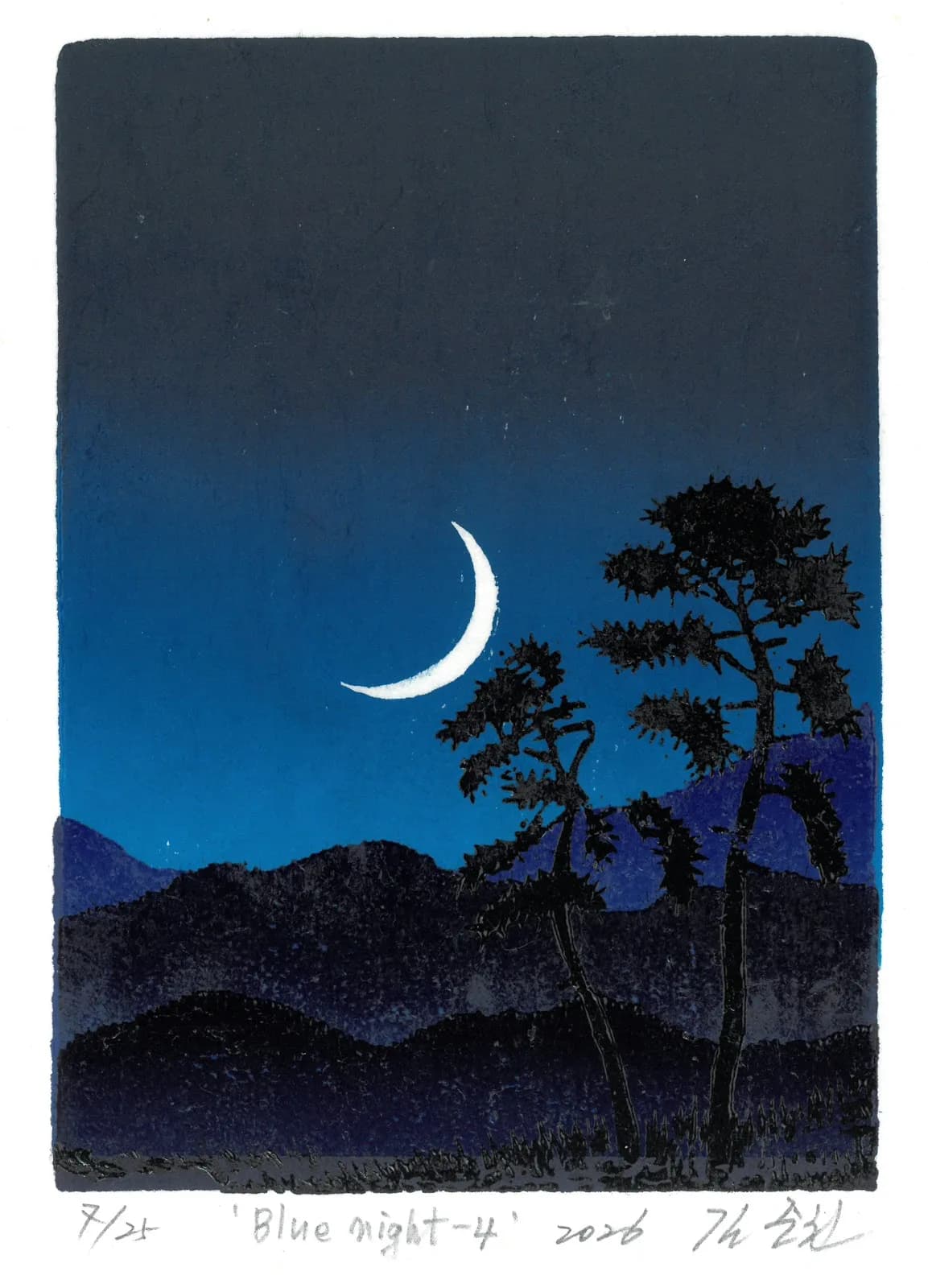
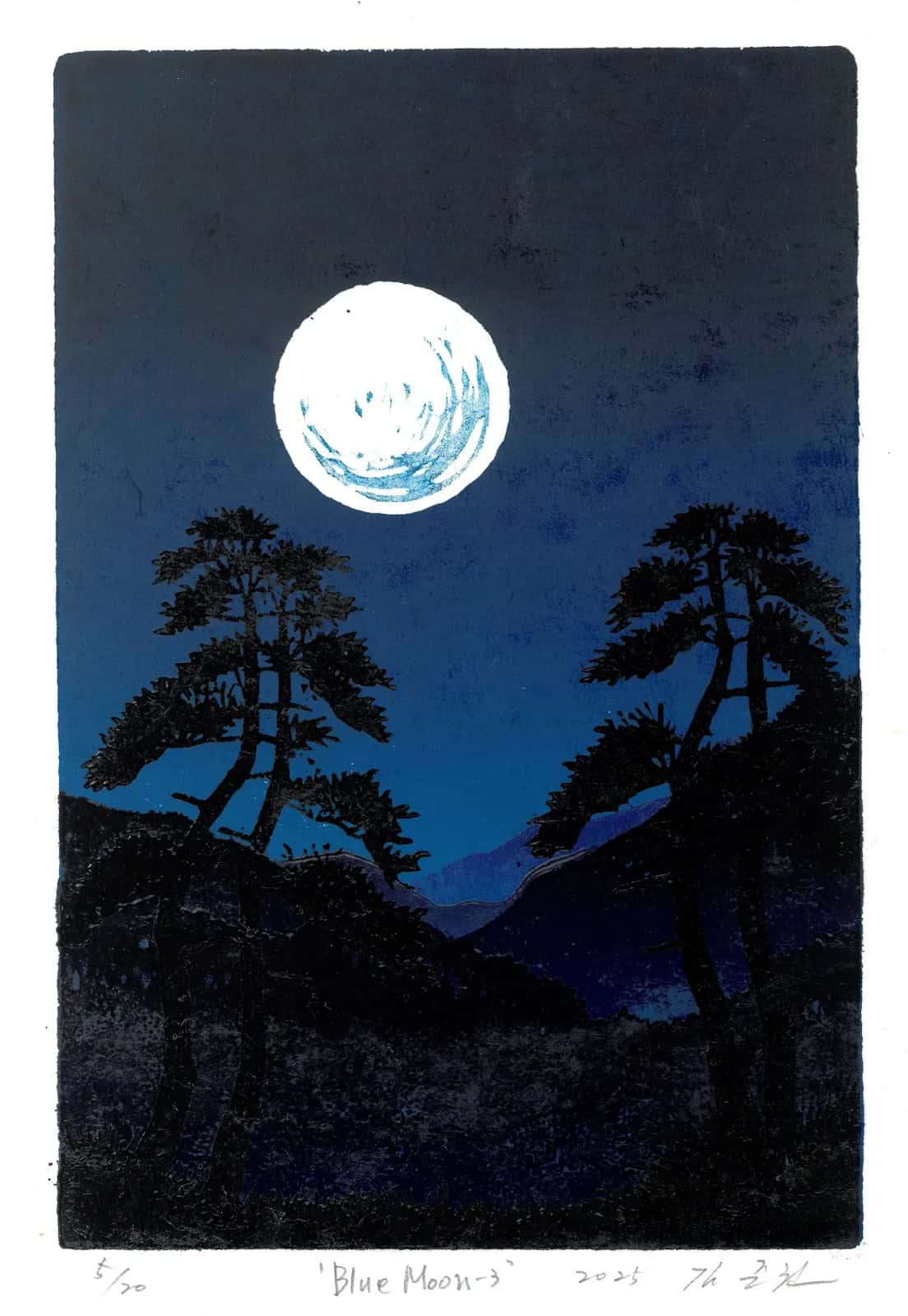
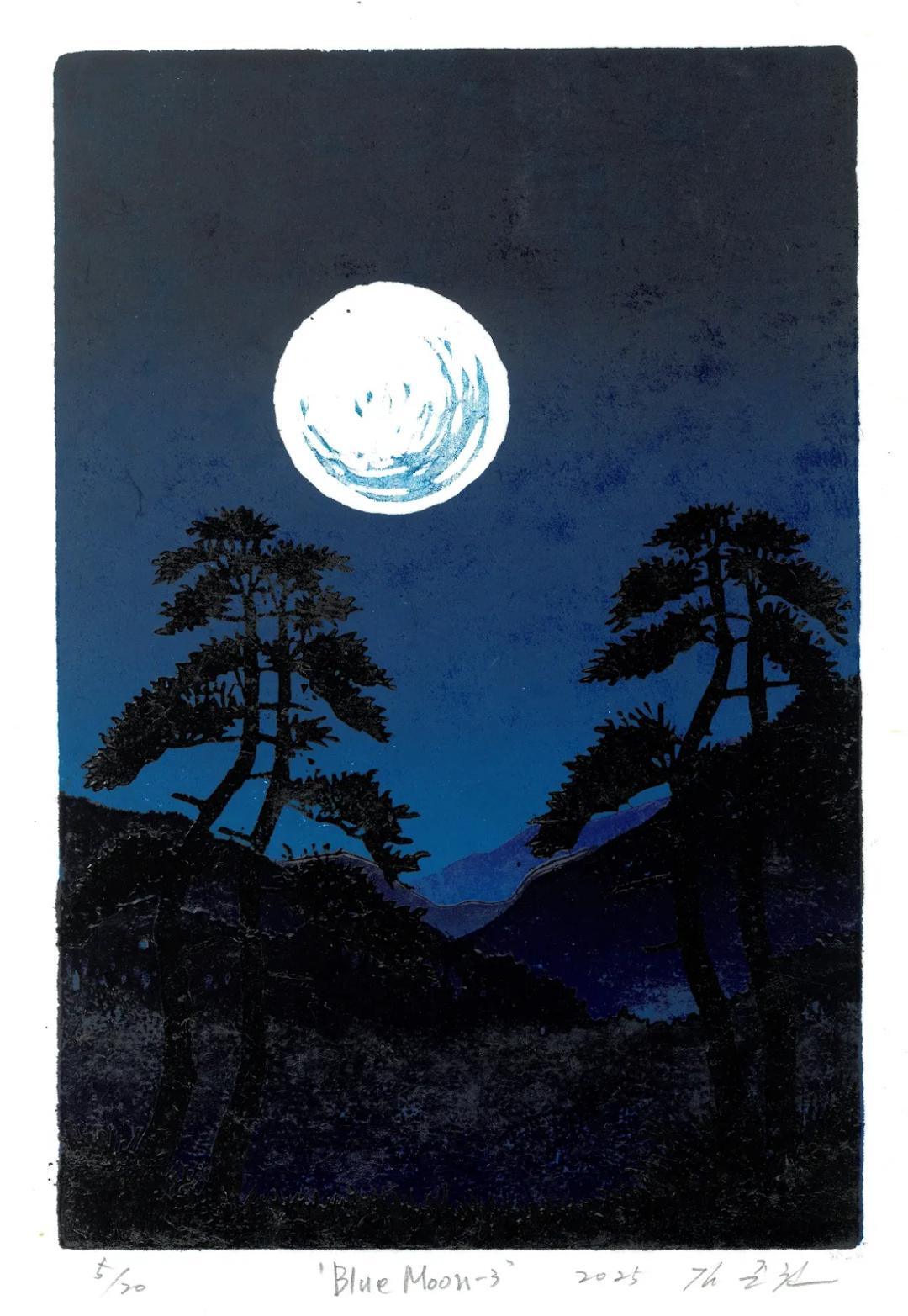
SAF 2026 contributions: Like a Mountain (color-ink woodblock, 50×45 cm, 2021); Blue Pine (oil-based woodblock, 45×80 cm, 2023); and the lyrical night-mountain works Blue Moon-3 (oil-based woodblock, 2025) and Blue night-4 (oil-based woodblock, 18×22 cm, 2023). Four works — all traces of a blade on wood.
Printmaking is an art of multiples. Many can be pulled from one plate. An artist who has believed in that multiplicity for over 40 years places his work into the mutual-aid fund for fellow artists facing financial discrimination. The belief that more people should own art — that is also the spirit of SAF.
In 2018, a mountain hung on the wall of a historic meeting room. That mountain had been carved by one person with a blade for decades. When marks of the blade accumulate, this kind of thing can happen.
Works by Kim Jungwon
Related reading
If this piece helped, you may also enjoy these related articles:

View all works by Kim Jungwon →
Related Reads

Artists on the Same Path

Collecting Guides
Seed Art Festival
·