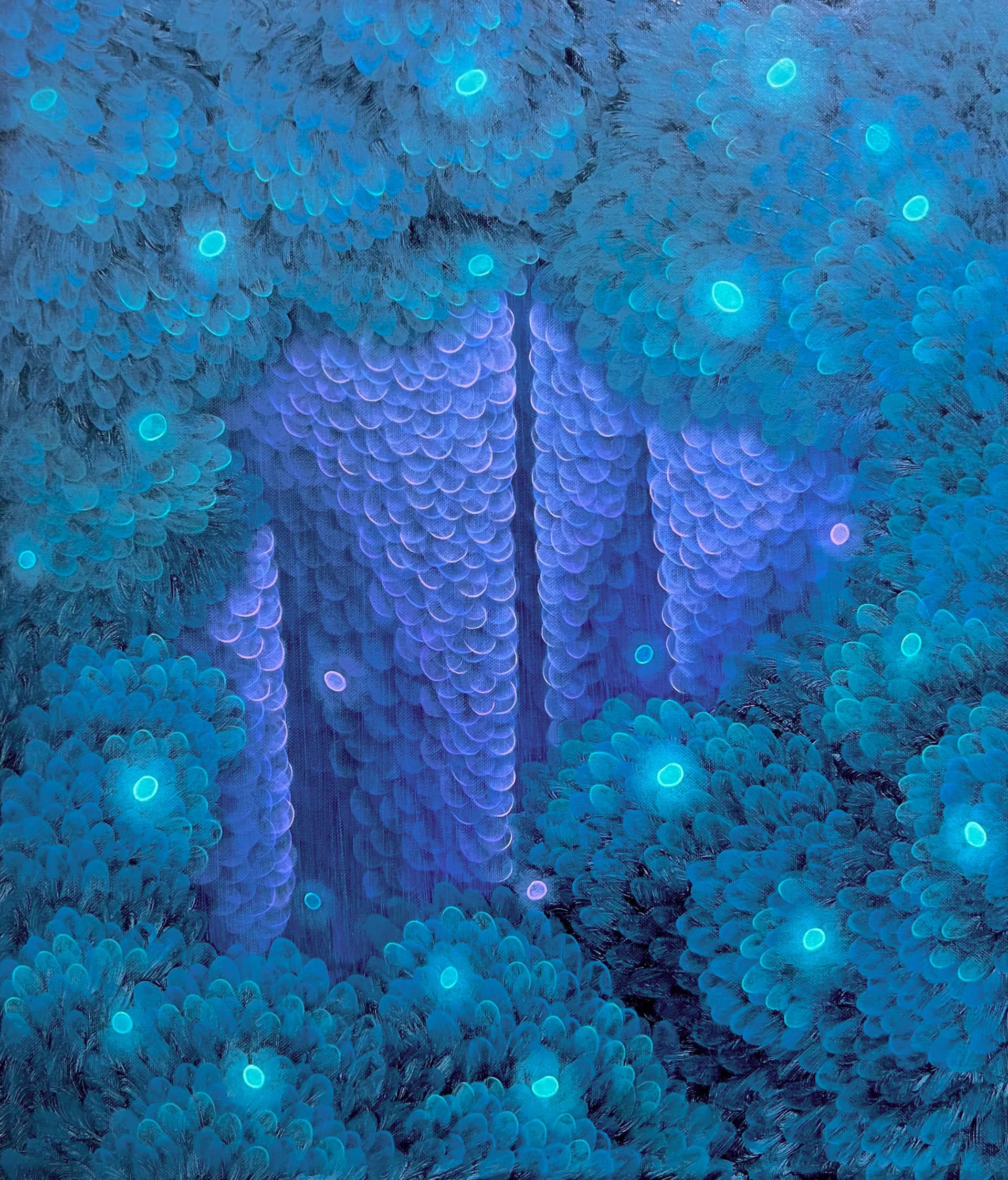
Buying an artwork is not just a transaction between seller and buyer. Over time, it becomes a relationship between two people. Two years of conversations between an artist and a patron who met through SAF.
Artist × Patron — A Relationship Built on a Single Work
Buying and selling a work of art is, strictly speaking, a one-time transaction between seller and buyer. Most exchanges end there. The work goes up on a wall, and seller and buyer return to their separate lives.
But some transactions do not end there. Given time, they grow into a relationship between two people. The artist tells the buyer about new work; the patron keeps following the artist's practice. After a few years, what began as a simple "collector–artist" pairing becomes the relationship of fellow travelers.
This piece is the record of a conversation, two years on, between an artist and a patron who first met through a work exchanged at SAF (Seed Art Festival). Both remember their first encounter as "just one transaction," but here they reflect on how that single exchange has come to occupy a place in each other's lives.
This conversation is a fictional reconstruction based on real cases. Names are pseudonyms, and certain details have been altered.
Participants
- Yun Kyung (pseudonym, artist) — Painter in her late thirties. Submitted a work to SAF two years ago.
- Tae Hoon (pseudonym, patron) — In his mid-forties, working in IT. Purchased Yun Kyung's painting through SAF as his first collection piece, two years ago.
First Encounter — 2024
Tae Hoon: I first came across the SAF site in spring 2024. A friend shared the link on social media. I'd always been interested in art, but I'd never actually bought an original.
Yun Kyung: At that point I'd put my second work up on SAF. The first one had sat for two months without selling, and I was beginning to wonder if I'd been foolish to submit anything at all.
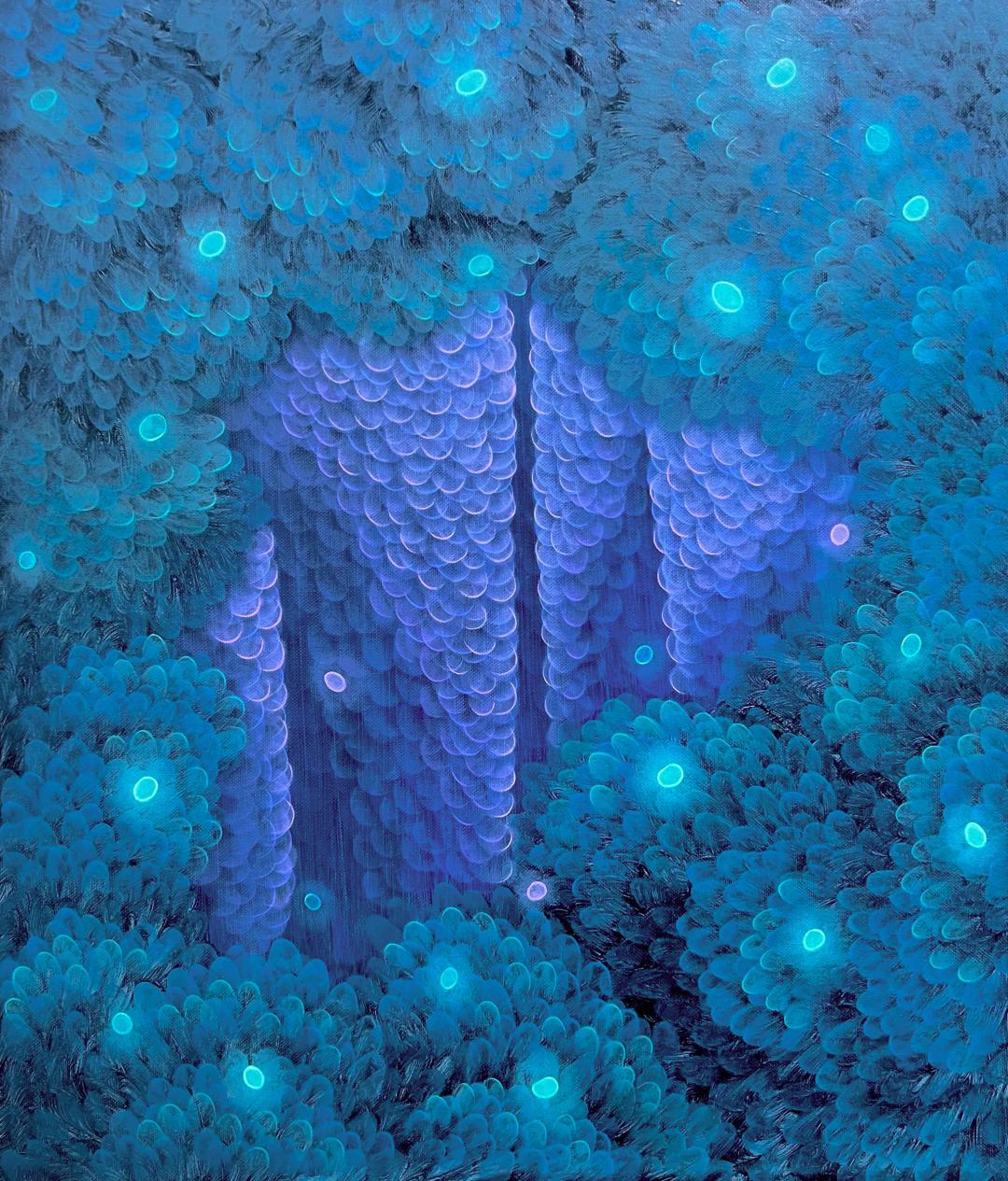
Tae Hoon: I spent maybe thirty minutes browsing the site, and your work kept catching my eye. The piece was titled "A Window Where Light Enters." Something about it felt like it could be the living room of my own house.
Yun Kyung: I'd never actually been to that window. It was an imagined scene. So when someone told me, "This looks like my living room," it was strange and moving.
Tae Hoon: Before buying, I sent just one message: "Around what time of day does the light come into this room?" Half a joke. But you answered seriously.
Yun Kyung: I loved that question, so I wrote back at length: "Early morning light, around eight." That single exchange is what I remember as our first contact.
The Day the Work Came Home — 2024
Tae Hoon: I remember the day it arrived. A Saturday morning, and I was alone at home. My hands actually trembled a little as I opened the box. ₩300,000 isn't a huge sum, but it was the first time I'd ever bought an original.
Yun Kyung: I was careful when I packed it, too. I hadn't sold many works at that point. Each one carries the worry — "will it arrive safely?"
Tae Hoon: I hung the painting on the wall and just stared at it for thirty minutes. The fact that an original I had chosen myself was now hanging in my living room was strangely moving. I sent you a short message: "It arrived safely. I've put it on the living room wall."
Yun Kyung: When that message came, I wrote back at length — about how the work was made, what I was thinking when I painted it, what it meant to me. Honestly, I don't even put that kind of thing in my solo-show catalogues, but with the person who'd bought it, it came out naturally.
Six Months Later — Late 2024
Tae Hoon: I saw on your social media that you had a solo show coming up — a small autumn exhibition. I went.
Yun Kyung: At the opening I was overwhelmed — greeting friends, welcoming visitors. Then someone introduced himself as "Tae Hoon," and I wasn't sure who he was for a moment.
Tae Hoon: I said, "I'm the one who bought your work last time." You paused, then said, "Ah — Window Where Light Enters!" You'd remembered the title.
Yun Kyung: That caught me off guard — the buyer of a work showing up at my next exhibition. Most buyers, the relationship ends with the purchase.
Tae Hoon: We talked in the gallery for about thirty minutes that day. Looking at the new pieces, I said, "These feel completely different from the first one," and you said, "A lot has happened in my life in between."
Yun Kyung: That period was personally difficult. A family member's health crisis cut into my studio time, and that fed into the colour of the new works. I surprised myself, telling Tae Hoon all that the first time we properly met.
One Year Later — 2025
Tae Hoon: After that I started following your social media, and I went to every show. I bought a second work. But more than that — I had become someone who keeps watching the artist's practice.
Yun Kyung: I now have two or three patrons like Tae Hoon. What their existence means to me is this: "there are people who keep watching what I make." A work leaves my studio, hangs on someone's wall, and that person waits for what I'll do next.
Tae Hoon: Before I bought a work, I thought of art as "the viewer's job." The painting was made; my role was to look at it. After buying one, I learned: art is something the maker and the buyer make together.
Yun Kyung: I feel something similar. The work isn't finished in my hands. It seems to be fully finished only in the moment it hangs on someone's wall and finds its place in that space.
Two Years Later — Spring 2026
Tae Hoon: I now own three of your works. When I see them together, I see your past two years. The warm light of the first, the darker tone of the second, the brighter line of the third. I think they are a visualization of the trajectory of your life.
Yun Kyung: Tae Hoon sometimes sends me photos of his living room — three of my paintings hanging side by side. In his space, not in my studio, the works keep generating new meanings I hadn't anticipated.
Tae Hoon: Looking back now at why this relationship even started — I think it's because of how SAF was set up. The artist's information was transparent, the buying process was warm, and there was a frame in place: works as objects of solidarity, not just commodities.
Yun Kyung: That's true. When I submitted my work to SAF, I did worry about who'd buy it. But once a buyer approached the work with real interest, it was easy for me to open up too.
Redefining the Word "Patron"
Tae Hoon: The word "patron" felt grand to me — wealthy people raising painters. But what I actually do for you is just keep watching. I buy a piece now and then, go to your shows now and then, leave a response on your social media now and then.
Yun Kyung: That is patronage. Not anything grand. The simple fact that one person keeps following my work is what gives me the strength to keep working. That sustained attention can matter more than financial support.
Tae Hoon: I'm not a wealthy person. Your works were ₩300,000 and ₩500,000 each. Two or three pieces a year is enough. But I've kept that pace for two years now, and it adds up.
Yun Kyung: For an artist, one person's consistency means more than ten one-time buyers. Ten buyers I can't remember; one person's two years I do.
What SAF Did in This Relationship
Tae Hoon: Without SAF, I would never have met this artist. I'm not the type to walk into galleries on my own, or visit art fairs. There had to be an online structure that someone like me — an ordinary person — could enter.
Yun Kyung: Same for me. I'm not an artist on contract with a major Seoul gallery. Without a platform like SAF, I would have had no channel to meet "ordinary collectors" this way.
Tae Hoon: And the mutual aid fund structure of SAF mattered to me — knowing that part of what I pay for a work becomes another artist's monthly studio rent. Buying one work, I'm helping two artists.
Yun Kyung: I'm both a beneficiary and a contributor. I submit work to SAF, and a portion of the proceeds becomes the fund that supports me and other artists. To me, this loop feels like a system in which artists support artists.
Two More Years
Tae Hoon: I'm going to keep following your work. Whenever you have a major solo show, I'll probably be the first one in the door.
Yun Kyung: The fact that this relationship has lasted to here is, in itself, a great asset to my life as an artist. It doesn't go on a CV, but it's etched deep into the inner life of my practice.
Tae Hoon: Here's what I want to say to people who love art: "Follow one artist consistently." Walking through one artist's time with them is so much richer than collecting one work each from many artists.
Yun Kyung: And here's what I want to say to fellow artists: "Don't forget the buyer's face." The person who bought your work is not just a "customer" — they are someone who gave a part of their living space to your practice. That relationship is part of your career, too.
Patronage is Another Name for Relationship
What this conversation shows is simple. The purchase of a single work can, over the course of two years, grow into a relationship. With no grand patron's stipend and no formal contract, two lives become connected through one work and a steady, ongoing attention.
SAF is a place where these relationships can begin. Where 186 artists meet thousands of citizens, new "artist × patron" relationships are quietly starting every day.
Your first work could be the beginning of your first relationship with an artist.
Frequently Asked Questions
Q. Could it be uncomfortable for an artist and a buyer to grow close? A. The right distance in a relationship is set by the people involved. Some artists welcome deep exchanges with buyers; others prefer to keep more distance. The frequency and tone of post-purchase messages should adapt to each side's signals.
Q. Is it better to focus on one artist than to buy works from many artists? A. It's a matter of personal taste. Experiencing a wide range of artists is a great pleasure; following one artist deeply is also a great pleasure. Many collectors try several artists in their first year or two, then concentrate on the ones who pull them in most strongly.
Q. I don't have the budget to keep buying works regularly. What should I do? A. "Buying" is not the only form of patronage. Visiting an artist's exhibitions, sharing their work on social media, recommending them to friends — all of these are meaningful forms of support. There is plenty of patronage you can practice without spending money.
Q. Does it actually help to tell artists, "This is good"? A. Yes, very much so. But specific feedback carries more weight. "I liked this" is less nourishing than, "The way ○○ works in this piece really stayed with me" — the latter is real fuel for an artist.
Q. Are the two people in this conversation real? A. The names are pseudonyms; the dialogue is a fictional reconstruction drawn from many real cases. But the substance of the experiences and statements reflects what actually happens in the SAF community.
Related reading
If this piece helped, you may also enjoy these related articles:
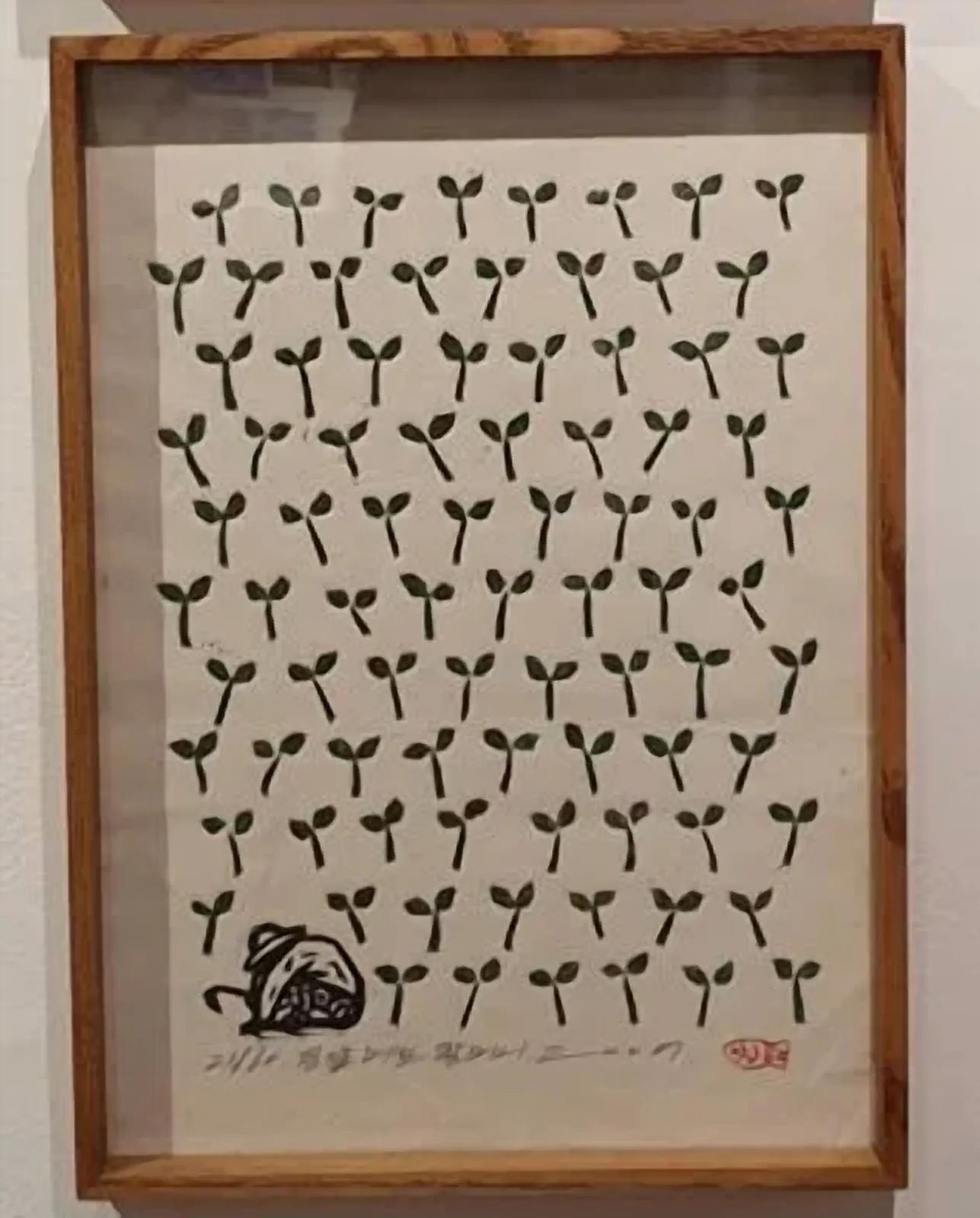
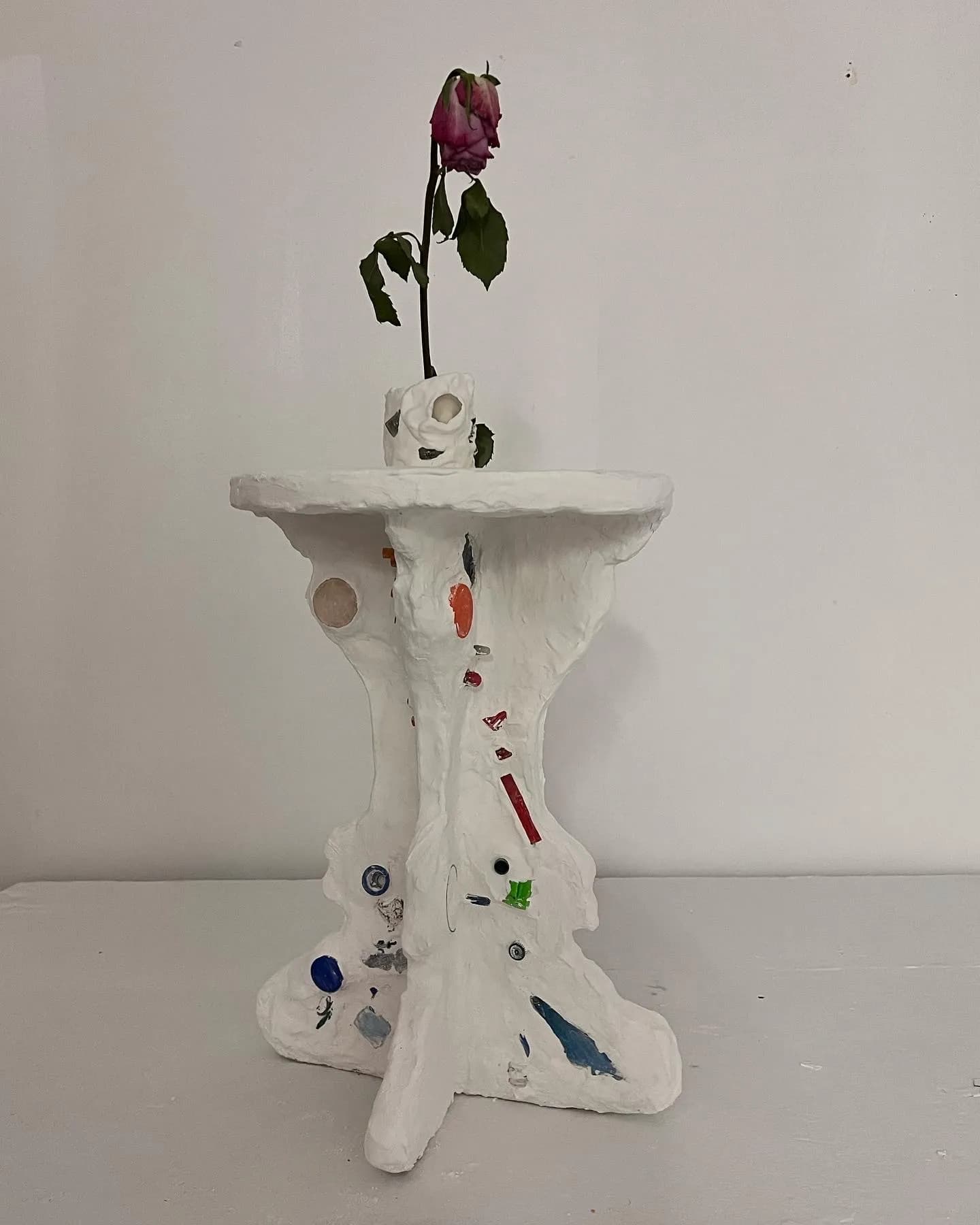

The moment a work is hung on a wall is not the end of a transaction; it is the beginning of a relationship. Your first work could be the start of one too. Find your one piece at SAF →
Collecting Guides
Seed Art Festival
·