Contemporary Korean printmaking, read through five artists at SAF 2026 — from Lee Cheolsu's woodblock Zen to Kim Jonghwan's broken-printer sculptures.
In Korean art, printmaking has long been called the "people's art". In the 1980s Grimmadang Min era, a single print was the most direct medium: it could be distributed in a plaza and hung on a home wall. Forty years on, that lineage continues. The five printmakers at SAF 2026 each represent different techniques and generations, yet seated together they form a lineage of contemporary Korean printmaking.
Five Lineages
Lee Cheolsu — From Resistance to Zen
Born 1954, woodblock artist. The most public face of 1980s minjung art, who later shifted toward a Zen-Buddhist worldview through the Heart Sutra series. His SAF work Sacred, a 96×64 cm large print, shows the depth of his recent practice.
→ From Resistance to Zen: The Prints of Lee Cheolsu
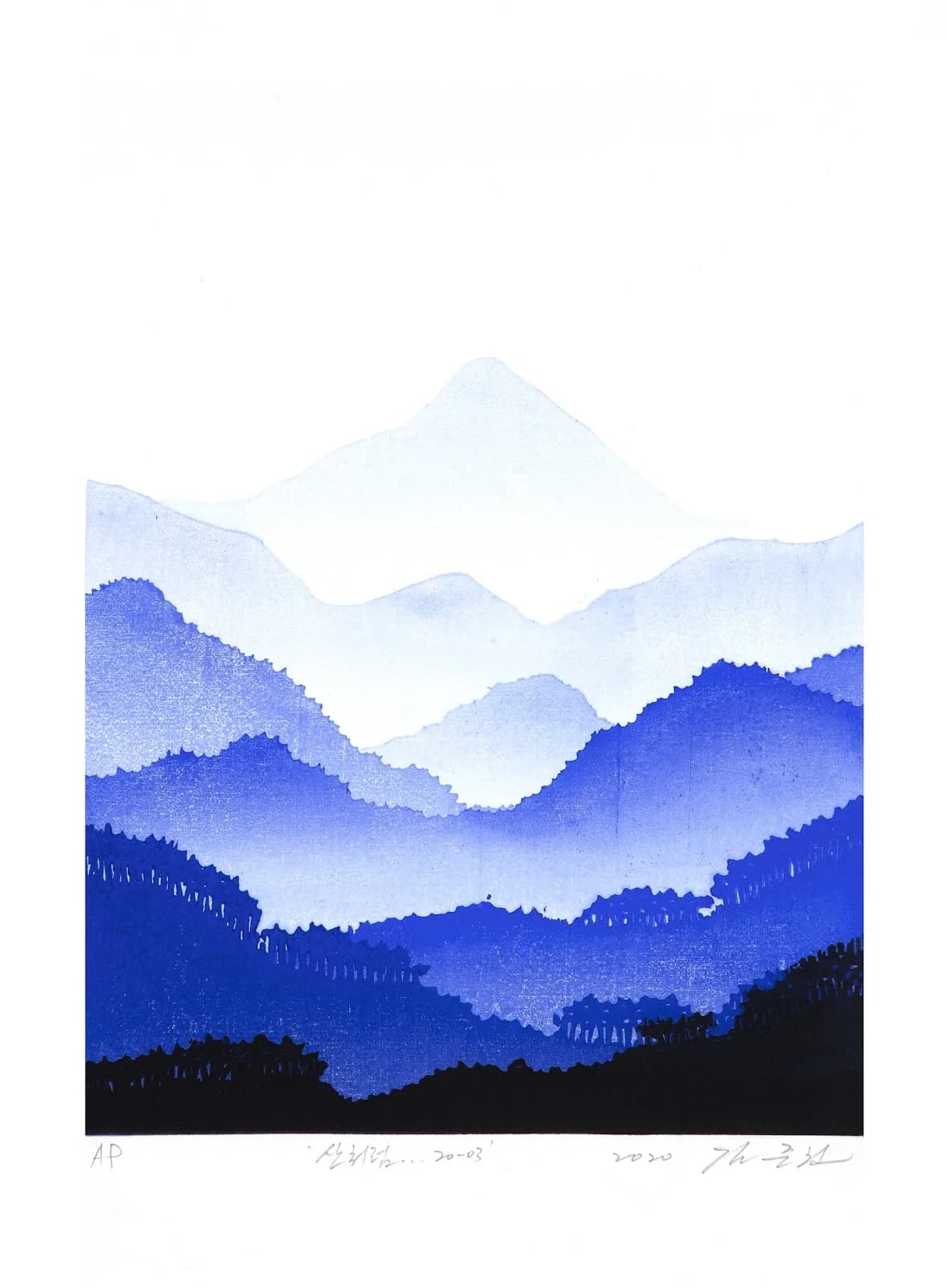
Kim Jun Kwon — Carving Korea's Landscape into Wood
A mid-career artist who has long carved Korean nature and landscape into woodblock. The blade's passage itself becomes "the skeleton of the landscape."
→ Kim Jun Kwon: Carving Korea's Landscape into Wood
Lee Yun Yeop — People Carved into Woodblocks
Born 1969. Building on the minjung print lineage, he carves today's workers, citizens, and everyday faces into wood. Rough lines with a warm gaze. His SAF work Good News is representative.
→ Lee Yun Yeop: People Carved into Woodblocks
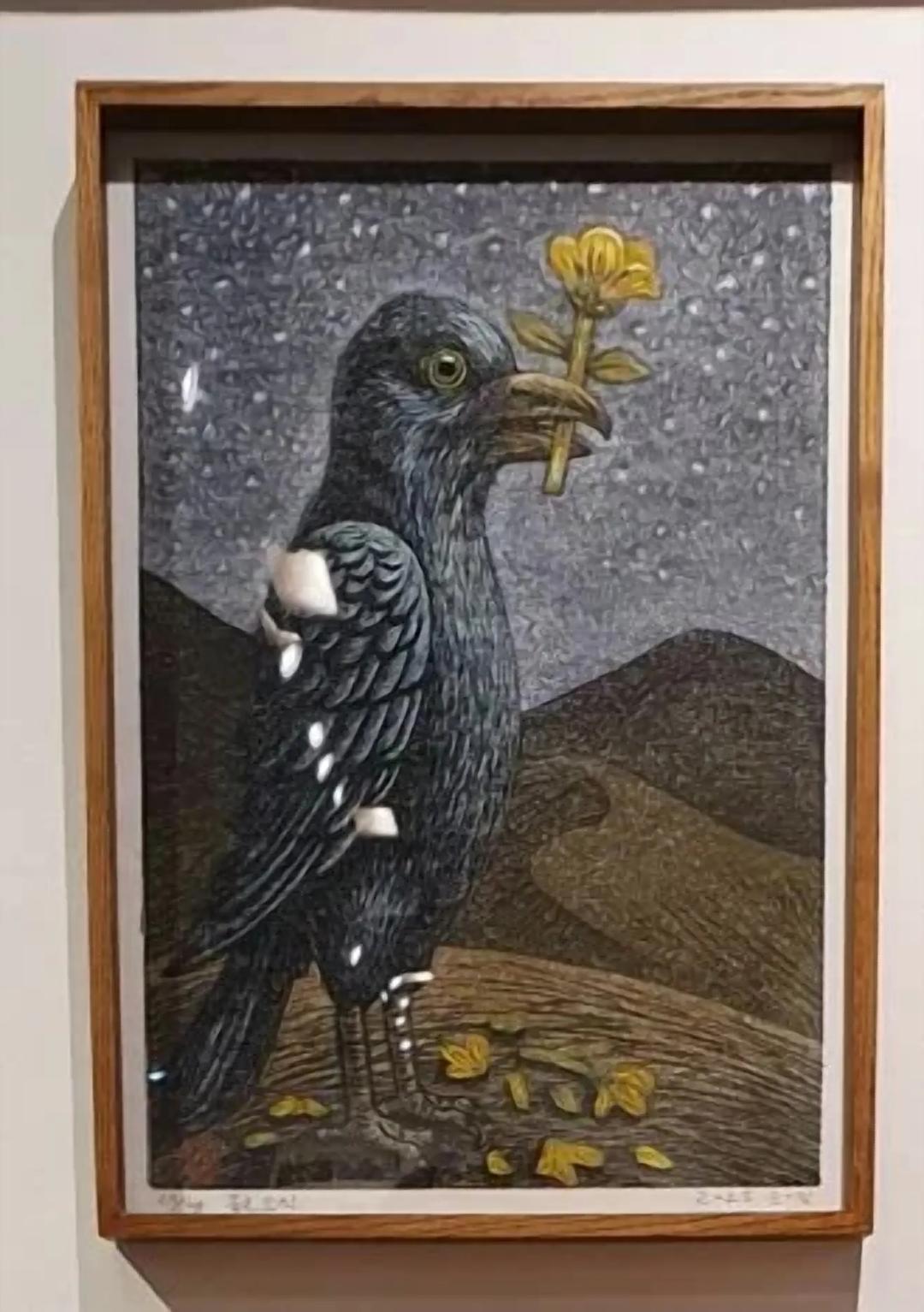
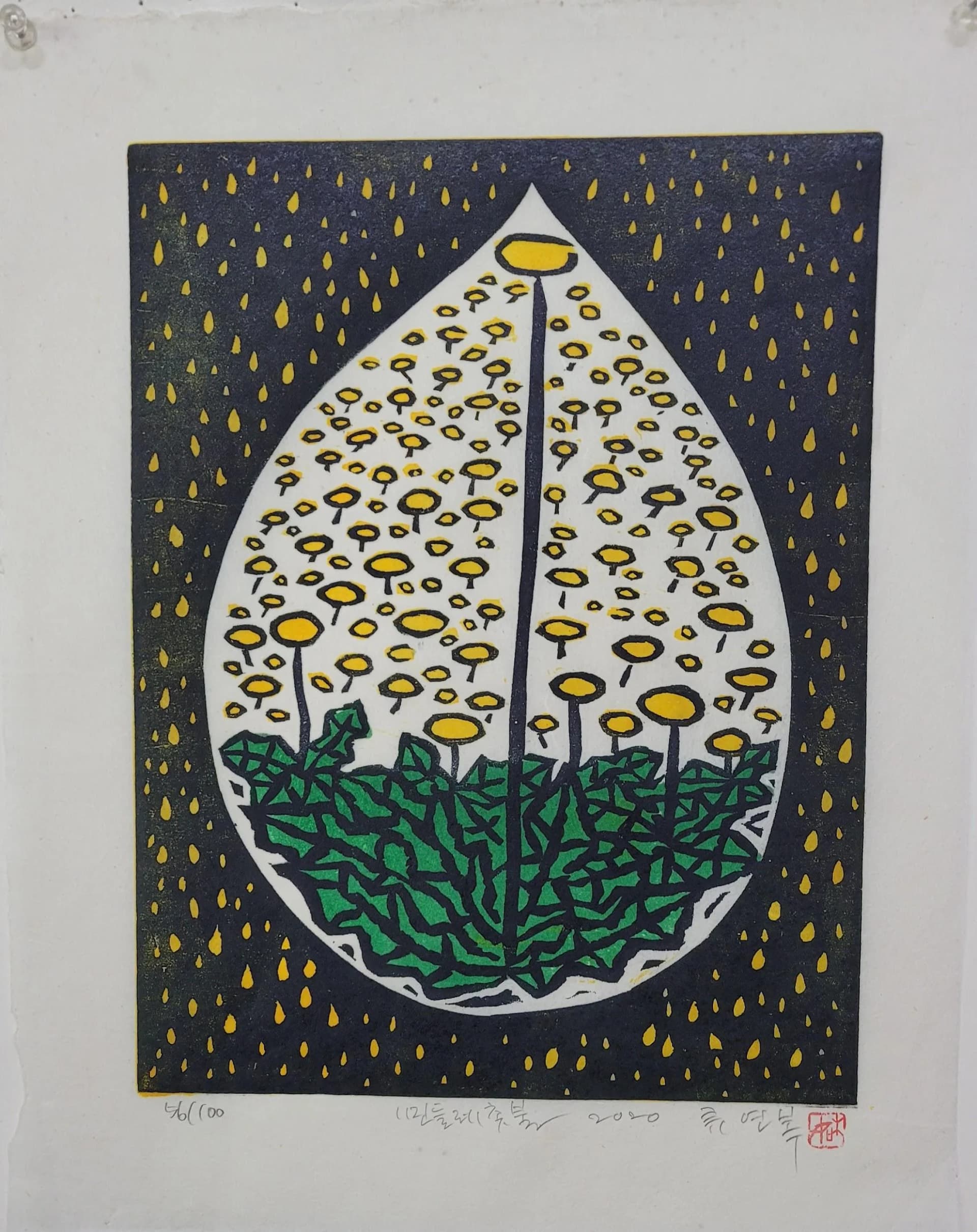
Ryu Yeonbok — Depth of the Print, Texture of Life
An artist who has dug the texture of Korean printmaking deep. Familiar iconography — candlelight, dandelions — carries the weight of print. He contributed Dandelion Candlelight to SAF.
→ Ryu Yeonbok: Depth of the Print, Texture of Life
Kim Jonghwan — A Printmaker Running a Print Studio
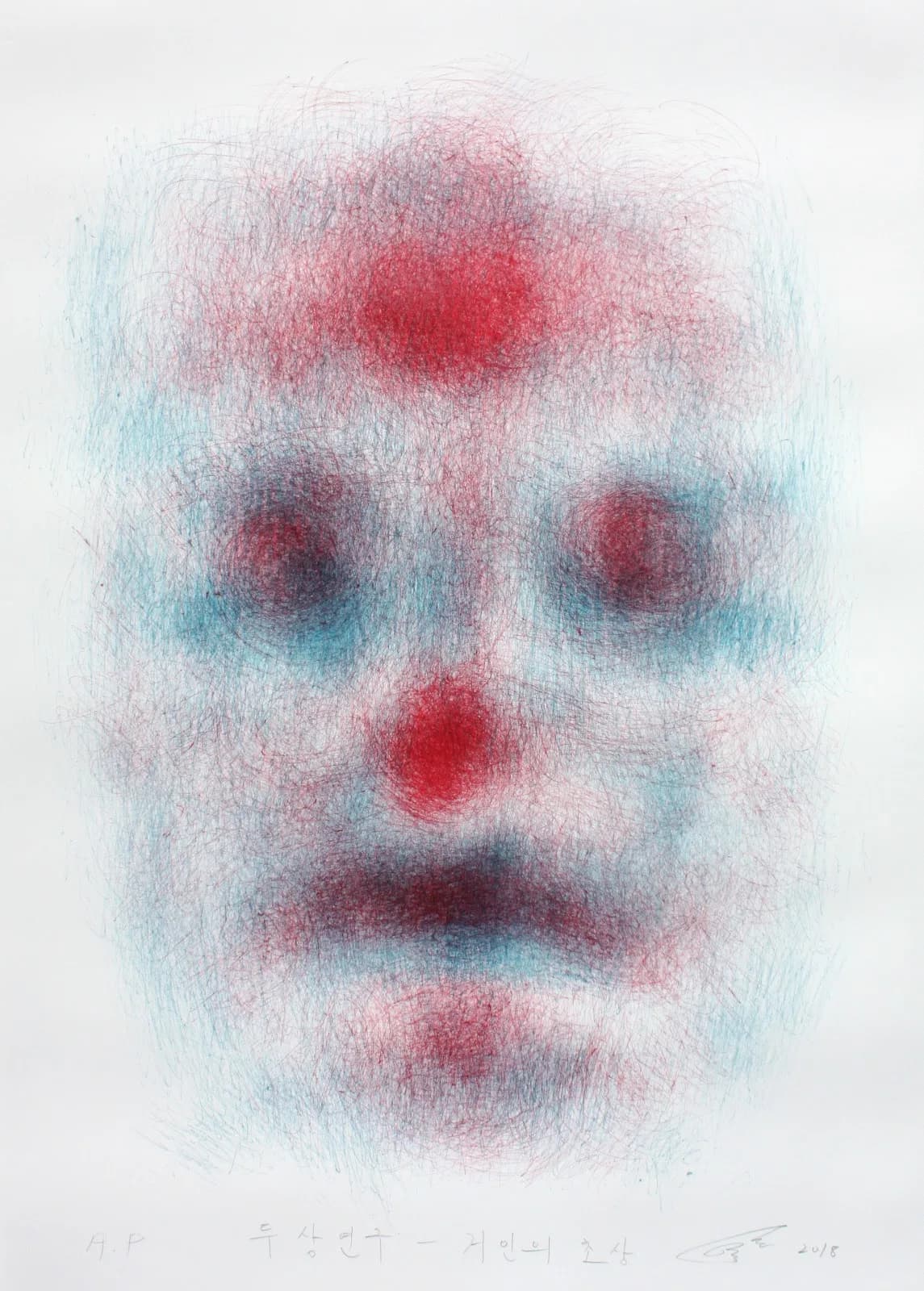
Member of the Korean Contemporary Printmakers Association and the Hongik Printmakers Association. Runs his own studio, Panhwabang, and has illustrated picture books — Banjjokie, Hong Gildong, Hanbija — with print. Also known for his Head Study series made from broken printer parts.
→ From a Broken Printer to a Head Being Born: Kim Jonghwan's Panhwabang
Four Techniques, One Room
The five artists' prints split by technique too.
- Woodcut: Lee Cheolsu, Kim Jun Kwon, Lee Yun Yeop, Ryu Yeonbok — the rough grain of the blade's passage
- Serigraphy (silkscreen): Lee Cheolsu, Min Jeonggi — clear color fields
- Etching: Kim Jonghwan — fine line
- Lithography: Kim Jonghwan — painterly tonal range
Within "printmaking," the impression differs completely by medium. Technique-by-technique detail and the meaning of edition numbers is covered in Prints vs. Originals, and Edition Numbering.
What It Means to Collect Prints
A print is not a reproduction. It's a form of original art that exists in multiple. The artist carves the plate themselves, pulls the impression, and signs and numbers in pencil. 3/30 means: the third of thirty.
Three advantages of buying a print:
- Accessible price — when a painting is several million won, a print meets you in the ₩300K–1M range
- Original-collecting experience — edition-numbered, signed prints are treated as originals for appraisal, insurance, transfer
- Standard sizes — easier to frame and hang
For first-time buyers: Choosing Your First Artwork by Budget · Hanging Guide.
The Solidarity of Print — Art Held by Many
84.9% of Korean artists are excluded from institutional finance. Sales of works by SAF-exhibiting artists cycle into a mutual-aid fund, returning as low-interest loans to fellow artists.
The nature of print itself is close to solidarity. Many impressions come from one plate; the impressions scatter to many walls. An image from one artist's hand exists in many homes at once. At SAF, that scattering gathers once more into the fund. While the press runs, each impression crosses into another artist's studio.
Related Guides
- Prints vs. Originals, and Edition Numbering
- 10 Ho or 30 Ho — How Many Centimeters?
- All Works in the Print Category
Further Reading
Start Collecting
Related reading
If this piece helped, you may also enjoy these related articles:
Seed Art Festival
·