Hanji is not just paper. A fiber that lasts a thousand years, a grain that catches ink, a thickness that lets light through. Reading hanji through the work of four artists: Lee Cheolsoo, Kang Le-a, Shin Yeri, and Suh Gongim.
The Aesthetics of Hanji
Hanji (韓紙) is not just paper. The bark of the mulberry tree (dak) is beaten loose, simmered in lye to bleach, lifted out by foot-press and dried — and what emerges is a fiber that lasts a thousand years. The reason the Jikji Simche Yojeol, printed in 1377 at Heungdeoksa Temple in Cheongju, still holds its form at the Bibliothèque nationale de France, and the reason the records of the Joseon Dynasty Annals can still be read after six hundred years, both lie in the material properties of hanji.
This essay looks at the work of contemporary Korean artists who use hanji as a material, and shows that hanji is not merely a ground but a core element that determines a work's emotion, durability, and temporality.
What Is Hanji — A Materials Primer
The mulberry tree determines everything
The raw material of hanji is the inner bast fiber of the mulberry (dak, 楮) bark. Japanese washi uses the same plant, but Korean hanji is traditionally made by the single-paddle method (oebal-tteugi), in which two layers are scooped and the grain laid in alternating directions. This crossing of grain produces hanji's signature bidirectional strength. It is why hanji does not tear easily and does not crumble even when folded.
The depth of natural bleaching
Traditional hanji not bleached chemically begins with a faint yellow tone and, over time, settles into a steadily warmer ivory. This shift in color adds temporality to the work. The same painting reads differently in five or ten years on hanji, and that change builds the depth of a hanji-based work.
Neutral pH — the secret to a thousand years
Industrial paper from the modern era is mostly acidic, so 30 to 50 years on it yellows and crumbles (a process called 'foxing'). Hanji is made at a near-neutral pH around 7, so natural decomposition by oxidation barely occurs. This is the reason the National Archives and museums adopt hanji as a conservation paper.
Thickness, surface, absorbency
Hanji is not a single thickness but a spectrum, from thin minongji to thick jangji. Surfaces range from smooth to rough, and depending on which hanji an artist chooses, the same ink or pigment yields entirely different results.
How Artists Use Hanji — Four Sensibilities
1. Lee Cheolsoo — Honest absorption on a woodblock
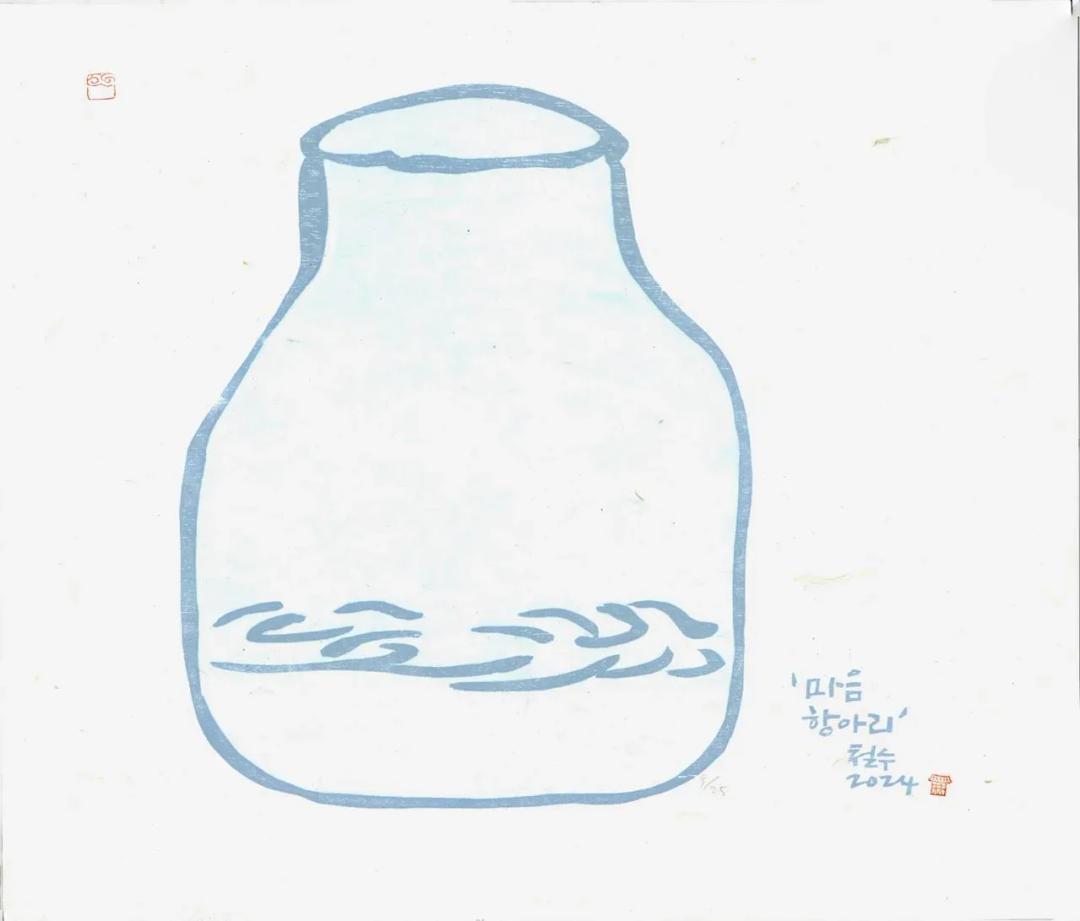
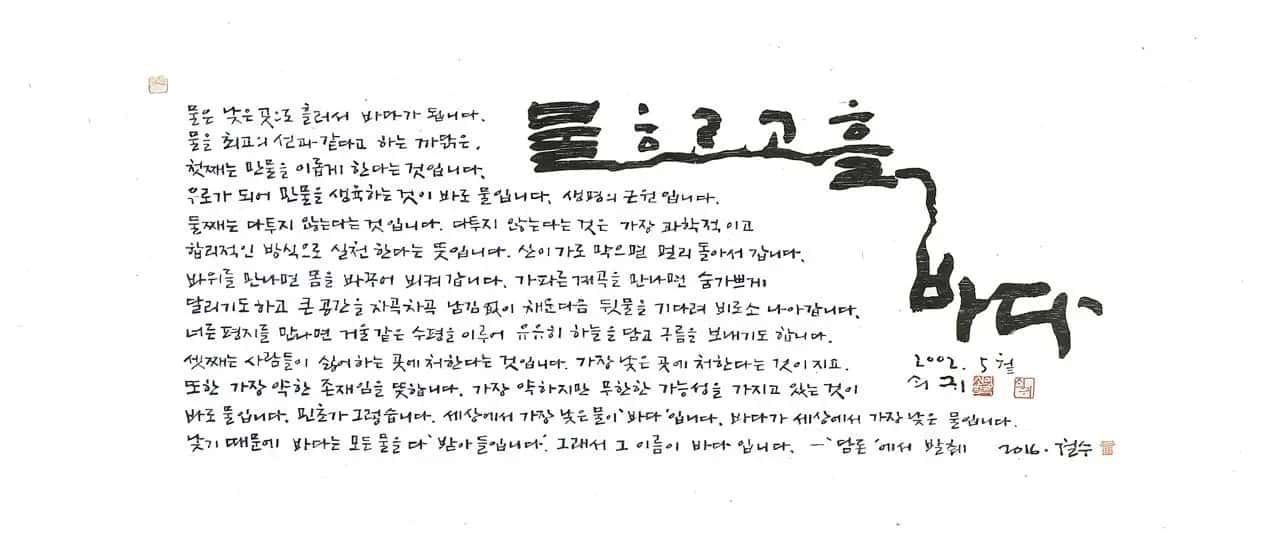
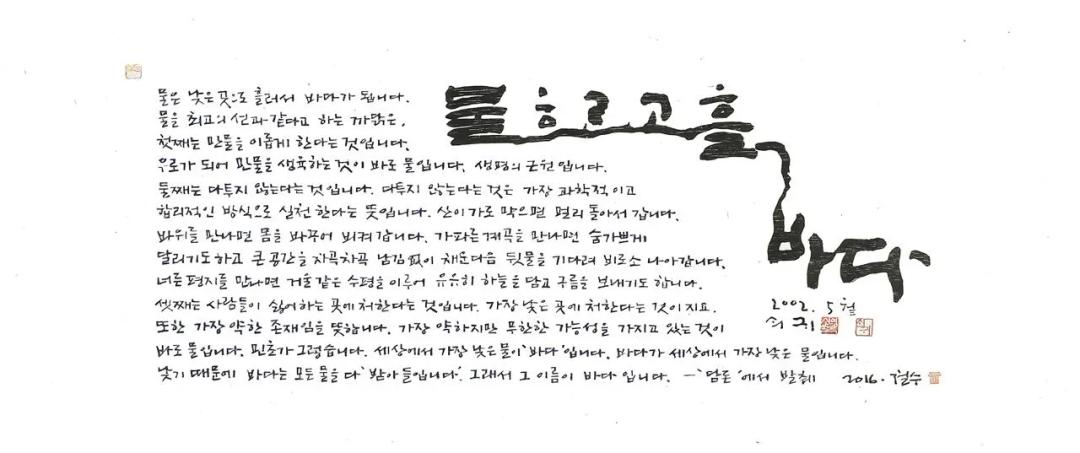
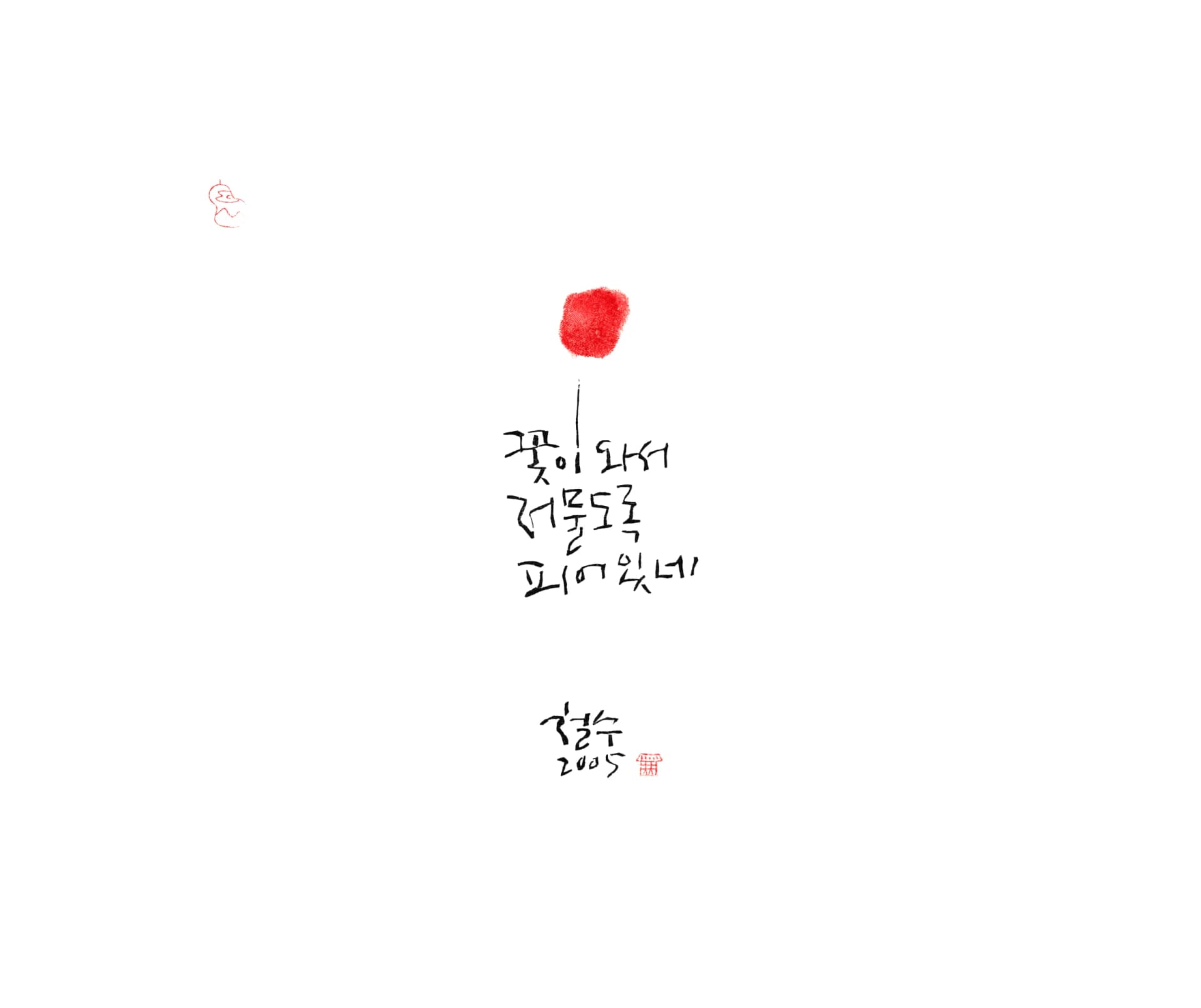
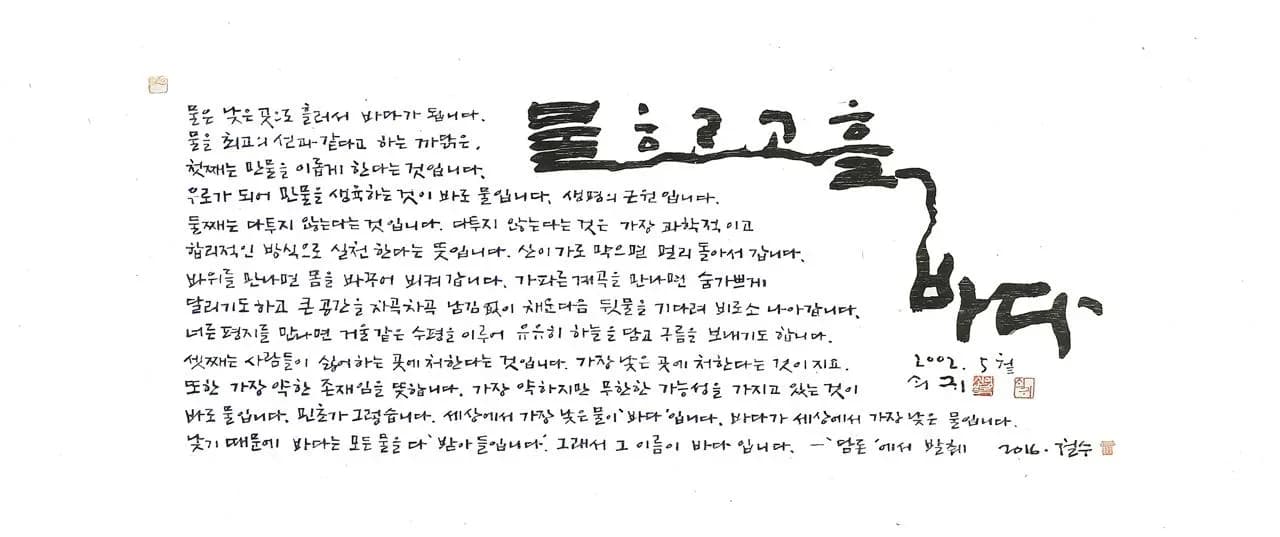
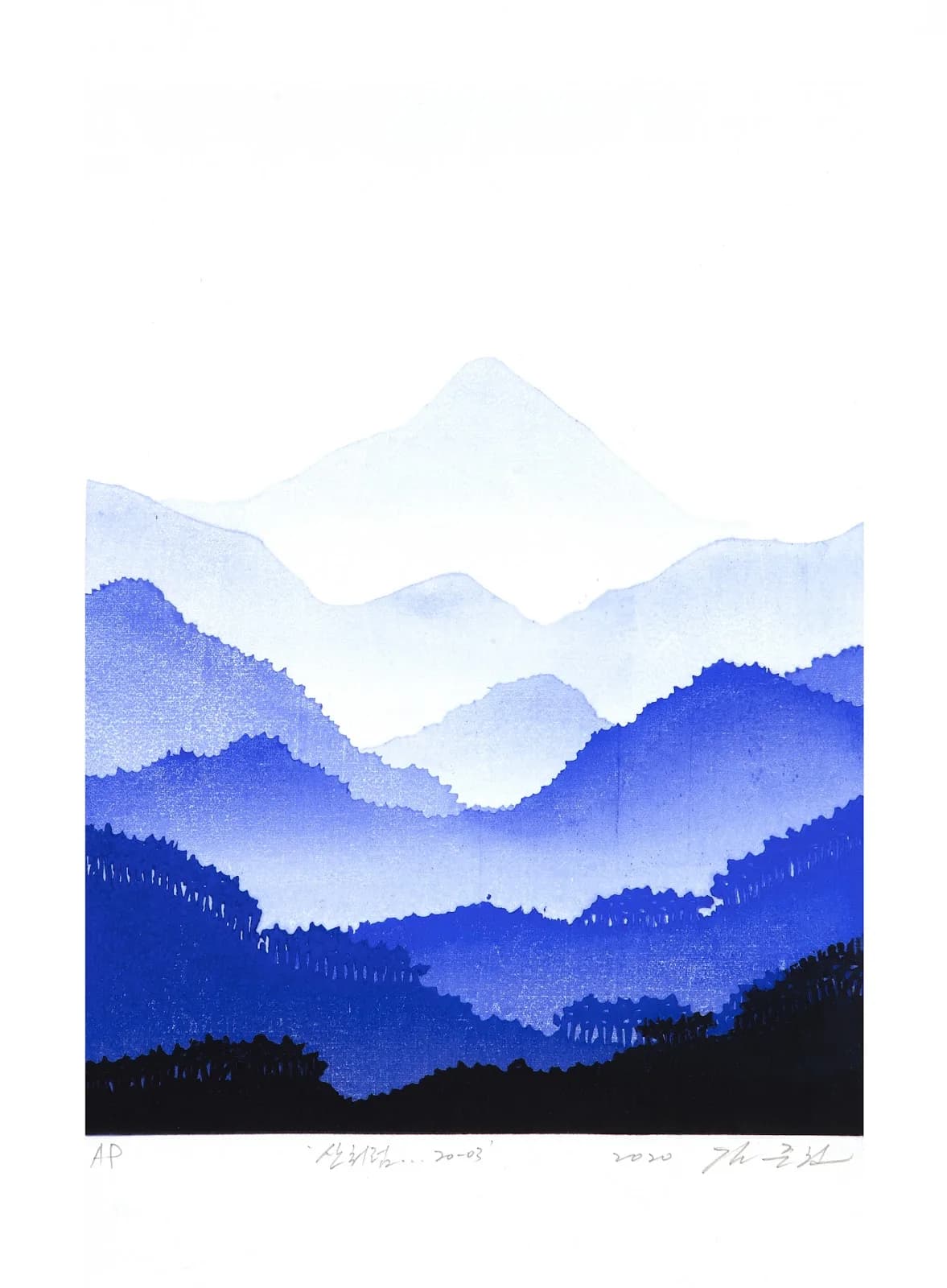
Lee Cheolsoo's woodblock prints represent the most traditional and honest use of hanji. As the lines and forms cut into the block transfer to the paper, hanji takes the dense and dilute gradations of ink almost without distortion. Tiny endings that disappear in mass-printed media, the slight tremor where the blade paused — all remain on the surface of the hanji.
- Materials: woodblock; mulberry hanji (handmade, sometimes blended with mass-produced dakji)
- Character: the gradations of absorbent hanji and the natural exposure of its grain
- Representative works: Heart Vessel, Ipchun, Water Flows On, On to the Sea — works in which the honest line of the woodblock settles onto the deep absorbency and warm hue of hanji
2. Kang Le-a — The temporality of digital pigment on hanji
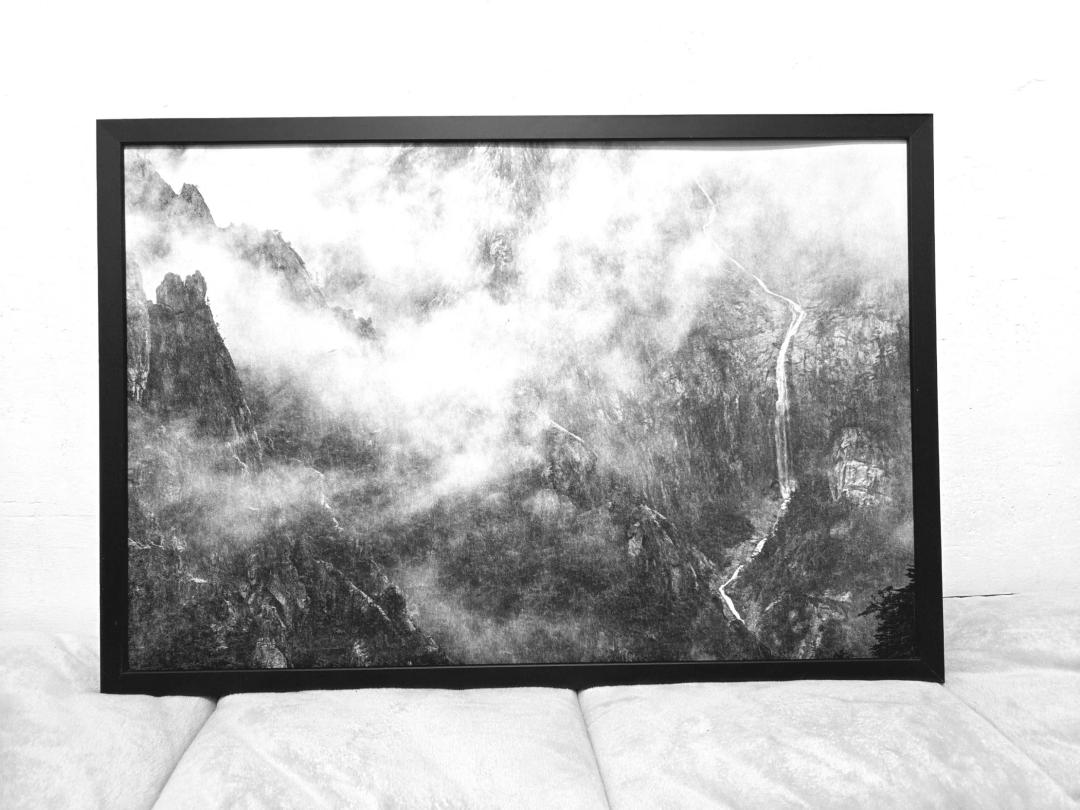
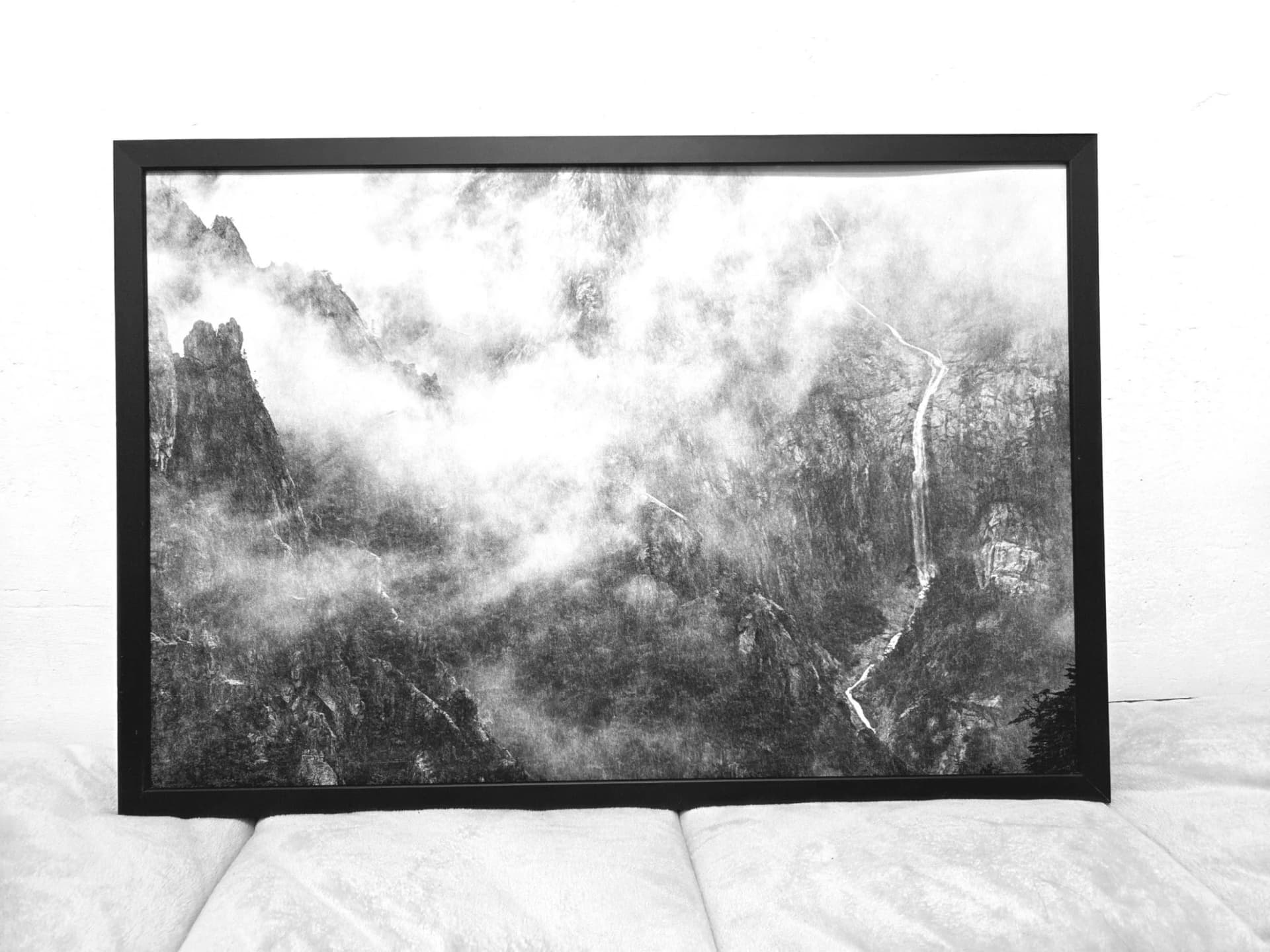
Kang Le-a's #01_S1707SP is a relatively new sensibility in which digital pigment is printed onto hanji. By outputting a natural landscape captured with a digital camera not on standard photo paper but on hanji, the cool precision of the photograph and the warm temporality of hanji meet on a single surface.
- Materials: hanji (mainly dakji), pigment ink (archival pigment print)
- Character: the sharpness of the digital image and the fine absorbency of the hanji grain coexist
- Temporality: standard glossy photographs lose color in 30 to 50 years under light, while the pigment-ink + hanji combination is theoretically capable of holding color for over 100 years
3. Shin Yeri — The depth of dyed hanji and bunchae
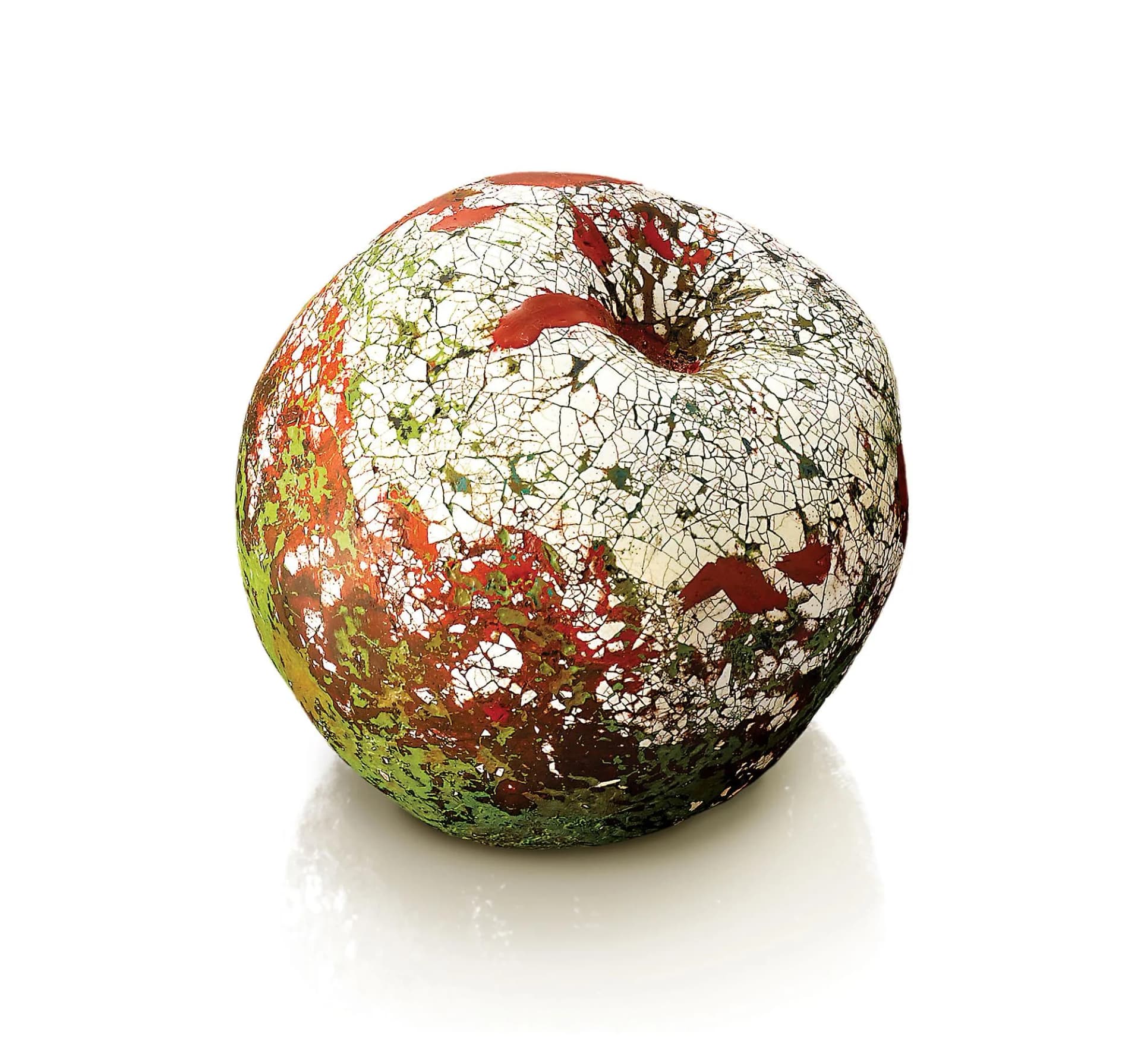
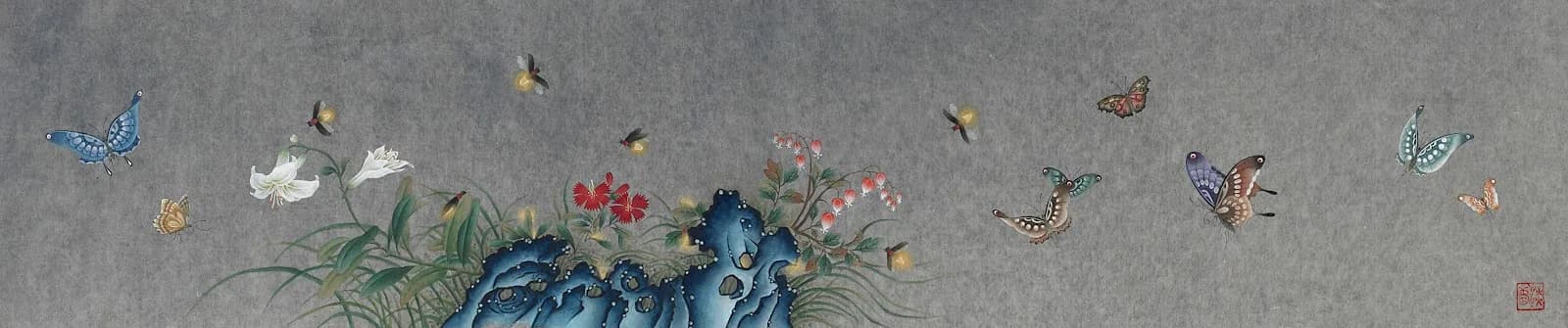
Shin Yeri dyes the hanji first to make her ground, then paints on top with bunchae (powdered mineral pigment). The deep darknesses in works such as Eagle, Chaekgeori, and Wild Form, Flower and Butterfly are not paint applied to white hanji but the color of the dyed hanji itself.
- Materials: dyed hanji (some ink-dyed) with bunchae on top
- Character: hanji is not a passive ground but a primary element determining the color and emotion of the work
- A different thread from An Eun-kyung's color-on-jangji: where An Eun-kyung lets light pass through layers of thick jangji, Shin Yeri builds darkness through the deep dyeing of single-layer hanji
4. Suh Gongim — Sugan-bunchae on hanji, the tradition continued
Works like Suh Gongim's Hero follow the very traditional Korean technique of applying sugan-bunchae (mineral pigment dispersed in animal-glue water) on hanji. Sugan-bunchae is the essence of Korean ink painting, dating back to Silla and Goryeo: mineral pigments dissolved in glue water and laid onto hanji.
- Materials: hanji (mainly thick dakji), sugan-bunchae
- Character: keeping the absorbency of the hanji while bringing out the chromatic strength of mineral pigment. Deep mineral color collides with the warm ivory of hanji
- Contemporary meaning: artists who have brought sugan-bunchae, fading from contemporary practice, back to life on hanji
Four Effects Hanji Brings to a Work
Effect 1. Conservation
As mentioned above, the combination of natural dakji and natural pigment is documented to last over 1,000 years. Compared to canvas and standard paper works, whose conservation limits run at most 100–150 years, hanji works are far closer to assets that pass between generations.
Effect 2. Change within time
The color of hanji at first sight is subtly different from the color of the same hanji ten years on. The ivory deepens, and the pigments steep more deeply into the fiber. The work grows along with time — a virtue digital prints and acrylic on canvas don't share.
Effect 3. A relationship with light
Thin hanji partially transmits light. Thick jangji seems to glow from within when light strikes it. The reason a single work reads differently in a sunlit living room and a lamplit bedroom is that hanji is a medium that responds to light.
Effect 4. An automatic link to East Asian sensibility
Hang a hanji work in your living room and, whatever its content, a Korean and East Asian register enters the space. This is not a conscious choice but the cultural weight that comes with the material itself. When you want to add an East Asian tone to an interior, a hanji work is the most direct way.
Notes on Storing and Displaying Hanji Works
1. Avoid direct sunlight
Natural hanji is strong against oxidation, but direct sunlight is a different matter. Direct exposure draws the pigment out and discolors the surface. Even in a living room or study, avoid placing the work directly in front of a south-facing window, and use UV-blocking framing or UV-filtering glass.
2. Maintain humidity at 40–55%
Hanji is highly sensitive to humidity. In dry air below 30% it contracts and develops fine surface cracks; above 70%, mold and foxing appear. Use a humidifier or dehumidifier to keep the range between 40% and 55%.
3. Framing — no acidic mats
Hanji works must be framed with acid-free matboard and backing. Acidic mats touching hanji cause yellowing and foxing within 5–10 years. When ordering a frame, specify 'museum-grade matting'.
4. Transport and storage
When rolling a hanji work for storage, roll along the grain and place it on a round core inside to prevent crease lines. For flat storage, slip a sheet of glassine paper between hanji works to prevent pigment transfer.
Frequently Asked Questions
Q. Is there a price gap between hanji works and Western paper works? A. It depends on medium, artist, and size, but comparing same-period works by the same artist generally yields hanji prices 1.2 to 2 times higher than Western paper. Conservation, material cost, and traditional value are reflected. The rule isn't absolute, however — visual completeness still decides more.
Q. Is there a difference between handmade hanji and mass-produced dakji? A. A large one. Hanji made by the traditional single-paddle method has crossed grain for high strength, with a finely irregular surface that lets pigment penetrate more deeply. Mass-produced dakji is uniform but single-grain, so its material behavior is simpler. When collecting, asking about the artist's hanji source (e.g. Jeonju hanji, Uiryeong hanji, Gapyeong hanji) helps in judging value.
Q. Can I hang a hanji work near a bathroom or kitchen? A. Not recommended. Bathrooms have wide humidity swings, and kitchens deposit oil and smoke onto the hanji surface. Living rooms, bedrooms, and studies — spaces with stable humidity and air — are recommended.
Q. How should I frame a painting on hanji? A. If you use a standard photo frame, the hanji touches the glass directly and condensation or mold can form. Always insert a sheet of acid-free matboard to create space between hanji and glass, and use acid-free corrugated board or core-cell as backing. At a professional framer, ask for 'a hanji work, museum-grade framing'.
Q. I can see hanji works in digital photographs — why see them in person? A. A digital photograph cannot carry the grain, thickness, or light-transmission of hanji. The same work, seen at eye level in person, opens up dimensions of thickness that read as flat on screen. A hanji work is a medium completed not on a screen but in space.
Q. When buying directly from an artist, can I ask about the source of their hanji? A. Yes — and it's encouraged. A good artist knows the origin, maker, and thickness of the hanji they use. 'What hanji do you use?' is a question artists enjoy and a signal that the collector is serious.
In Closing
Hanji is part of the work before anything is painted on it. Which hanji did the artist choose, and how does that hanji contribute to the work's emotion, durability, and temporality — being able to ask these two questions deepens the way you see Korean contemporary painting, printmaking, and photography.
The same is true for the collector. A single hanji work can be the start of an asset that crosses generations.
Related reading
If this piece helped, you may also enjoy these related articles:
Browse hanji-based works at SAF →
Meet the Artists
Further Reading

Seed Art Festival
·