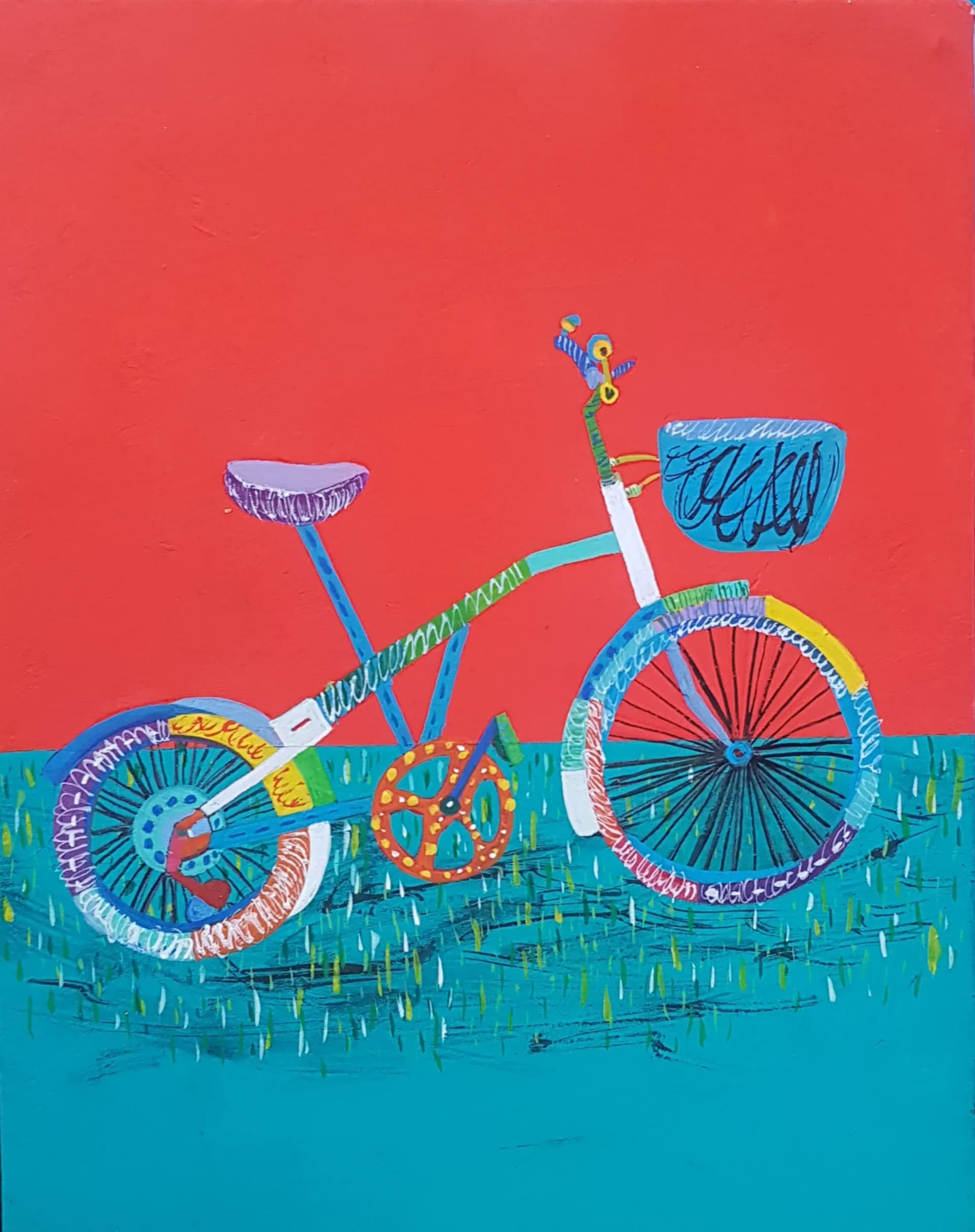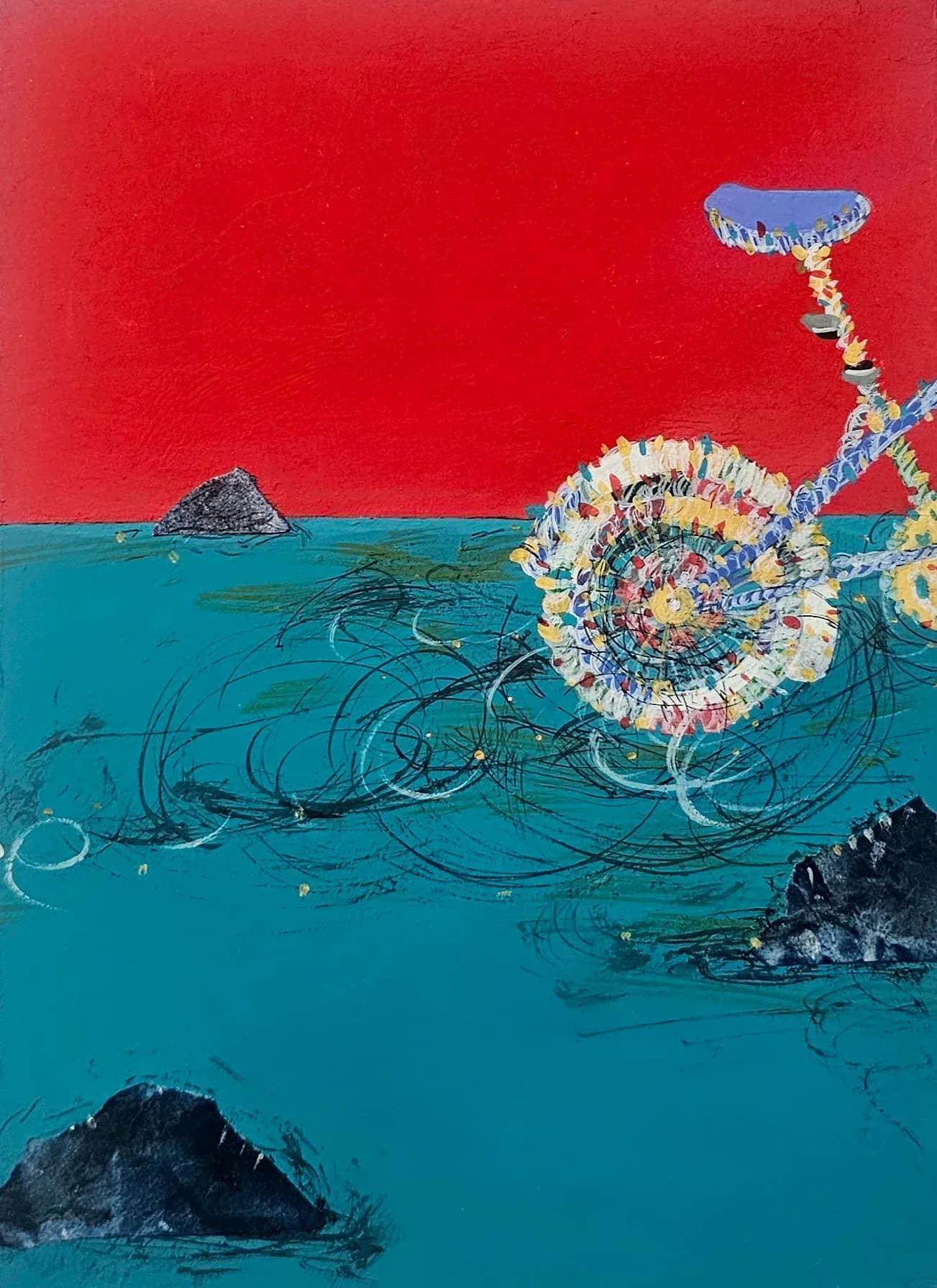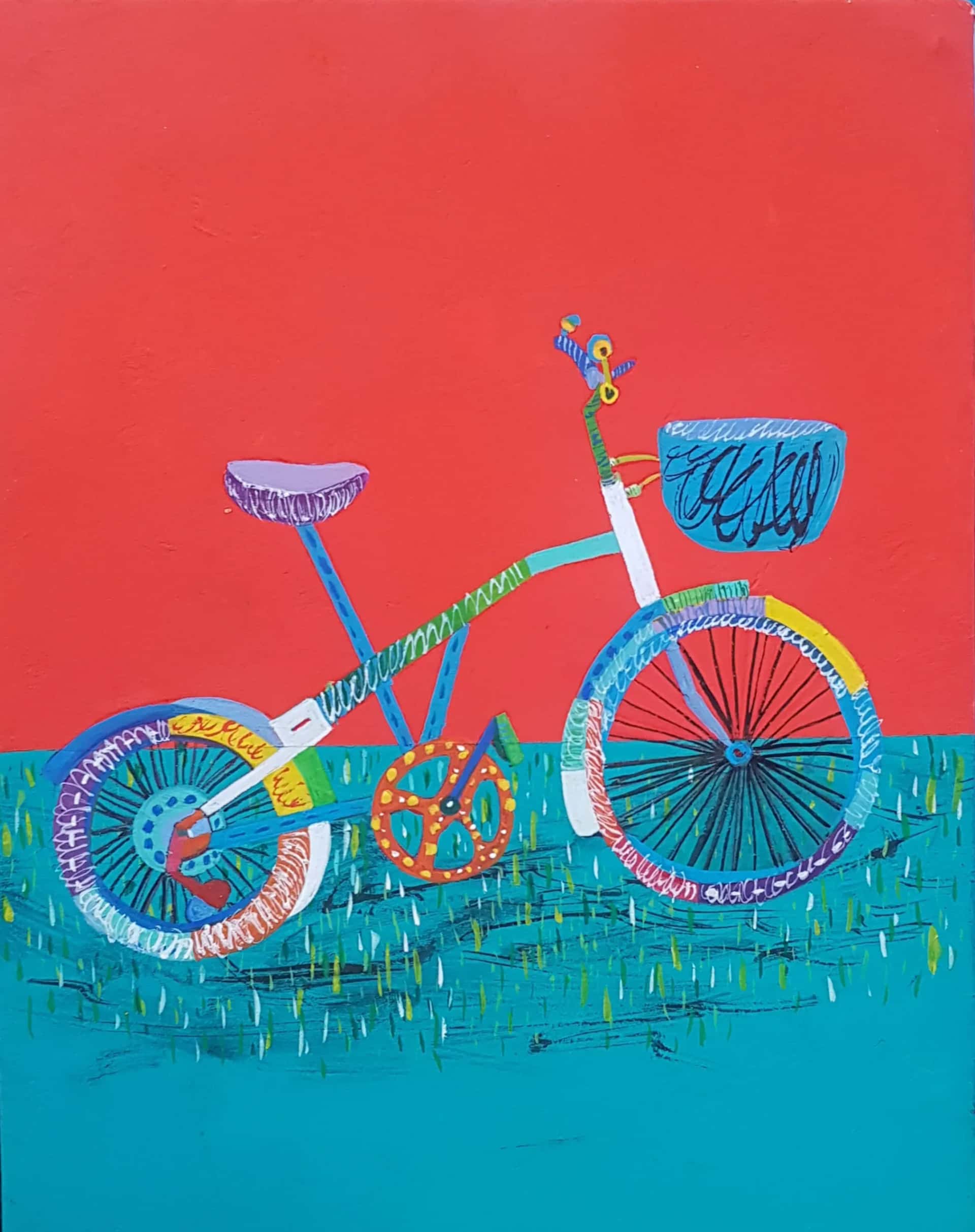
Janji is a thick traditional Korean surface made by layering hanji. Through An Eunkyung's paintings, we read its absorption, thickness, and quiet emotional effect.
Color on Jangji — Reading Contemporary Korean Painting Through An Eunkyung
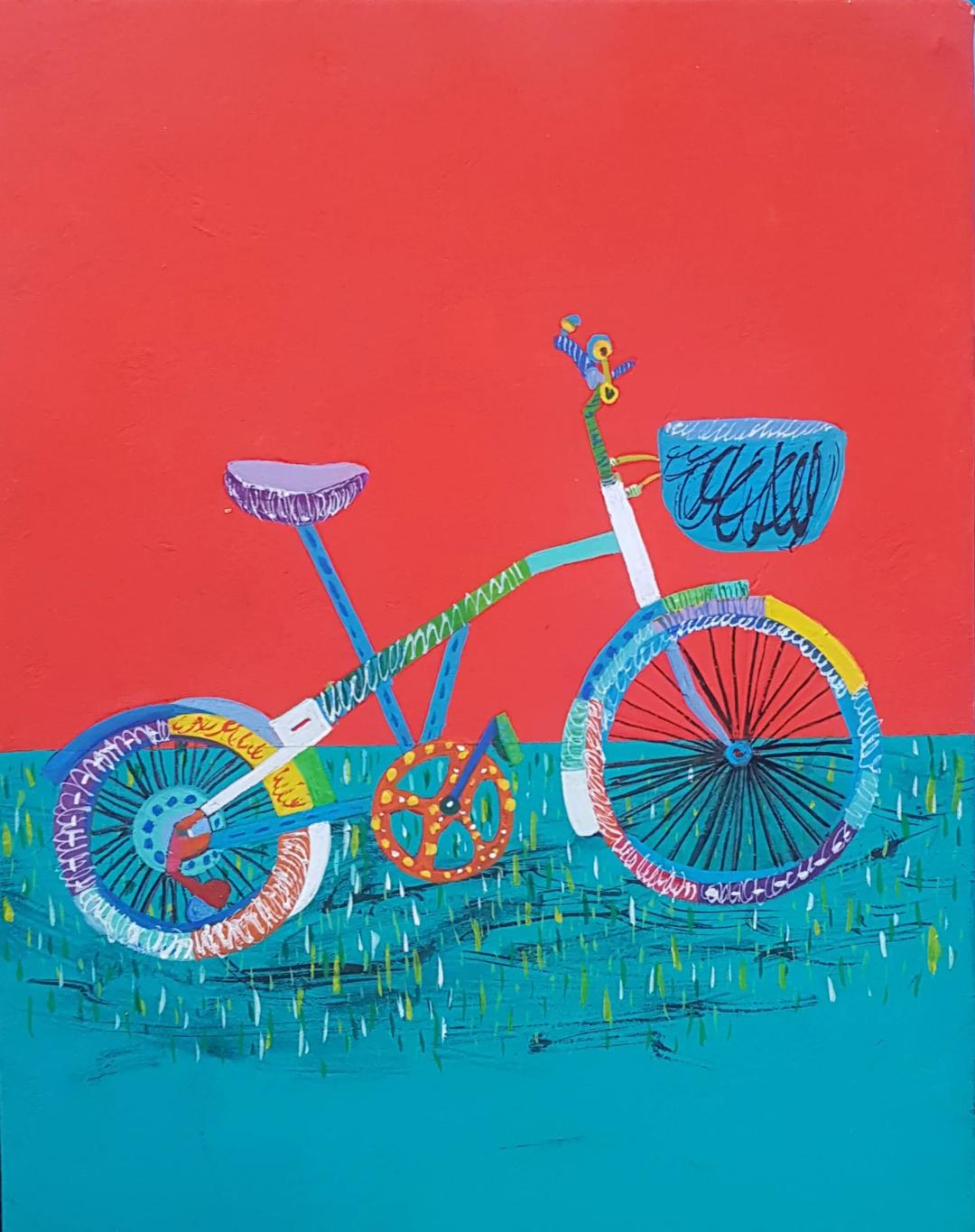
In contemporary Korean painting, the term "Korean-style painting" (한국화) keeps narrowing. While Dansaekhwa, Minjung art, digital practice, and experimental painting all stake claims on Korean identity, artists who paint the breath of their own time on traditional materials have worked relatively quietly. An Eunkyung is one of those quiet artists.
This essay reads how the Korean traditional paper called jangji (壯紙) becomes part of contemporary painting through An Eunkyung's Comma (,), Looking Back, A Moment That Stays, and Awkward Journey.
What is jangji?
The difference between hanji and jangji
What is generally called "hanji" is a single layer of mulberry paper. Jangji (壯紙), by contrast, is a Korean traditional painting paper made by laminating multiple sheets of hanji (typically three to five) into a thicker support. The character 壯 means "strong" or "thick" — the name describes a paper that is thick and firm.
| Property | Hanji | Jangji |
|---|---|---|
| Thickness | single layer, 30–80 g/m² | multi-layer lamination, 200–400 g/m² |
| Use | printing, calligraphy, records, window paper | painting, color painting |
| Absorption | fast and deep | slow and deep |
| Flexibility | folds easily | rigid, with canvas-like strength |
| Light transmission | partially transparent | almost opaque, with light held inside |
While preserving hanji's archival quality and grain, jangji lets a painter build up substantial layers of pigment — it serves as "the canvas of Korean-style painting."
The making of jangji — the craft of lamination
Jangji is not simply hanji glued together. Paste concentration, drying time, and pressure are all controlled with precision. Well-made jangji has a uniform surface that still preserves the natural irregularity of hanji's fibers, and its layers do not separate over time. A traditional jangji master takes more than a week to produce a single sheet, and good jangji costs five to ten times the price of standard hanji.
An Eunkyung's Practice — How Jangji Determines the Mood
Short breath — Comma (,), A Moment That Stays
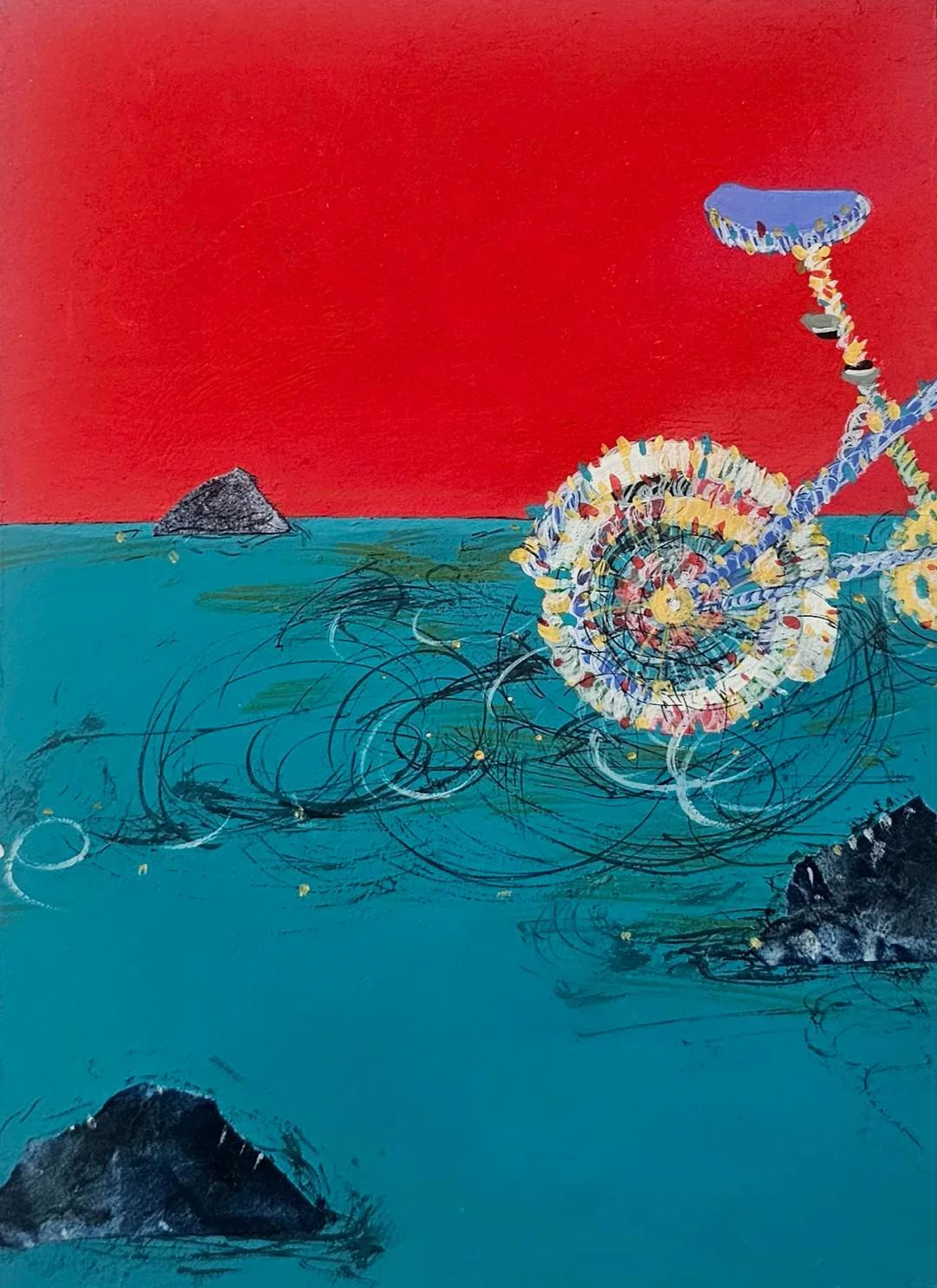
The first thing one notices in An Eunkyung's work is the small format. Comma (,) (19x24cm) and A Moment That Stays (16x22cm) — works close in size to a single A4 sheet — form the heart of her practice.
This scale is not accidental. The weight and thickness of a single sheet of jangji, the size that sits comfortably in the hand and opens well on a desk to be painted — that is the size she works at. Rather than carrying a long breath across a large surface, An Eunkyung has chosen to hold a short, condensed breath on a single sheet of jangji.
A square meditation — Looking Back
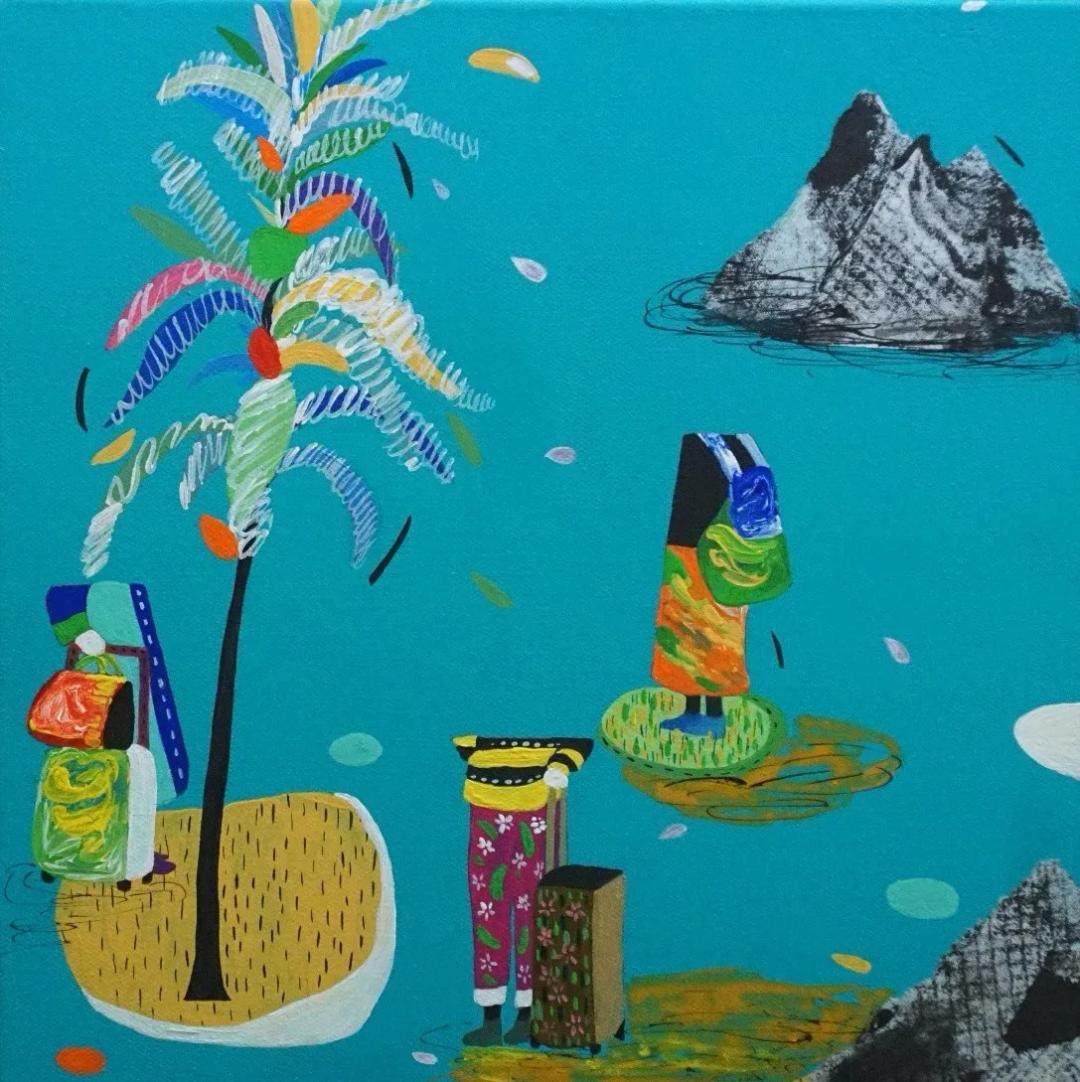
Looking Back (30x30cm, square) is the most meditative of An's works. The square jangji prevents the eye from drifting up, down, left, or right, anchoring the gaze inside the picture plane. Where the traditional Korean handscroll or hanging scroll emphasized the flow of viewing, An Eunkyung's square jangji is the contemporary inversion — binding the gaze to a single point.
Long breath — Awkward Journey
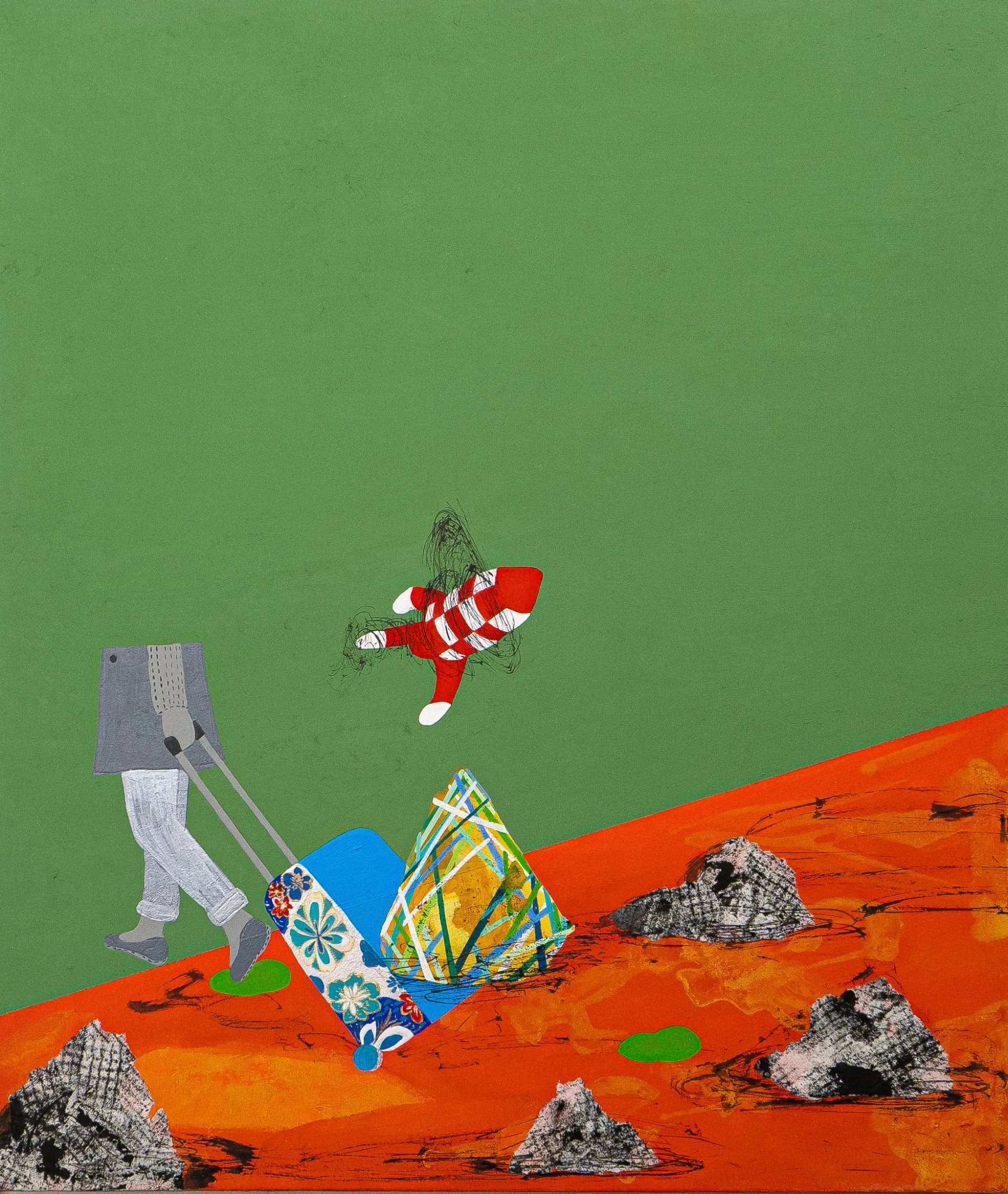
Awkward Journey (45.5x53cm) is comparatively large for An Eunkyung. Here the condensed breath of her smaller works is released into a longer line. The piece demonstrates that jangji's thickness performs reliably even on a wider surface.
An Eunkyung's choice of materials — jangji + color and mixed media
Her materials are consistently color or mixed media on jangji — not simple ink:
- Bunchae (粉彩) — mineral pigments
- Some seokchae (石彩) — coarser-grained mineral pigments
- Geumni/eunni (gold and silver) — metallic pigments, in places
- Ink — for tonal modulation
These materials accumulate on the deep absorbency of jangji so that layers of color do not stay locked at the surface but glow from within.
Four Effects Jangji Brings to a Work
Effect 1. Color that glows from within
The core property of jangji is that light enters the paper rather than reflecting off its surface, and re-emerges from inside. Pigment on canvas reflects light at the surface and reads as flat; pigment on jangji penetrates into the paper's fibers, producing the effect of the paper itself glowing.
That is why An Eunkyung's warm cream and soft tones appear to emit a gentle inner light under living-room lighting.
Effect 2. Meditative silence
The surface of a canvas painting is always saying something — thick paint, gloss, rough texture. The surface of jangji is closer to silence. The visual weight of the thick paper produces calm, and the forms drawn upon it naturally take on a meditative atmosphere.
Effect 3. Long-term preservation
Because jangji is laminated from multiple layers of hanji, it shows more stable adaptation to environmental shifts than a single sheet of hanji. It is less sensitive to humidity fluctuation and warps less when stored flat. Because of its thickness, however, framing demands greater precision.
Effect 4. Freedom as contemporary painting
Jangji is a traditional Korean medium, but what is painted on it is up to the artist. Some, like An Eunkyung, paint the breath of contemporary daily life; others, like Shin Yeri, bring the line of traditional flower-and-bird painting (花鳥圖) into the present. What jangji decides is "the depth of the material"; what is made on it is artist by artist.
Collecting Works on Jangji — Four Tips for First-Time Buyers
1. Start with small jangji
A first jangji work is best at 30x30cm or smaller. It's a scale that hangs well on a single wall and rewards daily viewing, and the price range of ₩500,000–1,500,000 is accessible to entry-level collectors. An Eunkyung's Comma (,), A Moment That Stays, and Awkward Thought sit in this register.
2. Always frame in a jangji-specific mount
Because jangji has thickness, fitting it directly into a standard paper-mat frame compresses it and warps the surface. Either deepen the matboard cut to match the paper's thickness, or commission a shadow box that gives the work breathing room without a mat.
3. Light exposure — the same principles as hanji
Avoid direct sunlight; maintain humidity at 40–55% — the same principles that apply to hanji works(공개 예정). Jangji's thickness gives it slightly more tolerance to environmental change than single-layer hanji.
4. Confirm the artist's consistency
The value of an artist working on jangji comes from how consistently and deeply they have engaged with the medium. A piece by an artist like An Eunkyung — who has worked with jangji as her primary medium for over a decade — holds its long-term collecting value better than a one-off experiment with the material.
Other Artists Who Work With Jangji
Jangji is a core medium of Korean-style painting, and many artists work it in different registers. Examples among SAF entries:
- Lee Ho — A Moment to Linger (72.7x50cm, pencil and bunchae on jangji). A larger surface than An Eunkyung's, combining pencil drawing with mineral pigment.
- O A — You Don't Even Read My Heart (72.7x60.6cm, ink and bunchae on jangji). The traditional Korean-painting register, with ink as the primary force.
- An Eunkyung — small jangji + refined color, in a contemporary register.
Comparing the three artists' use of jangji makes clear how differently the same medium can sound in different hands.
Frequently Asked Questions
Q. Which preserves better — works on jangji or on canvas? A. It depends on conditions. In an interior environment that is well managed (no direct sunlight, humidity at 40–55%), jangji outlasts canvas. In environments that are harder to control (studios, storage), canvas can be more stable. In a typical living room or study, jangji is sufficiently safe.
Q. I can't find a signature on a work on jangji — where is it? A. In the Korean-painting tradition, signatures are usually placed small on the back or near the edge of the work. Artists like An Eunkyung often use a seal on the verso or a stamp at the edge rather than a signature on the picture surface. Asking the artist directly is the most reliable way to confirm.
Q. Can I give a work on jangji as a gift? A. Yes. Confirm the recipient's environment in advance — sunlight, humidity, pets, children — and pass along a care-and-handling note with the work. Korean-painting works that arrive without a care guide are commonly damaged within five years.
Q. Are there other contemporary Korean-style painters with a similar register to An Eunkyung? A. Kim Minyoung, Lee Jeongju, and Park Jiyoung — Korean-style painters born in the 1970s and 1980s — work in adjacent registers. An Eunkyung's distinctive signature, however, is the condensed breath of small-format jangji. Beyond the SAF gallery, Hakgojae, Gallery Hyundai, and Wooson Gallery regularly handle contemporary Korean-style painters.
Q. Where can one buy jangji? A. It's hard for non-artists to source jangji. Specialist art-supply stores (e.g., Homi Hwabang, Munkyo Munku) carry some varieties, but the best jangji is usually ordered directly from a master papermaker by the artist. Beginners learning Korean painting typically start on standard hwaseonji (drawing paper) and move on to jangji in stages.
In Closing
Jangji is the most Korean of surfaces in Korean painting. Whatever it carries — plum blossom, abstraction, daily landscape — its thickness, absorbency, and way of carrying light determine the emotional register of the work.
A single small jangji work by An Eunkyung is the most direct way to fill one corner of a living room with the breath of Korean painting. If a large canvas dominates a room, a small jangji creates a small space of silence inside it.
Related reading
If this piece helped, you may also enjoy these related articles:
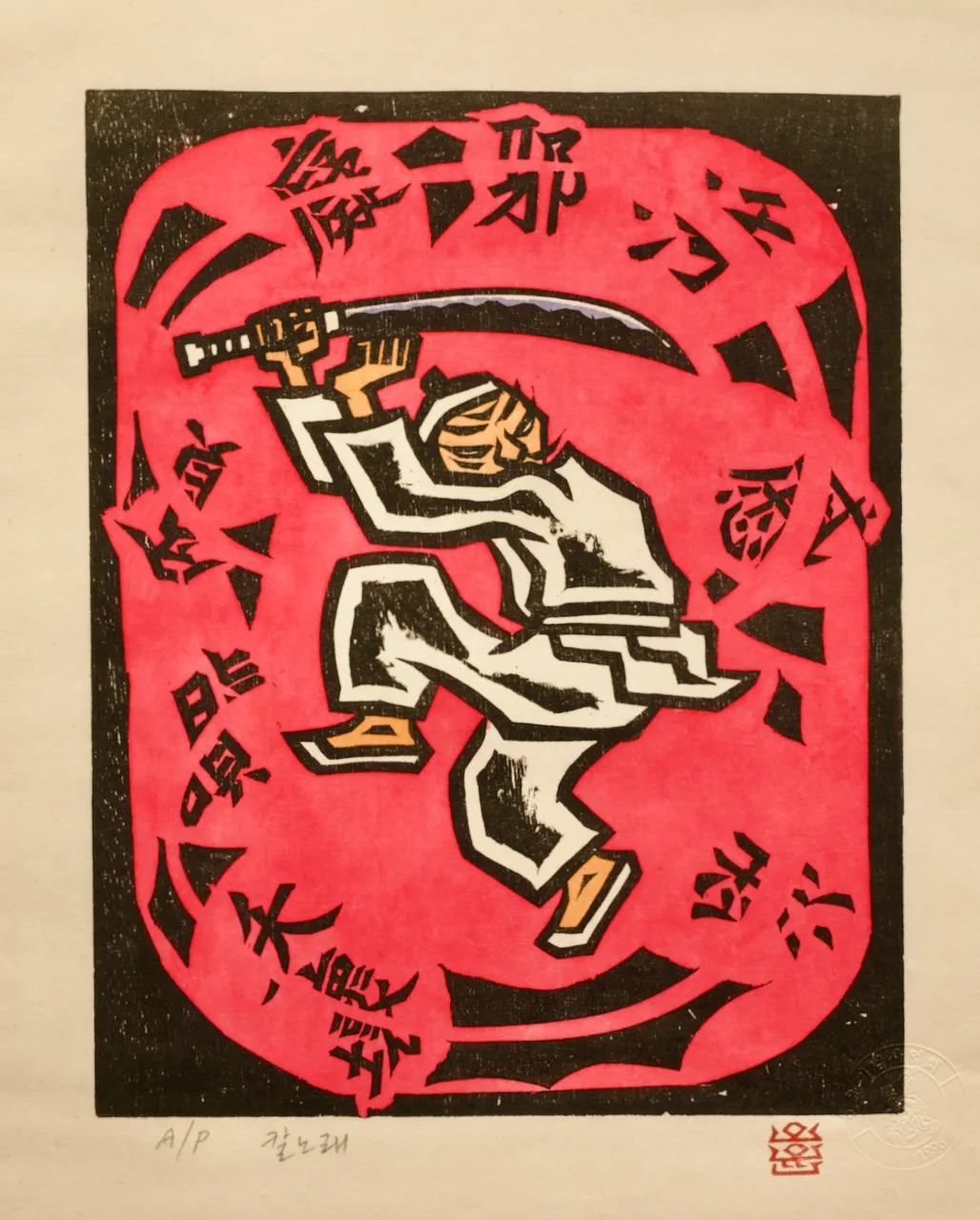
Browse An Eunkyung's jangji works at SAF →
Further Reading
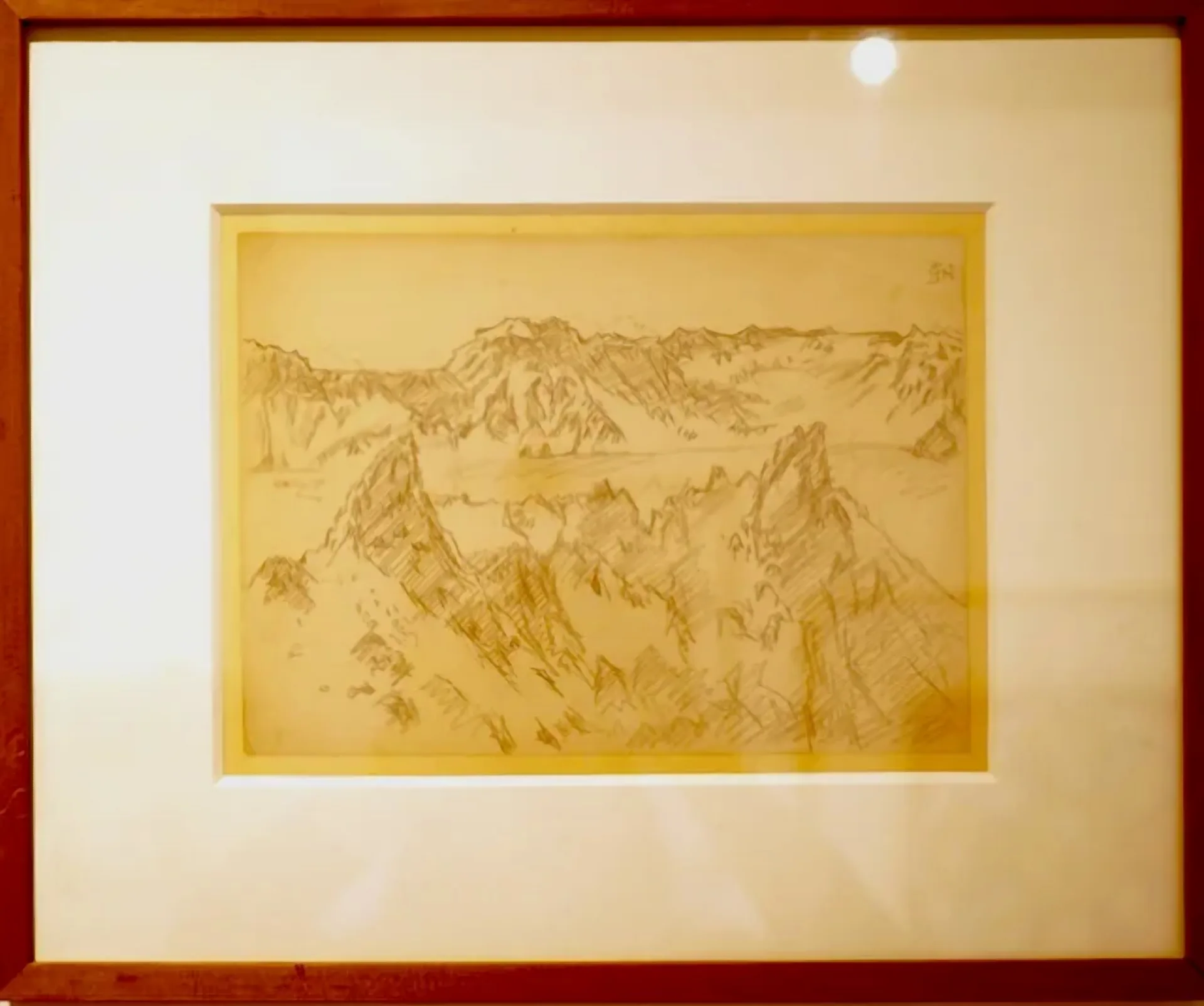
Further Reading
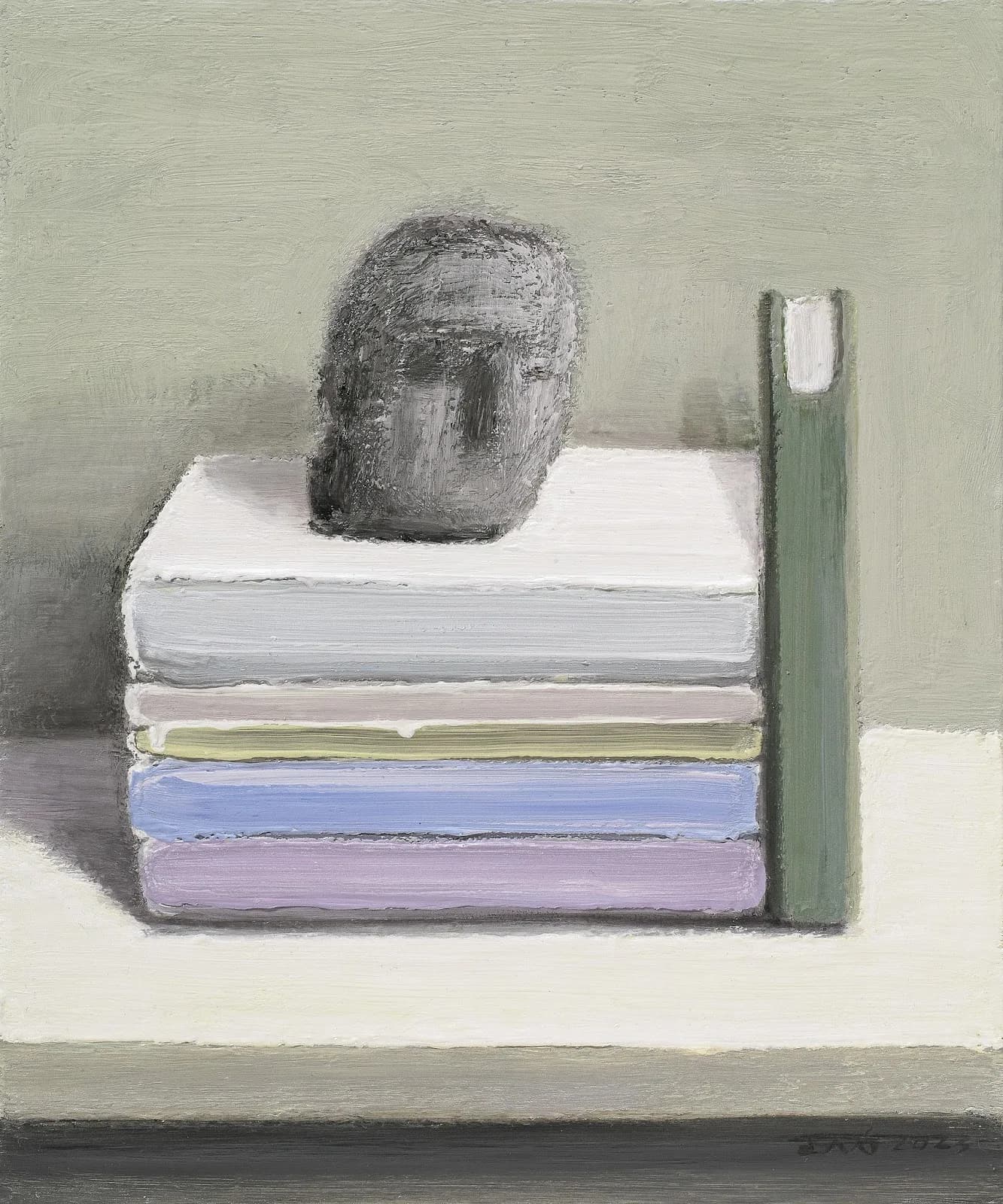
Seed Art Festival
·