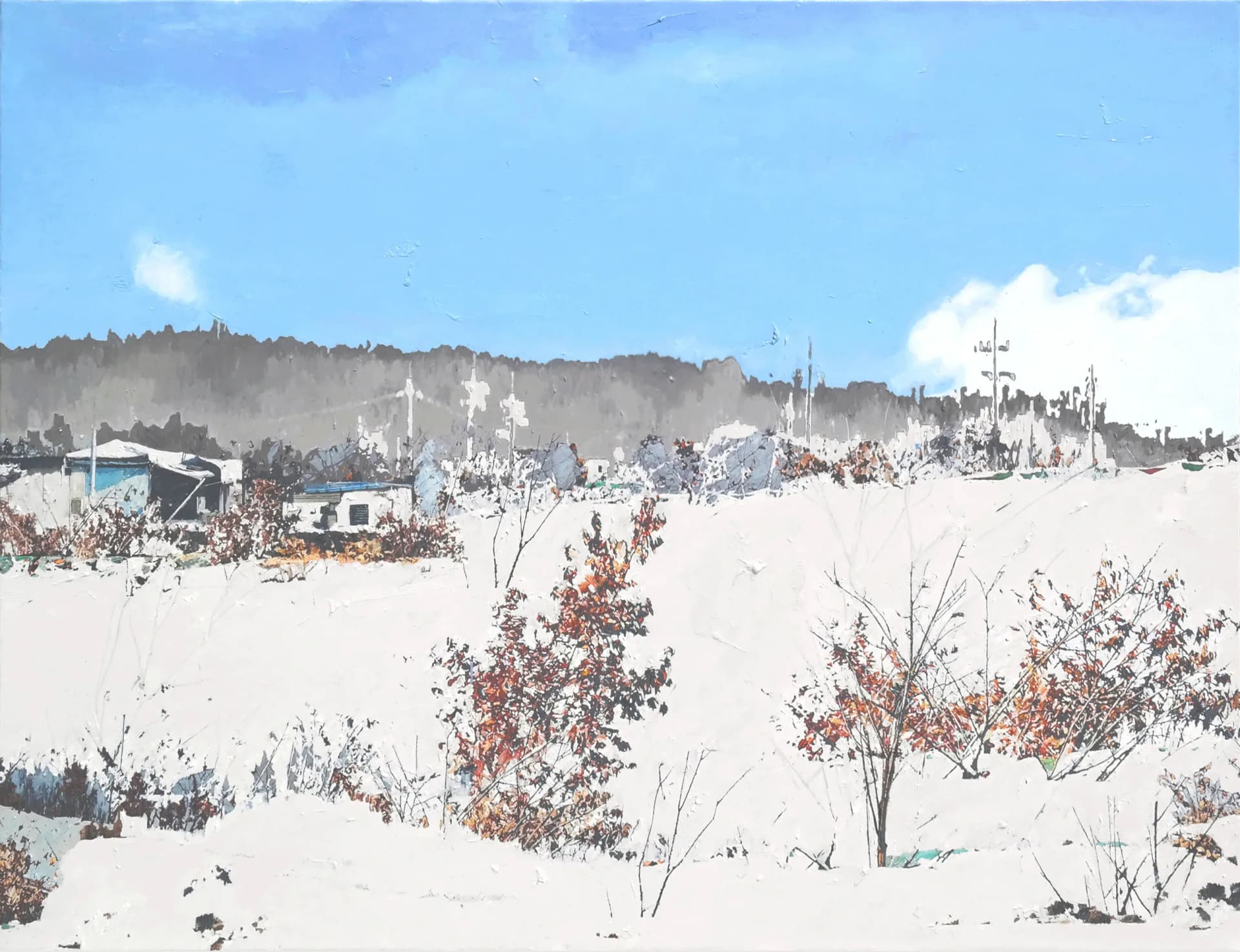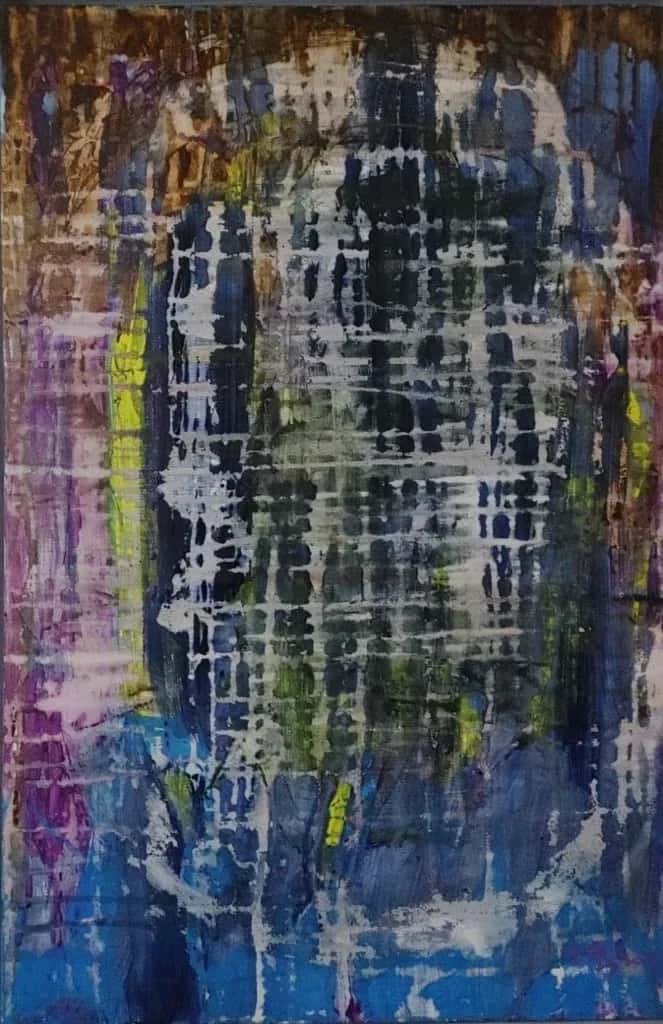
A painting that repeats the same stroke a thousand times — why is that art? The key to Dansaekhwa isn't the single color but the repetition. From Park Seo-bo to Ha Chong-hyun, the aesthetics of Korean monochrome.
Understanding Korean Dansaekhwa — An Aesthetics of Repetition and Silence
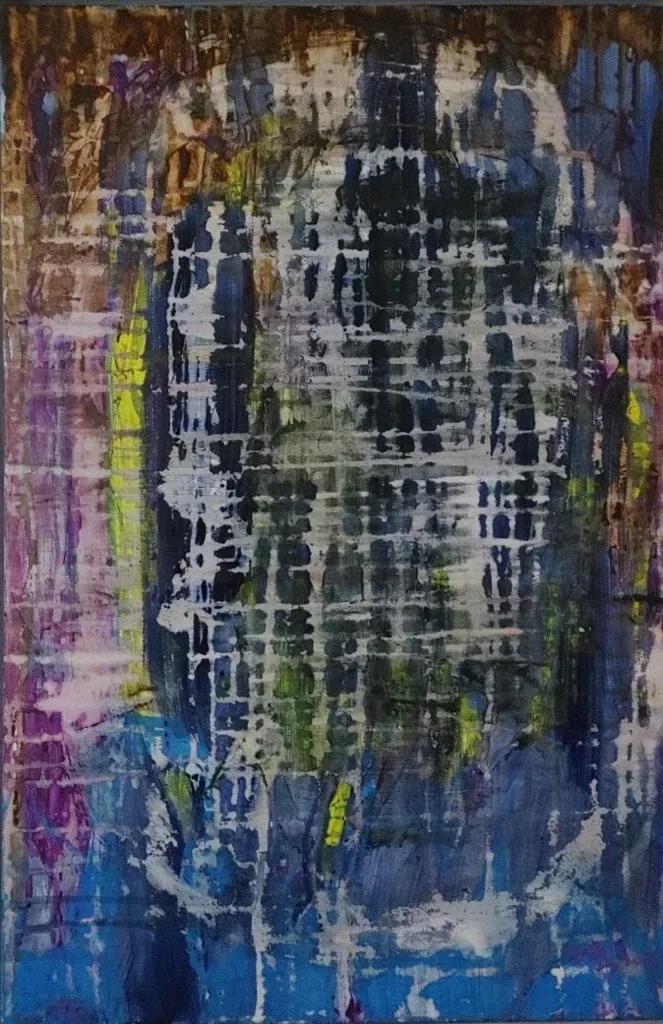
The first encounter with Dansaekhwa (丹色畵) is often a moment of bewilderment. "What's actually being painted?" A pale grid on a white canvas. A single color, applied. Innumerable repeated marks. Less a picture than the surface itself.
And yet over the past decade, Dansaekhwa has become the international face of Korean contemporary art. Works by Park Seo-bo, Chung Sang-hwa, and Ha Chong-hyun routinely fetch tens of millions of dollars at Sotheby's and Christie's Asian sales, and major museums in Europe and the United States have hosted retrospective after retrospective.
This essay sets out what Dansaekhwa is, why it matters, and how to look at it.
A Definition — More Precisely, a Movement
Dansaekhwa is a painting movement born in Korea in the 1970s. Its core works share several common threads.
- Monochrome or restrained palette: a single color, or a tightly held black-and-white
- Repetition and disciplined practice (susa-eng): the same brushstroke, the same gesture, repeated without count
- An emphasis on materiality: the physical qualities of paint, canvas, paper, and dak-ji surface and matter
- Time: the work takes a long time, and that time is deposited into the work
When these four come together, the result can be called Dansaekhwa. It bears a surface resemblance to Western Minimalism but operates at a different spiritual register.
Roots — Why This Form Emerged
Korea in the 1970s
Dansaekhwa was born inside the climate of 1970s Korea — a time of military rule, the noise of industrialization, and political repression. Many artists answered what they could not say aloud with the act of silence and repetition.
Dansaekhwa's silence was not exhaustion but compressed resistance. In place of direct political language, the work absorbed the era through the persistent labor of body and material.
A reinterpretation of East Asian tradition
Dansaekhwa drew on Western Minimalism, but its deeper roots lie in the spirit of East Asian ink painting.
- The act of grinding ink on a stone, accumulating time
- The long breath before a single stroke
- A composition where empty space matters as much as the image
- A respect for the qualities of natural materials — paper, ink, earth
Dansaekhwa artists translated this tradition into the era of canvas, oil, and acrylic. What emerged was a singular language at the meeting point of Western abstraction and East Asian tradition.
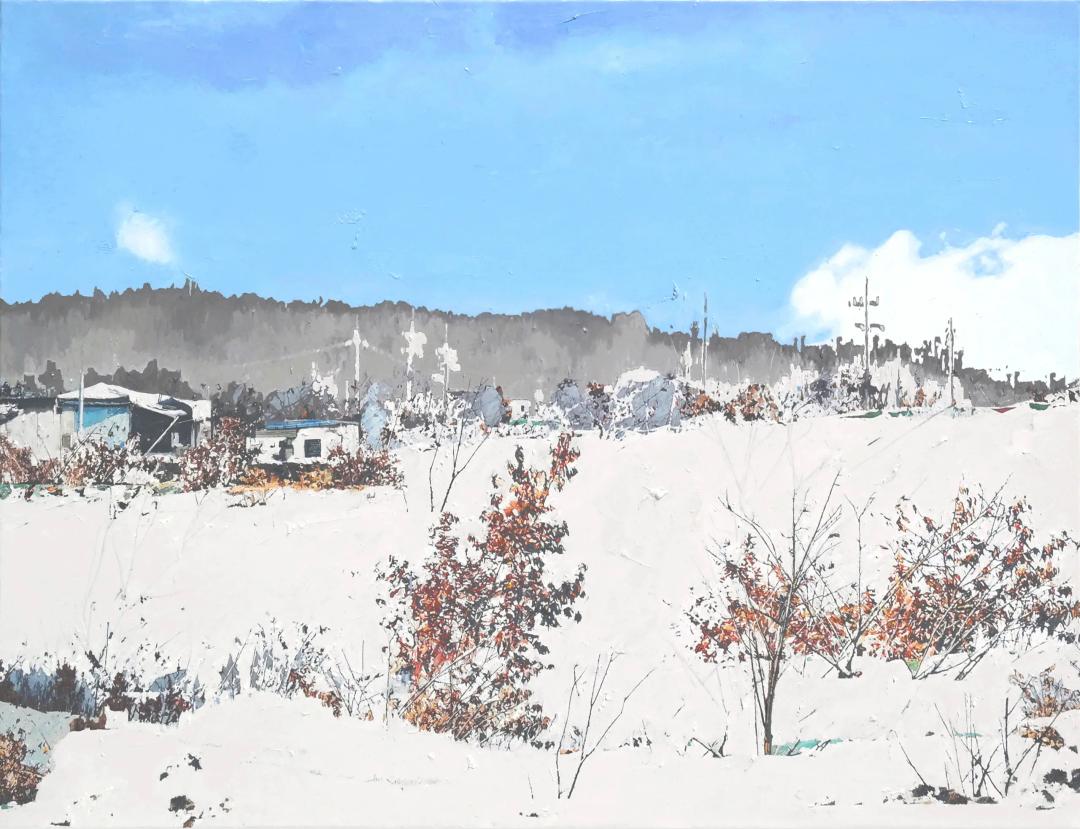
Kim Gyu-hak — A mid-career painter exploring light and atmosphere with the sensibility of a post-Dansaekhwa generation. Available at SAF.
Five Masters: Reading Dansaekhwa Through Its Range
Dansaekhwa is not a single style — each artist works through a wholly distinct approach. Here is its spectrum, through five.
1. Park Seo-bo (1931–2023) — Écriture (描法)
Method: Wet hanji is laid onto canvas, and before it dries, the same line is drawn again and again with pencil. The pencil scrapes the wet paper into a rhythm that feels inscribed onto the skin.
Philosophy: Park called his work "discipline." For him, painting was not expression but the act of emptying the body.
Signature qualities: lines repeated like a grid, the wrinkling of the paper, subtle pastel tones.
2. Chung Sang-hwa (b. 1932) — Untitled
Method: A thick paste of kaolin is applied to canvas and allowed to dry; then peeled away, refilled, and peeled again — the cycle repeated dozens of times. A lattice grid gradually emerges.
Philosophy: A repetition of "filling and emptying." The painting isn't drawn so much as revealed by being peeled away.
Signature qualities: vast planes built from small square tiles. Surface contour and density that you almost want to touch.
3. Ha Chong-hyun (b. 1935) — Conjunction (接合)
Method: Thick paint is pushed through the back of the canvas, forced through its weave, and emerges on the front. The paint passes through the canvas to become the work.
Philosophy: A material experiment that erases the boundary between paint and support. "The back becomes the front."
Signature qualities: hardened paint risen above the rough weave of canvas, with a brick-like materiality.
4. Yun Hyong-keun (1928–2007) — Pillars of Color
Method: A large brush, oil mixed with black and umber, drawn from top to bottom of the canvas in a single columnar stroke. Oil seeps into the canvas, and the edges bleed outward.
Philosophy: Cheonjimun — "the gate between heaven and earth" — gives the work its title and its slow, deep spatiality.
Signature qualities: dark, near-black columns; the boundary where raw canvas meets the bloom of pigment.
5. Lee Ufan (b. 1936) — From Line, From Point
Method: A single point placed on the canvas, or a single line drawn — the paint in the brush gradually thinning until it disappears. Marks without clean beginnings or endings.
Philosophy: Lee is the philosopher of "emptiness and relation." His work explores the wave a small gesture creates inside a vast empty space.
Signature qualities: a single restrained mark within open space. Most of the painting is what was not painted.
Why the World Began to Watch
2014 Kukje Exhibition — the turning point
In 2014, Seoul's Kukje Gallery mounted The Art of Dansaekhwa. The exhibition was decisive in framing Dansaekhwa as a coherent art-historical movement. International critics, gallerists, and curators began traveling to Korea to see the work first-hand.
2015 Venice Biennale collateral exhibition
During the 2015 Venice Biennale, a special Dansaekhwa exhibition ran alongside the main program. Internationally, this is when Dansaekhwa was inscribed as "Asia's Minimalism."
The auction-market explosion
From this period on, prices for Dansaekhwa artists at Sotheby's, Christie's, and Phillips Asian sales rose fivefold to tenfold over five to ten years. Park Seo-bo's large 1970s Écriture works began commanding billions of won, and Lee Ufan, Chung Sang-hwa, and Ha Chong-hyun followed similar trajectories.
Why Dansaekhwa specifically?
Three reasons stand out.
- Comparable to Western Minimalism, yet distinct — its spiritual depth offered Western art discourse a new axis
- Scarcity from accumulated time — months or years per work means physically fewer paintings exist
- Continuity from living masters — many of the movement's founders were still working into the 2010s, which strengthened market trust
How to Look
Dansaekhwa is closer to "standing" than to "viewing." Try the following.
1. Adjust your distance
The work changes with distance. Far back (3m+) reveals the depth of the color field; mid-distance (1m) reveals the rhythm of repetition; close in (within 30cm) reveals the materiality and the trace of the artist's body.
2. Give it time
A three-second glance will read as "empty." Stay 5–10 minutes and the hidden things begin to surface — the micro-variations within repetition, the bleed of ink, the tension of the canvas.
3. Look across works
Viewed beside another period of the same artist, or beside another Dansaekhwa painter, the divergent ways each artist enters repetition become visible. Dansaekhwa is not a single style.
Where Dansaekhwa Sits in Korean Art
Dansaekhwa is one axis of Korean contemporary art, not its whole. In the same era stood Minjung Art — almost an exact opposite in temperament.
| Item | Dansaekhwa | Minjung Art |
|---|---|---|
| Stance | silence, contemplation, repetition | utterance, participation, documentation |
| Subject | material and time | history and society |
| Audience | the museum visitor | the citizen on the street |
| International recognition | revival in the 2010s | reassessment in the 2000s |
The two are not rivals so much as complements. Korean art's richness depends on the coexistence of both axes. For a fuller comparison, see What Is Minjung Art.
The Present and the Future
A second generation
A tendency now exists — sometimes called post-Dansaekhwa — in which artists inherit the spirit of the first generation but expand into new media and themes. They carry repetition, materiality, and time into installation, video, photography, and digital practice.
Price stabilization
By 2023–2025, the Dansaekhwa market has moved past peak heat into a period of stable correction. High auction records hold, but they no longer climb vertically each year. This is read as market normalization.
Civic access
Original works by first-generation masters remain out of reach for most, but prints and small-format works are relatively accessible. Post-Dansaekhwa work by emerging and mid-career artists can also be encountered in the KRW 500,000–3,000,000 range.
Encountering the Spirit of Dansaekhwa at SAF
Among SAF participants are artists who carry the spirit of Dansaekhwa — repetition, materiality, time — into their own practice. They may not be labeled "Dansaekhwa artists," but their work draws a single line a thousand times, focuses on the qualities of the material, or pours months into a single piece.
Once you know the disposition of Dansaekhwa, the question often asked of such work — "why doesn't it tire when I keep looking?" — finds its answer.
Frequently Asked Questions
Q. Isn't Dansaekhwa just the Korean version of Minimalism? A. There are similarities, but they diverge. Western Minimalism leans toward concept and form; Dansaekhwa leans toward discipline and materiality. Closer to "different paths to the same destination."
Q. I still find Dansaekhwa boring. Is something wrong with my eye? A. No. Dansaekhwa often reads as boring at first encounter — that is natural. It is a genre that rewards trained looking. Repeated viewings, time, and the chance to see the work up close eventually open something.
Q. Which artist should I start with as a first Dansaekhwa purchase? A. Originals by first-generation masters (Park Seo-bo, Lee Ufan, etc.) are largely out of reach. Instead, consider (1) their limited-edition prints, or (2) originals by post-Dansaekhwa or emerging-generation artists. Plenty of options exist in the KRW 1,000,000–5,000,000 range.
Q. The name says "single color," but some works seem to have several colors. What's that about? A. True. "Dan-saek" doesn't strictly mean one color — it means a restrained palette. Park Seo-bo's later work uses vivid orange, blue, green. What matters isn't the count of colors but the disposition of repetition and silence.
Q. What's the correct English term? A. Dansaekhwa is the international standard. "Korean Monochrome" is also used, but in the international academy and market the romanized Korean term is now standard.
Related reading
If this piece helped, you may also enjoy these related articles:
Dansaekhwa is one of Korean art's distinct contributions to a global vocabulary. Knowing this vocabulary opens another layer of depth in Korean contemporary art. Read alongside Thirty Years of Korean Contemporary Art.
Further Reading
Seed Art Festival
·