Resistance in the 1980s, reappraisal in the 2000s, reinterpretation in the 2020s. Minjung art never disappeared — follow a lineage still alive as one spine of Korean art, read through Shin Hak-chul.
What Is Minjung Art? Reading One Lineage Through Shin Hak-chul

The phrase "Minjung art" (民衆美術, people's art) is easily misread. To some, it conjures up images of "political posters" from the 1980s. To others, it feels like a movement that has already ended. But Minjung art is still alive. It has shifted shape over forty years, but it has never been broken.
This article explains "What is Minjung art?" through one artist — Shin Hak-chul — whose work runs along the longest arc of the movement, from its birth to the present.
Minjung Art — A Short Definition
Minjung art (民衆美術) is a Korean art movement born in the early 1980s. Its core consists of three things:
- Reclaiming art's social role — A will to depict the times and the lives of the masses, beyond pure formalism.
- Rediscovering tradition — Bringing the visual languages of Korean folk painting (minhwa), Buddhist painting, woodblock, and shamanic ritual (gut) into the present.
- Communicating with the public — Art shown not in galleries and museums, but in streets, plazas, and factories.
In the 1980s, artists who shared these three elements gathered through groups like Reality and Utterance and the Gwangju Free Artists Association.
Beginnings: 1979–1982 — "Reality and Utterance"
Background
October 26, 1979 and May 18, 1980 in Gwangju. Under the violence of military rule, the question of what art could do spread urgently among artists. The mainstream art scene at the time was dominated by Dansaekhwa and abstract currents, and many young artists felt that this formalist tendency turned its back on the times.
The Founding of "Reality and Utterance"
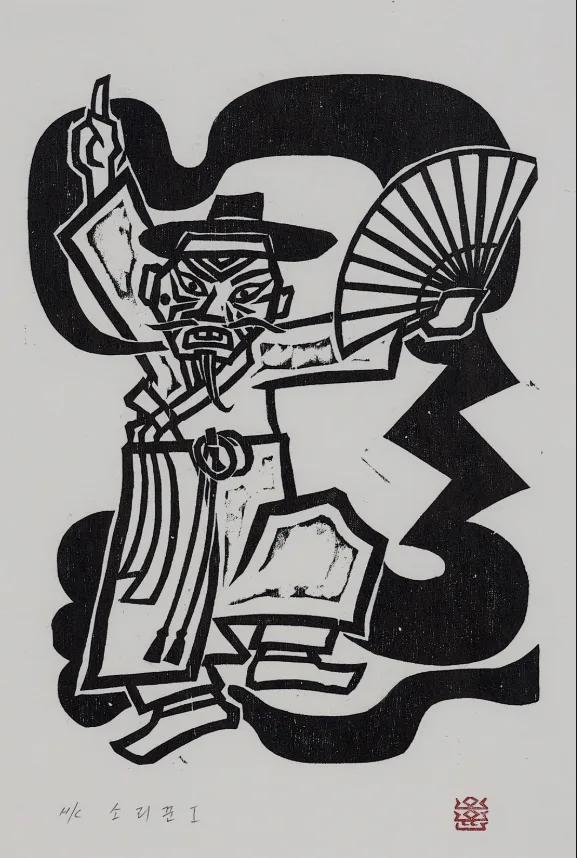
In 1979, Kim Jung-heon, Sung Wan-kyung, Oh Yoon, Lim Ok-sang, and Joo Jae-hwan formed Reality and Utterance. As the name implies — "art that speaks reality" — they began making work about labor, the rural village, and the urban poor.
Shin Hak-chul Enters
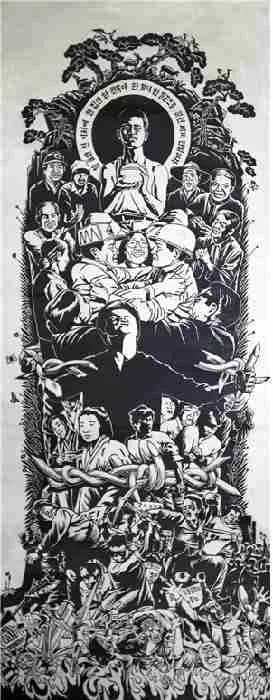
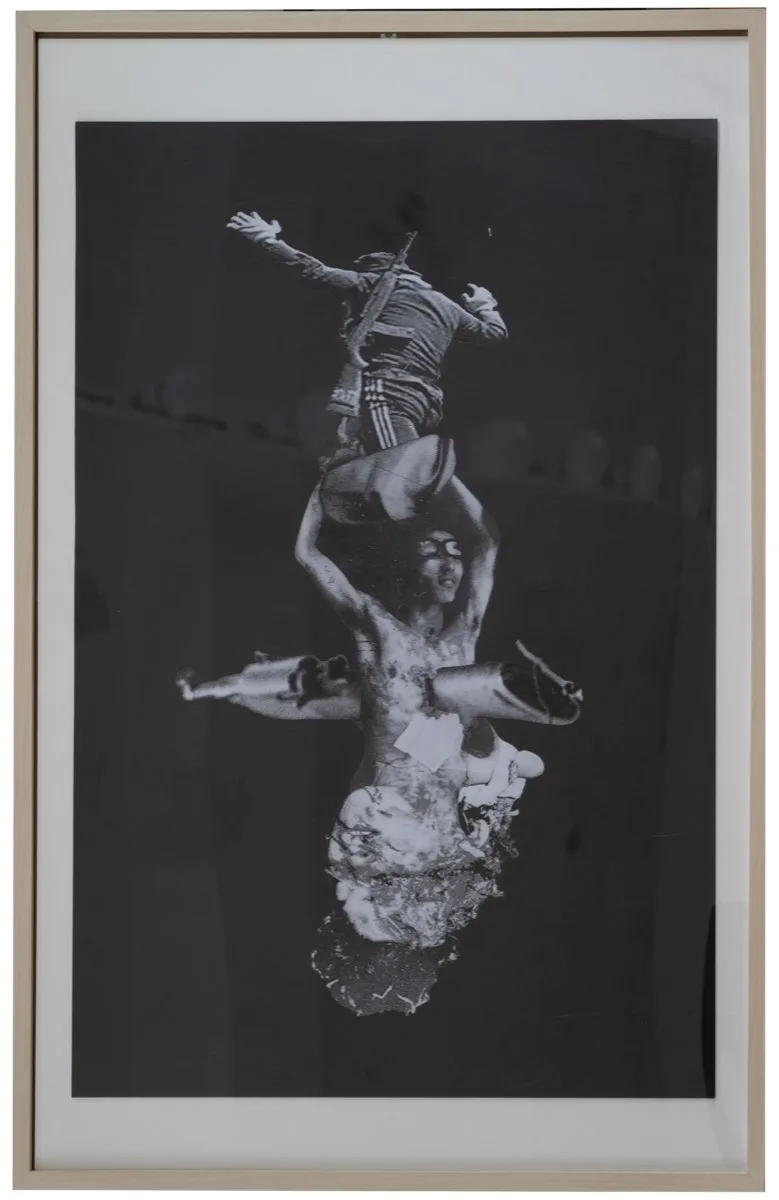
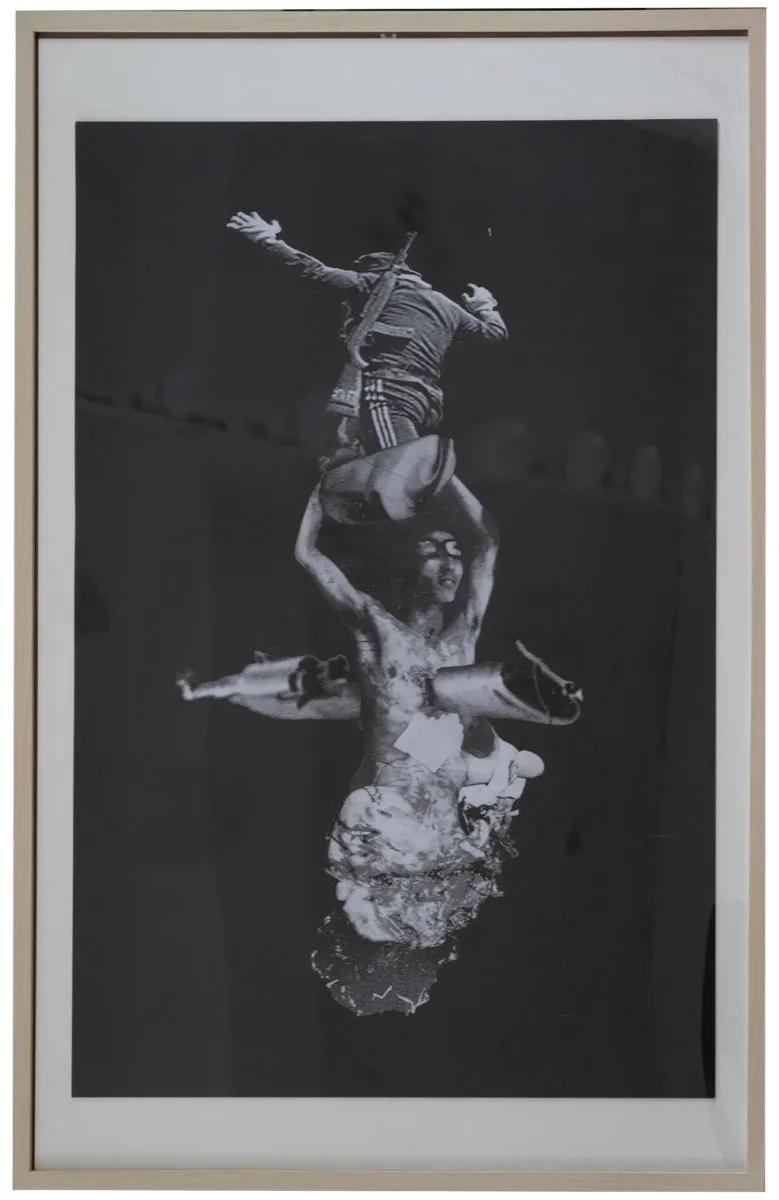
In this period, Shin Hak-chul had already been using photomontage and collage since the 1970s to render Korean modern history at colossal scale. His landmark series Modern Korean History gathered images of colonization, war, division, industrialization, and democracy movements into symbolic structures of body, river, and mountain.
"History itself is body." Shin Hak-chul's pictorial language became one of the iconic emblems of Minjung art.
Expansion: 1983–1989 — A Movement Named "Minjung"
Organization
In 1983, the Korean People's Artists Federation (Minmyeop) was formed. From this point, the term "Minjung art" became formal. Local groups arose across the country, and banner paintings, murals, and comics for workers and farmers became active forms of practice.
Key Artists
- Shin Hak-chul — Photomontage of historical narrative.
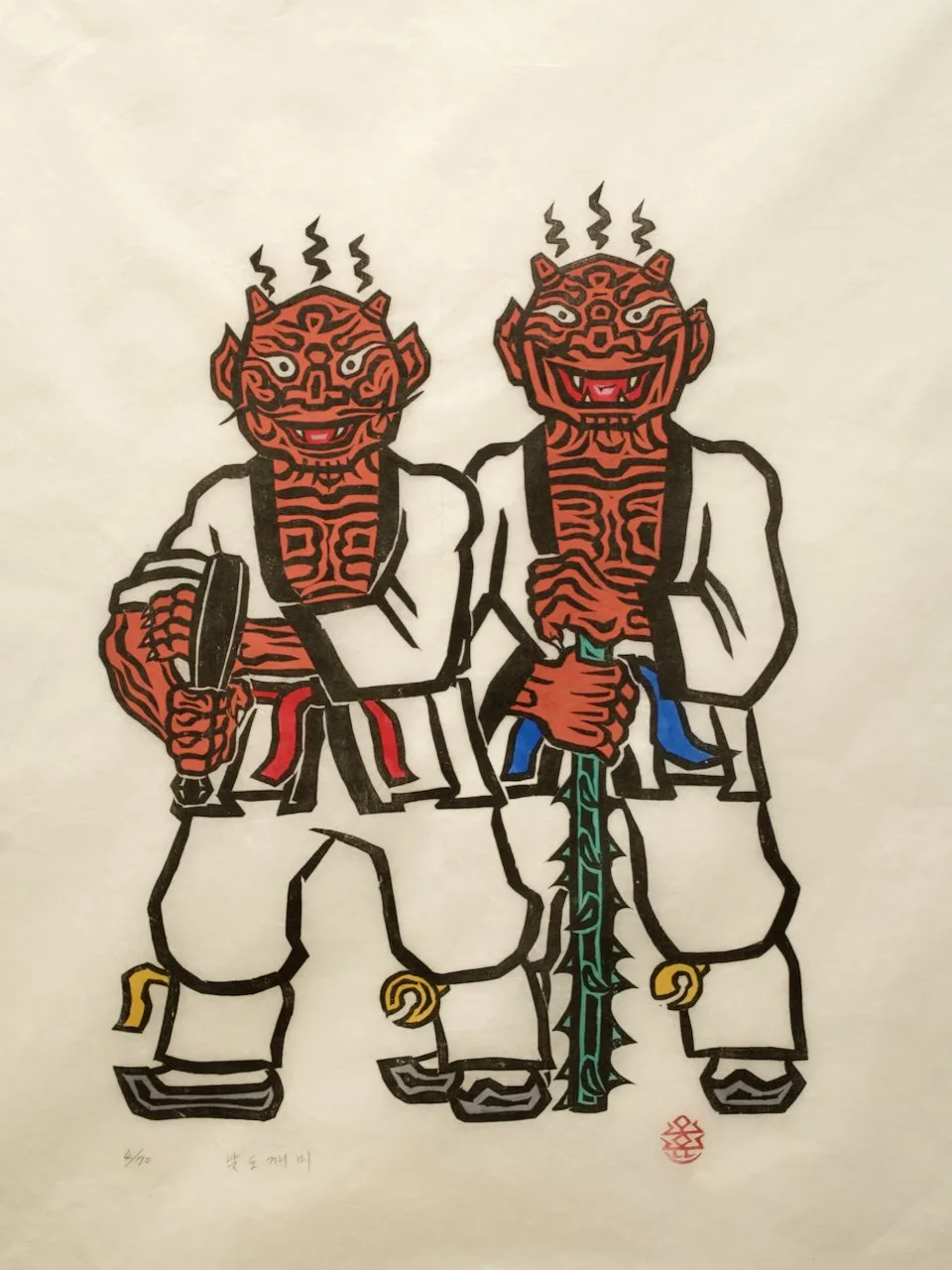
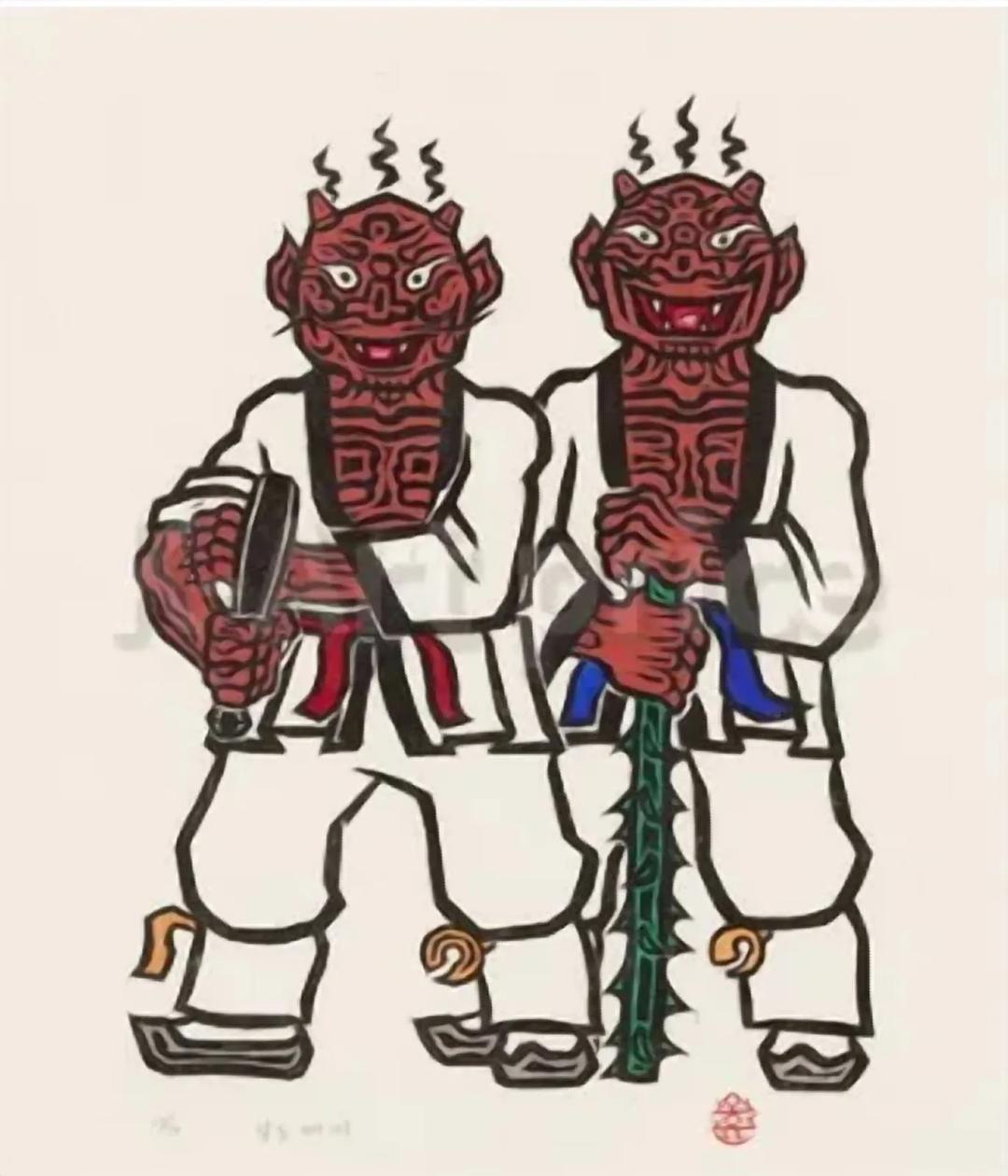
- Oh Yoon — Faces of the people through woodblock printing.
- Lim Ok-sang — The reality of countryside and city.
- Kim Jung-heon — The spirit of farmers and labor.
- Min Jeong-gi — The encounter of traditional folk painting with the contemporary.
- Lee Jong-gu — Rural landscapes and the lives of farmers.
- Kang Yo-bae — A long-form narrative of Jeju 4.3.
Repression and Endurance
In this period, many Minjung artists experienced surveillance, censorship, and arrest by state power. The 1989 imprisonment of Shin Hak-chul was its peak. His work Rice Planting was deemed "pro-enemy expression" and the artist was arrested under the National Security Law. The 1989 arrest became one of Korean cultural history's major turning points, prompting the art world, intellectuals, and civil society to issue joint statements of protest.
Transition: 1990–2000 — Democratization and Entering the Establishment
A Changed Era
With the 1987 democratization and the launch of civilian government in the 1990s, direct political repression disappeared. As the social context that had been Minjung art's "subject of resistance" shifted, artists faced a new question:
"In an age without an enemy to fight, what should we paint?"
How They Answered
Minjung artists responded as follows:
- Expanding subject matter to environment, region, and the everyday (Lim Ok-sang's nature series).
- Widening the gaze to Asia and the diaspora (Lee Jong-gu's Joseonjok series).
- Deepening formal inquiry (the refinement of woodblock printing after Oh Yoon).
- Turning toward public art (banners → murals and sculpture).
Joining the Establishment
From the late 1990s through the early 2000s, Minjung-art reassessment exhibitions were mounted in succession at MMCA, the Seoul Museum of Art, and the Gwangju Biennale. Works that had been outside the mainstream in the 1980s entered the canonical lineage of Korean contemporary art.
In this period, Shin Hak-chul too was extensively collected by MMCA and the Seoul Museum of Art, moving toward the center of Korean art history.
Transmission: 2001–2015 — A Second Generation Emerges
Second-Generation Minjung Art
A generation roughly the age of the 1980s artists' children or students appeared, shaping what came to be called 'post-Minjung art.' Rather than the direct resistance language of the first generation, they took these approaches:
- Combining personal narrative with the social (family history, gender, migration).
- Expanding into digital, photographic, and moving-image media.
- Connecting with international discourses (postcolonialism, feminism).
Representative Second-Generation Artists
- Ahn Kyu-chul — Metaphorical social critique through everyday objects.
- Ham Kyung-ah — Division narratives drawing on North Korean embroidery.
- Bae Young-whan — Generational narratives via song and installation.
- Park Chan-kyong — Documentary inquiry into the Cold War, division, and the diaspora.
These artists may not call themselves "Minjung artists," but they share the DNA of Minjung art in placing questions of society and history at the center of their work.
The Present: 2016–2025 — Minjung Art as a "Question"
Reinterpretation
In the 2020s, Minjung art is reread not as a particular style or generation but as the question, "How does art relate to society?"
This question continues into these currents:
- Feminist art — women's narratives, care, the politics of the body.
- Climate and ecological art — artists thematizing the environmental crisis.
- Migration and diaspora — Koreans' experience of globalization.
- Public and participatory art — projects with citizens as subjects.
- Social-campaign art — combining art and social movement (e.g., SAF).
These currents do not necessarily use the name "Minjung art," but they inherit Minjung art's foundational question: "How does art relate to its time?"
Shin Hak-chul Today
Shin Hak-chul is still working in the 2020s. The fact that an artist in his late 70s still stands before large canvases and paints Korean modern history is itself proof that Minjung art is not "a movement of the past" but creation in the present tense.
His 2024 solo show at Hakgojae Gallery was a retrospective spanning his early 1970s works to the most recent, and MMCA also re-examined his work extensively in 2023.
Five Core Works of Minjung Art — A Short Viewing Guide
1. Shin Hak-chul, Modern Korean History series
- Massive photomontage where body, river, and mountain become history.
- The pain and hope of modern Korean history overlap.
2. Oh Yoon, Song of the Sword (woodblock print)
- The sublime of the people, expressed in everyday faces.
- Strong woodblock lines link tradition and modernity.
3. Lim Ok-sang, Land IV
- A large work where rural soil and the body overlap.
- A pictorial record of loss in the developmentalist era.
4. Kim Jung-heon, Landscape series
- Painting farm work without heroizing it — direct and unadorned.
- Landscapes where the value of labor is plainly visible.
5. Park Chan-kyong, Power Passage (video)
- Documentary inquiry into the residues of the Cold War and division.
- The contemporary vocabulary of post-second-generation Minjung art.
Minjung Art Is Still in Progress
Even without using the phrase "Minjung art," the stance that art must respond to the suffering and questions of its time is among the oldest traditions in Korean art. SAF, too, stands within this tradition. Artists offering their work to the needs of a community, and citizens taking that work and returning value to the community, is a 2020s evolution of Minjung art's spirit.
To know Minjung art is not to identify a particular style. It is to understand why Korean art had to be painted this way at that time. With that understanding, even a single work hung today reads differently.
Frequently Asked Questions
Q. Are Minjung art and socially engaged art the same thing? A. They overlap but are not identical. Minjung art is a unique movement formed in a specific Korean period (the 1980s) and historical context (military rule, the democratization movement), while socially engaged art is a broader international concept. Minjung art can be seen as a regional variant of socially engaged art.
Q. Are Minjung-art works still collectible today? A. Yes. Major works by first-generation artists are largely held in museum collections and rarely come to market, but small to mid-sized works and prints continue to circulate. Works by second-generation post-Minjung artists are more broadly accessible. Some SAF artists also stand in this lineage.
Q. Where should a student begin studying Minjung art? A. Three books to start with: (1) Sung Wan-kyung, Minjung Art, Modernism, Visual Culture; (2) Choi Yeol, A History of Korean Contemporary Art; (3) Kim Jin-song, Permit a Dance Hall in Seoul. For exhibitions, follow the standing and special exhibitions of MMCA and the Seoul Museum of Art.
Q. Why is Oh Yoon special? A. Oh Yoon (1946–1986) was Minjung art's representative woodblock artist. He died at 40, but his woodblock prints are regarded as the most refined renderings of "the face of the people." His language — adding contemporary sensibility to traditional woodblock technique — is one of the peaks of Korean print history.
Q. Why is Minjung art said to have "ended"? A. More precisely, what ended is "Minjung art as a first-generation movement" in formal terms. But its spirit and questions live on through second and third generations. It is more accurate to see it as "an evolving tradition" rather than "a closed movement."
Related reading
If this piece helped, you may also enjoy these related articles:
If you want to understand one axis of Korean art, you have to know Minjung art as the counter-axis alongside Dansaekhwa. Knowing both at once is what reveals the three-dimensional shape of Korean contemporary art. Read together with the Korean Contemporary Art 30-Year Timeline.
Meet the Artists

Further Reading
Seed Art Festival
·