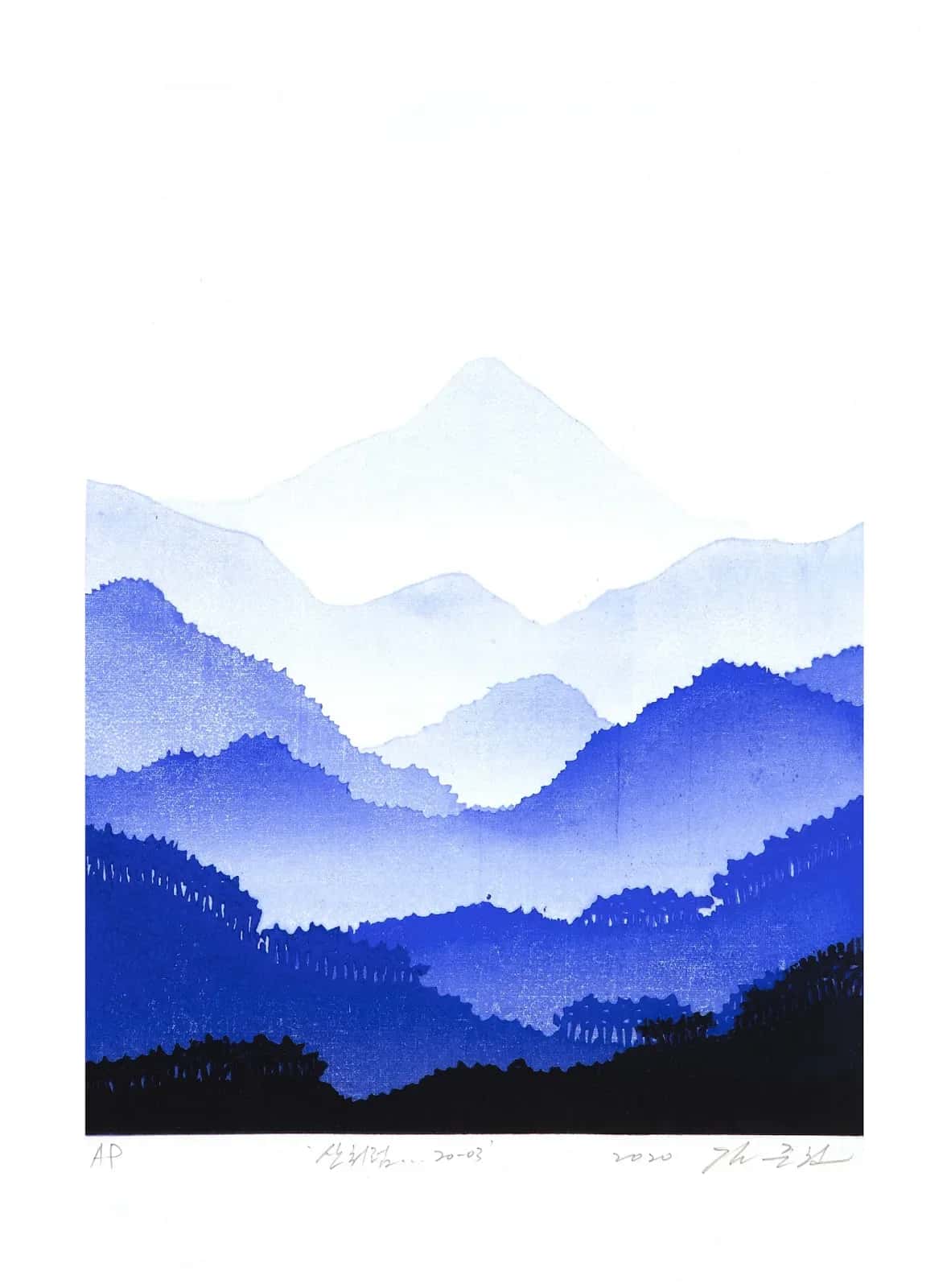
Korea's oldest pictorial motif is agriculture. Tracing the contemporary lineage from Shin Hak-chul's *Rice Planting* (1987) through Kim Jun-kwon's woodblocks, Min Jeong-gi's Yangpyeong fields, Lee Cheol-soo's hanji prints, and Jung Young-shin's five-day market photographs.
Korean Art of Farming and Labor — Kim Jun-kwon's Mountains, Min Jeong-gi's Fields, Lee Cheol-soo's Soil
Earth and hands. Rice planting and harvest. Mountains and fields. Korean painting's oldest motif is agriculture. From Danwon Kim Hong-do's genre paintings, through Shin Hak-chul's Rice Planting (1987) in the 1980s, to the rural time that Min Jeong-gi and Lee Cheol-soo took up again in Yangpyeong and Jecheon from the 1990s onward, and to Kim Jun-kwon's contemporary color-ink woodblock and Jung Young-shin's five-day-market photographs — the art of farming and labor has flowed without stopping.
This article assembles works on farming and labor from SAF 2026's exhibition into a curation that shows one cross-section of contemporary Korean agrarian art.
Starting Point — Shin Hak-chul, Rice Planting (1987)
The largest canon in contemporary Korean agrarian painting is Shin Hak-chul's Rice Planting (1987), in the MMCA collection. With two farmers planting rice at the center, the canvas is surrounded by the violence of foreign powers, division, and capital — like the stormy frame of 1987 Gwangju. The work, shown in 1987, was confiscated under the National Security Law in 1989, and has since become one of the most symbolic single works in the history of Korean art censorship.
This article traces the place Rice Planting opened up — that is, the current that brought farming back as a central motif of Korean art — and how it carried forward from the 1990s.
1. Kim Jun-kwon — Color-Ink Woodblock, Where Mountains Stand as Mountains
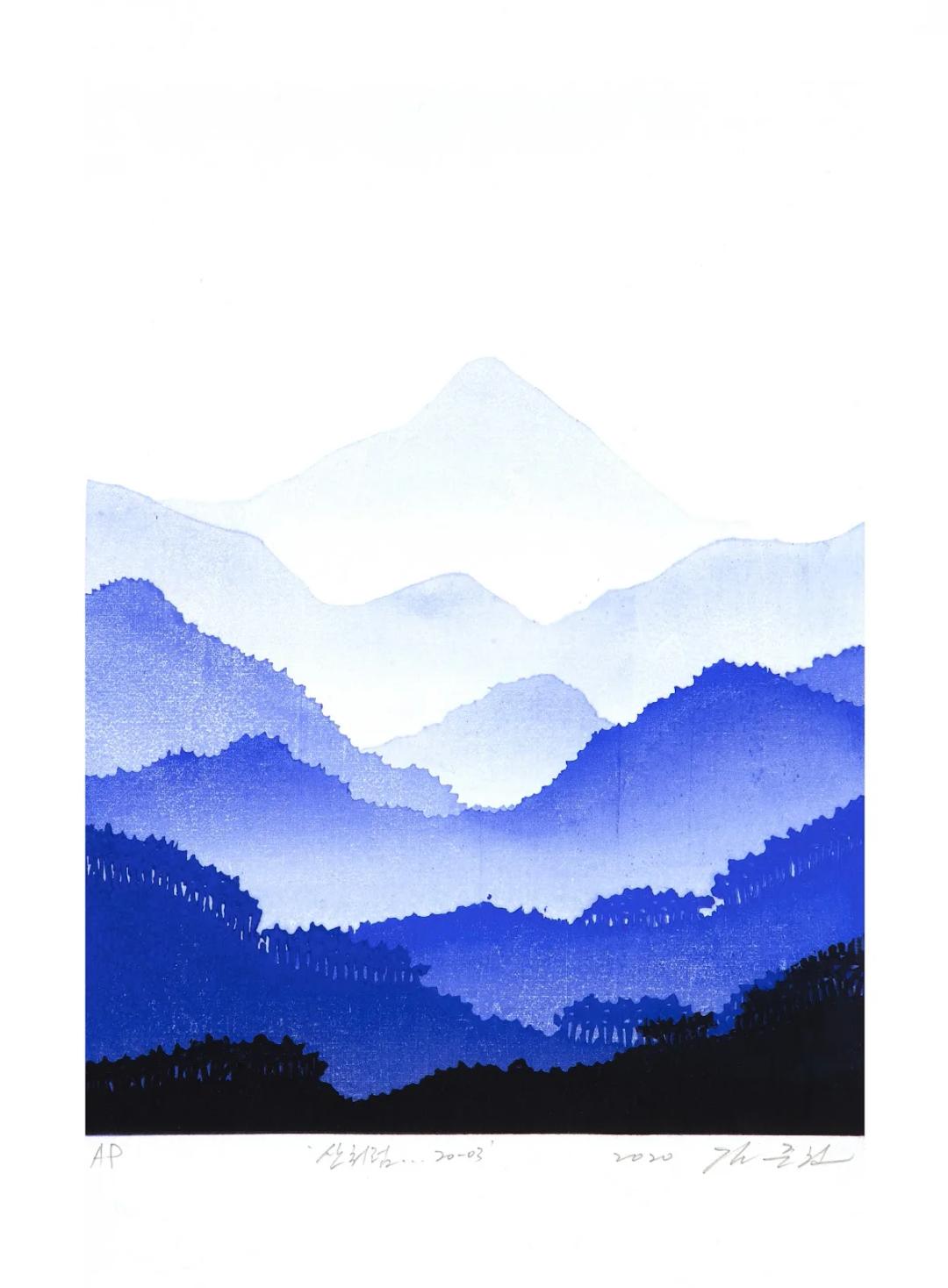
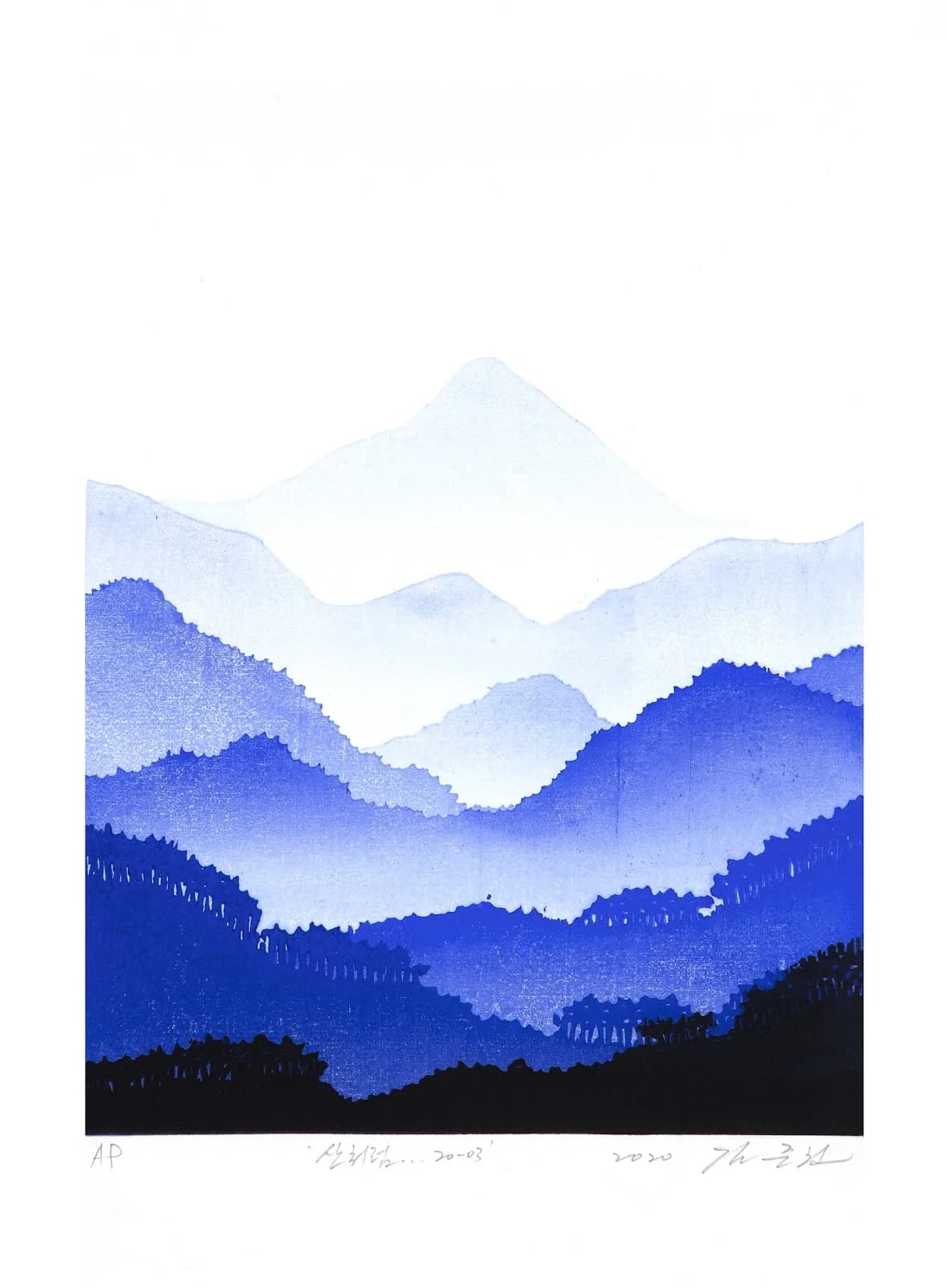
Kim Jun-kwon stands at the peak of Korean chae-mok (彩墨木版) — woodblock printing that combines color and ink. Working from a studio in Jecheon, Chungbuk, he has carved Korean mountains for thirty years.
Like Mountains (2021, 50x45cm) is a single grain of those thirty years. That mountains stand as mountains — that landscape is simply landscape, present as it is — is the deepest peace of an agrarian society. Kim Jun-kwon's mountains are a different agrarian ground placed beside the turbulent canvas of Shin Hak-chul's Rice Planting: 'the stillness after harvest.'
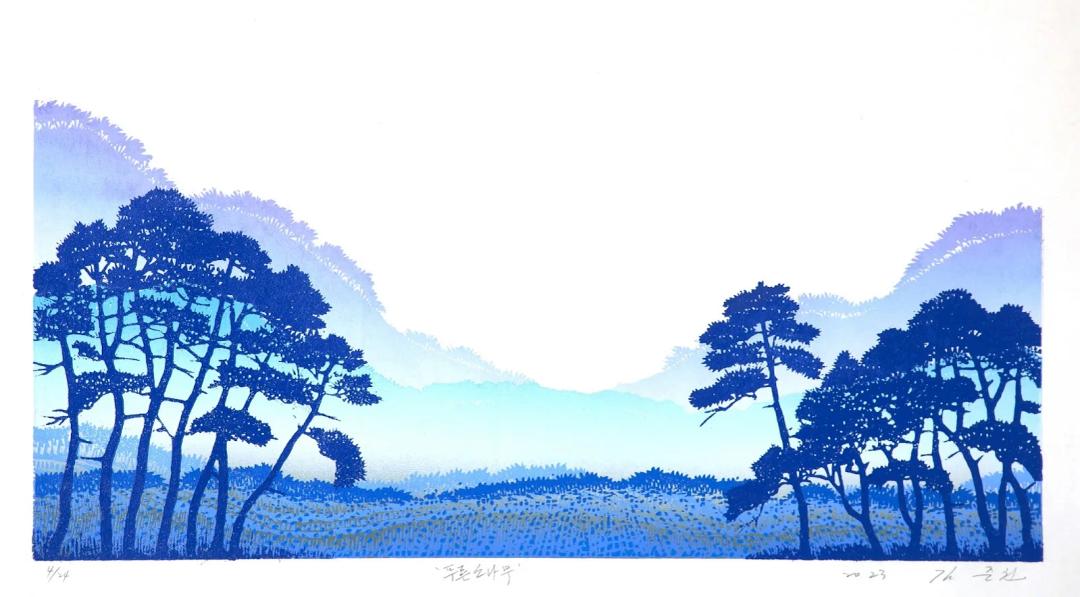
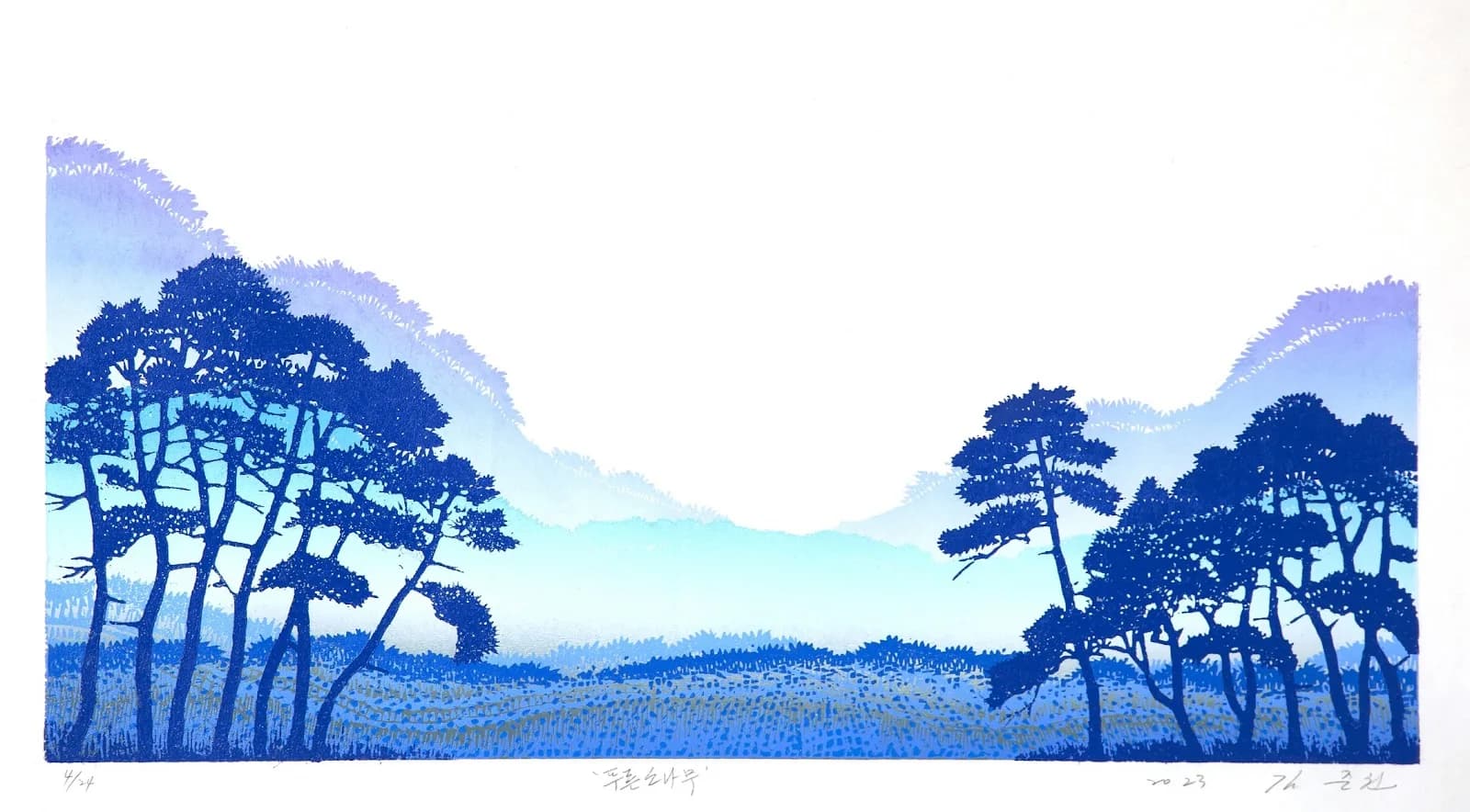
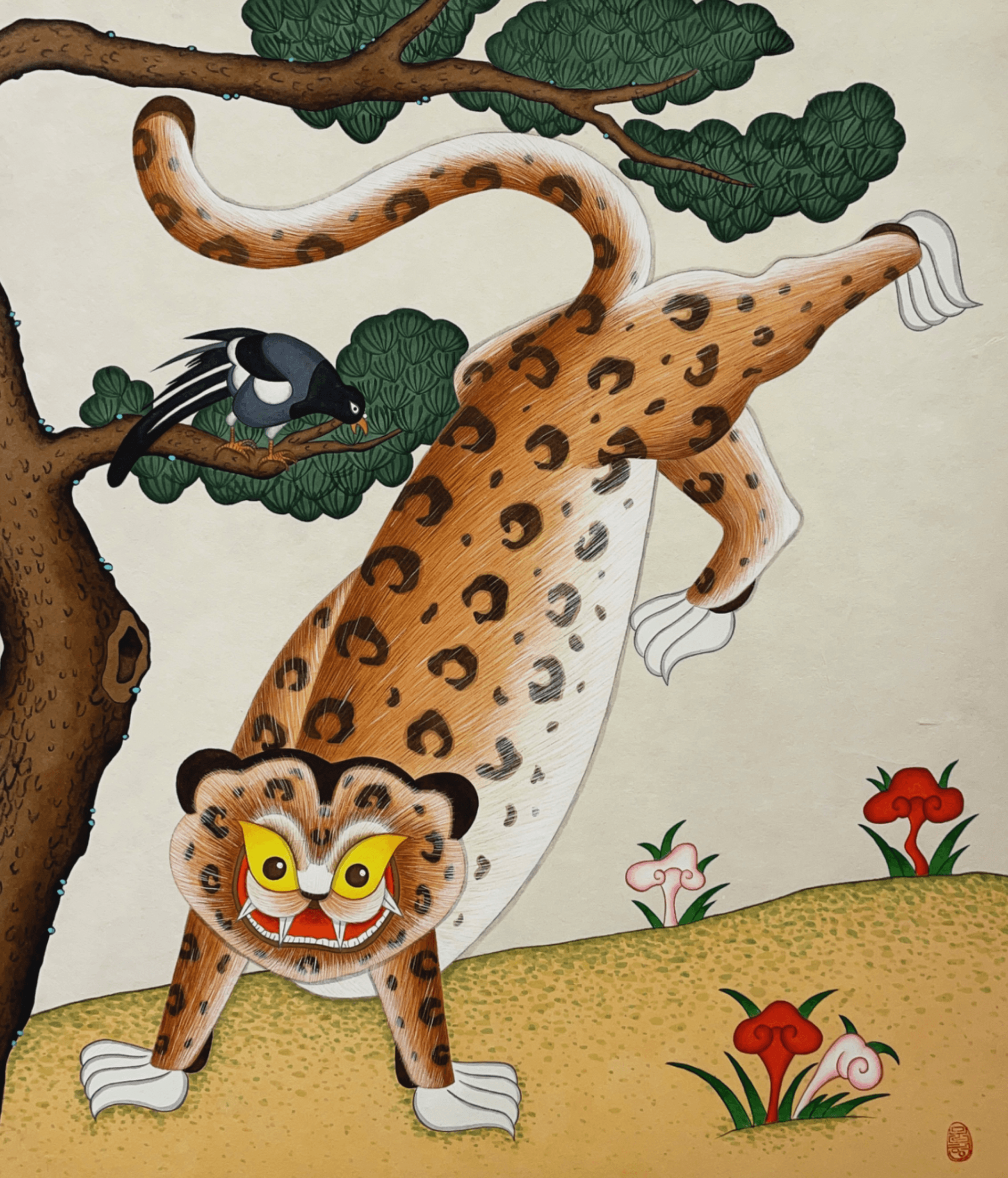
The pine is the sacred tree at the entrance to a Korean agrarian village. Kim Jun-kwon's Blue Pine (2023) re-carves, in contemporary language, the very pine that appears in Danwon Kim Hong-do's Tiger Beneath a Pine. In a city where farming has disappeared, what is the pine guarding — that question is etched into the canvas.
2. Min Jeong-gi — Yangpyeong Fields and Landscape
Min Jeong-gi was a founding member of "Reality and Utterance" in 1979, a first-generation figure of Korean Minjung art. From the 1990s onward he settled in Yangpyeong, Gyeonggi-do, and has been painting the time of the rural village apart from urban turbulence. A fuller profile of Min Jeong-gi appears in From Reality and Utterance to the Landscape Painting of Yangpyeong.
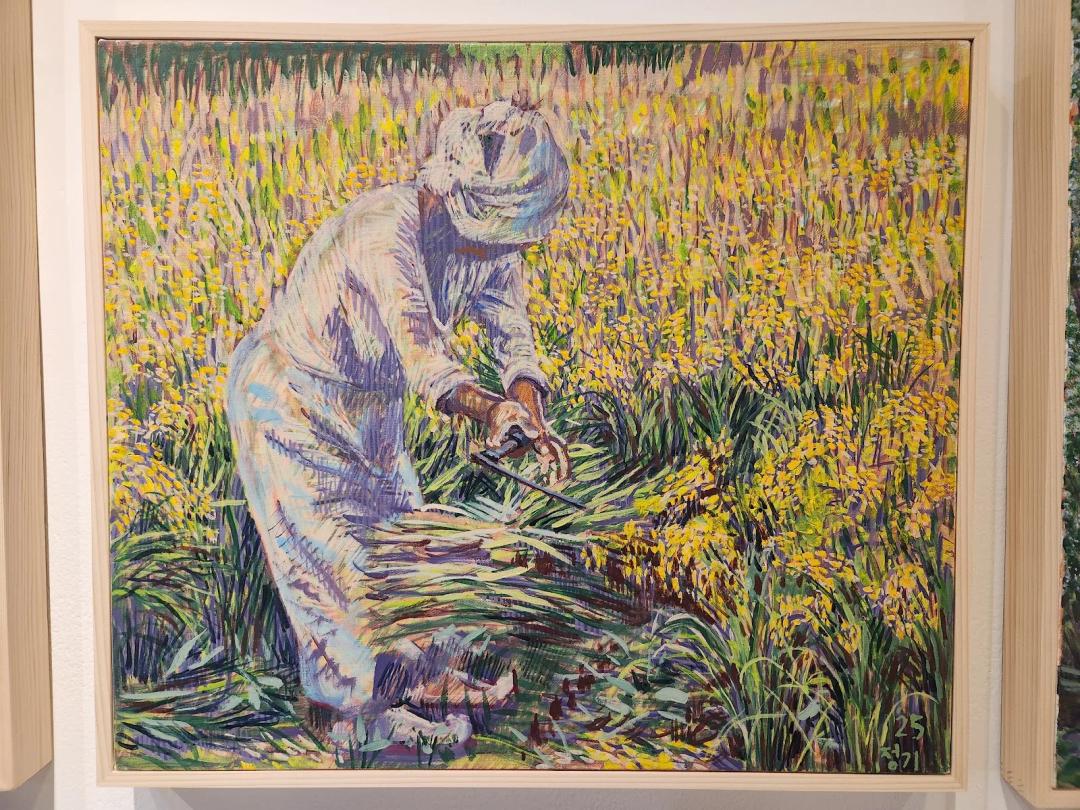
Seohu-ri is a small village in Yangpyeong-gun, and At Seohu-ri – Rice Cutting (2025) is a frontal view of the harvest scene in the artist's own neighborhood. If Shin Hak-chul's Rice Planting painted farming as an allegory of the era, Min Jeong-gi's Rice Cutting paints the everyday time that remains after the allegory has settled — 'the time of the people who actually cut rice there.'
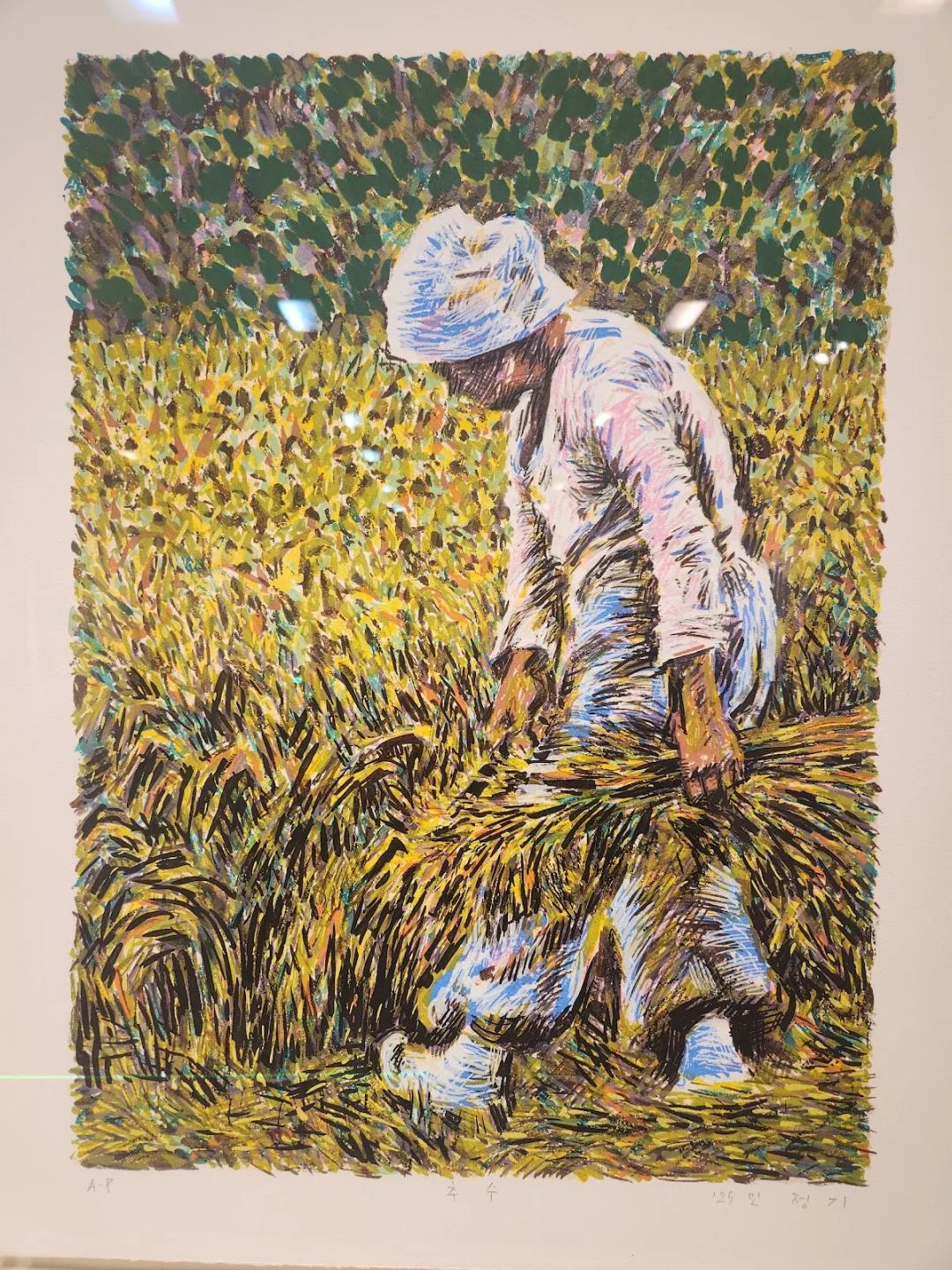
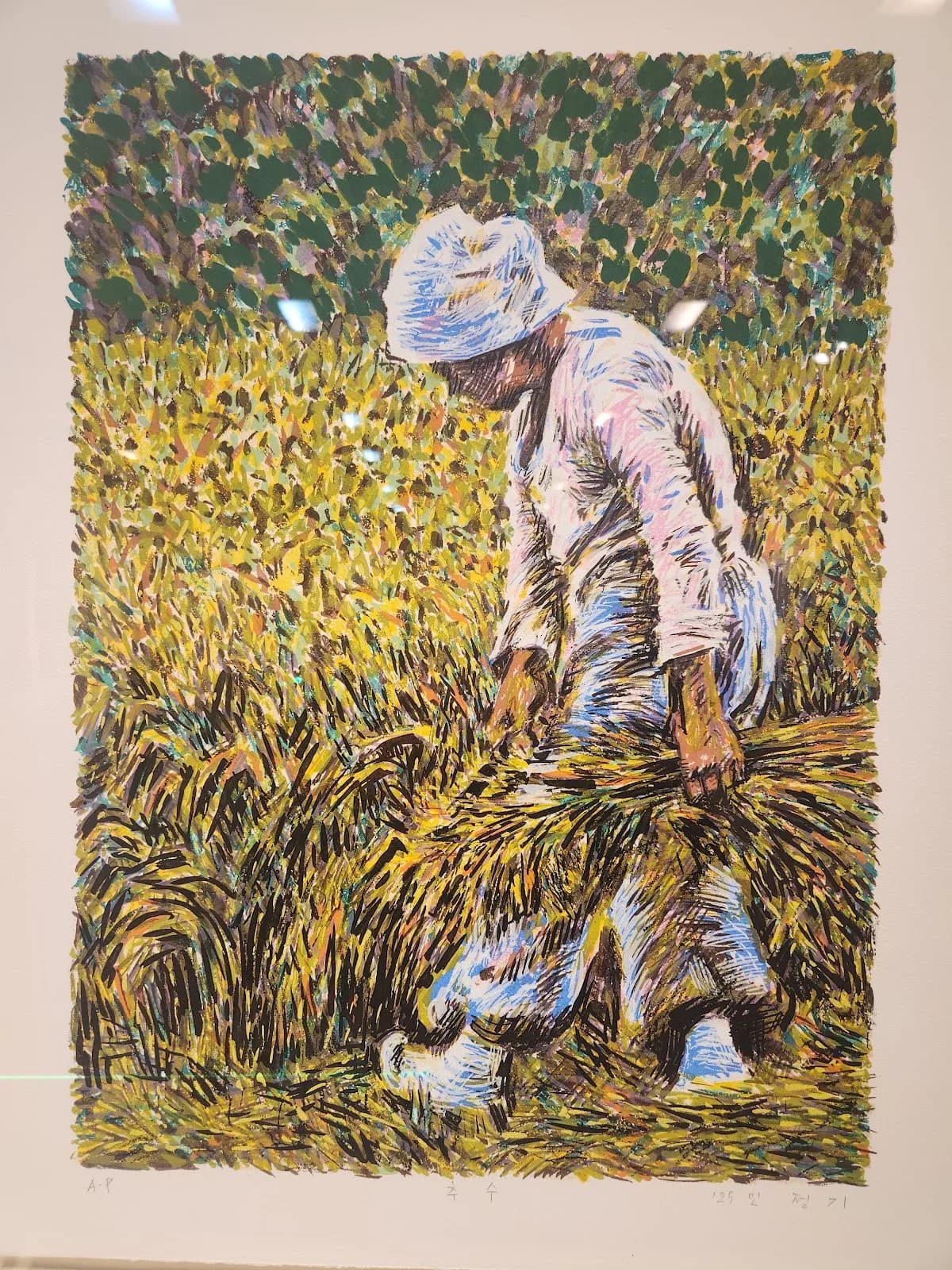
The same breath of the harvest, transposed to silkscreen print: Harvest (2025). Min Jeong-gi is an artist who releases painting originals together with print editions. Where the original sits at around KRW 18 million, a print of the same image forms at around KRW 1 million. That you can hold the same image at two price tiers makes Min Jeong-gi an entry route for collectors.
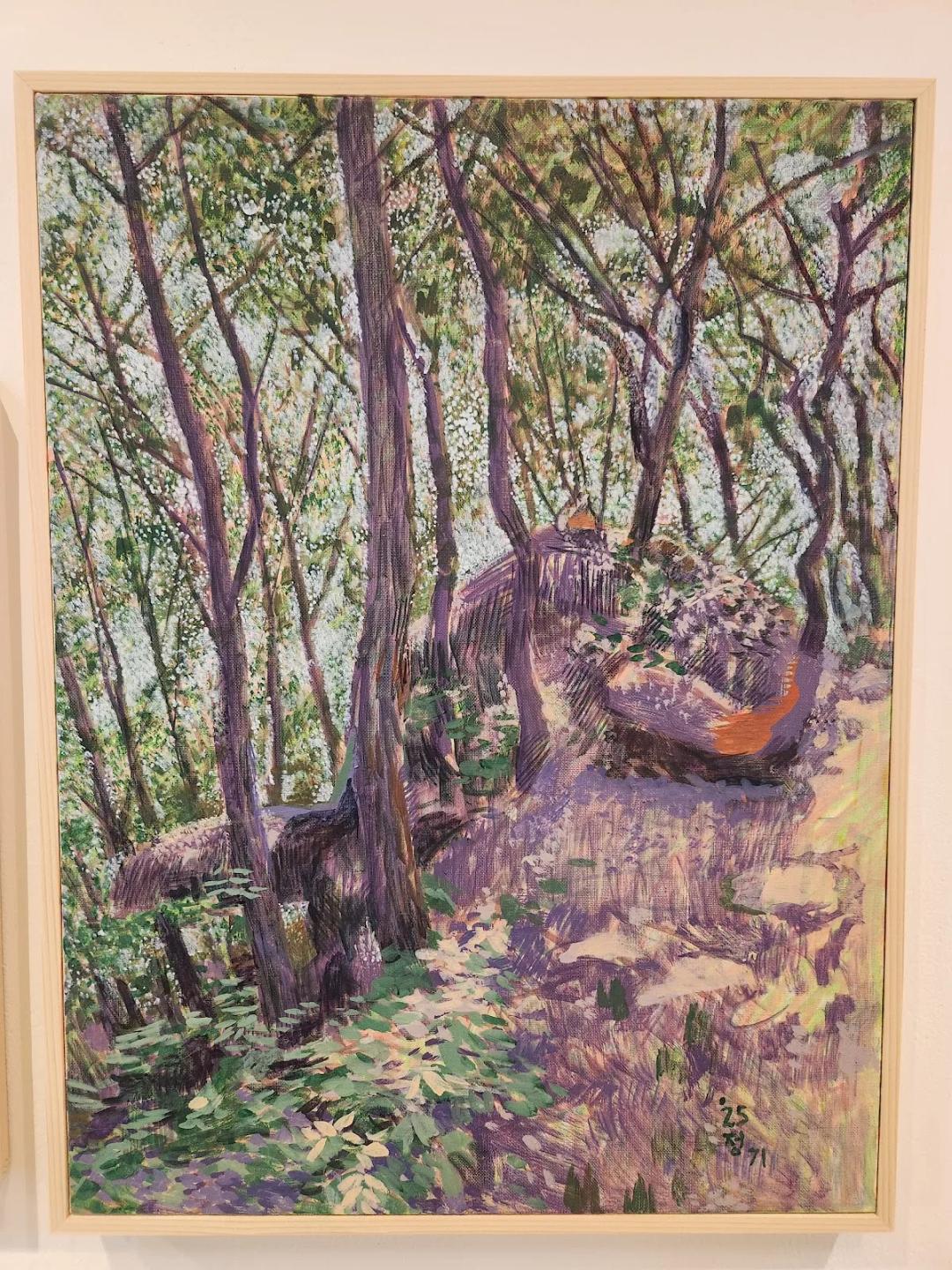
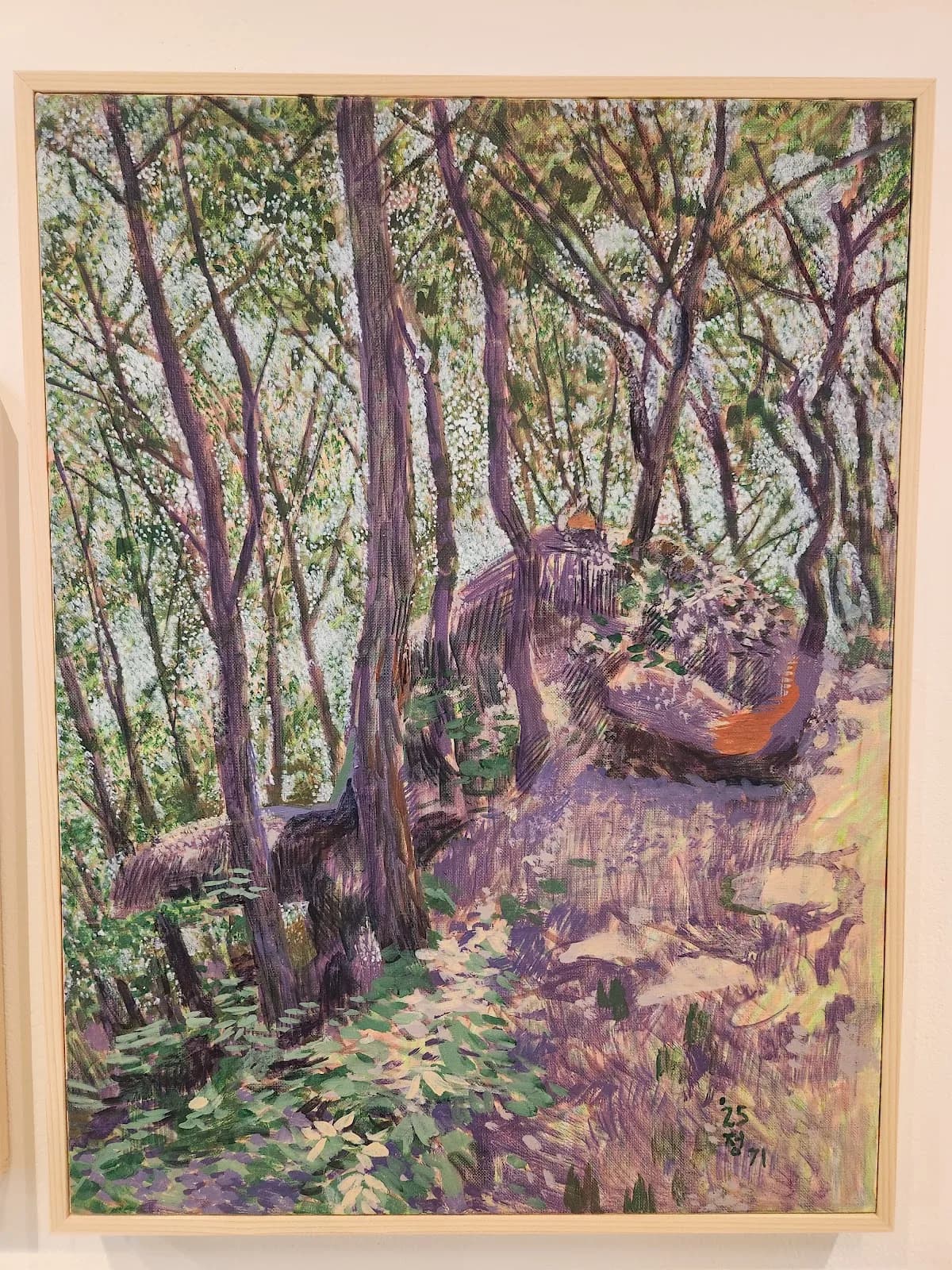
The stone tortoise of Songnisan is one of the four guardian spirits in the pungsu (geomancy) of Korean farming, watching over the village. Min Jeong-gi paints not only the fields of Yangpyeong but also the mythic geography of Korean mountain villages. Stone Tortoise of Songnisan (2025) is a single piece that holds the agrarian spirit beyond the agrarian landscape — 'the place that guards the land.'
3. Lee Cheol-soo — The Seasons on Hanji
Lee Cheol-soo is a self-taught printmaker who farms and carves in Jecheon, Chungbuk. He stood at the forefront of Minjung art in the 1980s, moved into the spirituality of Zen from the 1990s, and continues to carve the agrarian seasons on hanji. His arc is told in From Resistance to Zen — The Print World of Lee Cheol-soo.
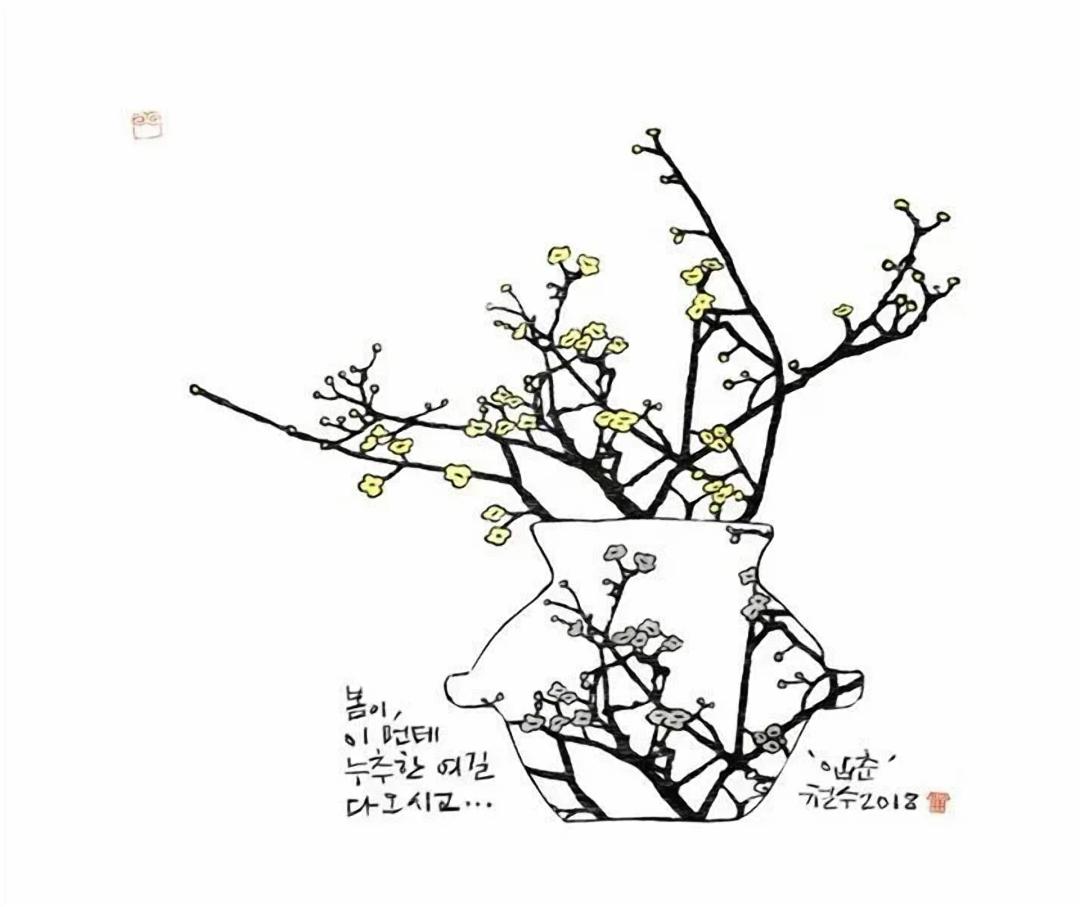
Ipchun — the beginning of spring — is the first of the twenty-four solar terms, the place where the agrarian year begins. Lee Cheol-soo names his prints after the seasonal terms themselves, carving Korean farming's sense of time one sheet at a time. The woodblock marks of Ipchun (2018) on hanji resemble the precise gesture of a farmer driving the first plow into the earth.
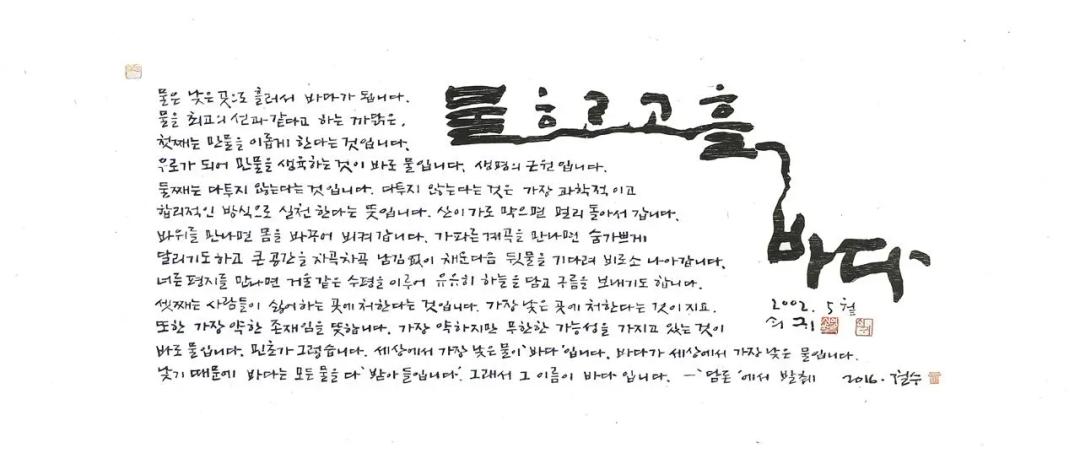
Farming, in the end, is the work of water. The water of rice planting, the water released in the harvest season, the water that becomes a river and goes to the sea. Lee Cheol-soo's Water Flows and Flows to the Sea (2016) holds that flow on a 98cm-wide canvas. It is a rare large-breath piece in which the time and space of Korean farming is moved onto a single sheet of hanji.
4. Jung Young-shin — The People of the Five-Day Market
The canvas of farming does not stop with painting and print. Jung Young-shin is a documentary photographer who has captured the country's five-day markets for forty years. Some 600 markets, tens of thousands of frames. A fuller profile of the artist appears in Jung Young-shin — Photographing the Layers of Time.
The five-day market is the most living trace of Korean agrarian society. A market that opens once every five days is the place where farmers come out with their own crops. To meet the same farmers and merchants in the same spot for forty years is also to record one person's whole life on a single photograph.
Jung Young-shin's photographs catch farming's 'process' rather than its 'result.' The moment when crops harvested through rice planting and reaping are spread on the market stalls — that is farming's most social moment, and Jung Young-shin is the artist who has followed it for a lifetime.
A Collecting Guide to Agrarian Art
Agrarian art can be collected along two paths.
Historical lineage — The thread of Korean art history that, with Shin Hak-chul's Rice Planting (1987) at its peak, moved from the 1990s onward to the rural villages of Yangpyeong and Jecheon. From this viewpoint, the recommended works are Min Jeong-gi's paintings, Lee Cheol-soo's prints, and Kim Jun-kwon's color-ink woodblock.
Everyday landscape — Bringing the time of farming into a city living room. From this viewpoint, small-format prints suit best. The entry pieces are Kim Jun-kwon's Blue Pine, Min Jeong-gi's Harvest (silkscreen), and Lee Cheol-soo's Ipchun.
| Artist | Representative Work | Price Range | Suitable Space |
|---|---|---|---|
| Kim Jun-kwon | Like Mountains, color-ink woodblock | KRW 4,000,000 | Living-room main wall |
| Kim Jun-kwon | Blue Pine, oil-based woodblock | KRW 7,000,000 | Living room / hallway |
| Min Jeong-gi | At Seohu-ri – Rice Cutting, oil | KRW 18,000,000 | Living-room main wall |
| Min Jeong-gi | Harvest, silkscreen | KRW 1,000,000 | Bedroom / study |
| Lee Cheol-soo | Ipchun, woodblock on hanji | KRW 1,200,000 | Tea room / study |
| Lee Cheol-soo | Water Flows and Flows to the Sea, woodblock on hanji | KRW 2,500,000 | Living-room horizontal wall |
Agrarian art comes alive most fully in spaces with soft natural light. A living-room main wall with daylight is the first choice; avoid spots with strong direct sunlight.
FAQ
Q. Who are other contemporary Korean artists working with farming? A. Beyond the four covered here — Kim Jun-kwon, Min Jeong-gi, Lee Cheol-soo, Jung Young-shin — there are Park Jae-dong (rural genre), Lee Hong-won (Jeonbuk countryside), and Lee Jong-gu (Seosan farmers). Park Jae-dong is covered separately in Solidarity Through the Brush.
Q. How does color-ink woodblock differ from ordinary woodblock printing? A. Chae-mok (彩墨木版) is a woodblock technique using both color (chae) and ink (muk) together. It carries a richer color layering than ordinary black-and-white woodblock and sits at the meeting point of Korean ink-painting tradition and Western print technique. Kim Jun-kwon is widely regarded as the contemporary peak of this technique.
Q. Can I directly buy Shin Hak-chul's Rice Planting? A. The original Rice Planting (1987) is in the MMCA collection and does not circulate on the market. Other works by Shin Hak-chul from different periods are traded through galleries and fairs.
Q. Original or print edition — which is better? A. It depends on budget and taste. With Min Jeong-gi, the same image exists as both an original (around KRW 18 million) and a silkscreen print (around KRW 1 million) — about an 18x gap. The original holds the edge in art-historical value, but for daily living-with, a print is fully alive too. A detailed comparison is laid out in Why Print and Original Prices Differ by 10x.
Q. Why is agrarian art receiving renewed attention now? A. Contemporary issues — urbanization, climate crisis, food sovereignty — have raised farming back to a spiritual and political position. If 1980s Minjung art treated farming as allegory, 2020s contemporary art is bringing farming over as 'time actually lived.' The contemporary work of Kim Jun-kwon, Min Jeong-gi, and Lee Cheol-soo is the firmest evidence of that current.
Related reading
If this piece helped, you may also enjoy these related articles:
Agrarian art is the deepest stratum of Korean painting history and, at the same time, one of its most living currents extending into the contemporary. Setting the work of Kim Jun-kwon, Min Jeong-gi, Lee Cheol-soo, and Jung Young-shin side by side, you can see at one glance where Korean art has gone since Rice Planting in 1987.
Sales proceeds become a mutual-aid fund for fellow artists. Just as farming was the work of a community, an artist's work is, in the end, the work of building the ground for fellow artists, together.
Further Reading

Seed Art Festival
·