Min Jeonggi, a founding member of *Reality and Utterance* (1979). From barbershop paintings into high-art corridors, then to Yangpyeong's sansu — four decades.
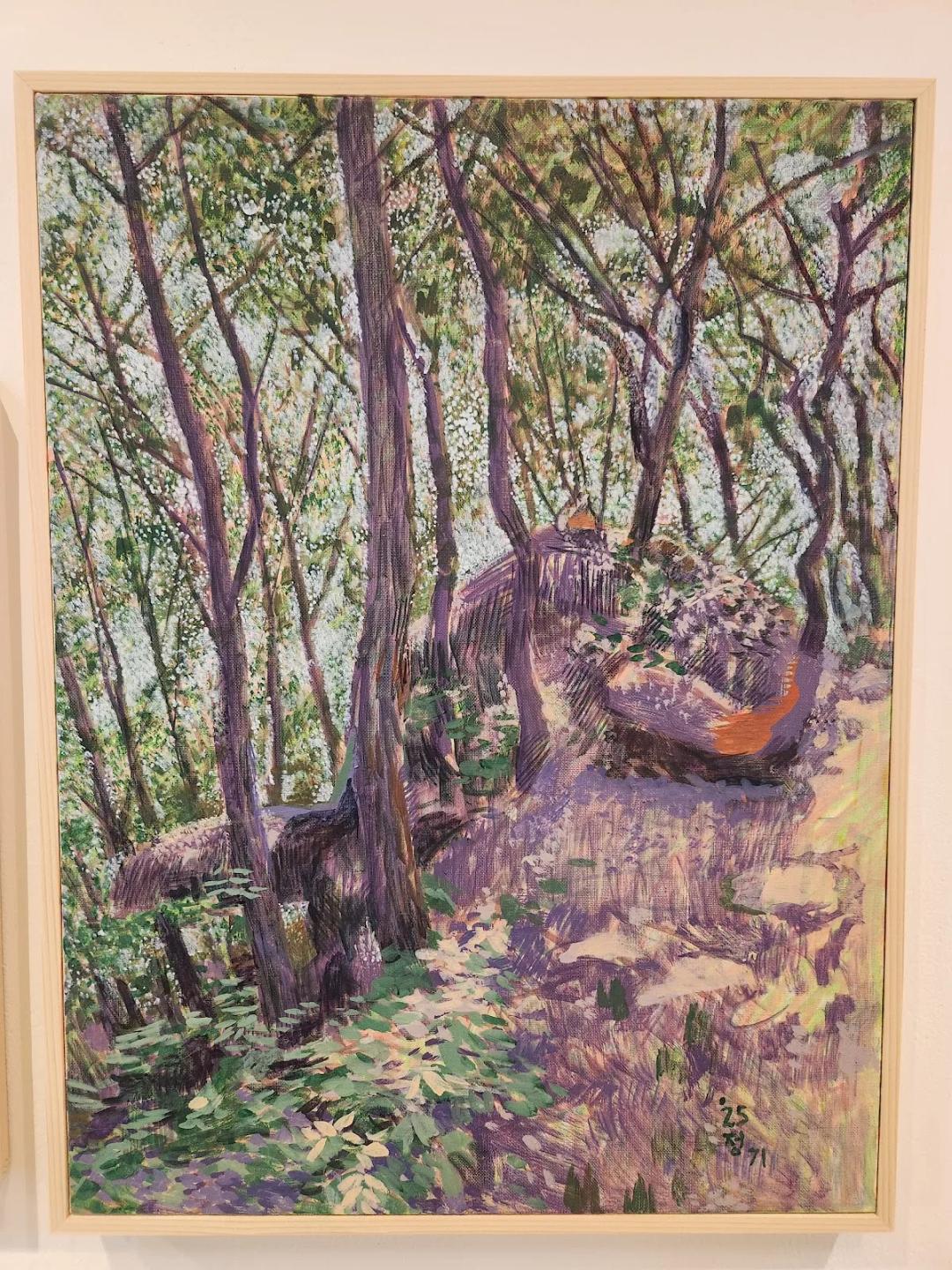
Late 1979. Reality and Utterance was founded.
Min Jeonggi (閔晶基, b. 1949) was a founding member. Through the group's official dissolution in 1990, he settled as a core figure of Korean minjung art. Forty-plus years since. Min Jeonggi's brush has passed through many sites in Korea's visual topography — from the kitschy barbershop paintings to Yangpyeong's sansu.
Bringing Barbershop Paintings Into the High-Art Corridor
Early Min Jeonggi brought the so-called barbershop painting — awkward, unrefined images — back into imitation and placed them inside the high-art corridor.
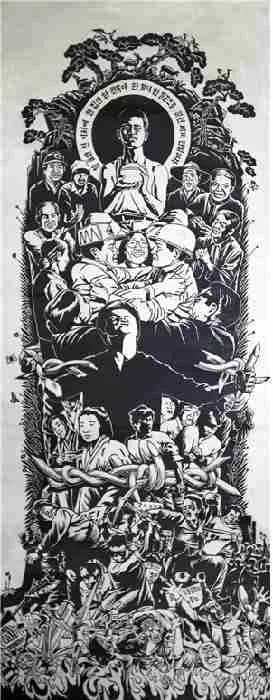
"He touched the self-awareness we all share — of living vulgar lives in a vulgar society." A critic's summary. An anti-aesthetic, Dadaist project. An allegory of a dark era. His early work was a provocation: placing the boundary between art and vulgarity itself on the exhibition stage.
A gaze of compassion that could not turn from the shadowed corners of popular life. That was Min Jeonggi's starting point and the tone that has stayed as undercurrent wherever he goes.
To the Forest, to the Land, to the Stratum
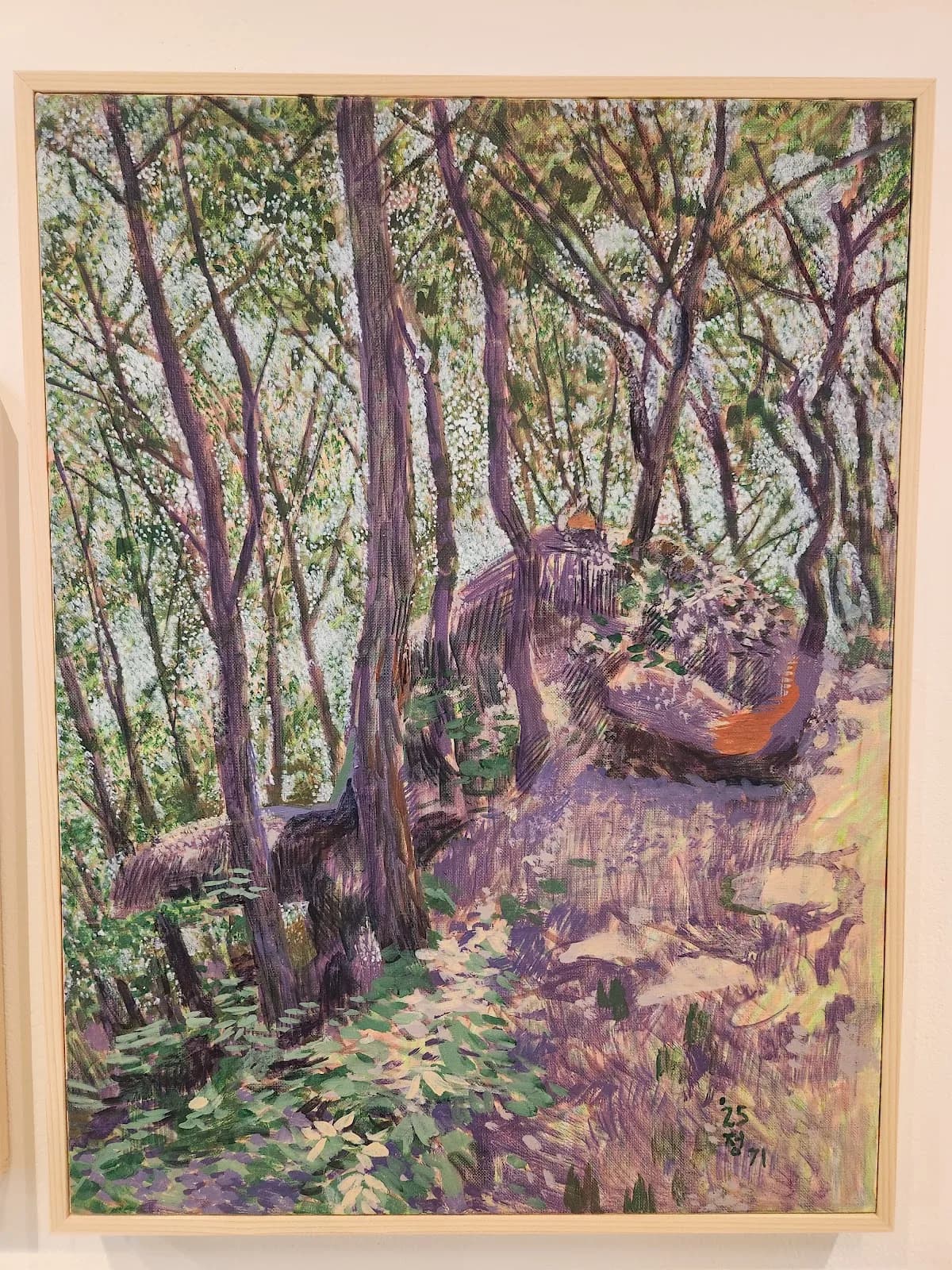
In 1987, Min Jeonggi moved to Yangpyeong, Gyeonggi. The move preceded Reality and Utterance's official dissolution (1990). And he began the work of pictorially recording human life living with mountains and earth — sansu, flower-and-bird painting.
But this shift should not be read as "a surrender from minjung art to sansu." Critics read it differently. "He walked toward the forest. But precisely, toward the land — toward the strata of history. Then he walks out into the marketplace, following roads, streets, and the flow of rivers. That is 'the road toward today.'"
A diverging path from contemporary art's drift toward all-positivity and all-cleanliness. His Yangpyeong-era sansu traces the steps of ancestors who made their dwelling within terrain and held pungsu as wisdom. His sansu is not a decorative landscape but a device that makes you aware of the distance from contemporary life.
Stone Turtle of Songnisan, Rice Harvest of Seohuri
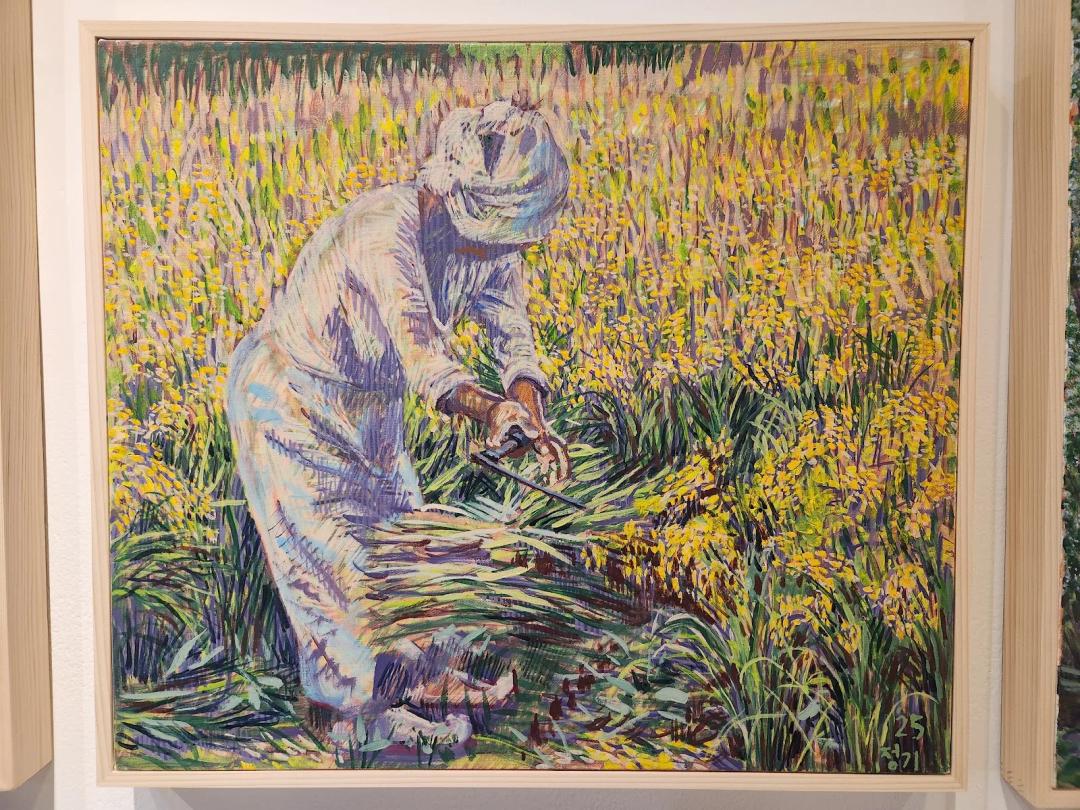
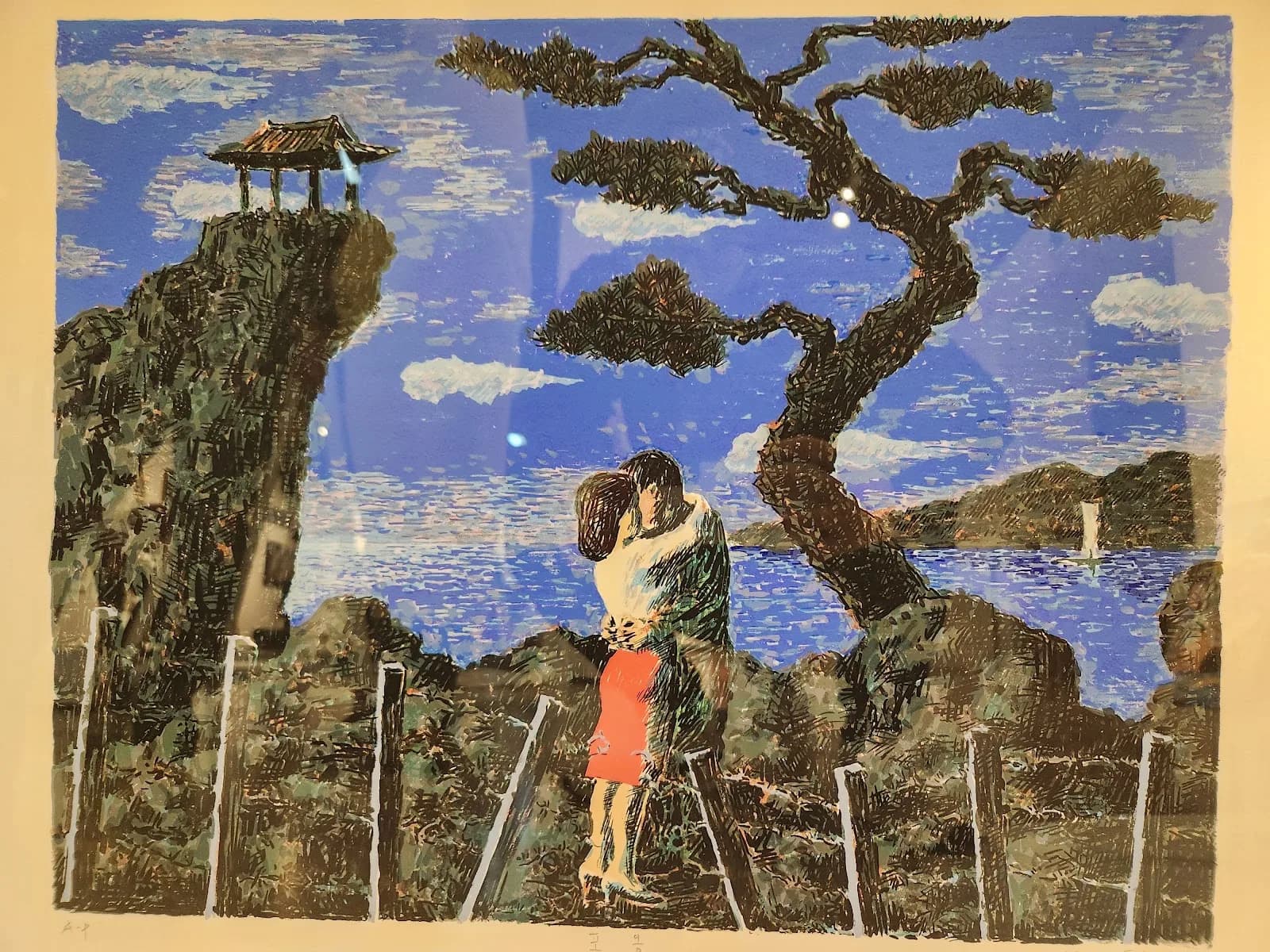
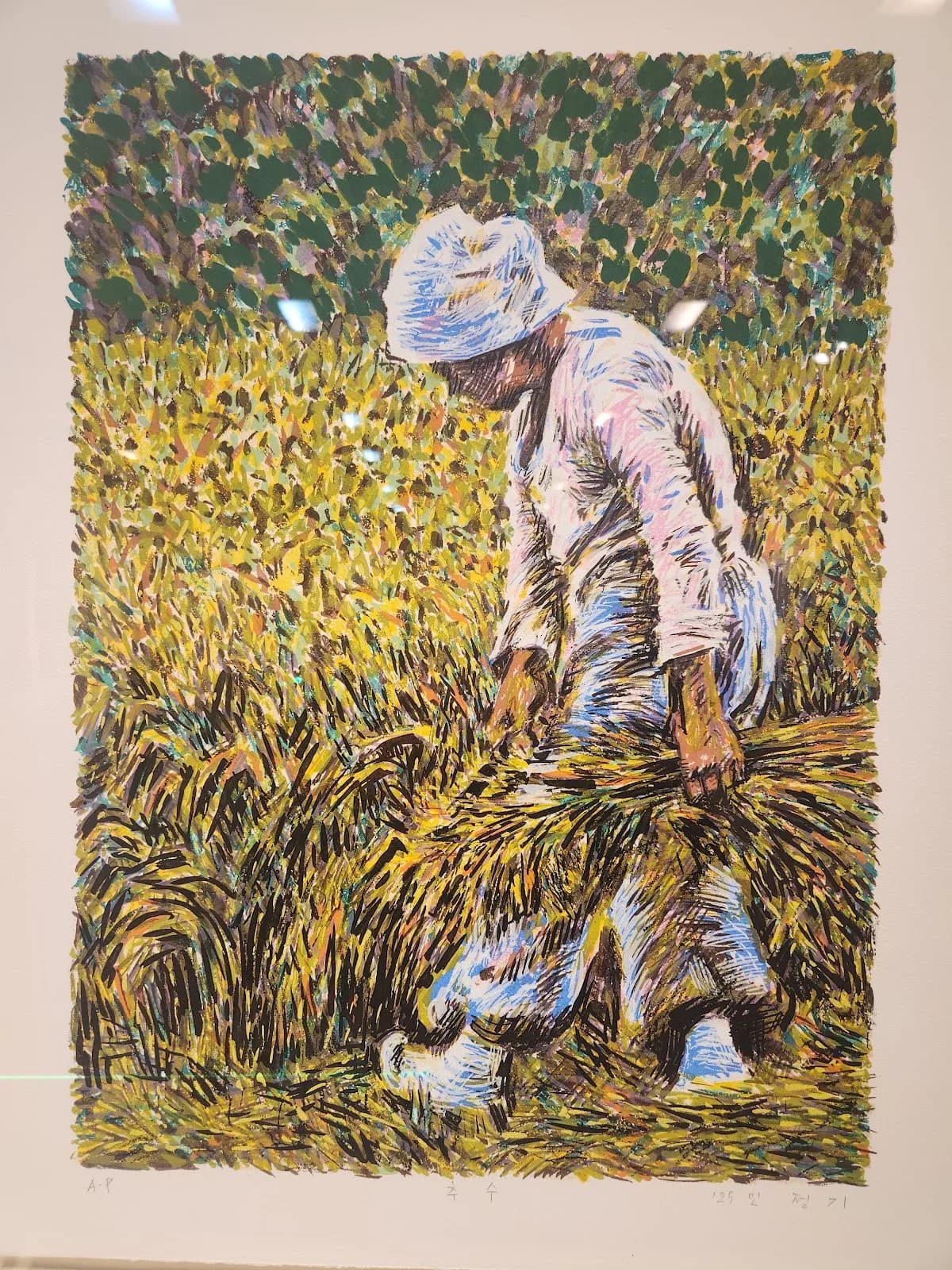
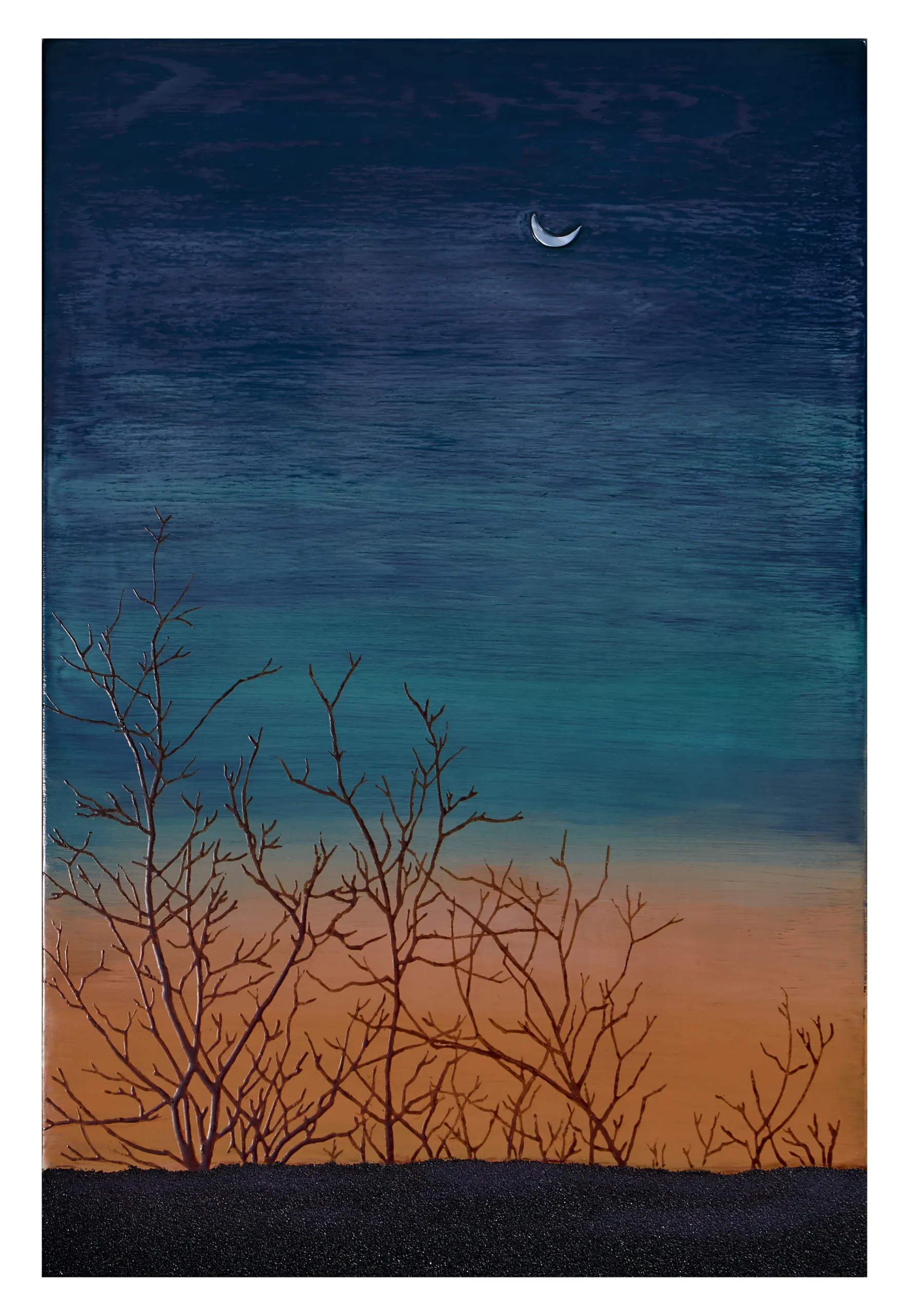
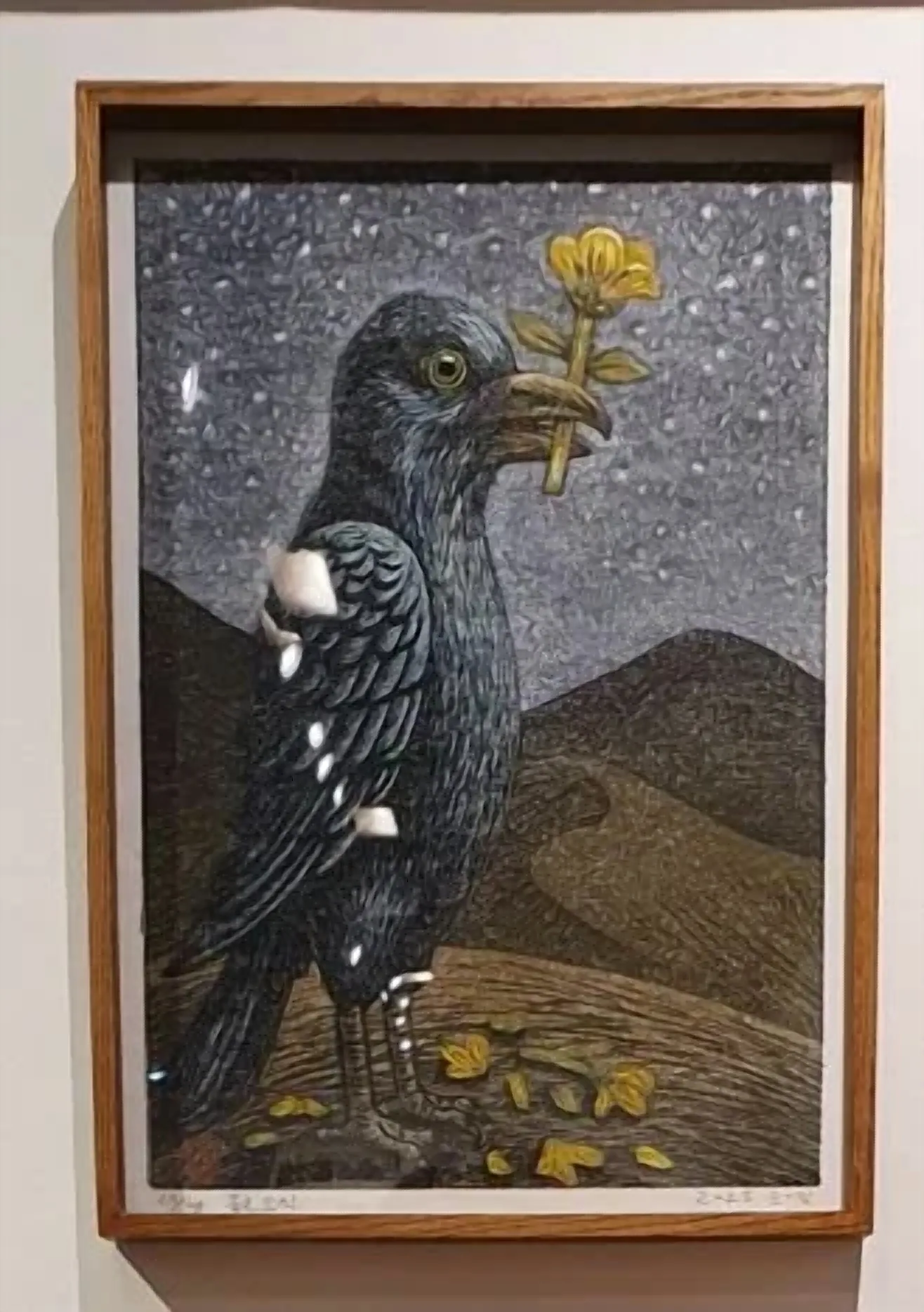
His SAF 2026 contributions are all 2025 works. Two oils, two silkscreens.
- Stone Turtle of Songnisan — oil on canvas
- At Seohuri — Rice Harvest — oil on canvas
- Embrace — silkscreen
- Harvest — silkscreen
The stone turtle of Songnisan is a natural object holding old time; the rice harvest at Seohuri is a scene of labor continuing now. The artist's posture of holding the stratum of history and today's marketplace at once is compressed into four works.
The two prints also serve as a channel through which a senior artist's work can be owned in a relatively accessible price range.
A Senior's Solidarity
84.9% of Korean artists are excluded from institutional finance. Sales of works by SAF-exhibiting artists cycle into a mutual-aid fund, returning as low-interest loans to fellow artists.
An artist who was part of Reality and Utterance's founding still puts his paintings forward for fellow artists 40+ years later. If minjung art began as critique of the system, that critical spirit survives today inside the form of mutual aid. Min Jeonggi's contribution is also his own record — that 40 years of solidarity have not been cut.
Shadow of Landscape, Shadow of Painting
The word shadow often sits on Min Jeonggi's paintings. Shadow of popular life's corners, shadow of landscape, shadow of painting.
Shadow does not only mean the place light cannot reach. It can also be the place that clearly points to where light is coming from. If, in front of Yangpyeong's sansu, you feel the distance from today's life — that is what Min Jeonggi's shadow does.
SAF is one of those shadows too. Not easily visible, but because it is there, you know where the light should move.
Works by Min Jeonggi
Related reading
If this piece helped, you may also enjoy these related articles:
View all works by Min Jeonggi →
Related Reads
Artists on the Same Path

Collecting Guides
Seed Art Festival
·