An artist who has never put down his brush from the 1970s through the 2020s. Fifty years of work that weaves the pain and hope of Korea's modern history through bodies, mountains, and rivers.
Painting the Faces of the People for Fifty Years — Artist Shin Hak-chul

In Korean contemporary art history, artists who have held a single subject for fifty years are rare. Shin Hak-chul is one of those rare exceptions. From the early 1970s to the 2020s, he has never stopped making large-scale narrative paintings on the theme of Korea's modern and contemporary history. With a single brush, he has painted a hundred years of his country.
This essay is an introductory guide for readers encountering Shin Hak-chul's practice for the first time.
The 1970s — The Era of Photomontage
Beginning to Paste Images
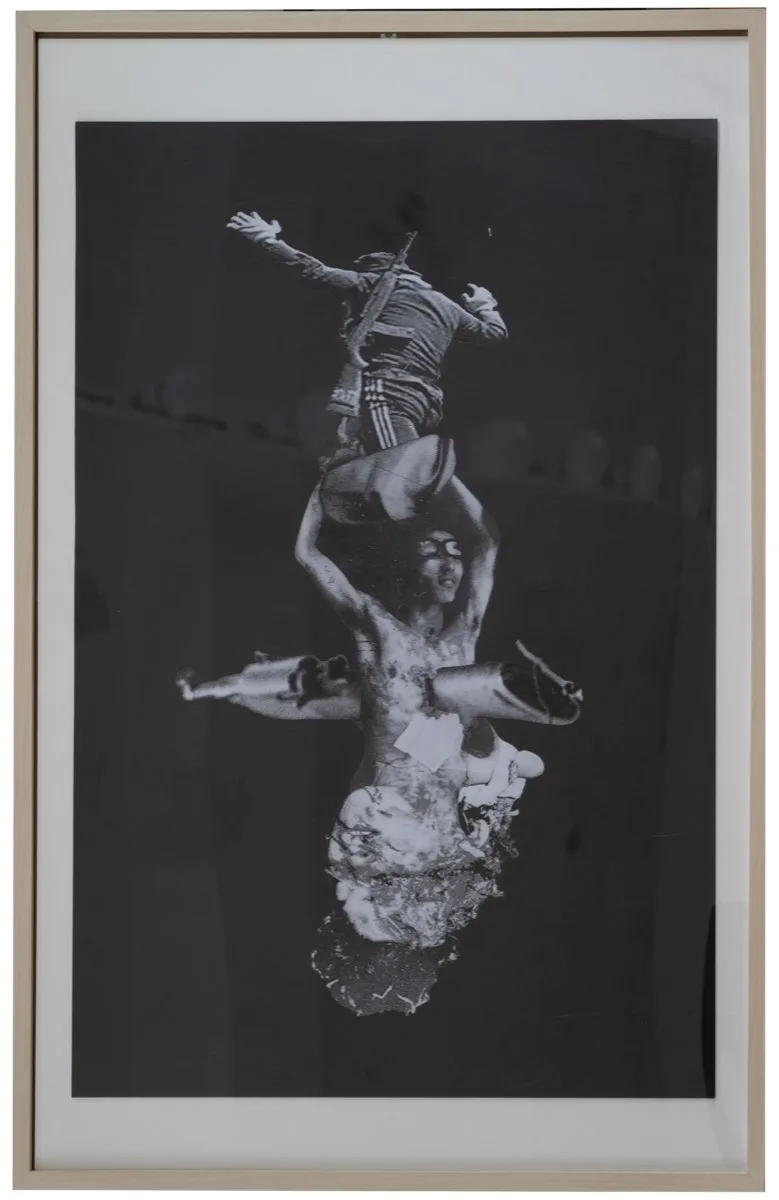
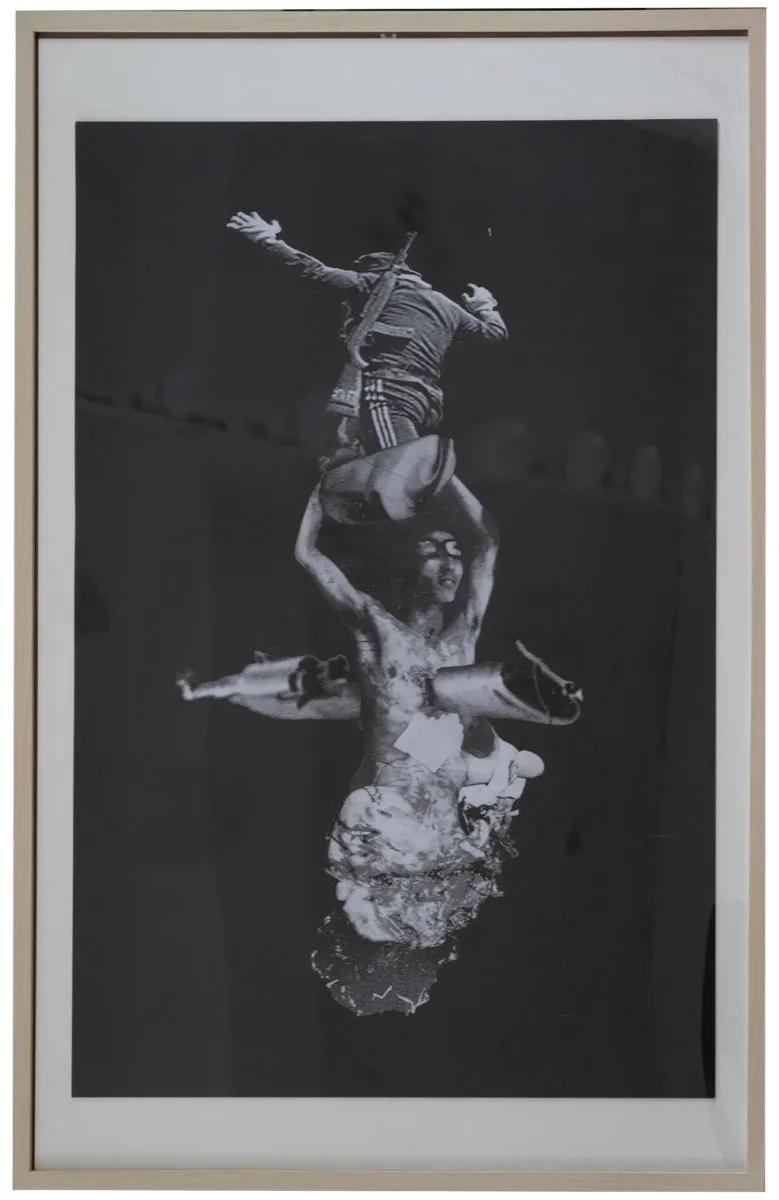
From the early 1970s, Shin Hak-chul developed photomontage and collage as his own language. The Korean art scene at the time was dominated by Dansaekhwa and abstract idioms; photomontage as a medium was peripheral within the field of art.
Shin's choice was deliberate. He wanted to draw the fragmentary images of his era into the work, and photomontage was the technique most suited to that purpose. Cutting images from newspapers, magazines, textbooks, and official photographs, pasting them up, and adding paint over the top, he constructed new narratives.
The Core Question of the Early Work
"Within the space of Korea, within the place of my own body, how does history accumulate?" This recurring question of the early work is the foundation of his entire practice.
The 1980s — The Beginning of the Korean Modern History Series
History as Body
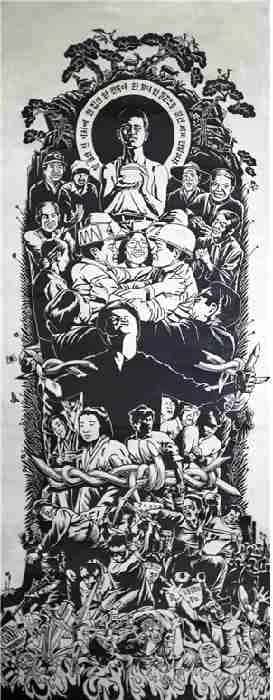
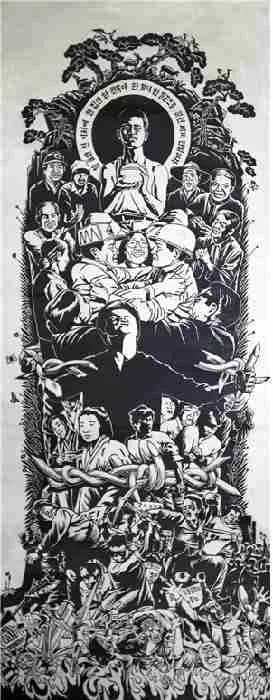
In the early 1980s, Shin began his signature Korean Modern History series in earnest. The visual core of this series is as follows.
- A single massive form (a body, river, mountain, or pagoda) runs through the center of the canvas
- That form is filled with countless historical scenes in compressed form
- History is layered not in chronological order but in spatial arrangement, crossing and overlapping
For instance, within a single colossal body, scenes of Japanese colonial rule, images of the Korean War, factories of industrialization, and faces of the democratization movement exist simultaneously. The viewer experiences the events of a century in a single scene while looking at one work.
After Reality and Utterance
With the founding of the Reality and Utterance group (Hyeonsil-gwa Bareon) in 1979, Minjung art took organizational form, and Shin took his place as a central figure in this current. His work, however, occupied a distinctive position even within the group. Where Oh Yoon's woodcuts faced the people directly and Kim Jung-heun rendered the daily life of the countryside in a quiet register, Shin handled the grand narrative of history. Each responded to the same era in their own way.
1989 — The Rice Planting Incident
National Security Law Indictment
In 1989, Shin Hak-chul's work Rice Planting was classified as a pro-enemy expression under the National Security Law, and the artist was arrested. The reason given was the inclusion of certain images within a scene of farmers planting rice.
This incident became a symbolic case of artistic censorship in late-1980s Korea. The art world, academia, and civil society issued statements and protested; international human rights organizations took an interest. Shin was released soon after his arrest, but the trials dragged on. He was acquitted at the first and second instances, yet in 1998 the Supreme Court reversed and remanded the case as a guilty verdict, and the following year a sentence of ten months in prison with a two-year stay was confirmed. Rice Planting was held by prosecutors for more than 25 years before being transferred to the National Museum of Modern and Contemporary Art (MMCA) in 2018.
After the Incident
The incident was a deep wound for Shin personally, but at the same time it became an important turning point in Korean contemporary art history. Many issues — artistic freedom, social language, the place of art in the public sphere — were brought into open debate through this case.
The 1990s–2000s — Entering the Institution and Re-evaluation
After Democratization
Through the 1990s, after the democratization of 1987, Shin's work was gradually folded into the collections of institutional museums. The "pro-enemy artist" of 1989 became, in the 2000s, an artist held by the National Museum of Modern and Contemporary Art (MMCA). This change reflects not Shin's personal transformation but the transformation of Korean society itself.
Major Holding Institutions
- National Museum of Modern and Contemporary Art (MMCA)
- Seoul Museum of Art (SeMA)
- Hakgojae Gallery–related collections
- Other major private and public museums
The Practice Continues
Even after entering the institution, Shin continued the Korean Modern History series. Through the 1990s, 2000s, and 2010s, the work goes on, with each era's new events accumulating onto the canvas. The IMF crisis, inter-Korean relations, citizens in the public square, the Sewol ferry disaster — all are absorbed into his later work.
The 2010s–2020s — The Era of Retrospectives
Work in His Seventies and Beyond
Shin has not stopped working in his seventies and eighties. Large canvases still stand in his studio, and new scenes continue to be added.
Major Retrospective-Style Exhibitions
- 2023 MMCA-related curated exhibitions
- 2024 Hakgojae Gallery solo exhibition — a large-scale exhibition spanning early 1970s works to recent pieces
- Other special exhibitions at SeMA and regional museums
These retrospective-style exhibitions show that Shin's practice has moved beyond being a record of one era to take its place in the canon of Korean contemporary art.
Three Keys to Understanding Shin Hak-chul's Practice
Key 1. The Body Is History
In his work, the body is not simply a body but a vessel of history. The body of an individual connects to the history of a nation; the body of one generation passes into the next. This memory of the body is the central subject of his practice.
Key 2. Layered Time
In Shin's canvas, time is not linear. 1945, 1980, and 2020 exist simultaneously within a single picture plane. The viewer does not read in sequence but experiences multiple times at once. This reflects his philosophy that history is not "what has passed" but "what is layered upon the present."
Key 3. The People as Subject
The subject of his work is always minjung — the people. Not heroes, not leaders, not celebrities. The faces and bodies of farmers, laborers, women, students, ordinary citizens stand at the center of the work. This choice of subject distinguishes his practice from other versions of "Korean modern history."
How to Read Shin Hak-chul's Work
Once Up Close, Once From a Distance
His large narrative paintings should first be apprehended from at least three meters away to grasp the overall structure, then approached closely to read the fragmentary images in detail one by one. From a distance you see the colossal form; up close, dozens of small stories emerge.
Allow Time for Discovery
His work is not something you have "fully seen" at first glance. Stay ten minutes, twenty minutes, an hour, and images that did not appear at first keep emerging. The pleasure of viewing lies in the duration of this discovery.
Read with the Year and Title as Clues
First check the year noted on the work. Bring to mind what Korea looked like in that period; the images within the work will read differently.
After Shin Hak-chul — His Influence
Shin's fifty years of practice have deeply influenced post-Minjung generations as well. Second-generation artists such as Park Chan-kyong, An Kyu-chul, Ham Kyungah, and Bae Young-whan inherit themes of "history and the individual," "public memory and private record."
Yet Shin himself is still active. The fact that an artist in his eighties continues to make new work proves to younger artists the possibility that "you may hold one subject for a lifetime."
The Spirit of Shin Hak-chul Met at SAF
Shin Hak-chul's participation in the SAF campaign carries particular weight. A first-generation elder of Minjung art has put work into a 2020s civic-solidarity art campaign. This symbolizes that his fifty years of practice continues not as a relic of the past but as a present-day act.
To collect his work through SAF is to bring a chapter of Korean contemporary art history into the home. On the artwork detail page you can see his major exhibitions, holdings, and related articles.
Frequently Asked Questions
Q. What is Shin Hak-chul's signature work? A. The Korean Modern History series is the most widely known. It is a long-running series from the early 1980s to the present, each work standing as an independent large narrative painting. Several pieces are held by the MMCA and SeMA.
Q. Can ordinary collectors buy his work? A. Large originals come to market rarely and command very high prices. Prints and small drawings, however, are within accessible ranges. The works in SAF are a representative example.
Q. What happened with the Rice Planting incident? A. Shown at the 1987 Unification Exhibition, Rice Planting was seized in 1989 as a pro-enemy expression under the National Security Law. After acquittals at the first and second instances, the Supreme Court reversed the case in 1998, and a guilty verdict (ten months in prison, two-year stay) was confirmed the next year. Held by prosecutors for over 25 years, it was transferred to the MMCA in 2018. The artist himself, in several interviews, has spoken of the incident as a record exposing the contradictions of an era.
Q. Why is Shin Hak-chul singled out among Minjung artists? A. (1) He is one of the first-generation artists with the longest career still active today; (2) he developed the unique language of the large narrative painting consistently; (3) he stood at the center of the discourse on artistic freedom in Korea through the 1989 Rice Planting incident; (4) he represents the trajectory from outside the institution into the institutional canon. These four combine.
Q. Where can I see more of Shin Hak-chul's work? A. (1) Permanent and special exhibitions at MMCA Seoul and Gwacheon, (2) SeMA, (3) major retrospectives when they are held (Hakgojae and others), (4) catalogues and books (key works are reproduced in writings by Sung Wankyung, Choi Yeol, and others).
The work of an artist who has devoted fifty years to a single subject is closer to a library than to a single "work." Within Shin Hak-chul's canvas live a hundred years of Korean modern and contemporary history. Read alongside What Is Minjung Art for a fuller understanding of the lineage in which his practice belongs.
Works by Sin Hakcheol
Related reading
If this piece helped, you may also enjoy these related articles:
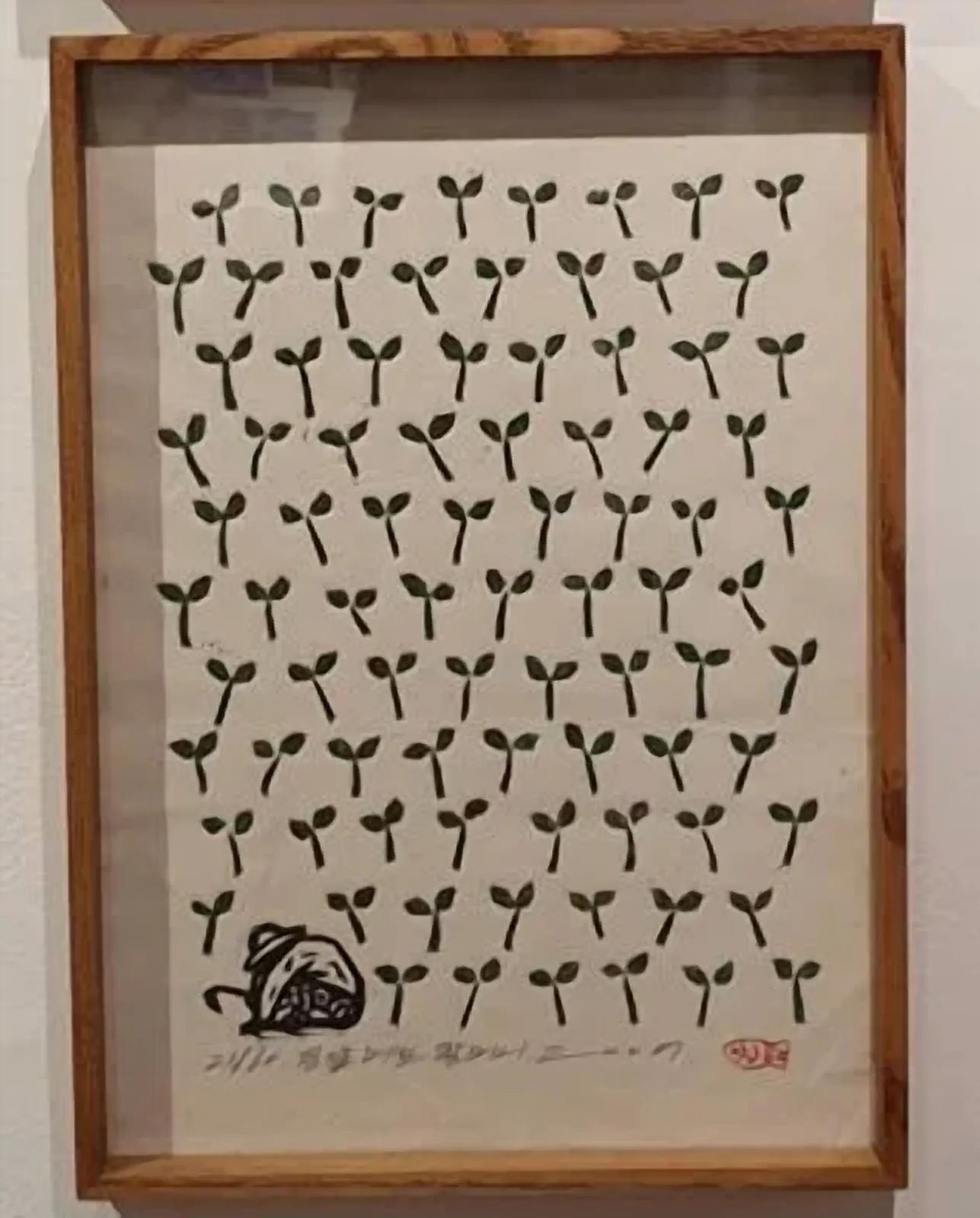
View all works by Sin Hakcheol →
Related Reads
Artists on the Same Path
Collecting Guides
Seed Art Festival
·