In the seventy years since the Korean War, Korean contemporary art absorbed, rejected, and reinterpreted Western traditions to forge its own language. From Art Informel to Dansaekhwa, from Minjung art to the global stage — this five-minute survey maps each era's key movements and shows where SAF 2026 artists stand in that history.
Painting on Ruins — 1950s–60s
In 1953, the war ended. Seoul was ash; the art-school buildings were broken. And yet something strange happened. Right on those ruins, Korean contemporary art began.
Young painters fell in love with Art Informel, born in postwar Europe. Abstraction that refused form, violent expression of throwing, scraping, spraying paint. Around the Contemporary Artists Association founded in 1957, Park Seo-bo, Kim Tschang-yeul, Ha In-du and others tried to transplant Western modernism into Korean soil.
The era's core question was singular. "How should we receive Western art?" A struggle to find Korean art's coordinates between traditional Eastern painting and Western abstraction. Before finding their own language, they were busy learning a foreign one.
Repetition in Silence — 1970s Dansaekhwa
As the 1970s arrived, the mood shifted. Violence settled; quiet rose.
Dansaekhwa (monochrome painting) emerged. Park Seo-bo painted and then drew pencil lines over the canvas, countless times — the Écriture series. Yun Hyong-keun let yellow-brown and ultramarine seep into canvas. Ha Chong-hyun invented baeapbeop — pushing paint from behind the canvas so it bled through to the front. Lee Ufan began From Point and From Line — touching negative space with points and lines alone.
Their common ground: they did not paint something so much as took painting as act itself as work. Reducing color to one, repeating, emptying. It overlaps visually with Western Minimalism, but the roots differ. Korean Dansaekhwa carries the negative space of ink painting, the nothing (無) of Zen Buddhism, the restraint of ceramics.
Dansaekhwa was rediscovered in the international market in the 2010s. Park Seo-bo's Écriture began fetching billions of won at auction, and with the label "Korean Minimalism," it took a chapter in world art history.
Whose Art Is It? — 1980s Minjung Art
If Dansaekhwa was meditation on canvas, the 1980s broke that meditation.
The Gwangju Uprising (1980), the prolonged military dictatorship. People fell in the streets — could painters keep drawing lines on white canvas? The question pushed back led to Minjung (people's) art.
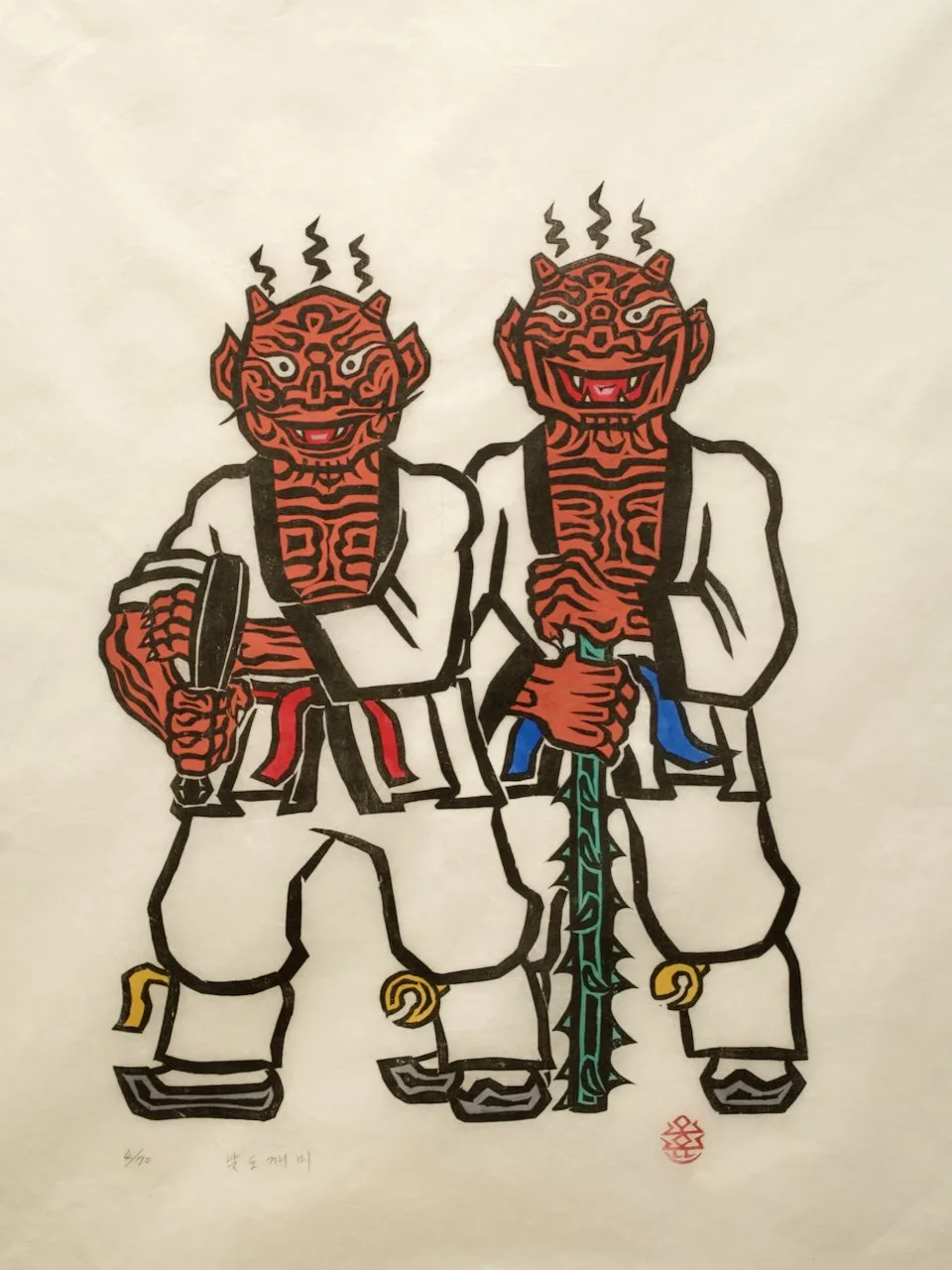
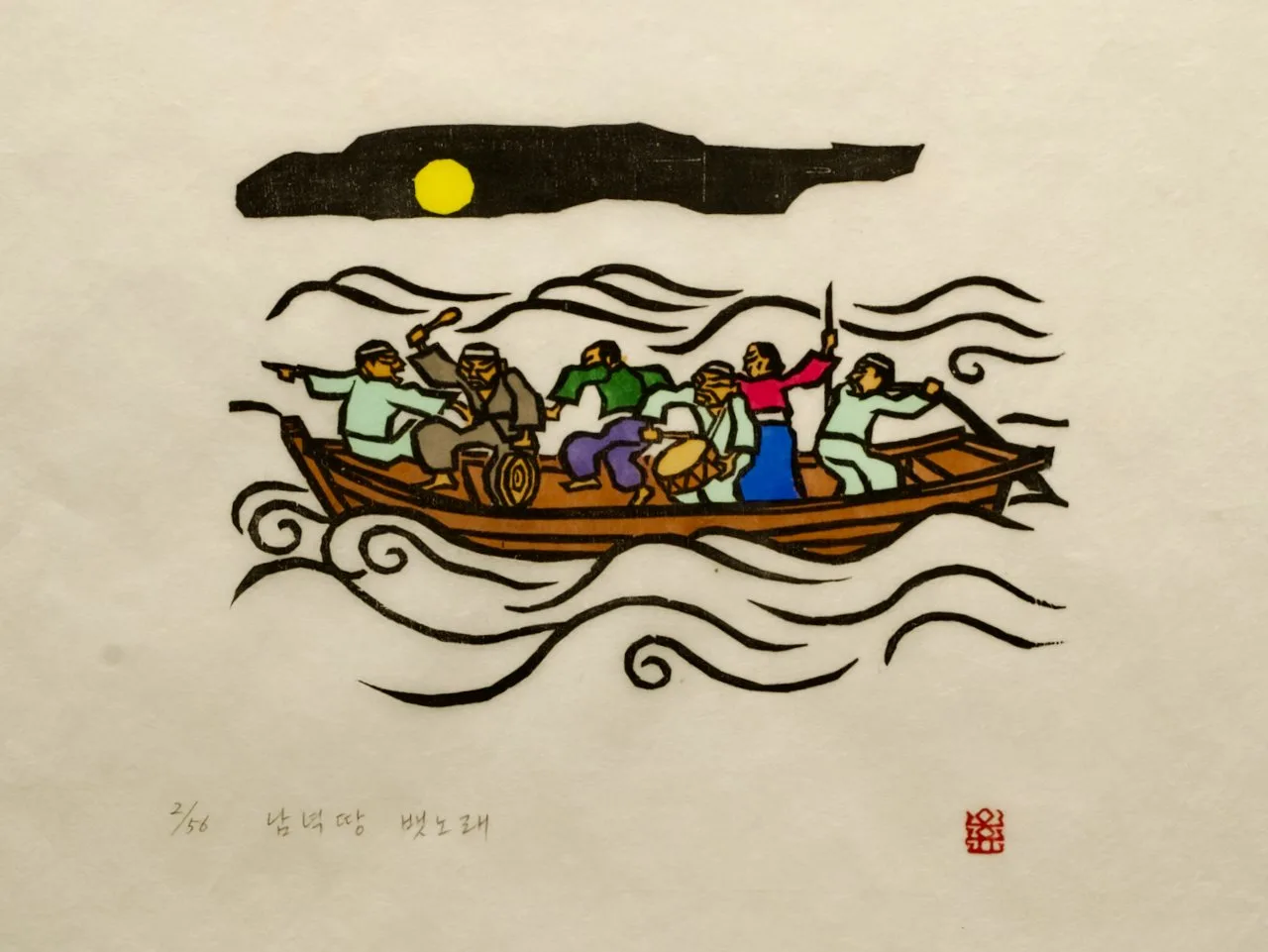
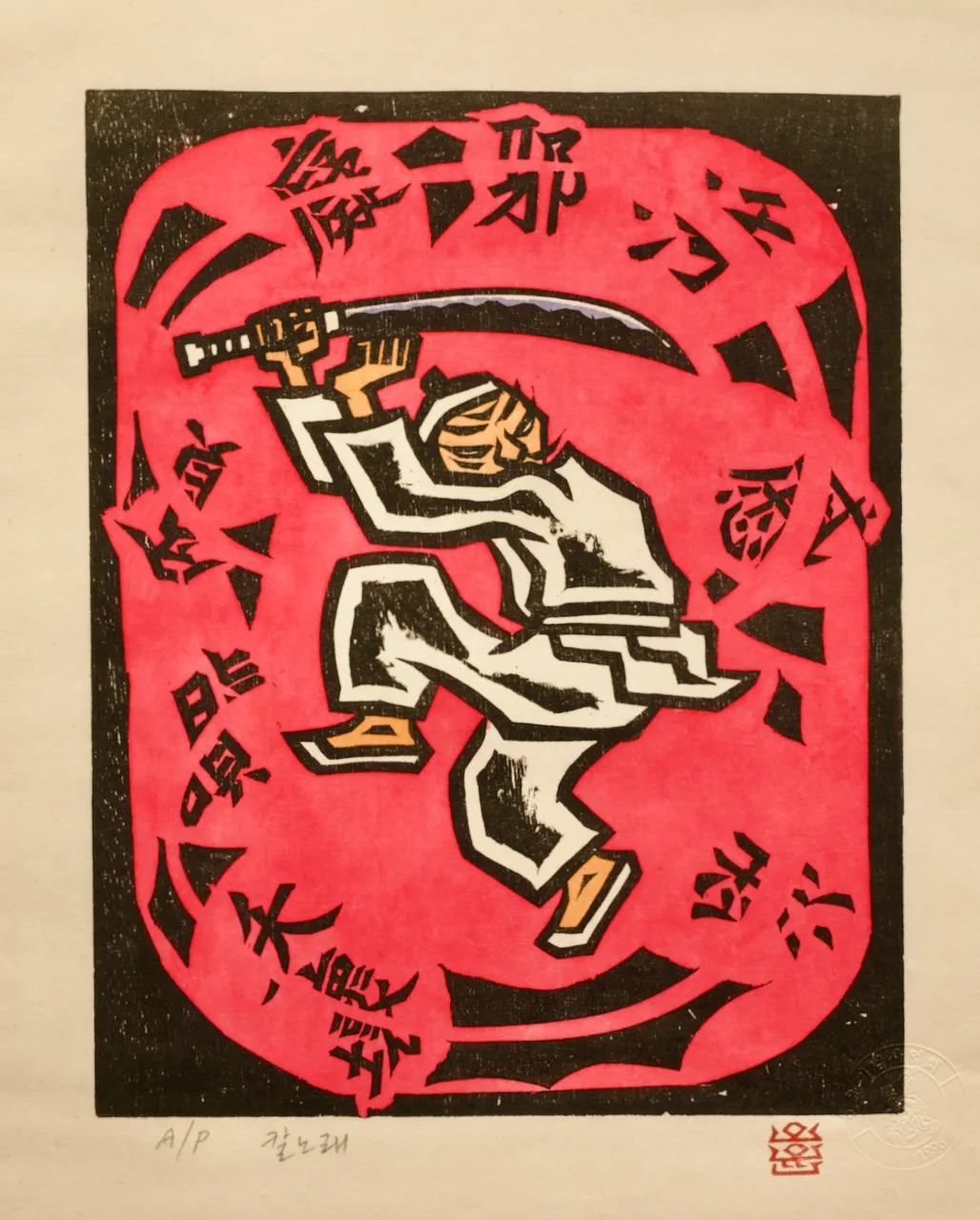
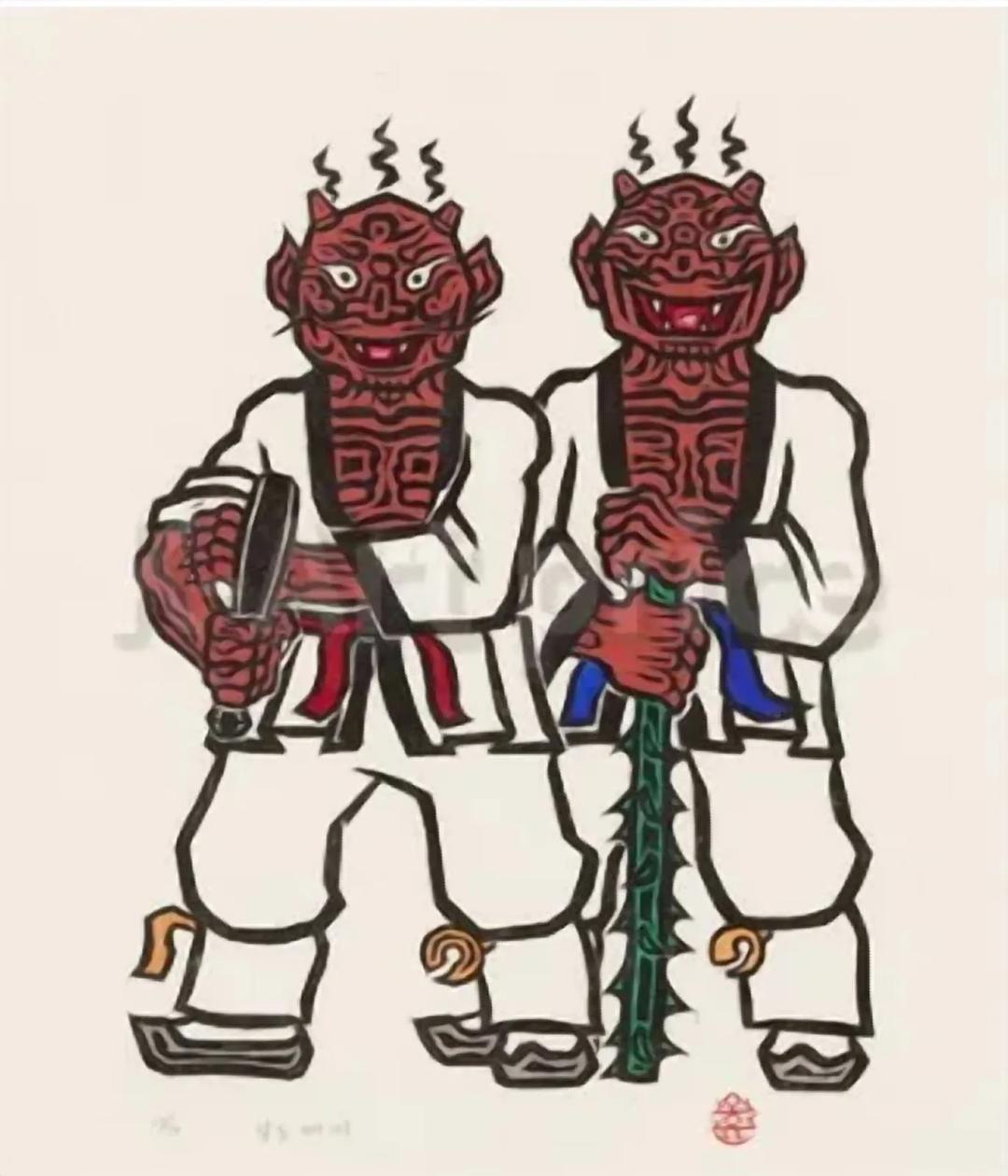
Oh Yun (1946–1986) was at the center. A Seoul National University sculpture graduate who chose mask dance, shamanism, and dokkaebi over Western aesthetics. His woodblock figures are suppressed but never weak. The sharp tension of Blade Song, the satire of Daytime Ghost, the rhythm of Namnyeok Boatmen's Song. These figures carved with a blade into wood first met audiences not in galleries but on factory walls and protest grounds. He died at 40 in 1986; SAF 2026 includes 18 of his posthumous prints.
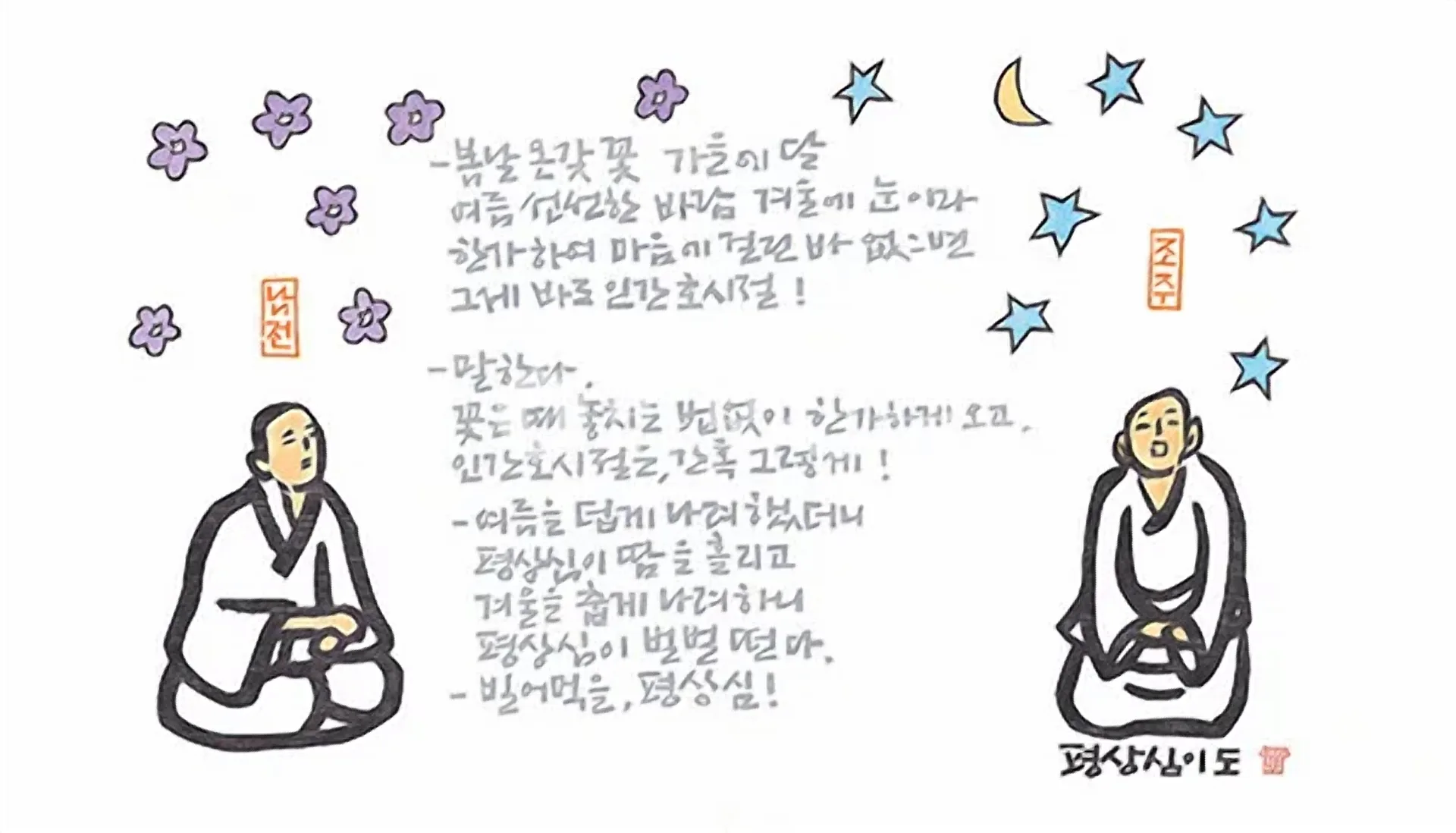
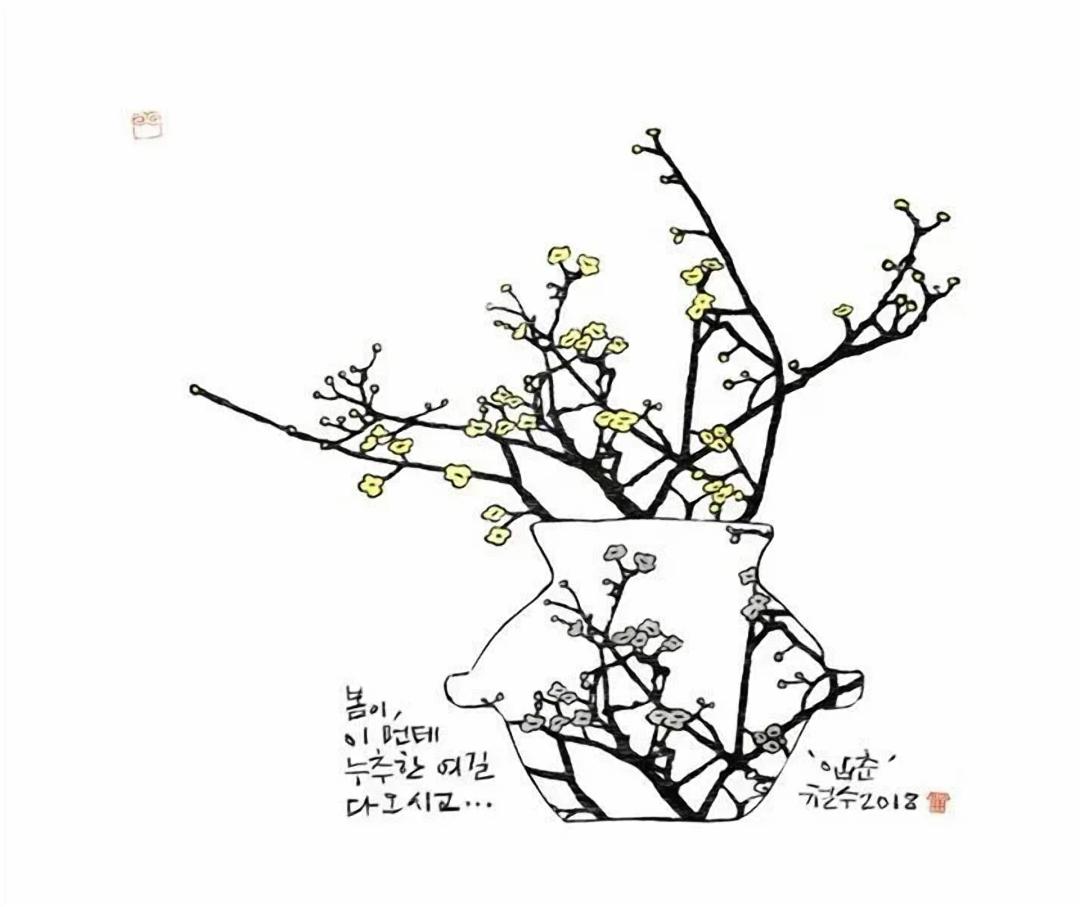
Lee Cheolsu (1954– ) came to printmaking self-taught, without attending art school. In the 1980s he stood at the front of Minjung printmaking; later he shifted toward Zen. The blade-edge of resistance and the blade-edge of meditation came from the same hand. He contributed 10 woodblocks to SAF 2026; the 50-plate Mumungwan (₩50M) is among the show's top-priced works.
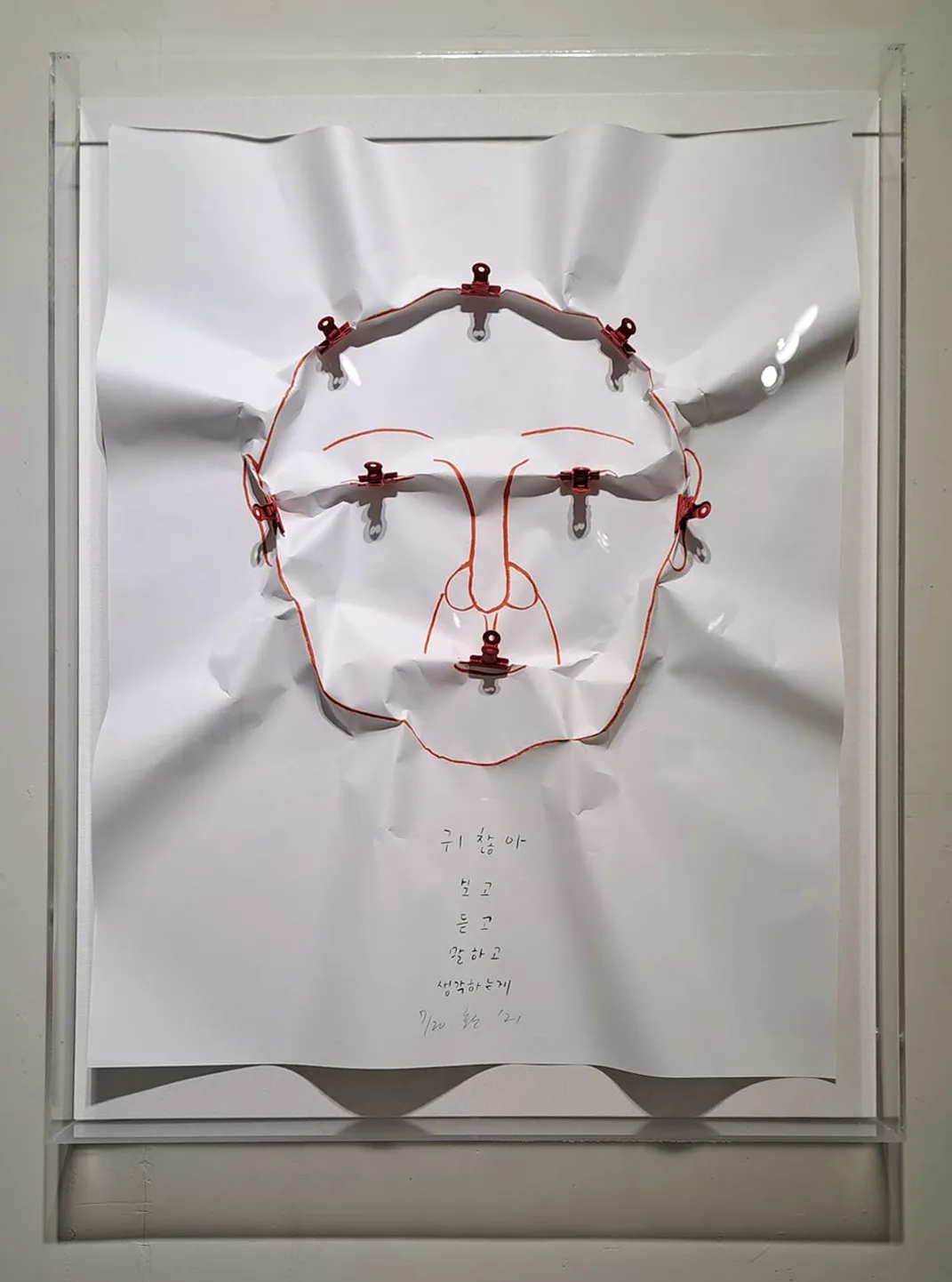
Formed in 1979, Reality and Utterance represented the era. A collective that declared its intent to paint reality against the purism of institutional art. Joo Jaehwan (1940– ) was a founding member. In Mondrian Hotel, he bent Mondrian's grid into the space of capitalism — the wit that built Korean art's distinctive tradition of satire for decades.
The question Minjung art posed — "whose art is it?" — remains alive. Art locked inside gallery white walls, or art standing in the middle of life?
Going Global — 1990s–2000s
The 1990s were a transitional era. As democratization proceeded, art's language also changed. Personal narrative replaced political slogan; installation and video rose beside painting.
In 1995, the Gwangju Biennale was founded — Asia's largest international art event. Korean art's official window to the world opened. Lee Bul represented Korea at the Venice Biennale in 1999 with monstrous body sculptures; Suh Do-ho surprised New York with hanji replicas of entire houses.
Joo Jaehwan moved onto the international stage in this period. The 4th Gwangju Biennale in 2002 and UNESCO Prize Special Honor the same year. Then the 50th Venice Biennale's special exhibition in 2003. A man who left Hongik after one semester stood in the Arsenale after 20 years of wandering. His later work evolved toward unraveling capital and consumer structures with humor.
A one-line summary of the era: while agonizing over what "Korean" means, Korean art became global at the same time.
An Age of Plurality — 2010s Onward
Today's Korean art resists a single strand. Which is actually a healthy state.
As Dansaekhwa was revalued internationally, the legacy of the 1970s returned to light in the 2010s. Simultaneously, media art took a central place in museums. Immersive exhibitions like teamLab drew crowds, and the NFT wave shook the very mode of ownership for digital works.
A more visible change happened on the audience side. MZ-generation collectors entered the art market. Online galleries grew active, and buying and selling became possible without a physical space. A time when someone who never stepped into a gallery buys work they found on Instagram.
SAF 2026 sits on this current. An online gallery showing 903 works at price points from ₩100K small works to ₩50M series-prints — a wide entry door. At the same time, experimenting with a social model where sales revenue flows into an artist mutual-aid fund. A question: can art be both market and solidarity?
Knowing the History Changes the Work
A fast pass over 70 years.
| Era | Core current | SAF 2026 artists |
|---|---|---|
| 1950s–60s | Art Informel, receiving Western abstraction | — |
| 1970s | Dansaekhwa (Korean Minimalism) | — |
| 1980s | Minjung art (socially critical realism) | Oh Yun, Lee Cheolsu, Joo Jaehwan |
| 1990s–2000s | Globalization, Gwangju Biennale | Joo Jaehwan (Venice Biennale) |
| 2010s–now | Plurality, MZ collectors, online | SAF 2026 as a whole |
Knowing art history means you can read the thickness of time behind one work.
Looking at Oh Yun's print without the 1980s Minjung context, it reads as a rough black-and-white image. With context, each rough line carries the weight of its era. Looking at Lee Cheolsu's Vessel of the Heart, the depth of its quiet shifts when you know the 40-year arc from Minjung printmaking to Zen. Looking at Joo Jaehwan's So Annoying..., knowing 20 years of wandering and Venice and every paradox between, the three-character title reads both funny and heavy.
History gives deeper eyes for the work. With those eyes, looking again at SAF 2026's 903 works, each starts to reveal its own place somewhere within the 70 years of Korean contemporary art.
Further Reading

Related reading
If this piece helped, you may also enjoy these related articles:
Seed Art Festival
·