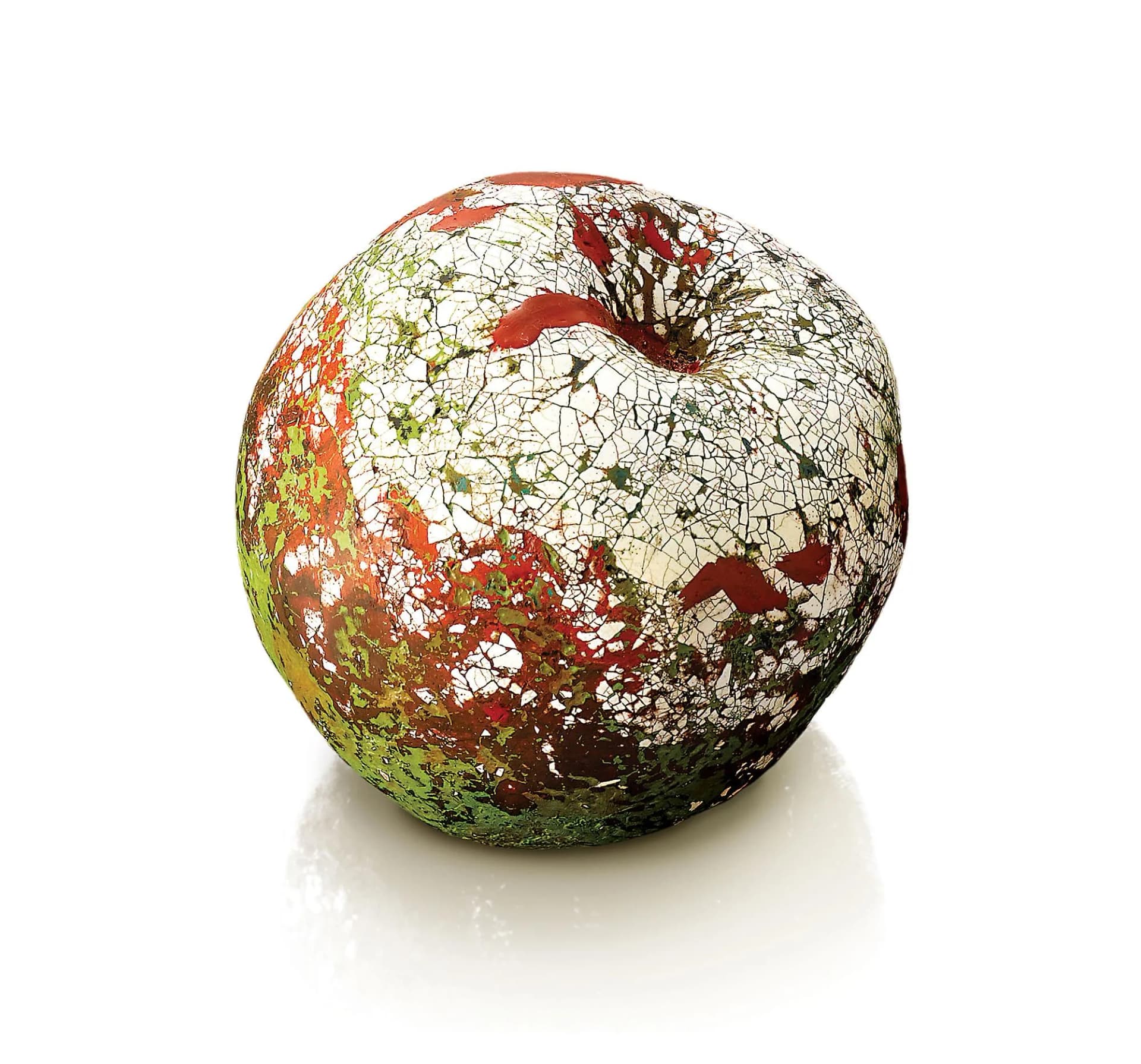
Lacquer is a thousand-year coating from East Asia — Korea, China, Japan. Through Jeong Chaehee's "Lacquered Apple," we read how lacquer, eggshell, and mother-of-pearl operate in contemporary painting.
The Art of Lacquer
Lacquer is not really an art material. It is the sap of a tree. The lacquer tree (Toxicodendron vernicifluum), when wounded, releases a milky liquid — and once that liquid hardens, it becomes the strongest natural coating known, resistant to any acid, heat, or moisture. The reason a lacquerware vessel unearthed from a Silla tomb still retains its sheen a thousand years later, the reason the Japanese imperial family's lacquered furniture has held its shape for fourteen centuries — all of it lies in the material properties of ot (옻), Korean lacquer.
This essay traces the materiality, history, and contemporary use of lacquer through the lens of Jeong Chaehee's Lacquered Apple.
What Is Lacquer?
Tree Sap — The Strongest Natural Coating
Lacquer is sap drawn by scoring the trunk of the lacquer tree, yielding only about 200–300 grams a year per tree. The harvested sap is refined, heated, and filtered to make raw lacquer (saeng-ot); with a black pigment added, black lacquer (heukchil); with red cinnabar, red lacquer (juchil).
The Chemistry — A Coating That "Cures" Rather Than "Dries"
Most coatings — paints, acrylics — dry in air. Lacquer behaves the opposite way: it hardens faster in humid environments (70–80% humidity). The reason is that urushiol, lacquer's principal compound, polymerises by reacting with oxygen and moisture. Traditional lacquer work therefore takes place in a humidity chamber known as a muro.
Permanence
Finished lacquer is almost unaffected by oxidation, water, heat, mild acids, or mild alkalis. That is why the lacquerware excavated from the Cheonmachong tomb (5th–6th century, Silla dynasty) has held its form for 1,500 years. In museums across Korea, China, and Japan, the oldest surviving coating — without exception — is lacquer.
The Allergy — Why It's Hard to Handle
Lacquer is a powerful allergen. Touching the tree alone can trigger a reaction, and more than half of working artists experience an allergic episode at least once. Lacquer artists work in studios with masks, gloves, and ventilation, and care must be taken so that the public does not contact the work before it has fully cured (i.e. completed polymerisation).
A Thousand Years of Korean Lacquer
1. Najeon Chilgi — The Light of Mother-of-Pearl on Lacquer
The peak of Korea's lacquer tradition is najeon chilgi (mother-of-pearl lacquerware): a technique of inlaying thinly cut sheets of nacre (from abalone, conch, and other shells) onto lacquered surfaces. Developed from the unified Silla period, Goryeo-dynasty najeon chilgi is recognised globally as the highest expression of the form. The Shōsōin in Japan, the Metropolitan Museum of Art in New York, and the Victoria and Albert Museum in London all hold Korean Goryeo najeon chilgi in their collections.
2. Joseon Daily Life — Lacquered Boxes and Stationery
In the Joseon dynasty, lacquer entered the daily life of the scholar-gentry: medicine boxes, document cases, brush holders, inkstone cases — the lacquer-and-mother-of-pearl combination became standard in yangban households. The iridescent shimmer of nacre on black lacquer is at the heart of traditional Korean aesthetics.
3. Tongyeong and Wonju — Lacquer Towns
Korea's two principal lacquer regions are Tongyeong in Gyeongsangnam-do and Wonju in Gangwon-do. Tongyeong is celebrated for najeon chilgi, while Wonju is famous for the lacquer trees themselves. Master craftspeople in both places carry on the tradition today, and several have been designated as Intangible Cultural Heritage holders.
4. Contemporary Lacquer — Rediscovery of the Medium
From the 1990s onward, in Korean contemporary art, lacquer was redefined from "traditional craft" into a contemporary art medium. Artists like Hwang Ran-ji, Lee Tae-su, Jeong Hae-jo, and Kim Deok-yong began using lacquer as a painterly medium, and lacquer was applied onto canvas, panel, and digital print in increasingly varied ways.
Jeong Chaehee — Where Digital Meets Lacquer
The Four-Layered Medium of Lacquered Apple
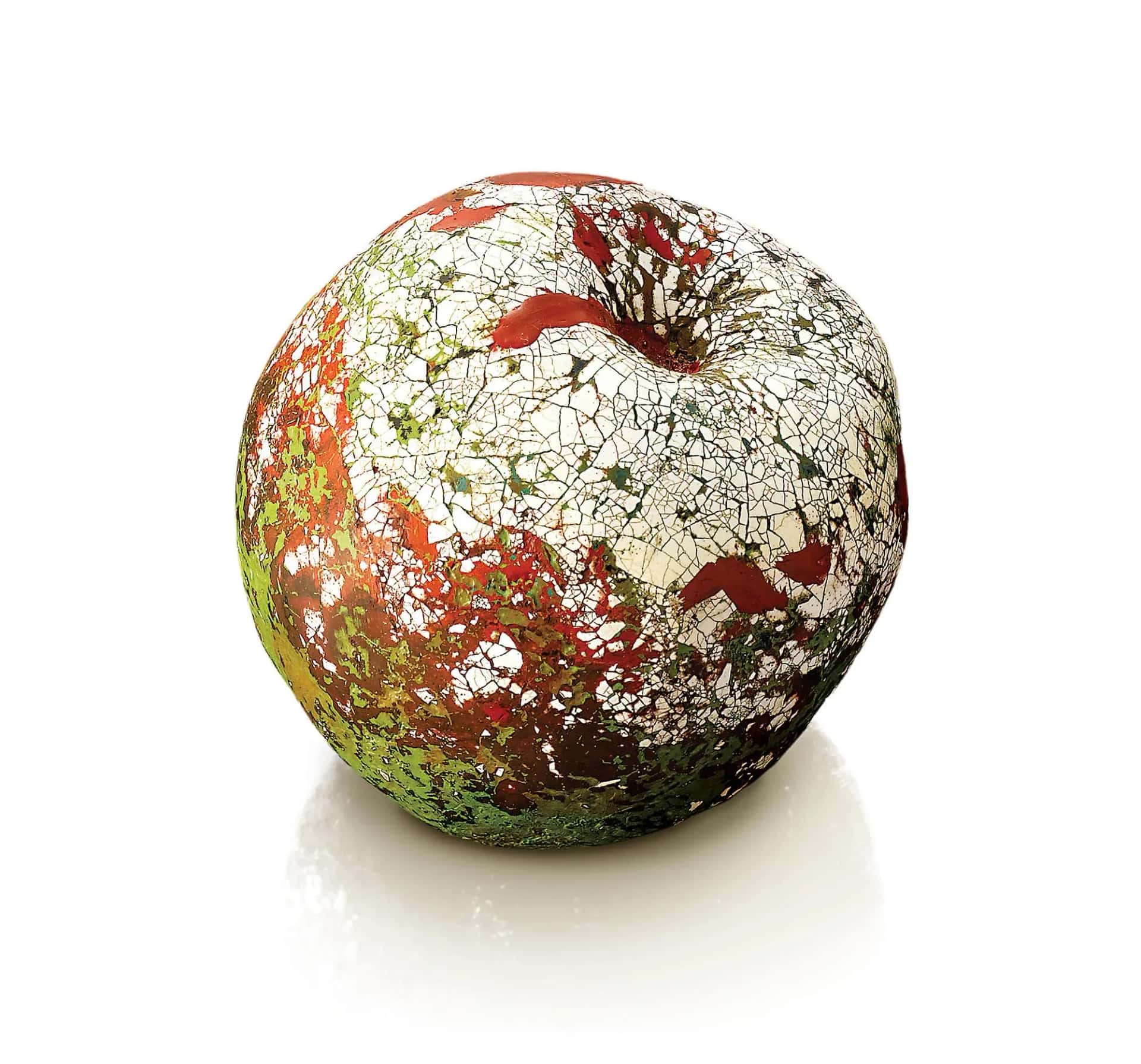
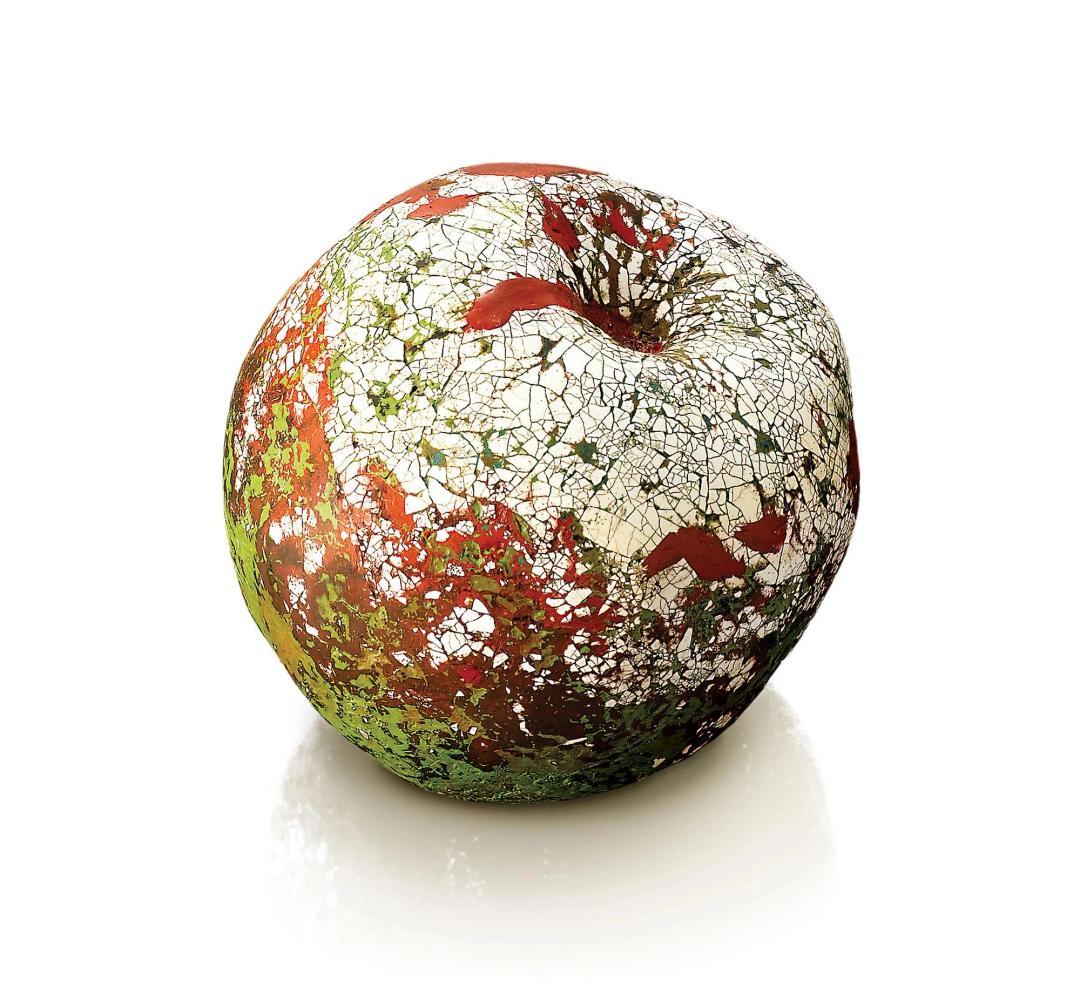
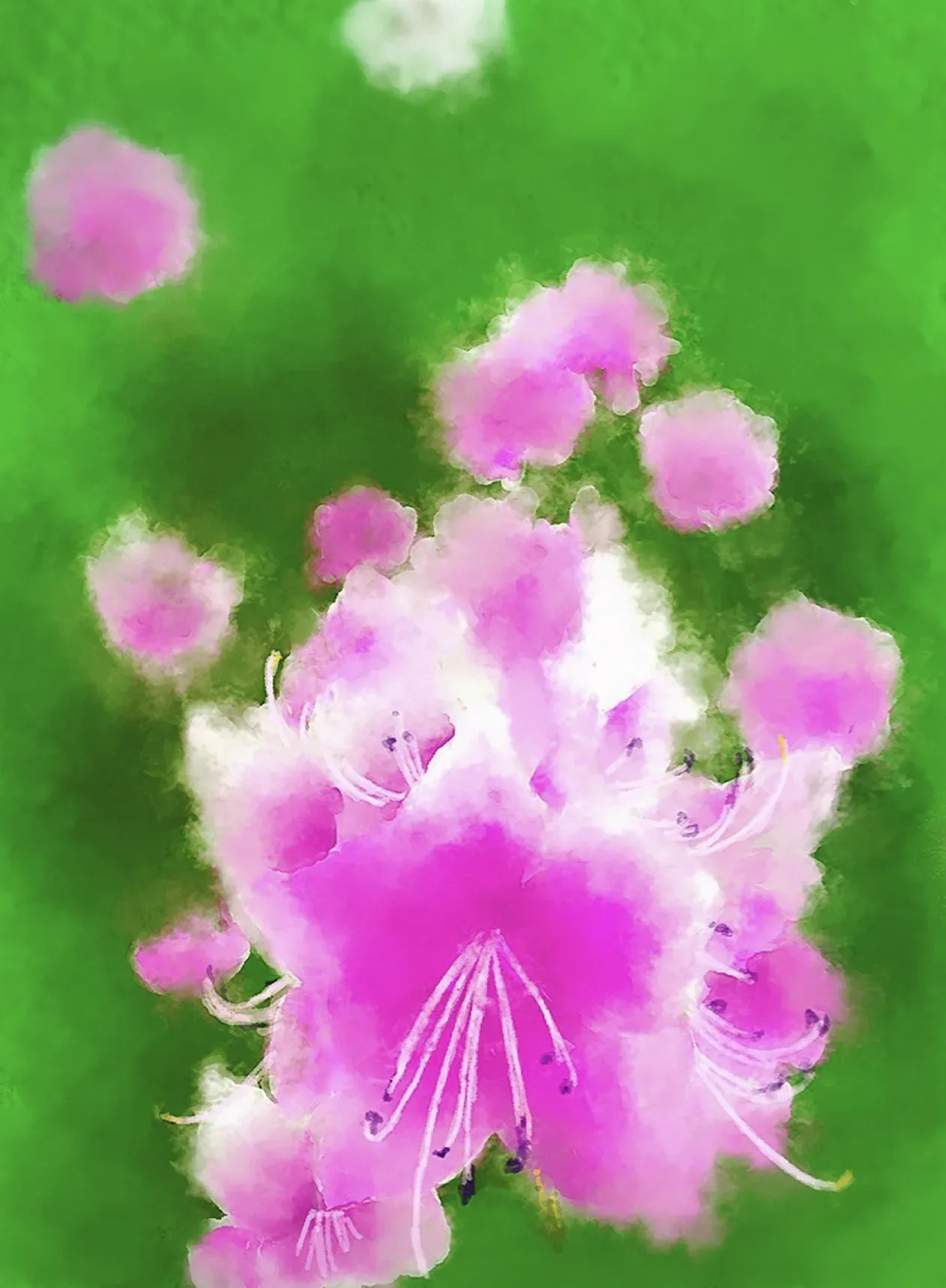
Jeong Chaehee's Lacquered Apple (65×70 cm) is a work where four media meet on a single surface:
- Digital print — the most contemporary medium, an image made on a computer and printed.
- Lacquer — the most traditional coating, with a thousand-year permanence.
- Eggshell (nangak) — finely crushed eggshell embedded into the surface to create texture and pattern. A traditional Korean and Japanese craft.
- Mother-of-pearl — the nacreous layer of abalone shell, with its iridescent gleam.
What happens when the four meet:
- Digital print delivers the flat informational image.
- Lacquer adds millennium-deep luminosity and depth across the entire surface.
- Eggshell creates fine relief and texture.
- Mother-of-pearl pulls the gaze with iridescent points that change as the light moves.
The Double Meaning of "Lacquered Apple"
- Apple: the most familiar icon of the digital age (Apple's logo, among others).
- Lacquered apple: the digital apple now embedded in a thousand-year-old medium. A signal of where Jeong Chaehee places herself — at the meeting point of the digital and the traditional.
The Significance of Jeong Chaehee's Practice
Jeong Chaehee is among the artists who have opened a new register: "a digital image painted in a traditional medium." She redefines lacquer, eggshell, and mother-of-pearl — Korean traditional craft materials — as painterly media of contemporary art, then layers a digital image onto them, bringing the two ends of time (the oldest medium and the newest) onto a single surface.
Four Effects Lacquer Brings to a Work
Effect 1. Deep Sheen and a Multi-Layered Surface
Lacquer is generally applied in thin coats three to ten times over, hardening and recoating in turn. Each layer chemically bonds to the next so that light reflects not only off the topmost surface but also from the layers beneath. That multi-layered sheen is unique to lacquer; no other coating reproduces it.
Effect 2. A Promise to Outlast Time — Again
Alongside seokchae and gold leaf, lacquer belongs to the family of media that survive across generations. Made of natural materials throughout, a lacquered work is verified to last on a 1,000-year scale.
Effect 3. Light Born from the Mother-of-Pearl Pairing
When the iridescence of nacre is added to the inherent sheen of lacquer, the work becomes a medium you don't simply look at, but move around to see. Not a static image — a kinetic experience.
Effect 4. An Automatic Channel to Korean Time
Lacquer carries a thousand years of accumulated time inside Korea itself. A work containing lacquer inherits that weight automatically. When Jeong Chaehee wraps a digital apple in lacquer, the digital image is invested with a millennium of Korean time.
Caring for a Lacquer Work — Five Practical Tips
1. Avoid Direct Sunlight
Lacquer is more light-resistant than nearly any other medium, but direct sunlight over long periods can cause faint browning of the surface. Living rooms and studies pose no issue; just avoid placing the work directly in front of a south-facing window.
2. Humidity — Surprisingly Demanding
Finished lacquer tolerates high humidity, but in very dry conditions (under 30%) the surface can develop fine cracks. Avoid placing it directly in front of a winter heater, and a humidifier is recommended.
3. Cleaning — Soft Cotton Cloth
Wipe the surface gently with a dry or slightly damp cotton cloth. Never use alcohol or detergent — they will damage the sheen.
4. Be Especially Careful with Mother-of-Pearl and Eggshell
For works like Jeong Chaehee's that include inlaid mother-of-pearl and eggshell, never let a stiff brush touch the surface. Both can dislodge under even small impacts.
5. Framing — Mind the Natural Materials
A work combining lacquer, mother-of-pearl, and eggshell has dimension, and rarely fits a flat frame. Discuss with the artist whether to use a shadow box, or to hang the panel directly without a frame.
FAQ
Q. Will I get a lacquer rash if I touch the work? A. A fully cured (polymerised) lacquer work rarely triggers an allergic reaction. The work is safe to touch. A small minority of highly sensitive people may still react — start by touching only a small area. The first one to two months after purchase is the period during which lacquer fully stabilises, so be more cautious then.
Q. What separates lacquer from synthetic finishes (lacquer, urethane)? A. The material properties and permanence are not in the same category. Synthetic finishes discolour and peel within 50–150 years, while ot lacquer is measured on a 1,000-year scale. Synthetic surfaces are flat and uniform in sheen; lacquer carries the depth of a multi-layered sheen. That's why the price brackets diverge.
Q. Are mother-of-pearl and pearls the same thing? A. Mother-of-pearl is the shell itself, while a pearl is a gemstone grown inside the mollusc. Mother-of-pearl is sliced into thin sheets and inlaid onto lacquer; pearls are treated as separate gemstones. Both come from the same nacre layer with its rainbow shimmer.
Q. Where can I buy lacquer works? A. Few Korean contemporary artists work with lacquer as their primary medium. Galleries with strong Korean-painting programmes — Gallery BHAK, Hakgojae, Gallery Hyundai — show lacquer works regularly. The Intangible Cultural Heritage masters in Tongyeong and Wonju can also be visited at their studios. Works submitted to SAF, like Jeong Chaehee's Lacquered Apple, are an excellent entry point into contemporary lacquer.
Q. What's the price range? A. It varies by artist, size, and technique. A 30×30 cm lacquer painting typically ranges from 1,000,000 to 5,000,000 won; a 100×100 cm work, 5,000,000 to 30,000,000. Najeon-chilgi furniture by Intangible Cultural Heritage masters reaches tens of millions to hundreds of millions of won. A contemporary work like Jeong Chaehee's Lacquered Apple (65×70 cm) is comparatively accessible.
Q. Can I hang a lacquer work in the bathroom or kitchen? A. Physically it can withstand the conditions, but it isn't recommended. Bathroom humidity swings are too wide; kitchens expose surfaces to grease and smoke. The living room, study, or bedroom — ordinary domestic environments — are the ideal places.
Closing
Lacquer is Korean art's most distinctly Korean medium, kept alive for a thousand years. As that medium re-enters contemporary painting, and as artists like Jeong Chaehee wrap digital images in lacquer, lacquer is no longer a piece of traditional craft — it becomes an ongoing asset of contemporary Korean art.
When a single lacquer work catches the light on the wall of a living room, the light reflected back is a millennium-deep sheen rarely encountered in contemporary painting. It is the most direct way to bring Korean time into your everyday life.
Related reading
If this piece helped, you may also enjoy these related articles:
Browse contemporary works in Korean traditional media at SAF →
Further Reading
Seed Art Festival
·