Ryu Yeonbok walks the land before he carves it. Baekdu, Geumgang, Dokdo, the DMZ — places crossed by feet, then carved into wood.

Feet First
Ryu Yeonbok walks before he draws.
He walks Baekdusan. He walks Geumgangsan. He stands on Dokdo. He wanders the DMZ area barred by wire, sketching. The lands division has split, he sees with his eyes and records with his hands before returning to the studio. Then he sits before a wooden plate and takes up the knife.
He doesn't carve land he has not walked. This is his principle.
From Hongik to Anseong — Searching for the Language of Resistance
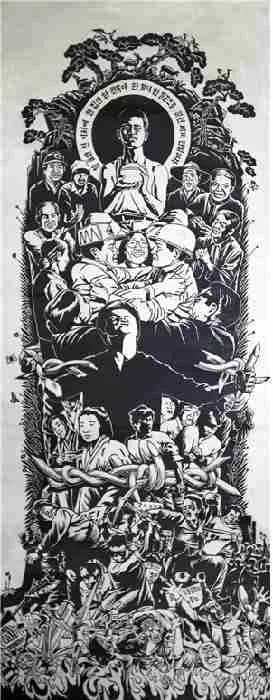
Ryu Yeonbok (b. 1958) studied painting at Hongik University. Graduating in 1984, he moved straight into social work. He led the Seoul Art Community in 1985, and in 1987 was a member of the banner-painting collective Hwalhwasan. An era when giant fabric banners filled protest grounds with the faces of minjung.
He served as secretary general of the Korean People's Artists Association, then as external-liaison director of the Korean People's Artists Federation. The conviction that art cannot exist outside the field moved him.
In 1993, he settled in Anseong, Gyeonggi. From voices of resistance to stories of life. Living among nature, his practice found a new direction. Printmaking remained work of the knife, but the blade's direction changed.
When the Knife Follows Wood Grain
The essence of woodblock print is immediacy.
Carving wood with a knife already carries a position. You can't smooth it over, you can't erase a mistake. Where you carved turns white; what you left prints black. That rough, resolute character is why Ryu Yeonbok has not let go of this medium.
Even as computer and digital technology becomes art's main tool, he stays on the wooden plate with the carving knife. Not simple revivalism. When the knife moves along the grain, the artist's breath and rhythm transfer directly onto the work. This material authenticity, he believes, cannot be substituted by digital.
Stroking a Wounded Land
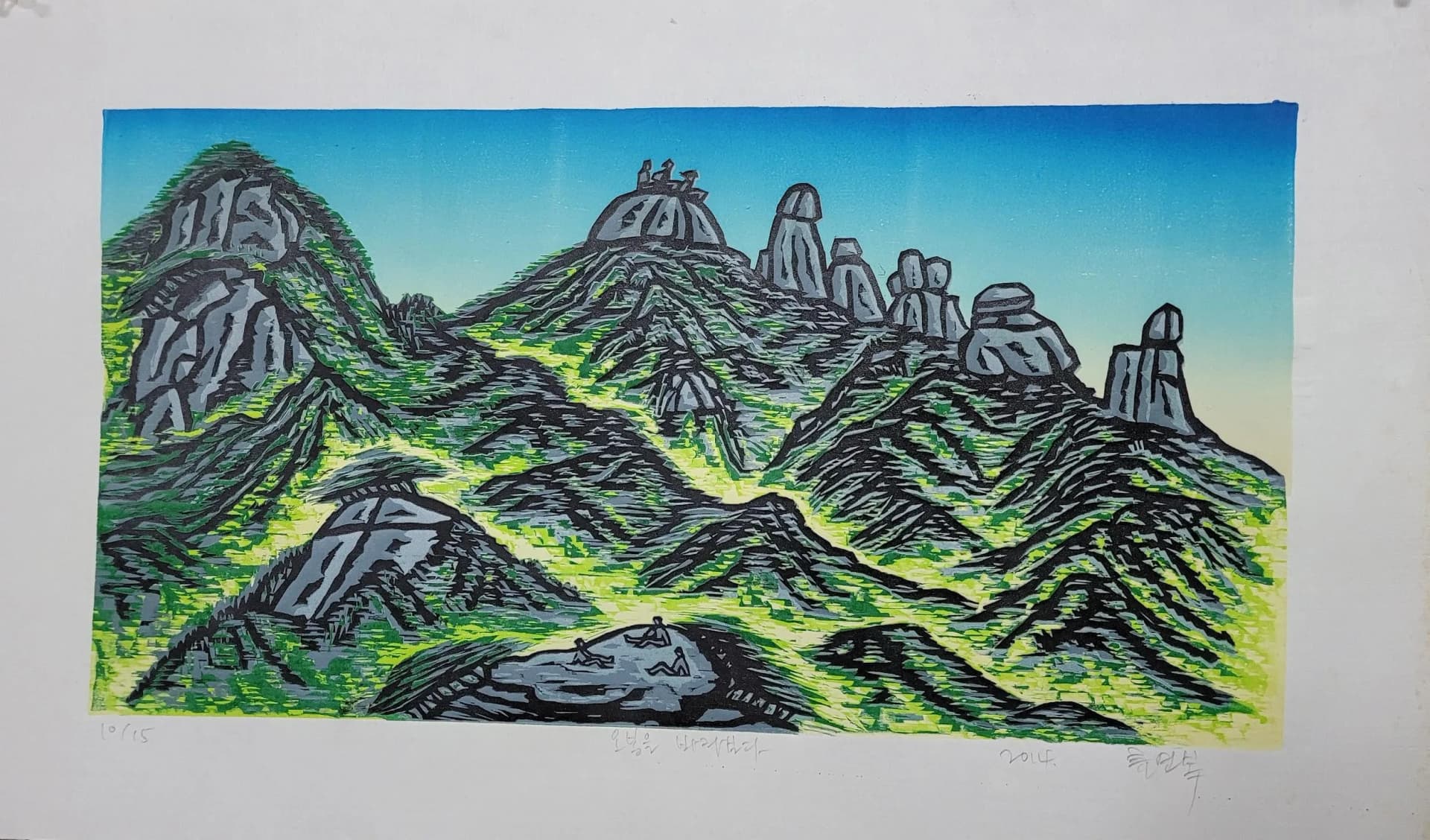
Looking at his Walking Bukhansan series, you quickly see it isn't simple landscape. The long frame of Walking Bukhansan-2 (2013, woodblock on hanji, 38×165 cm) holds the time of walking the mountain sideways. Footstep memory is inscribed on the plate.
His land-survey work is an artistic response to the reality of division. A mountain seen through wire fences, lands one cannot visit, yet that anyone of this country carries in memory. In the act of carving that mountain onto wood, the sensibility of an artist touching history's scar with his hand is held.
1986 Korean Minjung Print Exhibition in Osaka and Tokyo; 1989 traveling exhibition in Los Angeles; 2008 introduction in the US magazine Azalea; 2009 lecture and exhibition at Sharjah University, UAE. His prints carried their story across borders.
Land That Leans Together
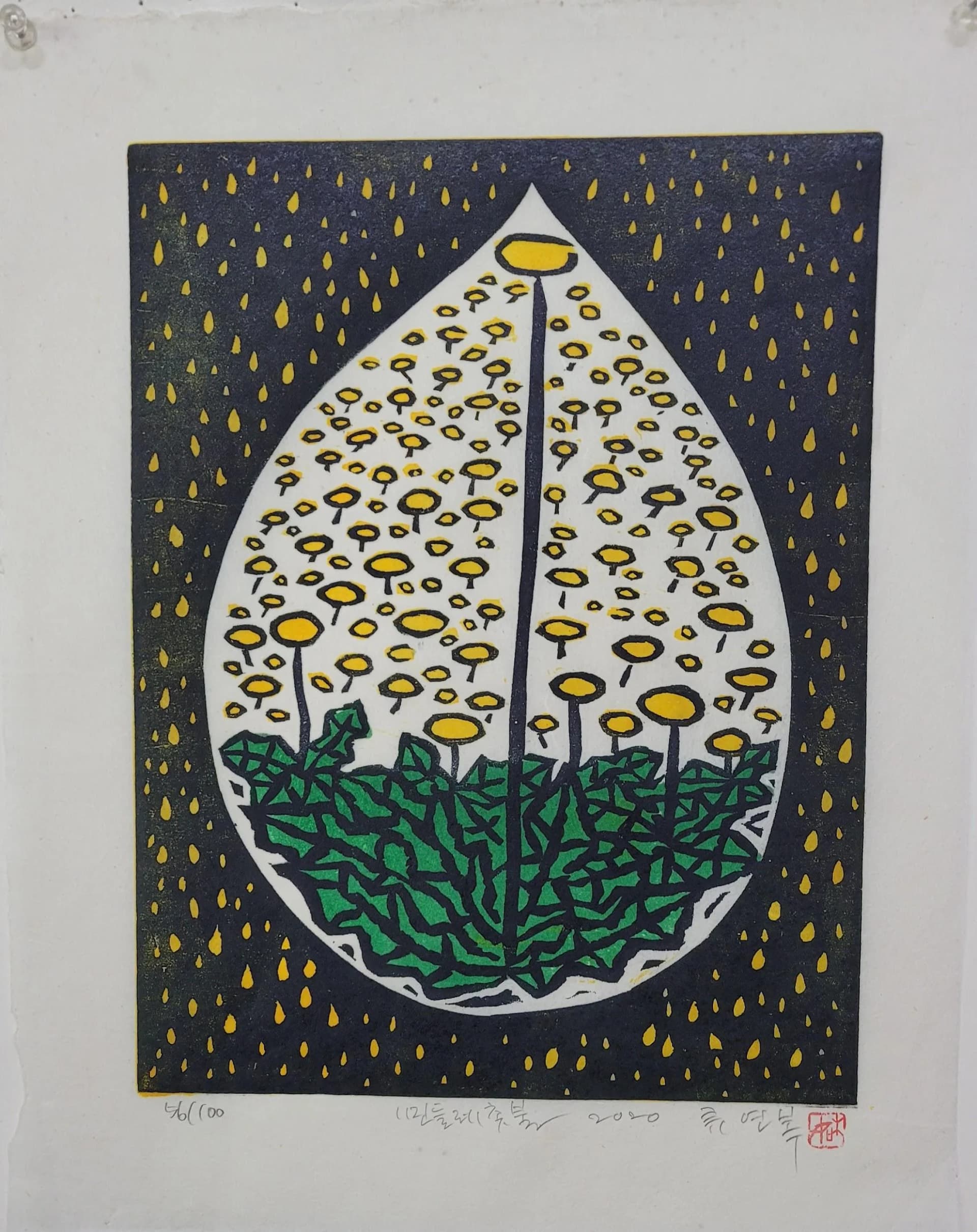
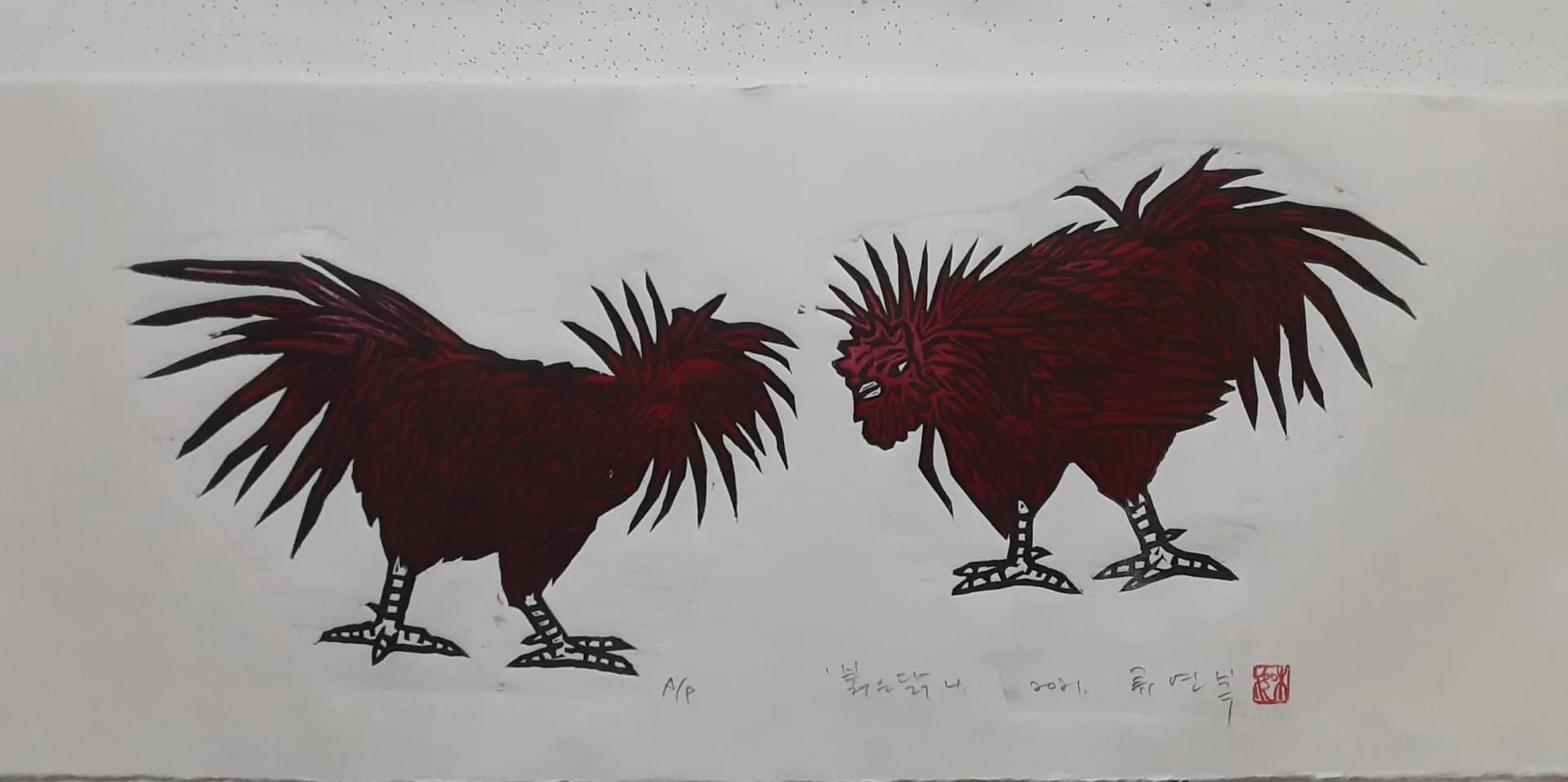
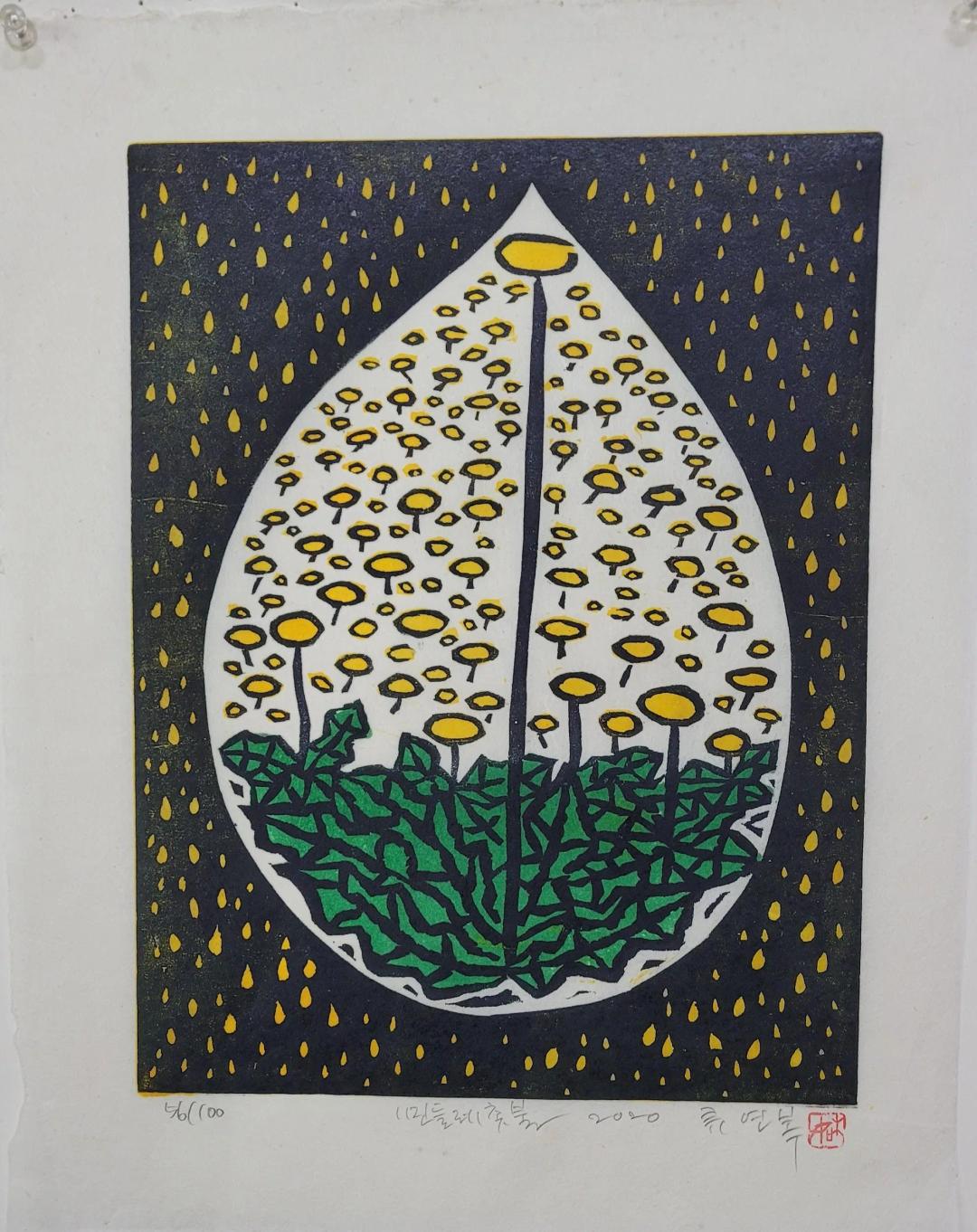
His SAF contributions — Dandelion Candlelight, Walking Bukhansan-2, Red Rooster, Gazing at Obong — all hold land. Walked with feet, held with eyes, carved with hands.
The belief that art should not be the possession of a wealthy few but of everyone; the sense that artists must lean on each other and stand together. That brought Ryu Yeonbok to SAF. To the mutual-aid fund returning as low-interest loans to fellow artists facing financial discrimination, he places the land he walked and carved.
He said he does not carve lands he has not walked. Today he is walking.
Works by Ryu Yeonbok
Related reading
If this piece helped, you may also enjoy these related articles:

View all works by Ryu Yeonbok →
Related Reads

Artists on the Same Path
Collecting Guides
Seed Art Festival
·