A guide to the 17 estate prints of Oh Yoon (1946-1986), master of Korean minjung art. What an estate print is, five perspectives on his practice, and entry recommendations.
Oh Yoon's Estate Prints — How to Meet a Master of Korean Minjung Art at a Reasonable Price
Oh Yoon (吳潤, 1946–1986) is one of the most important painters of the Korean minjung (people's art) movement, and the apex of contemporary Korean woodblock printmaking. Nearly forty years after his death, his name is still searched, his works still trade, and new collectors continue to discover him. This piece covers Oh Yoon's artistic world, what an estate print is, and how to approach the 17 Oh Yoon estate prints SAF holds.
Oh Yoon — a short life, a long influence
Oh Yoon was born in Busan in 1946 and died at age forty in 1986. In his short active period (1969–1986), he laid the visual foundation of the Korean minjung art movement. His work peaked in painting and sculpture, but above all in woodblock printmaking.
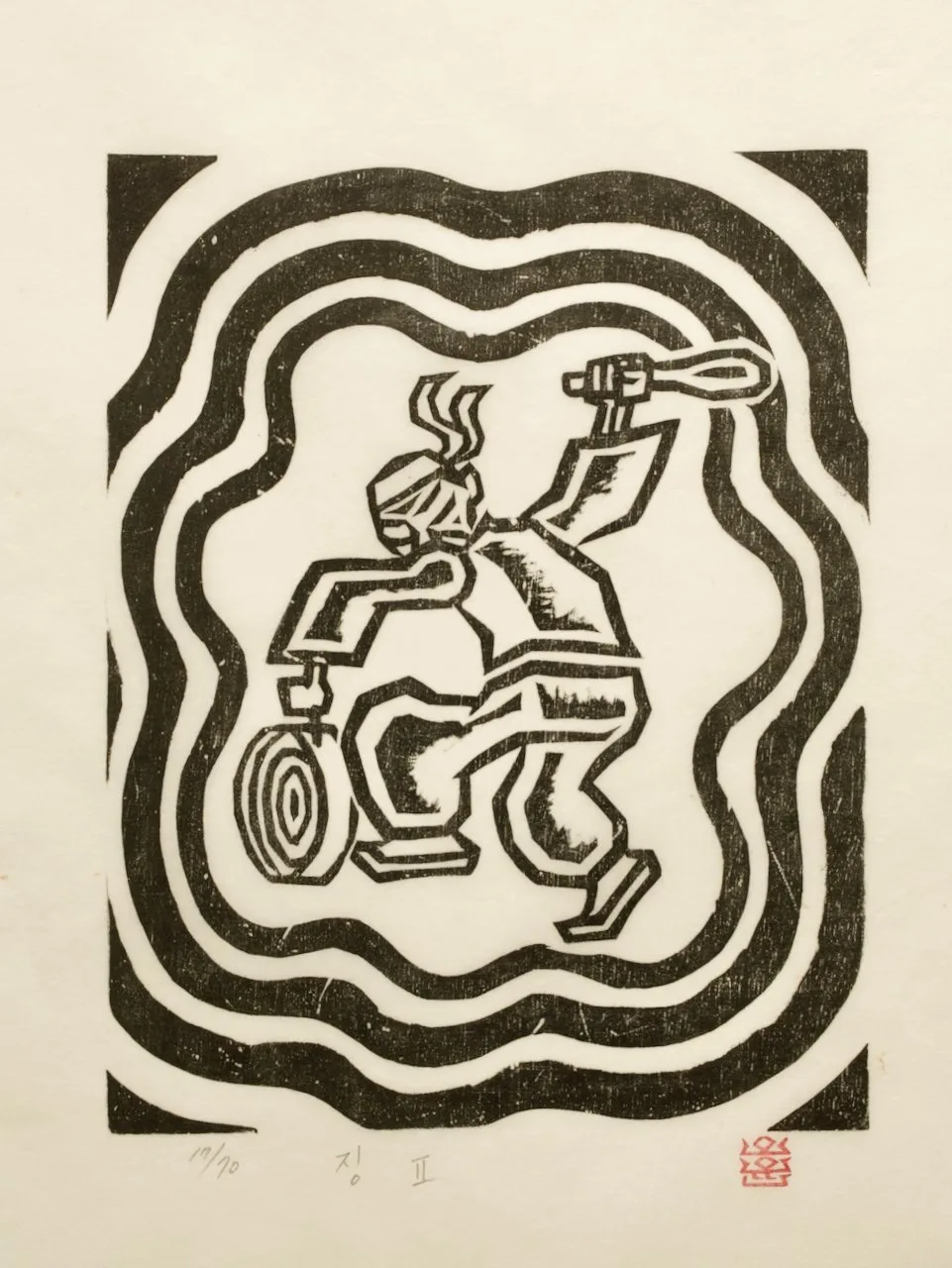
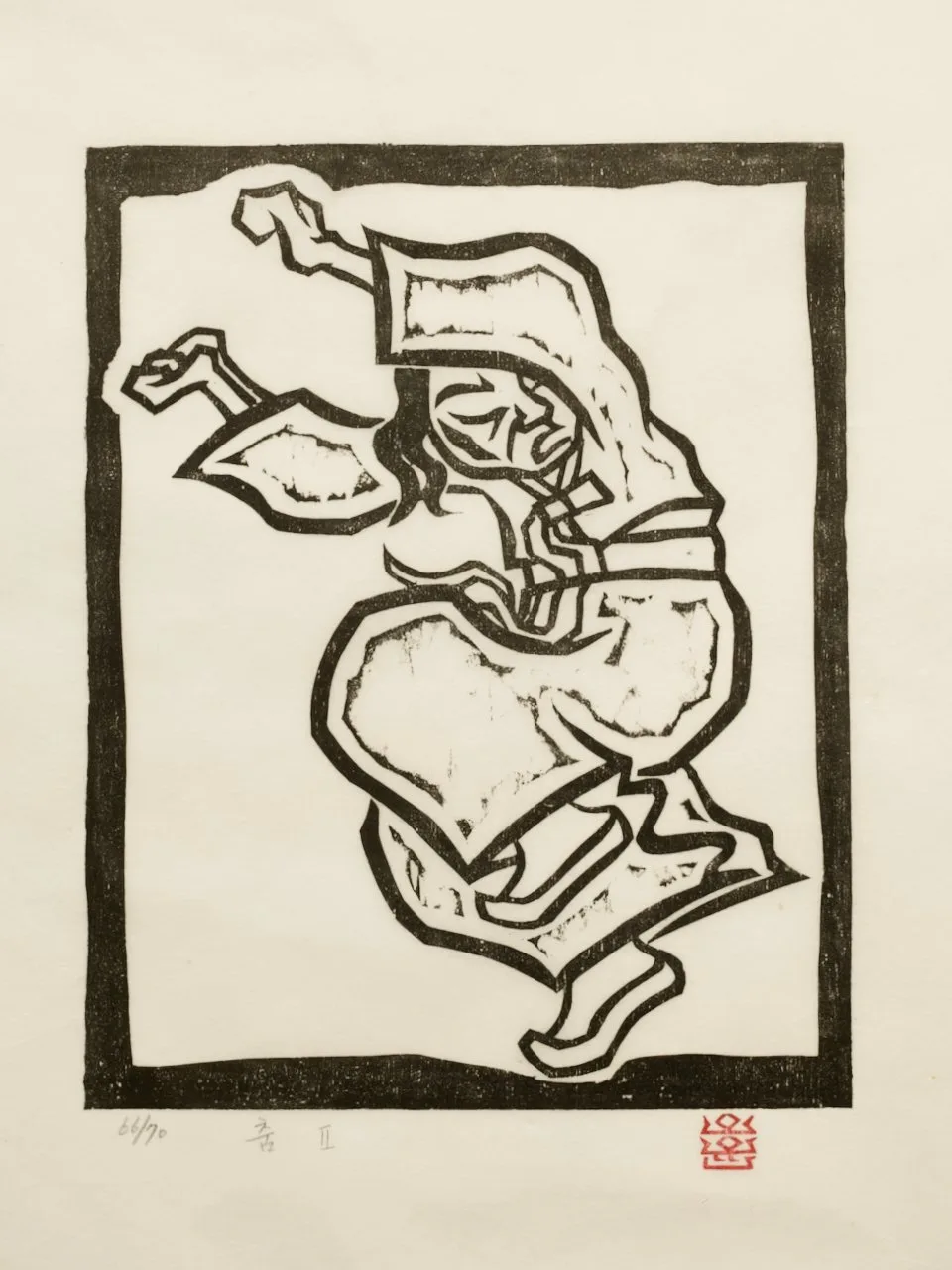
His woodblocks carve Korean sentiment, the faces of common people, and the rhythms of nature. Pieces like Knife Song, Gong, and Pansori Singer hold the worlds of Korean folk music and labor; pieces like Elder Brother, Grandmother, and Clown engrave the weight of an era into a single human face. His lines are firm, his colors restrained, and his composition echoes the rhythm of Korean minhwa (folk painting).
Oh Yoon was a core member of the 1979 Reality and Utterance collective, a pioneer of the minjung art movement. His work was political and poetic at once, regional and universal. After his early death, his visual language passed directly to the next generation — Park Jae-dong, Lee Cheol-soo, Min Jeong-gi, Lee Yun-yop.
What is an estate print?
The most accessible category for meeting Oh Yoon's work is the estate print.
An estate print is a limited-edition print made posthumously by the artist's family or foundation, using the artist's original plates. Lower priced than a lifetime print (pulled by the artist's own hand), but a formal work that preserves both the original plate and the artist's visual language. Estate prints by Korean minjung masters — Oh Yoon, Lee Cheol-soo, Min Jeong-gi — have become a major category in the first-collection market.
Characteristics of Oh Yoon estate prints:
- Original plates: the woodblocks Oh Yoon carved in the 1970s–80s
- Limited editions: typically 50–150 copies
- Family-supervised: printed and verified by Oh Yoon's family or foundation
- Official certificate: edition number plus family or foundation seal
- Price range: ₩1,000,000–3,000,000 (lifetime prints exceed ₩10,000,000)
Why estate prints matter: they offer Oh Yoon's visual language at 100% fidelity, at a price tier where individual collectors can rationally enter a master artist's catalog. Lifetime prints command auction-driven prices; estate prints trade close to list.
Five perspectives on Oh Yoon estate prints
Perspective 1. The rhythm of folk music — Gong, Pansori Singer, Dance
One of Oh Yoon's most frequent motifs was the rhythms of Korean traditional music and dance. Gong's percussion image, Pansori Singer's scene of Korean traditional opera, Dance's folk movements — these works engrave Korean sentiment most directly.
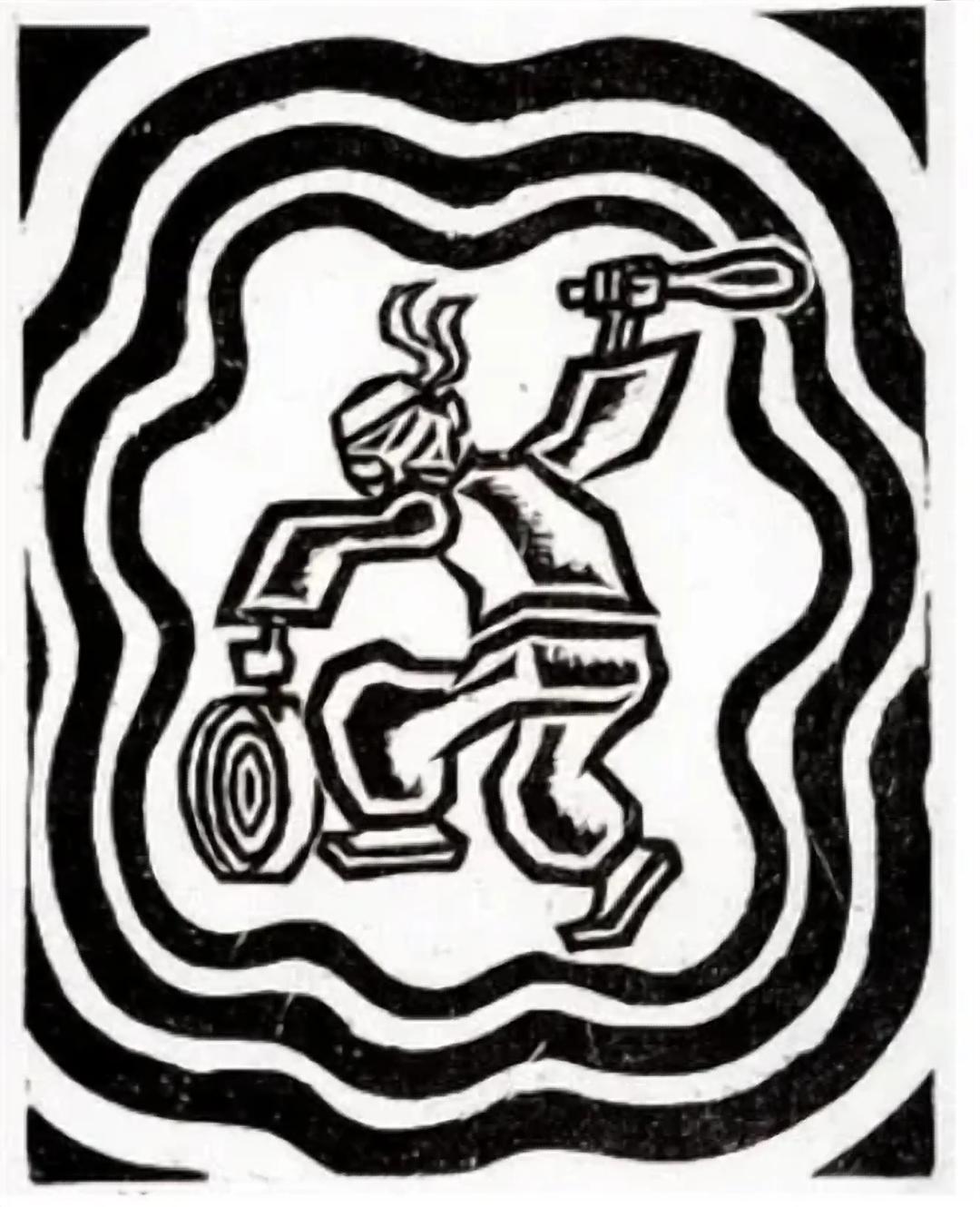
- Oh Yoon, Gong 2 — view artwork
- Oh Yoon, Pansori Singer 1 — view artwork
- Oh Yoon, Dance 2 — view artwork
Perspective 2. The human face — Elder Brother, Daytime Goblin
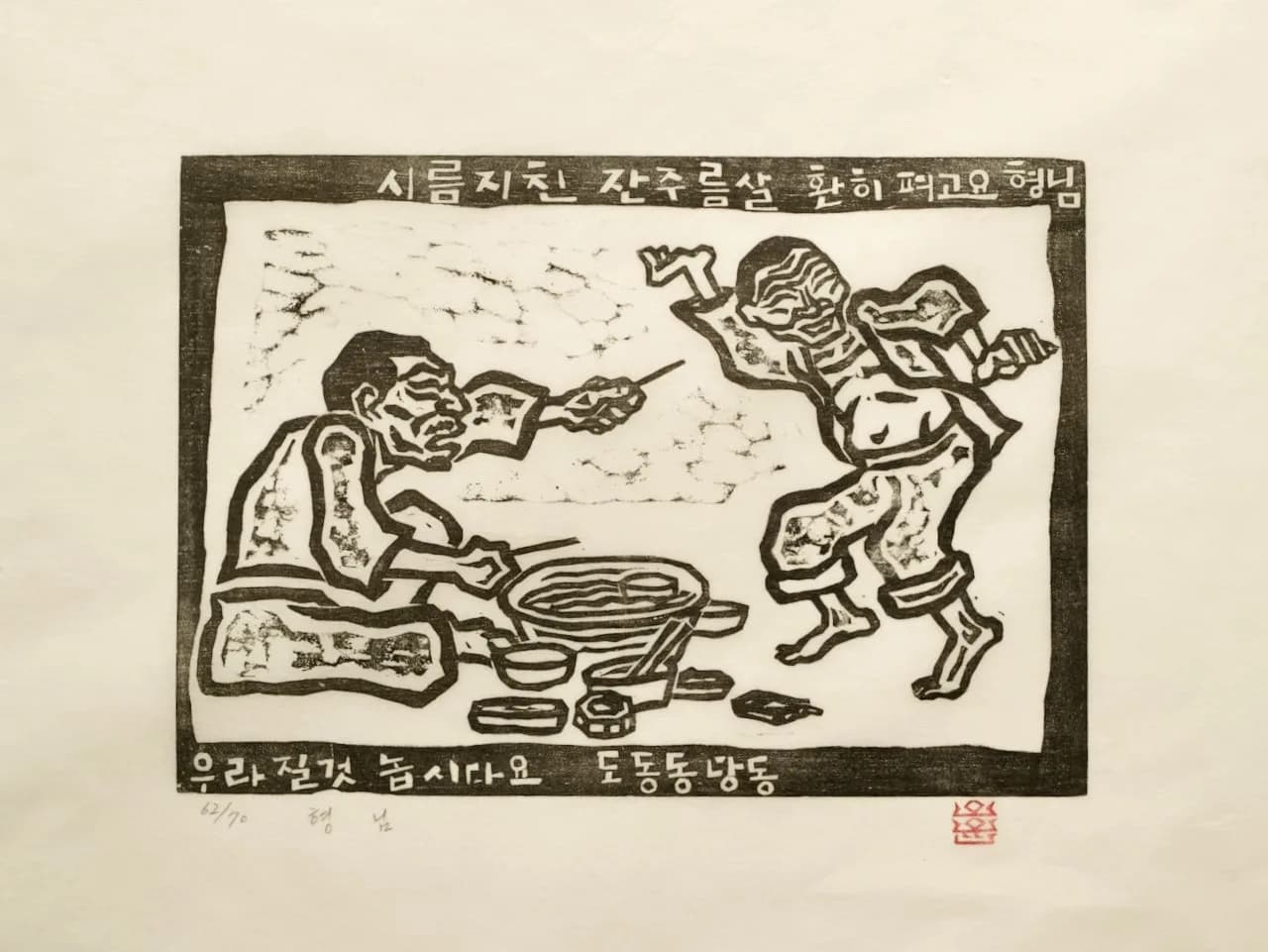
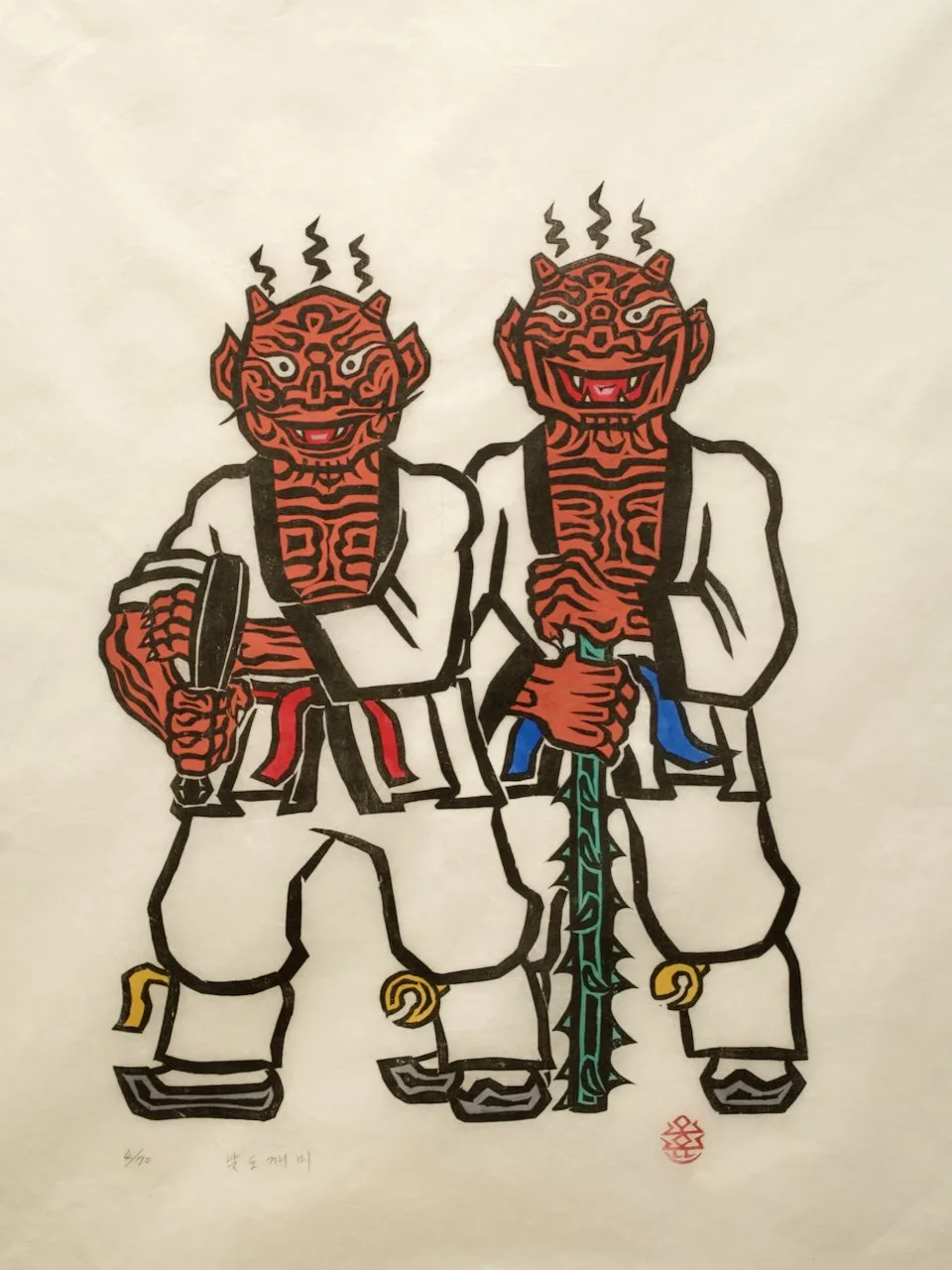
Oh Yoon was an artist who engraved the weight of an era into a single face. Elder Brother's quiet family figure and Daytime Goblin's figure from Korean folk myth — both speak through faces, not abstraction.
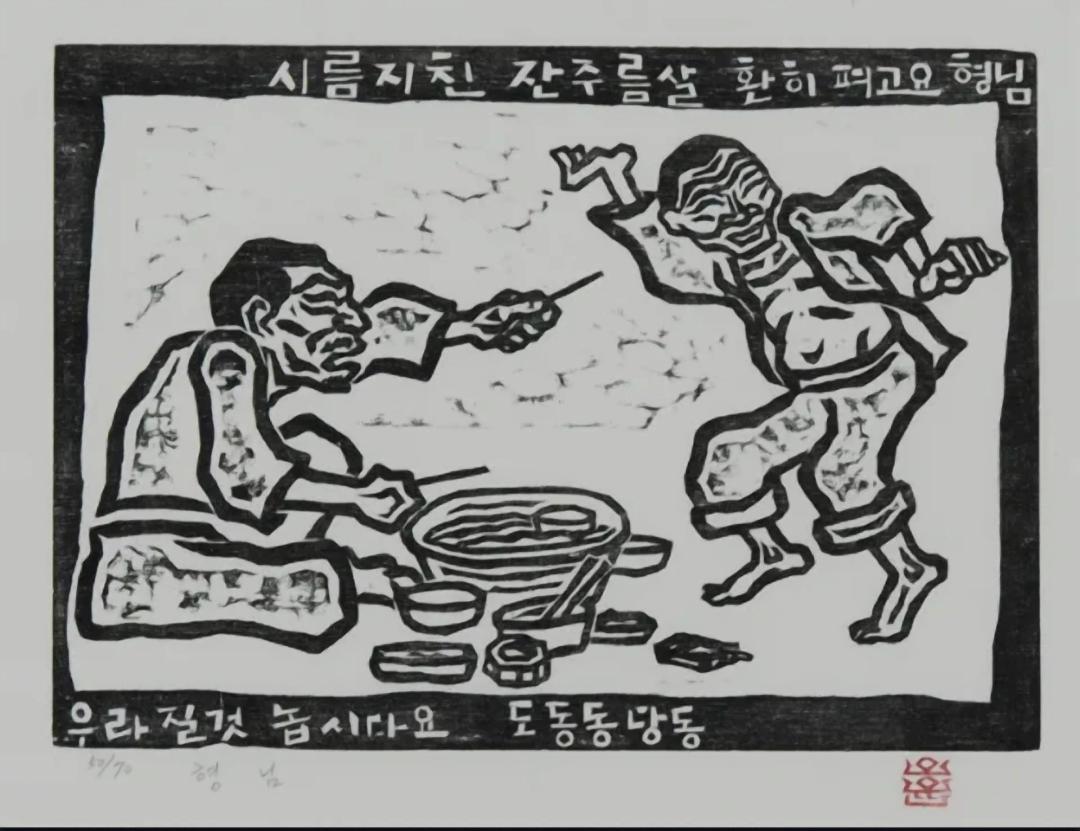
- Oh Yoon, Elder Brother — view artwork
- Oh Yoon, Daytime Goblin — view artwork
Perspective 3. Nature and time — Sunset, Spring Without People, Autumn Without Meaning
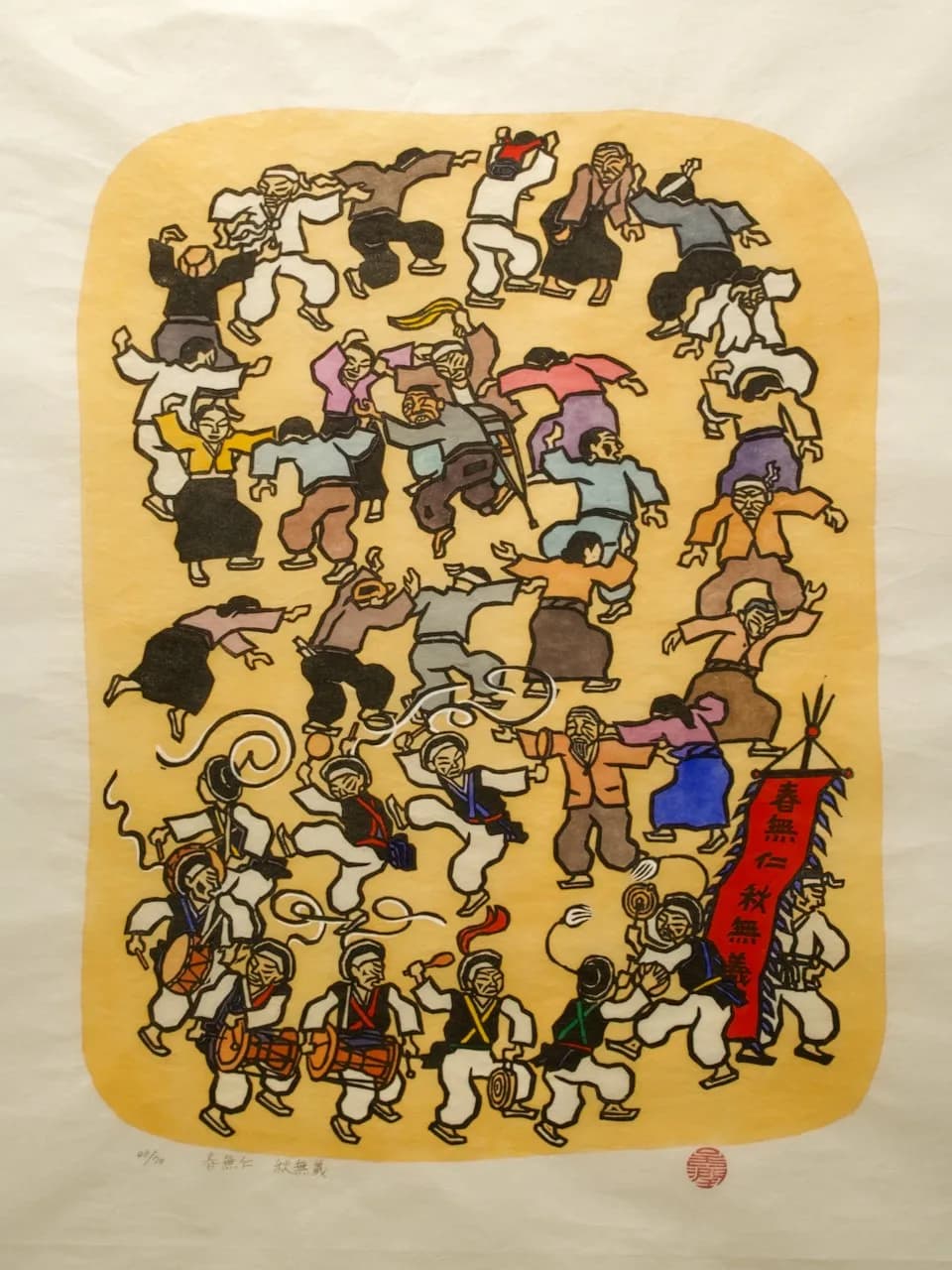
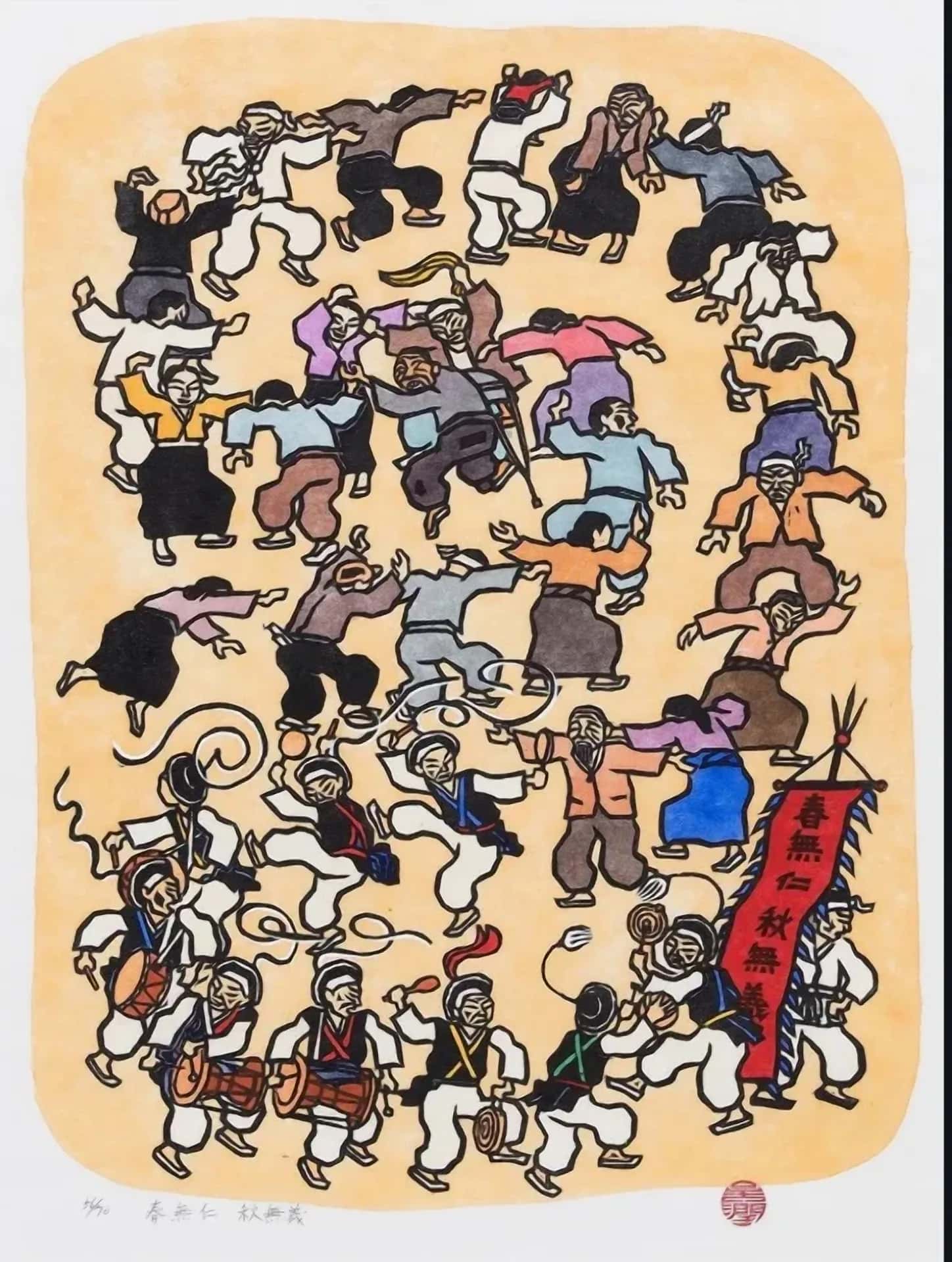
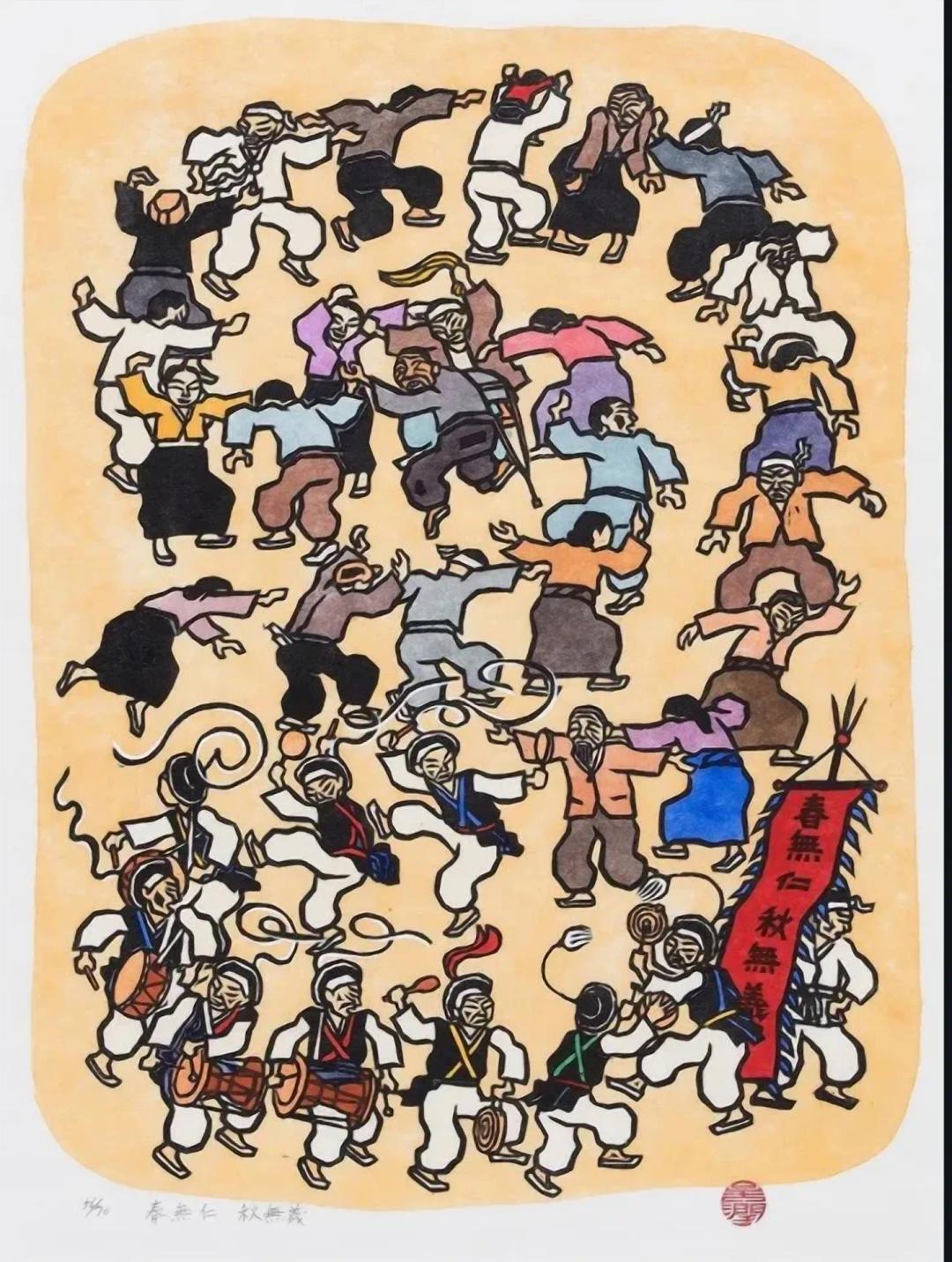
Oh Yoon also left landscape works that translated nature's time onto the woodblock. Sunset's Korean evening light, Spring Without People, Autumn Without Meaning (春無仁秋無義) — an agrarian proverb (no sowing in spring, no harvest in autumn) carried onto a 65.5cm large block. One of the most signature pieces in size and tone among the estate prints.
- Oh Yoon, Spring Without People, Autumn Without Meaning — view artwork
- Oh Yoon, Sunset — view artwork
Perspective 4. Buddhist stillness — Eight-Petaled Single Flower
Another recurring grain in Oh Yoon's work is Buddhist meditation. Eight-Petaled Single Flower (八葉一華) — a 50x50cm square work suited to meditation spaces, studies, and executive offices. Considered one of the essences of Oh Yoon's late practice.
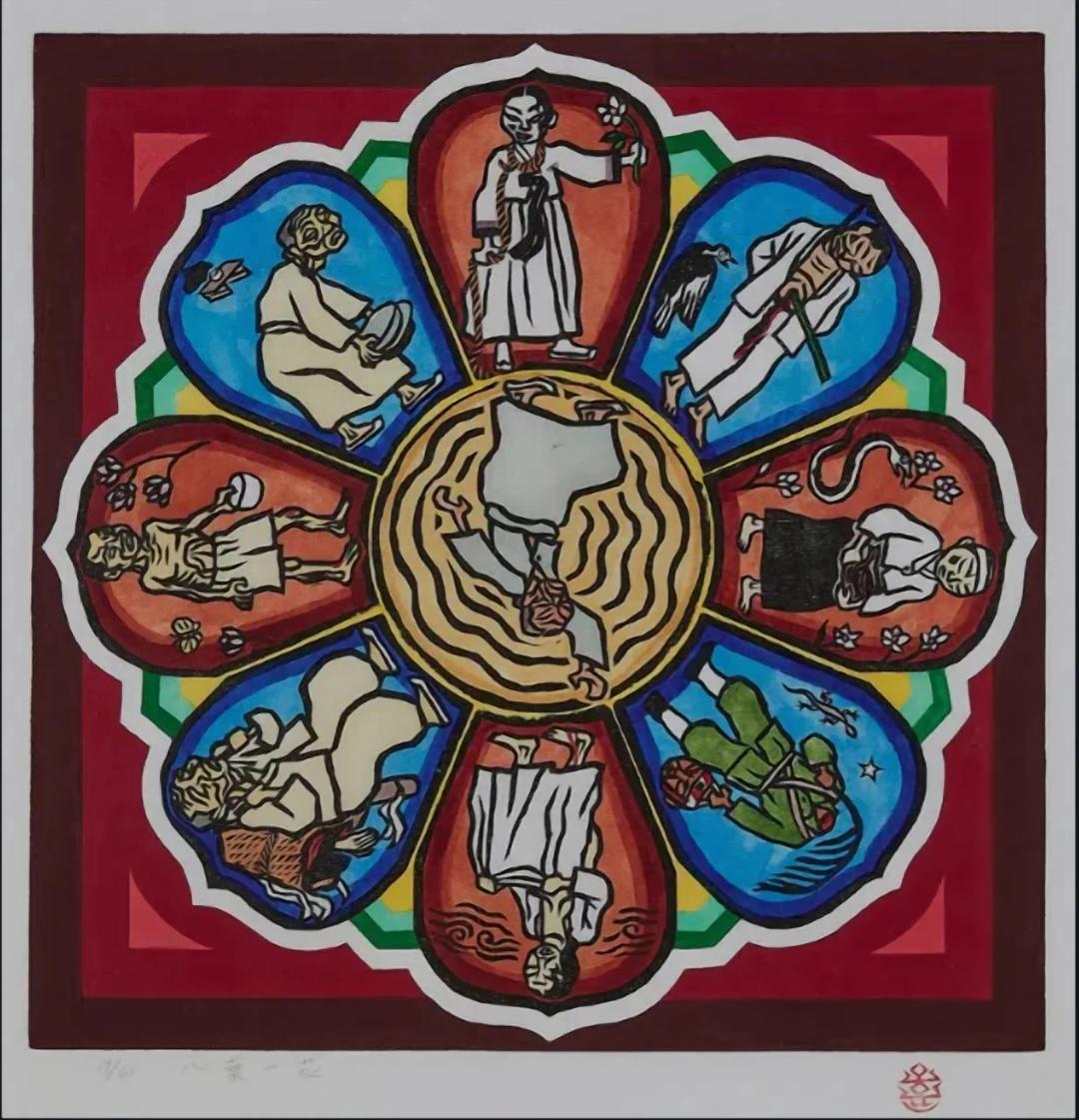
- Oh Yoon, Eight-Petaled Single Flower — view artwork
Perspective 5. Where to start your first piece
Among the 17 Oh Yoon estate prints, the most-recommended first pieces are:
- Small entry: Sunset (₩1,100,000, 23.5x22.5cm) — ₩1M tier, suits bedrooms or studies
- Signature piece: Spring Without People, Autumn Without Meaning (₩2,000,000, 65.5x48cm) — large size, living room main
- Figure piece: Elder Brother (₩1,600,000, 24x34cm) — family spaces, dining areas
- Meditation piece: Eight-Petaled Single Flower (₩2,000,000, 50x50cm) — square for meditation spaces
See all Oh Yoon works on SAF →
Frequently asked questions
Q. Are Oh Yoon estate prints real artworks? How do they differ in value from lifetime prints? A. Estate prints are limited editions formally printed by the family or foundation using the artist's original plates — they are real works. Lifetime prints (pulled by the artist himself in the 1970s–80s) trade at auction in the ₩10,000,000–50,000,000 range; estate prints sit in the ₩1,000,000–3,000,000 range — about a 10x difference. The price gap reflects the rarity and direct authorship of the lifetime prints.
Q. How do I verify the edition number on an Oh Yoon estate print? A. The back of the work or an enclosed certificate displays the edition number (e.g., 25/100) and the seal of the family or foundation. Oh Yoon estate prints purchased through SAF come with this documentation automatically.
Q. I'm starting with Oh Yoon — where should I begin? A. ₩1M tier: Sunset and other small works. Suits bedrooms and studies. ₩1.5–2M tier: Elder Brother, Dance 2, Pansori Singer 1 — figure and tradition motifs. Living room secondary walls and dining areas. Above ₩2M: Spring Without People, Autumn Without Meaning, Eight-Petaled Single Flower — signature sizes for living room mains.
Q. Which other Korean artists pair well with Oh Yoon? A. Same minjung lineage: Lee Yun-yop (multi-color woodblock, ₩400,000 tier), Min Jeong-gi (silkscreen, ₩1,000,000 tier), Park Jae-dong (drawing, ₩300,000 tier), Lee Cheol-soo (woodblock, ₩1,000,000 tier). Compare across the full SAF artworks by medium.
Q. How should an Oh Yoon work be framed? A. Estate prints typically need separate framing. Local frame shops in Korea (₩70,000–120,000 small, ₩150,000–250,000 medium) or online custom framers. To preserve the firm woodblock line, simple wood or slim aluminum frames suit best.
Q. Can I buy Oh Yoon's paintings, not just prints? A. Oh Yoon's original paintings are extremely rare in the open market. Auction appearances reach the ₩50,000,000 to several-hundred-million range. Estate prints remain the most realistic path to meeting Oh Yoon.
Q. Where do my purchases on SAF go? A. SAF gathers over 110 contemporary Korean artists in one campaign. Sales become a mutual-aid loan fund offering low-interest loans to fellow artists facing financial discrimination. Oh Yoon purchases participate in this structure as well.
Owning an Oh Yoon estate print is bringing the visual language a single artist carved 40 years ago into your present-day living room or study. The ₩1,000,000–2,000,000 price range is one of the most rational ways to place a work by a core artist of Korean art history into a single seat in your collection.
Related reading
If this piece helped, you may also enjoy these related articles:
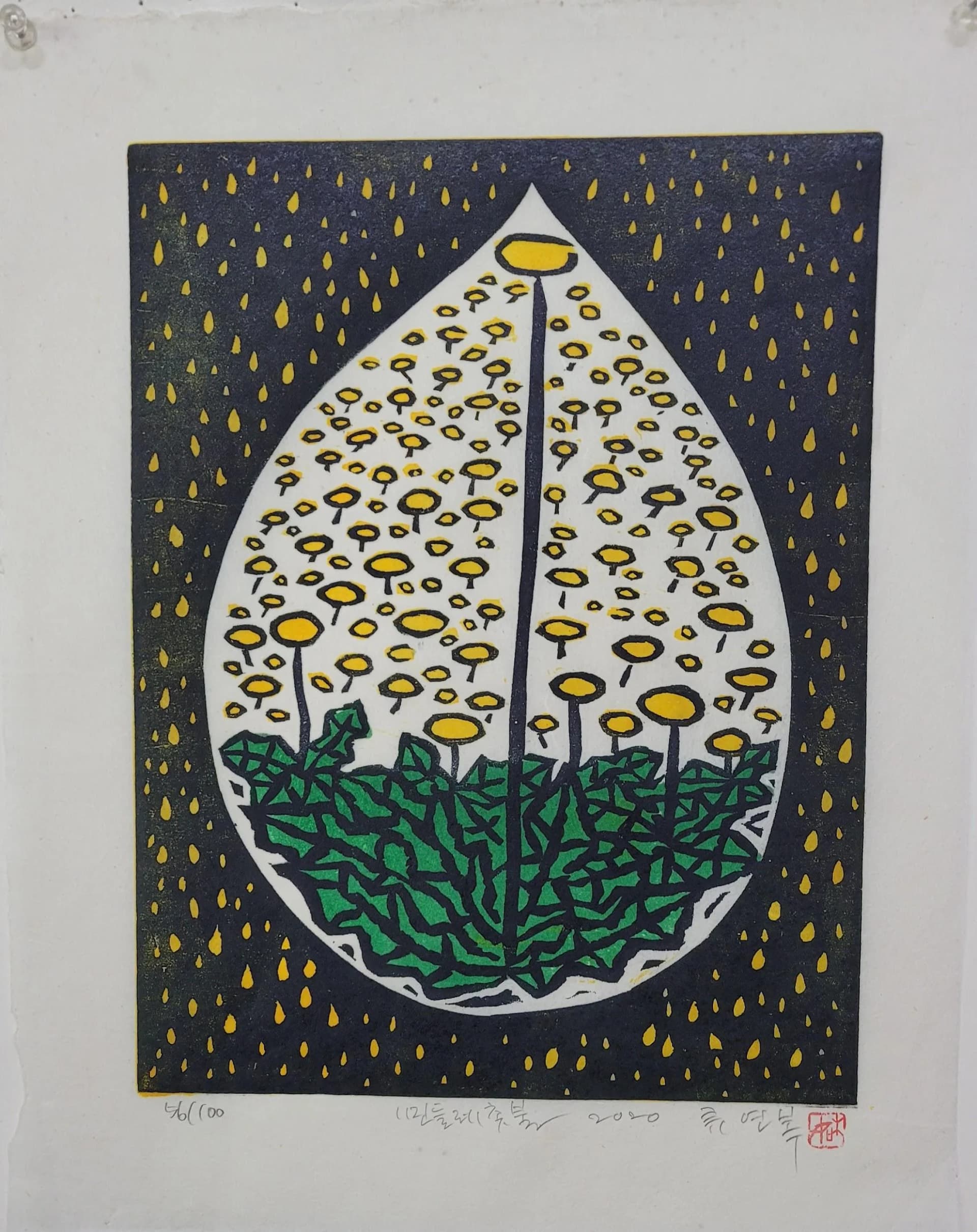
See all Oh Yoon works on SAF →
Further Reading

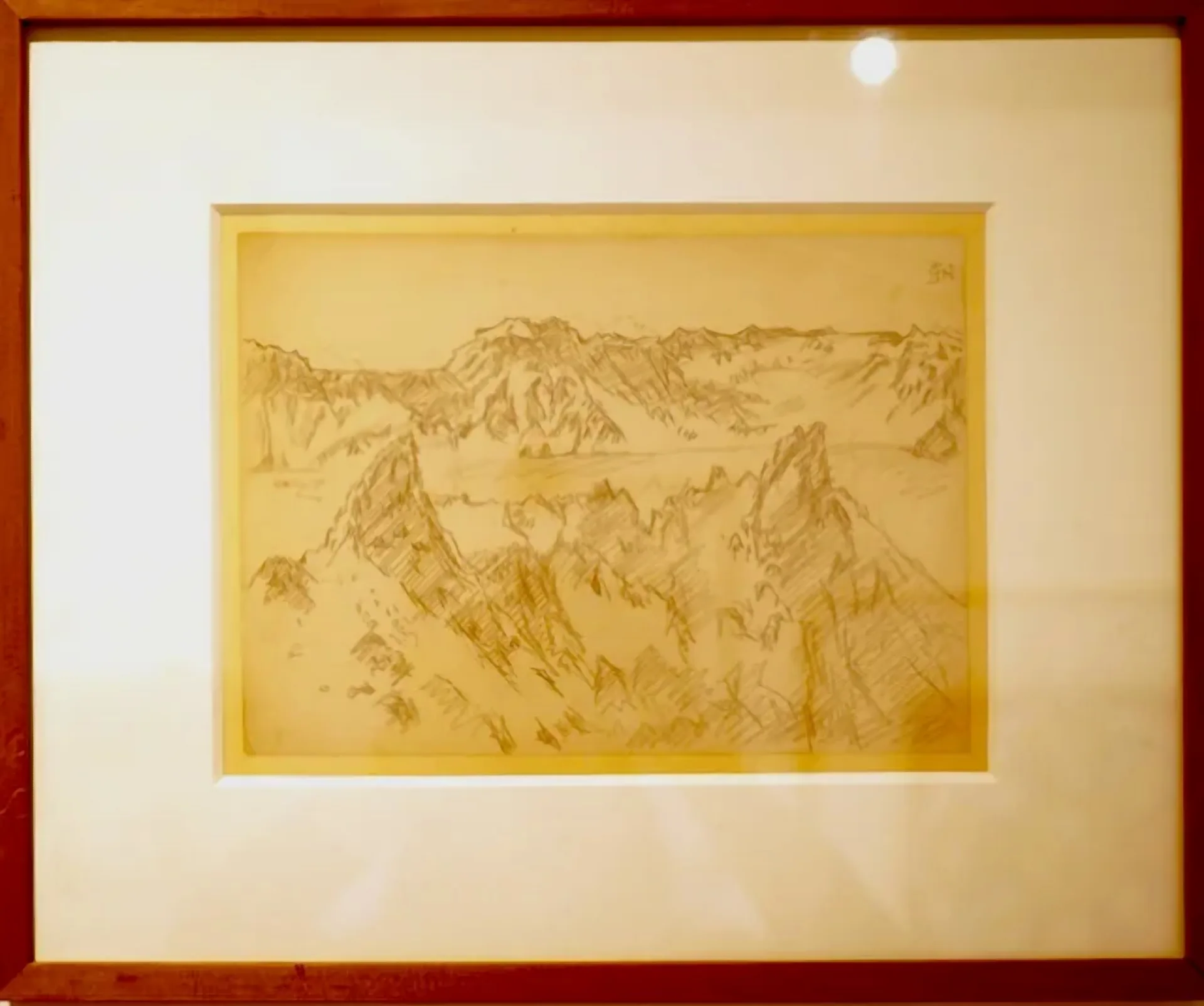
Start Collecting
What Is Under Way
The terracotta relief Oh Yun carved into the interior wall of a bank branch in Guui-dong in 1973 is facing demolition. It was made together with Oh Kyung-hwan and Yoon Kwang-ju, and it was not public art — it was a commission from the then Commercial Bank of Korea (now Woori Bank).
- Citizens' petition for the Guui-dong terracotta — addressed to the next mayor of Seoul and the Minister of Culture, Sports and Tourism
- Preservation fund — raising the cost of conservation through citizen donations
Seed Art Festival
·