The most common question from first-time buyers: "Is this real?" The 7 items a Certificate of Authenticity must contain, 5 red flags of a forged COA, and 3 points to read signatures and seals.
How to Read an Artwork COA — 3 Steps to Spot Forgeries
The most common question from a first-time art buyer is predictable: "Is this real?" That is why a Certificate of Authenticity (COA) accompanies the work. A single sheet of paper, but the only official document that proves the work's authenticity, edition, and provenance.
Yet when people actually receive a COA, they often do not know what to look for. A name, a signature, a quick glance — and into the drawer it goes. The importance of that single sheet is usually discovered only at the moment of resale or bequest. This guide is a 3-step checklist to run through the minute you receive a COA.
Step 1 — The 7 Items a COA Must Contain
A proper COA contains all seven of the following. If any one is missing, treat it as suspicious.
- Work Title — does the notation match the actual piece
- Artist Name — in both Korean and English, with the artist's own signature or seal
- Year of Creation — matches the signature on the work itself
- Size / Medium — clearly stating whether framed size or work only
- Edition Number — e.g.
12/50for prints and photographs,Unique / 1 of 1for originals - Issuing Body and Date — gallery, cooperative, or the artist, with the issue date
- Contact and Serial Number — a route by which authenticity can be reverified
Why the Edition Number Is Critical
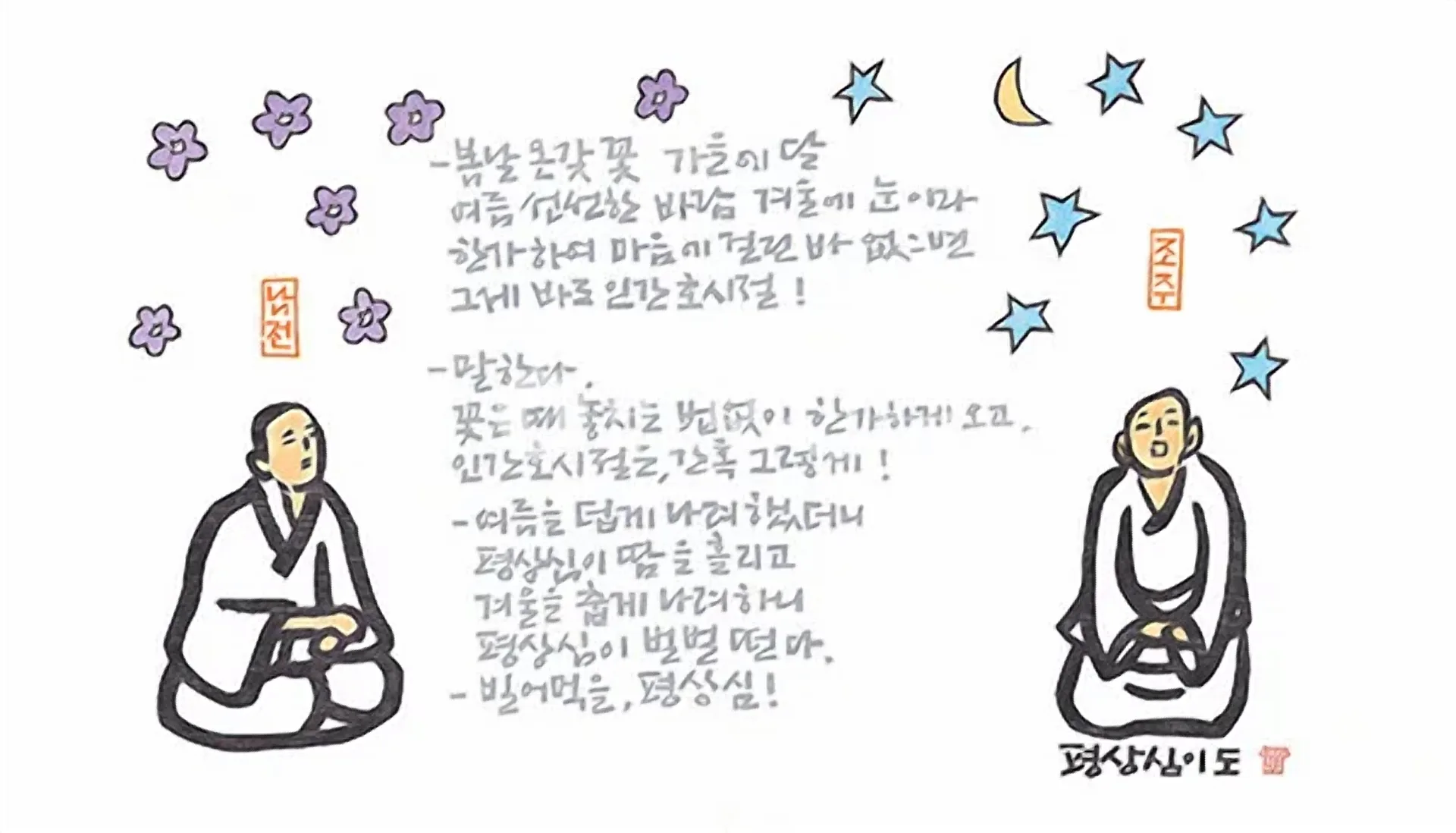
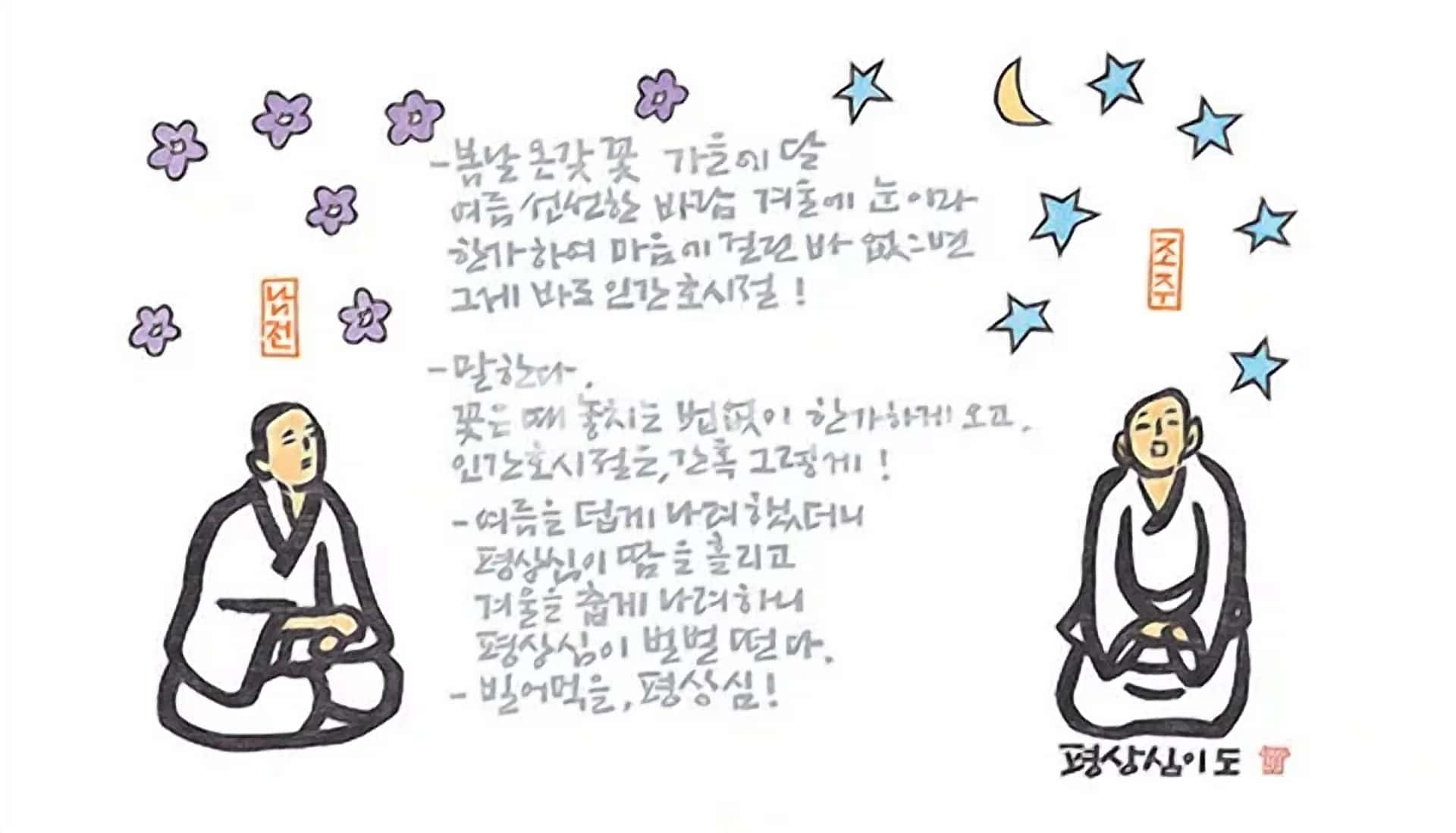
Prints and photographs are pulled from the same plate or negative, multiple times. That is why "which number out of how many" defines the uniqueness of the work. For example, Mumonkan 50 Plates (Print Series) is a set carving 50 of Master Wumen Huikai's Zen koans onto woodblocks. For such a serial print, the COA must indicate total number of plates, edition number, and set composition. A single plate pulled from the series loses its meaning.
For a deeper dive on editions, see Editions Explained — Unique, Limited, and Open.
Step 2 — Red Flags of a Forged or Invalid COA
COA forgery is more common than people think. If any one of the following five applies, contact the issuing body immediately.
① The signature is a printed image
An authentic COA carries the artist's hand signature. A scanned, copied, or printed signature is invalid. Hold the paper up to the light and check for ink impressions pressed into the paper.
② The issuing body is unclear
If the COA says only "ABC Gallery" with no phone number, address, or business registration number, that is a warning sign. A legitimate issuer always leaves a reverifiable contact.
③ The serial number is missing or simplistic
Formats like COA-2026-001 are easy to forge. A proper serial must be cross-referenced against the issuer's database for instant verification.
④ The edition notation does not match
If the work shows 12/50 at the bottom but the COA says 12/100, one of them is false. Always check them together, on site.
⑤ The paper quality is shoddy
A COA printed on plain A4 copy paper with an inkjet is likely fake. A real issuer uses consistent-quality paper, print, and seal.
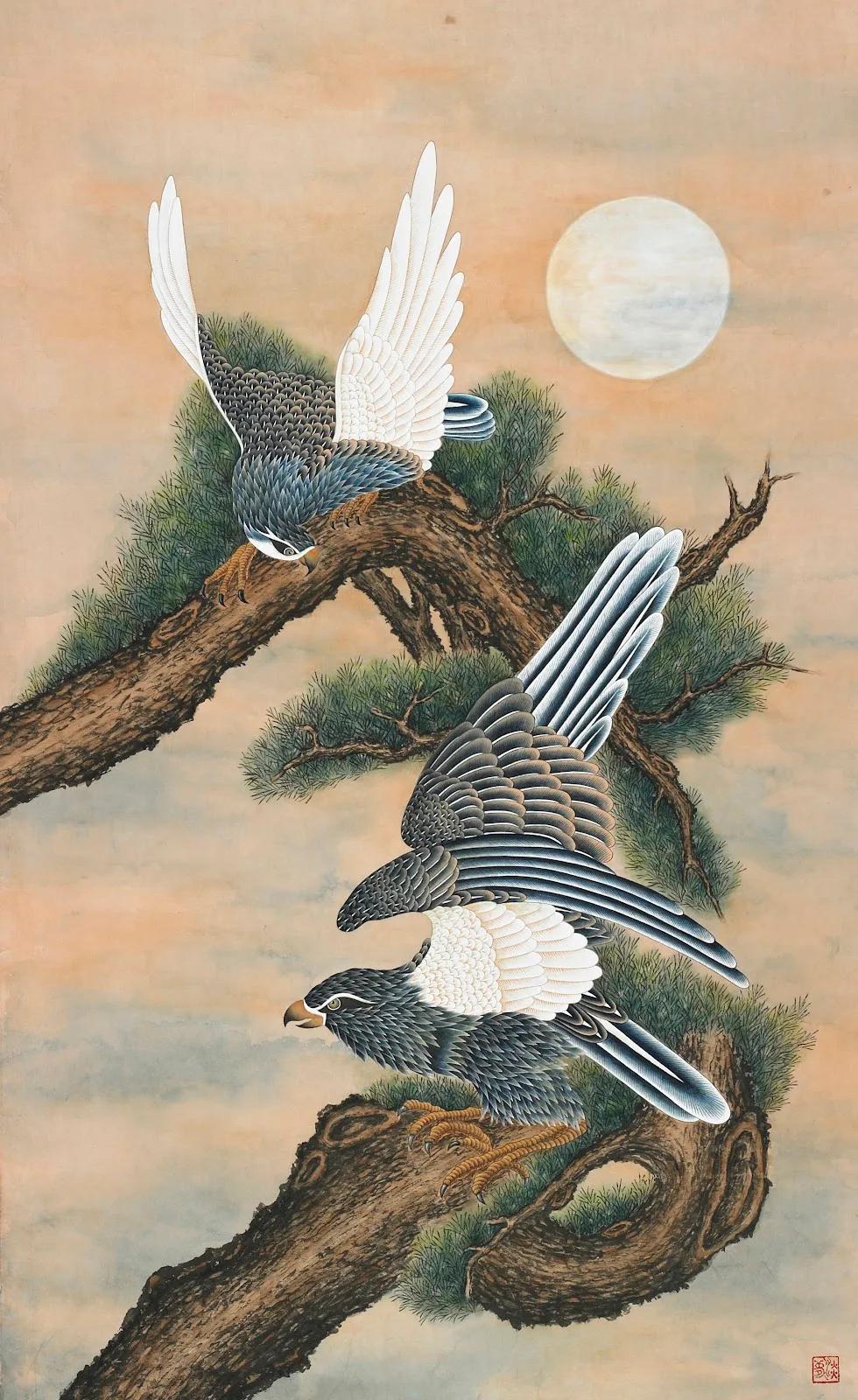
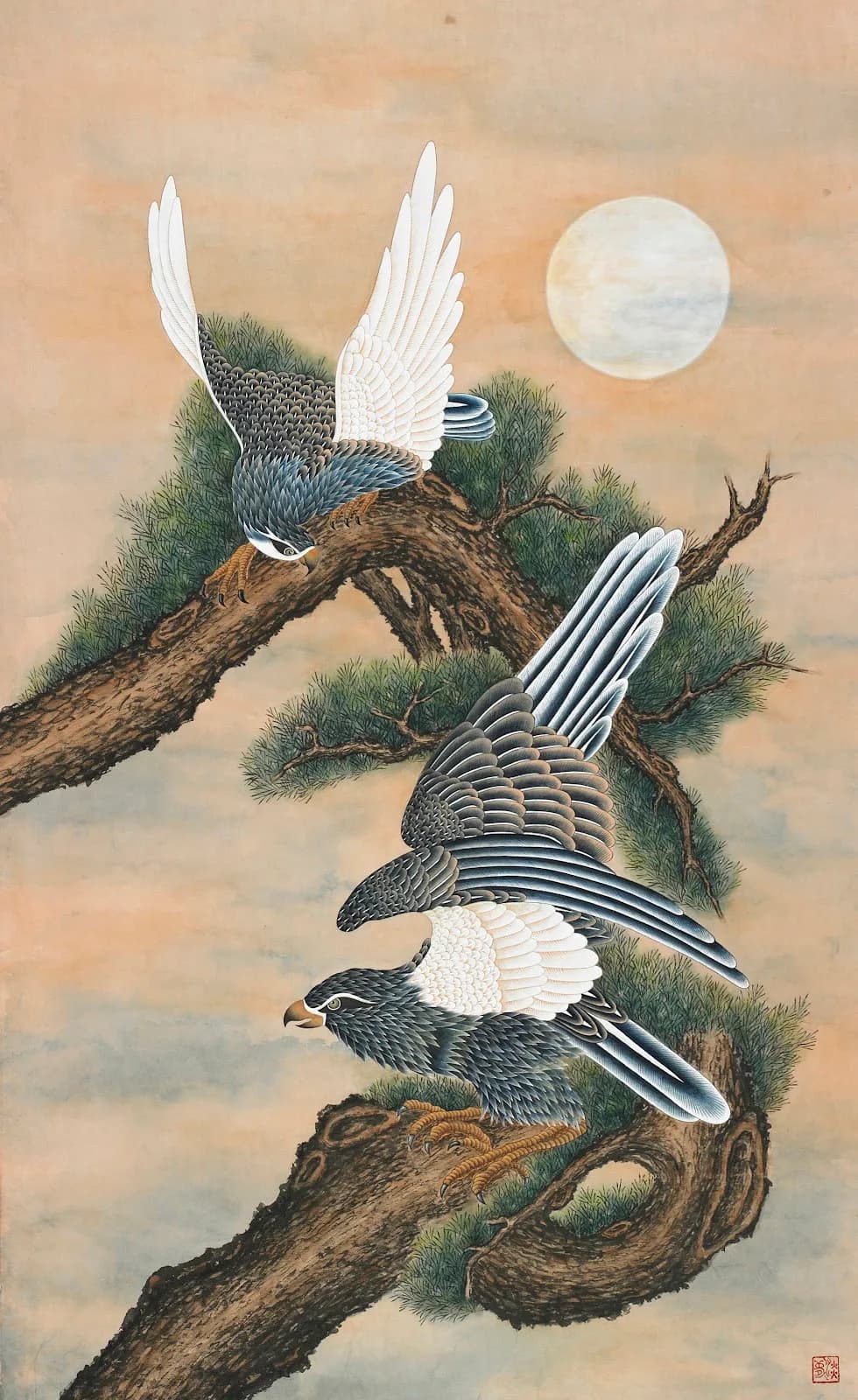
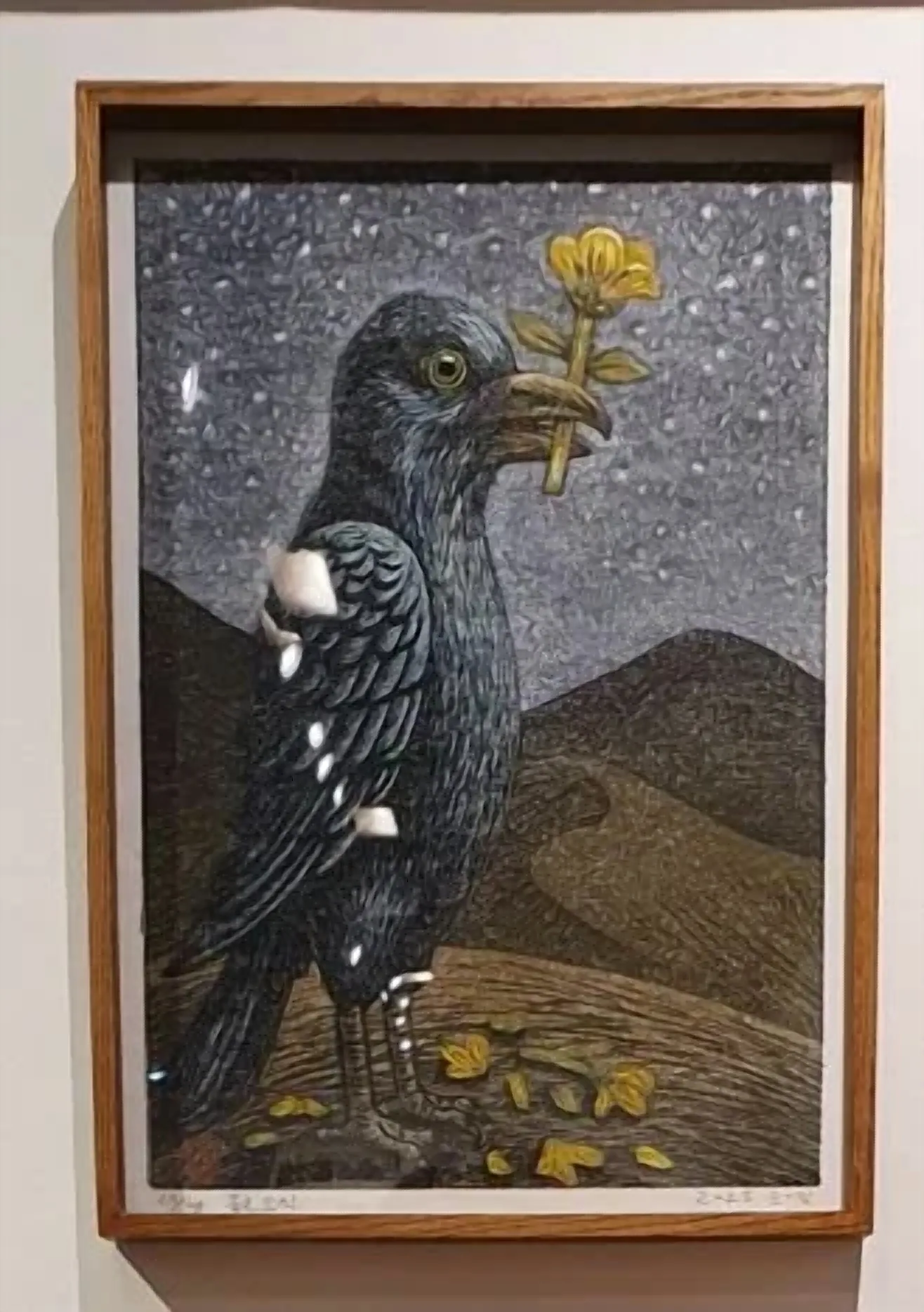
For a unique work, instead of an edition number, the COA reads '1 of 1' or 'Unique'. Shin Yeri's Eagle — a Korean painting on dyed hanji rendered stroke by stroke in powder color — is a typical example. For a unique work, the entire role of the COA is to prove "only this one exists in the world."
Step 3 — 3 Points for Reading Signatures and Seals
As important as the COA itself is the artist's signature and seal on the work. The two guarantee each other.
① Position
Korean painting and printmaking usually place the signature and seal together in the lower left or lower right margin. For woodblock prints, the signature is typically written in pencil after printing, rather than carved into the block. Kim Sang-gu's No 895 (180×30cm woodblock on hanji) is a textbook case: pencil signature + edition number + artist's seal, all three together.

② Ink and Pigment
Check whether the ink of the signature was laid down at the same time as the pigment of the work. If only the signature looks unusually fresh and sharp, it may have been added later.
③ Seal (Nakgwan) Position and Shape
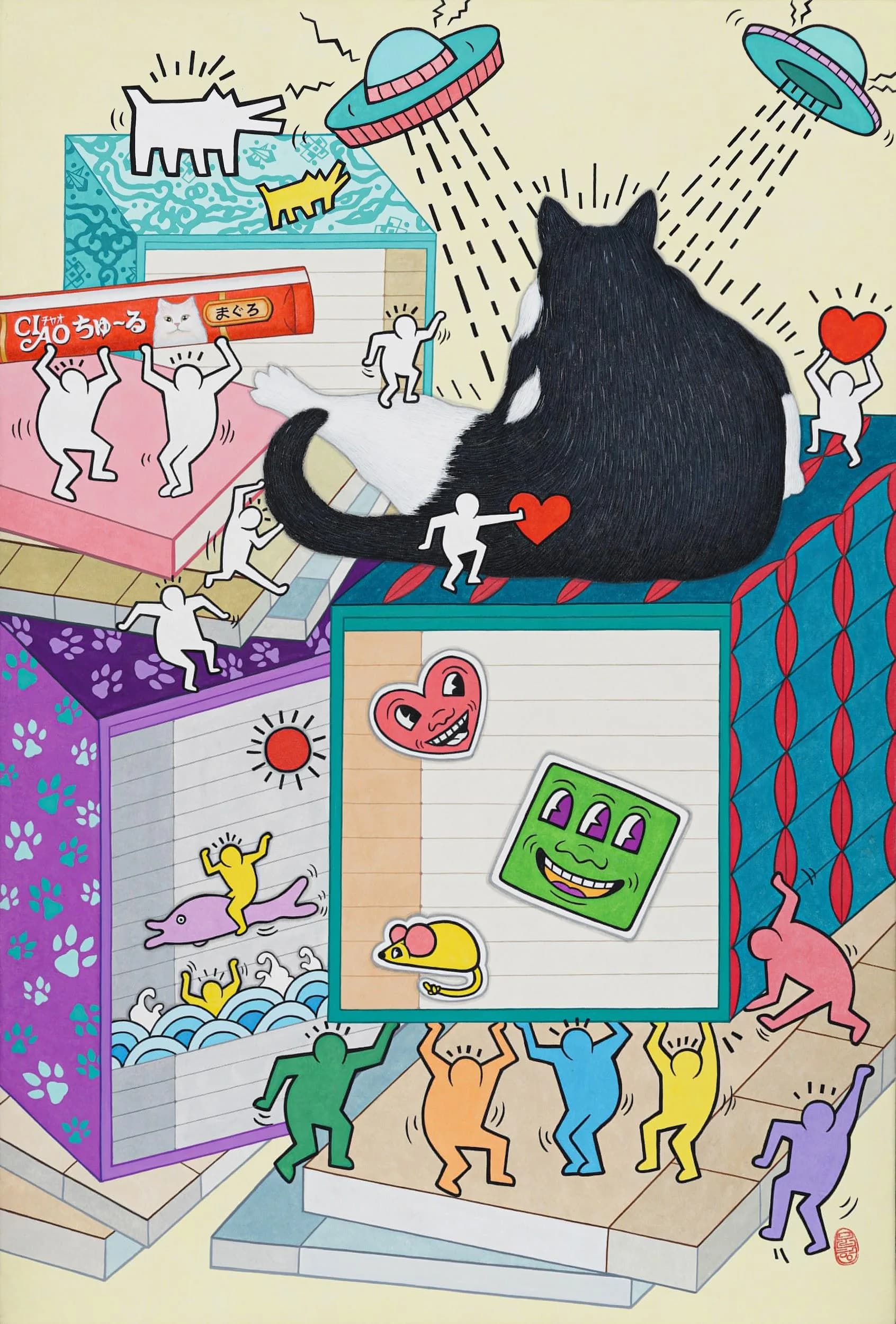
Eastern painting uses three kinds of seal: the name seal (seongmyeong-in), the artistic-name seal (aho-in), and the appreciation seal (yuin, 遊印). Each artist has a fixed, personal set of seals, and forgeries are often betrayed by minor distortions in the seal's shape. Even a work like Lee Munhyeong's Chaekgeori x Keith Haring — which fuses Korean folk-painting chaekgeori with contemporary pop art — has its authenticity confirmed by the position and color of the seal, central to the chaekgeori tradition.
How SAF Issues Its COAs
Every work sold through SAF (Seed Art Festival) passes through a two-stage verification: artist's hand signature + Korea SMART Cooperative issue number.
- The artist signs and seals the work directly at the bottom
- The cooperative assigns a unique serial to each work
- The buyer receives a paper COA alongside an electronic issuance record
- At transfer or resale, the issuer's record allows reverification
Revenue from sales is dedicated to the SAF mutual-aid fund, which becomes low-interest loan capital for fellow artists facing financial discrimination. A single COA proves not only the work's authenticity but also the flow of the fund.
What to Do After Receiving a COA
- Store it separately from the work — do not tape the COA to the back of the frame. Keep it in a separate file
- Photograph it — a backup in case of loss. Ensure the serial number and issue date are legible
- Include the original at transfer — copies carry no weight. The original is the proof
- Attach it for insurance — together with Artwork Care Guide, the COA becomes the basis for valuation
The Surest Way Not to Be Fooled
It comes down to four things.
- Buy from a trustworthy issuer — a gallery, a cooperative, or the artist directly
- Confirm all 7 items on the COA are present
- Match the work's signature and seal against the COA
- Reverify the serial number with the issuer immediately
Stick to these four and 90% of forged or invalid COAs are filtered out. If you already bought something and feel a faint unease, a single phone call to the issuer asking about the serial number ends the question.
Related Reading
The Context of Solidarity
84.9% of Korean artists are excluded from institutional finance. Sales of works by SAF-exhibiting artists build a mutual-aid fund that returns as low-interest loans to fellow artists facing financial discrimination. The single sheet of COA you receive proves not only the work's authenticity — it is also the starting point of that cycle.
Related Guides
Explore Further
Related reading
If this piece helped, you may also enjoy these related articles:
Seed Art Festival
·