Nails pull out of drywall, concrete resists them, and renters hesitate to drill at all. A practical guide to hardware by wall type and artwork weight, gallery rail systems, non-invasive options, and a 7-step installation flow.
Tools for Hanging Artwork — Choosing Nails, Anchors, and Rail Systems
You've bought the artwork but you're stuck at the nail. A nail in drywall pulls right back out, concrete refuses to take one at all, and renters are reluctant to drill into the wall in the first place. The piece spends a month in the shipping box.
This is a companion to How to Hang Artwork. Refer there for the principles, positioning, and height of hanging — this guide focuses on which hardware to actually buy. Choices by wall type and artwork weight, gallery rail systems, and non-invasive options for renters.
Know Two Things First — Wall Type and Artwork Weight
Before installing, verify both.
- What is your wall made of? — drywall, concrete, brick, or wood each need different hardware
- How heavy is the piece? — total weight including frame. Small ~1kg, medium 3–5kg, large 10kg+
A light knock with your fist tells you the answer.
- Hollow "thud-thud" — drywall (most apartment interior walls)
- Dead "thock" blocked sound — concrete / brick (exterior walls, older buildings)
- Light "tock-tock" — wood stud or plywood
Hardware by Wall Type
① Drywall (90% of apartment interior walls)
The most common, but the weakest. Plain nails pull out. Anchors are essential.
- Toggle Anchor — metal wings unfold behind the wall to grip. Good up to 3–10kg
- Plastic Anchor — for light work (under 2kg). Drill, insert anchor, screw in
- Molly Bolt — the strongest metal anchor. For work 10kg+
Drywall is usually 9.5mm or 12.5mm thick. Pick anchors sized to the thickness.
② Concrete / Brick
Stronger but harder to drill. Hammer drill required.
- Concrete anchor + screw — reliable for work over 5kg
- Drop-in anchor — more professional but home-usable
- Concrete nail (ridged) — limited to pieces under 3kg; drive in with a hammer
Without a drill, hardware stores sell concrete nails sized to wall material as a fallback.
③ Wood Wall
The easiest. Plain nails or screws work. The key is locating the stud.
- Stud finder — tool for locating wood studs. Around ₩10,000
- Into a stud, you can hang 30kg+ without concern
- Areas without a stud should be treated as drywall
④ Hybrid (Concrete with Drywall Facing)
Common in recent apartments. Drywall on the outside, concrete behind. The moment your drill suddenly hits a hard layer — that's concrete. Switch to a concrete anchor.
Hardware by Artwork Weight
| Weight | Drywall | Concrete | Wood Stud |
|---|---|---|---|
| Under 1kg (art print, small) | Small nail + plastic anchor | Concrete nail | Plain nail |
| 1–3kg (small with frame) | Plastic anchor + screw | Concrete anchor | Plain screw |
| 3–7kg (medium canvas) | Toggle anchor or Molly bolt | 2× concrete anchors | 2× screws |
| 7kg+ (large / glass frame) | 2× Molly bolts + wire | 2–3× concrete anchors | 2× screws + wire |
Small Art Print — the Simplest
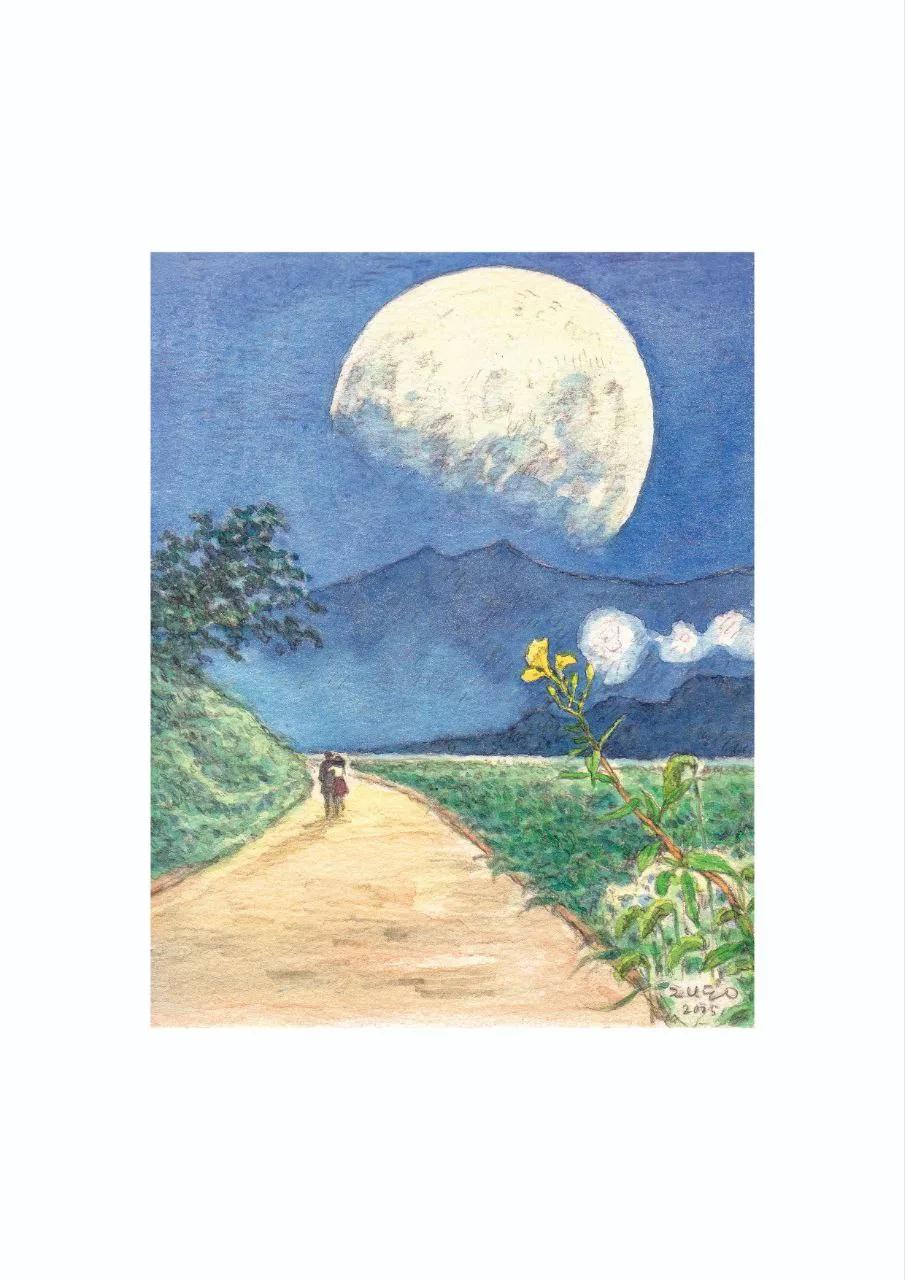
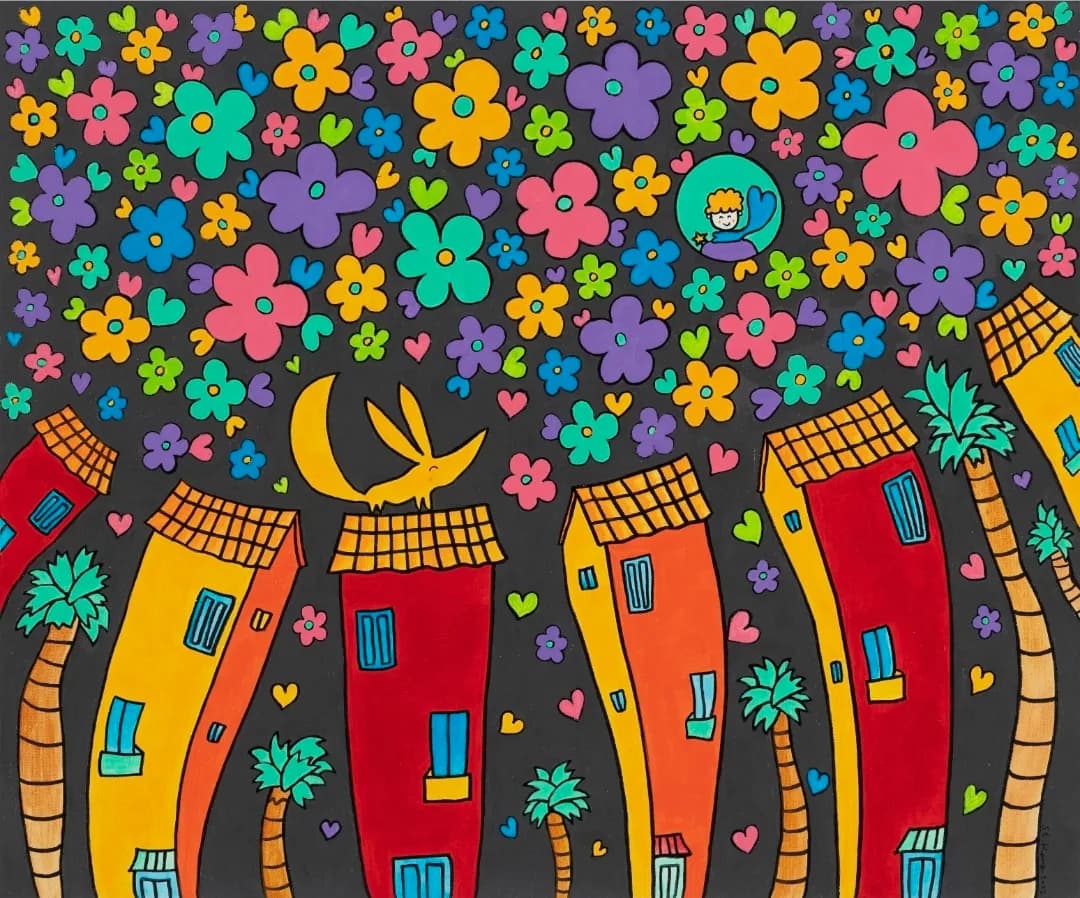
An A4-sized framed piece like Park Jaedong's Lovers Under Moonlight (21×29.7cm art print) weighs 500g–1kg. A single small nail is enough. Even in drywall, under 1kg doesn't need an anchor.
Medium Canvas — Two-Point Hanging Required
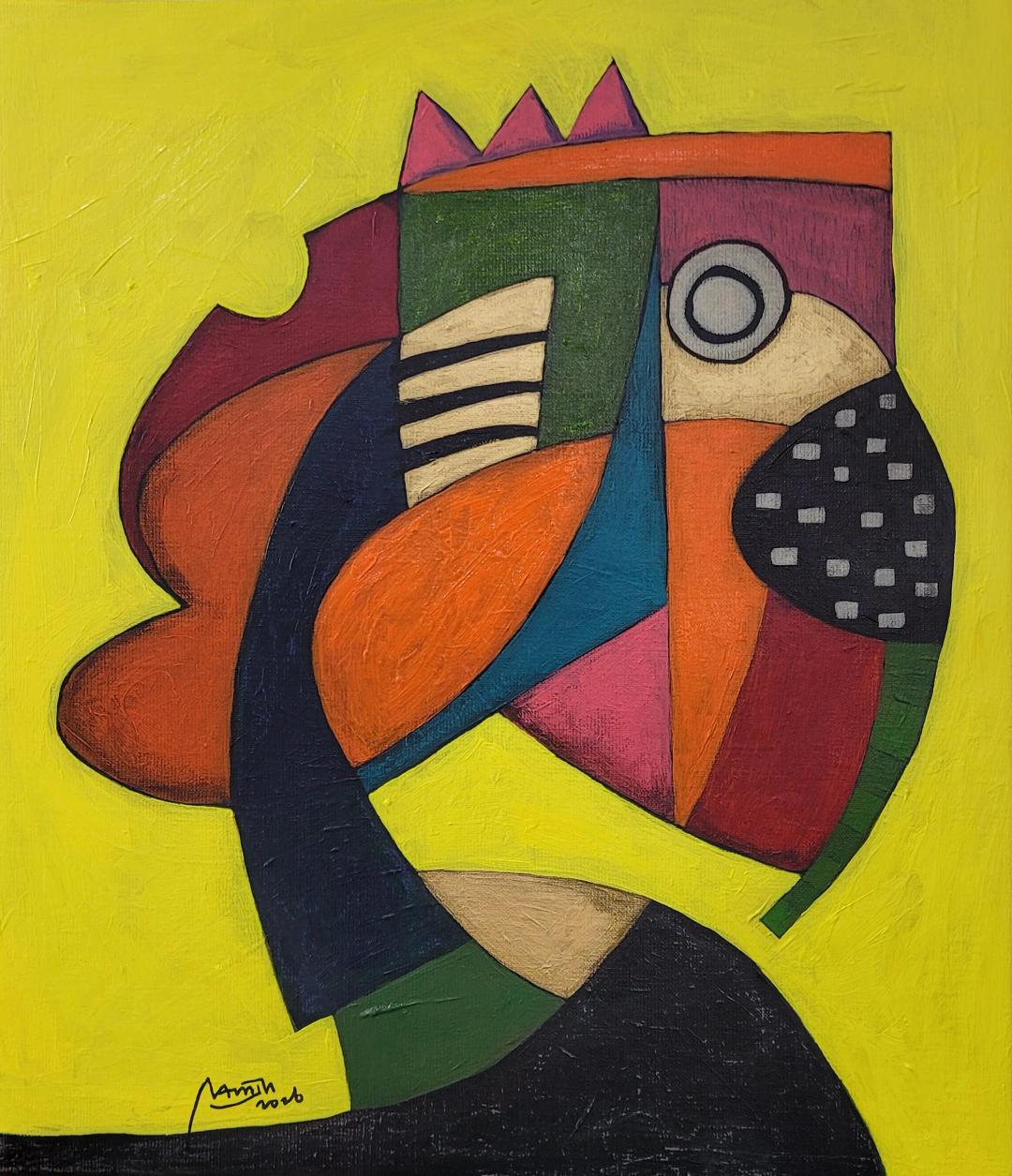
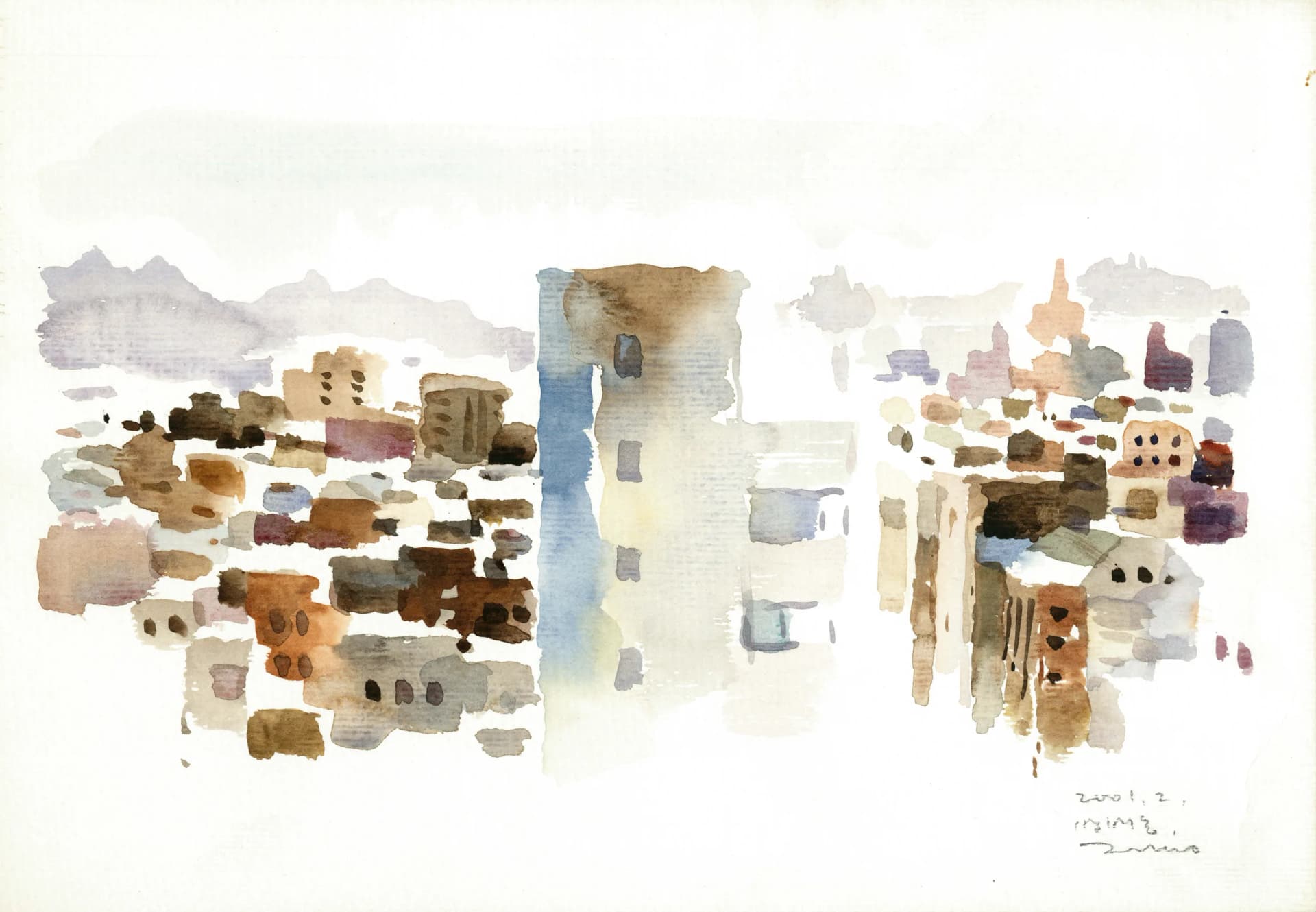
Nam Jinhyun's On Life, That Emptiness (53×45.5cm 10F canvas) weighs 3–5kg. Drive two nails at 40cm spacing and hook the wire on the back of the canvas across both. A single point will eventually drift off-axis.
Large or Wide Work — Three-Point Fixing
Long-format works like Kim Sang-gu's No 895 (180×30cm woodblock on hanji) need two ends + one center — three points in principle. Hanging from a single point lets the middle sag and deform the paper.
Gallery Rail Systems — When They're Worth It
A rail fixed at the top of the wall or ceiling; wires and hooks drop down from it to hold works. No wall holes, easy to relocate.
Upsides
- Swap works frequently with no wall damage
- Height and position adjust freely
- Multiple works align cleanly
Downsides
- Higher upfront cost (₩50,000–80,000 per meter)
- Requires specialist installation
- Not always possible depending on ceiling structure
When It Fits
- 5 or more artworks
- Frequent rearrangement
- Renters (easy to remove)
- Gallery-wall compositions (many works on one wall)
The representative systems in Korea are STAS and Walker. Popular in cafés and offices, spreading into homes.
Non-Invasive Options for Renters
For situations where drilling isn't an option.
① 3M Command Hooks
Adhesive hooks. Suited for art prints under 1kg. Removal may lift the paint — pull slowly downward when detaching.
② Push Pins
Press directly into drywall or wood by hand. Almost invisible holes — low pressure when moving out. Under 1kg only.
③ Shelf-Top Display
No nails — lean the work on a shelf. Good for frequent rearrangement. Use non-slip pads at the shelf edge.
④ Easels and Stands
A floor-standing approach. Gives weight to large works. Only where you have the floor space.
The 7-Step Install Flow
- Check the wall type (knock on it)
- Weigh the piece (a kitchen scale works)
- Decide position — use the 145cm rule from the How to Hang guide
- Mark the wall in pencil — at the hanger points on the back of the work
- Drill or hammer a hole — 6mm for concrete, 5mm for drywall
- Insert anchor → drive screw or nail
- Hang and check level — a phone spirit-level app is fine
Five Essential Tools
Worth keeping at home.
- Small drill (with 4–6mm bits)
- Hammer
- Tape measure or meter stick
- Pencil
- Spirit level (a free phone app)
All in — around ₩50,000.
Five Common Mistakes
① One nail for a medium work
Hanging a piece over 3kg from a single point lets gravity pull it to one side and tilt over time. Always two points.
② Plain nail in drywall
Pull-out is only a matter of time. Even thin art prints warrant an anchor.
③ Drilling and screwing without the anchor
Skipping the anchor and driving a screw into the bare hole grips nothing. Anchor first, then screw.
④ Near electrical or plumbing lines
They hide inside the wall. Avoid within 20cm of windows or switches. Use a detector to be safe.
⑤ Hanging too close to the ceiling
Too high and the neck strains looking up. The standard is work center at eye level (145cm). The reasoning is detailed in the How to Hang guide.
Where to Buy Hardware
Daiso, E-Mart
Basic nails, plastic anchors, a hammer — all of this under ₩10,000.
Hardware Stores
Toggle anchors, concrete anchors, drill bits. You can get recommendations tailored to your building's construction.
IKEA
Sells picture-hanging hook sets that cover three wall types in a single pack — convenient.
Online
Brands like 3M Command and STAS rails ship via Coupang or Ohou. For rail systems, installation quotes come with the product.
Hangers on SAF Works
Works bought through SAF ship with hangers prepared by the artist attached. Canvas with wire, woodblock or hanji with scroll rods, photography with D-rings — different by medium.
If the default hanger doesn't fit your wall — e.g. your wall is concrete while the standard hanger assumes wood — contact SAF staff and additional hangers can be coordinated with the artist.
Related Reading


The Context of Solidarity
84.9% of Korean artists are excluded from institutional finance. Sales of works by SAF-exhibiting artists build a mutual-aid fund that returns as low-interest loans to fellow artists facing financial discrimination. Driving a single nail correctly is part of keeping a work safe for years, and every time a long-kept work changes hands, a new stretch of creative time begins.
Explore Further
Related Guides

Related reading
If this piece helped, you may also enjoy these related articles:

Seed Art Festival
·