Investment vs. possession in Korean art collecting — five myths, market data, and examples viewed through both lenses.
Investment vs. Possession — The Two Paths of a First Collector
Two motivations are mixed in any art purchase. Possession — the desire to keep a piece you love beside you. And investment — the expectation that the value will rise over time. For first-time collectors, these two motivations aren't a choice between options. They're a question of ratio.
This guide covers how to balance investment and possession, how that balance reshapes selection, and the five most common investment myths new collectors fall into. It closes with examples of Korean artworks viewed from both perspectives.
A reality check on the Korean art market
Let's start with the data: the number of artists in Korea's contemporary market with high short-term price-rise potential is small. Looking at 2023–2025 transaction records, only 20–30% of emerging artists' works recover their purchase price within five years at resale. Seven out of ten emerging-artist purchases come back to market below the buy price.
By contrast, artists already validated by criticism, exhibitions, and the market — Oh Yoon, Park Bul-ddong, Park Jae-dong, Min Jeong-gi — show stable or slowly rising prices for their works even decades later. Estate prints and mid-period works by major artists often see 1.5–2x asset appreciation over ten years.
| Category | 5-year asset value | 5-year emotional value | Recommended share |
|---|---|---|---|
| Master estate prints | Stable to +20–50% | Very high (historical meaning) | 30–50% of first collection |
| Emerging artist paintings/digital | -30% to +200% (high variance) | Variable with the artist's growth | 30–50% |
| Trend-chasing works | -50% to +50% | Likely to fade in 1–2 years | 0–10% |
Key takeaway: The most rational structure for a first collection is master pieces for asset stability + emerging artist works for emotional value. Trend-chasing loses on both counts.
What it means to view art through an investment lens
How selection criteria shift when investment is the dominant motive:
1. Validation of the artist comes first
Rather than betting on potential price-rises of emerging artists, prefer artists already validated by criticism, museums, and market history. Artists in the National Museum of Modern and Contemporary Art collection, in major biennials, or written about in academic journals carry already-accumulated market valuation.
2. Edition scarcity and preservation
From an investment view, limited editions outperform open editions, original paintings and prints outperform digital reproductions, and signature sizes outperform small works in typical asset appreciation. Estate prints (especially of major artists) sit at a balanced intersection of accessibility and asset value.
3. Transaction record, certificates, and provenance
Investment requires a certificate of authenticity, gallery transaction record, exhibition history, and catalog inclusion — these become the basis for price verification at future resale. Gallery or curated-platform purchase → automatic certificate → future resale possibility — establishing this flow from the start is foundational to investment-oriented collecting.
4. Liquidity and market depth
The investment lens cares about whether a resale market exists. Artists with prior transactions at Korean auctions (Seoul Auction, K-Auction) or international houses (Sotheby's, Christie's) carry liquidity safety. Artists with no transaction history can be wonderful but hard to liquidate.
What it means to view art through a possession lens
How criteria shift when possession is the dominant motive:
1. "Will I love this in ten years" comes first
Whoever the artist is, whatever the market thinks, the absolute criterion is whether you want this piece in your line of sight ten years from now. Even if the price drops, the daily pleasure of seeing the work offsets the loss.
2. Connection with the artist's overall practice
Don't be drawn only to one piece — ask whether you respond to the artist's other works too. Real collecting begins when you connect with the artist's full practice, not just one piece.
3. Fit with your space and daily life
Whether the work suits your home or office matters. Even a great piece, in the wrong space, hurts both sides. From this lens, calm pieces that set a tone often beat strong statement pieces.
4. Relationship and story with the artist
The possession lens values direct connection with the artist — meeting at exhibitions, reading interviews, following them on Instagram. Apart from market price, the desire to support the artist's next work is the core driver of collecting.
Five investment myths
Myth 1. "Emerging artists' prices always rise"
Not true. Only 20–30% of emerging artists' works recover their purchase price within five years. 70% drop in price or fail to transact at all. Emerging-artist collecting has to be motivated by connection to the artist's practice — not investment expectation — to be safe.
Myth 2. "All works by famous masters are equally valuable"
Estate prints and mid-period works by master artists tend to be asset-stable, but not all works by the same artist appreciate equally. Period, medium, size, and edition number create wide value differences within one artist's catalog. Even when buying master work, check the individual piece's transaction record.
Myth 3. "Auction-bought works appreciate faster"
Auction transactions reveal the agreed-upon market price at one moment — they don't guarantee future value. About 30% of an auction price goes to fees and taxes, so resale must beat the original price by at least 30% to break even. Auctions matter for liquidity and verification, but that's separate from price-rise guarantees.
Myth 4. "Foreign artists' works are more valuable"
In the Korean market, Korean artists treating Korean contexts have deeper transaction depth and a more stable collector pool. Foreign artists' works face a narrow Korean resale market — liquidity can be hard. Starting a first collection with Korean artists is also more rational from a liquidity standpoint.
Myth 5. "Sell when the price rises"
Selling a piece you bought for possession just because the price rose makes it hard to find a piece of equal quality at that new price. The art market doesn't easily welcome back people who've left. Asset appreciation should be a natural consequence of holding — not a motivation to sell.
Korean artwork examples through both lenses
A. Asset stability — master estate prints
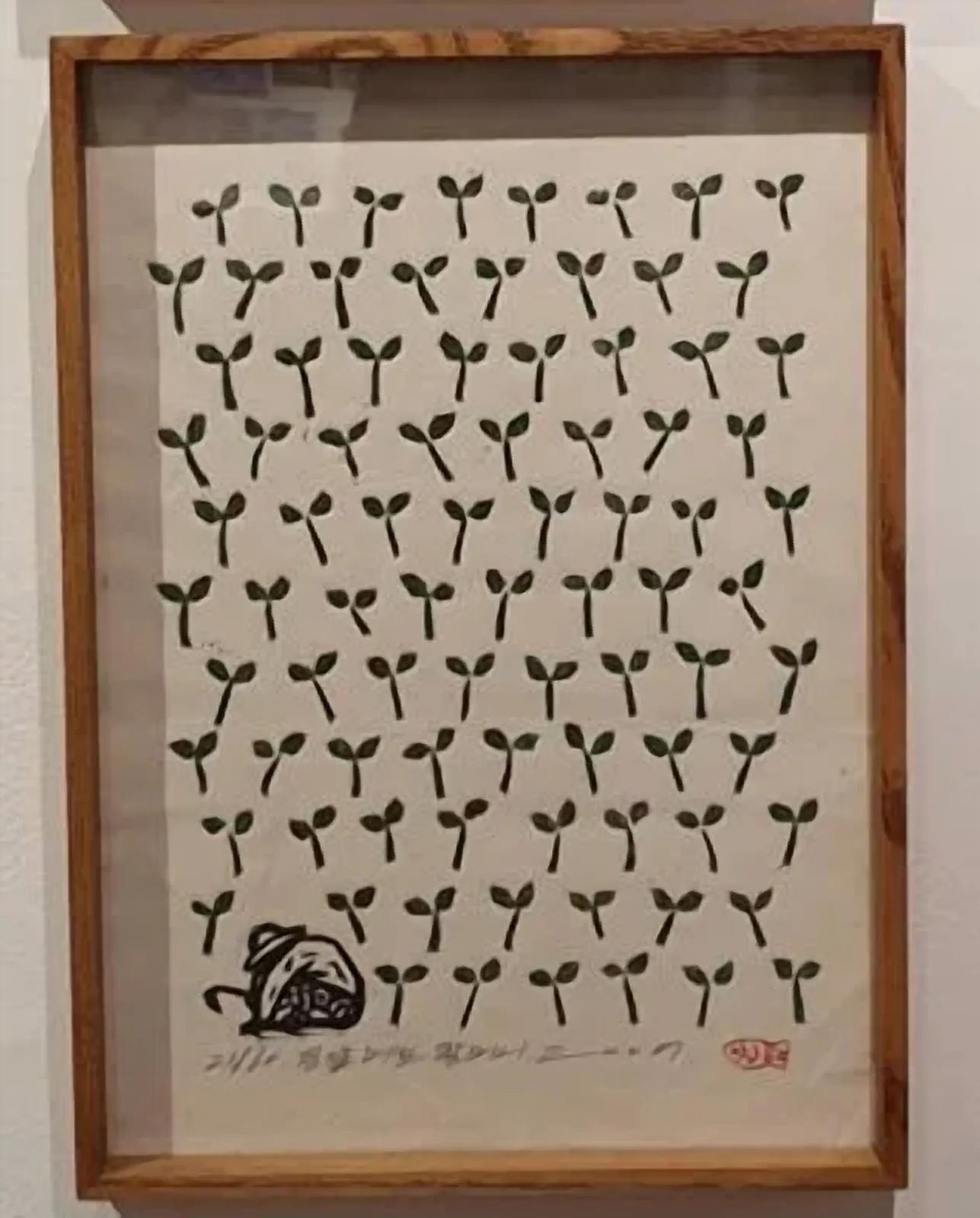
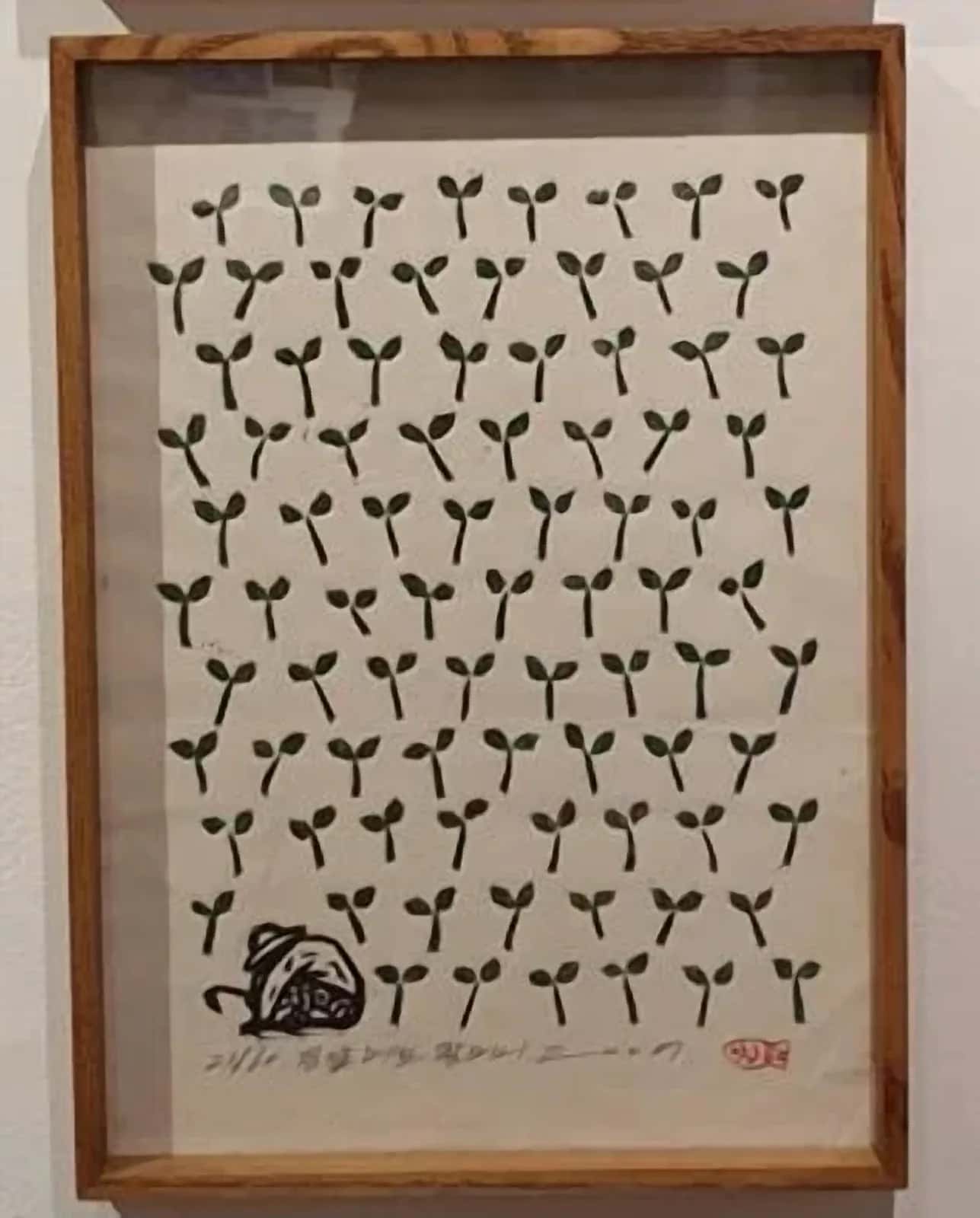
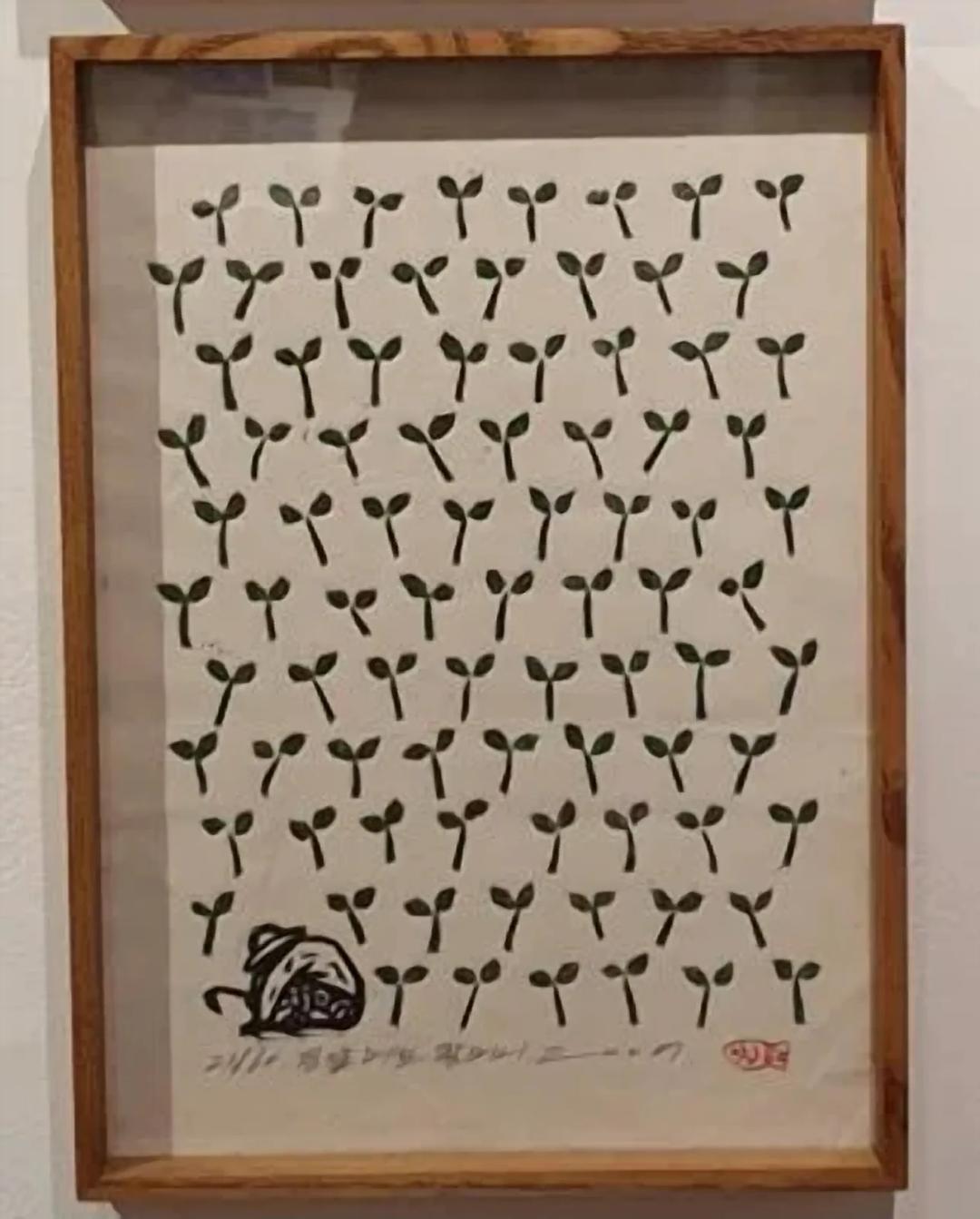
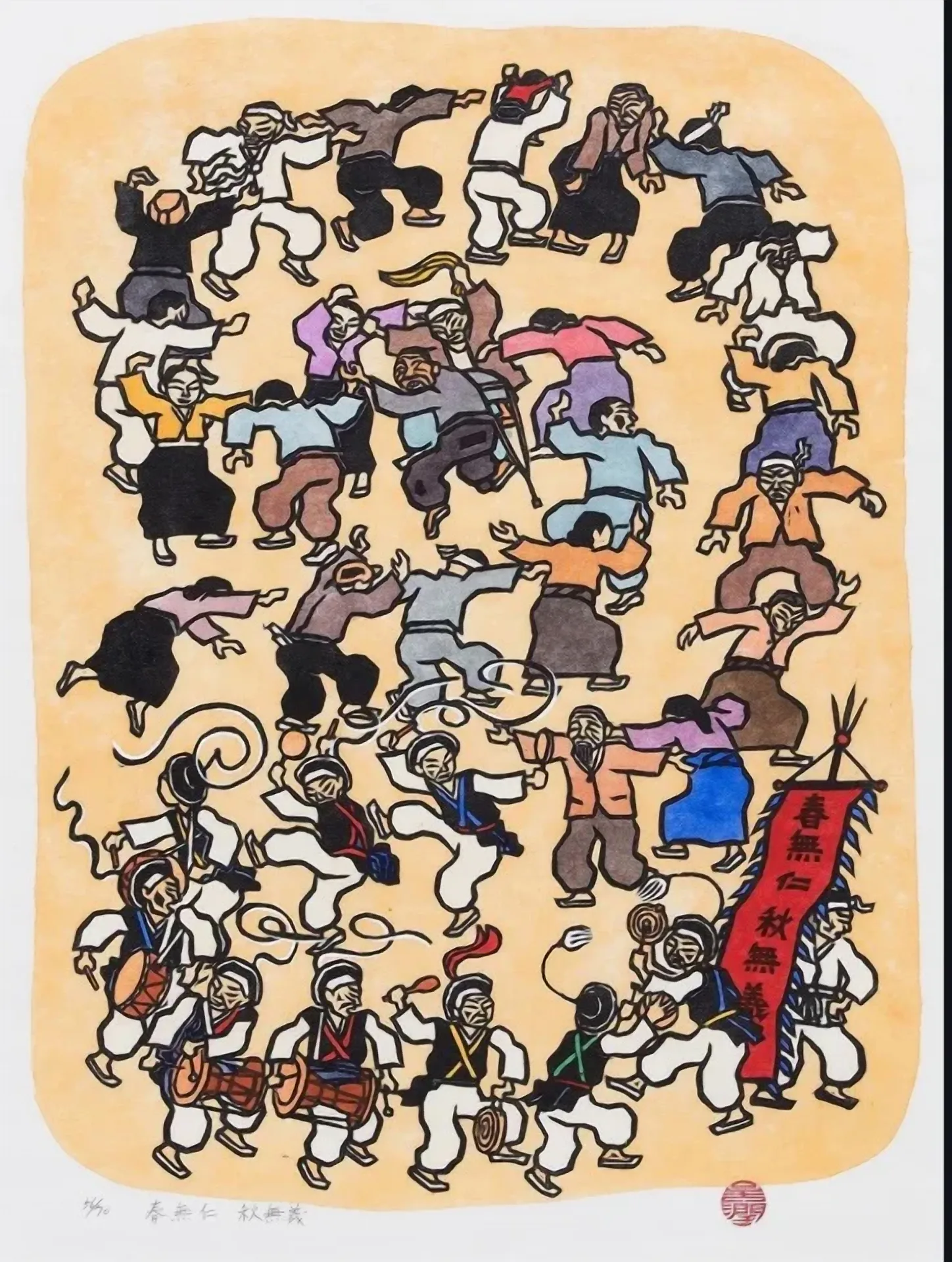
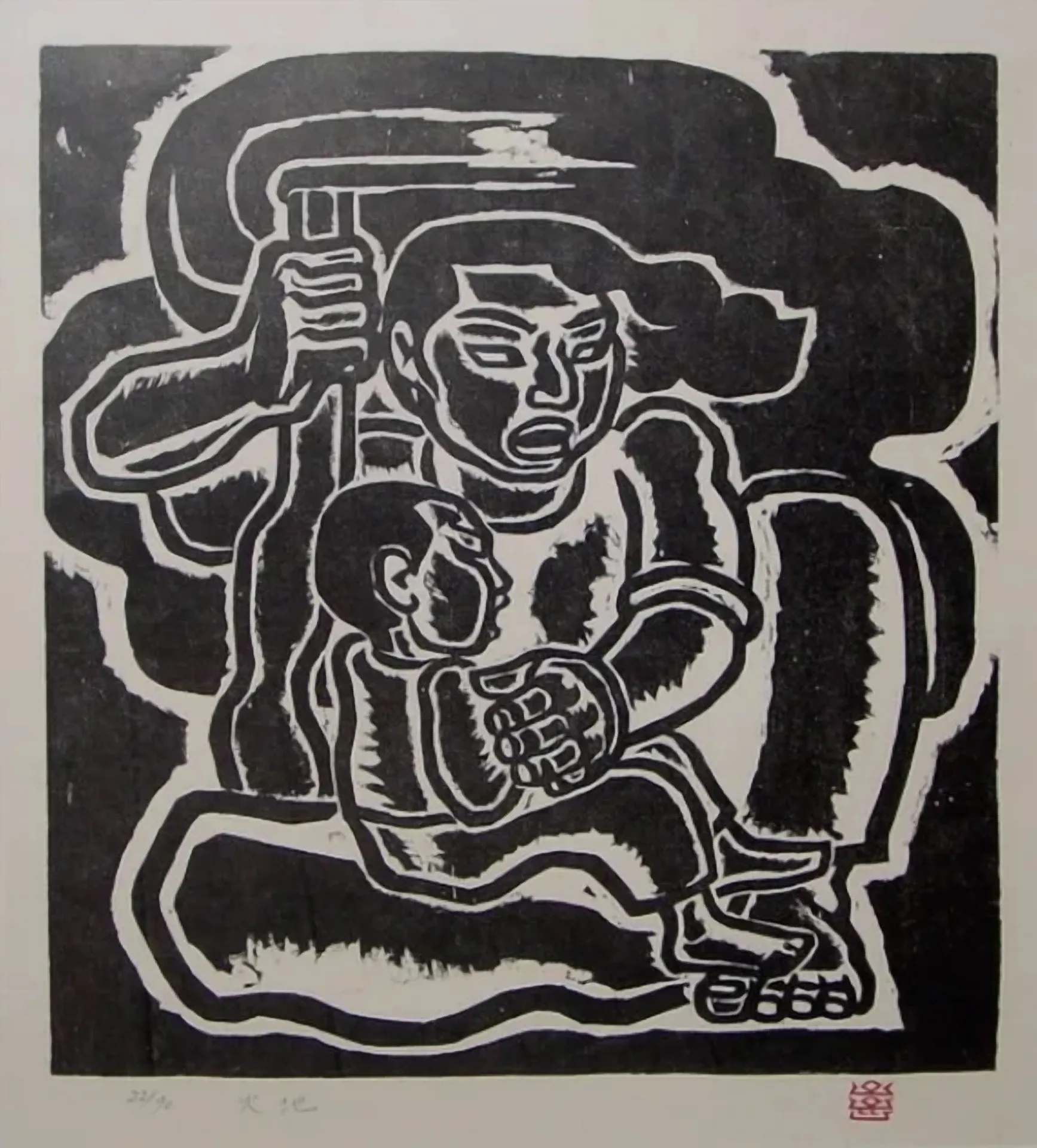
Lee Yun-yop, Grandmother Weeding the Bean Field 2 (multi-color woodblock, edition of 60, ₩400,000) A piece of the Korean minjung art lineage. The 60-copy edition disappears from the market over time. Auction history exists for the artist's other works, providing liquidity. A solid asset-value pillar for a first collection.
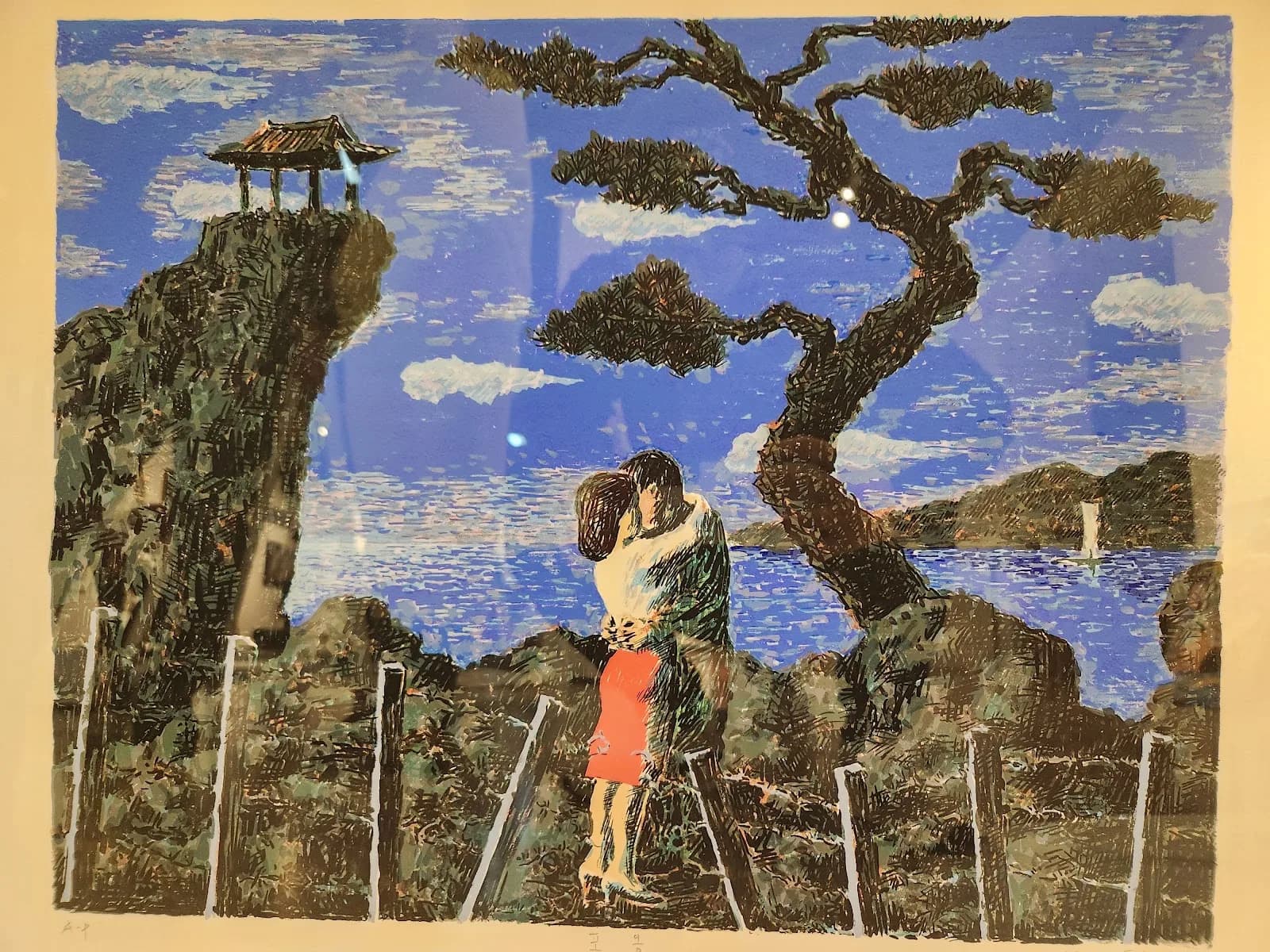
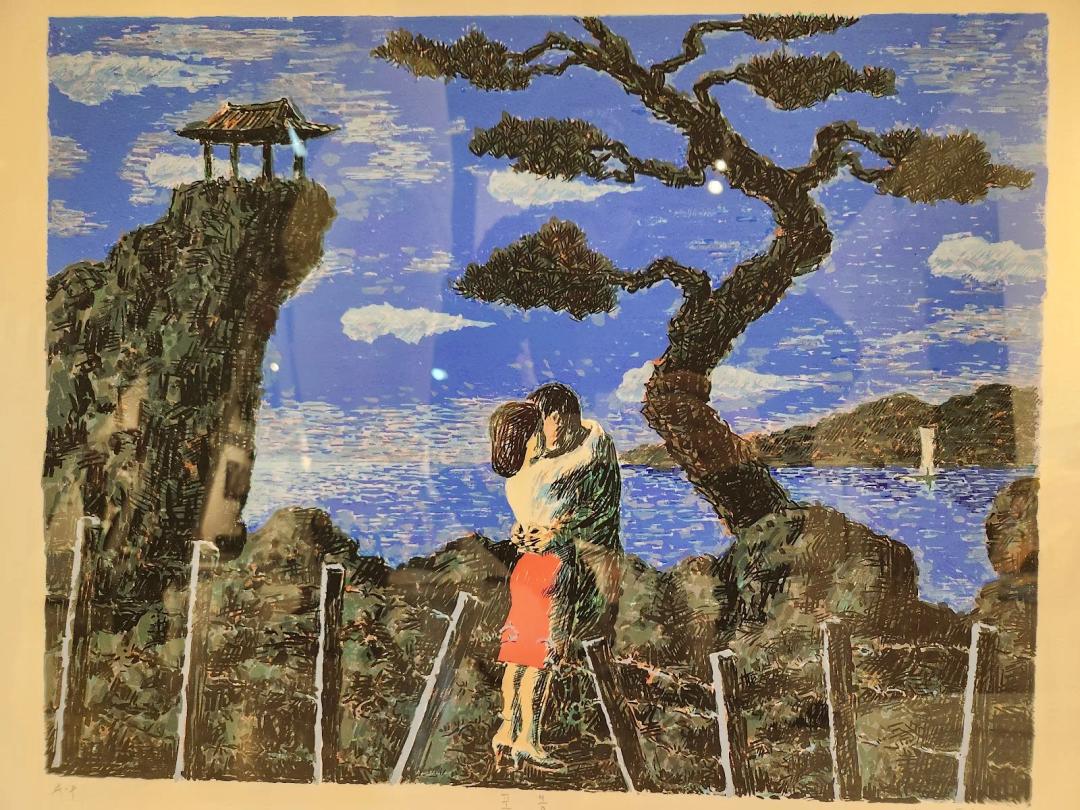
Min Jeong-gi, Embrace (silkscreen print, ₩1,000,000) A core artist of 1980s Korean minjung art. Min Jeong-gi's silkscreens are a rational entry point to a National-Museum-collected artist. Bringing a master's work into your first collection at the ₩1,000,000 tier.
B. Emotional value with potential — emerging and mid-career artists
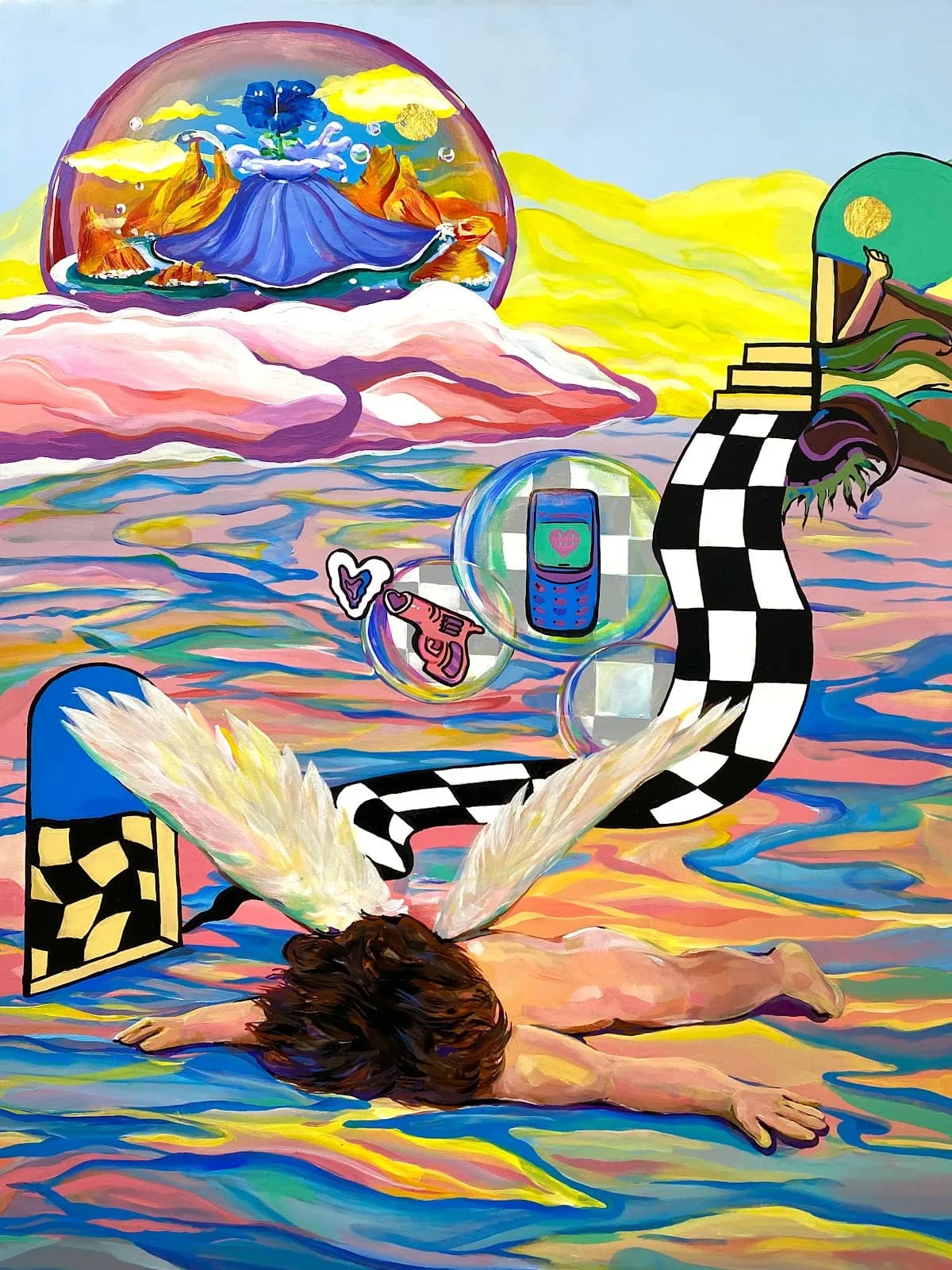
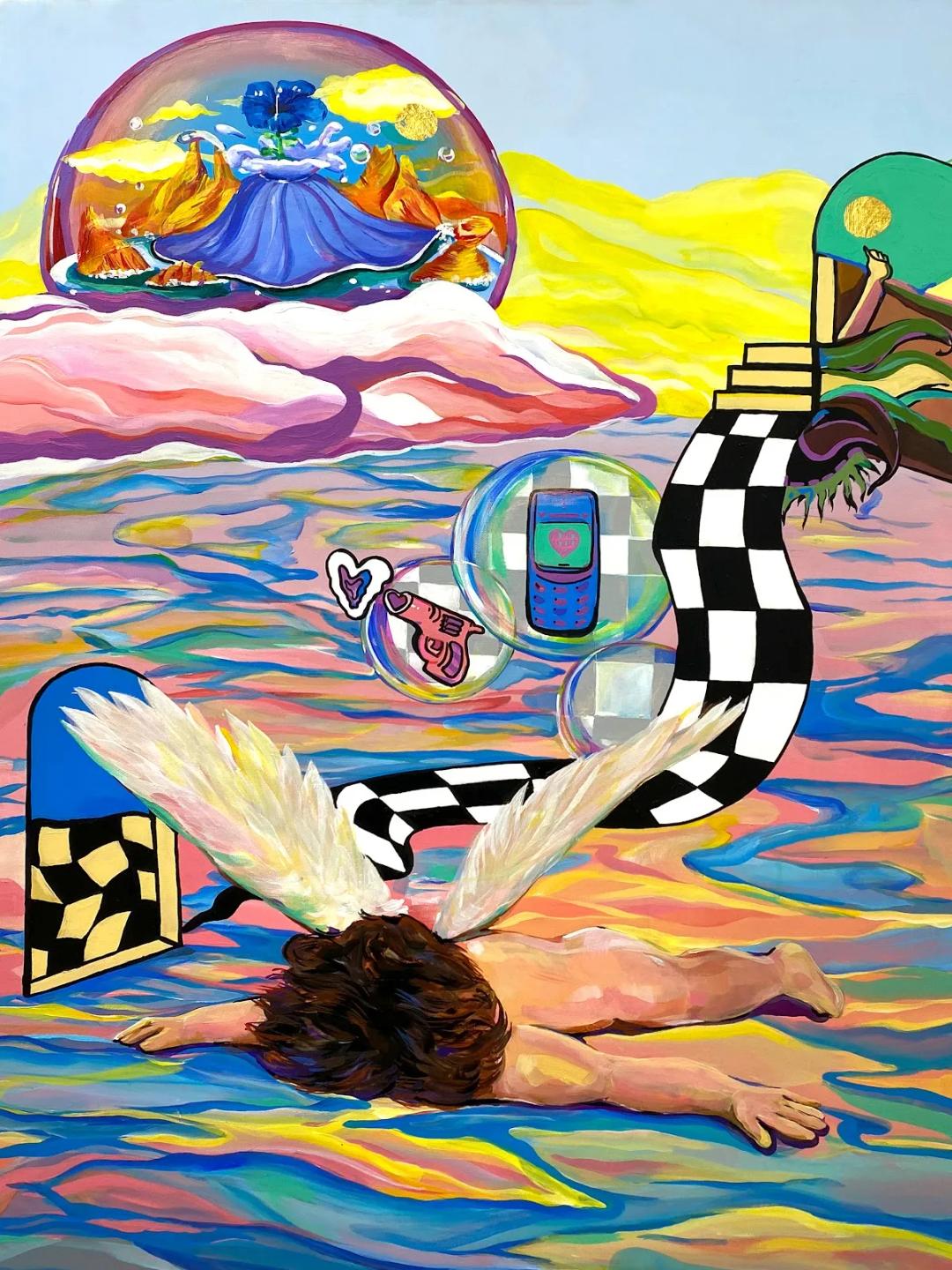
Han Mi-young, Lovers (mixed media with gold leaf, ₩800,000) A signature series by a mid-career artist. The unusual material combination of mixed media and gold leaf, plus the universal motif of "lovers," carries strong emotional value. Priced reasonably relative to the artist's other works — a piece that fits both possession and investment perspectives.
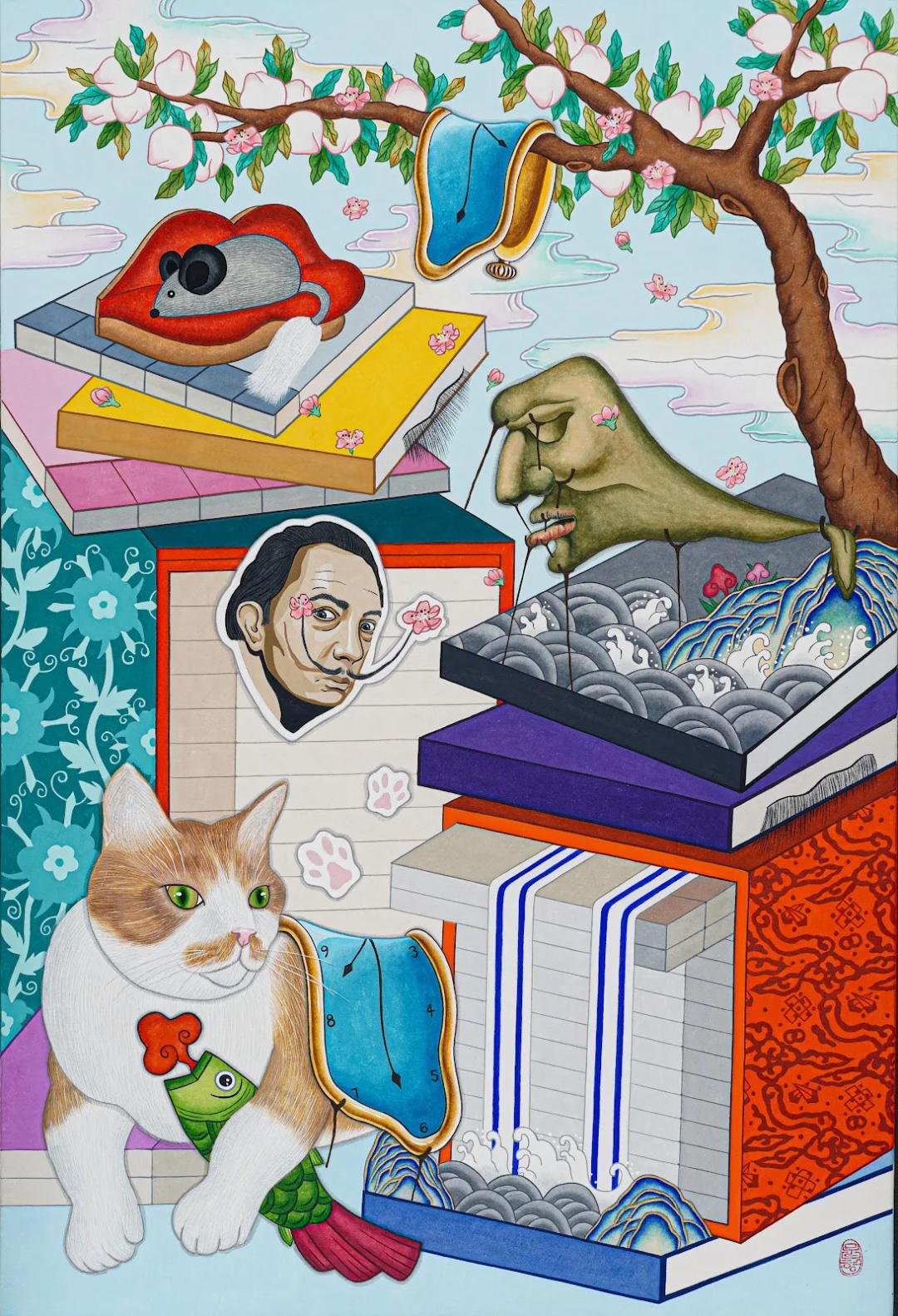
Lee Mun-hyung, Chaekgeori x Salvador Dalí (ink and color on hanji paper, ₩840,000) A series combining the traditional Korean chaekgeori (scholar's books) genre with Salvador Dalí's surrealist motifs. The clear concept — synthesis of tradition and contemporaneity — gives the artist's practice momentum that value can follow over time. An emerging-to-mid-career example.
C. Asset stability + emotional value — Korean landscape and documentary
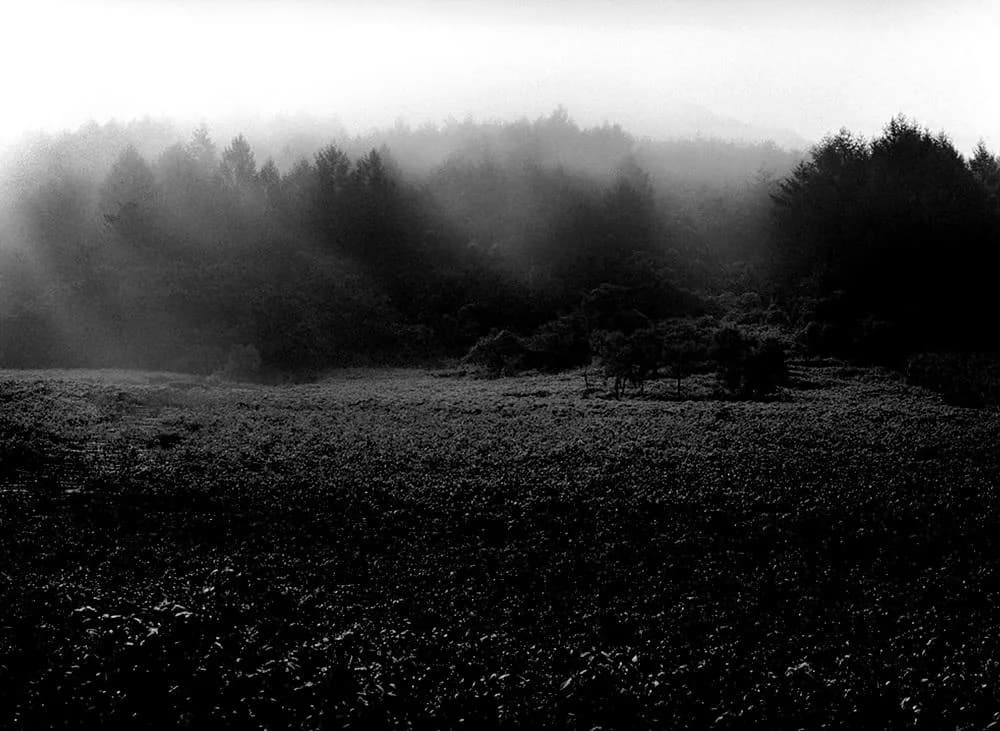
Cho Mun-ho, 2003 Yangsan Yeongchuksan (pigment ink print, ₩1,000,000) Cho Mun-ho is a mid-career artist in the lineage of Korean documentary photography. Records of Korean mountains, nature, and ordinary people are a category in which historical and emotional value accumulate over time. The stability of the photographic medium combined with the universality of Korean landscape.

Frequently asked questions
Q. What ratio of investment to possession should a first collection have? A. For a first 5-piece collection: 1–2 estate-print or validated-artist works (asset stability) + 3–4 emerging-to-mid-career emotional pieces (possession) is the most balanced ratio. With a small budget, starting at 100% possession is fine — expand to master works after five years.
Q. Should I bid at auctions directly? A. Not recommended at the first-collection stage. Auctions add a buyer's premium (16.5–19.8% of hammer), taxes, and the psychological pressure of bidding. First collections are safer at gallery or curated-platform list prices. Auctions are worth trying once a collection has accumulated (typically 10+ pieces).
Q. Is buying art meaningful from a tax or asset perspective in Korea? A. Individual collectors: artworks transferred for less than ₩60 million are tax-free at sale; from ₩60 million up, partial other-income tax (not capital gains tax) applies. Corporations: works at ₩10 million or less can be expensed; above that, entered as assets — artworks are not depreciable, so the cost stays on the books until sale. Both offer some long-term tax efficiency, but always confirm with your accountant or tax advisor first.
Q. What if an emerging artist I bought stops their practice? A. Market value can drop, but the emotional value of the piece you already own remains. Practice cessation doesn't void the work's value. There are also cases of posthumous re-evaluation (several in Korean art history) — so absolute value loss isn't a foregone conclusion.
Q. Should I insure the collection? A. If the total collection value exceeds ₩30 million, art insurance is worth considering. Annual premium runs roughly 0.3–0.5% of collection value. Korean providers include Hanwha General Insurance, DB Insurance, and Samsung Fire — all offer art-specific products.
Q. What's a healthy pace for adding to a collection? A. One to two pieces per year is the most natural pace for first-time collectors. Living with one piece for a while before adding the next preserves both the consistency of the collection and the depth of emotional connection. Buying 5–10 at once risks diluting emotional connection in a short time.
Q. Where can I see other artists' works? A. Browse the full SAF artworks by price, medium, or artist, or read other guides in the magazine — price-tier and space-specific curations help in shaping your collection's direction.
Investment and possession aren't different paths — they're two sides of the same path. Good works see asset value follow over time. But invert the order — buy for asset value alone, without emotional connection — and you lose on both counts. The safest and most enjoyable path is starting from a piece you can love, and letting asset value follow naturally as your eye accumulates.
Related reading
If this piece helped, you may also enjoy these related articles:
Start your collection at SAF →
Related Guides

Explore Further
Seed Art Festival
·