Healing by day,
recording the land by night
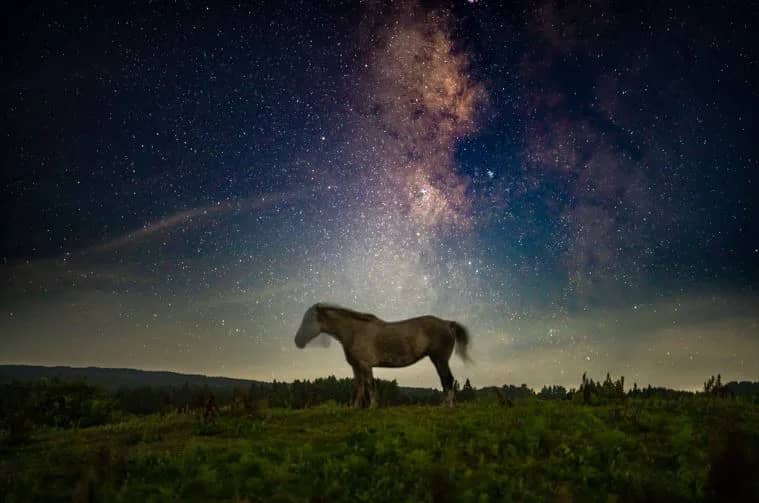
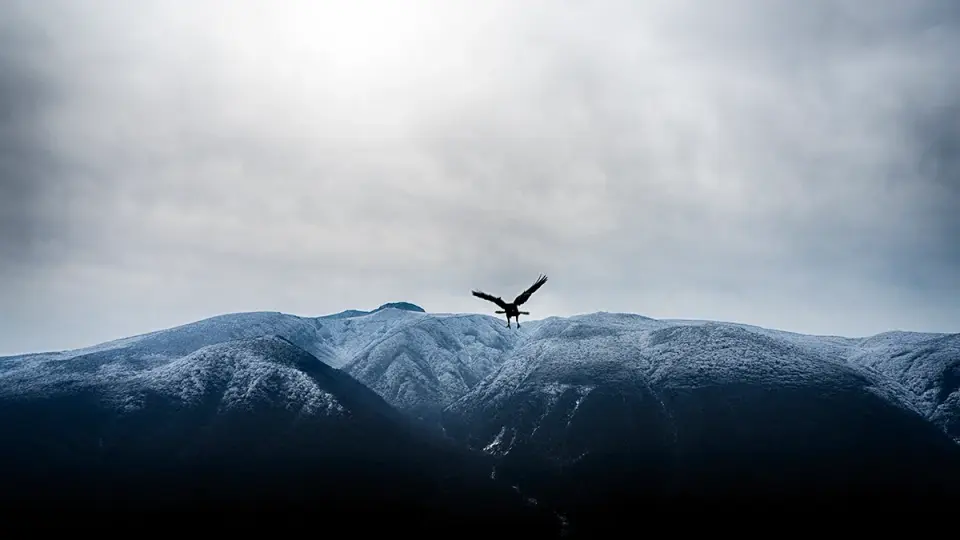
The darkness and stillness of Jeju's mid-mountain oreum.A primal landscape recorded before it vanishes.
The land of the gods —
recorded before it vanishes
Kim Suoh was born and raised on the volcanic island of Jeju. As a child he played in the Tapdong sea below Sarabong — turning over stones at low tide to find crabs and sea snails, cracking open sea urchins on the spot. That sea is remembered with his whole body. It is not nostalgia alone: after spending his youth on the mainland and returning home around the age of forty, the sea he met again was no longer that sea.
Watching life disappear from a sea worn down by development and pollution, he says: “The sea is dying.” Within those words is sorrow, and an urgency — that the old things must be remembered.
In 1984 he left home for the Department of Electronic Engineering, working at a research institute for some six years before entering a college of Korean medicine. He became an Oriental-medicine doctor and returned to Jeju, where he now treats patients at his clinic. The return to the island was, for him, the recovery of a place to stand.
What first led him to take up the camera in earnest was Gangjeong village. During the years when Gureombi rock was blasted and construction of the naval base was pushed through, he would finish seeing patients and drive across Hallasan to Gangjeong — giving acupuncture to injured residents in the sit-in tents, then crossing back to Jeju City near midnight, season after season. One such night, parked on a mid-mountain plain, the silhouette of the oreum and the distant lights of fishing boats on the night sea were almost unreal in their beauty. Having watched Tapdong reclaimed and Gureombi disappear, he thought: those landscapes too could one day vanish; before they are lost, I must hold them in photographs.
That was the beginning. Almost every day since, once his clinic hours end, he sets out for the mid-mountain plains and oreum — from evening into deep night, sometimes met by the dawn dew, photographing the landscapes of the volcanic island. He works mostly among the oreum of eastern Jeju's mid-mountains; to the west, resorts and golf courses inevitably enter the frame. In the darkness and stillness of the island at dusk, where the trails of people have thinned, he walks the hills and fields alone deep into the night, trying to hold the beauty that is slipping away.
Major themes
- 1
The oreum at night
The darkness and stillness of the mid-mountain oreum at dusk — a primal volcanic-island landscape held in deep, contemplative tones.
- 2
Before it vanishes
Having watched Tapdong reclaimed and Gureombi disappear, he records the landscapes that could one day be lost — an urgency to remember.
- 3
Life and its cycle
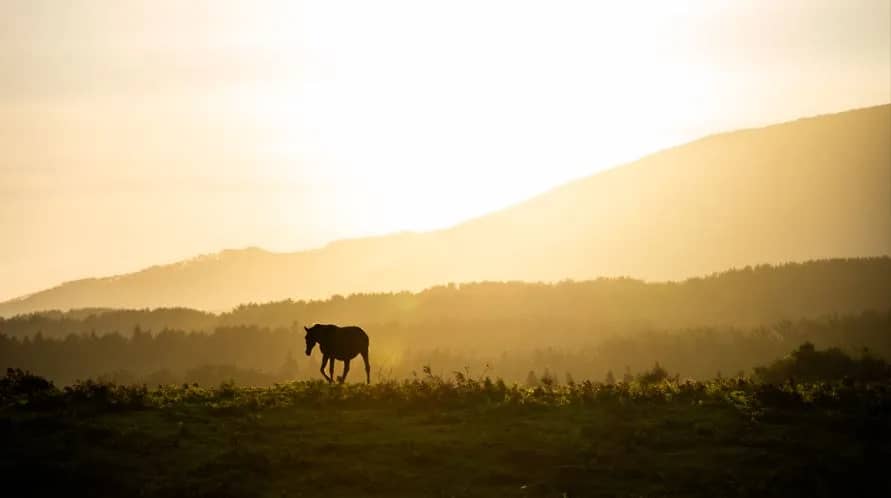
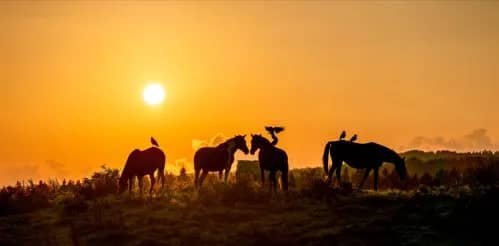
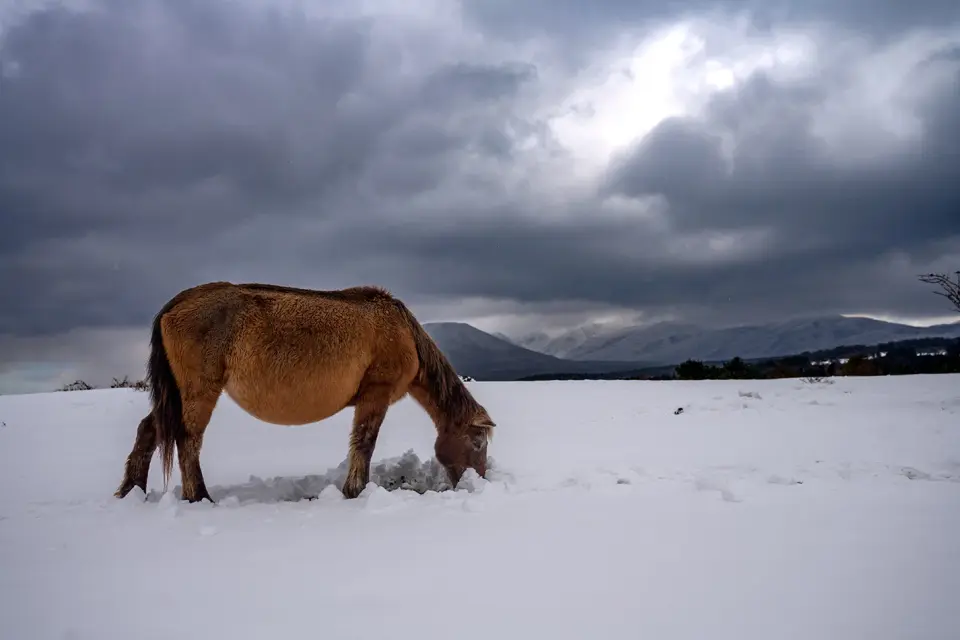
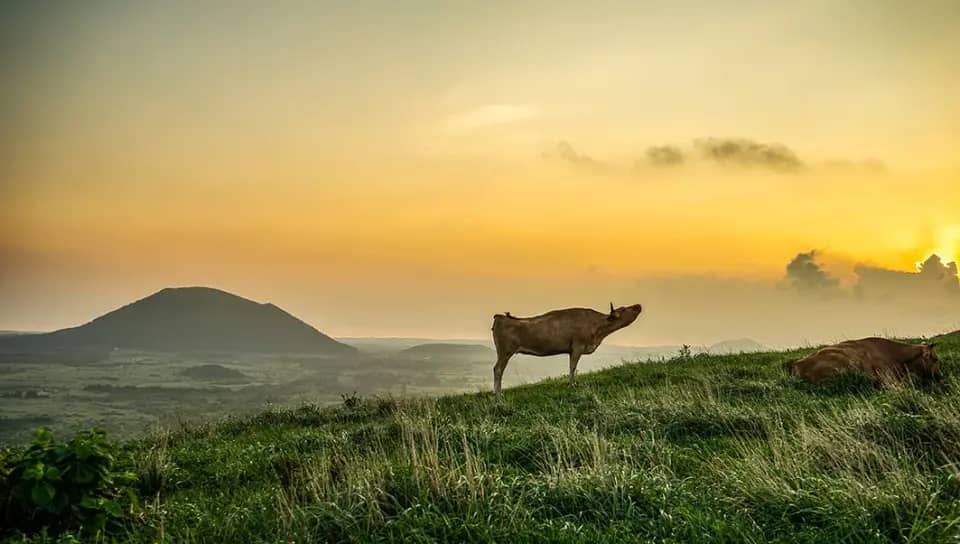
From the oreum to the lives upon it — the four seasons and life cycle of the Jeju horse trace the circulation of life and the order of nature.
The artist's timeline
- 1984Leaves Jeju for the Department of Electronic Engineering at Seoul National University.
- —Works at a research institute for some six years, then enters a college of Korean medicine.
- —Ph.D. in Korean Medicine, Kyung Hee University; returns to Jeju as an Oriental-medicine doctor.
- —Begins photographing the mid-mountain oreum of Jeju after the years at Gangjeong.
- 2022First solo exhibition 〈Land of the Gods〉, Gallery Keunbadayeong, Jeju — his first public statement on the oreum.
- 2024Second solo exhibition 〈Reaching, Touching〉, Gallery Nuvo, Jeju — the four seasons and life cycle of the Jeju horse.
Education & exhibitions
- B.S., Dept. of Electronic Engineering, Seoul National University; Ph.D. in Korean Medicine, Kyung Hee University
- Solo exhibition 〈Land of the Gods〉, Gallery Keunbadayeong, Jeju (2022)
- Solo exhibition 〈Reaching, Touching〉, Gallery Nuvo, Jeju (2024)
- Group exhibitions: many shows for the nature and peace of Jeju
Three essays —
on the island, the night, and the work
1Two vocations, one gaze — the doctor who photographs
Kim Suoh did not arrive at photography through art school. He studied electronic engineering, worked at a research institute, then turned to Korean medicine and came home to Jeju to practice. By day he reads the body and tends to illness; by night he reads the land. The two disciplines are not as far apart as they look. Both are acts of attention — of looking closely at what is ailing, and at what is quietly enduring.
His photographs are born where those two grains of his life meet. The same patience that sits with a patient sits with an oreum until the light is right; the same care that treats an injury attends to a landscape that is slipping away. This is why his images move beyond beautiful scenery toward a contemplation of life and the order of nature.
2From Gangjeong to the camera — how the work began
The camera entered his life through Gangjeong village. In the years when Gureombi rock was blasted and the naval base went up, he would finish his clinic hours and drive across Hallasan to give acupuncture to injured residents in the sit-in tents, returning to Jeju City near midnight. These are stated here as a matter of record — the personal occasion that first put a camera in his hands — not as an argument for or against any cause.
On one of those midnight drives, parked on a mid-mountain plain, the silhouette of an oreum and the far lights of fishing boats struck him as almost unreal in their beauty. Having already watched Tapdong reclaimed and Gureombi disappear, he understood that such landscapes are not permanent. The decision followed: to hold them in photographs before they too were gone. The impulse was preservation, not protest — a wish to remember.
3From 〈Land of the Gods〉 to 〈Reaching, Touching〉
In 2022, after years of work, he opened his first solo exhibition, Land of the Gods, at Gallery Keunbadayeong in Jeju — his first public statement on the oreum. He works mostly among the oreum of eastern Jeju's mid-mountains; to the west, resorts and golf courses inevitably crowd into the frame. In the hush of dusk, where the trails of people have thinned, he walks the hills alone into deep night, holding the beauty that is slipping away.
His second solo exhibition, Reaching, Touching (Gallery Nuvo, Jeju, 2024), follows the four seasons and the life cycle of the Jeju horse to unfold the circulation of life and the order of nature. The gaze that began on the oreum has deepened — toward the lives lived upon it, and toward the time in which those lives continue and disappear.
Healing people by day and recording the land by night, Kim Suoh photographs a volcanic island before it vanishes — a deep, affectionate gaze at things that are beautiful and disappearing, and at lives that endure without a word. He joins this campaign not as a subject of its cause but as a fellow artist in solidarity, offering his work so that those who come after might keep their footing.
Selected Works
6 works are featured here.
Kim Suoh joined this campaign in solidarity with fellow artists. Every work sold flows directly into the artists' mutual-aid loan fund— a purchase becomes the next month's lifeline for an artist navigating financial exclusion today.