Five real Korean artworks between ₩150,000 and ₩400,000. Why a real piece beats a poster, five criteria for choosing your first work, and a curated entry per medium.
Starting Your First Art Collection Under ₩400,000 — One Piece Is the Beginning

The word art collection sounds distant. Auctions, art fairs, blue-chip galleries — they all feel like someone else's world. But collecting begins with a single piece. And that piece is much closer than it seems.
This guide is for anyone starting a collection with a first work between ₩150,000 and ₩400,000. What's actually possible at each price tier, why a real artwork beats a poster of the same price, five criteria for choosing a first piece, and five SAF-curated picks to start with.
Is "art under ₩400,000" really a thing?
It is. The Korean contemporary art market has real artworks available between ₩150,000 and ₩400,000 — but you need to know where to look.
| Price tier | Possible | Not possible |
|---|---|---|
| ₩150,000–250,000 | Small photographs by emerging artists (around A4), digital prints, small paper works | Major artists, large oils above 50F |
| ₩250,000–350,000 | Digital paintings and digital art, small paper paintings | Large canvas oils |
| ₩350,000–500,000 | Estate prints by major artists (open editions), small paintings or prints by mid-career artists | Original works by major artists |
The key: even at the same price point, posters and reproductions are interior decoration — a different category from works with an attributed artist and edition number. For the same money, one real piece beats six posters as the start of a collection.
Five reasons to buy a real artwork instead of a poster
Reason 1. There's an artist
Posters typically credit only the image source, not the artist. A work with an attributed artist is the accumulated time, thought, and skill of one person. Knowing whose hand made the piece on your wall — that's the starting point of collecting.
Reason 2. The edition is limited
Even open-edition prints are usually limited to dozens or hundreds of copies. Digital prints are color-supervised, limited outputs by the artist. Posters reproduce infinitely; an artwork exists in N copies in the world. Owning one of those N matters in a different way.
Reason 3. The color doesn't fade
Artists use paper, ink, and pigment built for long-term preservation. Posters begin to fade in 5–10 years. A work, properly stored, is a visual asset that lasts 30, 50 years.
Reason 4. The artist and the market grow together
A digital piece you bought from an emerging artist for ₩300,000 might look different five years from now when that artist appears at a major fair. Buying an emerging artist's first piece is a small investment in their future.
Reason 5. You become part of a living ecosystem
Buy a poster and the money goes to distributors and printing companies. Buy a work and a substantial portion goes directly to the artist. The most direct way to support an emerging artist's next work is to buy their current one.
Five criteria for choosing your first piece
Criterion 1. Can you say yes to "Will I still love this in ten years?"
Pieces bought on momentary trends or Instagram aesthetics fade within a year or two. Ask first: Is this a piece I want in my line of sight ten years from now?
Criterion 2. Can it hang where you'll see it daily
A first work accumulates meaning by being seen often. Bedroom headboard, beside the living room sofa, across from the dining table — decide the daily-visible spot first, then choose a piece that fits.
Criterion 3. Do you also like the artist's other works
Look at the artist's page and ask whether you respond to their other pieces too. If only one piece appeals and the rest leave you cold, that one piece is probably a coincidence. Real collecting starts when you connect with the artist's overall world.
Criterion 4. Can you talk about it
When a guest asks "Whose work is this?", can you say a sentence or two about the artist? Origin, period, working method, the context of this piece — even small information makes the work feel alive.
Criterion 5. Is framing and hanging in the budget
Looking only at the artwork price leads to surprise costs in framing, shipping, and hanging. Sum it up in advance: artwork + framing (₩50,000–150,000 for small works) + hanging (₩10,000–30,000 if needed).
Five SAF picks for first-time collectors
SAF (Seed Art Festival) is a campaign in which over 110 contemporary Korean artists have donated works to address financial discrimination against fellow artists. Sales become a mutual-aid loan fund offering low-interest loans to artists shut out of bank credit. Your first piece is itself support for the Korean art ecosystem.
The five works below are chosen one per medium — photography, painting, digital art, print, painting — between ₩150,000 and ₩400,000. Each suits the entrance to a first collection.
1. First photograph — Lee Yeol, Blue Baobab of Memory
- 21x29.7cm · Hahnemühle Baryta FB · pigment ink-jet print · ₩150,000
- An A4-sized photograph. Hahnemühle Baryta FB is one of the standard fine art print papers, defining both archival quality and color reproduction. The blue-toned baobab image suits narrow walls — bedrooms, studies, hallways. The most rational price point for starting a collection with photography.
2. First painting — Kim Lacy, Returning around 5
- 19x19cm · Oil on canvas · 2025 · ₩170,000
- A small 19cm square oil. A rare price point for a real canvas oil under ₩200,000. Fits anywhere — atop a desk, between bookshelves, on a small wall. The most accessible entrance into an emerging artist's world.
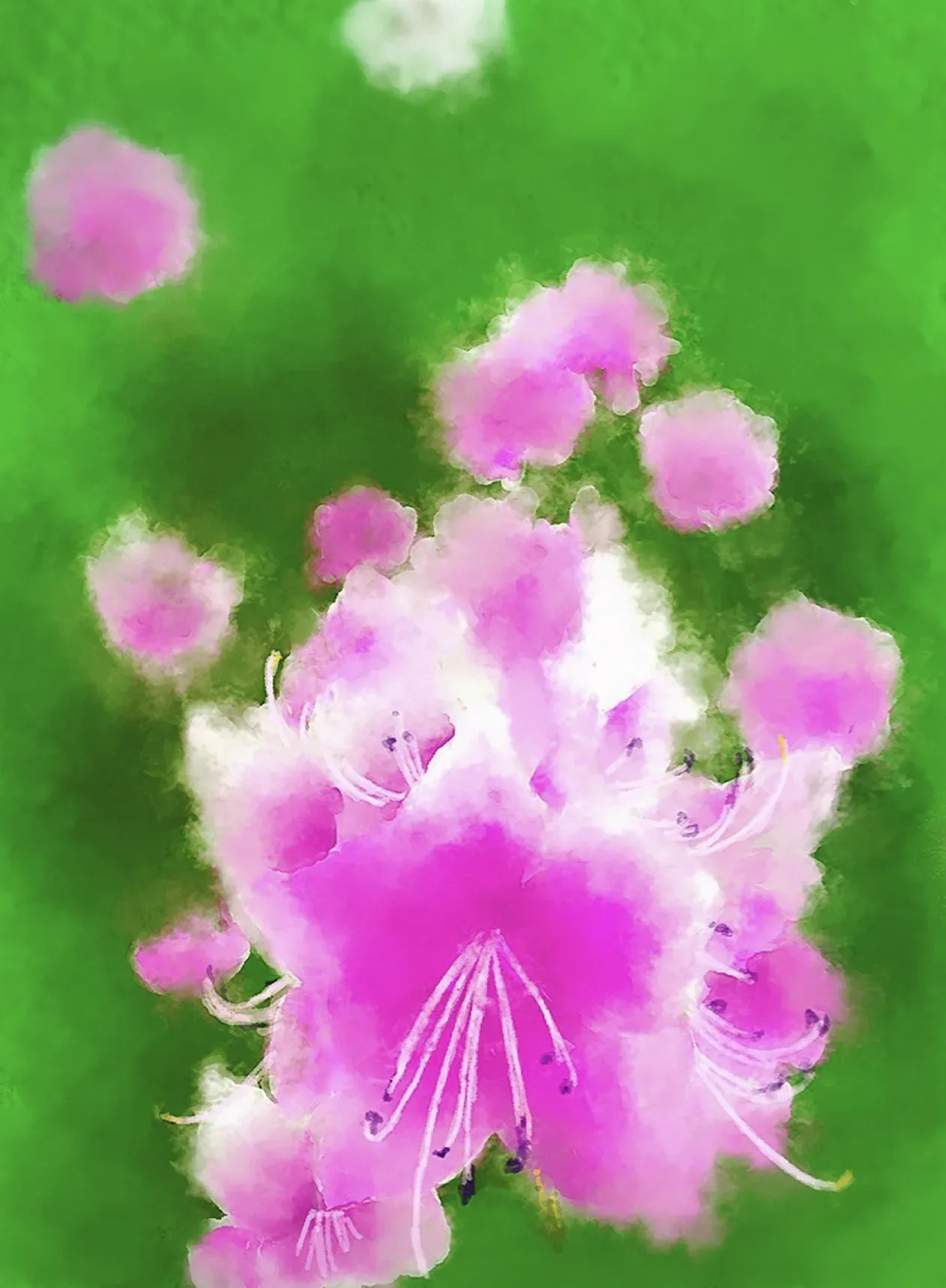
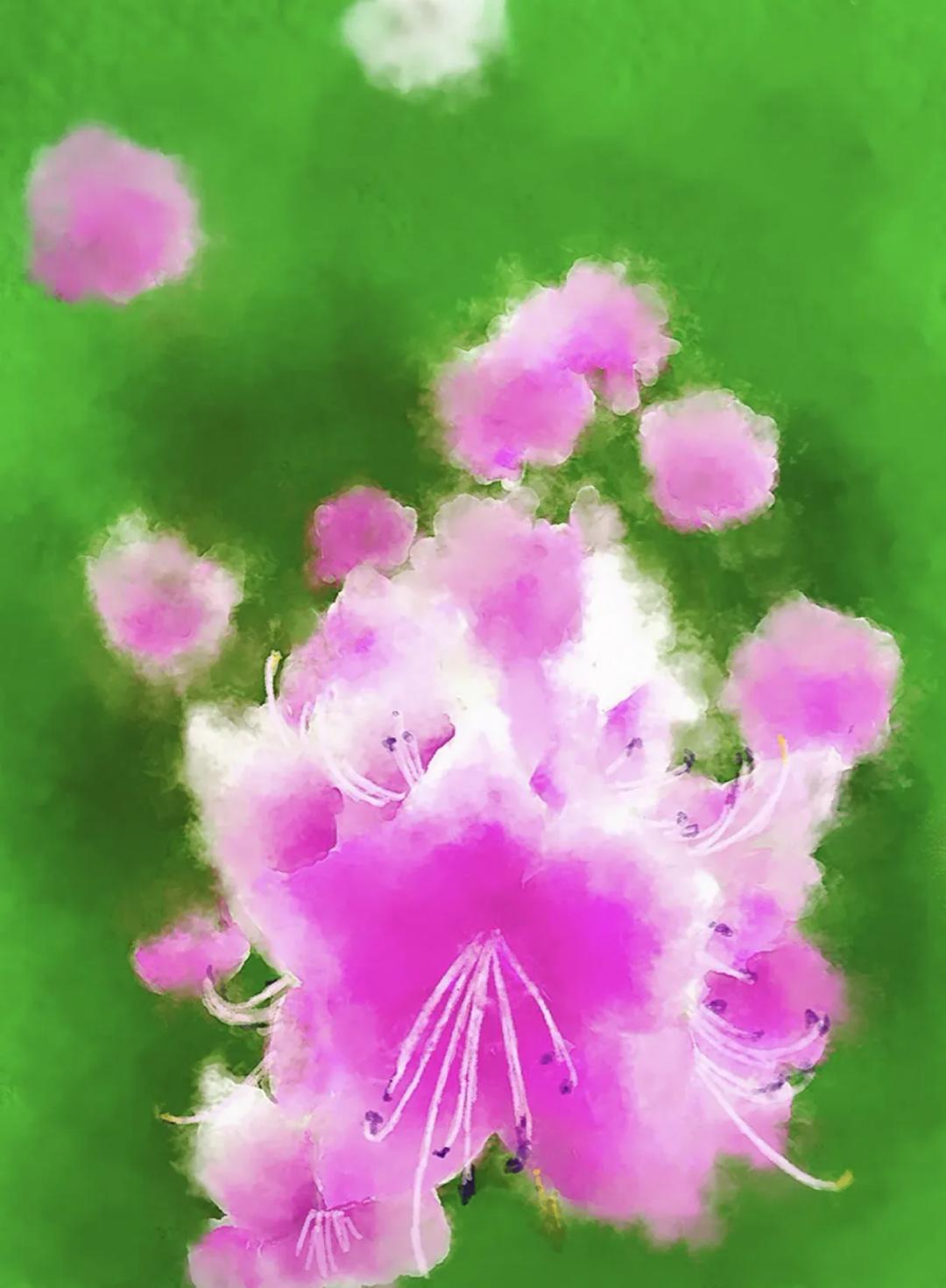
3. First digital art — Lim Ji-eon, Azalea, Azalea
- 33.4x45.5cm · Digital painting print · 2018 · ₩300,000
- The azalea — Korea's most representative spring flower — rendered as a digital painting. Digital art is one of the most active fields in contemporary Korean art, and this piece treats a Korean motif through a digital medium with care. A good entry point at the ₩300,000 tier.
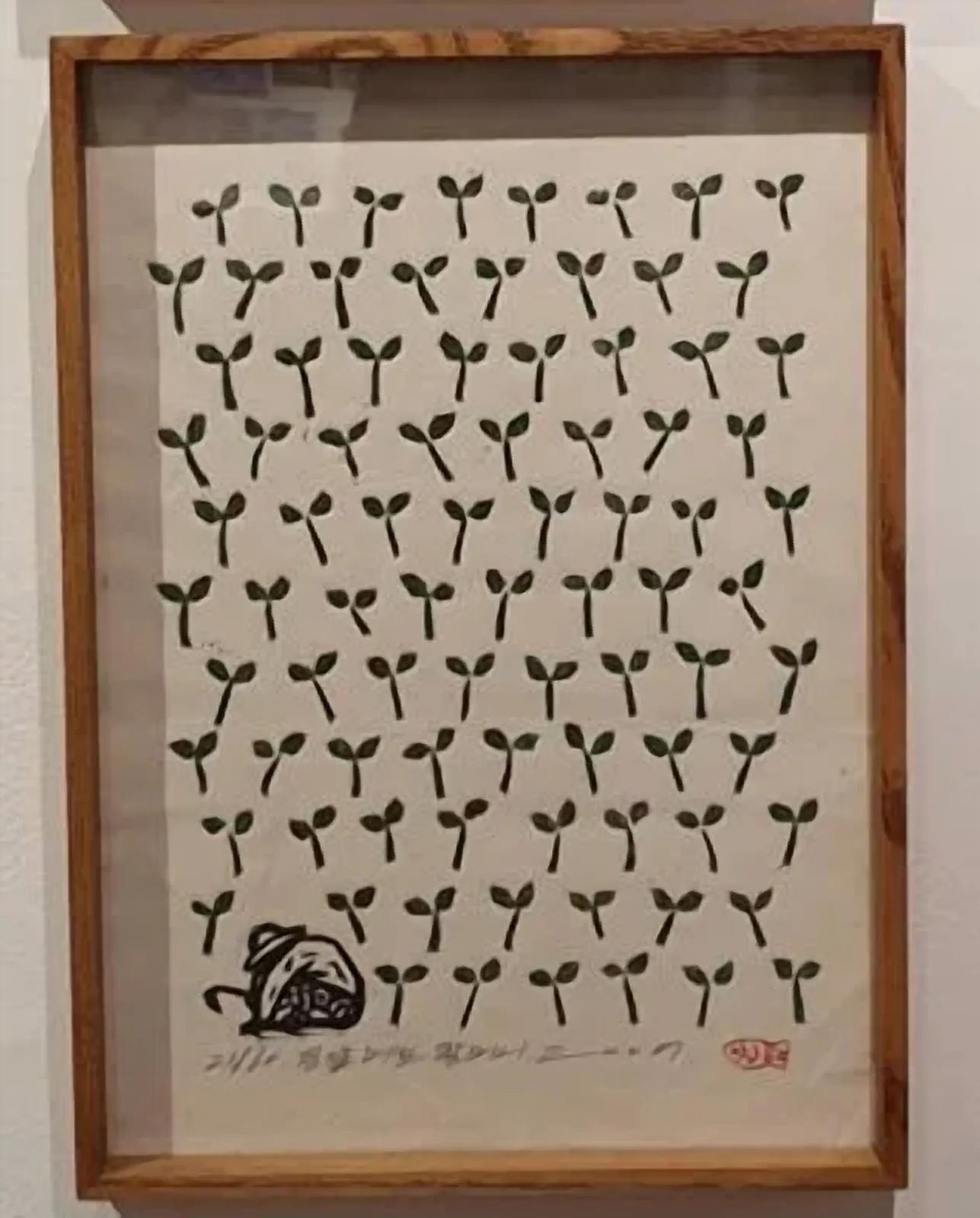
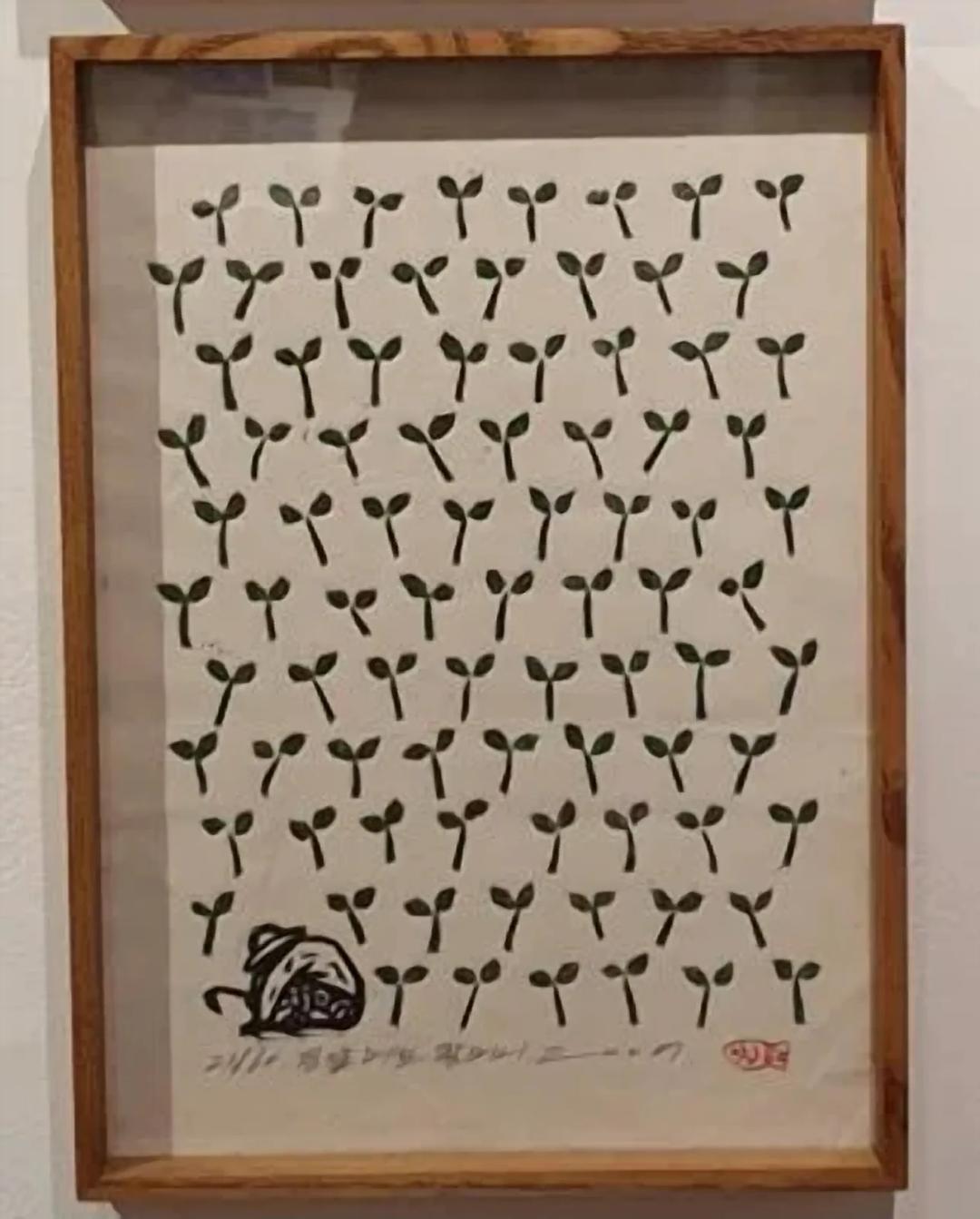
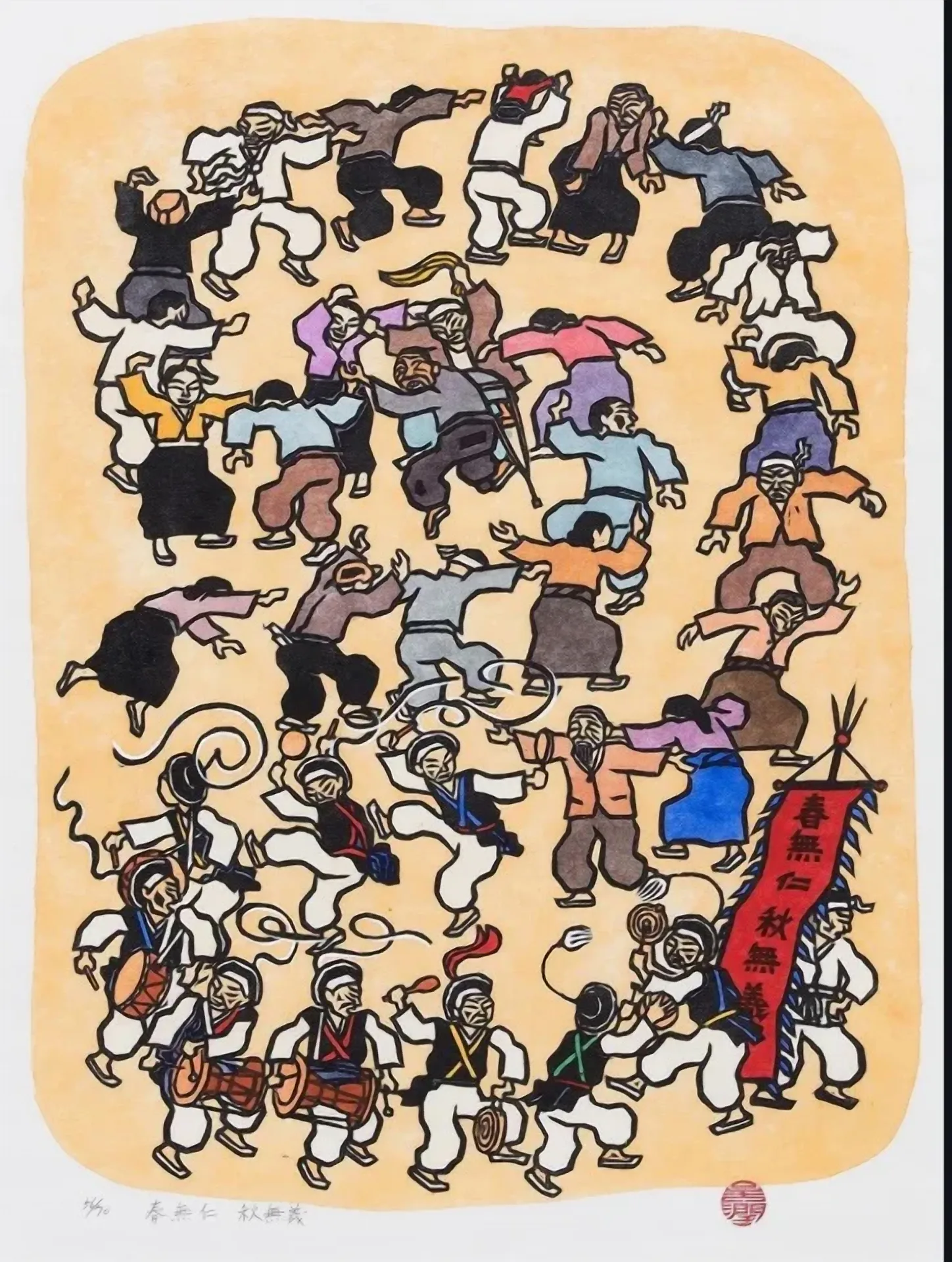
4. Master print — Lee Yun-yop, Grandmother Weeding the Bean Field 2
- 25x32.5cm · Multi-color woodblock (edition of 60) · 2009 · ₩400,000
- A multi-color woodblock from a limited edition. Woodblock printing is one of the most labor-intensive media — the artist carves and prints each color by hand. A 60-copy edition disappears from the market over time. Bringing a piece of the Korean minjung (people's art) lineage into your home for ₩400,000 carries both price and historical weight.
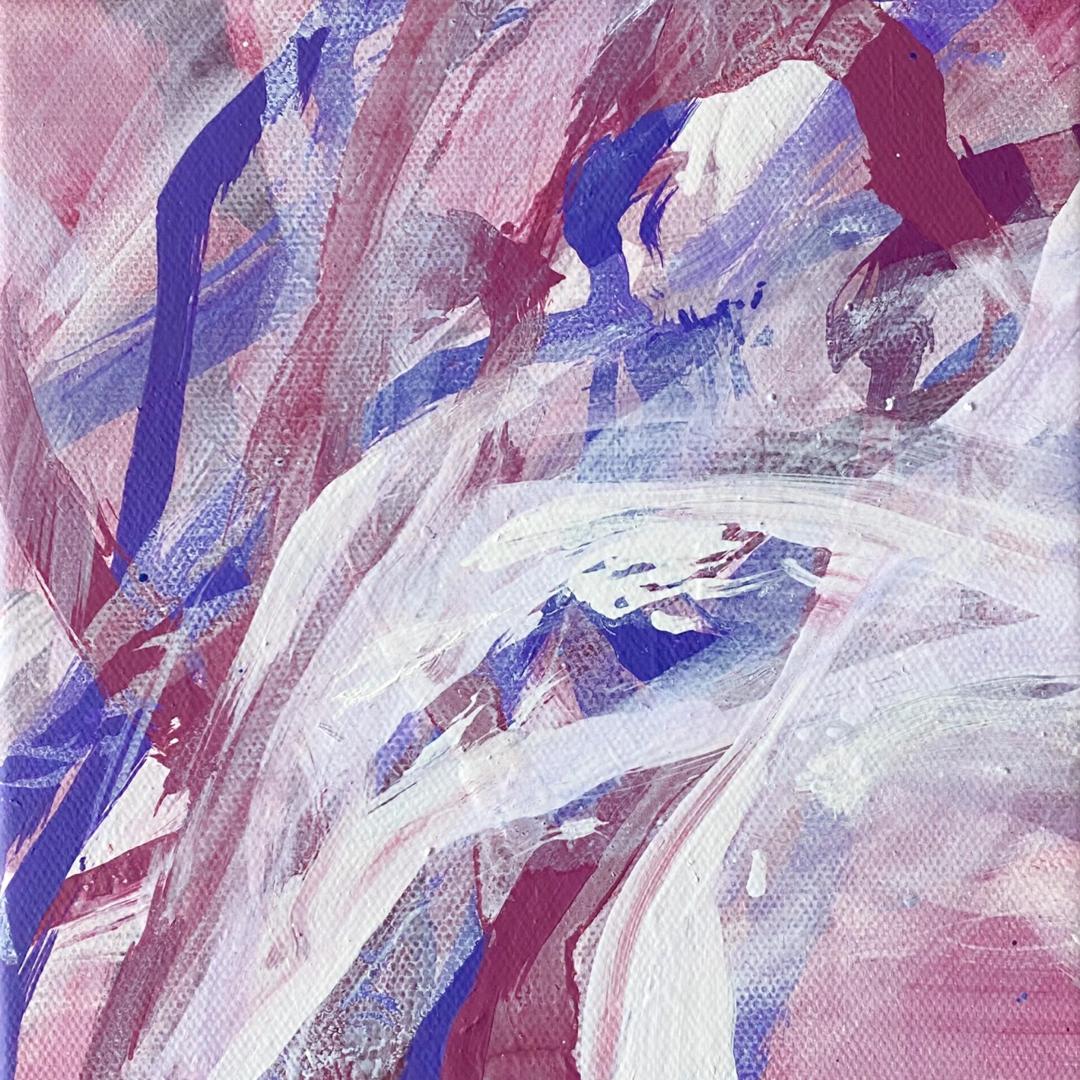
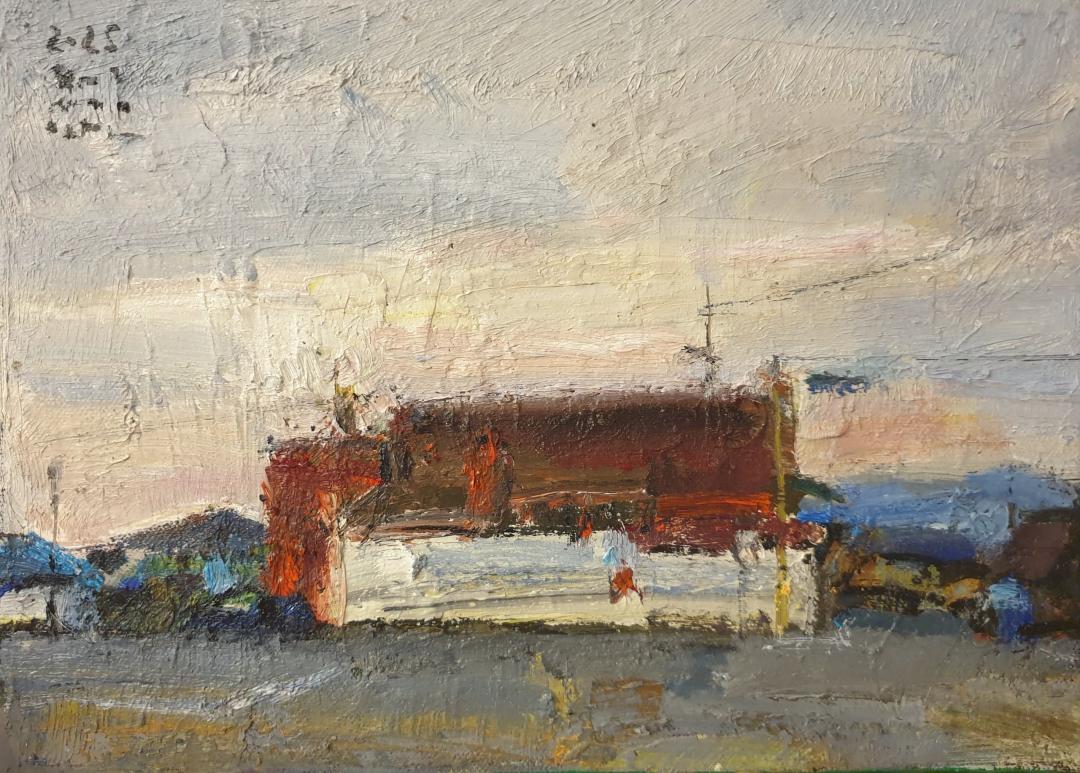
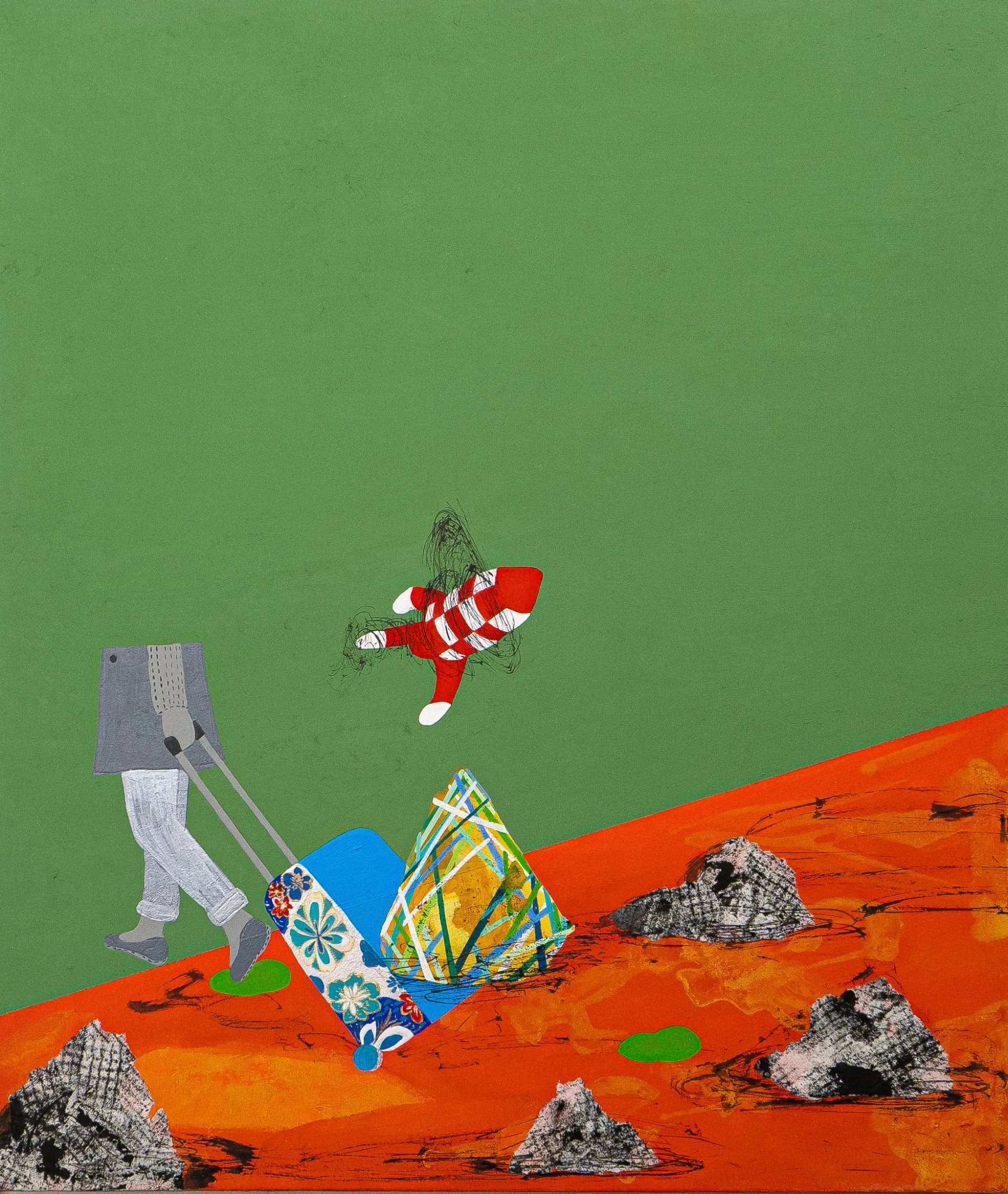
5. Emerging painting — Park Sung-wan, A Smile of Unwavering Spirit
- 24.2x33.4cm · Oil on canvas · 2025 · ₩400,000
- A small canvas oil by emerging artist Park Sung-wan. A condensed expression of the artist's practice of painting Korean regional landscapes. The roughly 30x30cm size fits anywhere — living room secondary walls, dining areas, studies. A good entry point if you want to extend your collection with the same artist's other works later.
Frequently asked questions
Q. Are works under ₩400,000 really art? How do they differ from posters? A. They are real artworks. The differences: (1) the artist is named, (2) the edition is limited, (3) archival materials are used, (4) the artist supervises directly. Posters meet none of these. Same price, different category.
Q. Should I start with photography, prints, or paintings? A. There's no universal answer, but photography and prints have the lowest entry barriers. Photography prints scale reasonably; prints carry meaning in their hand-pulled limited editions. Paintings are unique works, so the same artist's price tier sits higher — but the attachment to a first painting is unmatched.
Q. Will the price of an emerging artist's work go up? A. Don't buy with that hope as the primary motivation. Artists whose prices rise have done so through years of critical, exhibition, and market evaluation — not because someone predicted it. That said, buying an artist's work itself supports their next project, and watching that artist grow over time is one of the great pleasures of collecting.
Q. What's an "estate print"? Is it really by the artist? A. An estate print is a limited edition produced posthumously by the artist's family or foundation, using the artist's original plates. Lower priced than a lifetime print pulled by the artist, but a formal work that preserves the original plate and the artist's visual language. Estate prints by Korean minjung masters like Oh Yoon and Lee Cheol-soo are major entry points in the first-collection market.
Q. Does a frame come with the artwork? A. It varies. SAF artwork pages indicate framing inclusion or exclusion near the bottom. If a frame isn't included, neighborhood frame shops or online custom framers in Korea charge ₩50,000–100,000 for small works. Photographs and prints typically need separate framing; paintings often hang directly from the canvas without a frame.
Q. Do I need to buy several pieces to count as a collection? A. No. The first piece is the start of the collection. If you love that piece, a second and third arrive naturally over time. Collections aren't planned into existence — they accumulate one piece at a time. Don't try to start with five.
Q. Where else can I see works under ₩400,000? A. Sort the full SAF artworks by price and works from ₩150,000 onward will surface in order. Filter by medium (Photography · Print · Painting · Digital Art) for more focused browsing.
Starting under ₩400,000 isn't a sign of being unable to afford more — it's the sign of a first piece. Collections begin not from price but from sincerity toward one work. Skipping a meal out once or twice a month adds one piece a year — that pace is the most natural rhythm for a first collector.
Related reading
If this piece helped, you may also enjoy these related articles:
Browse more entry-level works on SAF →
Related Guides
Explore Further
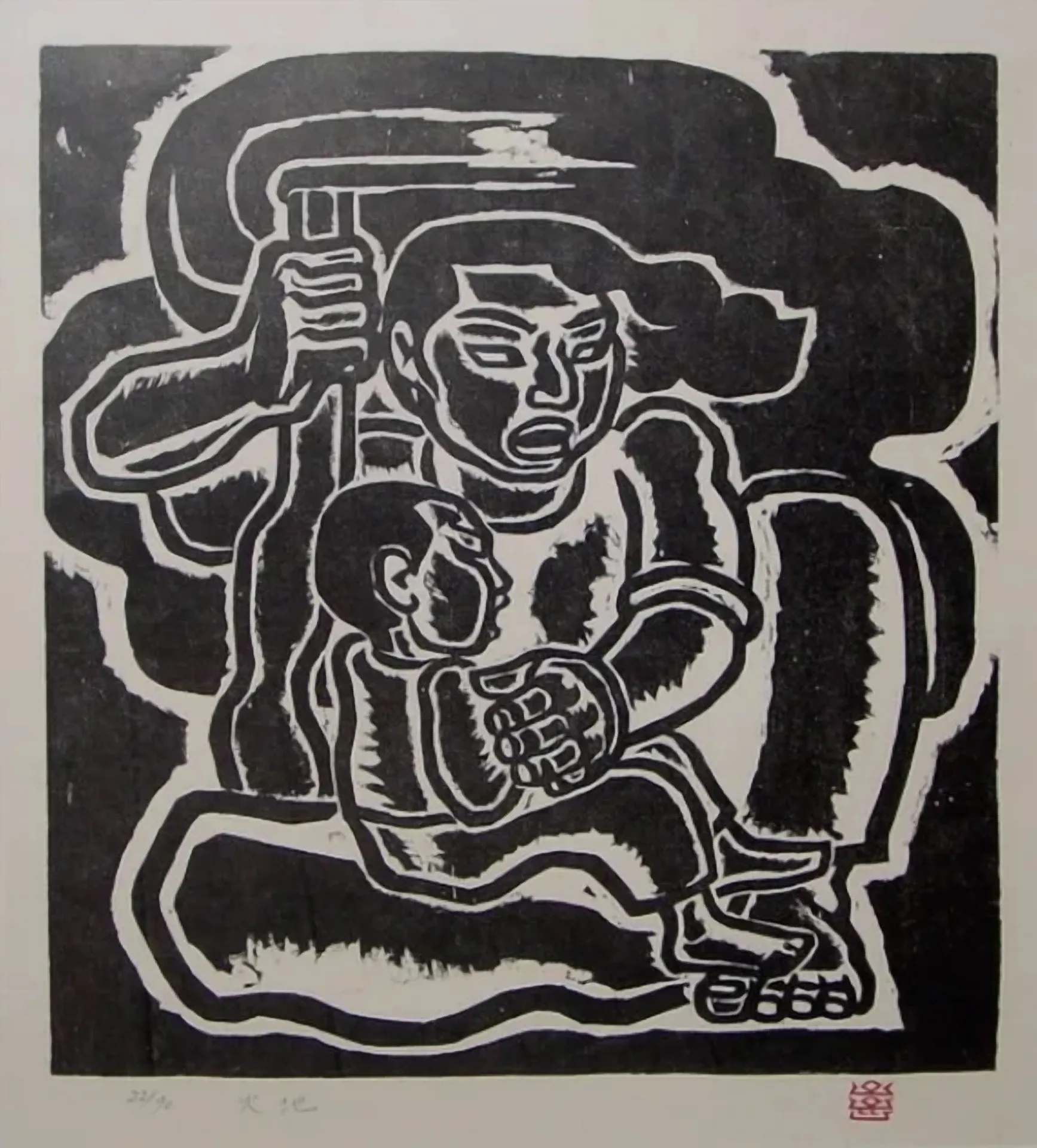
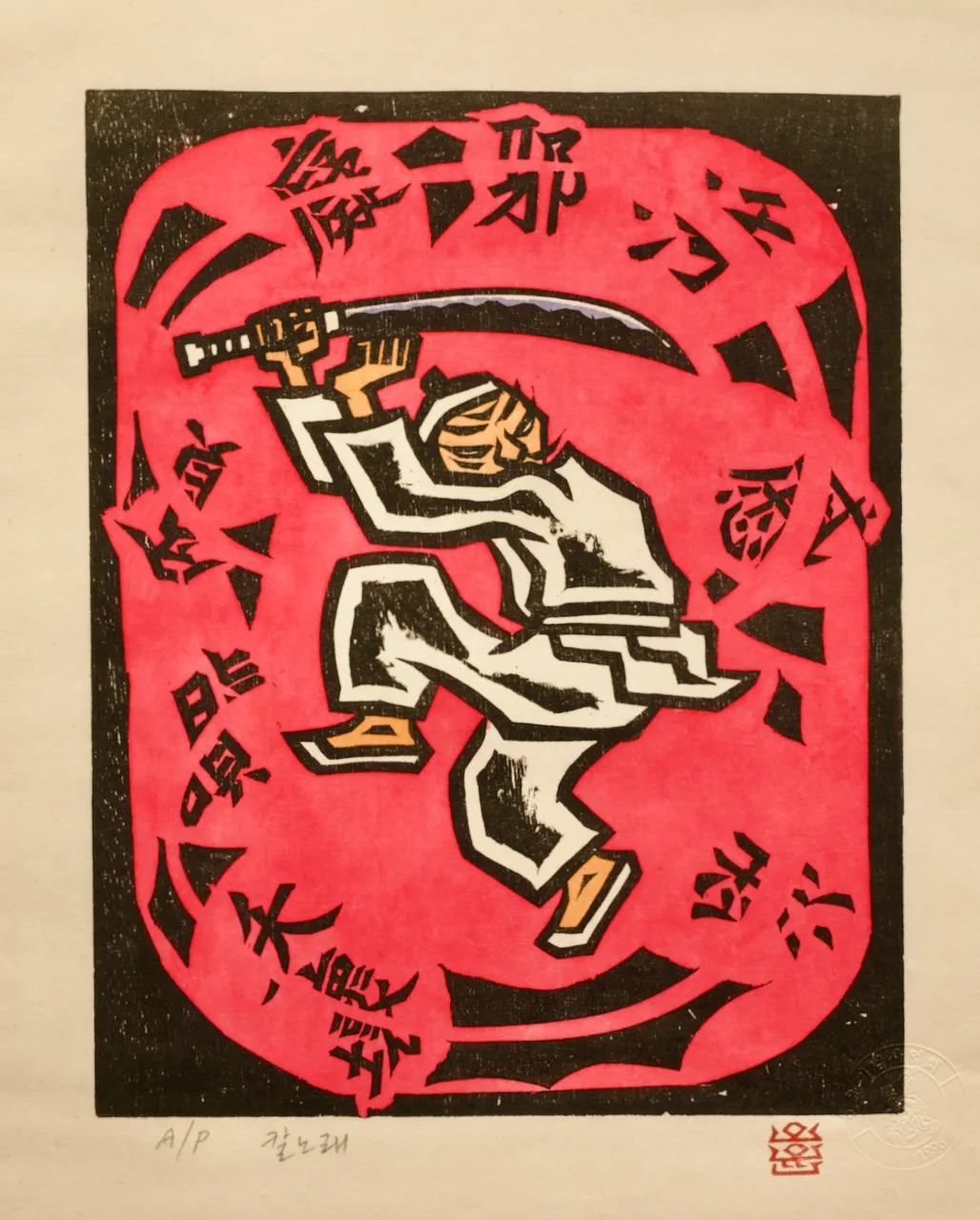
A Lower Threshold
If an original or a print is still out of reach, there are the Oh Yun art cards — sets that gather his print images onto cards, from a four-piece set at 15,000 won up to a 73-image complete collection, nine options in all. It is not the same as owning a work, but it is the lightest way to keep the images close.
Seed Art Festival
·