Korean artworks for offices, cafés, and meeting rooms. Selection principles by space, five practical tips for B2B collectors, media and tax guidance, and 5 SAF picks.
Korean Artworks for Offices and Cafés — A B2B Collector's Curation Guide
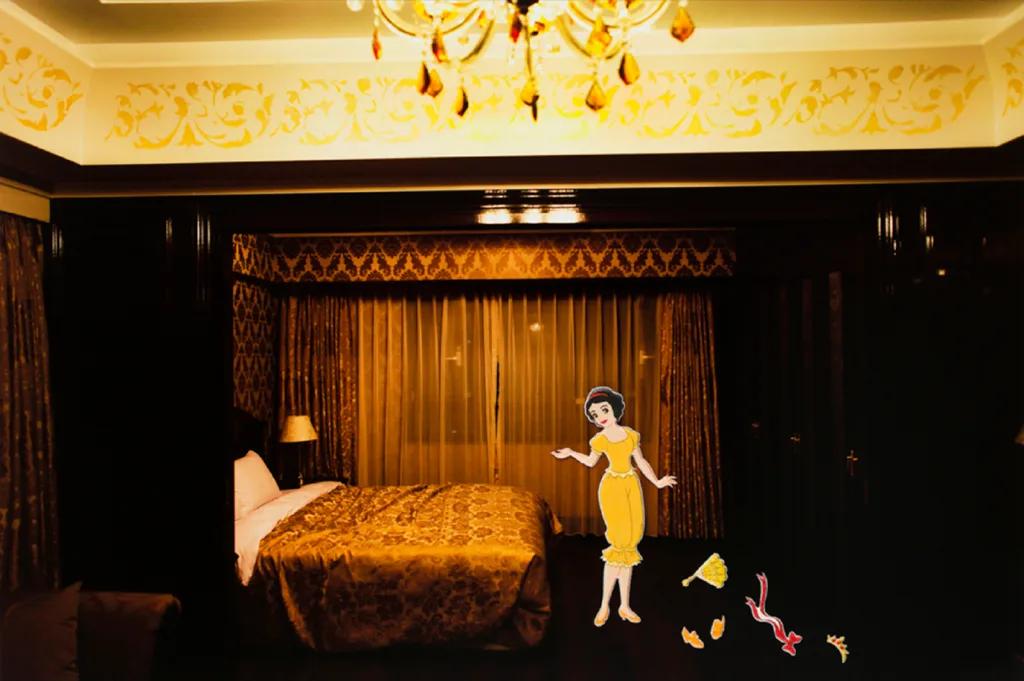
The walls of an office or café are the first place a client or guest forms an impression of the space. What hangs there speaks silently about the company's tone, taste, and trustworthiness. At the same time, art purchases for business use carry meaningful tax and asset implications.
This guide covers Korean artworks suited to offices, cafés, meeting rooms, and lobbies — selection principles by space, five practical tips for B2B collectors, and five SAF-curated picks.
Why office and café art differs from residential art
Residential pieces reflect personal taste; office and café pieces are visual assets for everyone using the space. This single difference reshapes every selection criterion.
| Aspect | Residential | Office / Café |
|---|---|---|
| Tone | Personal taste | Universal appeal, professionalism |
| Color | Warm, cozy | Calm, refined, focused |
| Motif | Family, nature, abstraction | Landscape, abstraction, urban, tools, still life |
| Politics | Free | Neutral (brand-independent) |
| Size | Smaller-to-medium for the space | Larger relative to space (uses ceiling height) |
| Price | Personal budget | Business asset / tax-deductible |
Selection principles by space
1. Office lobby and entrance
The first place a client sees. The company's first impression is set here, so a piece with a clear motif and visual impact works best. Landscapes, urban scenes, and figurative works tend to read better than pure abstraction. Go larger — if the ceiling reaches 2.7m or more, pieces over 100cm don't feel oversized.
2. Meeting rooms
Pieces that sit in peripheral vision during meetings. Strong colors or busy compositions can disrupt focus, so calm landscapes, abstraction, and monochrome work well. Meeting rooms are surprisingly affected by the artwork on their walls — clean media like diasec-mounted photographs or restrained prints suit best.
3. Executive offices
Personal yet visible from outside — an inherent duality. The piece should reflect the executive's taste while remaining not too private or provocative. Korean ink painting, contemporary painting, and sculpture — media with weight — are common choices.
4. Cafés and F&B venues
Artworks that get photographed alongside customers' Instagram posts. The piece itself becomes part of the café's visual identity. Two common approaches: hang a series of works by one artist on a single wall, or define the café mood with one large main piece.
5. Staff lounges and corridors
Pieces that are walked past rather than studied. This calls for lighter tones or multiple small works connected as a series. The artwork contributes to the emotional rest of the staff.
Five practical tips for B2B collectors in Korea
Tip 1. Korean tax law allows artwork purchases as deductible expenses
Under Korean Corporate Tax Law enforcement decree, artworks priced at ₩10 million or less per piece can be expensed immediately. Pieces above ₩10 million are entered as assets — and because artworks are not depreciable assets, they cannot be written off year by year; they stay on the books until sold. Reallocating part of an interior budget to art is rational on the tax, finance, and visual-asset dimensions all at once. (Confirm exact treatment with your accountant or tax advisor.)
Tip 2. Choose the artwork before finalizing the space tone
A common sequence: finish the interior, then add art at the end. A better sequence: choose the main artwork first, then set the wall color, lighting, and furniture around it. This produces a far more visually cohesive space.
Tip 3. Build coherence with a single artist's series
Three to five works by one artist on a single wall create a far stronger impression than scattered works by different artists. Especially effective in cafés, retail, and lobbies. Same-artist works naturally unify in tone, medium, and size.
Tip 4. Prefer diasec mounts and acrylic frames
Offices and cafés are environments with frequent cleaning, movement, and contact. For photographs and prints, diasec mounts or acrylic frames are safer, lighter, and visually cleaner than glass. Cafés especially benefit from matte non-reflective finishes to reduce glare.
Tip 5. Use direct artist purchase or curated platforms
For small offices or shops, online galleries and campaign platforms (like SAF) make the most rational direct-purchase route. For mid-to-large spaces, consult a gallery or curator for spatial advisory. Even with a curation fee, it's less costly than the risk of a poor selection.
Five SAF picks for B2B spaces
SAF (Seed Art Festival) is a campaign in which over 110 contemporary Korean artists have donated works to address financial discrimination against fellow artists. Sales become a mutual-aid loan fund supporting artists shut out of bank credit. A piece on your office or café wall becomes direct support for the Korean art ecosystem — fitting naturally into corporate ESG and social-value reporting.
The five works below are curated one per space — office entrance, meeting room, office main wall, executive desk, and café/lobby main.
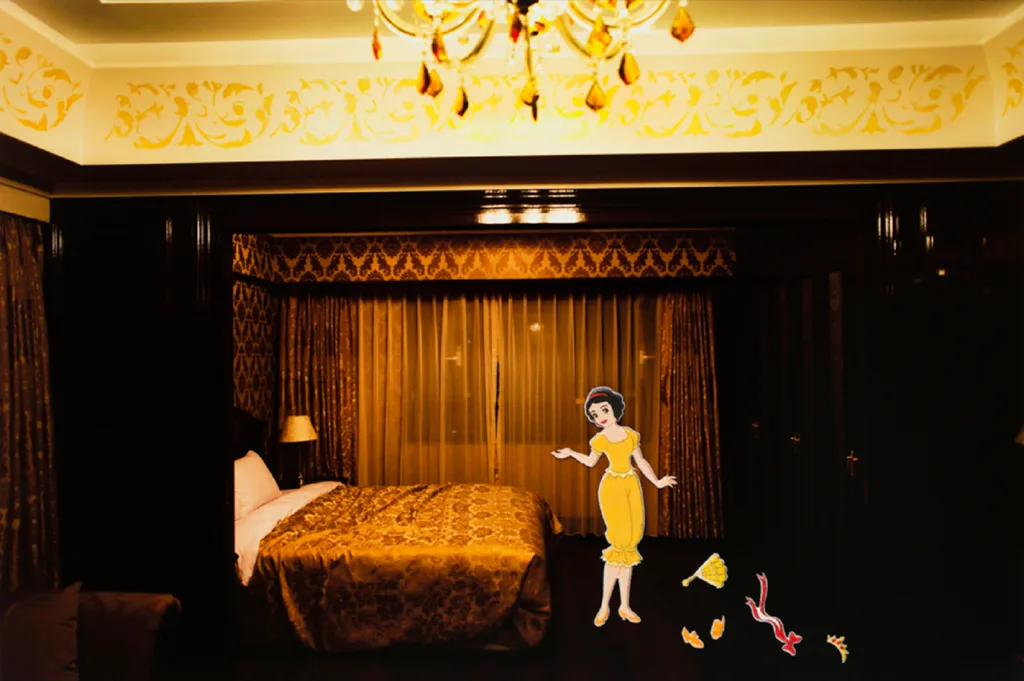
1. Office entrance — Kim Ho-sung, Inviting
- 30x45cm · Pigment print (diasec mount) · 2011 · ₩500,000
- A diasec-mounted photograph is one of the most stable media for office entrances and corridors. The mount is impact-resistant, holds light beautifully, and stays clean visually. The title "Inviting" matches its function — a welcoming first visual message for clients. Entry-tier pricing.
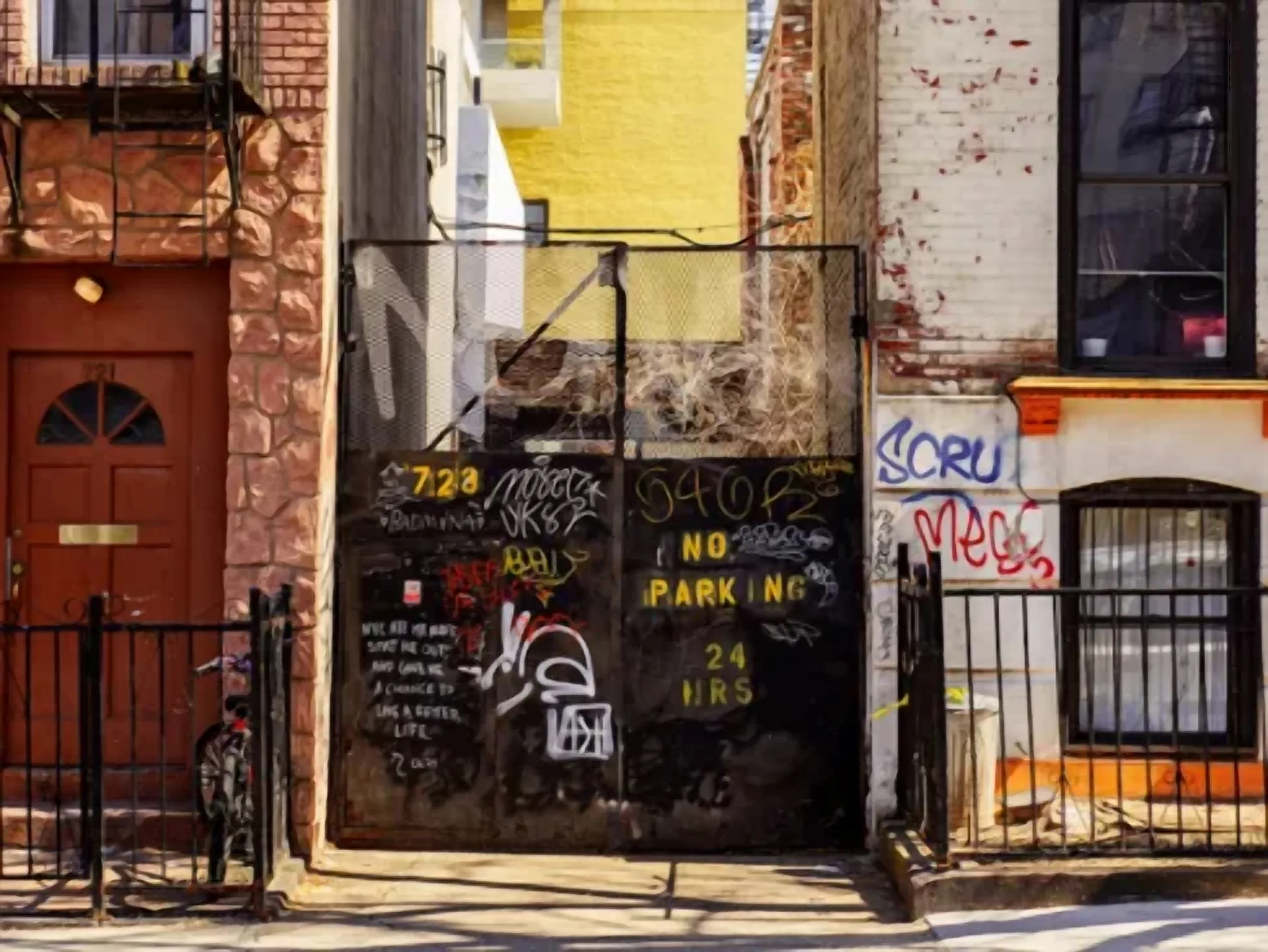
2. Meeting room — An So-hyeon, Authentic City
- 40x50cm · Pigment print · 2023 · ₩600,000
- An urban landscape photograph. The calm tone suits a meeting room wall without disrupting focus, while visually evoking the city, industry, and contemporaneity. Naturally aligned with the context of business meetings. The 40x50cm size fits 4–6-person meeting rooms.
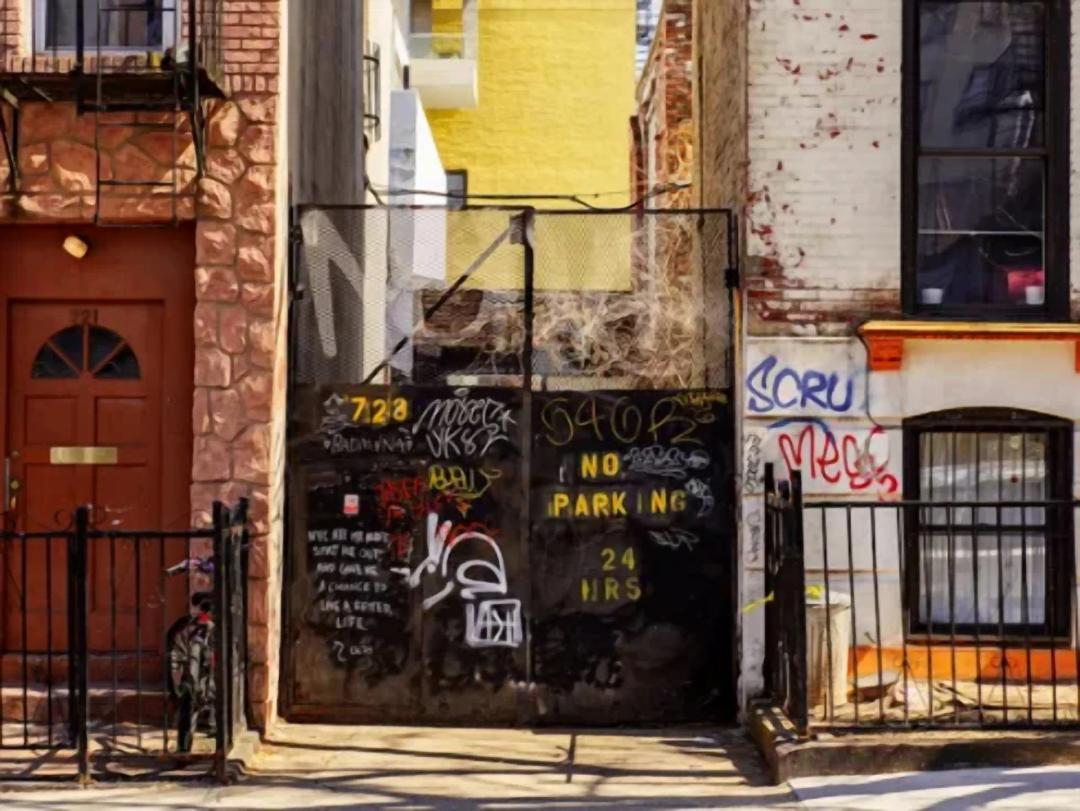
3. Office main wall — Park Ji-hye, y&b drawing
- 40x60cm · Digital print · 2025 · ₩800,000
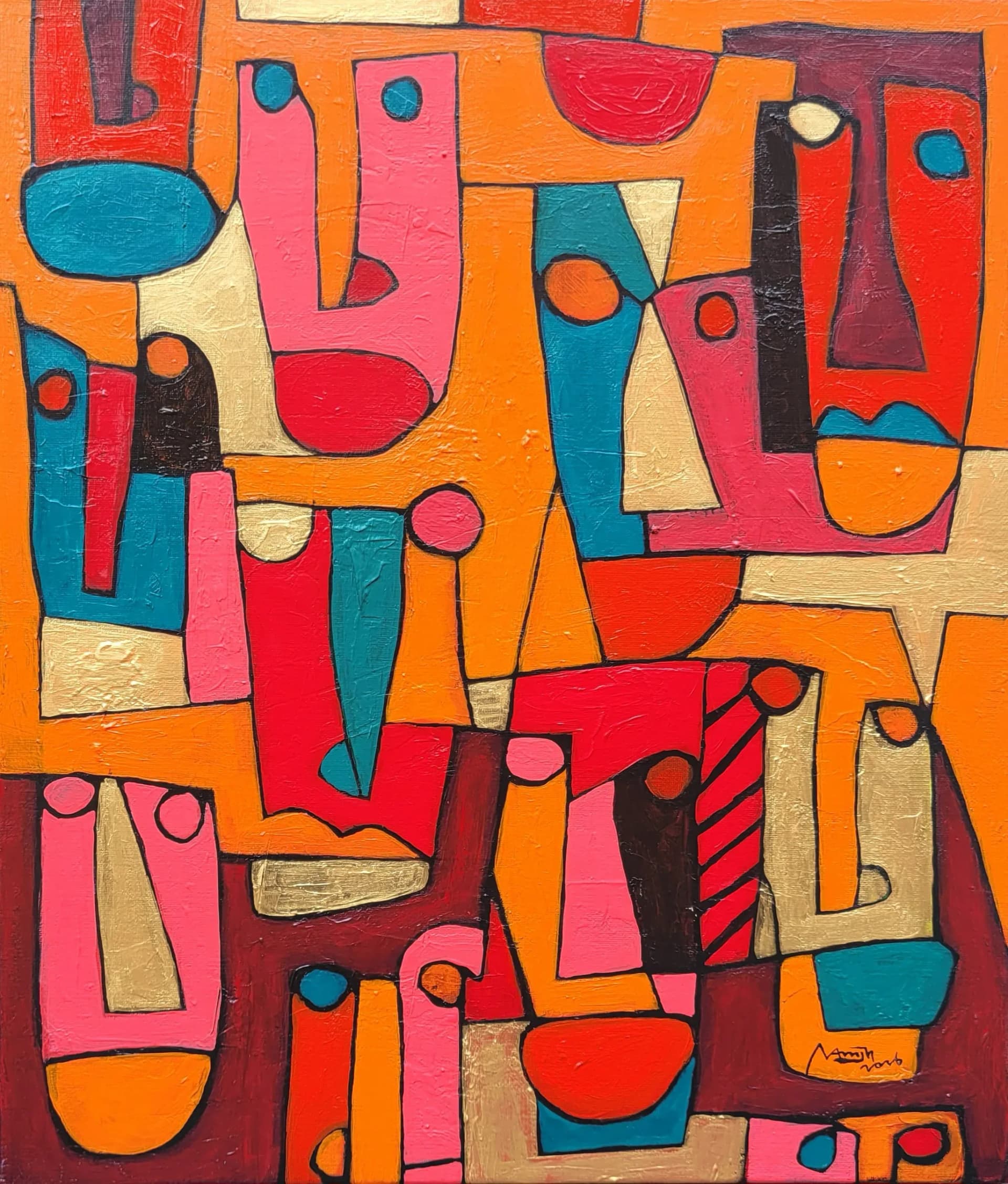
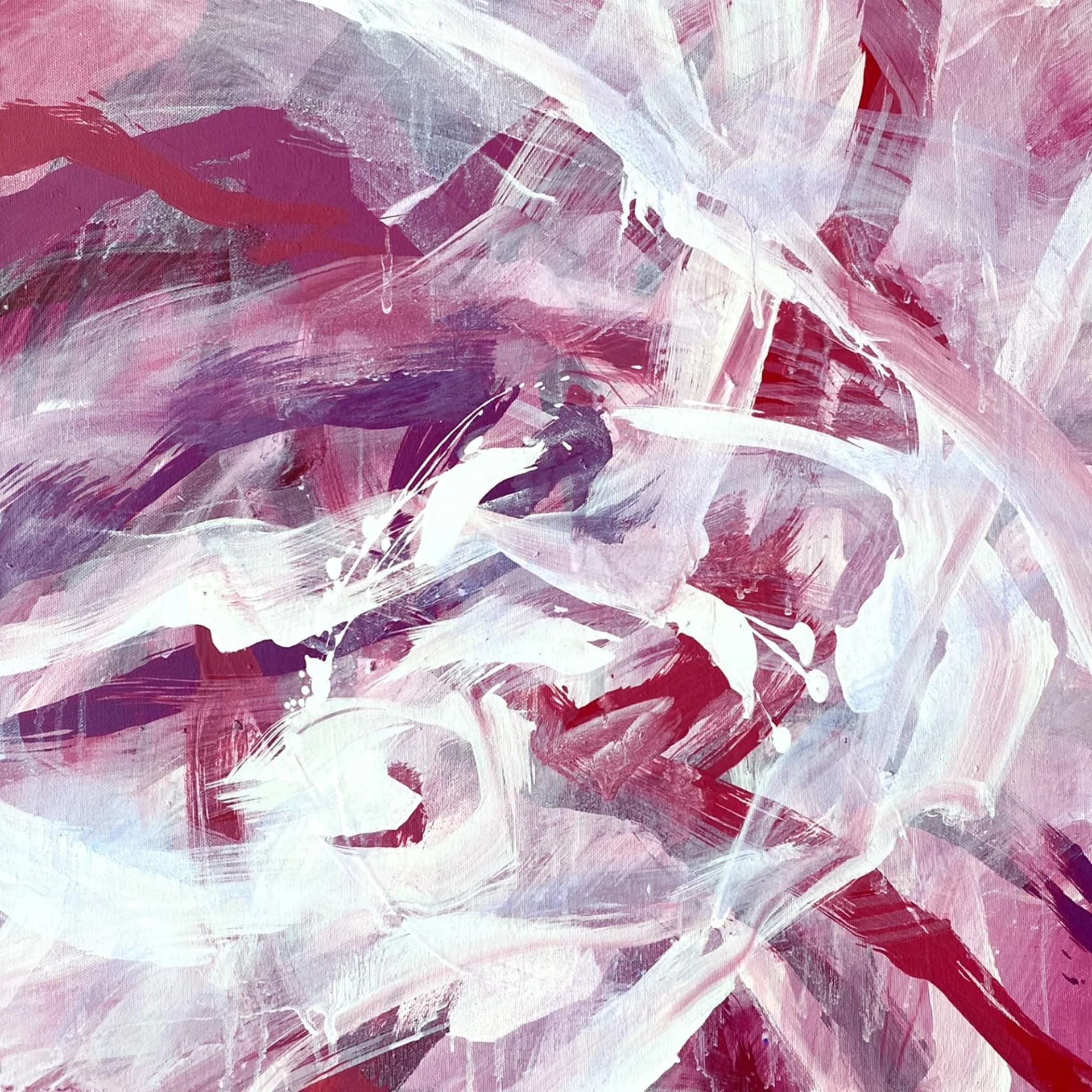
- A calm abstract digital print is the safest choice for an office main wall. The muted palette doesn't clash with any flooring, furniture, or wall color, while delivering a contemporary, design-forward impression. Particularly suited to IT, design, and consulting firms.
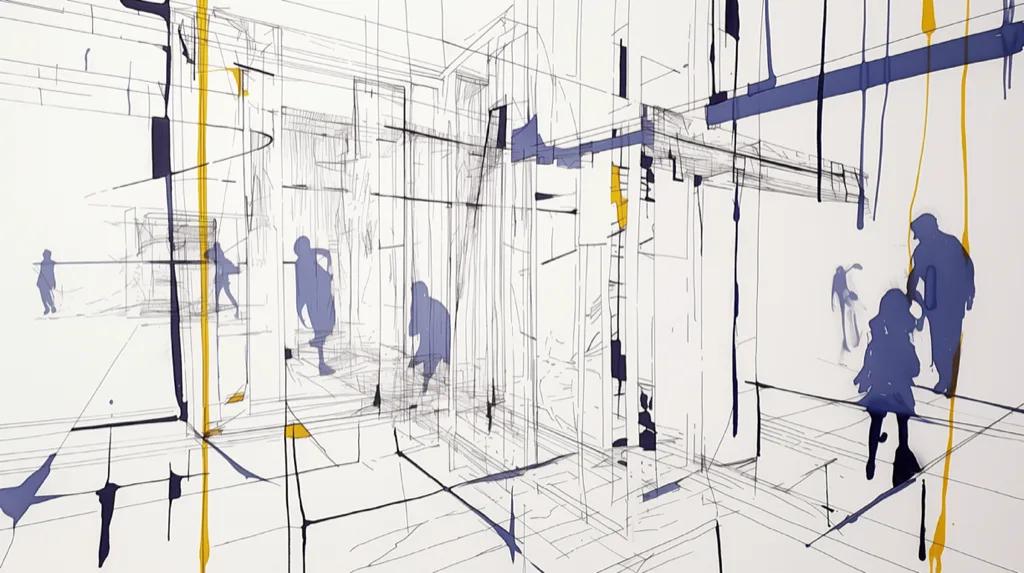
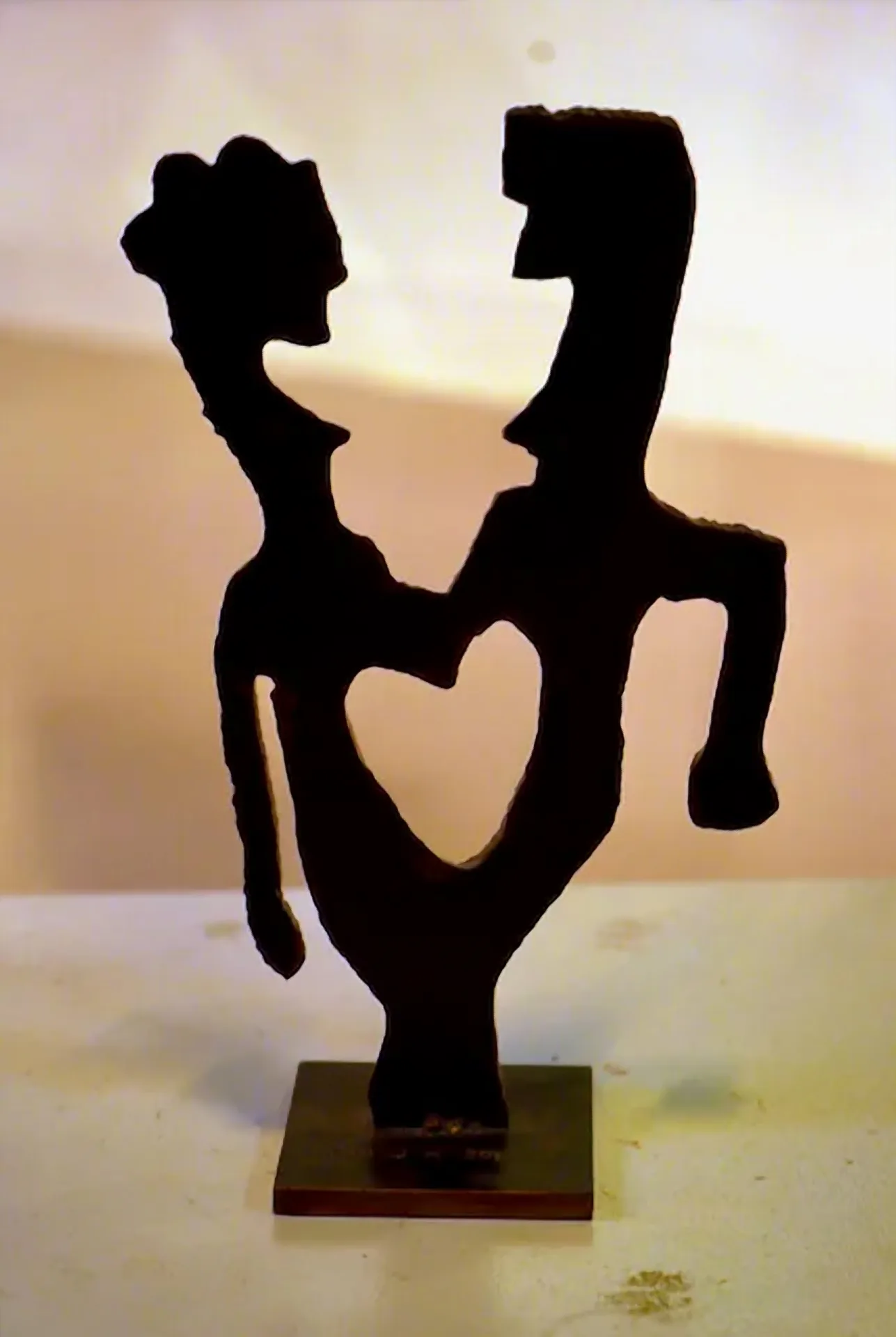
4. Executive desk — Kim Joo-ho, Making Love
- 33x20x9cm · 8mm steel plate sculpture · 2013 · ₩1,000,000
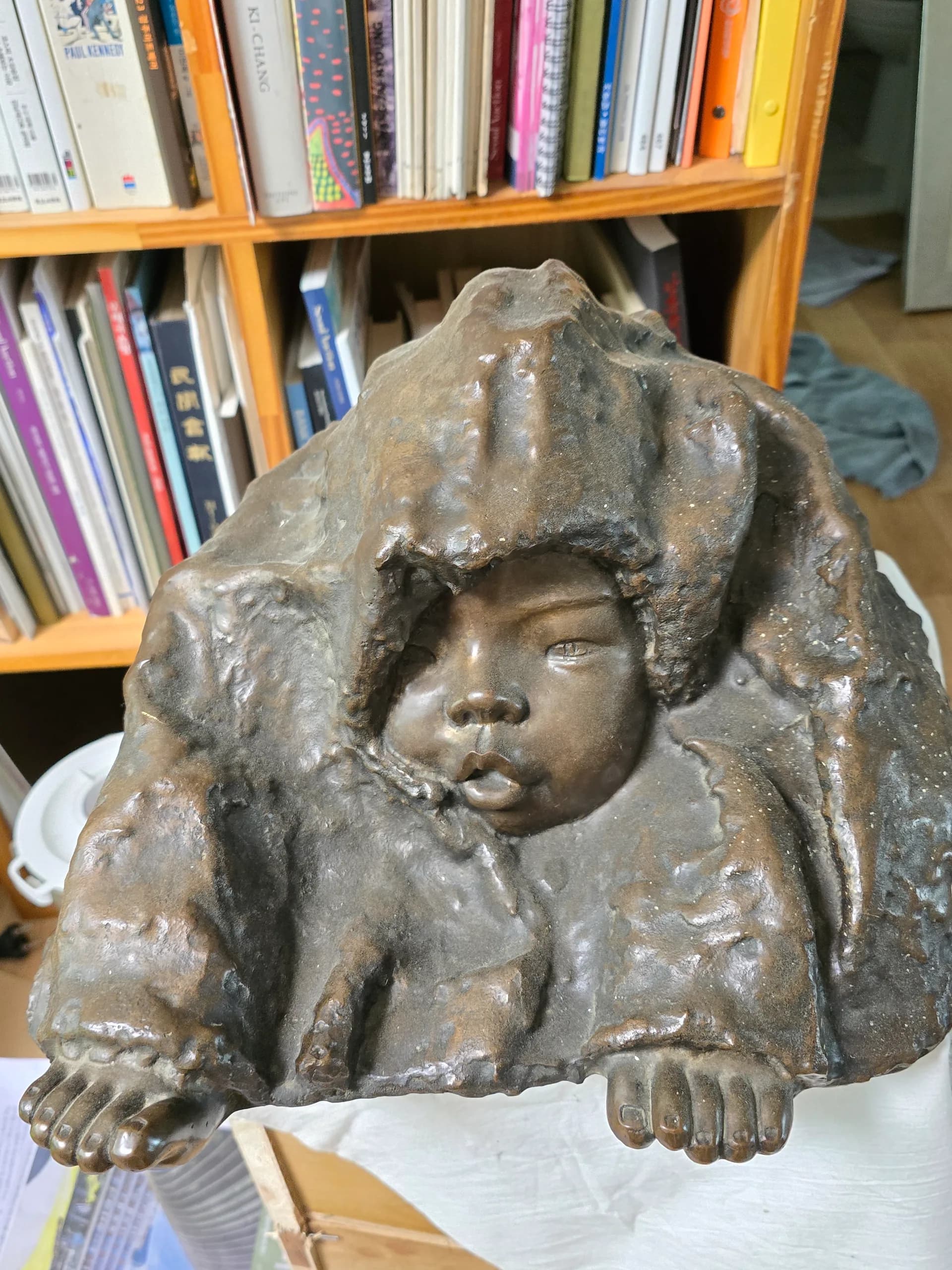
- A desk sculpture is a different category of visual asset from paintings or photography. The 8mm steel sculpture carries weight and permanence — well suited to an executive's desk or the console in a private office. Abstract yet warmed by the universal motif of "making love."
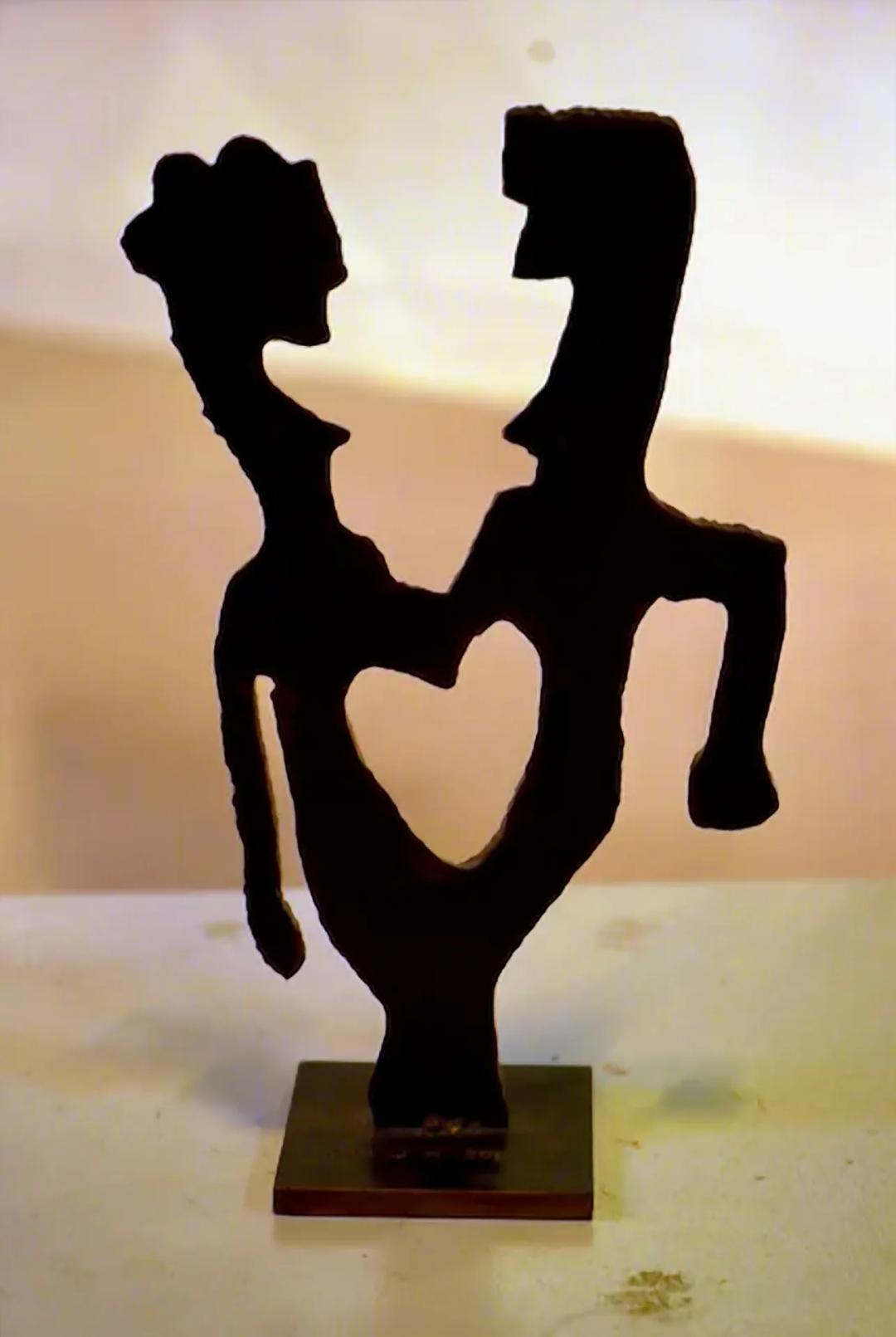
5. Café / lobby main — Jeong Geum-hee, Flowers Fall and Return to Earth #15
- 60x90cm · Archival pigment print · 2018 · ₩1,200,000
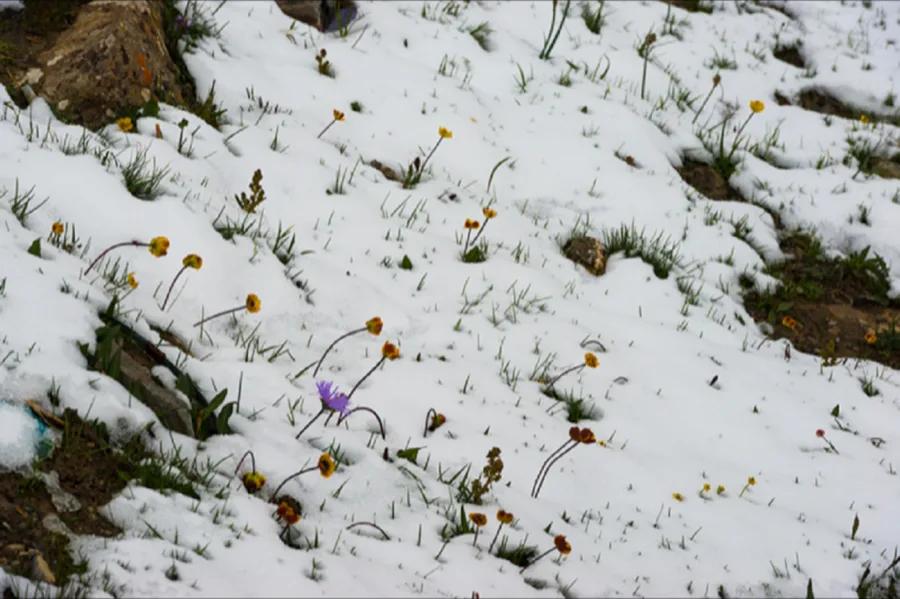
- 60x90cm is the impactful main-wall size for a café or office lobby. The Korean phrase 花落以土 — flowers fall and return to earth — evokes the East Asian sentiment of nature, time, and seasons through photography. Brings depth of nature and stillness to a café or F&B space. If the café concept centers on nature, East Asian aesthetics, or stillness, hanging three works in this artist's series together is also a strong option.
Frequently asked questions
Q. How is a corporate art purchase treated for tax purposes in Korea? A. Artworks priced at ₩10 million or less per piece can be expensed immediately under Corporate Tax Law enforcement decree. Pieces above ₩10 million are entered as assets, and since artworks are not depreciable assets, the acquisition cost simply remains on the books. Treatment and documentation requirements vary by company size, industry, and tax policy — always confirm with your accountant or tax advisor in advance. Keep the tax invoice and certificate of authenticity for each purchase.
Q. What media are safest for offices and cafés? A. Photographs (diasec or acrylic-mounted) and prints are most resilient to environmental change and contact. Paintings are more sensitive to direct sunlight, humidity, and physical contact — fine for main walls but diasec photographs are a more rational choice for corridors or lounges. Sculptures can be placed flexibly on desks, consoles, and corridor corners.
Q. What if the café concept doesn't match an artist's practice? A. Understand the artist's practice first, then match it to the café concept — that's the right order. Examples: nature-and-stillness cafés pair well with Korean ink painting and nature photography; modern-design cafés with abstraction and digital art. Consult a gallery and ask for artist recommendations based on your café concept to reduce mismatch risk.
Q. What if office staff move artworks around without permission? A. Apply explicit labels (artist name, title, year, owner: company name) to each piece. Also designate one internal staff member as the sole authority for repositioning — important for asset management. For collections above a certain scale, consider art insurance (annual premium roughly 0.3–0.5% of artwork value).
Q. Can we commission an artist to create a custom piece for our space? A. Yes — known as commission work. The artist maintains their existing tone while adapting to your company concept and wall dimensions. Pricing is typically 1.5–2x the artist's standard rate; production usually takes 2–6 months. Well suited to large meeting room main walls. To commission a SAF artist, contact us at contact@kosmart.org.
Q. Where can I see more office and café-suitable works? A. Browse the full SAF artworks by medium, or explore Photography, Korean Painting, and Painting categories with price and size filters. Sort by size for larger pieces (over 80cm) suitable for main walls.
The wall of an office or café is the message a company speaks every day in silence. The artwork hanging there defines the visual identity of the company. Choosing the first piece well is also the act of converting part of an interior budget into a meaningful visual asset.
Related reading
If this piece helped, you may also enjoy these related articles:
Browse more office and café-suitable works on SAF →
Related Guides

Seed Art Festival
·