Founded in 1995, biennial, set in the city of the May 18 uprising. Where Gwangju Biennale stands in Asian art, and a two-day route for first-time visitors.
The Gwangju Biennale at a Glance
In September 1995, Korea's first — and Asia's first — international biennial opened in Gwangju. The inaugural theme was Beyond the Borders. That the biennial began in the city of the May 18 Gwangju Democratic Uprising (1980) was no accident. The encounter between the memory of repression and art — this is what has set the Gwangju Biennale apart from every other biennial for thirty years.
This piece lays out, in one place, where the Gwangju Biennale stands within Korean and Asian art, a two-day route for first-time visitors, and what to see in Gwangju when the biennial isn't on.
The Gwangju Biennale — One Table
| Item | Detail |
|---|---|
| Founded | 1995 (1st edition) |
| Frequency | Biennial (odd or even years, shifting with political schedules) |
| Edition | 15th (2024) / 16th (2026) |
| Venues | Main Exhibition Hall + sites scattered across the city |
| Run | Usually September–November, around 60–80 days |
| Main + Sub-Venues | Main hall plus Gwangju Museum of Art, Asia Culture Center (ACC), Gwangju Folk Museum, Yangnim-dong, and more |
| Theme | Different each edition. Heavy emphasis on politics, society, history, memory |
| Pavilions | Some national pavilions, in the Venice mode |
What Sets the Gwangju Biennale Apart
1. May 18 as Spiritual Origin
The direct impetus for the first biennial in 1995 was an artistic response to the May 18 Gwangju Uprising. Through the 1980s and 90s, when the first generation of Korean Minjung (people's) artists — Oh Yoon, Shin Hak-chul, Yim Ok-sang, Kang Yo-bae — were active, Gwangju was where the political conscience of Korean art gathered, and the biennial was that current's international extension.
Thirty years on, that spirit still shapes the biennial's themes and artist lists. While Venice, São Paulo, and Istanbul move within polished global contemporary art, Gwangju's core remains the art of politics, society, history, and memory.
2. The Whole City as Venue
The Gwangju Biennale doesn't end at the main hall. Gwangju Museum of Art, the Asia Culture Center, the Gwangju Folk Museum, the Yangnim-dong art alley — the whole city is part of the biennial. Visitors naturally walk through Gwangju itself, and May 18 historic sites (the old Provincial Office, Geumnam-ro) fall onto the route.
3. Weight on Asia and the Global South
Where Western biennials center on American and Western European artists, Gwangju gives overwhelming presence to artists from Southeast Asia, the Middle East, Africa, and Latin America. In Korea, this is the place to encounter the textures of Global South art that you'll find almost nowhere else.
4. Reasonable Admission
A combined pass runs roughly KRW 15,000–20,000 (50% off for students and youth) — strikingly affordable next to Venice or documenta.
A Two-Day Route
Day 1 (Saturday) — Deep into the Main Exhibition
09:00 KTX Seoul → Gwangju-Songjeong (1h 50m)
- 25 minutes by subway or bus from Songjeong Station to downtown Gwangju
11:00 Arrive at Main Exhibition Hall
- 111 Biennale-ro, Yongbong-dong, Buk-gu, Gwangju
- Main exhibition + pavilions = 4–5 hours
- Lunch: in-hall café or nearby restaurants
16:00 Gwangju Museum of Art (linked special exhibition)
- 15 minutes' walk from the main hall
- During biennial seasons the museum runs special exhibitions tied to the biennial theme
- 1.5 hours
18:00 Dinner — Gwangju hanjeongsik or Mudeungsan bossam
- Hanjeongsik KRW 25,000–50,000; Mudeungsan bossam KRW 10,000–20,000
20:00 Lodging
- Business hotels around Chungjang-ro and Geumnam-ro (KRW 80,000–150,000)
- Hotels near Songjeong Station also offer good value
Day 2 (Sunday) — The City and May 18
09:30 Asia Culture Center (ACC)
- The site of the former South Jeolla Provincial Office, a historic location of May 18
- Contemporary Asian art + May 18 archive
- Allow 3 hours
- Free admission (special exhibitions priced separately)
13:00 Lunch — Chungjang-ro or Yangnim-dong
- Chungjang-ro: the heart of downtown Gwangju
- Yangnim-dong: an old neighborhood of small cafés and art spaces
14:30 Walk Yangnim-dong
- A preserved early-1900s missionary village, Gwangju's modern alley
- Small art spaces, cafés, historic houses
- 1.5 hours
16:00 Gwangju Folk Museum (optional)
- History and folk life of Gwangju — background for the city's art
17:00 May 18 Liberty Park or Mangwol-dong Cemetery (optional)
- For those who want to feel the spirit of May 18 directly
- 1 hour
18:00 Gwangju-Songjeong Station → KTX Seoul
- Arrive Seoul 19:50
What to See in Gwangju Outside Biennial Years
The biennial runs every other year, so some years are off-cycle. Even then, Gwangju has plenty to offer as an art city.
Open Year-Round
- Gwangju Museum of Art — Gwangju-born artists (Heo Baek-ryeon, Oh Ji-ho, Kang Yong-un) plus a Korean modern and contemporary collection. Free admission
- Asia Culture Center (ACC) — Site of the old Provincial Office, blending May 18 history with contemporary Asian art
- Yangnim-dong Modern Alley — A scene of Gwangju's early-1900s modernization
- May 18 Archives — Near Liberty Park; not a museum, but essential for understanding the spiritual root of Korean Minjung art
Other Biennials
- Gwangju Design Biennale — Even years (biennial)
- Gwangju Biennale of Crafts — Biennial (timing varies)
In years when these overlap (typically September–November), the entire city becomes an art city, offering the richest possible experience.
The Biennale and Korean Art
Thirty years of the Gwangju Biennale have served as a ladder for Korean contemporary art into the global market. Internationally active Korean artists — Lee Bul, Do Ho Suh, Mun Beom-gang, Park Chan-kyong — were spotted or amplified through Gwangju. Korean and Asian curators who worked at the biennial later moved into key roles at Venice and documenta.
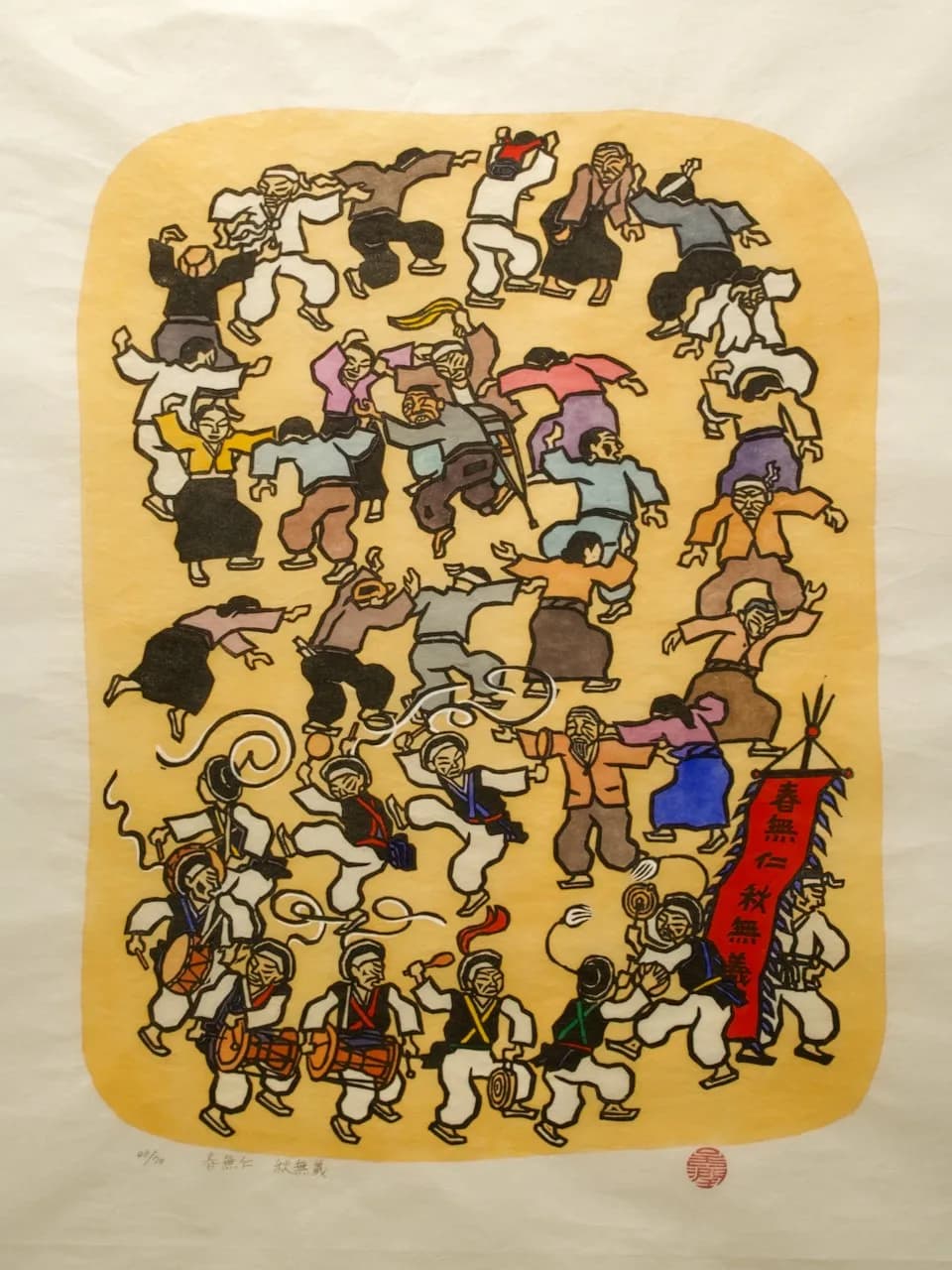
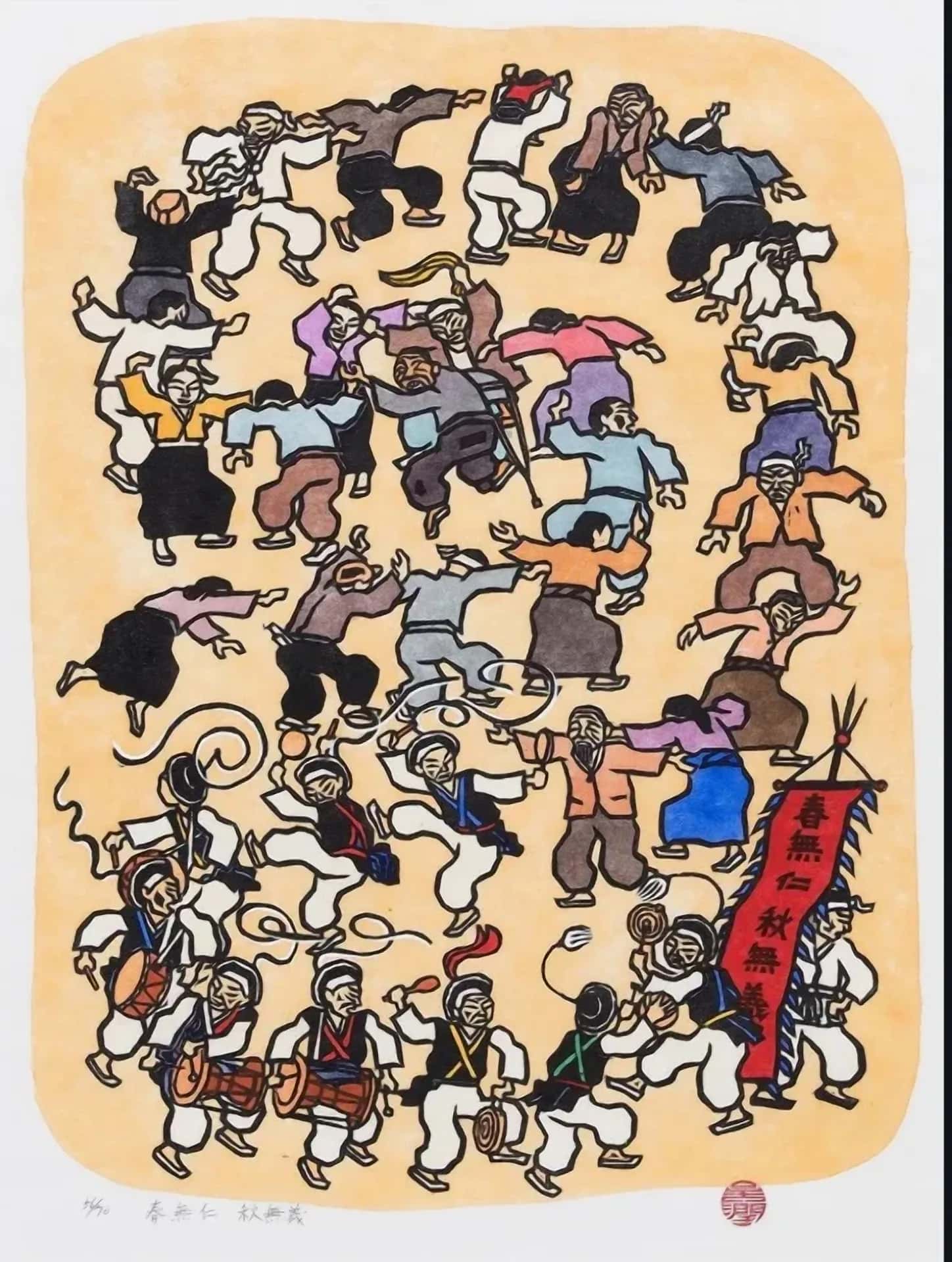
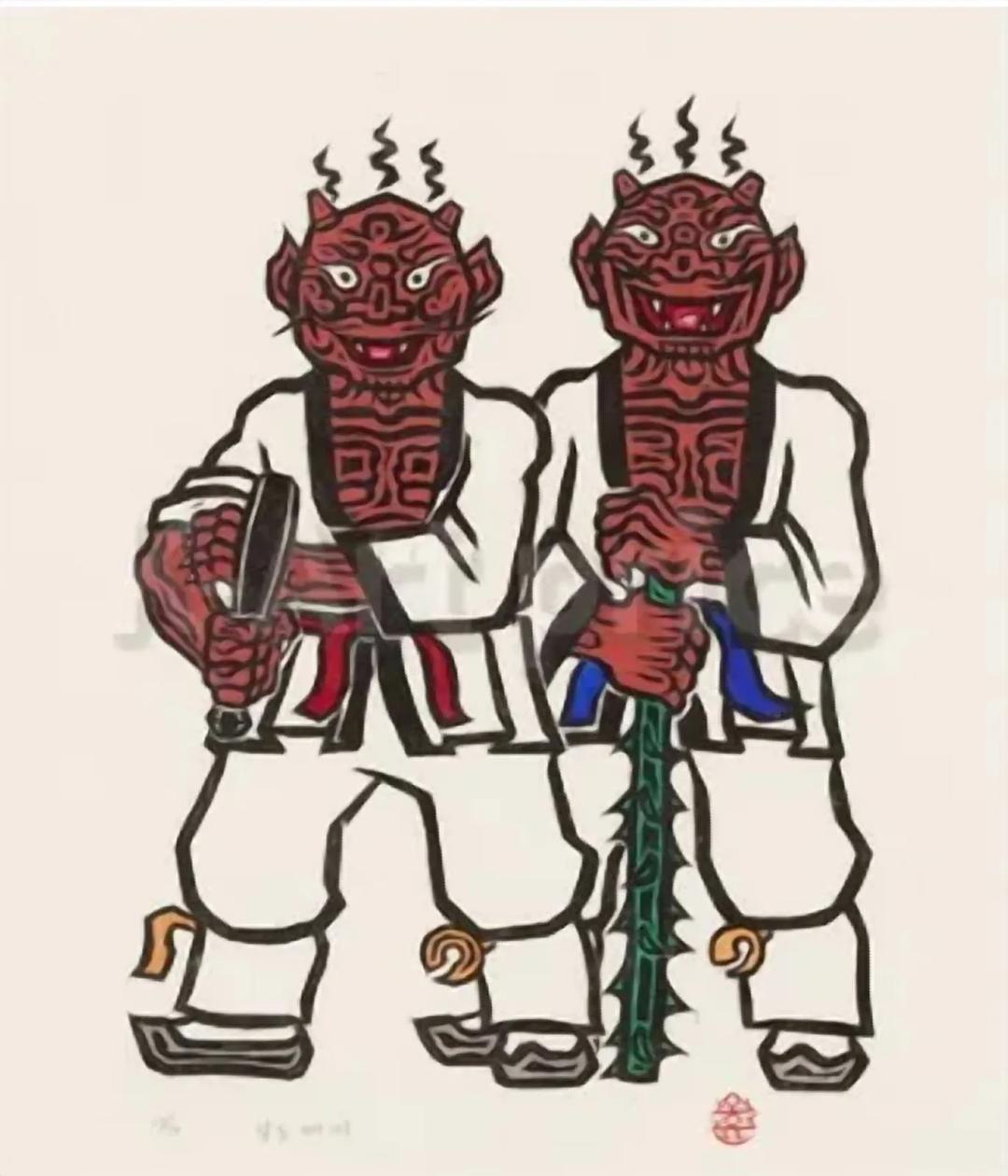
A posthumous woodblock like Oh Yoon's In Spring There Is No Person, In Autumn There Is No Meaning, cited above, is a work directly connected to the biennial's spiritual root in Korean Minjung art. Many artists carrying that thread into the contemporary moment have submitted work to the SAF Gallery, where the eye trained at the biennial can be turned toward collecting.
Frequently Asked Questions
Q. Is the biennial worth visiting if I'm not a collector? A. Yes — perhaps even more so for non-collectors. Sales aren't the point. The core is socially, historically, and politically engaged art, so visitors can encounter serious work without the pressure of buying.
Q. Can I bring children? A. Some works treat political and historical subjects unsuitable for young children. The main exhibition is best for upper elementary age and above. With children, the Gwangju Museum of Art and ACC's children's programs are a better fit.
Q. Is two days enough? A. For the biennial alone, two days is sufficient. To go deep into ACC and the May 18 sites, three days is better. The main exhibition can stretch past eight hours, so plan time carefully.
Q. Are docent tours available? A. Official docent tours are free and run on a schedule. Reserve through the biennial's official site or app. English, Chinese, and Japanese docents run during select sessions.
Q. Where do the works go after the biennial? A. Most are returned to the artists, with a few entering the biennial foundation's or city museum's collection. Biennial works are generally not sold, but you can find other works by the same artists through their galleries or art fairs.
Q. Are there galleries in Gwangju where I can buy directly? A. Gallery The Marine, Gallery Hyehwa 1117, Wu Je-gil Museum and a handful of others. But Gwangju is a city of art events more than an art market — Seoul and Busan are better for collecting. The common pattern is to build the eye in Gwangju and buy elsewhere.
In Closing
For thirty years the Gwangju Biennale has inscribed onto Korea's art map the fact that art is not separate from politics, society, or history. To carry the view that collecting is not mere asset accumulation but a touching of one's own era's conscience, you have to go to Gwangju at least once.
One hour and fifty minutes by KTX, and you arrive at the spiritual root of Korean art. Setting aside one biennial-year weekend in September–November for Gwangju adds depth to the eye of any collector or viewer.
Related reading
If this piece helped, you may also enjoy these related articles:
Browse Korean Minjung and contemporary works at SAF →
Related Guides
Seed Art Festival
·