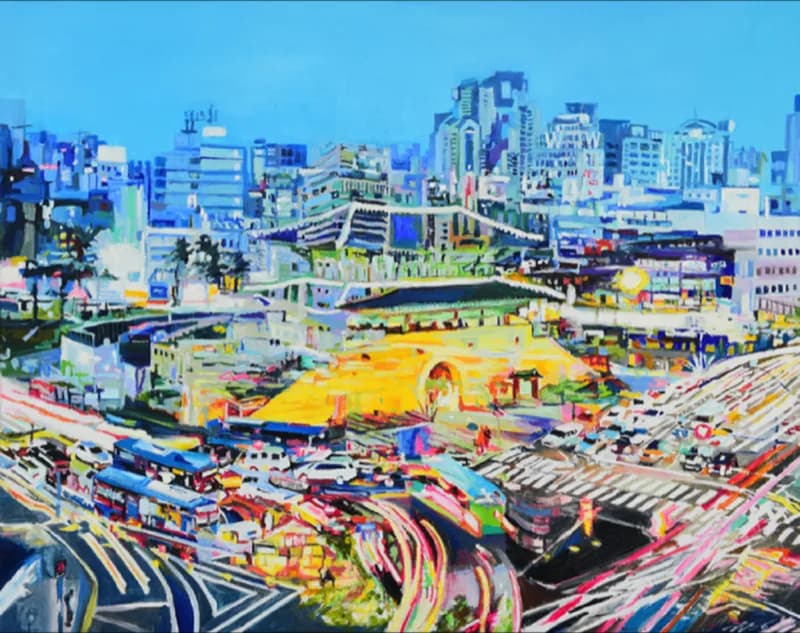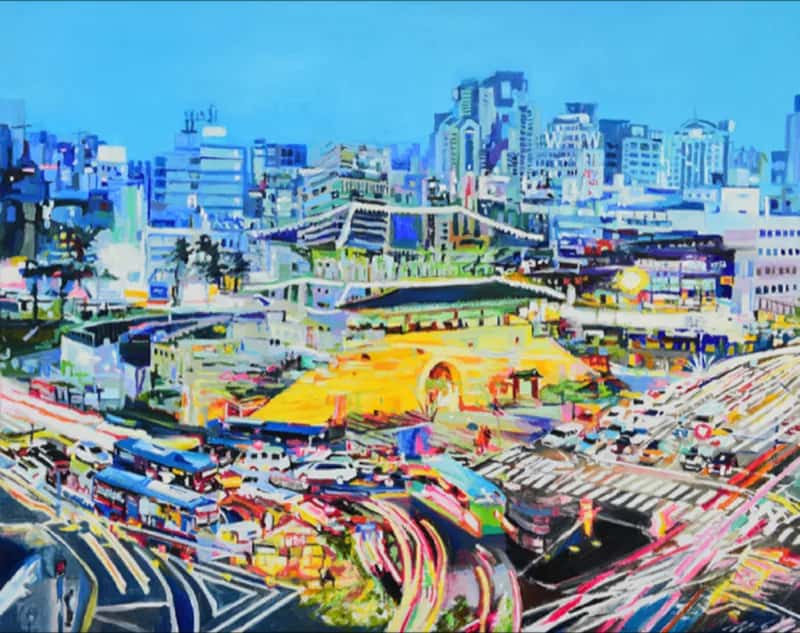
"To draw" comes from "to miss." Kim Juhui photographs a place many times, then overlaps the images on canvas. 36 solos, held by MMCA.
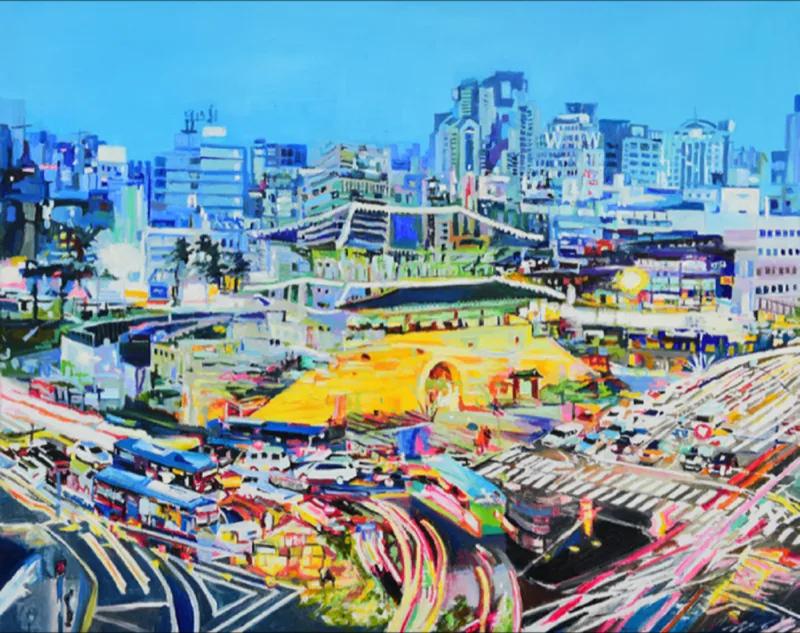
"The Korean word 'to draw' (geurida) was derived from 'to miss' (geuriwohada)."
A sentence often placed first when explaining Kim Juhui's practice. She photographs a place she misses many times, and repeatedly overlays those images on canvas. Overlap. With each layer the landscape doesn't blur — it sharpens.
Dongdaemun, Woljeong Bridge, Jeju Seopjikoji
Three SAF 2026 works are all titled with place names.
- Dongdaemun — 2024, oil on canvas, 90.9×72.7 cm
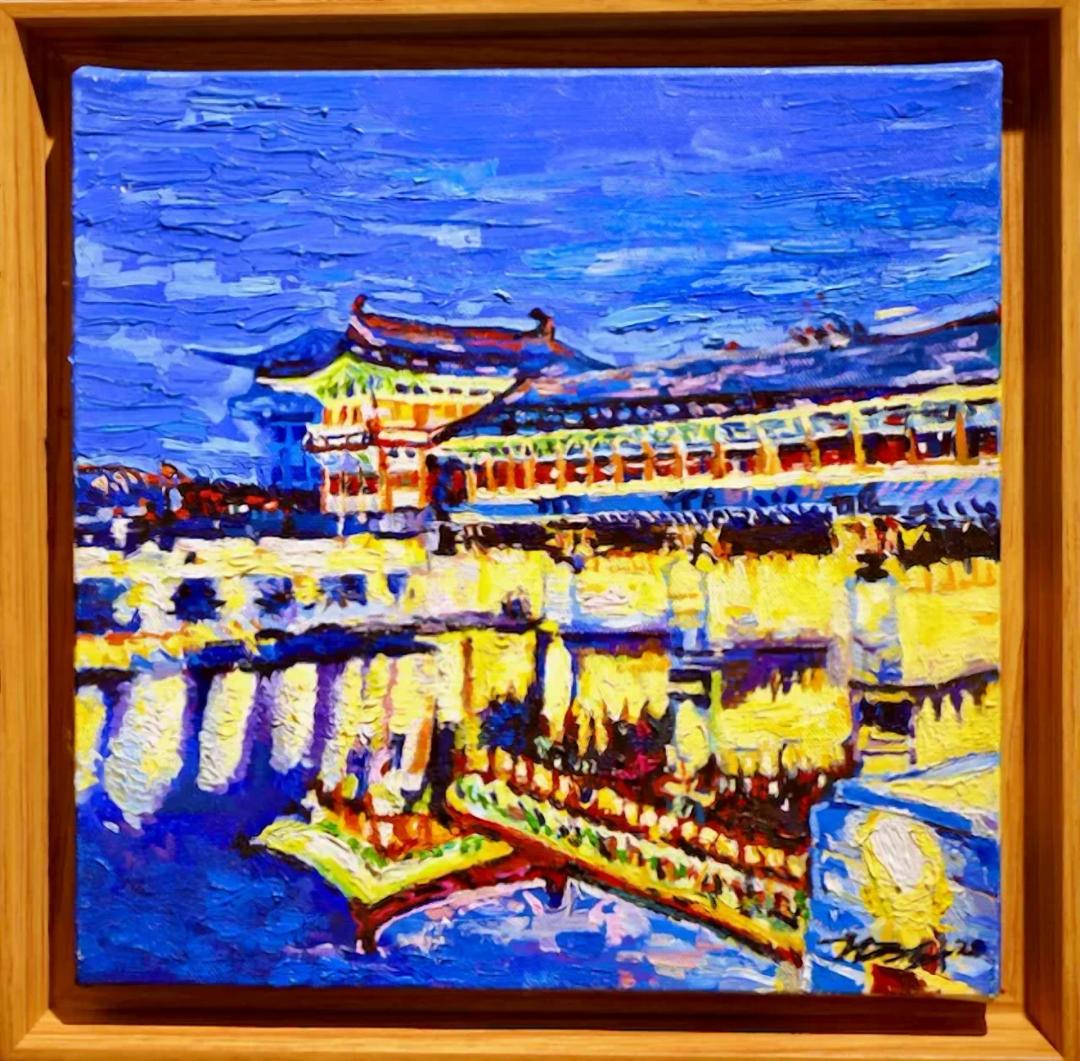
- Woljeong Bridge — 2020, 31.8×31.8 cm
- Jeju Seopjikoji — 2019, 53×33.3 cm
Dongdaemun in Seoul, Woljeong Bridge in Gyeongju, Seopjikoji on Jeju. Points of memory scattered across Korea's cities. Yet within the frame, all three are handled in the same grammar. Photograph many times, overlay many times, then record that overlay again in oil.
Regret for What Is Disappearing
The artist explains her work this way.
"I overlap unforgettable memories and moments. I revise and composite memory, repeatedly layering to amplify those moments as much as possible on canvas. I photograph or collect what I love and want to see, and I keep overlapping. Within overlapping I repeatedly re-remember the moments. This resembles regret for what is disappearing, and the contemporary person's desire to possess more. The image in the painting, as it layers, does not destroy itself but becomes brighter. I deliberately don't mix the colors — to leave bright memories brighter."
Overlap is a technique of memory. What is seen once fades easily, but what is seen many times becomes sharper. That principle is translated into the grammar of paint on her canvas.
Time in Art History, and the Artist's Memory
She places her practice within the flow of art history.
"Since antiquity, art has expressed a still image. It reached its peak in Impressionism's expression of a moment. With Futurism, attempts were made to fully express moving objects. The artist uses the effect of overlap to layer and unfold the time of objects and landscapes. Not merely time — the artist's memory overlaps too, completing her identity."
A self-awareness placing her practice within the lineage of Impressionism and Futurism. Kim Juhui's overlap is not a technique dealing only with time but an attempt to condense memory and identity onto one surface.
36 Solos, MMCA Collection
Her record is thick. BFA at Sungshin Women's University (Western painting), MFA at Hongik University Graduate School of Fine Arts. 36 solos (12 at galleries), 185 group shows.
Major venues: Art Space H, Gallery Doo, Space Um, Gallery Tam, Alternative Space Noon, Grimson Gallery. Group shows at Seoul Auction, Galleries Art Fair, the National Assembly, 63 Building Sky Art Museum, Sejong Center. Art-fair participation at Galleries Art Fair, Seoul Art Show, Busan International Art Fair, Art Asia, Bank Art Fair, Urban Break, Daegu Art Fair, ASYAAF, International Craft Art Fair, Lotte Hotel Art Fair.
Above all, MMCA collection, selected artist at SeMA (Seoul Museum of Art), selected artist at Kimi Art. Carnival Pizza art-goods collaboration. Naver Project Flower createrday4 selection. Her name appears side by side across academy, museum, market, and popular culture.
A Place to Overlap Onto SAF
Kim Juhui contributes three works to SAF.
84.9% of Korean artists are excluded from institutional finance. Sales of works by SAF-exhibiting artists cycle into a mutual-aid fund, returning as low-interest loans to fellow artists.
Overlap is a technique in which multiple records make one sharpness. SAF holds a similar structure. When one work each from many artists overlaps, that overlay builds a stable studio for one person. Like memory becoming clearer.
Pigment of Longing
What you miss, you paint — and the subject becomes a little clearer. It is not forgotten.
As Dongdaemun, Woljeong Bridge, and Seopjikoji sharpen on her canvas, SAF carves the easily forgotten faces of artists once more into public record. A place where longing becomes the pigment of solidarity.
Works by Kim Juhui
Related reading
If this piece helped, you may also enjoy these related articles:
Related Reads
Artists on the Same Path
Collecting Guides
Seed Art Festival
·