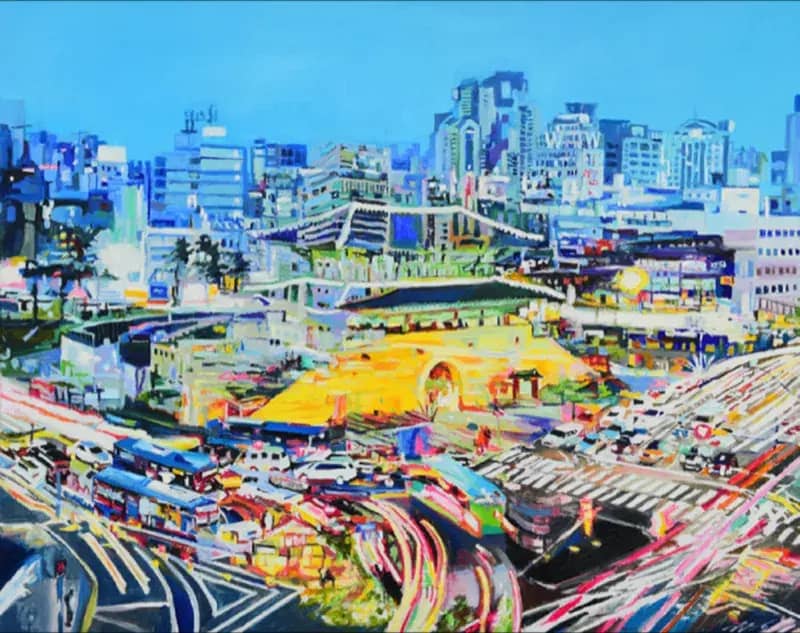
Memory grows sharper
as it is layered
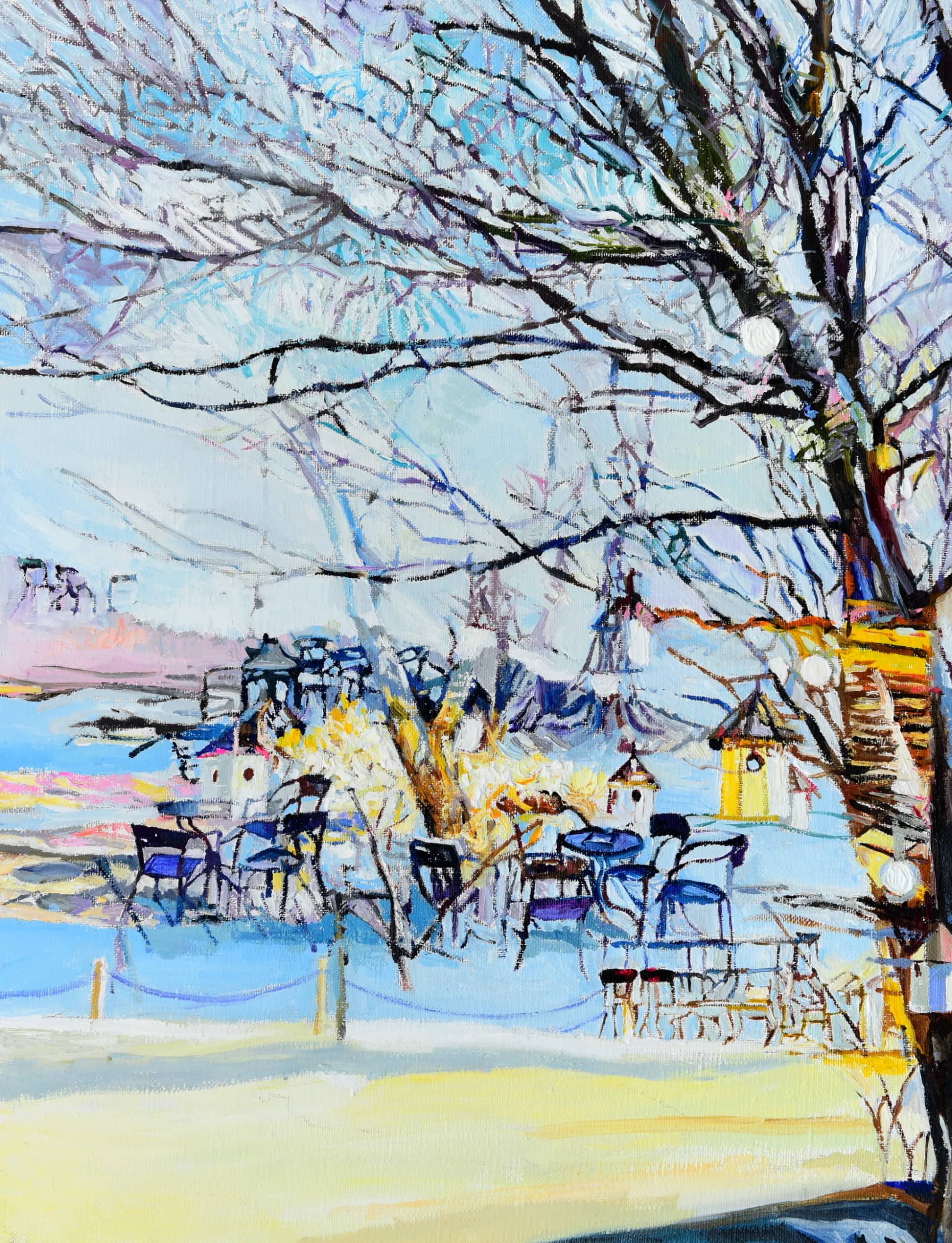
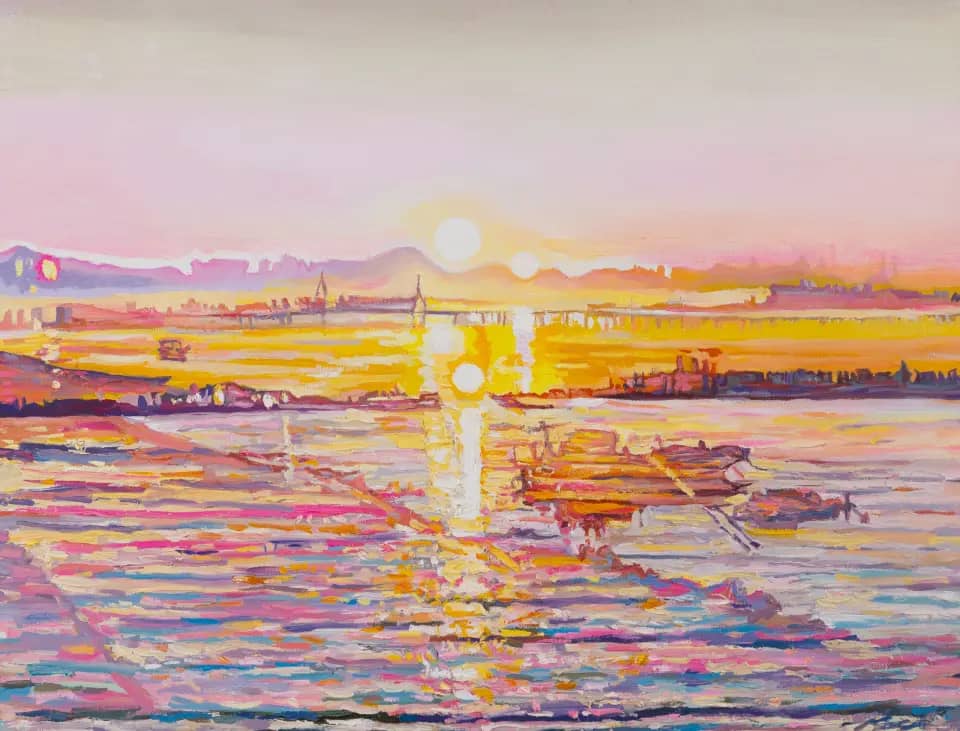
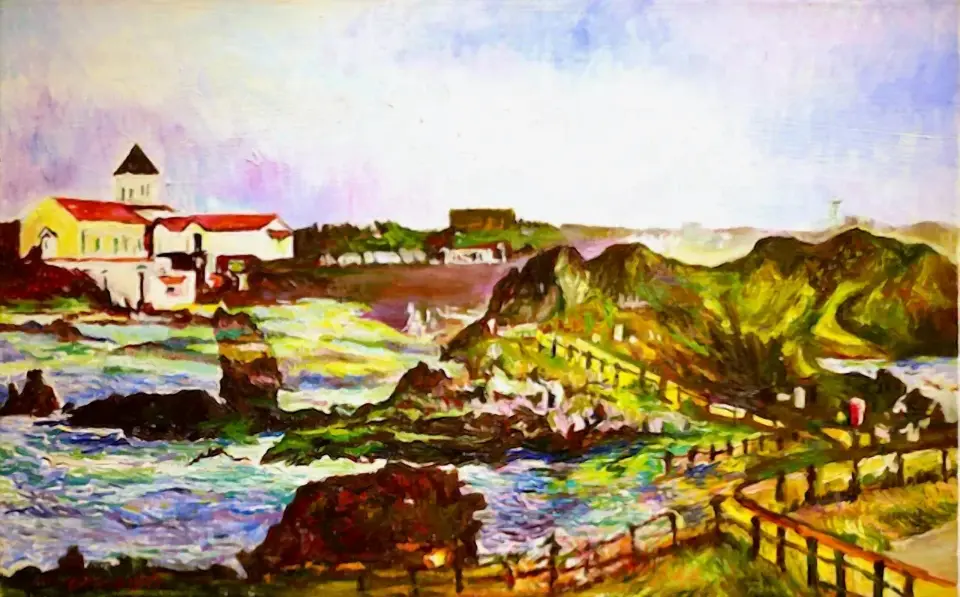
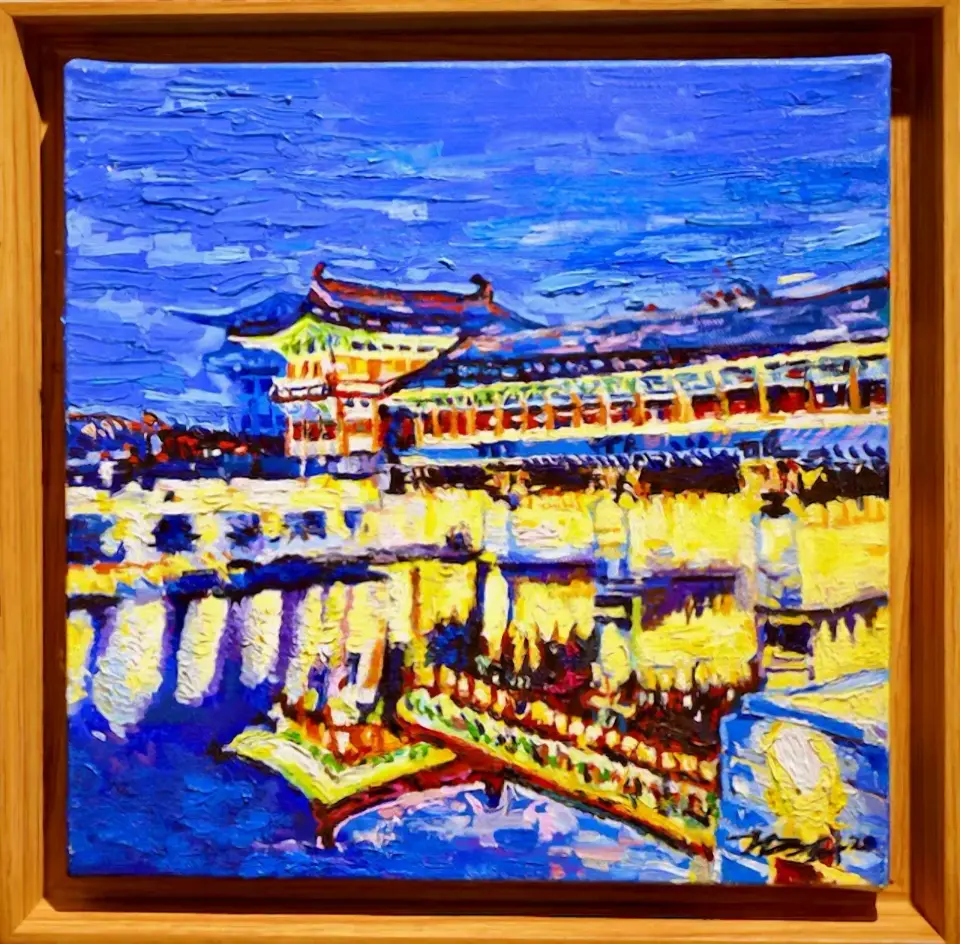
She overlaps remembered moments on a single surface.What is longed for is not erased by repetition, but revived.
Overlapping images —
memory revived, not erased
Kim Juhee is a mid-career Korean painter who graduated from the Department of Western Painting at Sungshin Women's University and completed her master's degree in the Department of Painting at the Hongik University Graduate School of Fine Arts. She describes herself simply, as an image-overlap painter — and the phrase is less a label than a method.
Her premise is that to draw is to long for. In Korean, the verb geurida (to draw) shares a root with geuriwohada (to long for); the act of painting and the ache of missing something are, etymologically, the same gesture. So she loves what she longs for, looks again and again at what she wants to see, photographs it, and lays those images one over another.
The result is a repeated superimposition that joins unforgettable memories to entirely different spaces. As she puts it, 〈the image in the painting is not destroyed by being layered again and again, but revives more vividly〉. Memory, in her hands, behaves the opposite of how we fear it will: the more it is overlaid, the sharper it becomes.
What accumulates on the surface is therefore not only the longing but its counterweight — the desire of modern people, the things we want to possess, and the regret over what slips away. Each overlap is a small argument against disappearance: a way of holding, in pigment, what time would otherwise carry off.
Across more than three decades of practice — thirty-six solo exhibitions and some 185 group shows — that method has carried her work into the collection of the National Museum of Modern and Contemporary Art (MMCA), and earned her selection as a SeMA artist by the Seoul Museum of Art and as a KIMI Art selected artist. The image-overlap she names so plainly is, by now, a sustained body of work.
Major themes
- 1
Image overlap
Photographs of remembered moments laid over one another and over entirely different spaces — repetition as the structure of the work.
- 2
To draw is to long for
The verb for drawing shares a root with longing — painting becomes the act of loving and returning to what one misses.
- 3
Desire and what slips away
The layers hold modern desire, the things we want to possess, and the regret over what disappears — memory revived rather than lost.
The artist's record
- StudyB.F.A., Dept. of Western Painting, Sungshin Women’s University; M.F.A., Dept. of Painting, Hongik University Graduate School of Fine Arts.
- Solo36 solo exhibitions in total (12 at galleries) — Art Space H, Gallery Doo, Space Um, Gallery Tam, Alternative Space Noon, Gallerysohn, and others.
- Group185 group exhibitions — Seoul Auction, Galleries Art Fair, the National Assembly, 63 Sky Art Museum, Sejong Center, and others.
- FairsGalleries Art Fair, Seoul Art Show, Busan International Art Fair, Art Asia, BANK Art Fair, Urban Break, Daegu Art Fair, ASYAAF, International Craft Art Fair, Lotte Hotel Art Fair, and more.
- HonorsWork in the MMCA collection; SeMA-selected artist (Seoul Museum of Art); KIMI Art selected artist; Maeul Misul (Village Art) Project selected artist; Naver Project Flower createrday4 selected artist.
- CollabCarnival Pizza art-product collaboration.
Collections & selections
- National Museum of Modern and Contemporary Art (MMCA) — work held in the collection
- Seoul Museum of Art (SeMA) — selected artist
- KIMI Art — selected artist
- Maeul Misul (Village Art) Project — selected artist
- Naver Project Flower — createrday4 selected artist
Three essays —
on overlap, longing, and what remains
1Image overlap — repetition as structure
The technical and conceptual core of Kim Juhee's work is a single operation: overlap. She photographs the moments and places she cannot forget, then lays those images one over another — and over entirely different spaces. The painting is not a window onto one scene but a sediment of several, pressed into the same surface.
What is striking is the direction the repetition takes. We tend to assume that layering an image again and again would muddy it, wear it down, finally erase it. In her work the opposite happens. As she states it plainly, 〈the image in the painting is not destroyed by being layered again and again, but revives more vividly〉. Superimposition becomes a means of intensification rather than loss.
That reversal is the quiet argument of the practice. Memory, treated as something fragile that fades with handling, is here shown to behave like a photograph developed slowly: the more passes it is given, the more clearly it comes into view. Repetition is not erosion. It is how the image is kept.
2To draw, to long for — an etymology made into a method
Kim Juhee builds her practice on a small linguistic fact. In Korean, the verb geurida — to draw, to paint — and the verb geuriwohada — to long for, to miss — share the same root. To draw something, in this reading, is already to long for it. The drawing hand and the missing heart are not two acts but one.
She takes the etymology literally and makes it a procedure. She loves the things she longs for; she looks again and again at the things she wants to see; she photographs them; and she overlaps those photographs into the work. Longing, in her hands, is not a mood that hovers over the painting but the engine that produces it — the reason a particular image is chosen, returned to, and laid down once more.
This is why the overlap never feels mechanical. Each layer is a thing missed enough to be looked at twice. The accumulation on the surface is, finally, a record of attachment: a measure of how much, and how often, the painter returned to what she could not let go.
3Desire and regret — what the layers carry
If the method is overlap and the motive is longing, the content is something more ambivalent. What gathers on the surface, the artist says, includes the desire of modern people, the things we want to possess, and the regret over what slips away. The work is not only tender. It holds appetite and loss in the same frame.
This is what keeps the paintings from nostalgia in the simple sense. To overlap a remembered image is also to confront how much we wanted it, and how little of it we could keep. The layers register both the reaching and the letting go — desire pressed against the fact of disappearance, neither one allowed to cancel the other.
And yet the final note is not defeat. Because the image revives rather than dies under repetition, the work proposes a modest consolation: what we long for is not lost simply because it has passed. It settles into us, changes, and can be brought back to the surface — layer by layer, looked at long enough to be seen again.
Across thirty-six solo exhibitions and a body of work that has entered the MMCA collection, Kim Juhee has pursued a single, patient question: how does one keep what is longed for without letting it fade? Her answer, built layer by layer, is an image-overlap practice in which memory grows sharper the more it is laid down. She joins this campaign not as a subject of its cause but as a fellow artist in solidarity — so that those who come after might work with a little less of the weight that financial exclusion places on Korean artists.
Selected Works
5 works are featured here.
Kim Juhee joined this campaign in solidarity with fellow artists. Every work sold flows directly into the artists' mutual-aid loan fund— a purchase becomes the next month's lifeline for an artist navigating financial exclusion today.