Korea's first independent filmmaker. A total artist who carried Gwangju, LA, and the divided peninsula on his body. Remembering Lee Iktae, who passed in winter 2025, through the three works he left behind.
Lee Iktae (李益太, 1947–2025) passed away on December 7, 2025. SAF 2026 became one of the final acts of solidarity he consented to during his lifetime.
Over fifty years. Film, theater, performance, painting, installation, photography — Lee Iktae's practice was a ceaseless dismantling of genre boundaries. To him, art was not an end but "a way of being in relationship with the world," a means of practicing solidarity with those who suffer.
1970, Korea's First Independent Film
In 1970, at twenty-three, the young Lee Iktae — then a student at Seoul Institute of the Arts — acted in, directed, and produced Korea's first independent film, Between Morning and Evening. The work, which thoroughly dismantled the conventional dramatic grammar of beginning-middle-end, was later screened at Tate Modern in the UK.
Around the same time, he founded the experimental film group "Film 70." He took part in "The Fourth Group," founded in 1970 as Korea's first avant-garde art collective. To leave the canvas behind and use living, moving "action" as a medium, pulling art into the everyday square — that was his starting point.
1977–1999, Twenty-Two Years in LA
In 1977, the artist crossed to the US and stayed for twenty-two years. He won first prize at the international exhibition of the Clary Miner Gallery in New York State, entering the international stage, and at the same time lived in LA's Koreatown, documenting the everyday lives and social issues of immigrants as a freelance journalist. This experience planted in his work a critical lens on "Korean diaspora" and "fake American dream."
In 1981, he founded the performance group "Theater 1981." The Wailing series mourning the victims of the Gwangju Democratization Movement. Spirit 265, dedicated to the victims of the KAL plane shot down by the Soviet Union — the latter was featured as top news on ABC and other major networks.
The 1992 LA riots became a turning point in his work. He brought the ruins of the burnt Koreatown — shattered liquor bottles, melted household goods — directly into the exhibition space and staged the large-scale performance Volcano Island. Completed with a grant from the LA City Department of Cultural Affairs, the work was also featured on NBC TV. It laid bare the sorrow of minorities living atop racial conflict, while physically demonstrating the process of laying soil over the ruins and planting seeds that sprouted new growth.
1999, Ice Wall
After returning to Korea in 1999, Lee Iktae turned his gaze to the division of the Korean peninsula. The Ice Wall series erected about 380 yellow ice blocks on Seogang Bridge and Tongil Bridge. A political prayer — that, just as ice melts into the river and flows to the sea, the rigid tension between the two Koreas would dissolve. The physical act of continuously stacking ice under the searing sun became a declaration longer-lasting than words.
A Painting That Paints Itself
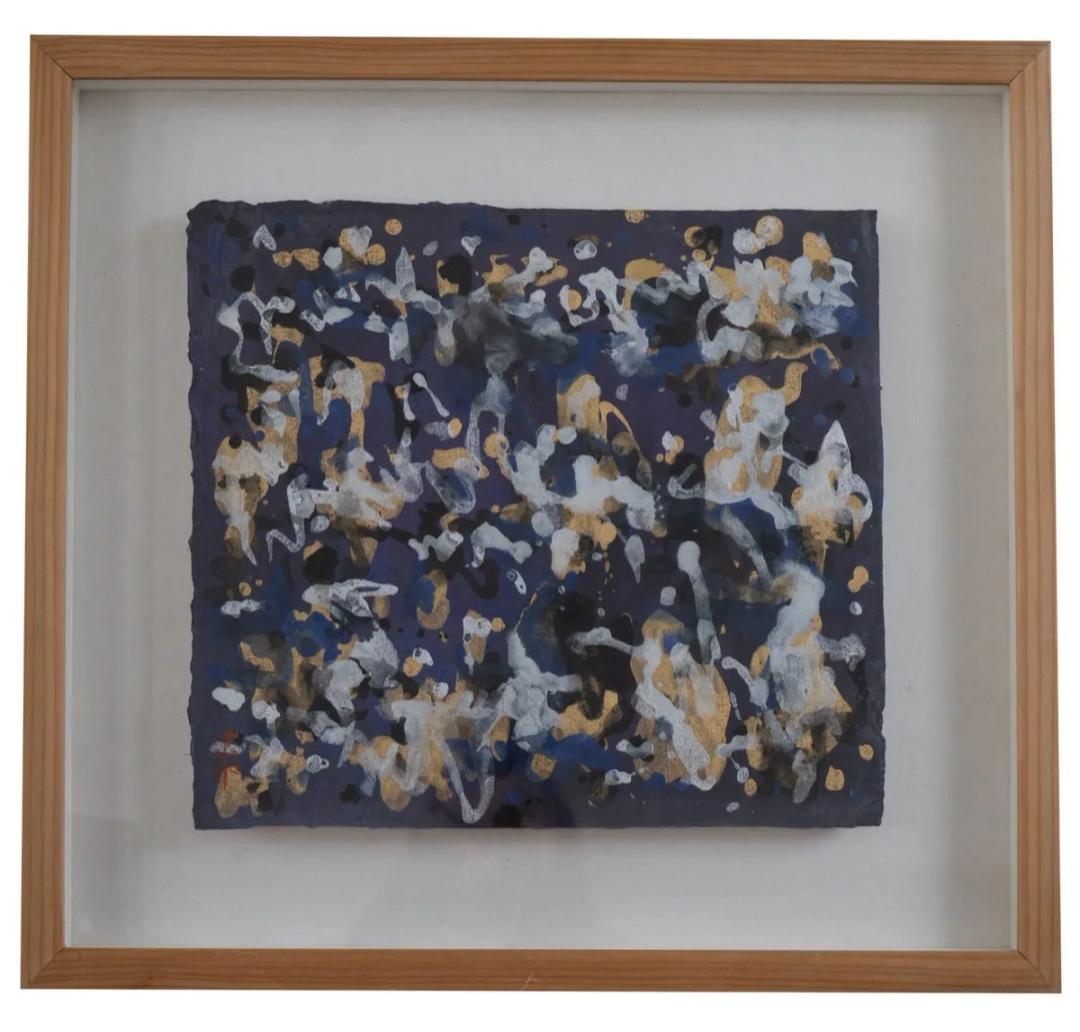
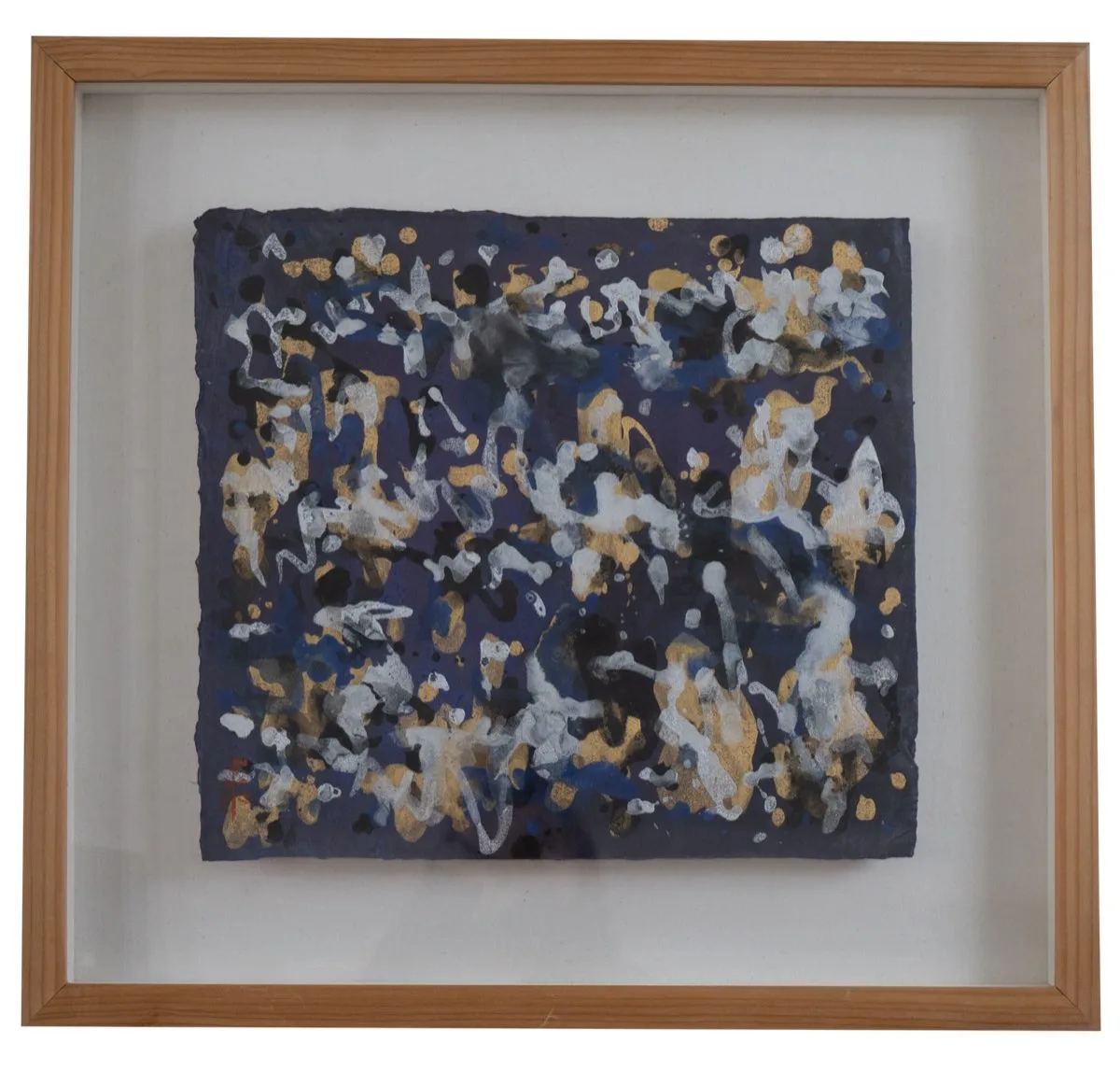
In the mid-2000s, Lee Iktae's practice entered a new phase. A country life based in Seongbuk, an immersion in the physicality of nature itself. Spreading hanji in the yard, scattering paint, washing with water, drying under sunlight, then painting and washing again — a repetition of actions.
"For a long time, I struggled to express the heavy load of meaning, symbol, and message. When I gave up form, meaning, symbol, my heart grew light. I spread hanji in the yard, scatter paint, wash with water, step on it, crumple and unfold. Yellow ginkgo leaves and pine needles drift across the hanji in the wind, and bees, butterflies, even dragonflies fly onto it. Wind, water, air, insects, leaves — a feast they throw together completes the work. During that time, I am not there. My work is flowing from painting I draw to painting that draws itself."
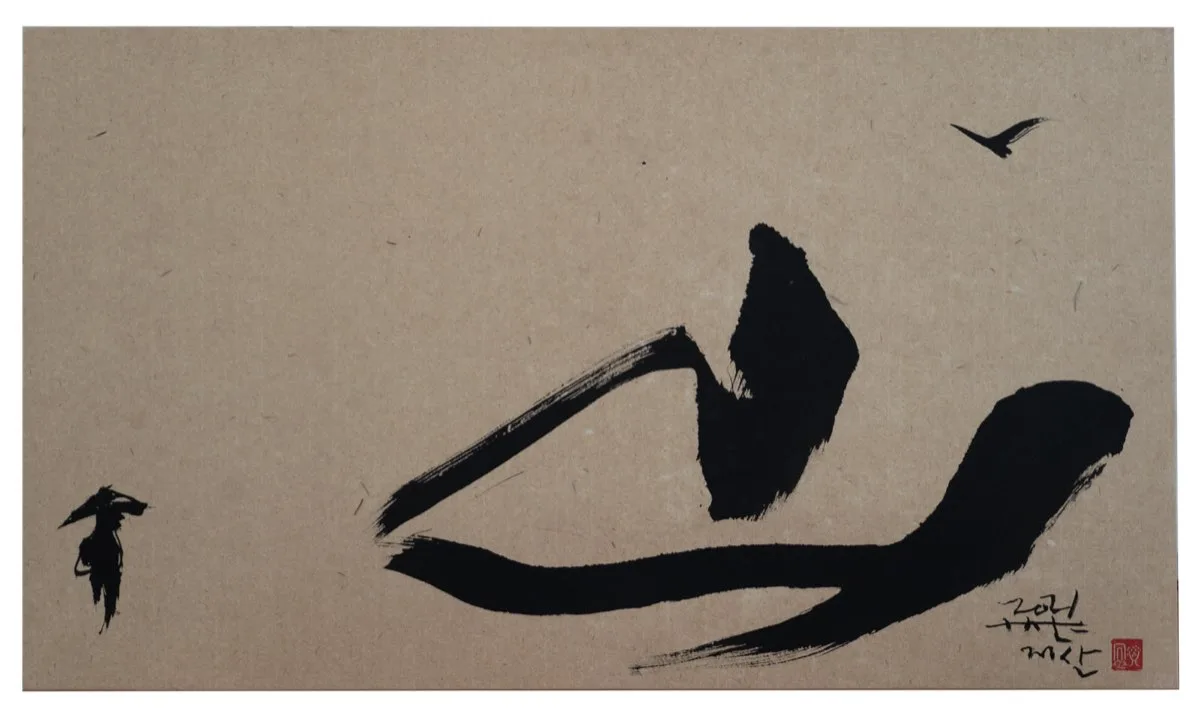
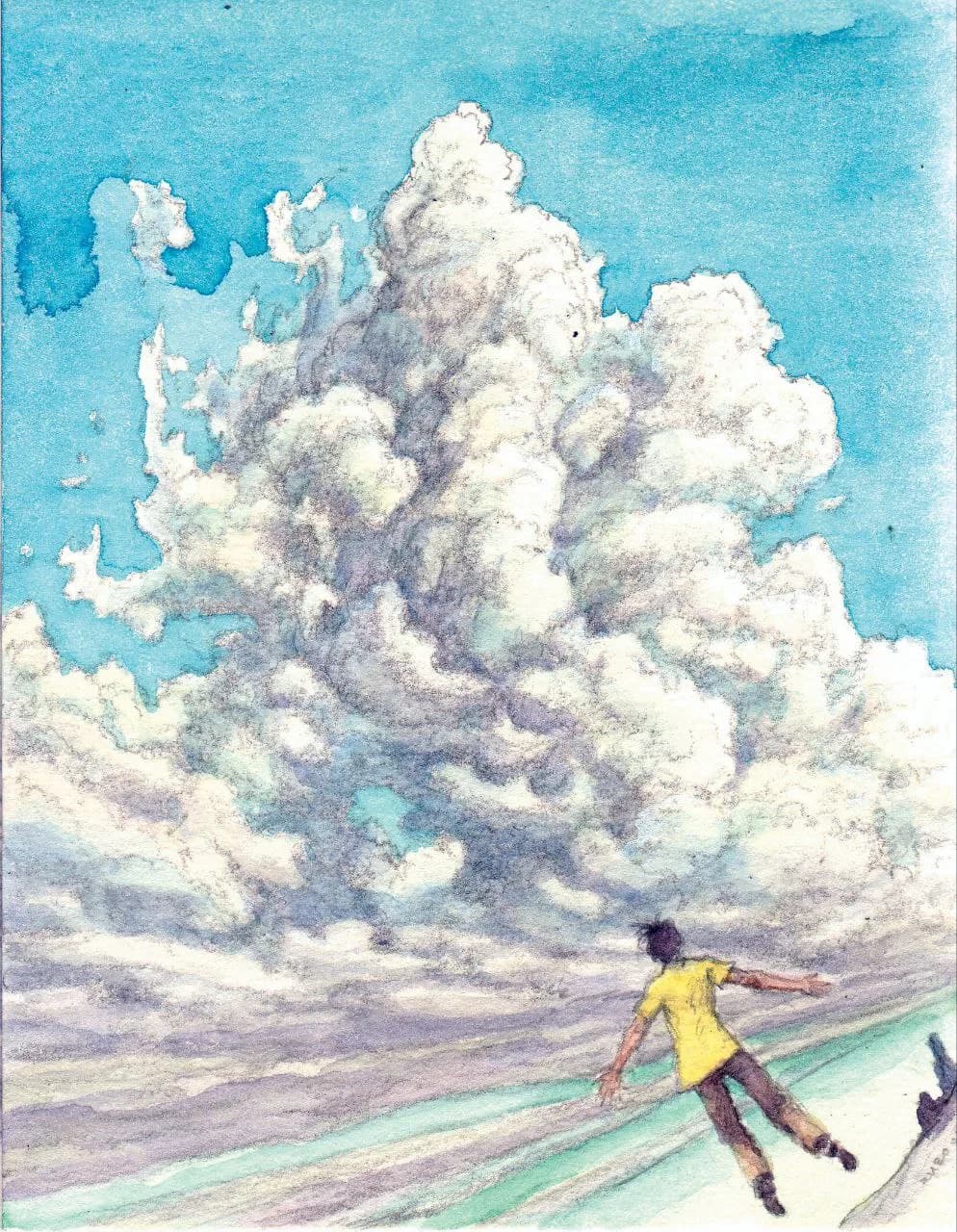
The Haiku series, a Korean reinterpretation of the Japanese form. A time in which intent is withdrawn and nature paints in its place. His SAF submission Mountain is a scene from this period.
A Clown on the Stage of the World
Toward the end of his life, the artist turned back toward human interiority. In the Pierrot series, he used the clown — symbol of wit and pathos — to express the duality of all human beings. Bright primary colors, yet a heavy emotion. Holding together the laughter and the anguish behind it.
"On the stage called the world, we are all clowns. Regardless of social position, wealth, or gender, every person lives their own tragicomedy."
His SAF submission The Lover of Sisyphus is acrylic on aluminum. Sisyphus, who had to eternally push a falling stone uphill, and the someone who stood beside him. The image of solidarity the artist pursued all his life lives within this title.
Three Works Left at SAF
Lee Iktae submitted three works to SAF.
- Mountain — 2021, ink on hanji
- Beam Letter — 2011, acrylic on hanji
- The Lover of Sisyphus — 2025, acrylic on aluminum
84.9% of Korean artists are excluded from institutional finance. Sales of works by SAF-exhibiting artists build a mutual-aid fund that returns as low-interest loans to fellow artists facing financial discrimination.
Until his last years, Lee Iktae continued to criticize the art market captured by capital, and advised younger artists to "tell your own story rather than chase fame." That one of his final acts of participation was the SAF mutual-aid fund confirms, once more, the sentence he upheld throughout his life.
The Seed Left on Despair
"An artist is a translator of the invisible world." Lee Iktae's own definition.
His practice consistently sought possibility in moments of despair, left signs of life on ruins, tried to melt what had frozen solid. Like seeds planted in the ash of the LA riots, like the ice wall at Seogang Bridge, like the insects and leaves drifting onto hanji.
In the winter of 2025, the artist departed. But the "invisible world" he spent his life translating remains. The three works at SAF are the final sentence of that translation, and a sentence that begins again.
Works by Lee Iktae
Related reading
If this piece helped, you may also enjoy these related articles:
Related Reads
Artists on the Same Path
Collecting Guides
Seed Art Festival
·