One artist who erased
the borders between genres
Film, theatre, performance, painting, installation —fifty years of experiment that refused to stay inside any single frame.
A total artist —
translator of the invisible world
Lee Iktae (1947–2025) was a Korean total artist who spent more than fifty years working across experimental film, theatre, performance, painting, and installation. In 1970, while a student at Seoul Institute of the Arts, he directed and starred in Between Morning and Evening — widely recognized as Korea's first independent film. The work deliberately dismantled conventional film grammar; it was later screened at Tate Modern in London, earning international recognition.
In the same period he co-founded the experimental film collective Film 70, and in the mid-1970s joined The Fourth Group alongside Bang Taesu, Kim Kulim, and others — one of Korea's earliest avant-garde art collectives, which challenged the conventions of the established art world through happenings and experimental action. In 1972 he also helped form the Moving Image Research Forum, a group of university students and filmmakers influenced by French New Wave and New American Cinema.
In 1977 Lee moved to the United States, where he would remain for roughly twenty-two years. Turning fully to painting, he won first place at the Clarion Minor Gallery International Exhibition in New York. He also lived in Los Angeles's Koreatown, working as a freelance journalist covering the daily lives and social issues of Korean immigrants — an experience that shaped his critical view of the “fake American Dream” and the Korean diaspora condition.
It was in Los Angeles that he founded Theater 1981, a performance group that used sound and visuals to confront historical tragedy and social conflict. His “Wailing” series — experimental performances commemorating the victims of the Gwangju Democracy Movement — was covered in major art publications and mainstream press. His performanceSpirit 265, mourning those killed in the KAL 007 shootdown, was reported as a top news item by ABC and other major broadcasters.
The 1992 Los Angeles riots became a new turning point. Lee physically transported debris from the burned Koreatown — shattered bottles, melted household objects — into the gallery, and staged the large-scale performance and installation Volcano Island, funded by the Los Angeles Cultural Affairs Department. Broadcast on NBC, the work showed the grief of a minority community caught in racial conflict while simultaneously planting seeds in earth laid over the ruins — a material enactment of recovery and healing.Hugging Angels and The Day of Collage followed, each supported by further L.A. Cultural Affairs grants. He also collaborated with California Expressionist artist GRONK during this period.
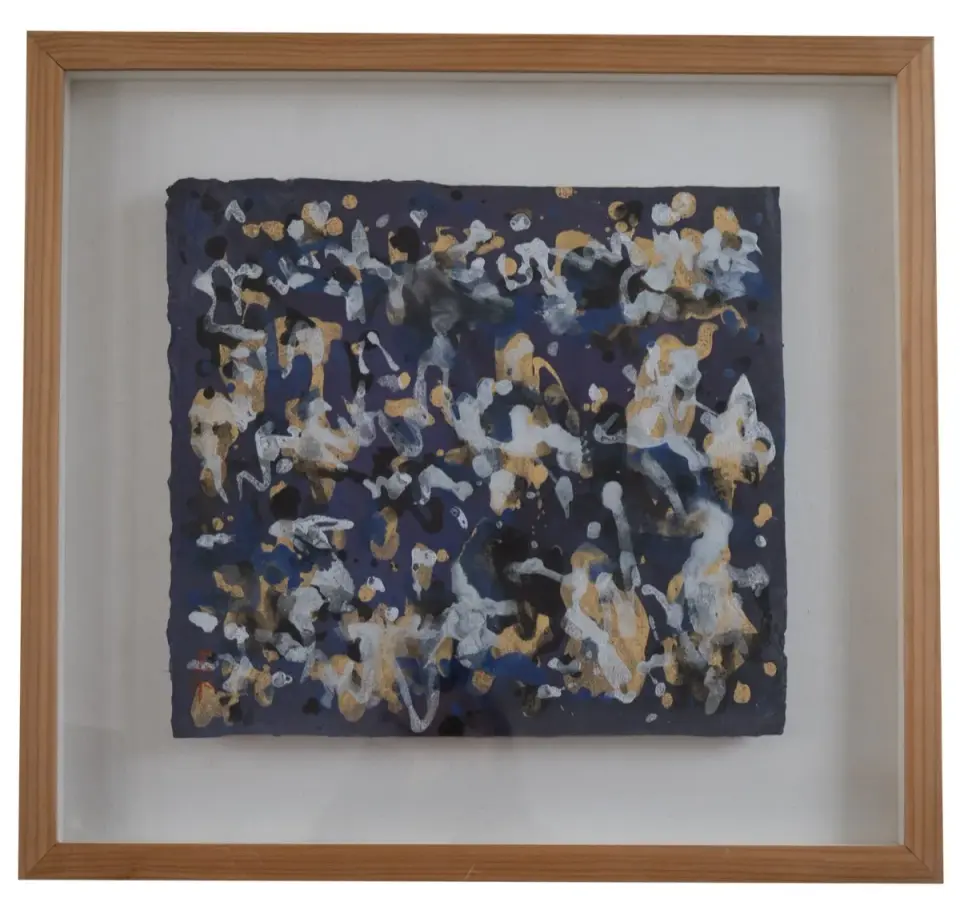
After returning to Korea in 1999, Lee's gaze turned to the division of the Korean peninsula. His Ice Wall series placed some 380 yellow ice blocks on Seogang Bridge and Unification Bridge — praying, as the ice melted into the river and out to sea, that the frozen tension between North and South might dissolve. In his later years the Haiku and Pierrotseries turned toward nature and inner life: spreading hanji paper in the yard, pouring pigment, washing it away with water, drying it in the sun — an art made by wind, water, and light as much as by any human hand. He defined the artist as “a translator of the invisible world.” Lee Iktae passed away on December 7, 2025.
Major themes
- 1
Total art / Cross-genre experiment
Film, theatre, performance, painting, installation — refusing to be contained in any single medium was itself the method.
- 2
Historical trauma and healing
Gwangju, KAL 007, the LA riots, the division of Korea — he translated collective wounds into physical acts of mourning and recovery.
- 3
Nature, non-intention, and wu-wei
In his later years: hanji spread in the yard, water washing pigment, wind and insects completing the work. Moving from painting to being painted.
The artist's timeline
- 1947Born in Korea.
- 1967Takes part in the Youth Artists Joint Exhibition (Cheongnyeon Jakga Yeollipjeon).
- 1970Directs and stars in 〈Between Morning and Evening〉 — Korea's first independent film (16mm, b&w, 20 min). Joins The Fourth Group. Co-founds Film 70.
- 1972Co-founds Moving Image Research Forum (university filmmakers influenced by French New Wave and New American Cinema).
- 1973Directs the play 〈Le Voyage de Monsieur Perrichon〉; screens short films 〈The Whereabouts of Light〉 and 〈A Trivial Afternoon〉; holds watercolor exhibition.
- 1974–Honorable mentions for screenplays in Dong-A Ilbo New Spring Literary Contest (1974: 〈The Vacation When No One Was There〉; 1975: 〈Requiem〉).
- 1977Moves to the United States; begins career as a painter. Wins first place at Clarion Minor Gallery International Exhibition, New York.
- 1981–Founds performance group Theater 1981 in Los Angeles. "Wailing" series (commemorating Gwangju victims) and "Spirit 265" (KAL 007 victims) receive coverage in major US press and broadcast.
- 1992LA riots: creates 〈Volcano Island〉 (LA Cultural Affairs grant; NBC broadcast); followed by 〈Hugging Angels〉 and 〈The Day of Collage〉 (further grants). Collaborates with GRONK.
- 1999Returns to Korea. Ice Wall series: ~380 yellow ice blocks placed on Seogang Bridge and Unification Bridge, praying for resolution of national division.
- 2000s–Haiku (Aiku) series and ink paintings: art made by water, wind, and light. Pierrot series: the dual nature of all human beings through the figure of the clown.
- 2001〈Between Morning and Evening〉 screened at the 27th Korean Independent Short Film Festival.
- 2004〈Between Morning and Evening〉 screened at the 30th Seoul Independent Film Festival.
- 2015〈Between Morning and Evening〉 screened at Tate Modern, London, as part of the Embeddedness: Artist Films and Videos from Korea 1960s to Now programme.
- 2025Passes away on December 7, 2025, in Seoul, aged 78.
Wind, water, and the vanishing hand
In his later years Lee spread hanji across the yard, poured paint, washed it with water, dried it in the sun, and repeated the cycle. Ginkgo leaves and pine needles scattered in the wind; insects flew in. The work was completed less by the artist than by wind, water, light, and leaves — the hand of the maker quietly disappearing into the process.
His final 〈Pierrot〉 series turned to the human interior: the clown, a symbol of wit and pathos, standing in for the duality of every life. In bright primary colours carrying a heavy emotional weight, the work held laughter and the sorrow behind it at once.
Three essays —
on a practice without fixed form
1Experiment across genres — from 〈Between Morning and Evening〉 to Tate Modern
In 1970, while studying at Seoul Institute of the Arts, Lee Iktae directed, wrote, and starred in Between Morning and Evening— now recognized as Korea's first independent film. Shot on 16mm in black and white, the twenty-minute work deliberately dismantled the conventional grammar of film narrative: no rising action, no resolution, no coherent cause and effect. The film follows a young man across a day and its encounters, but its logic is associative, not dramatic. It was a formal provocation at a moment when Korean cinema was largely governed by genre conventions and studio control.
In the same year Lee joined The Fourth Group — one of Korea's earliest avant-garde collectives, which united visual artists and filmmakers in challenging the established art world through happenings and experimental action. He also co-founded Film 70, and in 1972 helped form the Moving Image Research Forum, a group of university students and filmmakers engaged in systematic study of French New Wave and New American Cinema. The accumulation of these affiliations in a single year describes a particular moment: Korean art in 1970 was opening outward, and Lee was among those doing the opening.
The long reach of Between Morning and Evening is itself evidence of his place in Korean experimental art history. The film was screened at the 27th Korean Independent Short Film Festival (2001), at the 30th Seoul Independent Film Festival (2004), and — most significantly — at Tate Modern in London in 2015, as part of the exhibition Embeddedness: Artist Films and Videos from Korea 1960s to Now. A work made by a student in 1970 reaching a London museum in 2015: the delay, and the arrival, are both part of what it means to be a pioneer.
2Performance as witness — Theater 1981 and Volcano Island
When Lee Iktae moved to the United States in 1977, he came to paint. But the Korean diaspora community he found himself in — and the history that followed it there — could not be addressed in paint alone. In Los Angeles he founded Theater 1981, a performance group built around sound and visual language, to confront historical trauma through collective physical action.
The Wailing series commemorated the victims of the Gwangju Democracy Movement — the 1980 pro-democracy uprising suppressed by military force, whose casualties were a wound carried by the Korean diaspora in Los Angeles as much as by those who remained at home. The performances were experimental in method but direct in intent: to enact mourning in public, to refuse the privatization of grief. They were reported in specialized art publications and mainstream press alike. The performance Spirit 265, commemorating the 269 people killed when a Soviet fighter jet shot down Korean Air Lines Flight 007 in September 1983, was treated as a top news story by ABC and other major broadcasters — a measure of the depth of community response it touched.
After the 1992 Los Angeles riots, which devastated Koreatown, Lee's response was again to bring the destroyed world physically into art space: charred debris, shattered bottles, melted household objects transported directly into the gallery. Volcano Island, created with funding from the Los Angeles Cultural Affairs Department and broadcast on NBC, did not only display wreckage — it also laid earth on top of the ruins and planted seeds. The work held both grief and the possibility of recovery in the same space. Lee continued to receive L.A. Cultural Affairs grants forHugging Angels and The Day of Collage. He also collaborated during this period with the California Expressionist artist GRONK. In all of this, performance was not a form chosen for its own sake but because some moments demand witness in the body, not just the eye.
3From painting to being painted — the late work
After returning to Korea in 1999 and completing the Ice Wall series — its 380 yellow ice blocks on two Seoul bridges, its silent prayer for the dissolution of division — Lee Iktae turned toward a quieter territory. In the mid-2000s, living outside the city, he developed what he called the Haiku (Aiku) series: works made by spreading hanji in the yard, pouring pigment, washing it away with water, drying it in the sun, then beginning again. Wind scattered leaves across the surface. Bees and butterflies and dragonflies landed and moved on. The work was completed not by the artist alone but by everything present — a feast made by wind, water, air, insects, and leaves.
In his own account of the shift: “For a long time I struggled to express the heavy burden of meaning, symbol, and message. When I abandoned form, meaning, and symbol, my heart became lighter.” The Haiku series developed alongside ink paintings that reached for a similar condition — the work that paints itself, the work that does not carry the artist's intention as a load. He described his artist's identity as that of “a translator of the invisible world”: someone who does not impose vision but opens a channel.
The Pierrot series, which occupied his final years, turned this inward. The clown — a figure of wit and pathos simultaneously — became the vehicle for exploring the double nature of every person: grief behind laughter, sincerity inside performance. Painted on hanji with acrylic and oil pastel, the works hold together bright primary color and emotional weight, smeared and pressed texture, the comedy and the sorrow that cannot be separated. “We are all clowns who have appeared on the stage of the world,” he said. The advice he gave to younger artists — “tell your own story rather than seeking fame” — belonged to the same understanding: that art is not a destination but a relationship, a form of being present to what is actually there.
From the 16mm frame of Between Morning and Eveningin 1970 to the hanji yard in the 2010s, Lee Iktae's practice pursued a single question in many forms: how does one stay present to what cannot be contained — to history, to community, to the invisible movements of light and water and wind? He joins this campaign not as a subject of its cause but as a fellow artist in solidarity — so that those who come after might work without the weight he carried, and with the freedom he spent his life practicing.
Selected Works
3 works are featured here.
Lee Iktae joined this campaign in solidarity with fellow artists. Every work sold flows directly into the artists' mutual-aid loan fund— a purchase becomes the next month's lifeline for an artist navigating financial exclusion today.