A hospital needs a different artwork than a café or a law firm. How to choose the first piece for an office or commercial space — by industry, with practical notes on tax treatment.
A new space opens. The sign goes up, furniture arrives, and one wall is still blank. Everyone who walks in will see that wall first — a fact that hits about a month after opening.
This guide is for founders and clinicians preparing a new business, and for anyone preparing a gift for their opening. A hospital is not a café is not a law firm. Each industry asks for a different kind of artwork.
Why a Business Space Needs Art
Interiors get copied. Same lighting, same furniture, same wall color. One artwork does not get copied. The moment a visitor asks "where did you buy that?", the space becomes specific.
Art is also a medium that speaks without speaking. A flower painting in a café whispers this place is warm. A sansu landscape in a law firm says we have been here a long time. A longer sentence than a sign, quieter than a brochure.
A Different Framework for Business Art
Three additional criteria beyond "home art" apply. First, fit with industry context — a fierce abstract in a dental waiting room feels wrong. Second, standing up to the long look — employees and returning visitors see this every day. Third, practical maintenance — café heat, salon chemical vapors, and direct sunlight affect longevity.
Scale also shifts. Business walls are generally larger than home walls. Pieces under 20 ho fit reception desks and narrow hallways; lobbies and main floors usually need 30 ho or more. Start from the Space-by-Space Size Guide, then size up one notch.
Hospitals, Dental Clinics, Pharmacies — Quiet Nature

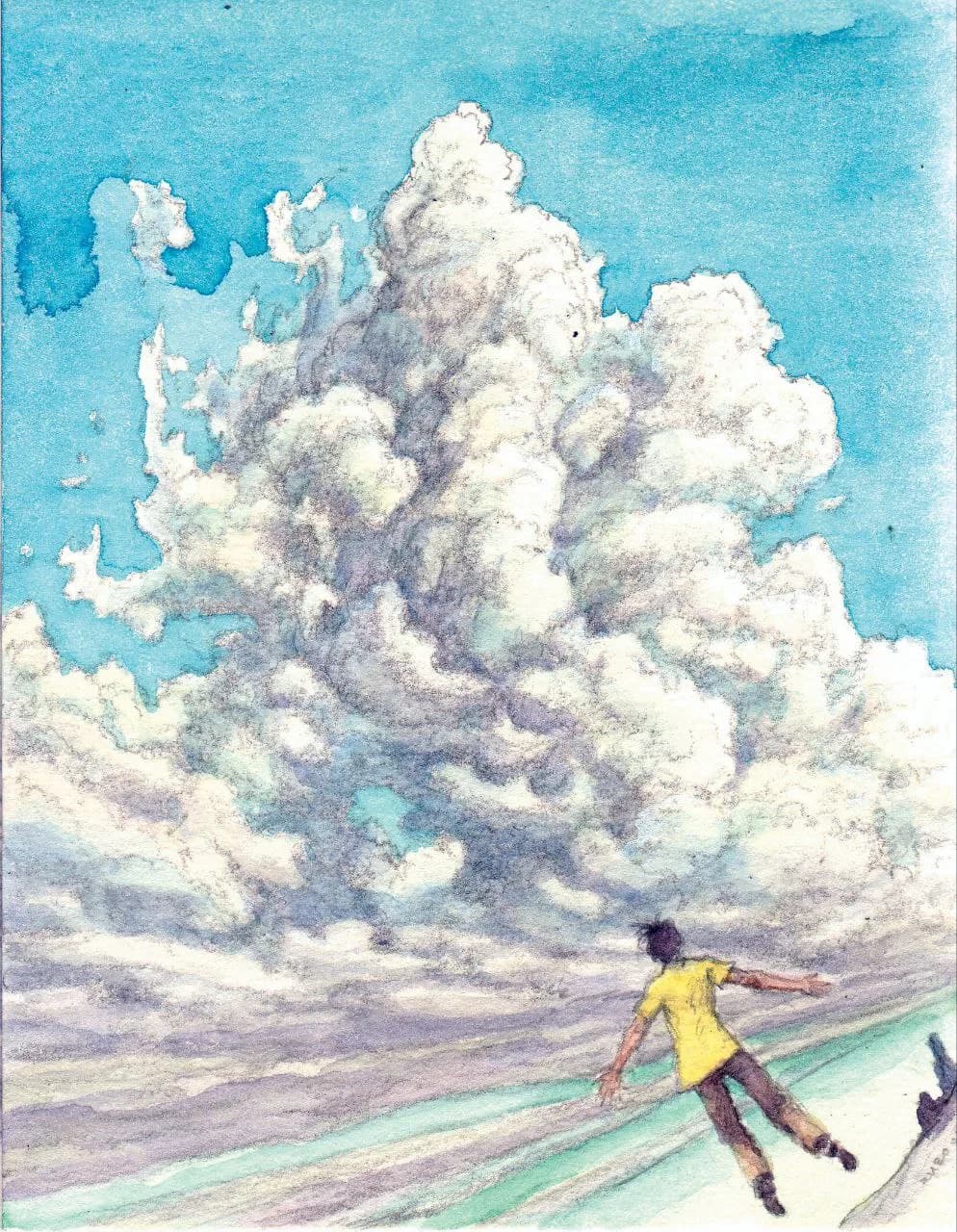
Medical spaces need art that lowers patient anxiety. Amid fluorescent lighting and cool-toned interiors, the artwork provides breathing room. Avoid excessive red, wound or anatomical imagery, loud abstraction. Recommend landscape photography, ink sansu, still life, minimal single-flower compositions.
Kim Suoh's Winter Hallasan — the quiet of snow. Jeju's character and stillness arrive together.
Cafés, Bakeries, Dessert Shops — Warm Flowers and Daily Life
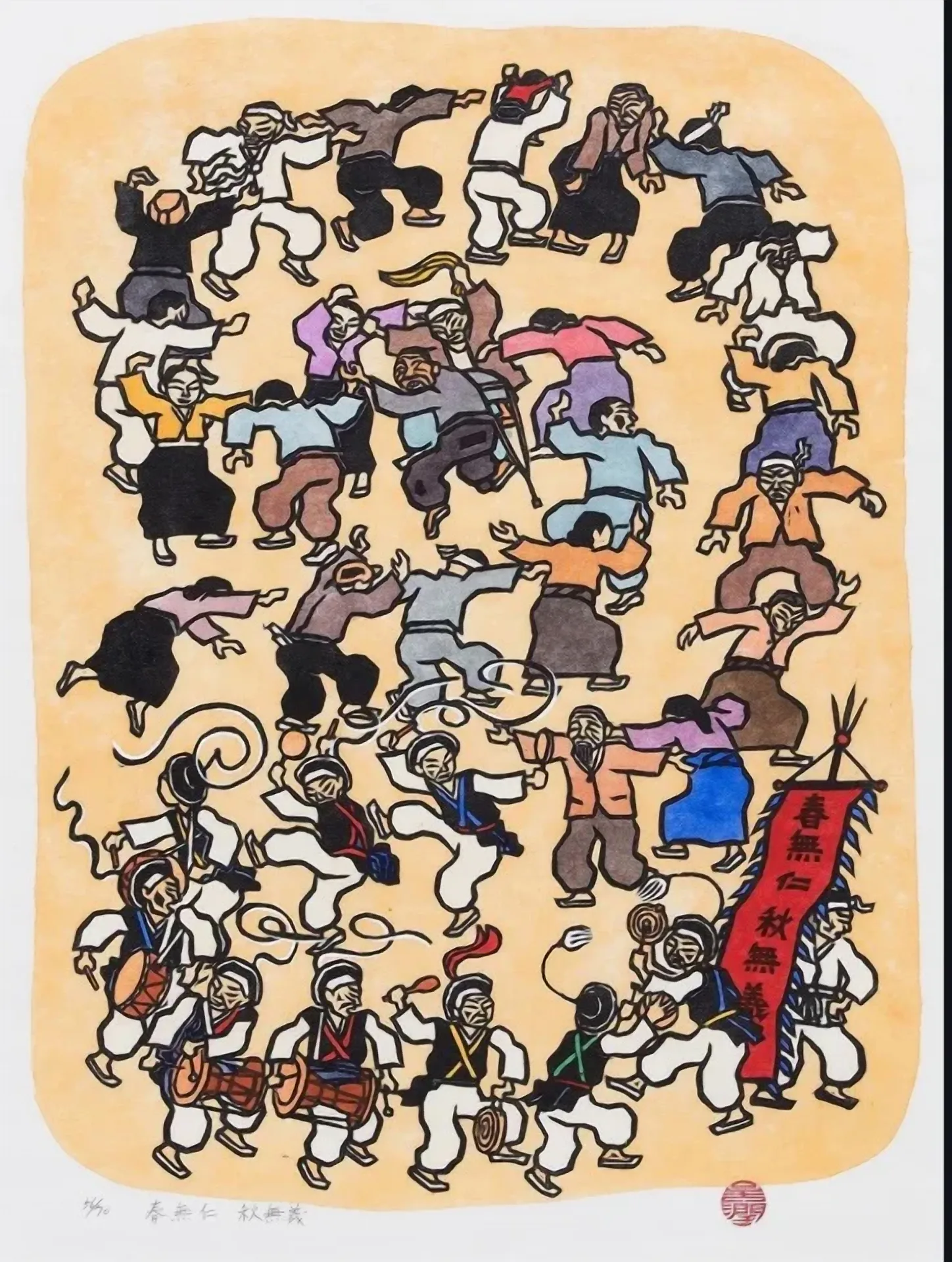
Café art is also the Instagram background at the table. Long dwell times favor pieces that wear well. Avoid all-grayscale palettes and melancholic narratives. Recommend flowers, fruit, still life; warm-toned prints; Korean woodblock with visible hand.
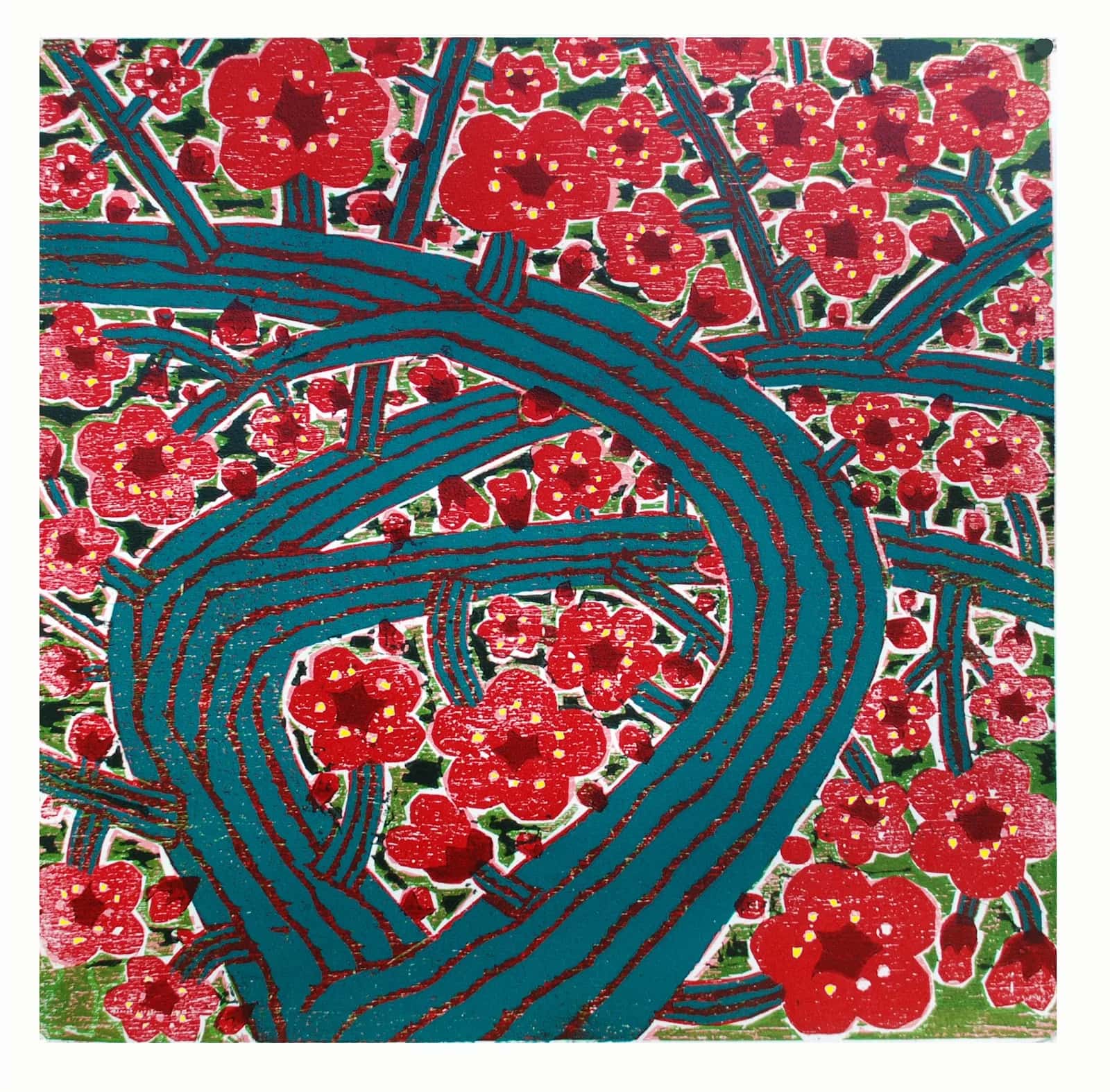
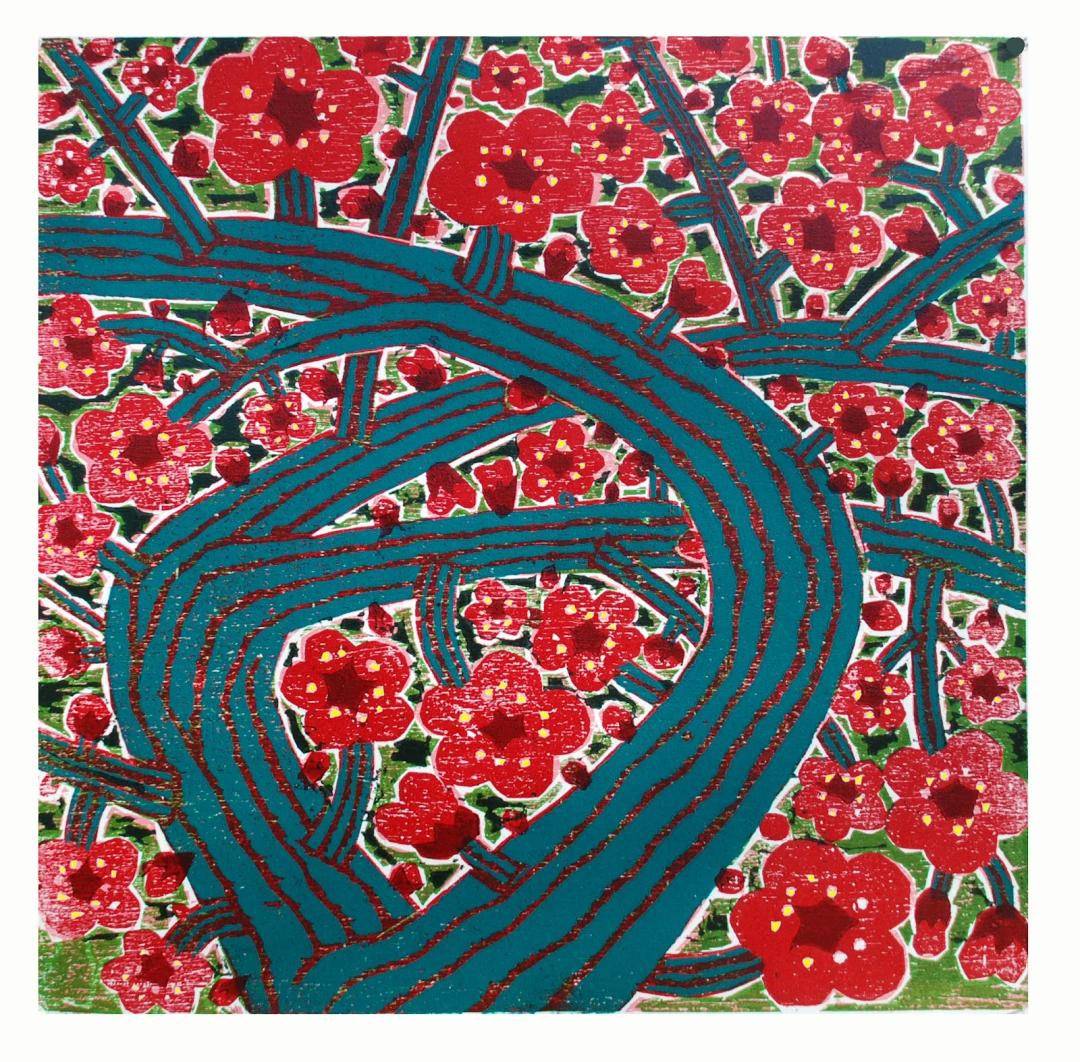
Lee Yun Yeop's Red Spring Plum Blossoms — a declaration of spring by a master of Korean contemporary woodblock. Hospitality, distilled.
Restaurants and Wine Bars — Abundance and Welcome
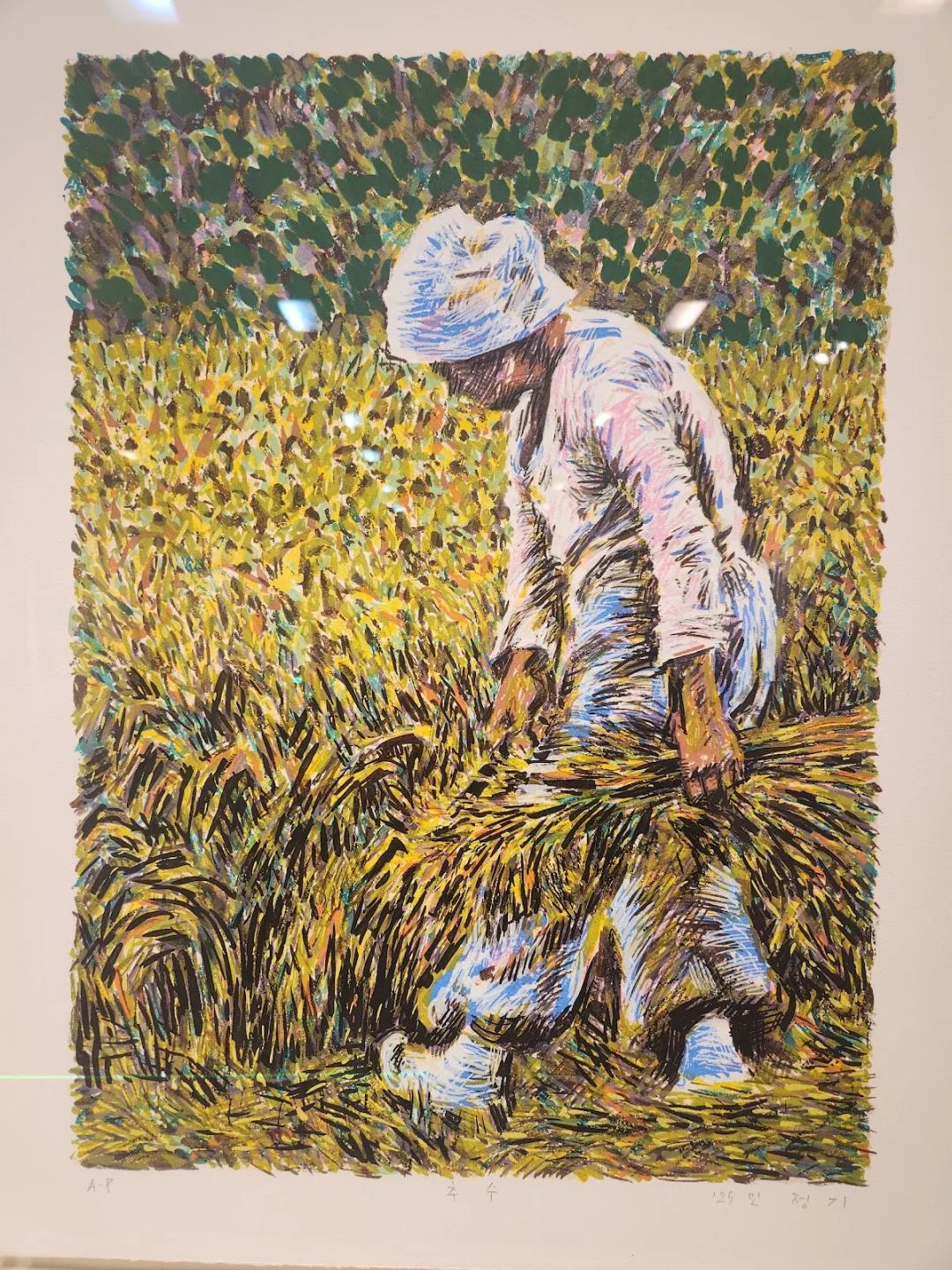
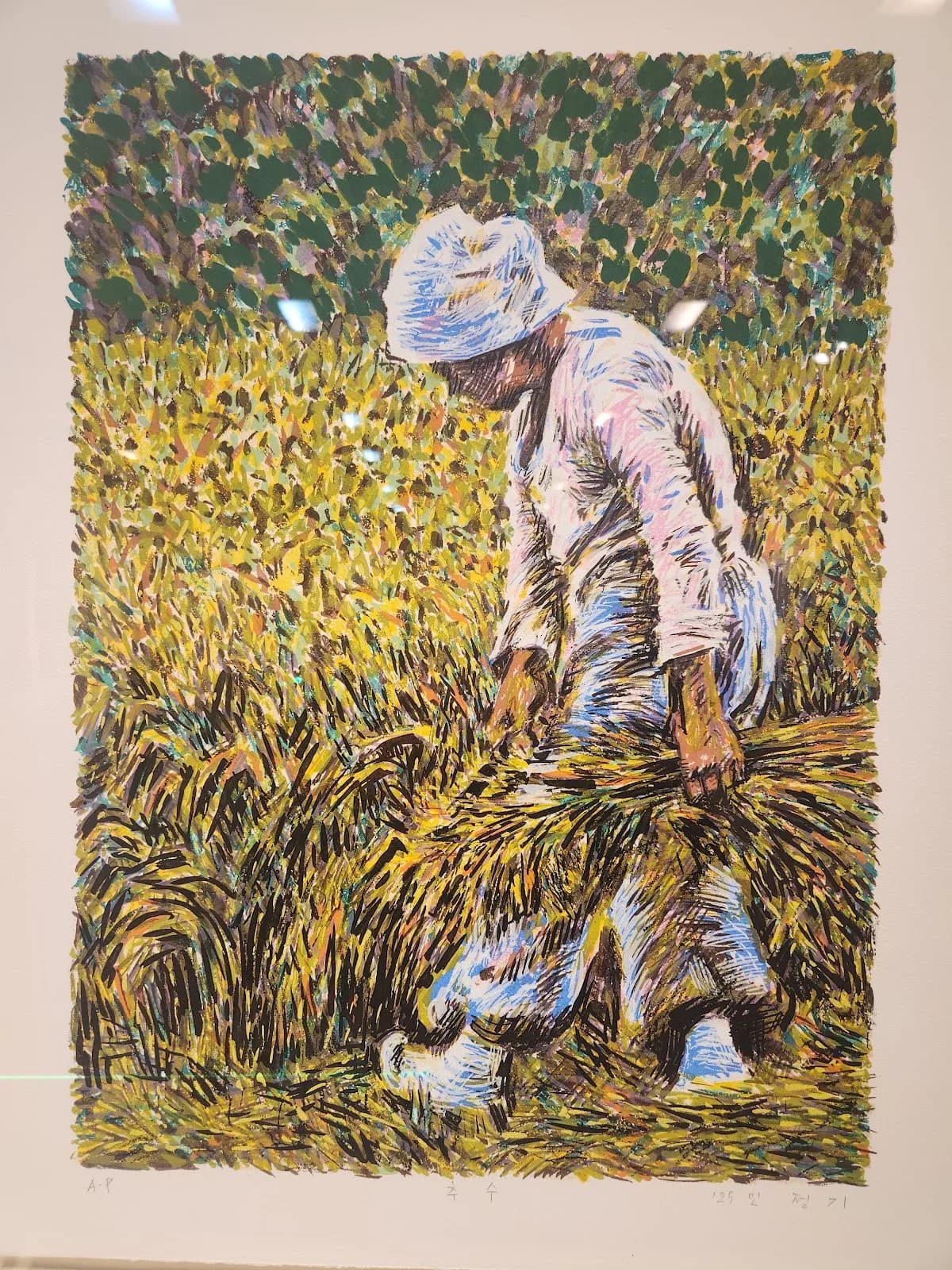
Dining spaces reward art that triggers appetite and conversation. Avoid palettes that kill appetite, insect or bone imagery. Recommend harvest, abundance, food motifs; colored Korean painting; silkscreen prints.
Min Jeonggi's Harvest — a silkscreen of rice fields and people. The title aligns directly with a restaurant's philosophy.
Law, Tax, Accounting, Consulting — Gravity and Trust
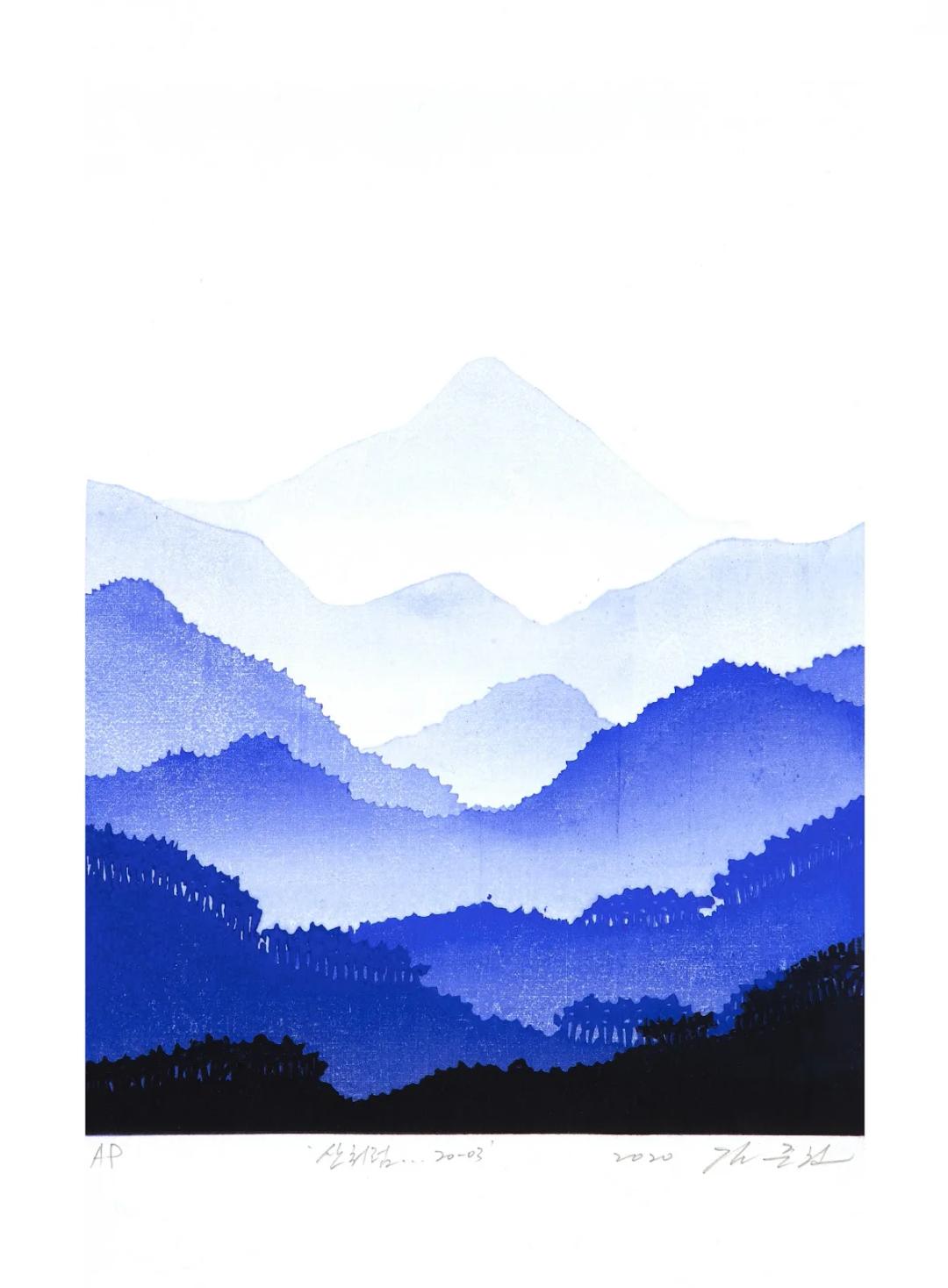
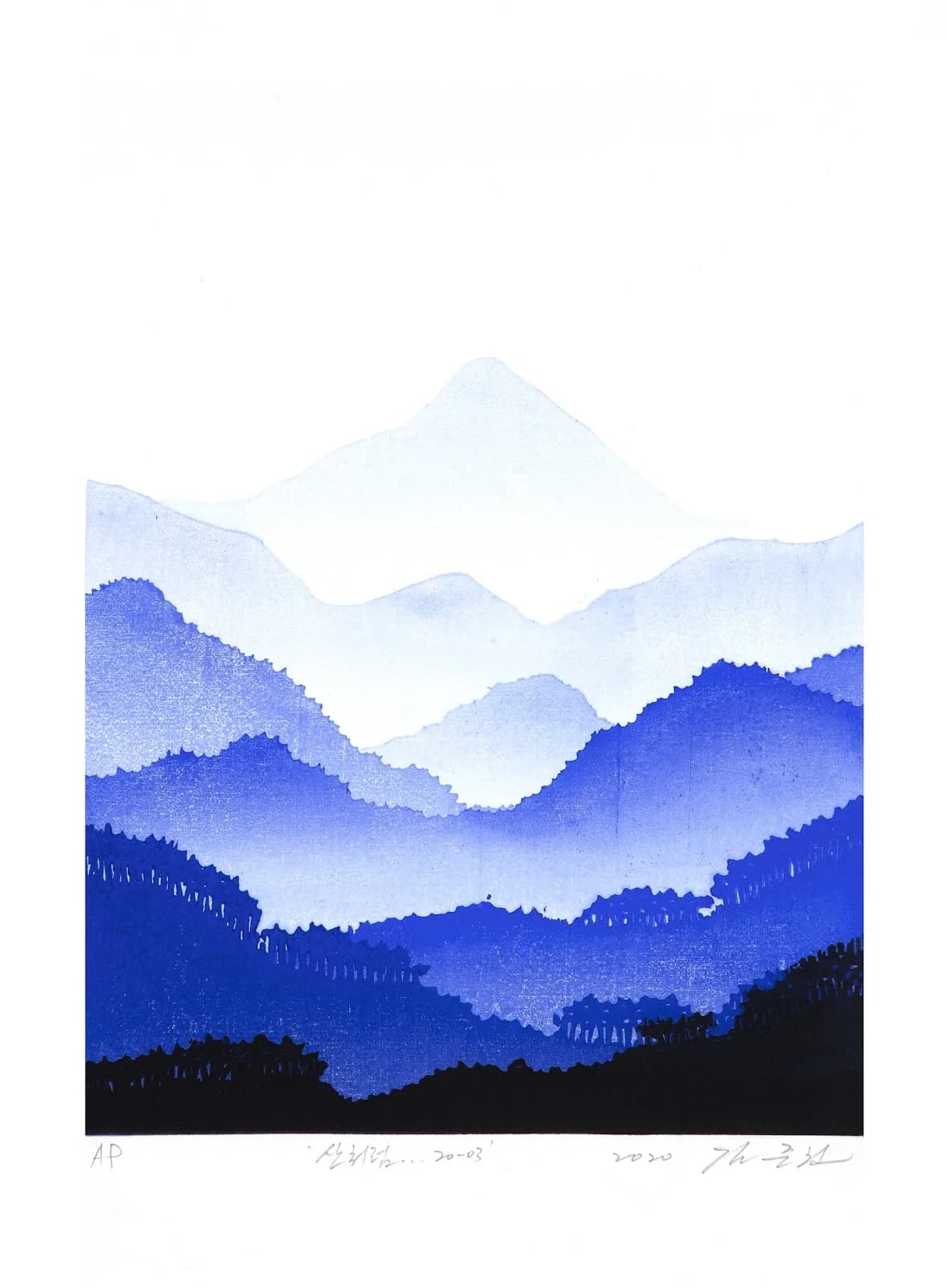
Advisory practices are hurt by lightness. The artwork should help the client feel comfortable entrusting money and problems to this room. Avoid fad colors and highly idiosyncratic voices. Recommend Korean sansu, calligraphy, ink work; prints by senior artists; restrained photography.
Kim Jun Kwon's Like a Mountain — a color-ink woodblock with the weight of Korean traditional printmaking. The mountain sits in the room.
Design Studios and Creative Agencies — Contemporaneity and Concept
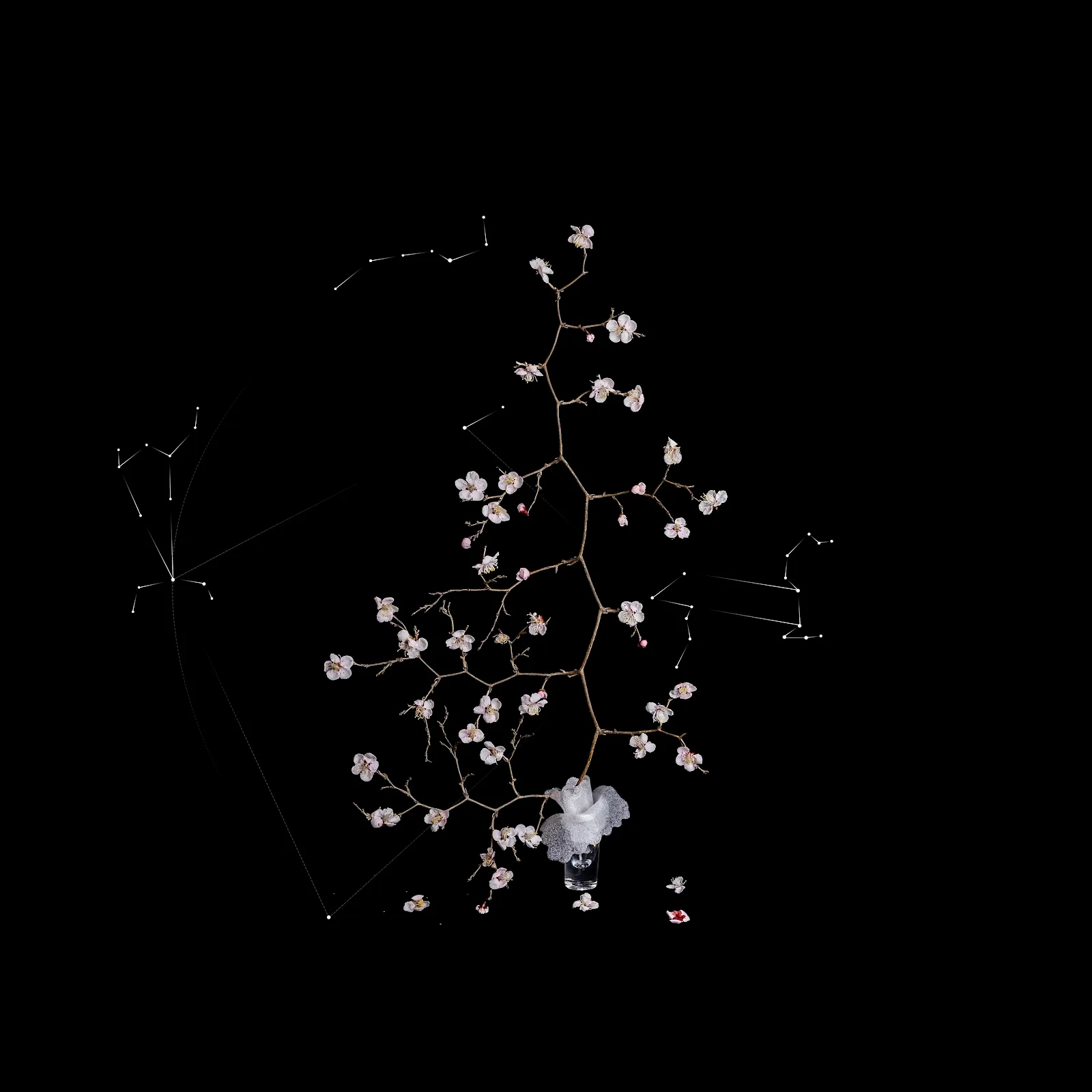
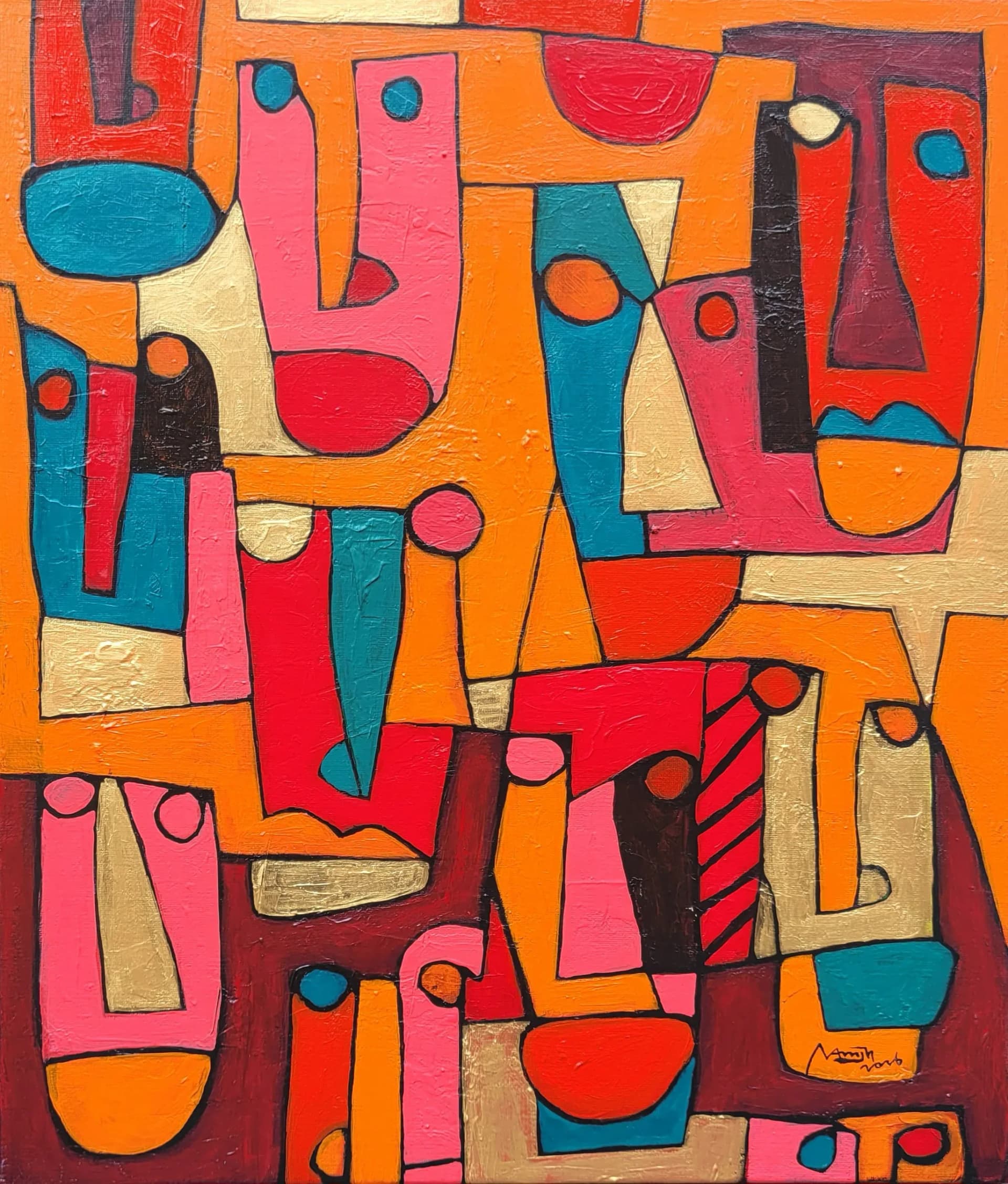
Creative spaces use art to declare aesthetic identity. Precise beats safe. Avoid generic hotel-lobby abstracts and overly commercial graphics. Recommend contemporary abstraction, conceptual photography, digital and mixed media.
Choe Jaeran's The Time of Quarks #113 — 100×100 cm archival pigment print. The artist suspends withered petals, seeds, and dried fruits gathered on daily walks against a black ground, then draws constellations and the traditional Korean chilbo motif over the still life. Borrowing "quark" from physics as a metaphor for the invisible time that pervades the smallest things — a match for spaces built on ideas.
Salons, Spas, Boutiques — Refined and Sensory
In beauty and fashion, timeless work outlasts trend work. Avoid this year's graphic fashion and campaign aesthetics. Recommend fine-art photography, colored Korean painting, flower and feminine motifs.
Jeong Geumhui's Flowers Fall and Return to Earth #16 — meditative and sensory at once.
Bookstores, Publishing, Education — Contemplation and Language
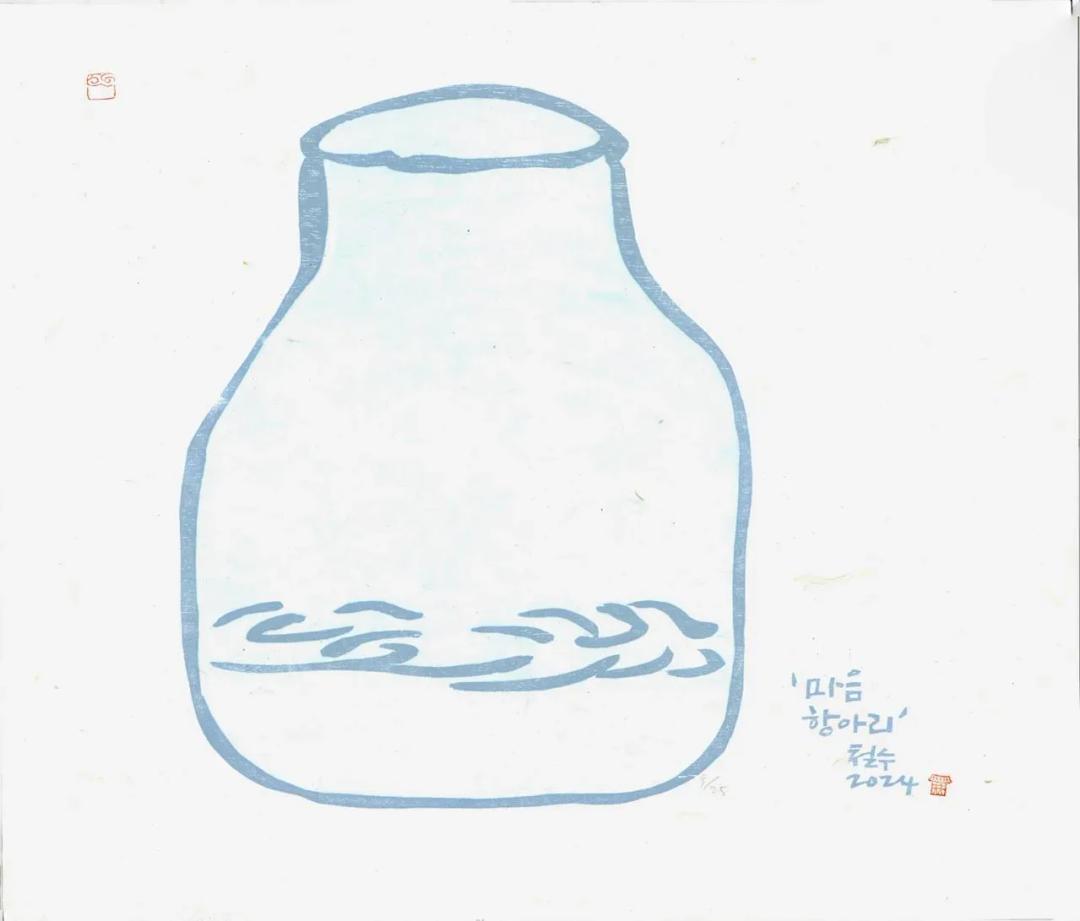
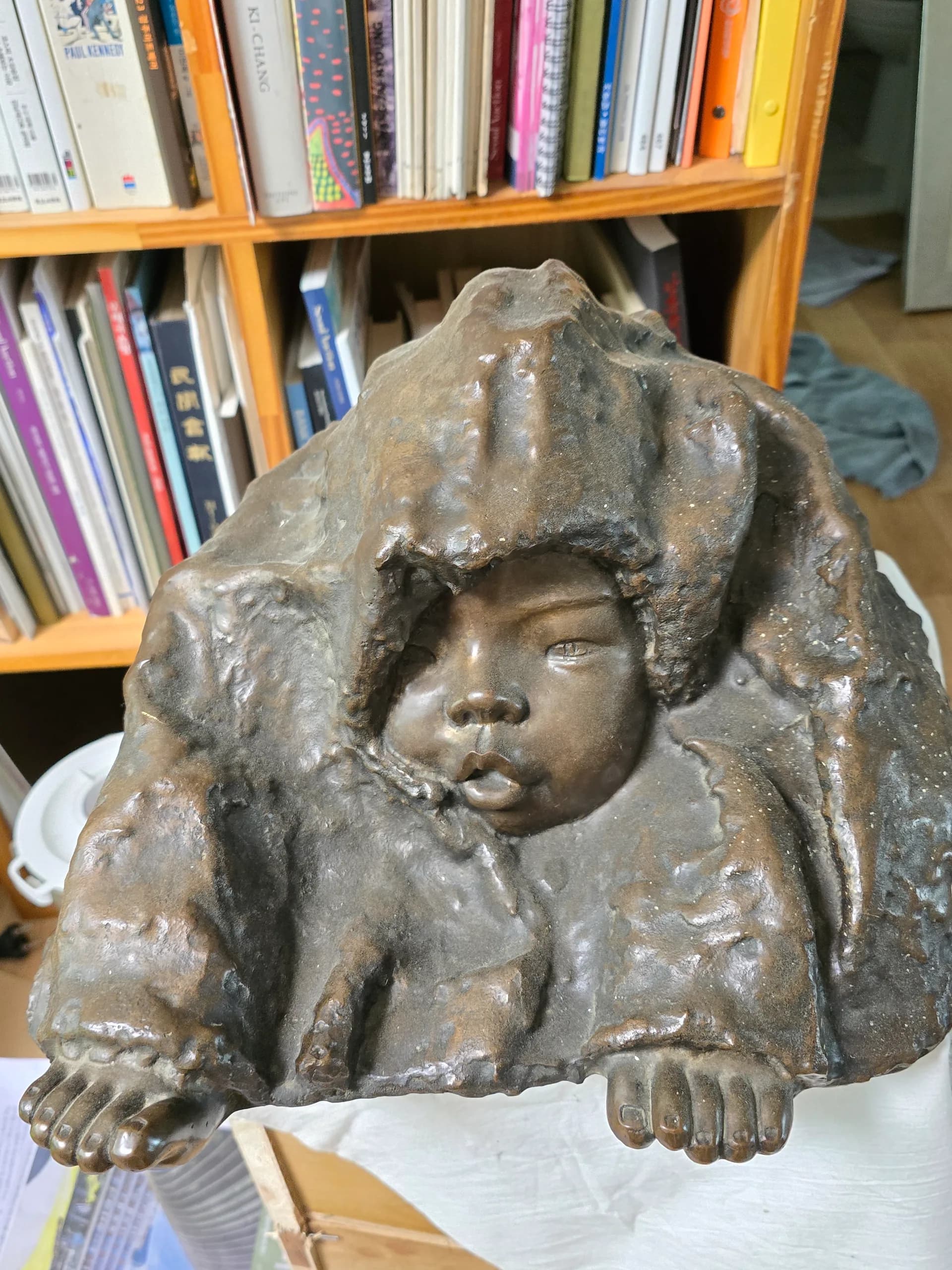
Spaces of books welcome art that speaks back over time. Woodblock and ink have been the traditional answer for good reason. Avoid visually noisy work.
Lee Cheolsu's Vessel of the Heart — woodblock on hanji. Sounds best in a room that smells of books.
Large Lobbies, Corporate Meeting Rooms — One Piece to Anchor
Halls with over 100 seats, tall-ceilinged lobbies, long corridors need one large work that sets the axis. Kim Sanggu's No 895 — a 180×30 cm horizontal woodblock on hanji — becomes the spatial axis when placed along a corridor.
Korean Tax Basics for Business Art
Corporations and sole proprietors installing artwork in a business location may expense certain pieces immediately. Under 2025 NTS interpretation, decorative artworks up to ₩10M per transaction unit are deductible in the acquisition year. Confirm with your tax professional; thresholds update annually.
Related Reading


The Context of Solidarity
84.9% of Korean artists are excluded from institutional finance. Sales of works by SAF-exhibiting artists cycle into a mutual-aid fund, returning as low-interest loans to fellow artists. Many SAF works already hang on walls of Korean cafés, restaurants, and clinics. One piece on a new wall; another artist's studio a little better off. Fund mechanics: Inside the Door the Bank Closed.
Related Guides

Related reading
If this piece helped, you may also enjoy these related articles:
Seed Art Festival
·