Price
₩1,500,000
Art protects art
8 out of 10
artists are shut out by banks
354
loans extended to fellow artists
95%
repayment rate — trust comes full circle
~KRW 140M
interest saved vs. predatory rates
Until the next exhibition, the next performance. For artists, income gaps are an unavoidable reality. For fellow artists forced into predatory loans just to afford paint, canvas, and studio rent, proceeds from this artwork become the Seed Fund — extending a fair hand at fair rates.
Voices of fellow artists
“The memory of going hungry for three days, alone, so my children wouldn't know.”
— 50s, theater artist
“I've been putting off urgent dental treatment because I can't afford it. I should be seeing a doctor regularly, but enduring instead of going has become a habit.”
— 50s, actor
“I kept delaying ear treatment because I had no money, and the symptoms in both ears worsened.”
— 30s, musician
“I couldn't pay my hospitalized mother's bills, so we had to delay her discharge, and she had to give up tests and treatment she needed.”
— 50s, actor/broadcaster
“Because of money troubles I had nowhere to go — drifting between gosiwon rooms and rehearsal studios, and for a while sleeping rough.”
— 30s, musician
“Because of unpaid rent, my collective was forced to vacate our shared workspace and home. Neither bank loans nor artist loans could help.”
— 50s, actor
“Without money, life collapses — and creating art? Out of the question.”
— 50s, artist
“It's painful that solving this month's money problems has to come before the work itself. As an artist, I can only earn well when the work succeeds — yet I have to chase odd jobs every month instead. It feels like being trapped in a vicious cycle.”
— 40s, musician
“Debt collection calls disrupted my rehearsals and performances, and the psychological burden made every day painful and the next day frightening.”
— 40s, theater artist
“Many times the loan payments looming each month forced me to step away from performing and focus on part-time work.”
— 50s, actor
“Sleeping less than four hours a night, juggling part-time jobs and theater — but the more I performed, the more debt piled up. Eventually I decided to quit performing.”
— 30s, actor
“When things were hardest, I couldn't even attend close friends' weddings or funerals — and as a result, relationships were severed.”
— 50s, actor/broadcaster
“When I said I was a stage actor, the loan officer called me "unemployed."”
— 50s, actor
“The shame and severed friendships that came with borrowing from people I knew, the pressure of failing to pay it back, the helplessness.”
— 50s, cartoonist/visual artist
“Even with programs meant for low-income citizens, I feel shame when I can't produce enough documentation simply because I'm an artist.”
— 30s, film/broadcasting professional
One artwork becomes the oxygen that keeps a fellow artist creating.
Sales proceeds go to the artist mutual-aid fund.
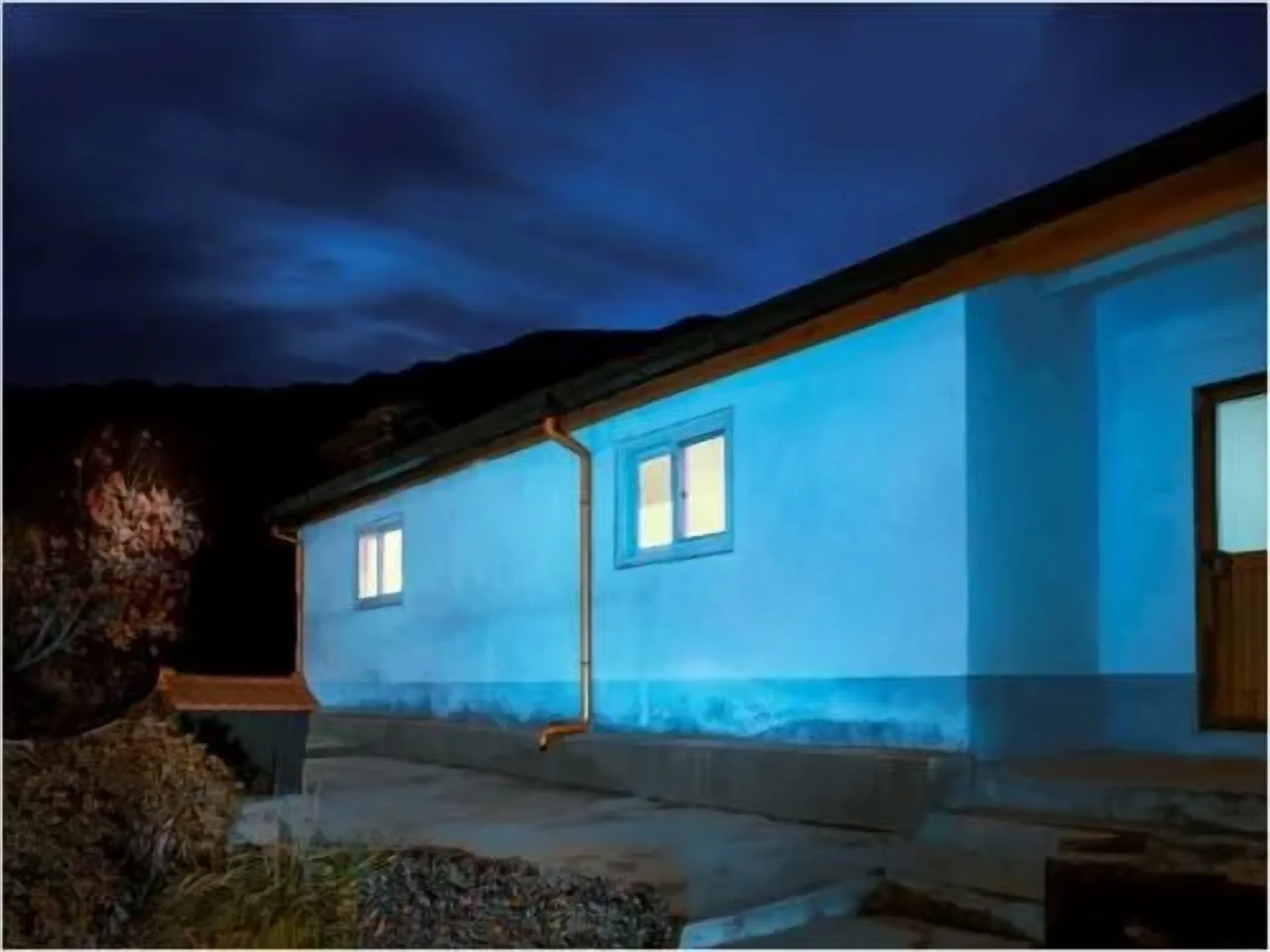
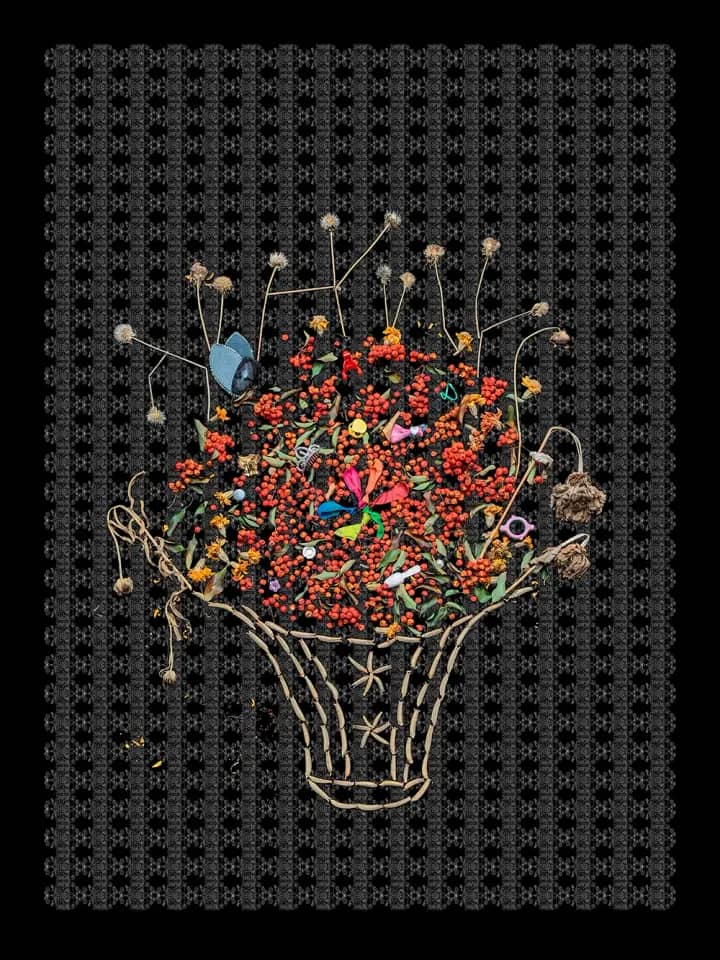
House on the Hill
Son Eunyeong
- Category
- Photography
- Material
- Archival pigment print What's a pigment print? →
- Size
- 60×50cm · Size 12 · Medium How big is this? →
- Year
- 2024
- Price
- ₩1,500,000
- Availability
- For sale
About the Artist
Son Eunyeong studied the foundations of painting at the Department of Western Painting, Ewha Womans University. Pursuing her dream as a painter, she entered the graduate program in Photography Design at Hongik University's College of Industrial Art, and at the boundary between the two disciplines she began forging her own unique visual language. The color sensibility and compositional instincts of painting met the realistic representational power of photography, giving birth to a new aesthetic that belongs to neither medium yet encompasses both.
The Artist's Life
Son Eunyeong traces the wellspring of her creative philosophy to a childhood spent apart from her family, living with her grandmother, and the longing for family that experience engendered. This primal yearning drives all her creative work and has determined every choice and subject throughout her life.
After marrying and having children, she set aside her dream of painting for twenty years to be a full-time mother. As her children grew, the desire to paint returned. Before that, she had purchased a camera to photograph her children — and it was this that led her onto the path of photography. Initially she used the camera for her children, but as they began avoiding it she started exploring other subjects, ultimately discovering "the house" as her signature theme.
In 2018, she won the artist open call at Seoul City Hall's Sky Plaza Gallery, marking the beginning of serious recognition. Her debut solo exhibition, The Underground, captured the city's subterranean and hidden spaces. This was followed by Black Houses (2019), an invitational at Gallery Bresson, for which she visited the sites of homes destroyed by a massive wildfire in Goseong, Gangwon Province, every two weeks over the course of a year. During this period, she began transitioning from photographic realism toward pictorial transformation.
The Houses at Night series, which began in earnest in 2020, led to the 2nd FNK Photography Award in 2021, firmly establishing her stature as a photographer.
The World of Her Work
When we first encounter Son Eunyeong's work, we recognize it as photography. Yet the longer we look, the more we realize it approaches painterly expression. This is deliberate. Having studied Western painting as an undergraduate and photography in graduate school, she has a thorough command of both media. To capture both photography's realistic representational power and painting's expressive freedom, she spends one to one-and-a-half months meticulously retouching each photograph in Photoshop — intentionally emphasizing or flattening textures, tones, and shadows to transform a photograph into a painting.
Even at the shooting stage, she uses both a medium-format digital camera and an infrared camera, then adjusts the resulting layers in Photoshop as though applying brushstrokes. The delicate textures of a tree or the rough surface of a concrete wall are heightened through increased contrast, while walls and roofs are flattened to appear as simple planes. Colors are shifted and forms accentuated, effectively reconstructing the original photograph.
In her most recent work, she has adopted a collage method that advances these techniques further — cutting out photographs taken at different locations, repositioning them, and digitally adjusting color and form. Like a painter wielding a digital brush, she fills the canvas stitch by stitch, cultivating her own garden. This goes beyond documentation to the act of "creating" images; Son Eunyeong's photographs look real yet contain a world beyond reality.
Black Houses took three years to complete, and Houses of Memory two years, underscoring that retouching demands far more time than shooting. Early on, she spent three months to finish a single image. This investment of time is not merely a pursuit of technical polish — it is part of the intense creative process of embedding her memories and emotions in each image.
The Meaning of House and Memory
Son Eunyeong's fixation on "the house" does not arise from abstract concepts. It stems from the longing created by a childhood spent apart from her family, and the meaning of motherhood she came to understand while raising her own children. Even on a dark night walk, if one can see light spilling from a window or hear a mother's voice, that house ceases to be a building and becomes a haven where someone beloved waits.
She perceives the house as "the most important place in daily life," a space where "we spend a great deal of time and create memories," and "the last value that does not disappear." Memory warps with time, and it is impossible to reproduce exactly the old house of one's memory. Therefore, she travels the country seeking houses and neighborhoods that evoke the feeling of the home she lived in as a child, photographs them, and layers them over her own memories with transformations.
In Black Houses (2019), what emerges is the worn texture of nighttime residential entrance doors and alley walls — repositories of history and accumulated lives. As her work evolved into The Houses at Night (2020–2021), she focused on the mood and palette unique to nighttime — the gritty glass of an old front door, laundry racks glimpsed through low walls, the glow of signage — elements that meet the visual noise perceptible only in night landscapes, rendered in saturated color as if tracing someone's old memory. One viewer purchased a piece, saying the moon in the work was exactly the one he saw as a child returning home from playing soccer with his brother on a hillside neighborhood in Seoul.
The series continuing through Houses of Memory (2023) and Living in That House (2024) grows increasingly painterly and abstract. Where earlier work emphasized the details and materials of landscape, the focus now rests on the composition of color and plane — the tone of the sky, the texture of walls, the direction of light. All of these formal elements are reorganized by the artist's hand and sublimated into spaces that feel real yet transcend reality.
Garden, Threshold of Memory
After nearly a decade devoted to "the house," Son Eunyeong has turned her gaze to "the garden." Her June 2024 exhibition Monet's Garden at Gallery Bresson marked the beginning of this shift. "There was a pond in front of the house where I grew up. Roses bloomed, and my mother used to water the garden. I loved that garden."
The garden belongs to the house yet is not the house — neither indoors nor on the street, but an in-between space, private yet public. For Son Eunyeong, the garden is a "threshold of memory": the moment just before entering a house, or just before leaving it.
Monet's Garden comprises some twenty photographs — roses climbing beneath a wall, rain-soaked grass, an old wooden chair, colorful tulips, a transparent greenhouse in a forest saturated with green, a tropical garden scene where cacti and agave intersect. All are fragments of a garden, yet they are not mere records of plants and objects but landscapes imbued with emotion.
Too vivid for reality, too concrete for a dream — these landscapes visually maximize the theme of "a garden in memory." The artist has composed not merely the forms of nature but the collisions and reconciliations of color that gardens harbor. Slightly blurred petals, smudges of light behind leaves, the density of darkness at the edges of a photograph — all convey more by not speaking.
As philosopher Choe Jinseok has said, "Desire for sustenance resides in the vegetable patch; desire for beauty resides in the garden." Unlike a vegetable patch planted with edible things, a garden is filled with what cannot be eaten — flowers, fragrance, light, pattern, and art. Son Eunyeong's garden project is an exploration of the garden as a landscape of desire and a birthplace of art.
Photographer Kim Yeongho remarked of the exhibition: "An artist who has long been devoted to 'the house' has now turned her gaze to 'the garden,' thereby expanding her sensibility of home. This exhibition will serve as the momentum heralding that transformation."
Like Repainting, Like Repairing
Son Eunyeong describes her working process: "I travel between Seoul and the provinces photographing houses of various forms, then I apply color as if repainting them, and remake them as if repairing something old." This is not merely a description of technique — it is a philosophy.
The first time she retouched a photograph in Photoshop, she realized that the layering work of composing a frame and emphasizing a subject was exactly the way she used to paint. Even when shooting the same subject from the same spot, what is emphasized changes with the angle, just as a painting is structured around what the artist wishes to highlight.
Son Eunyeong's photographs move us because they are landscapes we have passed through and, at the same time, landscapes we have never seen. Reality, memory, and imagination are layered upon one another — images that deepen the longer we look. Within that depth, she helps us recover something we all possess but have forgotten. In the garden before the house, handling light like a magician, she creates a world that lies beyond reality, emotions that lie beyond memory. Her practice, expanding from the most private space of the house to the landscape of desire called the garden, poses an unending question and gift to us all.
Artist Statement
Home is the most important place in everyday life, where one feels emotional experiences such as love, warmth, and ease, and a sense of intimacy among family members. Home is the place where people spend much of their time and create memories; memories of home call to mind one's connection with family, friends, and community, and play a role in showing the meaning and direction of one's own life. Home is steeped in an unbreakable bond and a sense of shared destiny with family members, an important place where memories were shared and dreams of the future were dreamed.
As the times change, the meaning of home gradually shifts as well, but home still holds the memories and experiences of one's past, along with the image of the self. The warmth and protection that home holds is its motherhood (母性); because of that motherhood imprinted upon the body, the houses where childhood memories soak — even when they no longer exist — remain as a final, undisappearing value.
Beginning with The Black House (2020), and continuing through The Houses at Night (2021), The Houses of Memory (2023), and Living in That House (scheduled for May 13, 2024), I have paid attention to the place called "home" and made it a central subject of my work.
For me, home is at once a place full of emotional bonds with the family and a place where the loss born of the family's absence is mixed in. The home in my memory was also often a place where the whole family could not be together and where I sometimes lived alone. The home series begins from these memories of the past. I often dreamed of the whole family gathered under one roof, laughing, enjoying themselves, talking together.
If The Houses at Night and The Houses of Memory approached the house from a close, still gaze, like a still life, then this Living in That House looks at the alleys where houses gather and lean against one another. The varied forms of houses I photographed traveling between Seoul and the provinces are dressed, as if being repainted, in colors, and expressed anew, as one would mend something old or broken. I tried to use many warm tones so that human warmth and intimacy could be felt.
In the young heart of my adolescence, I would sometimes think that home is everywhere, but a true home — where family members can share joy, anger, sorrow, and pleasure together — must not exist anywhere. And yet, just as humans remember only what they wish to remember, the homes within my autobiographical memory remain in the form of a beautiful, splendid longing. Even for people of today, the questions remain unsolved: Where is the true home for human beings? What does home mean to a human being?
Through a journey to find the true meaning of home — by way of the longing and tender memory of family I felt in adolescence and the nostalgia of a time to which one cannot return — I want to express the true consolation needed to live in this age, and the beauty and special quality of life that dwell in the place we call home.
Key Career Highlights
Related materials
Korean media · Original Korean article
This article text is currently available in Korean. Open the source to read the original version.
Korean media · Original Korean article
This article text is currently available in Korean. Open the source to read the original version.
Korean media · Original Korean article
This article text is currently available in Korean. Open the source to read the original version.
artlecture · Original Korean article
This article text is currently available in Korean. Open the source to read the original version.
Magazine
A Shutter Returning After 20 Years of Silence: Son Eunyeong's House and Garden
Son Eunyoung studied Western painting, then set down the brush for 20 years of motherhood. Picking up a camera to photograph her children led her into photography.
Apr 20, 2026 · Seed Art Festival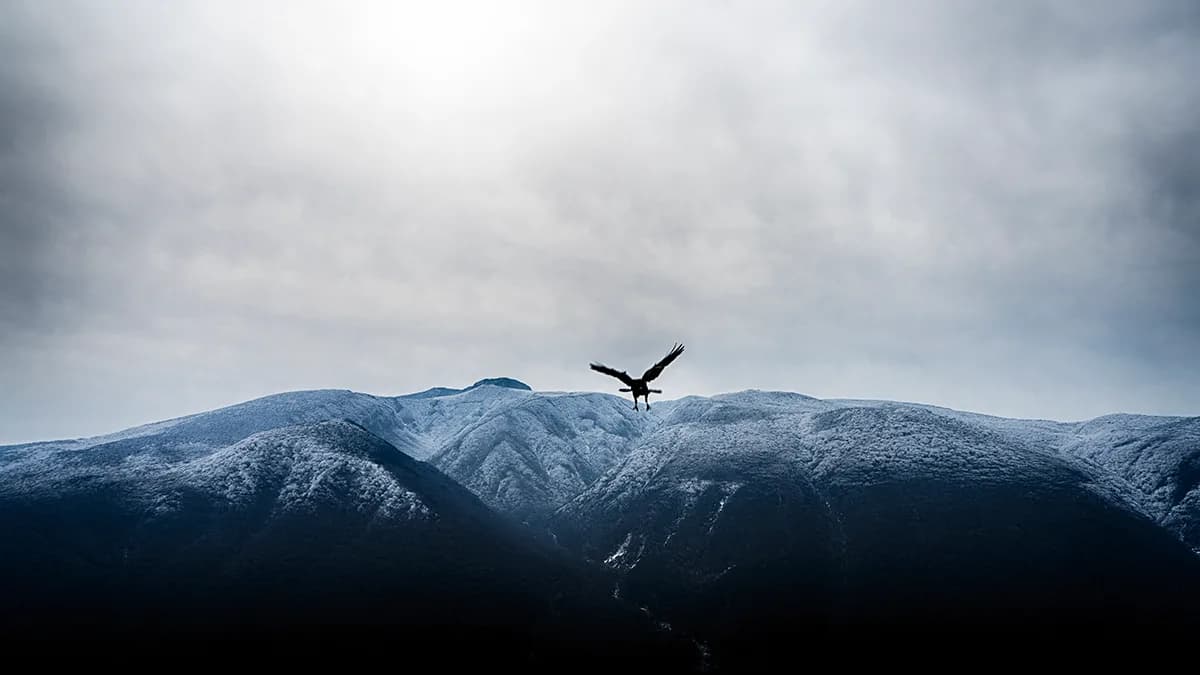
SAF Photographers — From Documentary to Camera-less Photography
Ten SAF photographers across four axes — documentary, landscape, experiment, and critique. From Cho Moon-ho's edges of the world to Lee Sucheol's pictures without a camera.
Apr 20, 2026 · Seed Art Festival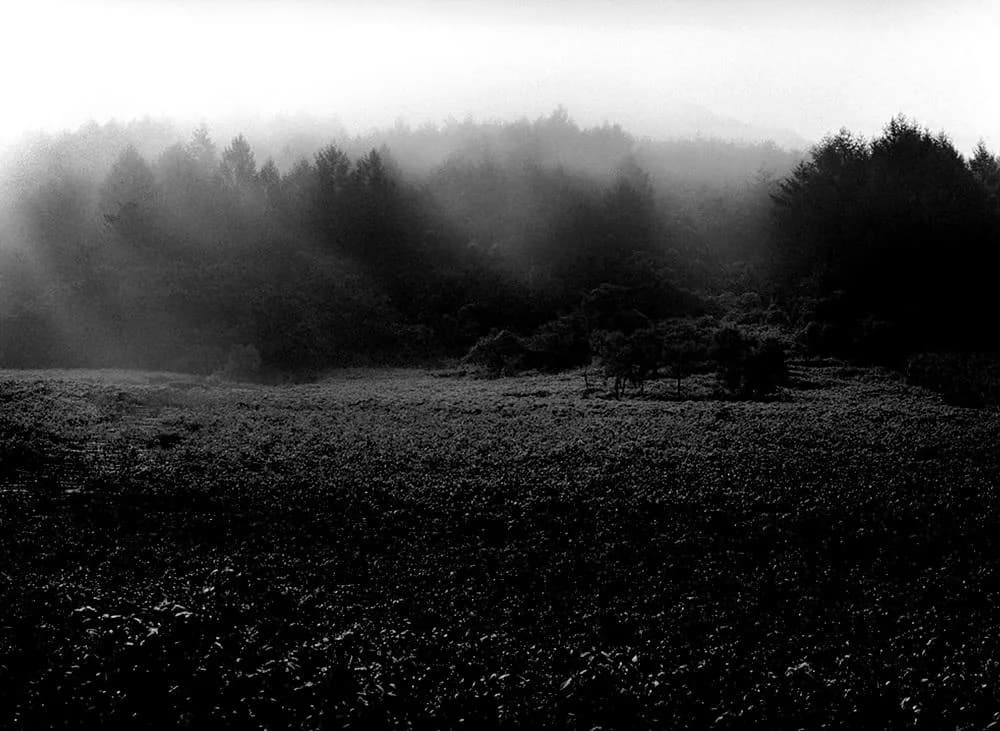
Korean Landscape and the Lives of Common People — The Documentary Photography of Cho Mun-ho, Jeong Yeong-shin, and Kim Soo-oh
The flow of Korean documentary and landscape photography — the practices of three masters Cho Mun-ho, Jeong Yeong-shin, and Kim Soo-oh, plus five collecting perspectives.
May 10, 2026 · Seed Art FestivalOther works by Son Eunyeong
View All
More Photography Artworks
View all Photography
Price
₩1,500,000
Two beginnings made by one piece
- For you —
- One of a limited edition
- For the artist —
- the pride of standing with a peer
- For a fellow artist —
- a new ₩3,000,000 path of low-interest support
354 artists have walked this path of recovery; 95% returned to open it for the next.