Price
₩2,400,000
Art protects art
8 out of 10
artists are shut out by banks
Until the next exhibition, the next performance. For artists, income gaps are an unavoidable reality. For fellow artists forced into predatory loans just to afford paint, canvas, and studio rent, proceeds from this artwork become the Seed Fund — extending a fair hand at fair rates.
Voices of fellow artists
“The memory of going hungry for three days, alone, so my children wouldn't know.”
— 50s, theater artist
166 artworks sold, each becoming a seed of solidarity
One artwork becomes the oxygen that keeps a fellow artist creating.
Sales proceeds go to the artist mutual-aid fund.
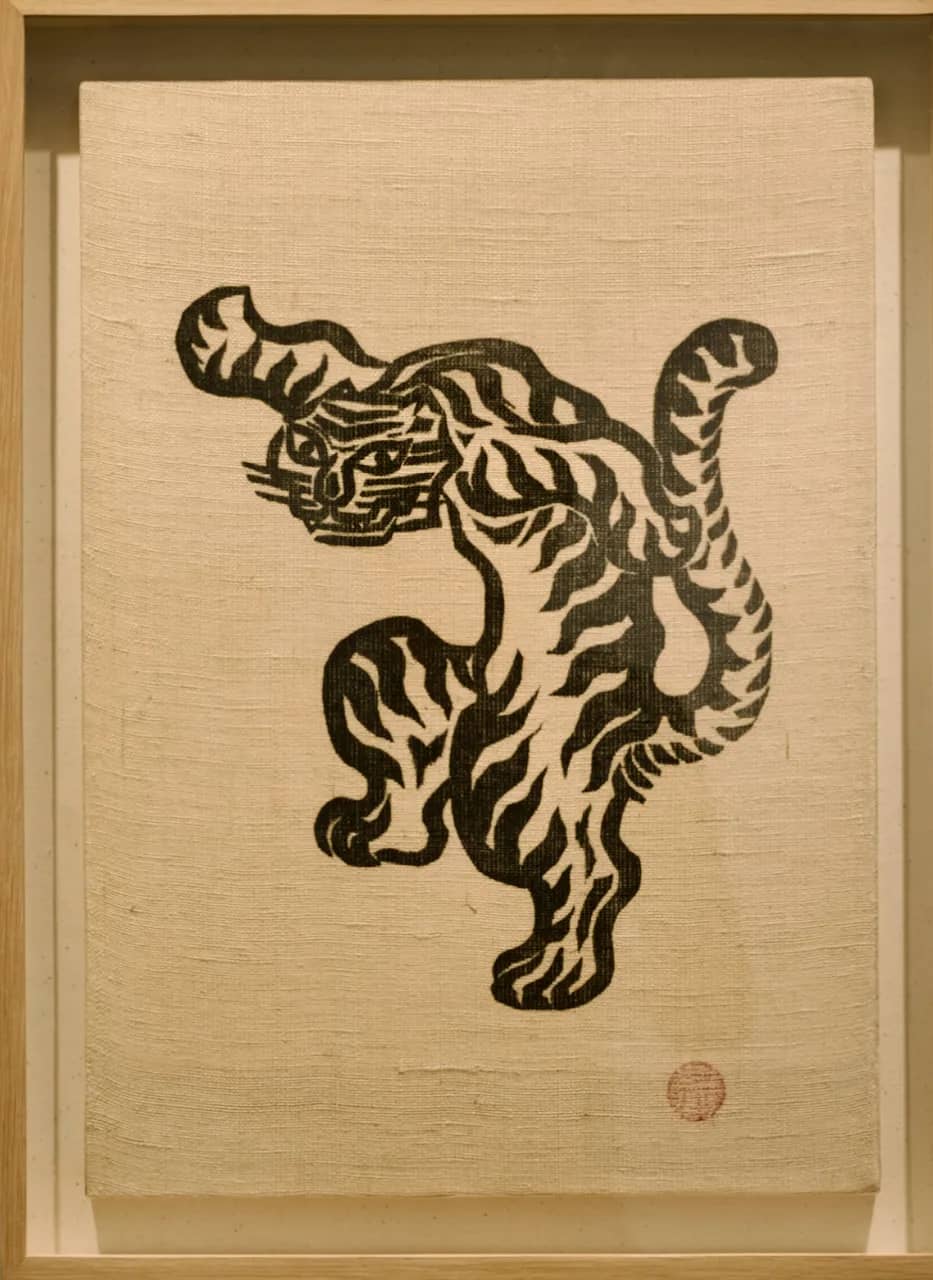
Dancing Tiger
Oh Yoon
Posthumous Edition
- Artist
- 오윤 (1946–1986)
- Issuing authority
- Estate & foundation authorized
- Original source
- Issued from original 1980s woodblock prints
Posthumous editions are official limited prints authorized by the artist's estate and foundation — bringing a master's works within reach at an accessible price.
On the 10th anniversary of his death in 1996, five printmakers who had walked the Minjung art path alongside Oh Yoon — 홍선웅, 류연복, 남궁산, 박야일, 김윤기 — came together to produce this posthumous edition. Pulled from the woodblocks Oh Yoon left behind, these prints exist to carry his spirit to more people — the most faithful way to continue his belief that art must be shared with many.
A finite set from 1996 — once a print finds its owner, it is not reprinted.
- Exhibition
- OH YOON 40th Anniversary Special Exhibition
- Category
- Posthumous Print
- Material
- Woodcut on mulberry-bark hanji What's a print? →
- Size
- 35×25.6cm · Size 5 · Small How big is this? →
- Year
- 1985
- Price
- ₩2,400,000
- Availability
- For sale
About the Artist
Oh Yun was a towering figure in Korean contemporary art, the most passionate and honest artist of the tumultuous 1980s, who elevated the lives of ordinary people into art. Born to Oh Youngsu, the author well known for the novel Seaside Village, he grew up in a fertile artistic environment, yet his gaze was always directed toward the lives of common people standing on barren ground rather than the glamorous art world. Despite receiving a Western aesthetic education studying sculpture at Seoul National University, he yearned not for a preserved aesthetics confined to museums but for living art that breathed in the streets and on the ground. After much deliberation, the medium he chose was woodblock printing. The woodblock, which leaves an irreversible mark with each cut of the knife, was the most fitting tool to express his robust and powerful artistic spirit. The most essential sentiment running through Oh Yun's works is the harmony between han (a deep-seated Korean emotion of sorrow and resentment) and sinmyeong (the ecstatic vitality that breaks through it at once). The figures in his prints are never frail or weak. Their gestures, depicted with bold, rough lines—especially their dynamic shoulder movements in dance—symbolize a powerful life force that rises above the pain of oppressed reality. He reinterpreted folk subjects such as mask dance, shamanism, and dokkaebi (Korean goblins) with a modern sensibility, powerfully imprinting upon an art world accustomed to Western aesthetics the question of what constitutes a Korean archetype. For him, printmaking was not merely a technique for reproducing images but a ritual of communication—etching the pain of the times with his blade and sharing it with the public. He was wary of art becoming the exclusive property of a privileged few. Under his conviction that 'art should be shared by many,' his generous practice of lending his prints for poetry book covers and labor movement leaflets exemplifies his commitment to the public nature of art. From grand works satirizing the grotesque desires of capitalism to warm drawings comforting hard lives, his work was always rooted in a deep trust and love for humanity. Although he died of liver cirrhosis at the tragically young age of 41 in 1986, the marks he carved remain an unfading, deeply resonant legacy more than 40 years later. In 2026, we live in an era more technologically dazzling than ever, yet Oh Yun's rough woodblock prints continue to move us deeply—perhaps because of the authenticity they contain. He demonstrated through his own life and work how an artist should confront the times, and how the most Korean qualities can reach universal human values. Oh Yun is gone, but the people's dance he carved into wood never stops, and his art endures as the most humane and luminous record in Korean art history.
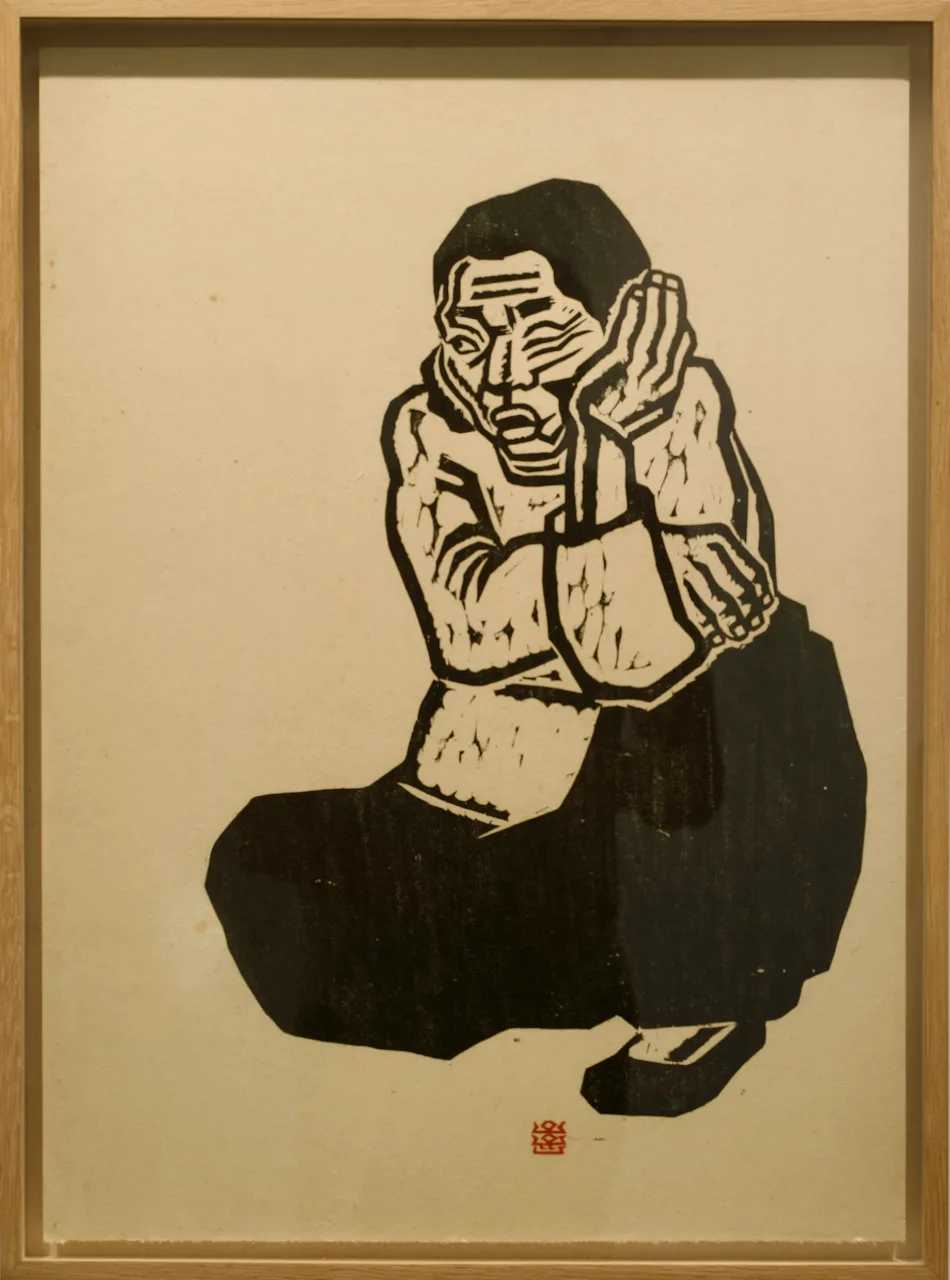
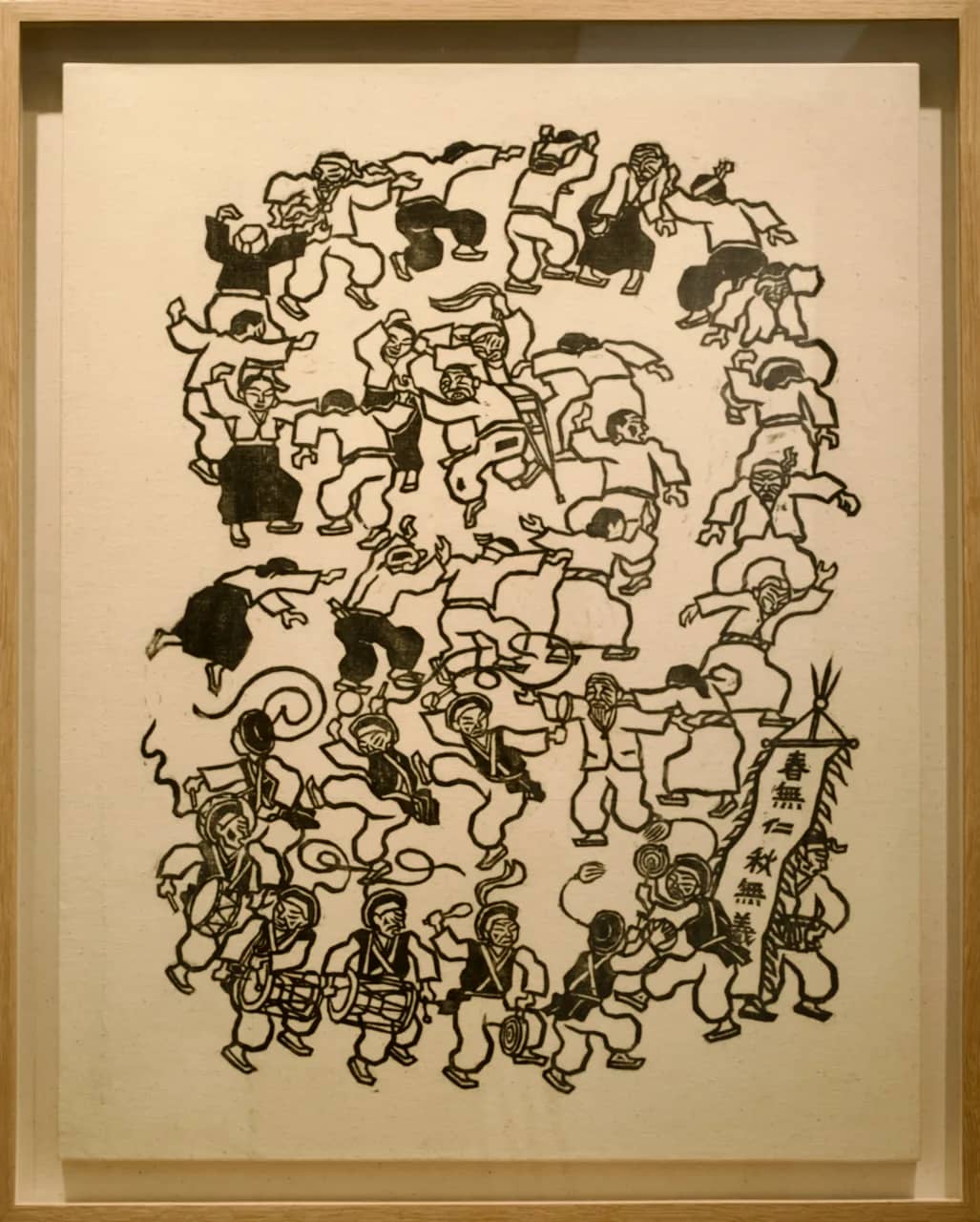
Other works by Oh Yoon
View All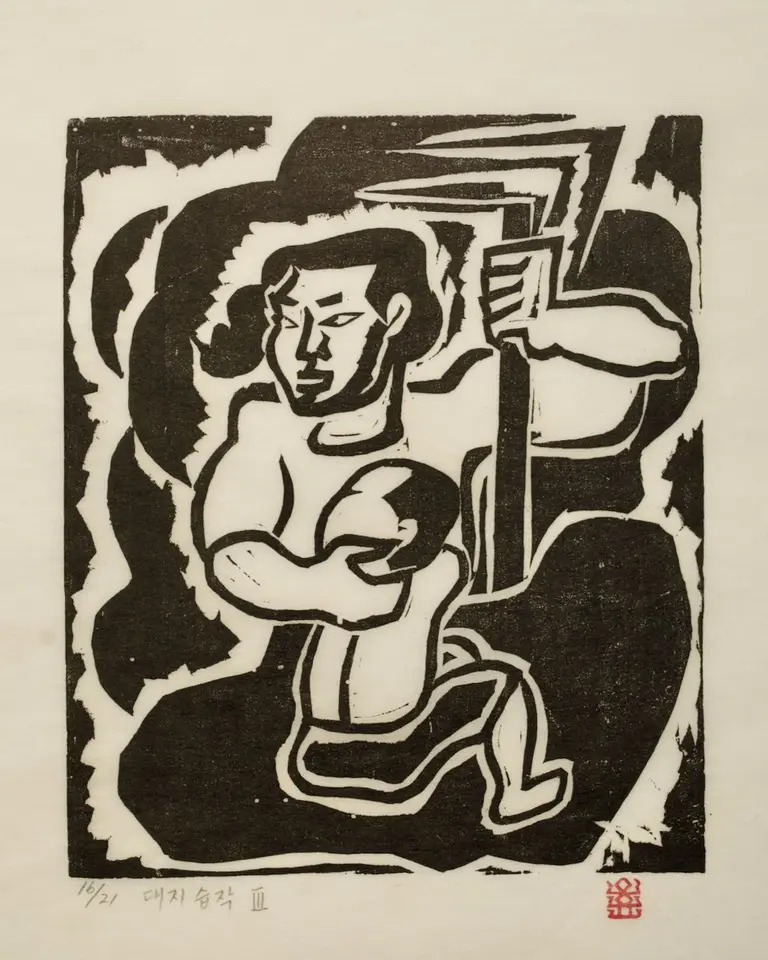
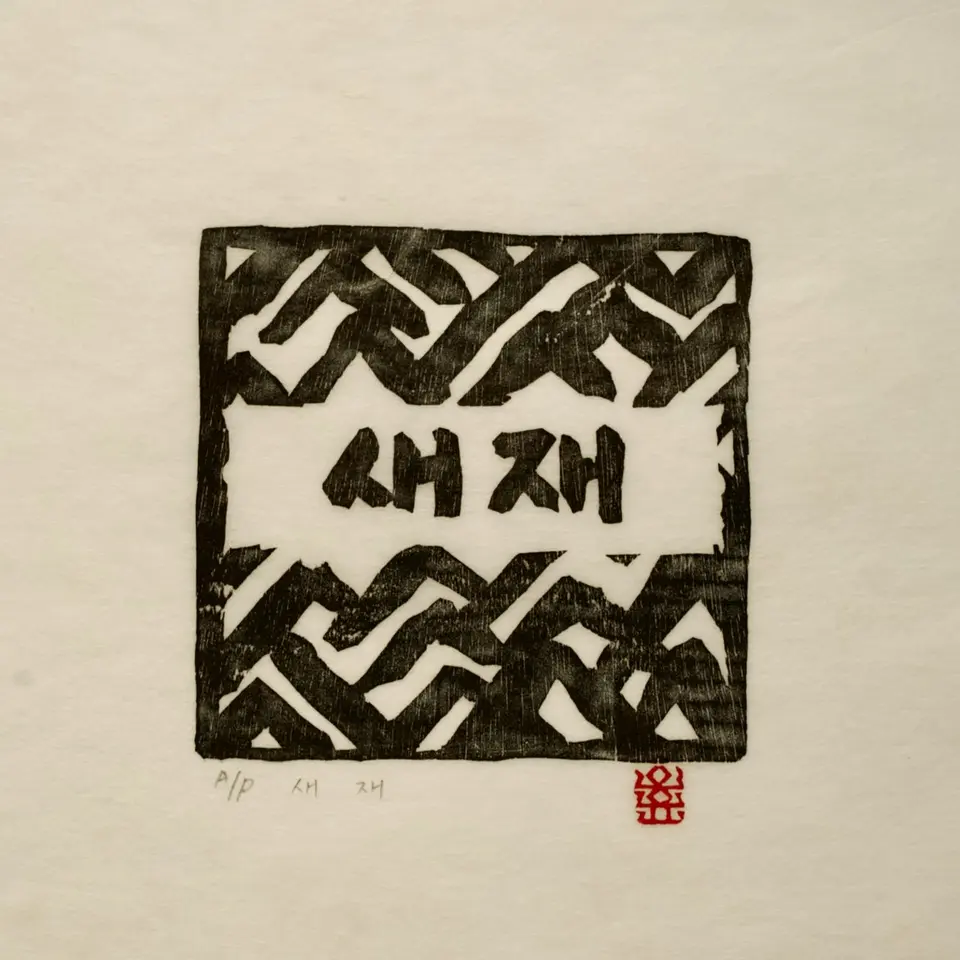
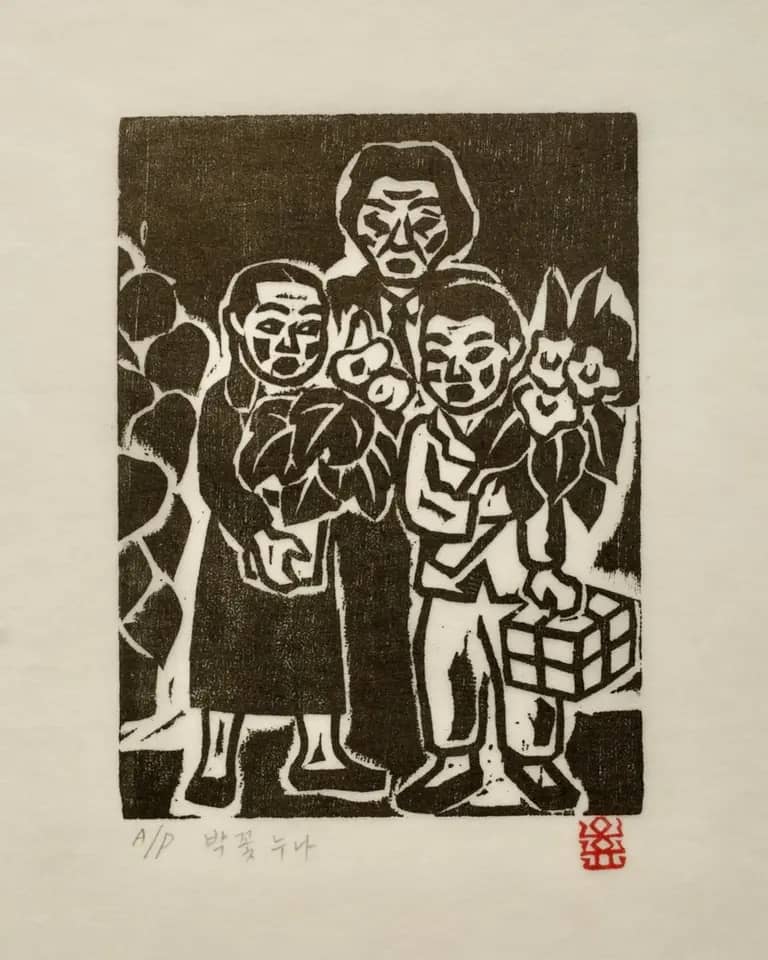
Recently Sold
166 artworks sold recently
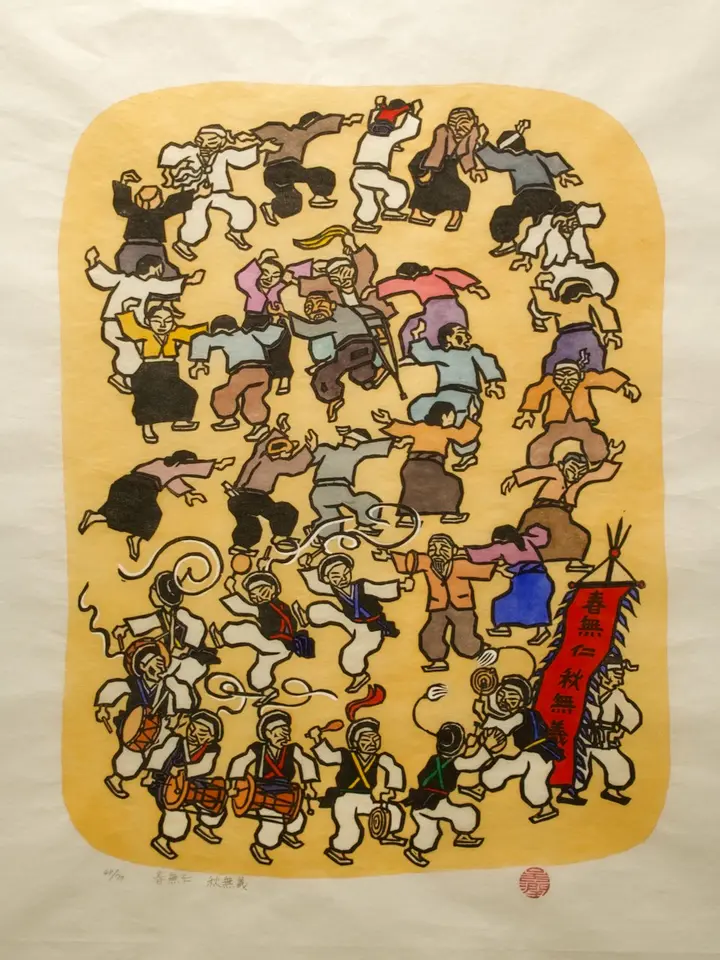
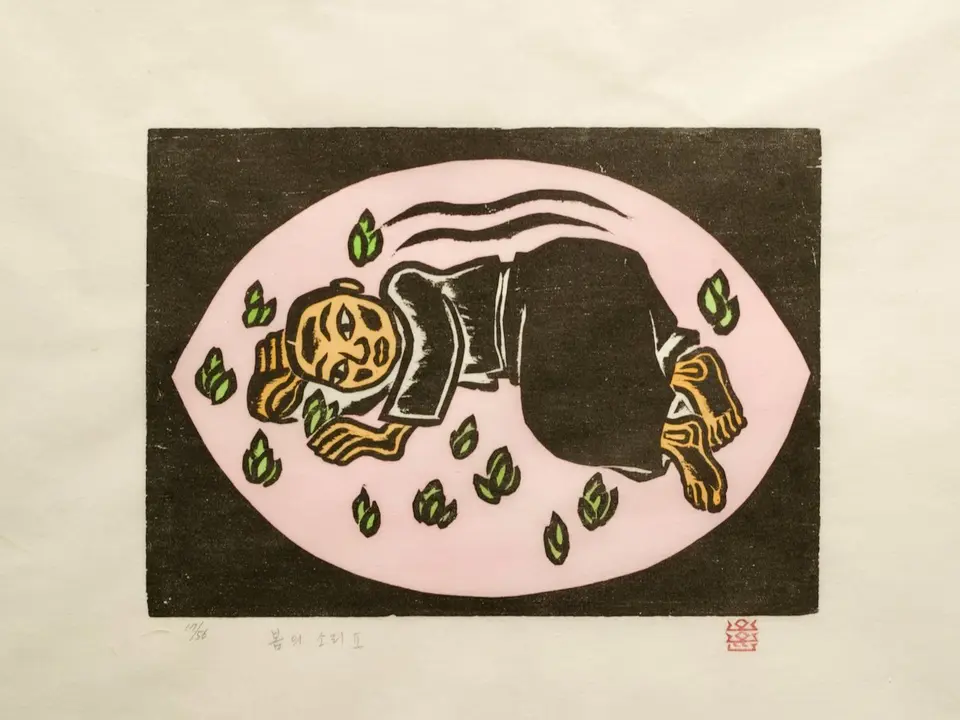
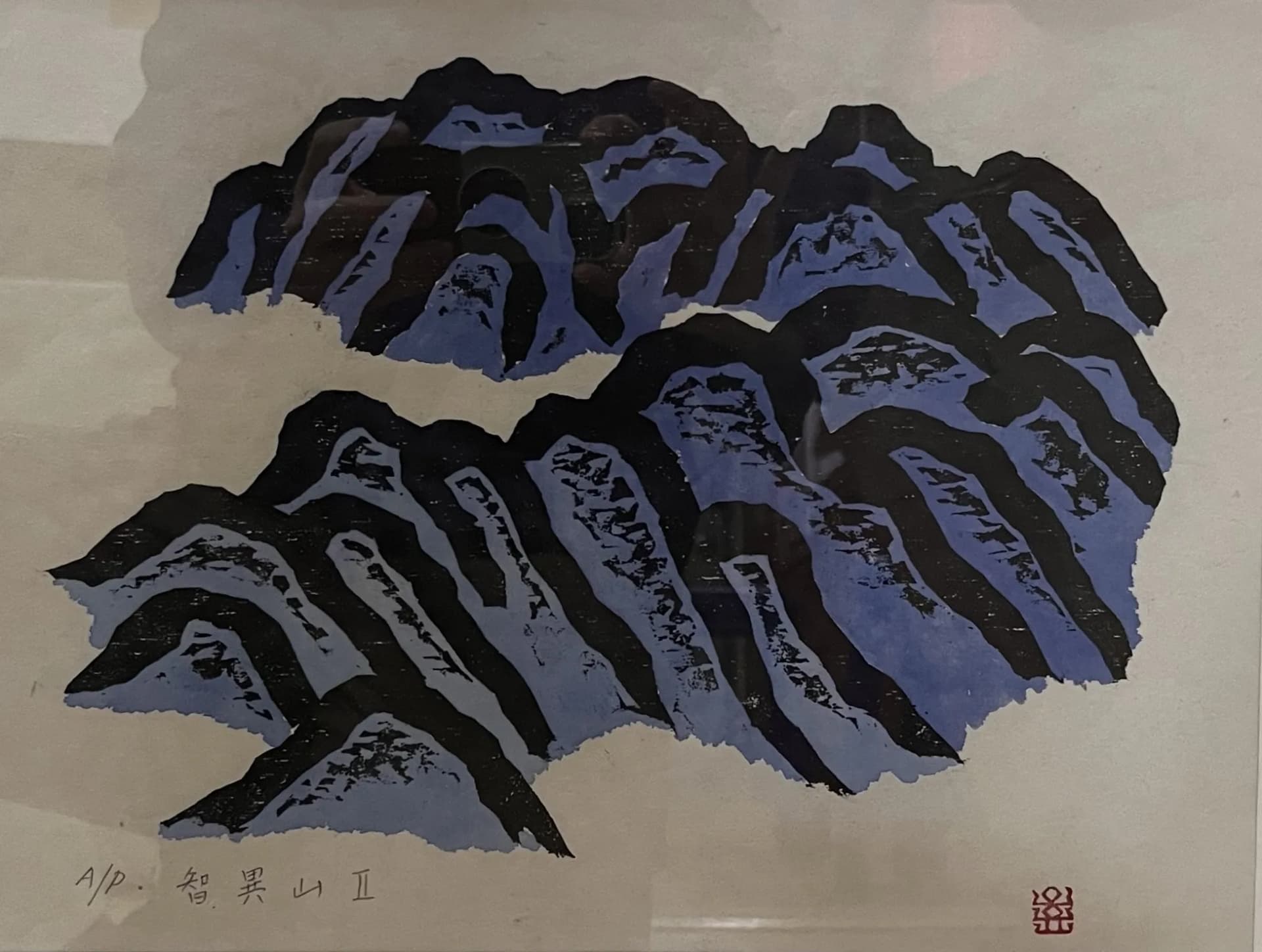
More about Oh Yoon
Magazine
Carving an Era with a Blade: Oh Yun 40th Anniversary Special Exhibition
The printmaker Oh Yun died at forty-one in 1986. Forty years later, the dance he carved into wooden blocks has not stopped. Eighteen posthumous prints submitted to SAF 2026 create a paradoxical, beautiful moment — his art reborn as a financial safety net for fellow artists.
Apr 7, 2026 · Seed Art Festival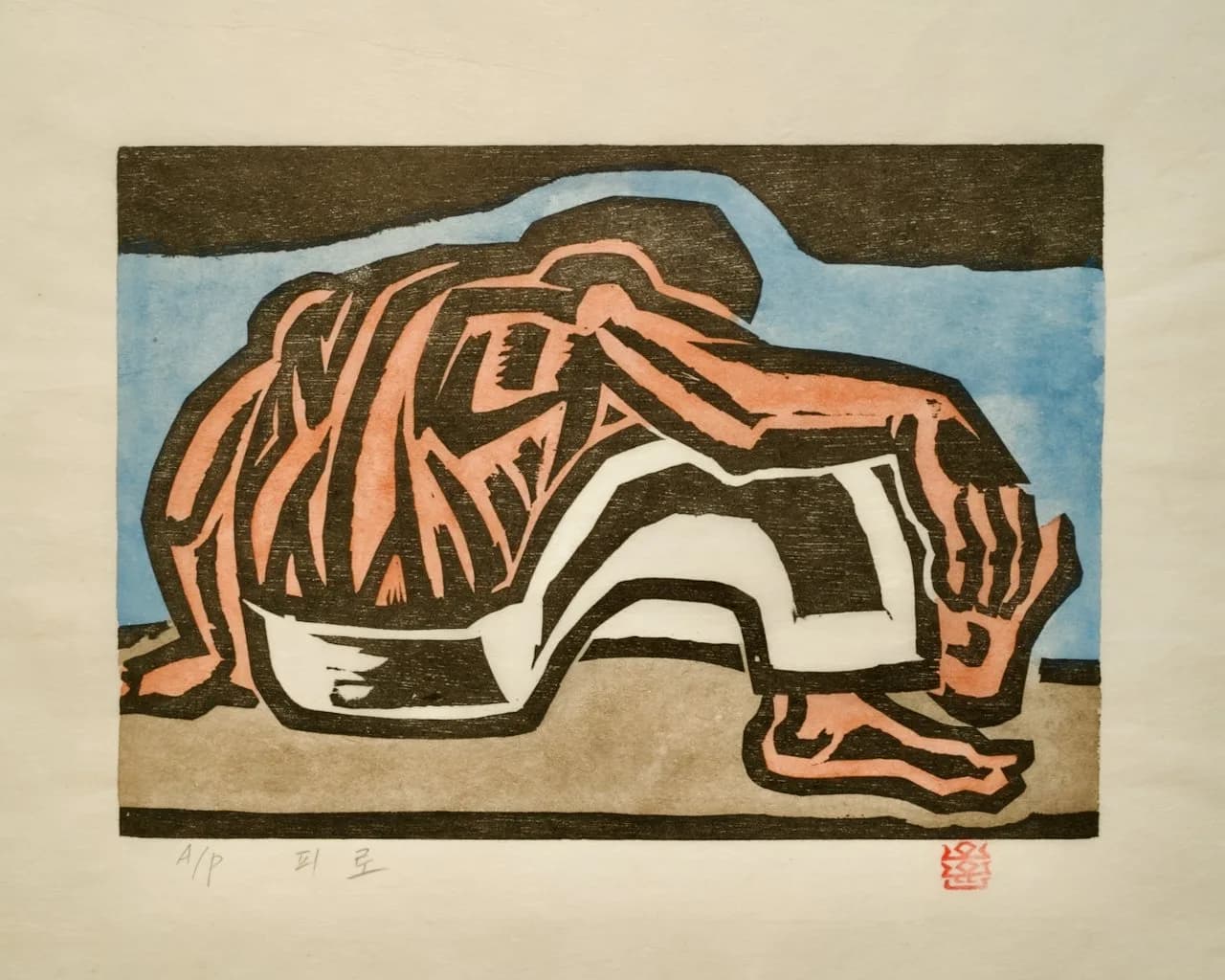
Looking Back at the Oh Yoon 40th Anniversary Special Print Exhibition: Following Its Eight Chapters
The Oh Yoon 40th Anniversary Special Print Exhibition ran from September 23 to October 12, 2026 at Dongduk Art Gallery. All 187 prints Oh Yoon carved hung together for the first and last time. This piece retraces the eight chapters that followed his life, with a few representative prints from each.
Oct 4, 2026 · Seed Art Festival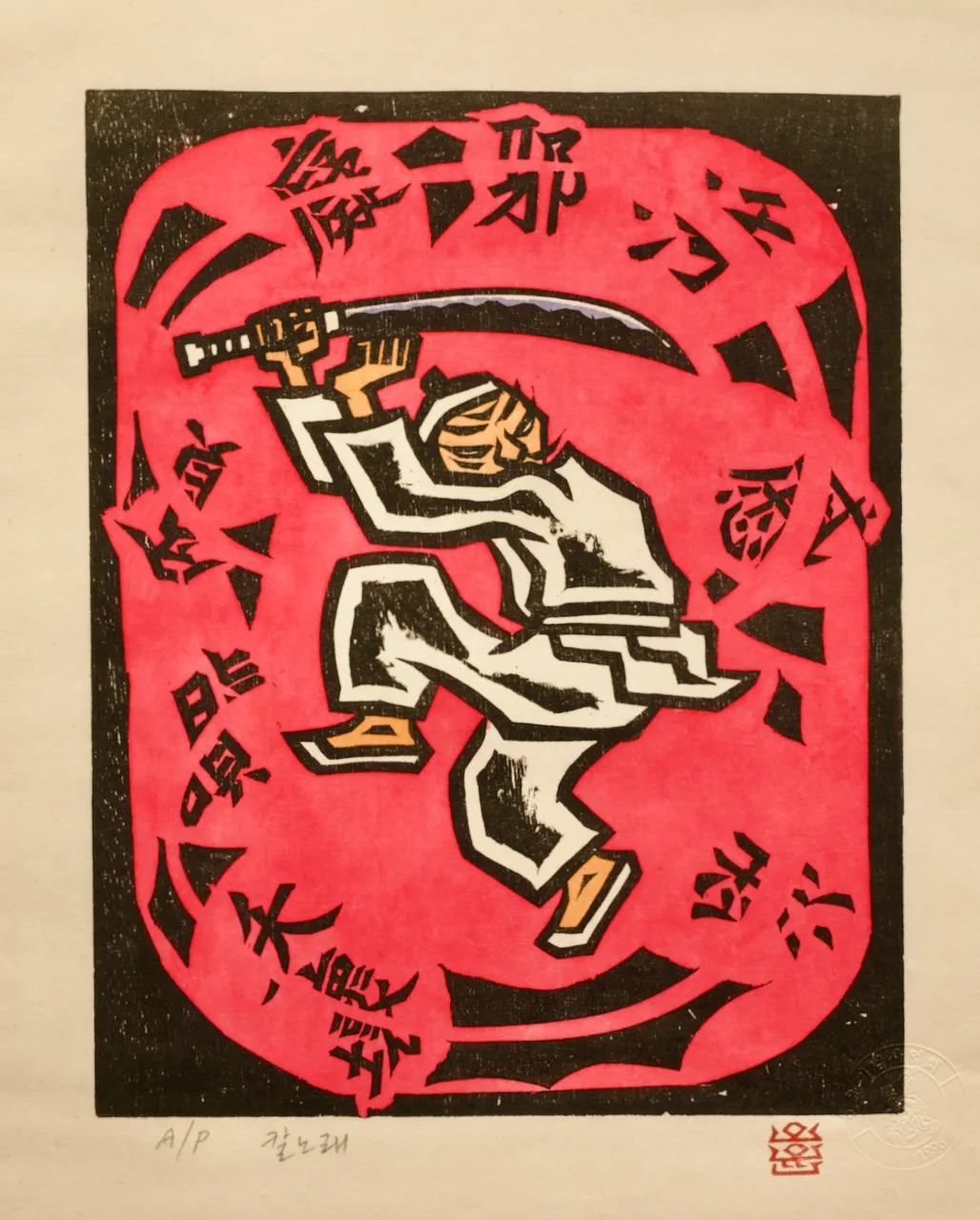
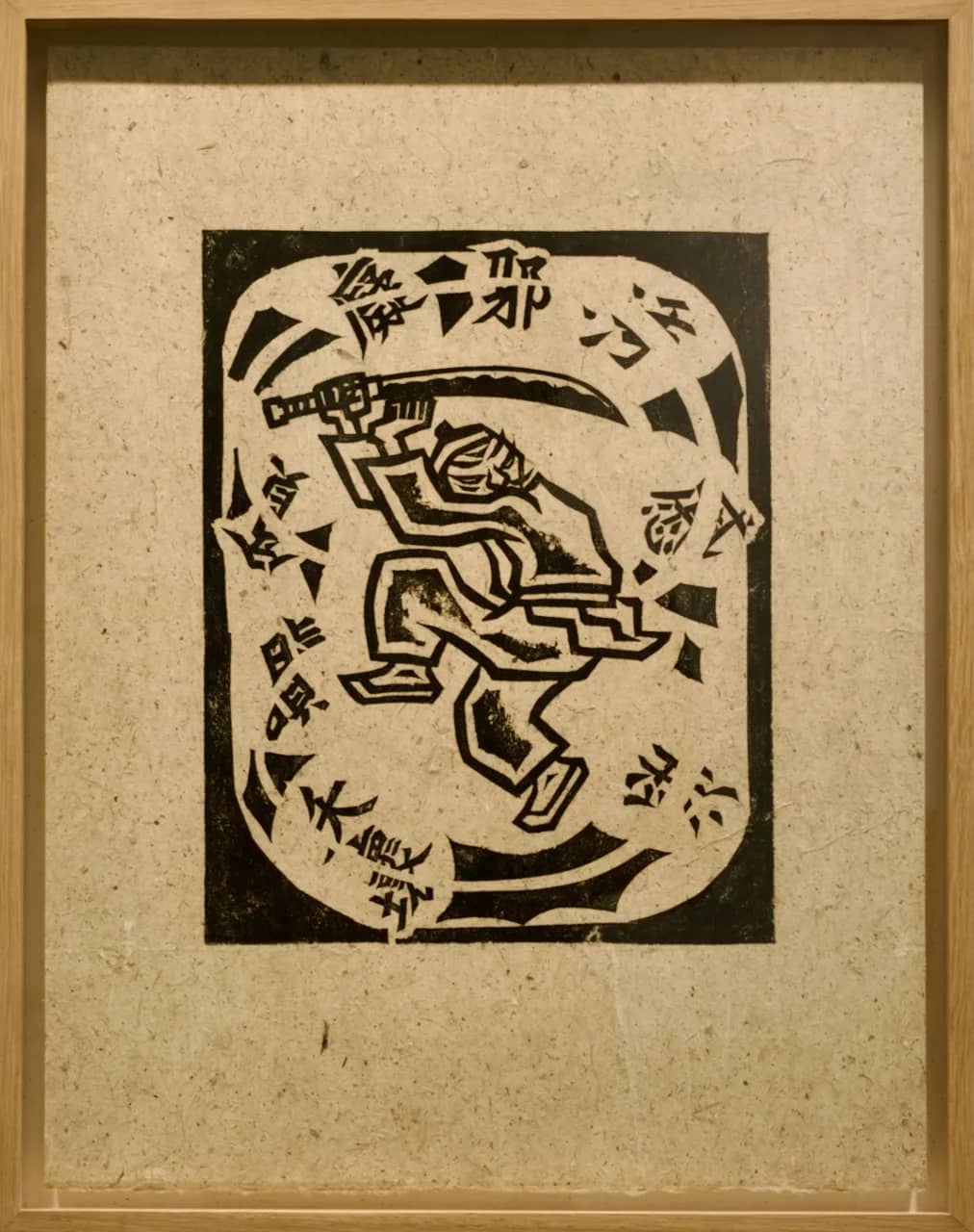
Reading Oh Yoon's Sword Song Closely: A Figure Raising a Blade Inside a Black Frame, and Two Sheets of One Composition
A figure lifts a blade overhead and raises one leg. Oh Yoon's woodcut Sword Song (1985) is read here in order: the black frame, the red field, the curve of the blade, the letter-like marks around the figure, and where the feet land. Two sheets from the same composition are set side by side, one printed in black on pale grey-brown taeji paper, the other coloured red on hanji.
Oct 3, 2026 · Seed Art FestivalRelated materials
Korean media · Original Korean article
This article text is currently available in Korean. Open the source to read the original version.
Korean media · Original Korean article
This article text is currently available in Korean. Open the source to read the original version.
Korean media · Original Korean article
This article text is currently available in Korean. Open the source to read the original version.
Korean media · Original Korean article
This article text is currently available in Korean. Open the source to read the original version.
Korean media · Original Korean article
This article text is currently available in Korean. Open the source to read the original version.
Korean media · Original Korean article
This article text is currently available in Korean. Open the source to read the original version.
Kyunghyang Shinmun · Original Korean article
This article text is currently available in Korean. Open the source to read the original version.
Korean media · Original Korean article
This article text is currently available in Korean. Open the source to read the original version.
Korean media · Original Korean article
This article text is currently available in Korean. Open the source to read the original version.
Two beginnings made by one piece
- For you —
- A foundation-certified limited edition
- For the artist —
- the pride of standing with a peer
- For a fellow artist —
- a new ₩3,000,000 path of low-interest support
354 artists have walked this path of recovery; 95% returned to open it for the next.