Germany's Künstlersozialkasse, France's intermittent system, the UK's Arts Council. Looking at how other countries have designed financial safety nets for artists shows the path Korea has yet to take.
International Models of Financial Support for Artists — How Germany, France, and the UK Do It
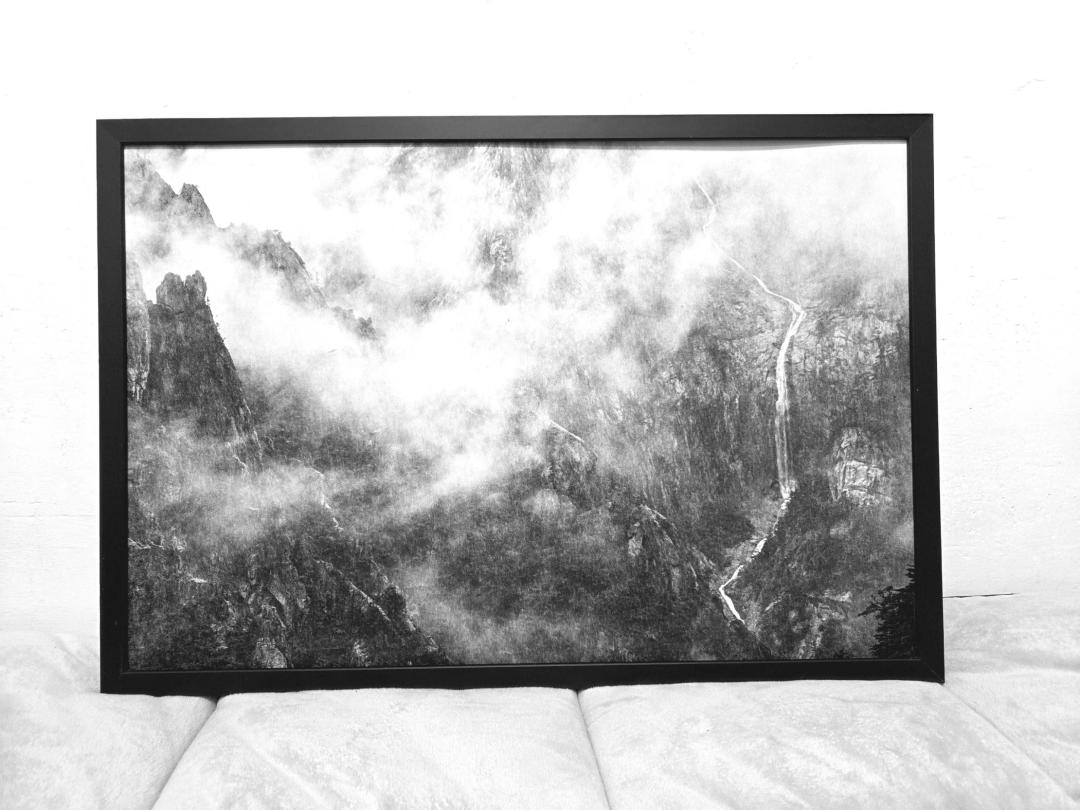
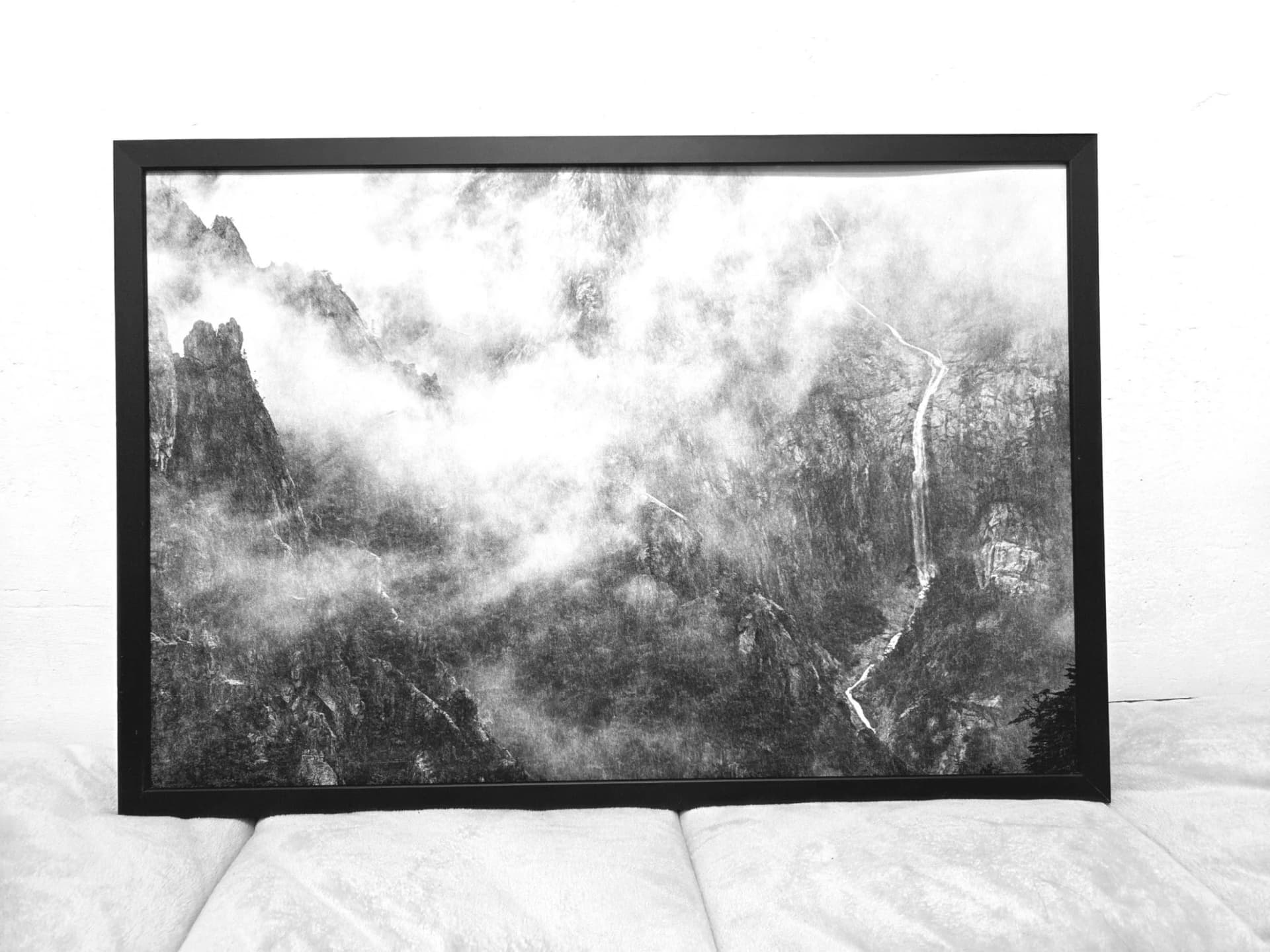
Kang Re-a — Climbs mountains, photographs them, prints on hanji. An internationally recognized fine-art photographer with multiple overseas residencies.
The financial exclusion of Korean artists is not a Korean problem alone. Artists everywhere share the same structural conditions: irregular income, uneven rhythms of work, and intellectual property — a non-financial form of asset.
What differs is how each country has chosen to address this. Some built national-scale social insurance decades ago. Some institutionalized private funds. Others worked through tax incentives.
This essay maps four representative international models that Korea can learn from.
1. Germany — Künstlersozialkasse (Artists' Social Insurance)
Germany is widely regarded as having the world's most systematic artist welfare regime, and at its center sits the Künstlersozialkasse (KSK, Artists' Social Insurance Fund).
Overview
- Established: 1983
- Enabling law: Künstlersozialversicherungsgesetz (KSVG)
- Eligibility: freelance artists and writers (visual art, music, literature, performance, etc.)
- Operator: an independent fund under the Federal Employment Agency
How it works
When an artist enrolls in KSK, they enter the same social-insurance system as any salaried worker:
- Health insurance
- Long-term care insurance
- Pension insurance
Artists pay half of the contributions on their declared income. The remaining half is covered as follows:
- 30%: federal subsidy (federal budget)
- 20%: the Künstlersozialabgabe, paid by businesses that purchase artistic services (publishers, galleries, broadcasters, etc.)
In other words, the entities that consume art contribute to the social insurance of the artists who produce it.
Outcomes
- About 200,000 artists in Germany are enrolled in KSK and have the same access to healthcare and pensions as ordinary employees
- Average disposable income for KSK members is meaningfully more stable than for non-enrolled freelancers
- Old-age income security for senior artists outperforms most other countries
Lessons for Korea
The core principle of the German model is that "those who consume art contribute to the welfare of artists." Korea's Arts Council fund has a related logic, but its support flows mainly to projects rather than KSK's direct, individually-vested structure. Moving toward an individually-vested social-insurance system is one of Korea's long-term tasks.
2. France — Intermittent du Spectacle (Performing-Arts Unemployment Benefit)
France operates an unemployment-benefit scheme tailored to performing-arts workers. Known as the intermittent system, it has been running for more than sixty years.
Overview
- Established: 1936 (current form codified in 1958)
- Eligibility: performing-arts workers (actors, musicians, technical staff, etc.) — visual artists fall under separate schemes
- Operator: Unédic, the French unemployment-insurance body
How it works
If an artist can show that they have worked a minimum of around 507 hours in the performing arts within a year, they receive unemployment benefit during the periods between engagements.
- Hours worked on productions count as employment
- Periods without work count as unemployment
- The pattern of these alternating states is officially recognized as "intermittent" employment
Outcomes
- Over 100,000 performing-arts workers benefit from the scheme
- It is widely seen as a foundation of France's international standing in the performing arts
- Other European countries have benchmarked similar models
Limits and challenges
- Repeated reform debates over fiscal deficits
- Visual arts and other non-performance fields require separate provision
- The administrative burden of qualification monitoring
Lessons for Korea
What the French model offers is a conceptual reversal: "the gap between projects is recognized as unemployment." Where Korea tends to read an artistic gap as "unemployment" in the punitive sense, France reads it as a period of creative preparation. That shift in framing is the starting point for undoing financial exclusion.
3. The United Kingdom — Arts Council England Funds and Tax Reliefs
The UK model leans less on direct state provision and more on a combination of arm's-length cultural bodies and tax incentives.
Arts Council England (ACE)
- Founded in 1946
- Operates hundreds of millions of pounds in arts funding annually
- Programs supporting individual artists (Developing Your Creative Practice, Project Grants, etc.)
- Award sizes: £1,000 to £200,000 (roughly KRW 1.7 million to KRW 340 million)
Tax reliefs
The UK offers some of the strongest tax incentives in the world for giving and patronage in the arts.
- Gift Aid: the government adds 25% on top of an individual's donation
- Cultural Gifts Scheme: income- and inheritance-tax relief for donating artworks
- Creative Industry Tax Reliefs: corporation-tax reliefs for film, theatre, orchestras, museums, video games, and other creative sectors
A mature private market for art-backed lending
London is one of the world's centers for art-backed lending. Sotheby's Financial Services, Christie's, and a number of private banks all offer loans secured against artworks.
- Loan-to-value: 40–50% of appraised value
- Interest rates: roughly 5–10% per year
- Typical eligibility: works valued at hundreds of thousands of pounds and up
This is one of the largest art-finance markets globally and offers both artists and collectors a way to maintain ownership of a work while unlocking liquidity.
Lessons for Korea
The core of the UK model is the mature private recognition of artworks as financial assets. In Korea, art-backed lending barely exists, and tax incentives lag well behind the UK in both scale and sophistication.
4. The Netherlands — WWIK and BKR (Two Discontinued Experiments)
The Netherlands once operated some of the most radical artist-income programs in the world.
BKR (1956–1987)
A large-scale program in which the Dutch government purchased works directly from artists. Artists submitted works on a regular cycle, and the state acquired them for public collections. The scheme provided stable income to struggling artists but was discontinued in 1987 under the weight of fiscal cost and concerns about quality control.
WWIK (1999–2012)
The successor to BKR — a guaranteed-artist-income scheme. If an artist's income fell below a threshold, the government would make up the shortfall for up to four years. This too was wound down in 2012 amid fiscal pressure and debate over its effectiveness.
Lessons for Korea
The Dutch experience marks the limits of unconditional income guarantees. For sustainability, conditional, staged, community-based systems appear more durable. SAF's mutual-aid loan model resonates with this lesson in being conditional and community-based.
Where Korea Stands — A Comparison
| Item | Korea | Germany | France | UK |
|---|---|---|---|---|
| Dedicated social insurance | Partial (Korean Artists Welfare Foundation) | Yes (KSK) | Yes (Intermittent) | No |
| Income support during gaps | Limited | Yes | Yes | Limited |
| Art-backed lending market | None | Some | Some | Mature |
| Creative grants | Yes (ARKO) | Yes | Yes | Yes (ACE) |
| Tax incentives | Limited (capital gains, etc.) | Yes | Yes | Strong |
| Private mutual aid | Active | Limited | Limited | Limited |
Korea actually leads in the vitality of private mutual aid. The problem is that this private energy is not yet plugged into public systems.
Three Lessons for Korea
Lesson 1. Individually-vested social insurance is the ultimate solution
Germany's KSK builds personal welfare records for artists. Health-insurance and pension records become formal credit signals that the financial system can read. Korea will need to expand the role of the Korean Artists Welfare Foundation to build a similar record system.
Lesson 2. "Artwork as asset" must be socially recognized
The UK's art-backed lending market is only possible on the foundation of "art is a financial asset." Korea needs the basic infrastructure to support this — credible appraisals, standardized valuation, and recognized liquidity.
Lesson 3. Community experiments are the seed of institutions
France's intermittent system and Germany's KSK both began as private experiments in artists' unions and civil society. Korea's mutual-aid lending sits on the same path. Today's vital private experiments may become the institutional templates of the next 10 to 20 years.
Where SAF Stands in This Stream
SAF (Seed Art Festival) is a civic-and-artist experiment heading toward the same destination as Germany's KSK or France's intermittent system, in a Korean context that has yet to put state-led structures in place.
- Artwork sales → mutual-aid fund (analogous to KSK's artist levy)
- Mutual-aid loans → income support during gaps (analogous to French intermittent)
- Civic transparency and governance → the kind of accountability the UK's tax-relief system demands
SAF, in other words, is a Korean civic edition of these international models — civil society stepping into the institutional gap.
Buying a single artwork, in this light, is not simple consumption. It is an early input into a Korean art ecosystem moving toward German- or French-level stability.
Frequently Asked Questions
Q. Can Korean artists join Germany's KSK? A. Any freelance artist resident and active in Germany can join, regardless of nationality. But because KSK operates within the German social-insurance system, artists based in Korea are not eligible.
Q. How long would it take to build something like KSK in Korea? A. KSK itself was preceded by more than a decade of organizing in the German art world. Korea has a foundation in the Artist Welfare Act (enacted in 2011); building a KSK-level system on top of it would likely take 5–10 years of policy design and budget expansion at minimum.
Q. What would it take to bring UK-style art-backed lending to Korea? A. A few Korean auction houses and private funds have piloted art-backed lending against high-value works, but the market hasn't taken hold. The main obstacles are (1) the absence of a standardized appraisal regime, (2) a lack of storage and management infrastructure for collateralized works, and (3) ambiguity in legal procedures for enforcing security interests. Once these three are in place, a market can form.
Q. Do mutual-aid models exist abroad as well? A. They do — the US's Artist Relief Tree, the UK's a-n Artist Benevolent Fund, France's Maison des Artistes, and others run analogous private mutual-aid programs. SAF's model — linked directly to artwork sales — is a relatively new variant.
Q. Of all these models, which would Korea adopt most easily? A. Activating a private market for art-backed lending is probably the fastest route, because it falls within private financial-product design rather than national legislation. That said, even this depends on first establishing credible appraisal of artworks.
Looking at other countries' systems is not about admiring them — it is about lighting our own road. Korea's artist financing problem will not resolve overnight, but the speed quickens when one walks in the footprints of decades elsewhere.
One first step is to bring an SAF artwork home today.
Related reading
If this piece helped, you may also enjoy these related articles:
Read next
- Two Definitions of Credit: Banks vs. Mutual Aid — The direct companion piece
- Why Banks Reject Artists — The structure of exclusion
- 5 Numbers on Korean Artist Finance — Key data
- Korean Artist Financial Reality · SAF Three-Year Proof
Further Reading
Seed Art Festival
·