Reviving a beauty
seven centuries old
From Western canvas to the silk of Goryeo Buddhist painting.The Water-Moon Avalokiteshvara, restored in gold and color.
A 700-year beauty —
restored thread by thread
Jo Irak studied Western painting at Dong-A University and Pusan National University, and began her career as a Western-style painter. The decisive turn came with her encounter with the Water-Moon Avalokiteshvara of Goryeo Buddhist painting — a beauty that drew her away from oil and canvas toward silk, gold, and mineral pigment.
She earned a master's degree in Goryeo Buddhist painting and relic reproduction at the Graduate School of Yongin University, and took part in relic reproduction work at the Jeongjae Cultural Heritage Conservation Institute. The reproduction of Goryeo Buddhist painting is not copying but restoration: the painstaking reconstruction of a 700-year-old aesthetic, drawing thread by thread, layer by layer, in techniques the Goryeo masters themselves used.
For more than two decades she has devoted herself to this reproduction. Among the roughly 160 Goryeo Buddhist paintings that survive in the world today — most of them dispersed abroad — the Water-Moon Avalokiteshvara is one of the most celebrated subjects, painted on semitransparent silk and accented with gold (geumni). Jo Irak revives this tradition: studying the originals, reconstructing the back-coloring method (baechae) by which Goryeo painters applied pigment to both sides of the silk, and bringing the work back to its first luminosity.
She has carried the beauty of Goryeo Buddhist painting abroad — to New York, Los Angeles, and beyond. Her reproductions are held in the collections of the National Museum of Korea, the Seoul Museum of History, and the city of Suwon, among others. Through her hands, a tradition that might have remained sealed in museum vaults speaks again to a living audience.
Today she leads the Jo Irak Goryeo Buddhist Painting Research Institute, holds certification as a cultural-heritage repair technician (mosagong no. 7148 and conservation-treatment technician no. 7547), and teaches at the Muusu Academy. Her practice unites two vocations rarely joined in one hand: the artist who paints and the conservator who preserves.
Major themes
- 1
The Water-Moon Avalokiteshvara
The bodhisattva of compassion gazing upon the moon mirrored in water — the most celebrated subject of Goryeo Buddhist painting, reborn in gold and color.
- 2
Gold and color on silk
The back-coloring method (baechae) — pigment applied to both sides of semitransparent silk — gives Goryeo painting its deep, luminous color. Jo Irak reconstructs it faithfully.
- 3
Heritage and transmission
As both artist and certified conservator, she preserves a tradition scattered abroad and carries it to a new generation.
The artist's path
- Western paintingStudies Western painting at Dong-A University and Pusan National University; begins as a Western-style painter.
- The turnDrawn by the beauty of the Goryeo Water-Moon Avalokiteshvara, turns from Western painting to Buddhist painting reproduction.
- M.A.Master of Goryeo Buddhist painting & relic reproduction, Graduate School of Yongin University.
- ConservationTakes part in relic reproduction at the Jeongjae Cultural Heritage Conservation Institute.
- 2005Solo exhibition of Buddhist painting, Yongin University Museum.
- 2015Goryeo Buddhist painting reproduction exhibition, Proxy Place Gallery, Los Angeles.
- 2017Goryeo Buddhist painting reproduction exhibition, Flushing Town Hall, New York.
- 2019Two-person exhibition with Kim Kyung-ho, Tibet House, New York.
- 2020Solo exhibition 〈The Hidden Flower: The Way to the Beloved〉, Seoul.
- 2021Solo exhibitions 〈Eohwa-dungdung, My Child!〉 (Hanok Gallery, Seoul) and 〈Paramita Bloomed as a Flower〉 (Mahabodhi Seonwon, Gyeongju).
- NowLeads the Jo Irak Goryeo Buddhist Painting Research Institute; certified heritage repair technician; instructor at Muusu Academy.
Exhibitions & collections
- Solo exhibitions: around ten, including 〈Eohwa-dungdung, My Child!〉 (Hanok Gallery, 2021), 〈Paramita Bloomed as a Flower〉 (Mahabodhi Seonwon, Gyeongju, 2021), 〈The Hidden Flower〉 (Seoul, 2020), the Goryeo Buddhist painting reproduction exhibition (Proxy Place Gallery, LA, 2015), and a Buddhist painting exhibition (Yongin University Museum, 2005).
- Invitational & curated exhibitions: around thirty, including the two-person exhibition with Kim Kyung-ho (Tibet House, New York, 2019) and the Goryeo Buddhist painting reproduction exhibition (Flushing Town Hall, New York, 2017).
- Collections: National Museum of Korea, Seoul Museum of History, the city of Suwon, and others.
- Certified cultural-heritage repair technician (mosagong no. 7148; conservation-treatment technician no. 7547); instructor at Muusu Academy.
Three essays —
on Goryeo painting and its revival
1What Goryeo Buddhist painting is — a beauty of the 13th–14th centuries
Most surviving Goryeo Buddhist paintings date to the late Goryeo dynasty, the 13th and 14th centuries. They were commissioned by the ruling class and enshrined in temples and homes as objects of devotion. Roughly 160 survive in the world today — and the great majority, around 130, are now held in Japan, with the rest scattered through museums in the United States and Europe. Only a small number remain in Korea itself.
The most frequent subjects are the Amitabha Buddha, the Water-Moon Avalokiteshvara, and the Bodhisattva Ksitigarbha — figures whose vocation is to save and to shelter sentient beings. Goryeo painting is distinguished by its luminous color and the refined, elegant line of its figures, with delicate gold-painted patterns on the robes that are a hallmark of the tradition. These are among the most exquisite religious paintings produced anywhere in medieval East Asia.
That so few remain in Korea — and that the survivors are so dispersed — gives the act of reproduction a particular weight. To reproduce a Goryeo painting is, in part, to bring a lost national heritage back within reach.
2The Water-Moon Avalokiteshvara — the moon on the water
The iconography of the Water-Moon Avalokiteshvara comes from the Flower Garland Sutra (Avatamsaka Sutra) and its chapter on the Entry into the Dharma Realm. There, Avalokiteshvara — the bodhisattva of infinite compassion — dwells on Mount Potalaka by the southern sea, amid treasures, flowers, and fruit, while saving sentient beings. The pilgrim boy Sudhana seeks out wise teachers, and Avalokiteshvara is among them; the painting depicts their meeting.
The name ‘Water-Moon’ evokes the moon reflected on water — a Buddhist image of a presence at once luminous and impermanent, real and reflected. In the Goryeo composition the bodhisattva is seated in ease upon a rock, draped in a translucent white veil rendered in fine gold line, the whole surface shimmering with the back-coloring method. It became the single most celebrated subject of Goryeo Buddhist painting, though it grew uncommon in the later Joseon period.
To reproduce such an image is to re-enter a vanished sensibility: the proportion, the gesture, the precise warmth of the gold. It is here that Jo Irak has concentrated her two decades of work.
3The work of reproduction — back-coloring and gold
The secret of Goryeo color is the back-coloring method, baechae. Painting on semitransparent silk, the Goryeo masters applied pigment not only to the front but to the reverse of the cloth. Color seen through the weave becomes softer, deeper, more luminous; the technique also anchors the pigment against flaking and fading. It is largely thanks to baechae that the surviving paintings have kept their beauty across seven centuries.
Over this ground the painters laid gold — geumni, powdered gold suspended in glue — drawing the fine patterns of the robes and accentuating jewelry and ornament. The combined effect is the distinctive splendor of Goryeo painting: deep mineral color glowing from within, traced over with a web of gold line.
Reproduction means rebuilding all of this from the original outward: the silk, the pigments, the order of the layers, the exact behavior of gold over color. It is slow, exacting, devotional work — closer to conservation than to making a new picture. Jo Irak joins this campaign not as a subject of its cause but as a fellow artist in solidarity, offering her work so that the proceeds may become a low-interest mutual-aid loan for another artist facing financial exclusion today.
From the Western canvas to the silk of the Goryeo masters, Jo Irak's work has pursued a single devotion: to bring a 700-year-old beauty back into the present, thread by thread and layer by layer. A tradition scattered abroad and sealed in vaults speaks again through her hands. She joins this campaign in solidarity — so that another artist might one day work without the weight of financial exclusion.
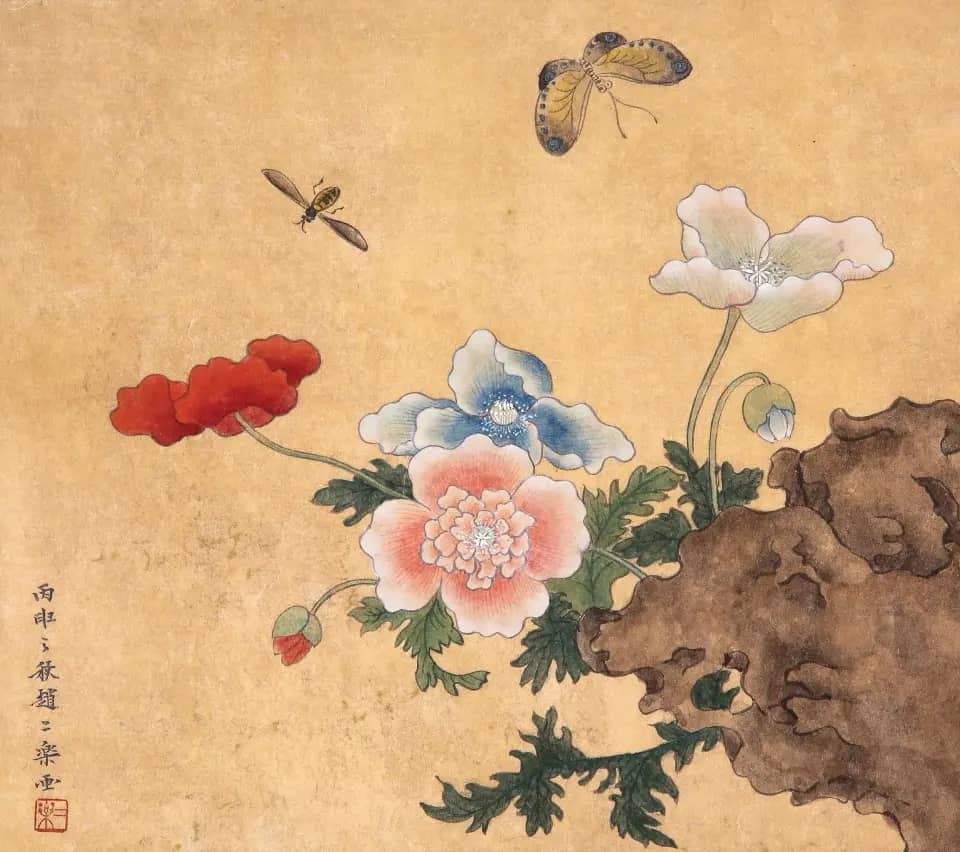
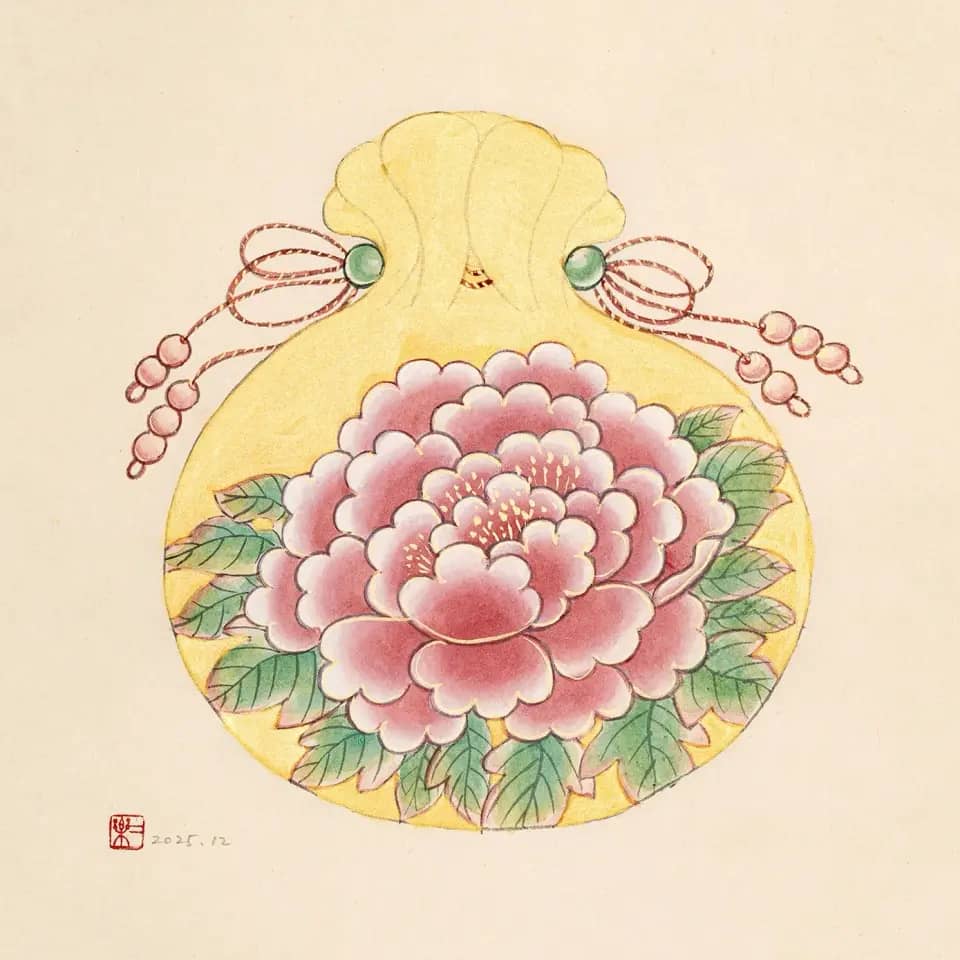
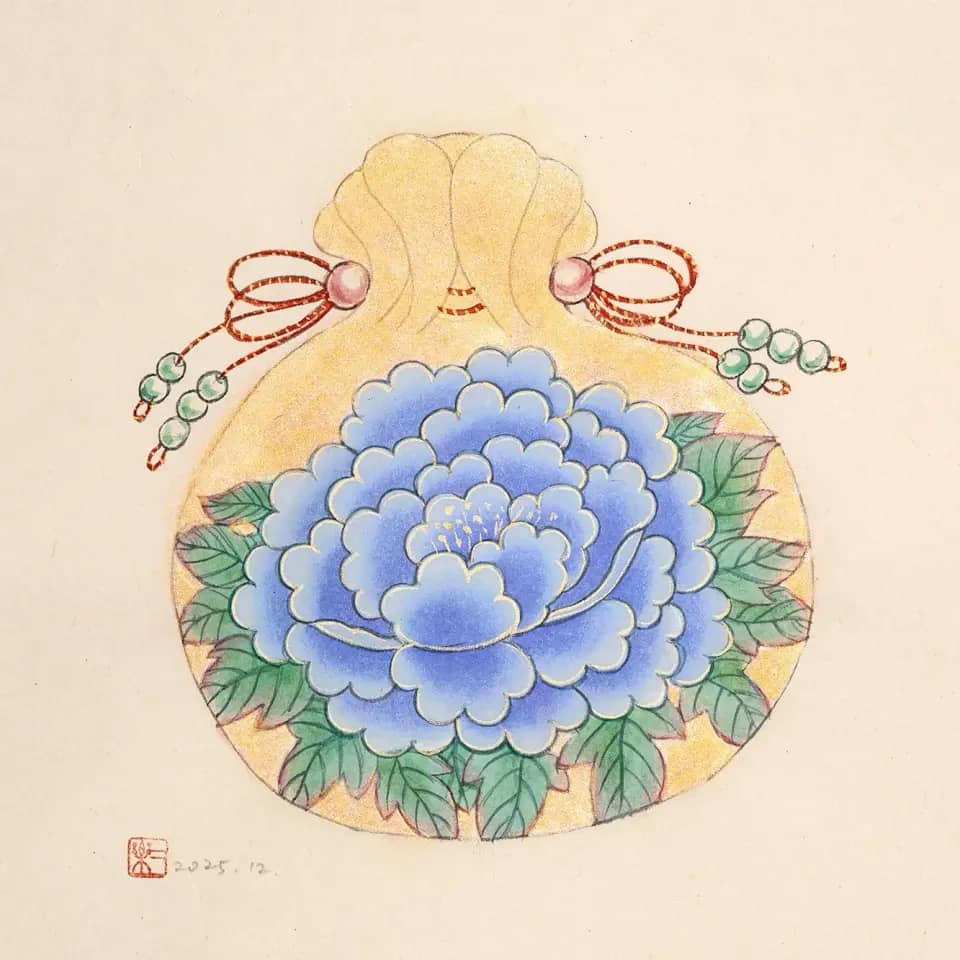
Selected Works
4 works are featured here.
Jo Irak joined this campaign in solidarity with fellow artists. Every work sold flows directly into the artists' mutual-aid loan fund— a purchase becomes the next month's lifeline for an artist navigating financial exclusion today.