You can't give the same work to a parent in their early sixties as to one in their late seventies. A generational guide to gifts for parents — taste, home environment, health context.
A gift of art for a parent is probably the most careful art gift of all. A work chosen through an adult child's sensibility doesn't always harmonize with the parent's room. A parent in their mid-fifties and a parent in their late seventies wait for different works. Apartment living room vs. countryside daecheong changes the answer again.
This guide organizes gifts for parents by generation, space, and health context.
Three Principles
1. Their eye level comes before your taste. Adult children often choose in their own taste; parents dutifully hang it; a few months later it migrates to storage. Start from works your parent has actually said they like. Observe first.
2. Check the wall and the space. An older apartment's living-room paint may have yellowed; a countryside home may have hanji on the walls. The backing tone changes everything. For sizing: Space-by-Space Size Guide.
3. Respect the health context. Changes in vision and mobility shift how art is looked at. Clear lines, legible subject, non-aggressive color travels better across generations.
Late 50s to Mid-60s — Still at the Center of Taste
This generation of parents often shares the cultural vocabulary of their adult children. Modern Korean painting, contemporary minhwa, color-ink works by younger artists land well.
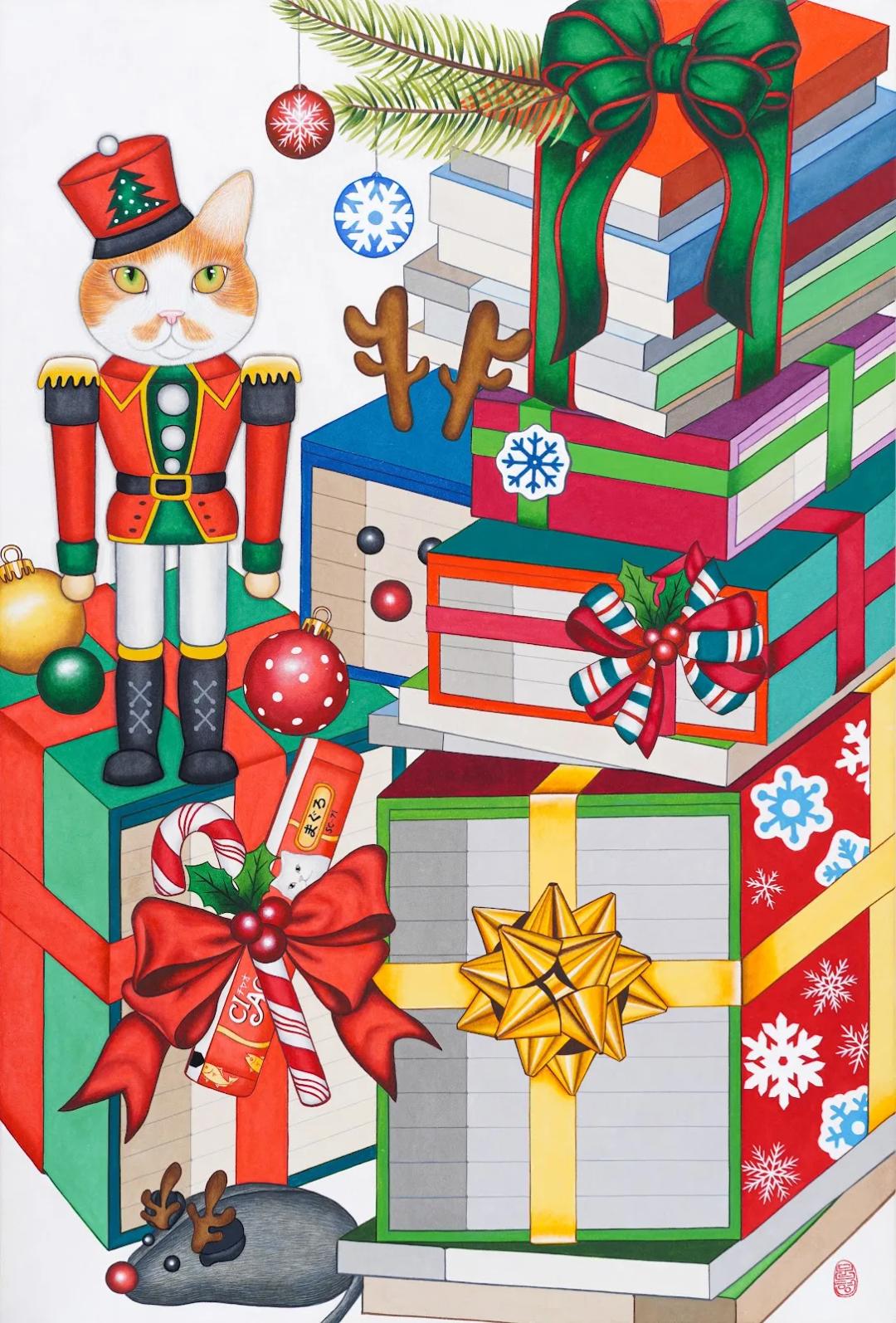
Lee Munhyeong, Chaekgeori × Christmas — a traditional chaekgeori form layered with Christmas imagery. A register the mid-sixties parent already has — "old things received with humor".
Late 60s to Mid-70s — Readers of Ink and Calligraphy
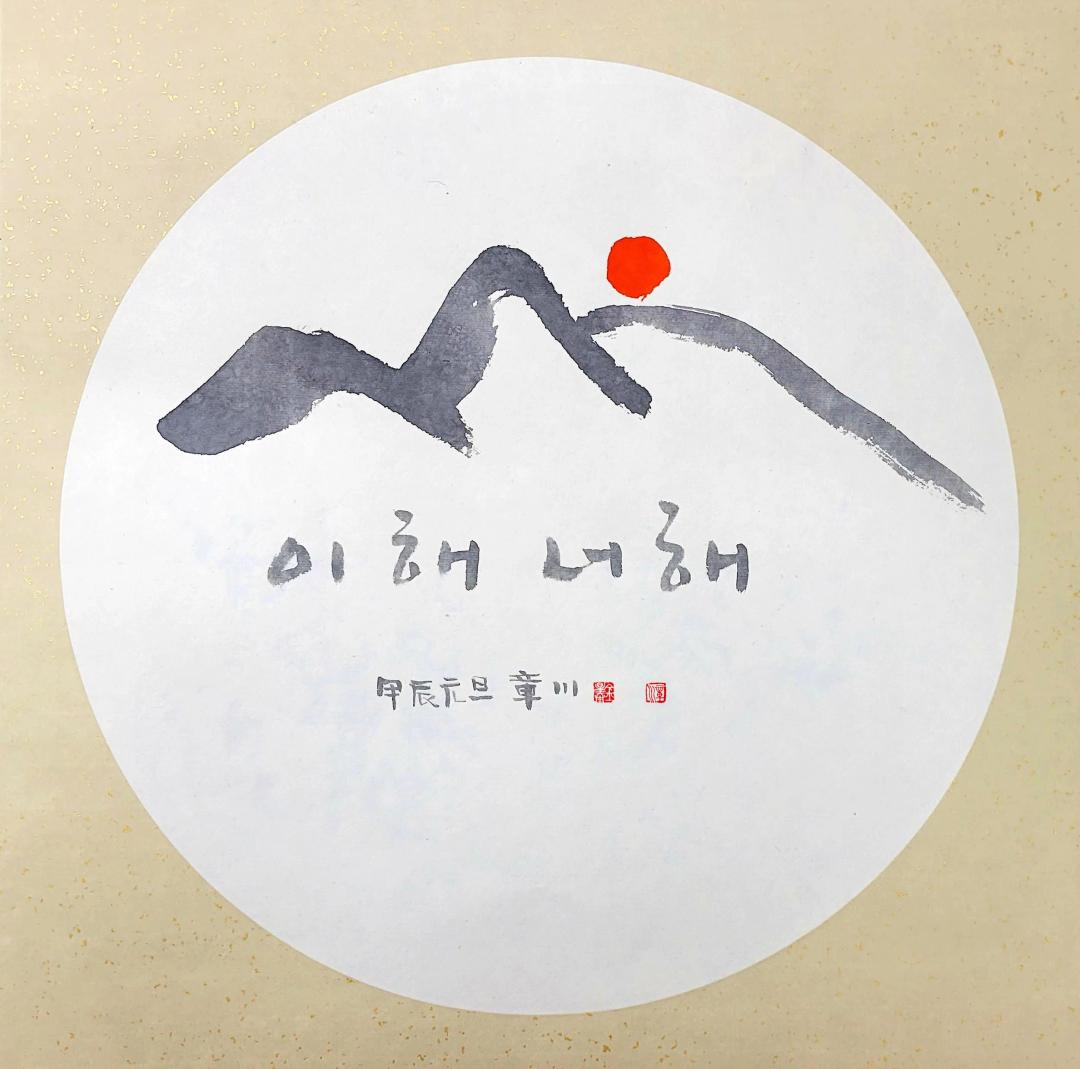
These parents often carry the Four Gentlemen, calligraphy, and ink sansu as daily visual vocabulary. Too contemporary reads as alien; too obvious calendar-style reads as "they thought I wouldn't understand anything else".
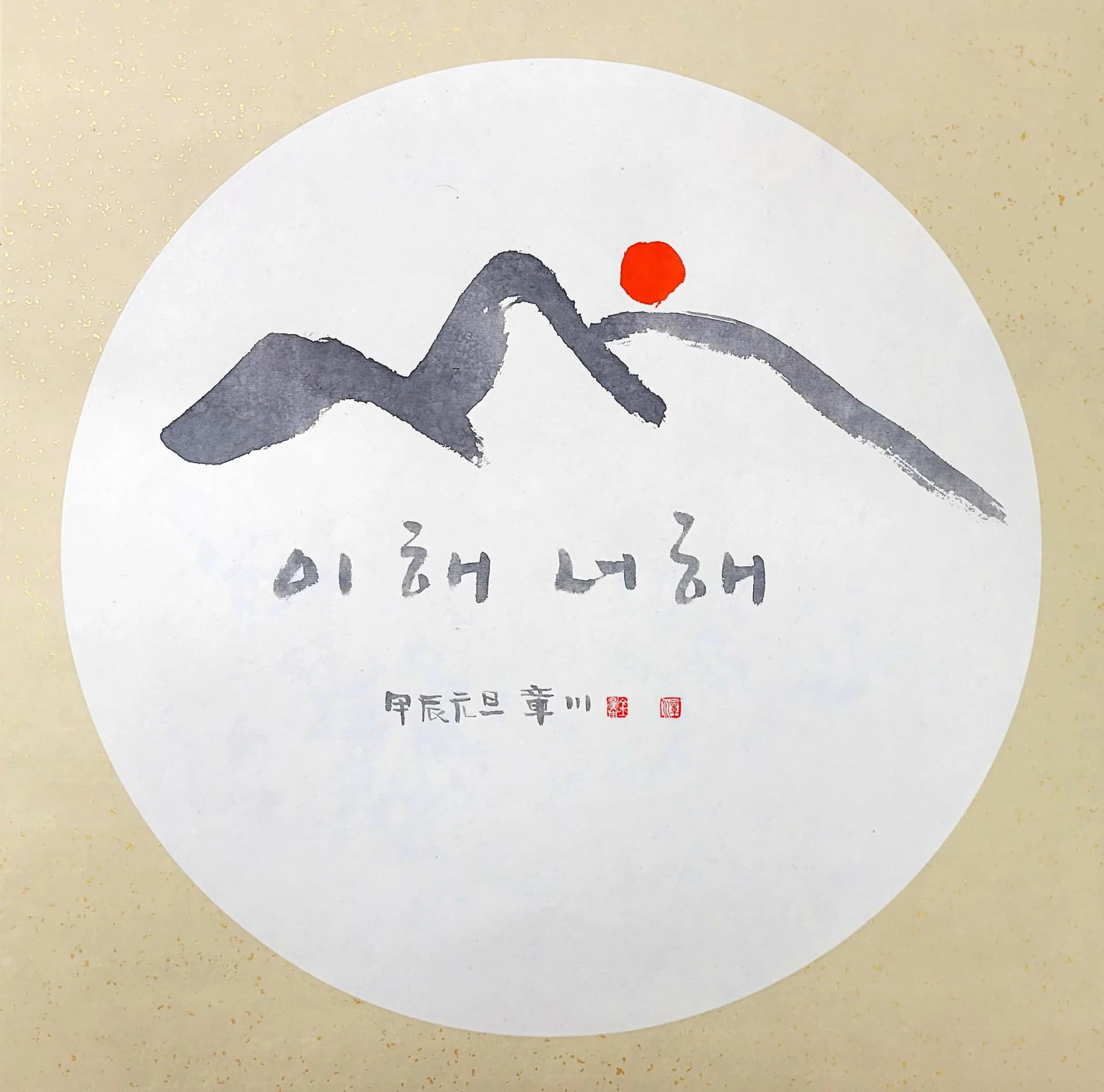
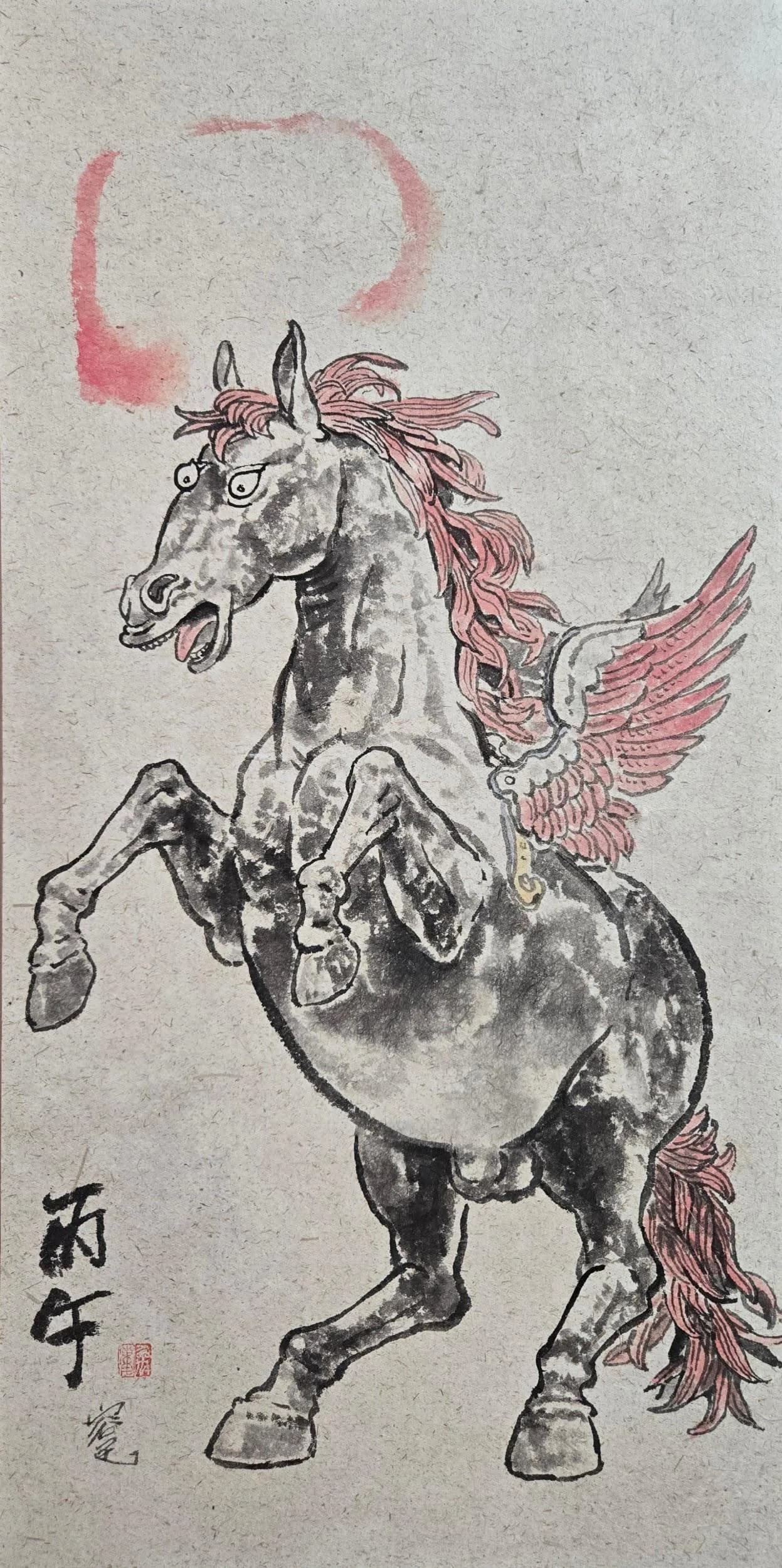
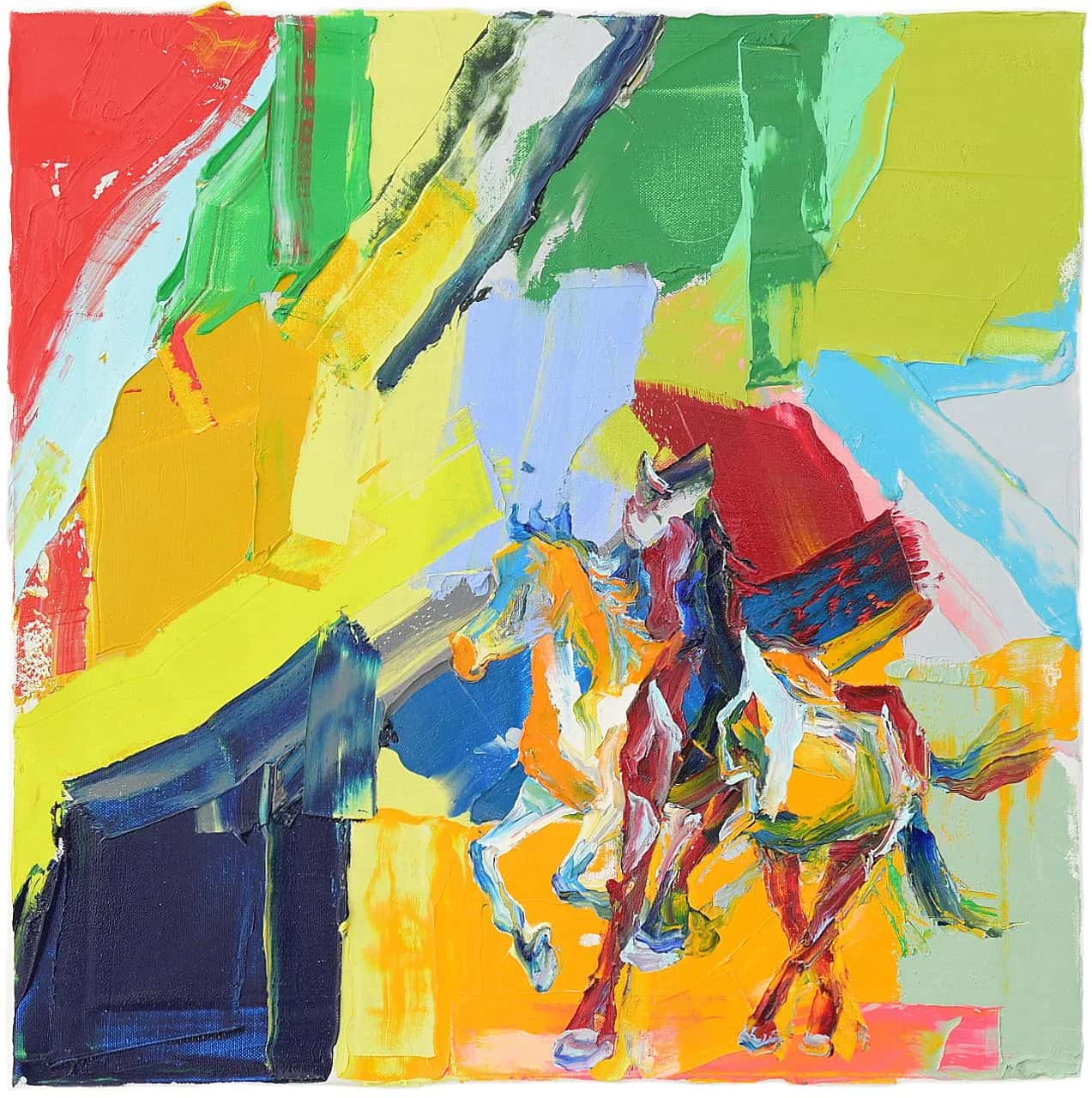
Jangcheon Kim Seongtae, This Year, Your Year — Korean painting moving between calligraphy and ink. The poetic resonance of the title reaches this generation's language directly. Alternate: Woo Yongmin, Horse of Byeongo 1 — a horse drawn in ink on hanji, settles into a father's study as a symbol of vigor and health.
Mid-70s — Seasons, Solar Terms, Everyday Wisdom
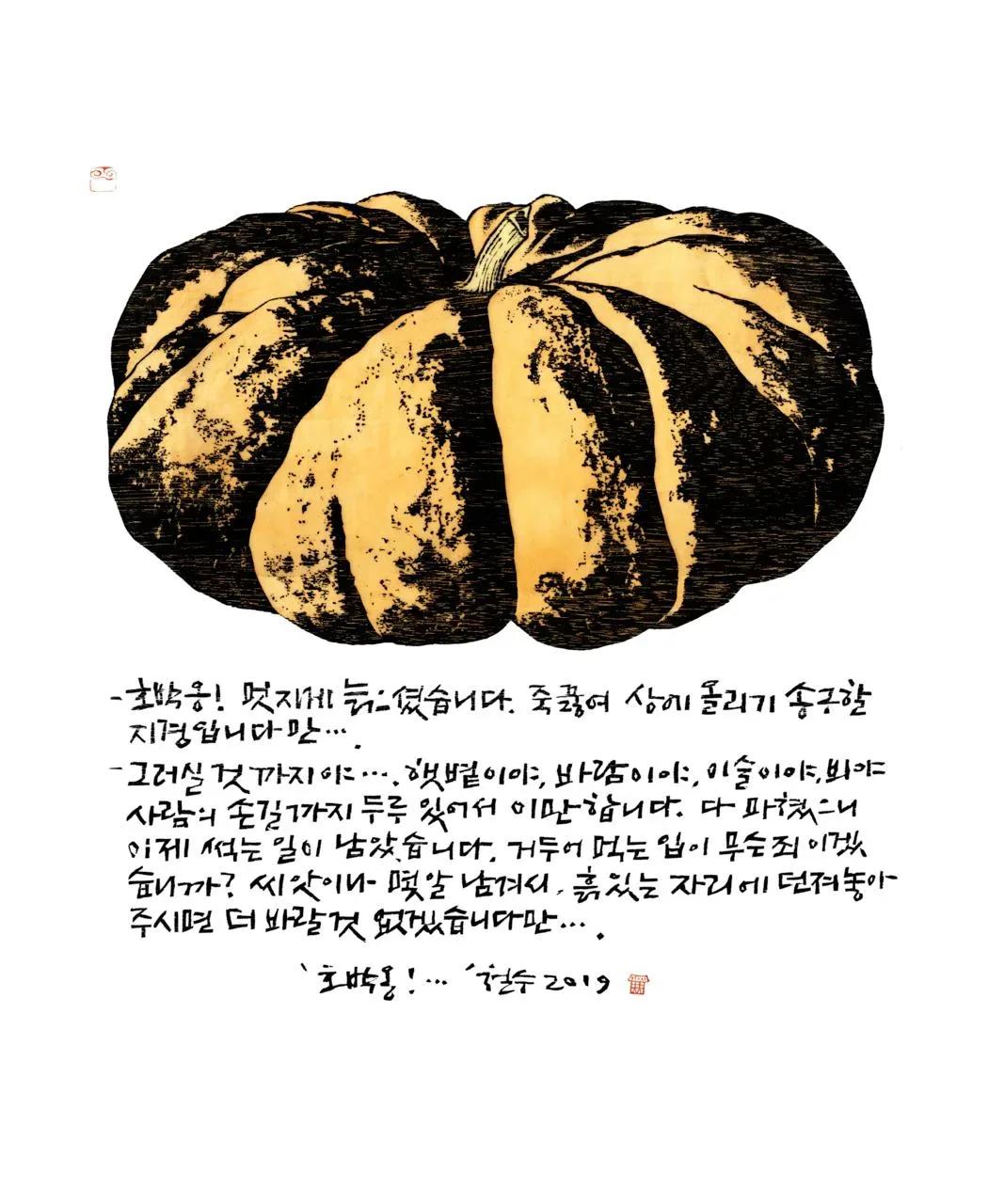
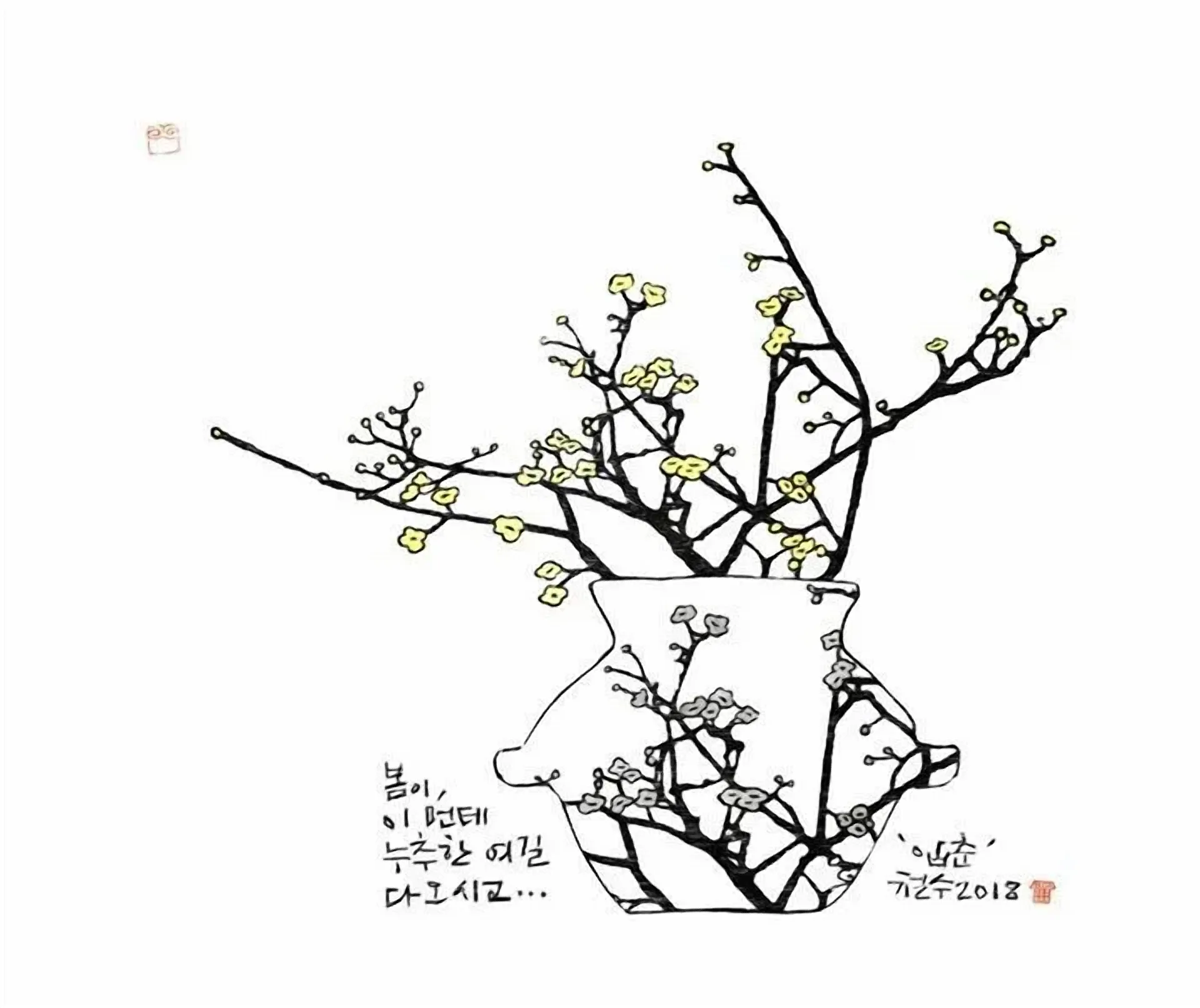
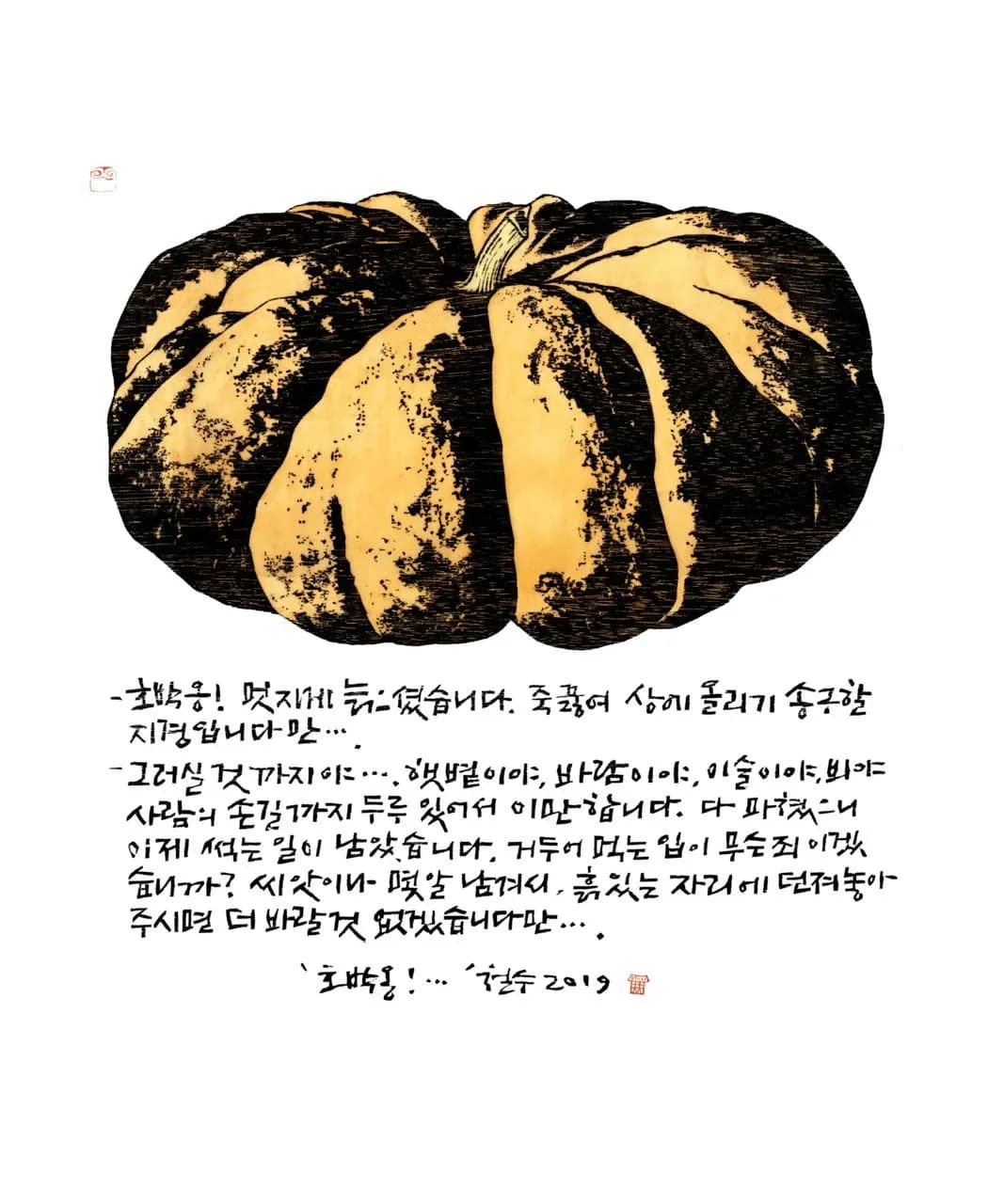
Works that touch the familiar a little more deeply. Lee Cheolsu's woodblocks are the archetype: rural scenes, seasons, farming tools, pumpkins, persimmons — everyday objects compressed onto a sheet of hanji, in quiet dialogue with a whole life.
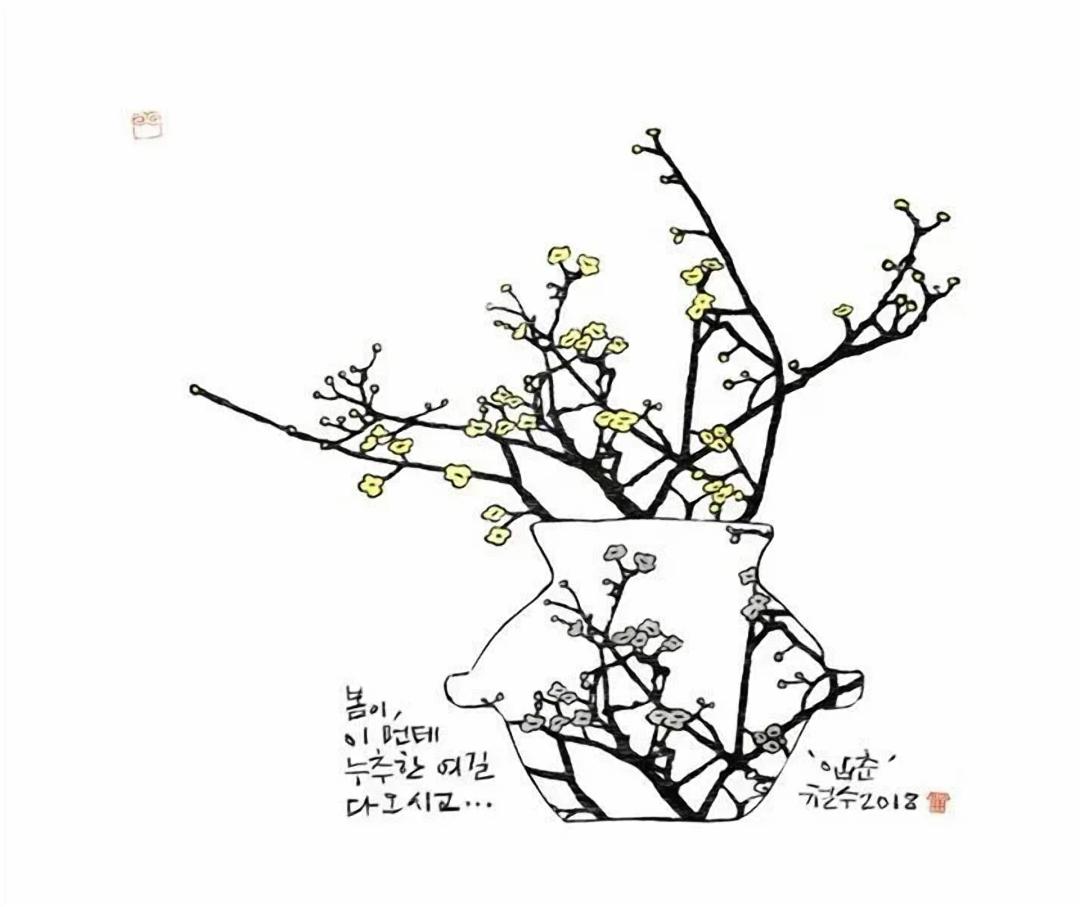
Lee Cheolsu, Beginning of Spring — ipchun, the first solar term of spring. New spring, renewed health, a new year. Among the most seasonally and emotionally appropriate works for a parent. Alternate: Lee Cheolsu, Old Gourd — Hobak-ong, "old Mr. Pumpkin." For parents who farmed, or who still remember rural life.
Late 70s to 80s — Black-and-White Testimony of Time
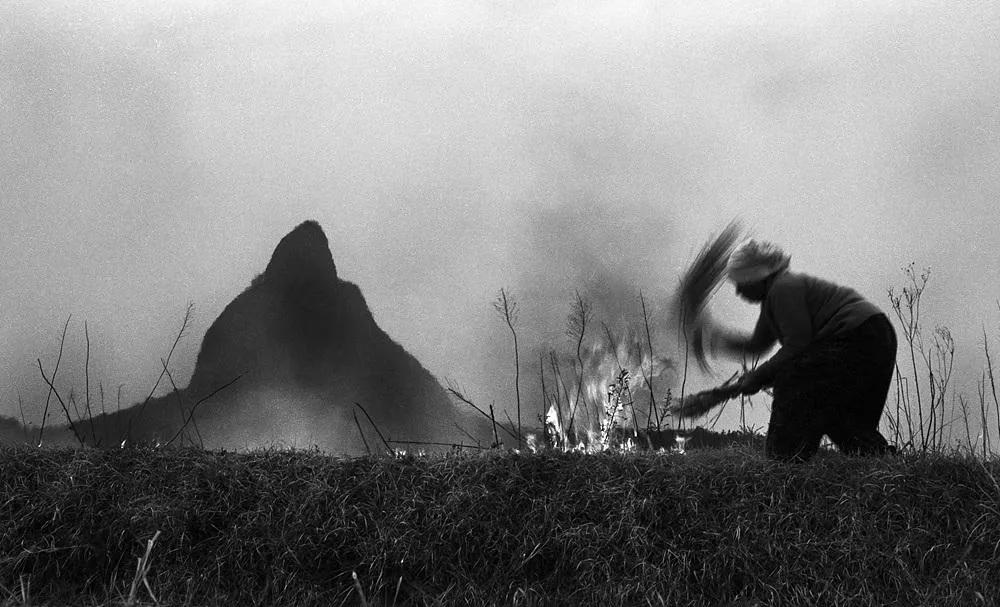
For this generation, work that testifies to the time they lived goes deepest. 1980s–90s black-and-white documentary photography holds the landscape of their youth.
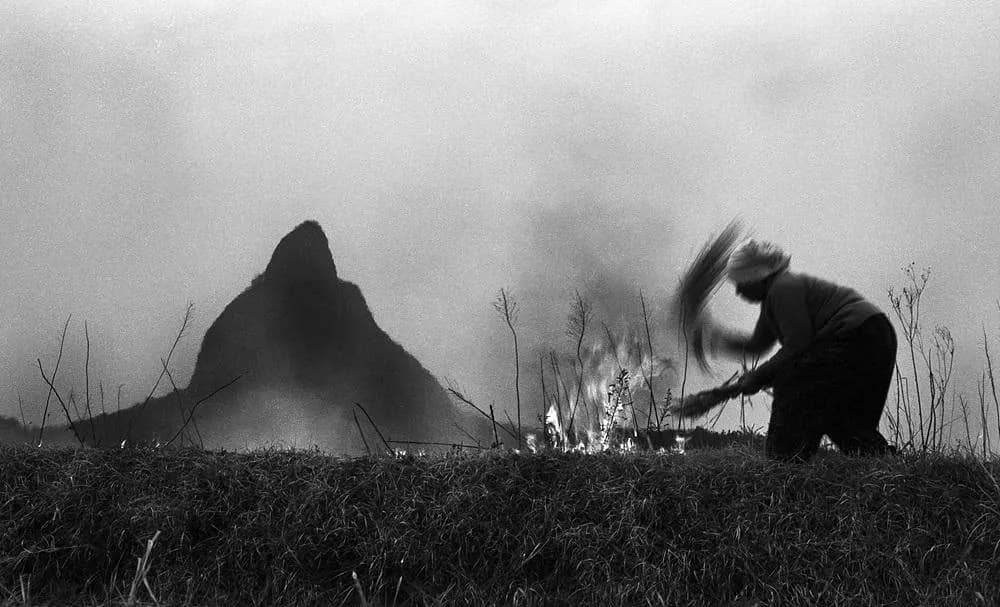
Jung Youngshin, 1988 Midway Up Maisan — Maisan in 1988. Alternate: Cho Moon-ho, 1988 Yangsan Yeongchuksan — the air of a Korean mountain in 1988 through a documentary photographer's eye.
A Parent Rooted in a Specific Region
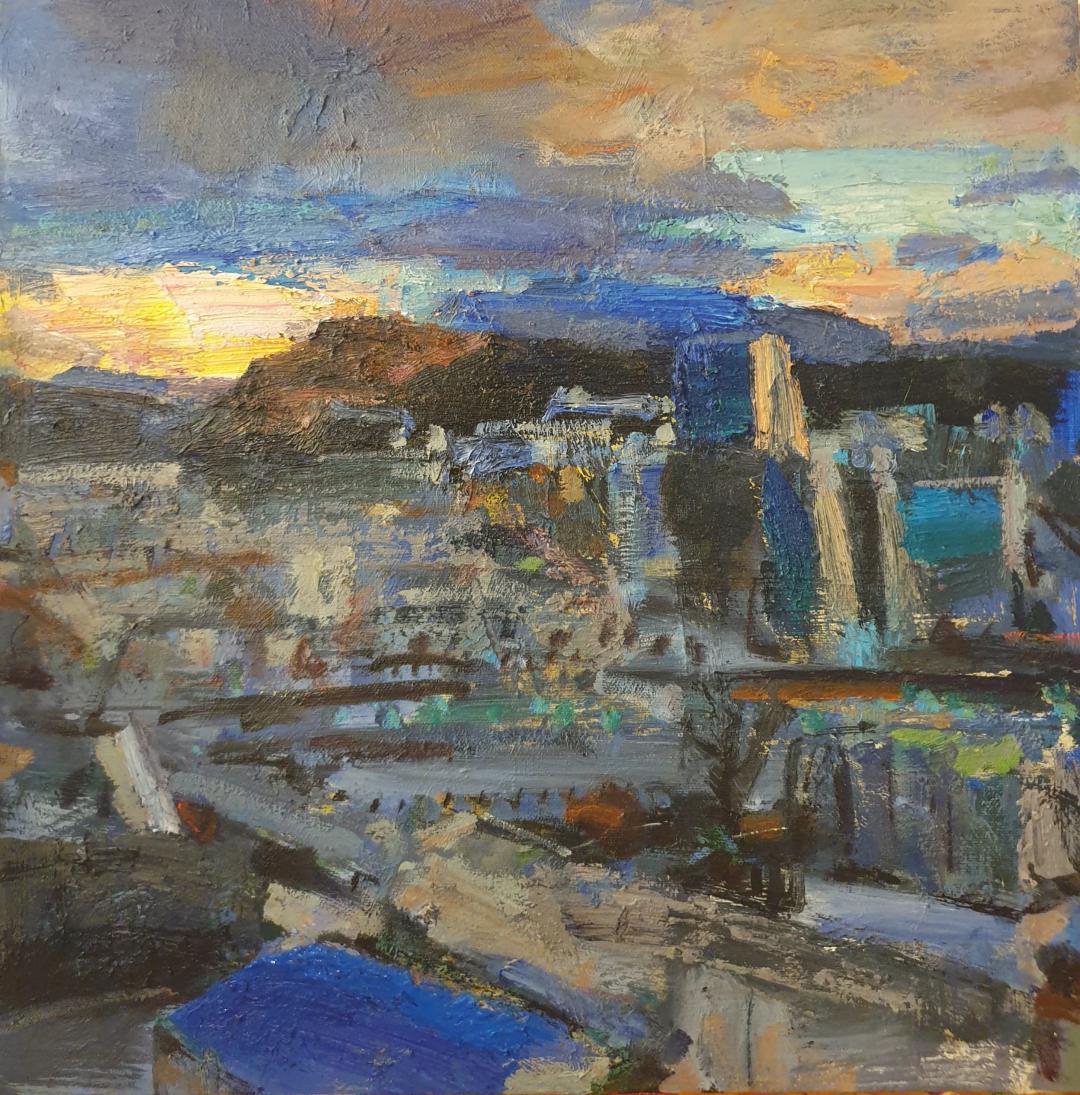
Park Seongwan, Mudeungsan from Jeonil Building — Mudeungsan seen from Jeonil Building, Gwangju. For a parent from Gwangju, this is the mountain of home, brought indoors.
Quick Notes on Space
Korean apartment living rooms run beige and ivory — hanji, hwaseonji, and woodblock families settle best. Country homes with mountains in the window reward works that interpret rather than copy nature — calligraphy, concise forms in ink, solar-term prints.
Budget Guide
| Relationship | Range |
|---|---|
| Adult child → parent, solo | ₩1M–5M |
| Children + spouses pooled | ₩2M–7M |
| First art gift to parent | ₩500K–2M |
| Hwangap / Chilsun major | ₩3M–10M |
Handoff Etiquette
With parents, short notes beat long explanations. Don't try to walk through the artist's CV. One line — "I saw this and thought of you" — is enough. Don't leave parents drilling and leveling alone. Visit and hang it yourself.
Include the COA. When parents eventually pass the work down or transition homes, clear provenance and artist information preserve its value. Edition basics: Editions Explained.
Related Reading

The Context of Solidarity
84.9% of Korean artists are excluded from institutional finance. Sales of works by SAF-exhibiting artists cycle into a mutual-aid fund, returning as low-interest loans to fellow artists. Many SAF artists have lived the same decades as these parents; hanging such a work in the family living room continues a cross-generational conversation. About SAF.
Related Guides
Related reading
If this piece helped, you may also enjoy these related articles:

Seed Art Festival
·