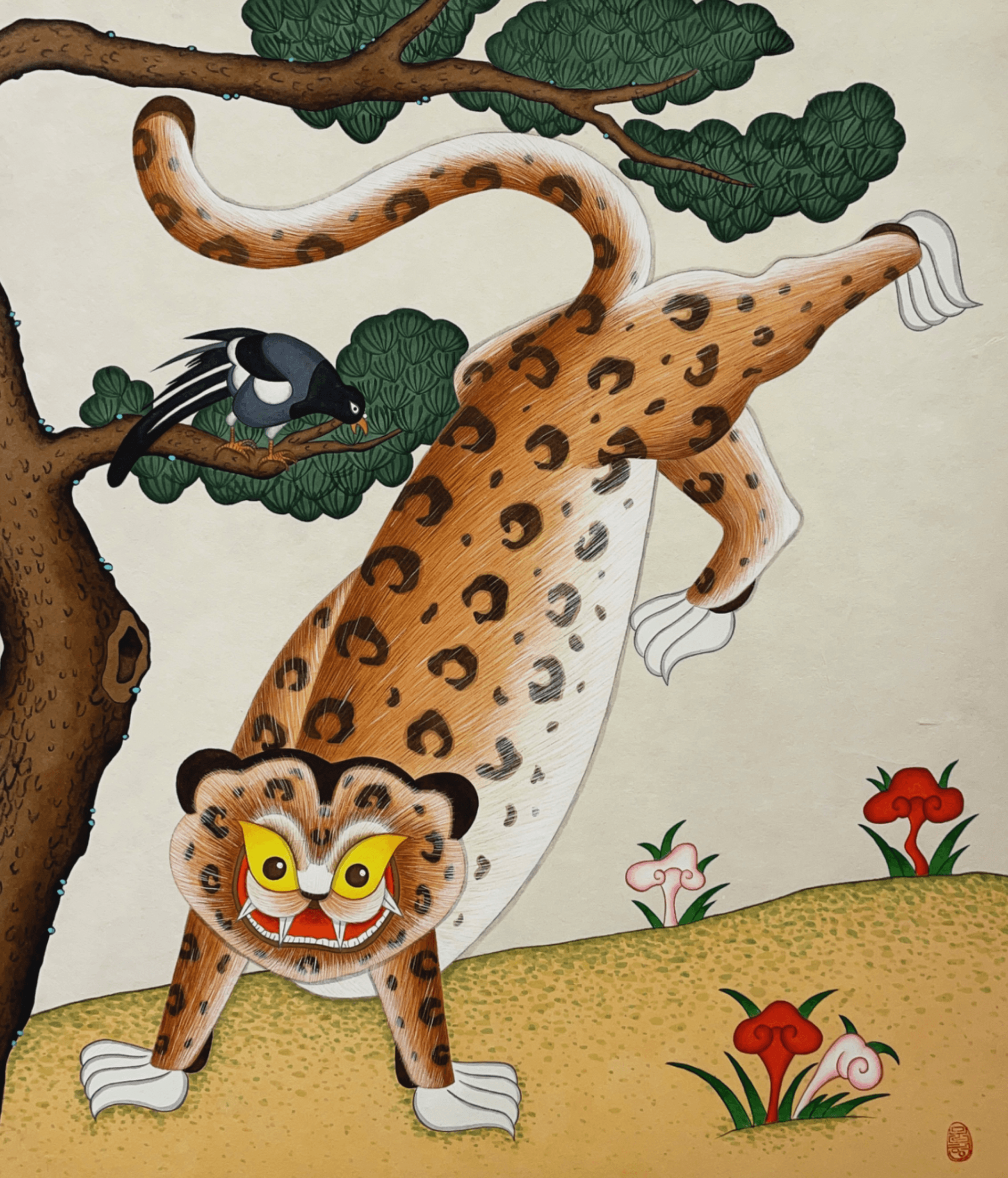
Lee Mun-hyeong paints Korean folk tigers and rebuilds the chaekgeori bookshelf with Matisse cutouts, Dalí clocks and Kusama dots. A guide to seven works where Joseon folk painting meets homage.
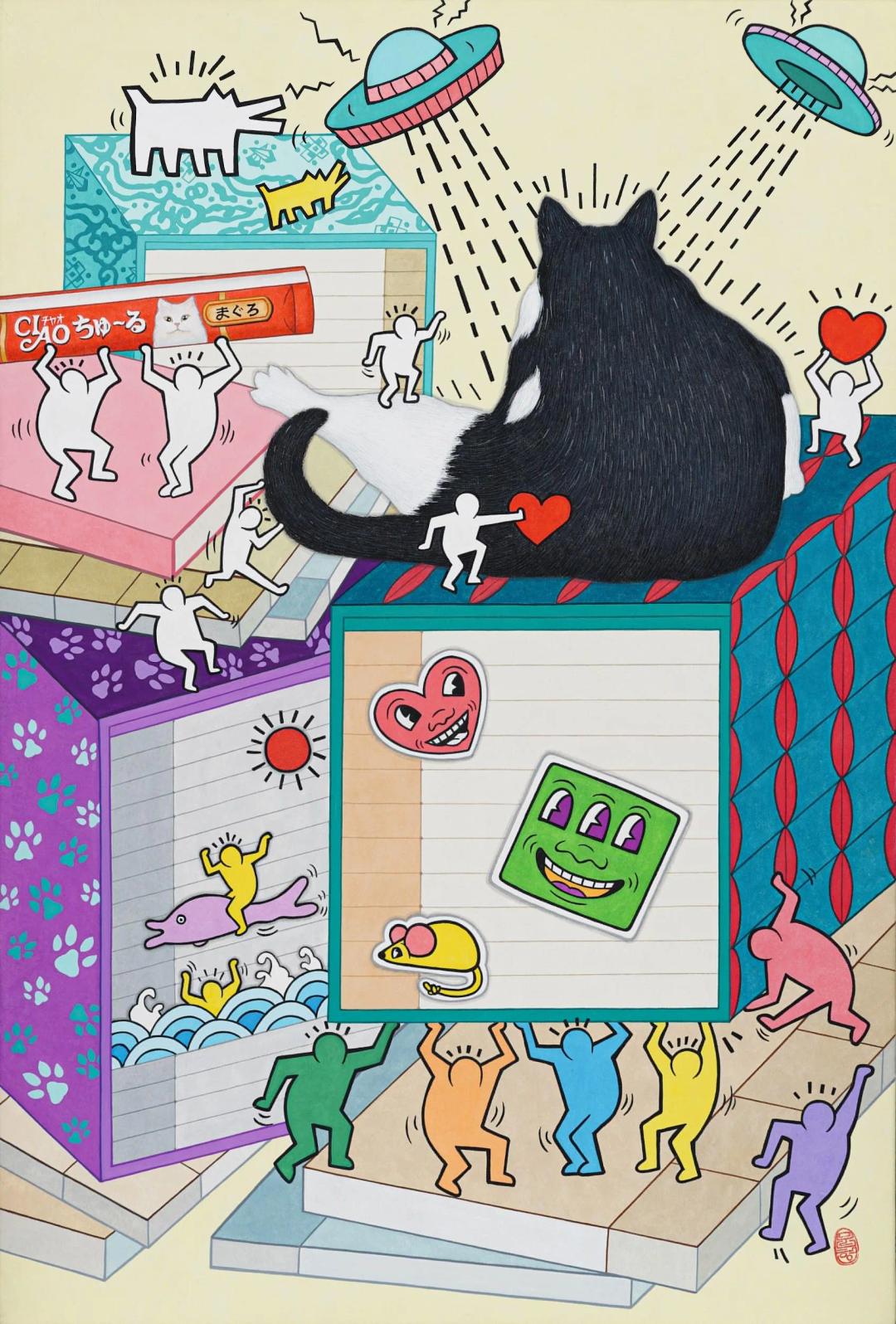
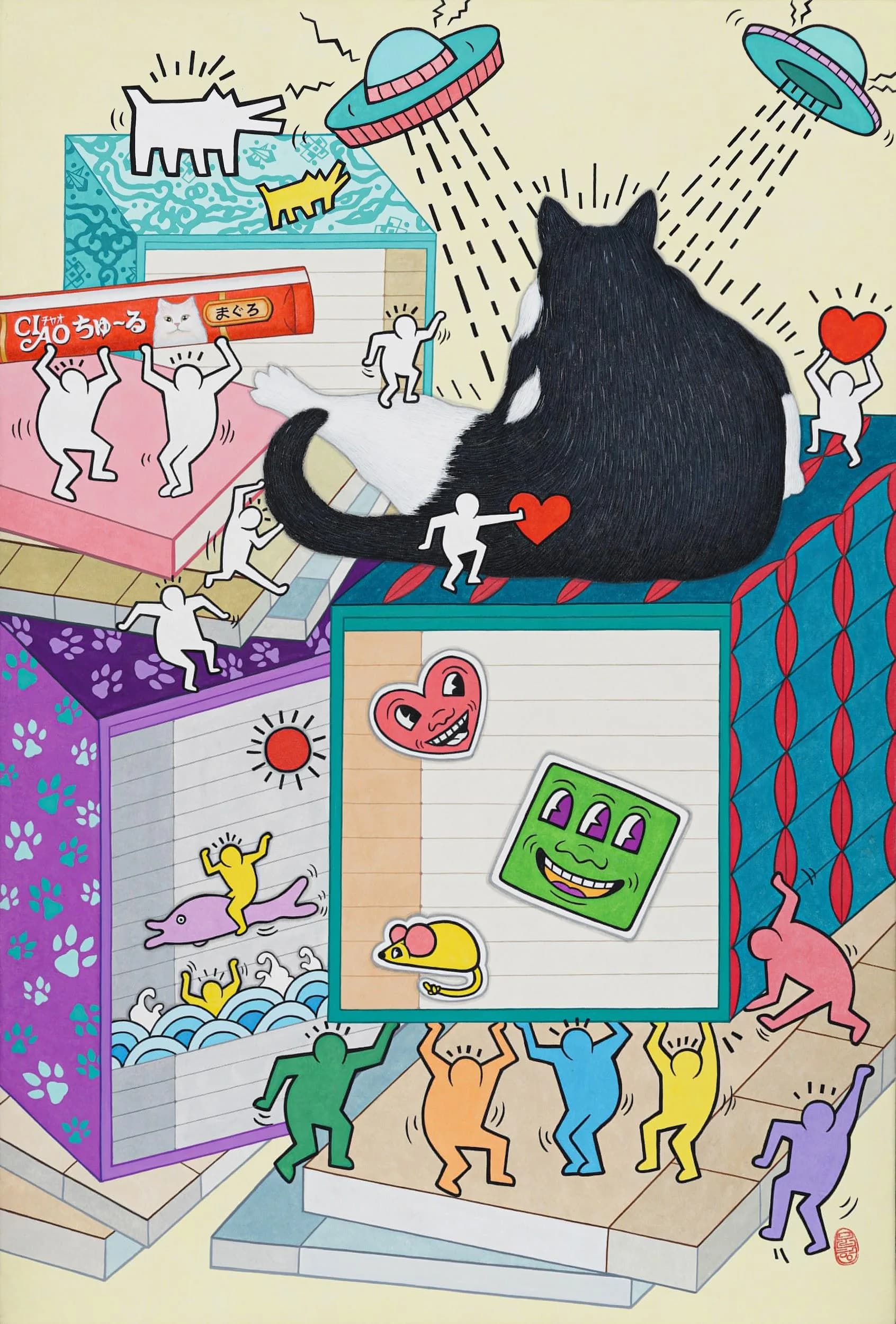
In Lee Munhyeong's chaekgeori, where Joseon-era books usually sit, Keith Haring's dancing figures appear instead.
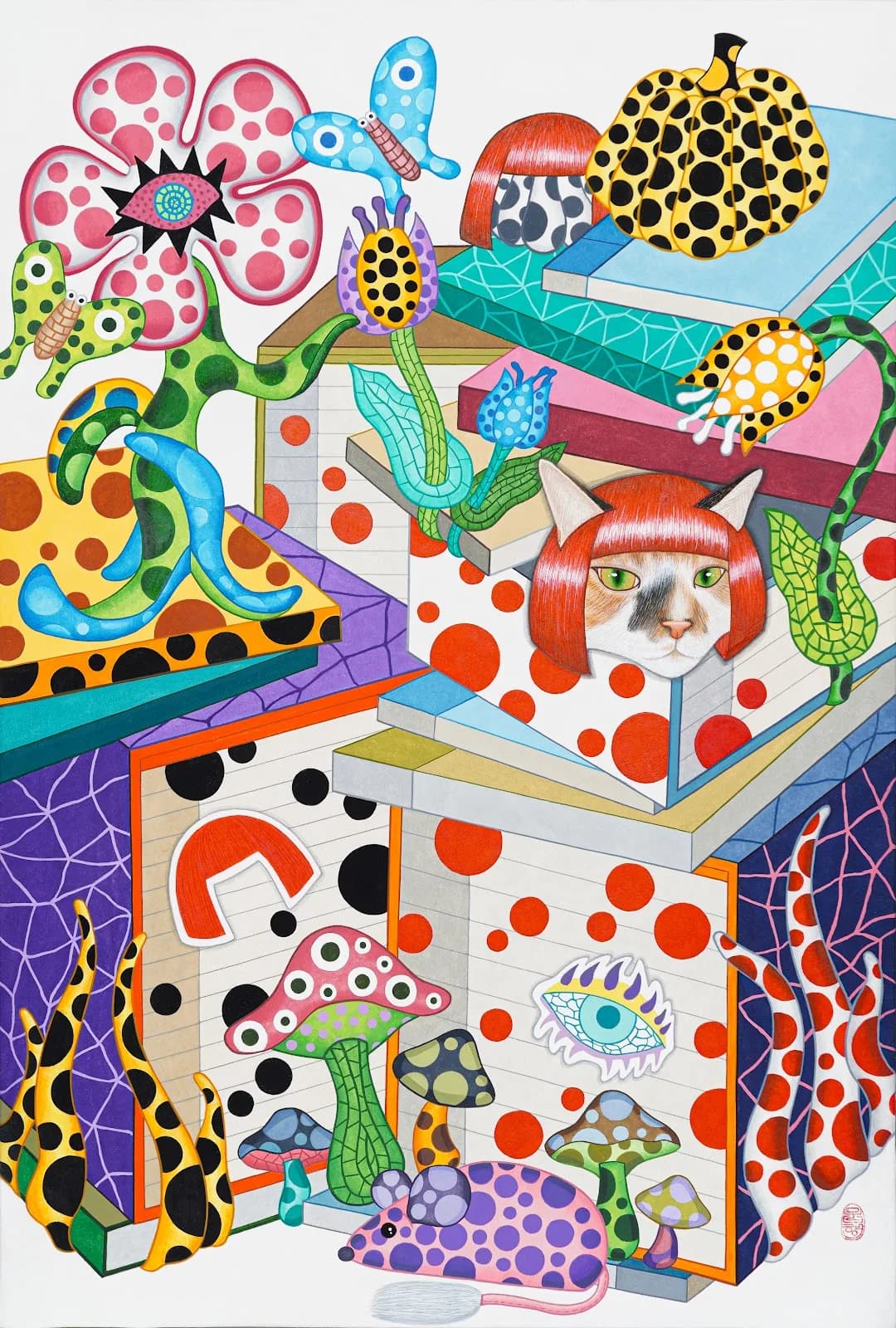
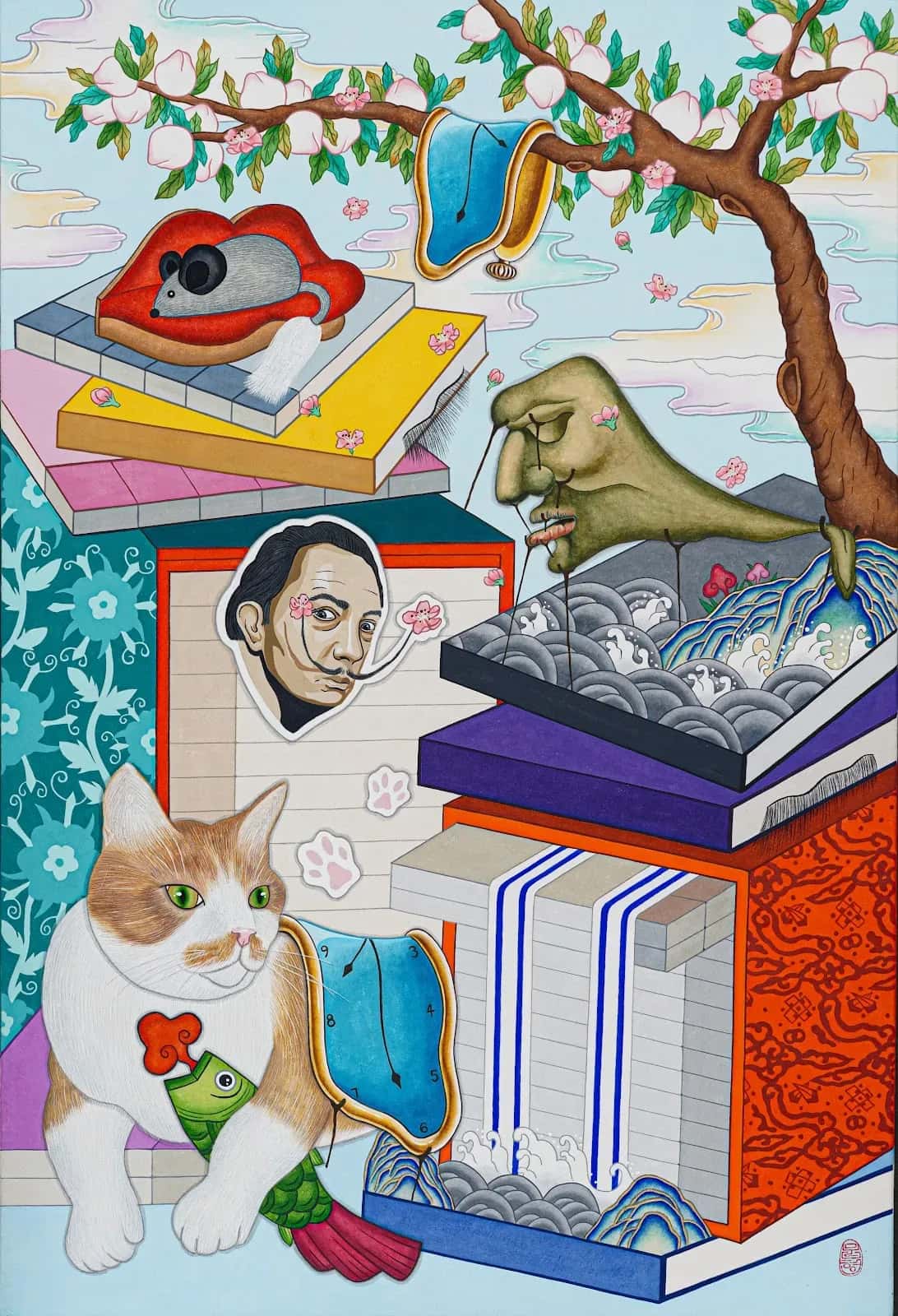
Chaekgeori (冊架圖) — a representative genre of late-Joseon minhwa. Paintings of a scholar's bookshelf stood in for the owner's temperament through arrangement of objects. Lee Munhyeong invites the language of 20th-century Western masters into this traditional form. Keith Haring, Henri Matisse, Yayoi Kusama, Salvador Dalí. Names that would never sit together otherwise gather in one house on hanji.
Hanppyeong Museum, and Korea Art Museum
Lee Munhyeong is a minhwa artist. In 2025 he held Lee Munhyeong Solo 2025 at Hanppyeong Museum in Cheonan. At Korea Art Museum in Seoul he has continued group shows like Minhwa's Flight — Chapter 6: Repetition and Pattern.
- 2025 7th Korea Minhwa Art Fair, Personal Booth (SETEC, Seoul)
- 13th Contemporary Minhwa Open Call — Excellence Prize
- 20+ minhwa group shows
An artist who works steadily inside the traditional frame of minhwa while constantly opening the grammar of the form in other directions.
Chaekgeori × Contemporary Art — Five Works
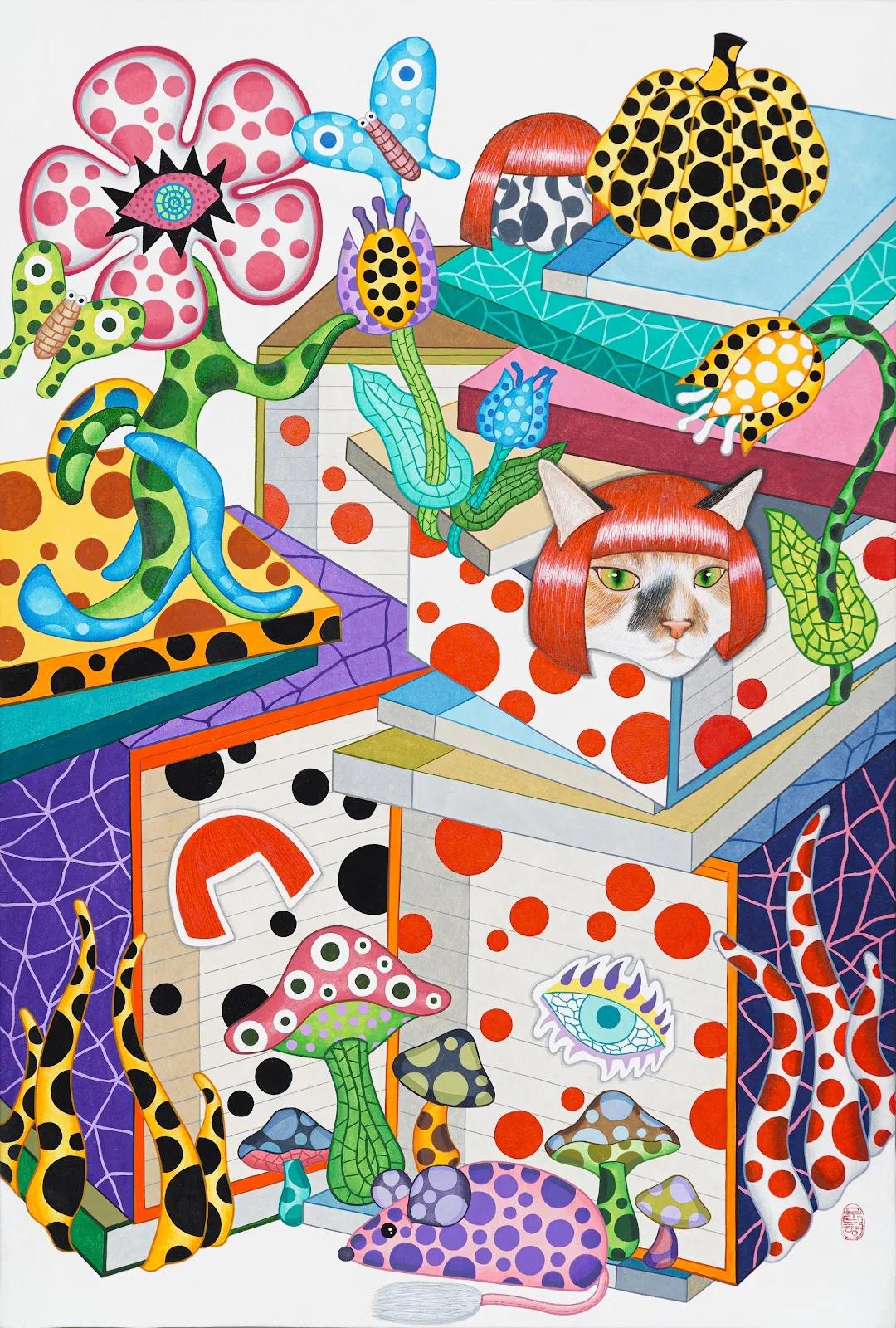
Five SAF works form a Chaekgeori × Master series. All 60.6×40.9 cm, ink and color on hanji.
- Chaekgeori × Keith Haring — a bookshelf meeting dancing signs
- Chaekgeori × Christmas — Korean chaekgeori × Western year-end
- Chaekgeori × Henri Matisse — sold
- Chaekgeori × Yayoi Kusama
- Chaekgeori × Salvador Dalí
Korean chaekgeori was originally a painting holding "longing for knowledge." When Western contemporary masters take that seat, two eras' desires layer on the surface. Joseon's longing for knowledge and the 20th-century's visual revolution meet inside the same square grid.
Piri-Playing Conan
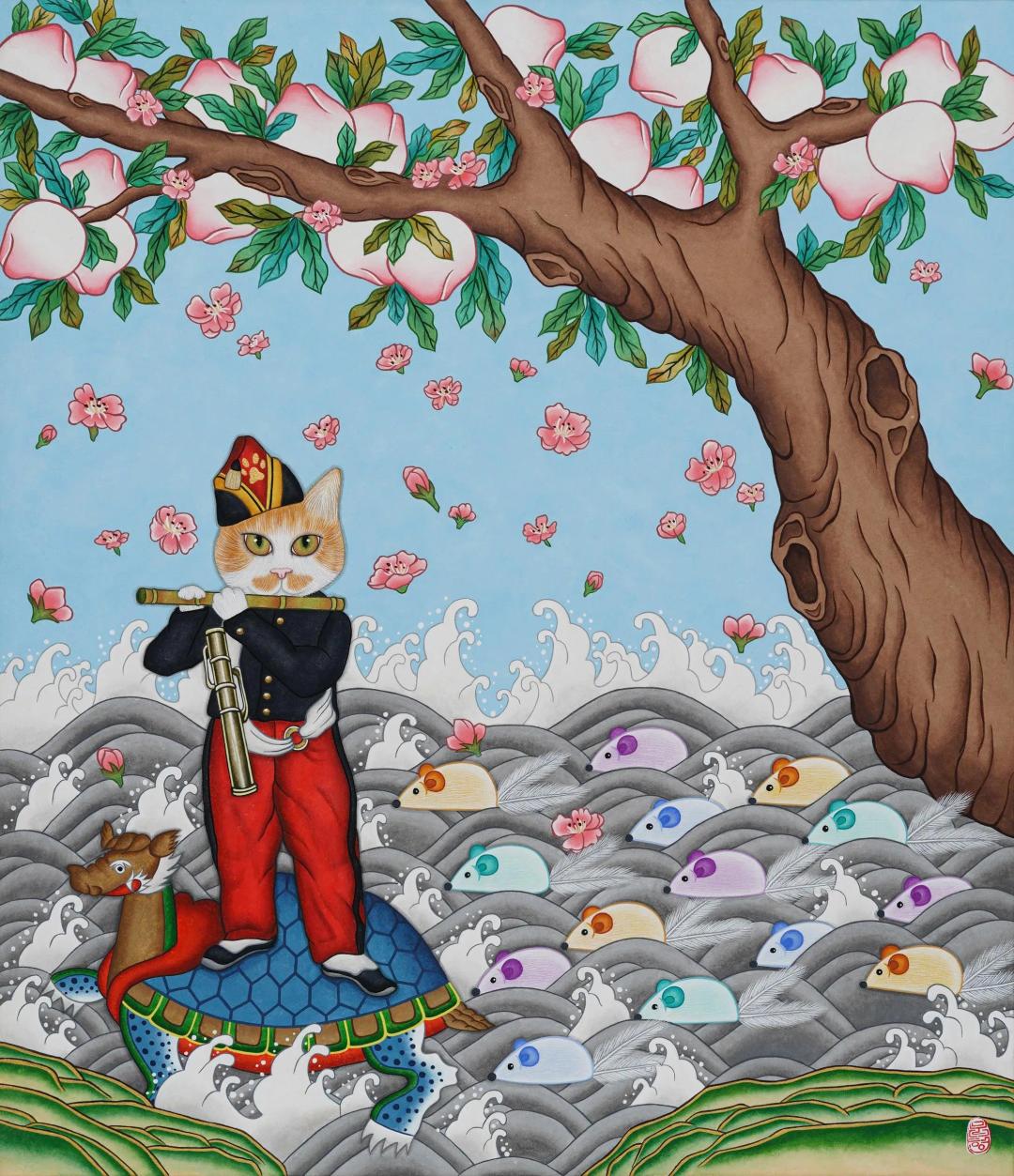
The sixth SAF work is Piri-Playing Conan. Overlaying the piri-playing boy that often appears in minhwa with the protagonist of the Japanese manga Case Closed (Detective Conan). Already sold as of contribution.
The combination of traditional minhwa iconography with pop-culture characters. Recalling that minhwa was originally "popular visual culture," Lee Munhyeong's Chaekgeori series is not a strange combination but an update of minhwa's nature itself in today's grammar.
The Seat of Chaekgeori
Lee Munhyeong contributes six works to SAF. Two are sold as of contribution.
84.9% of Korean artists are excluded from institutional finance. Sales of works by SAF-exhibiting artists cycle into a mutual-aid fund, returning as low-interest loans to fellow artists.
Chaekgeori is originally a painting of "I want to keep these things beside me." As Dalí, Matisse, and Haring now sit in his chaekgeori, tomorrow of fellow artists is placed in SAF's chaekgeori. The work of bringing invisible wishes, one by one, into the frame.
Minhwa Rising
Traditional minhwa was a minjung visual art. A painting anyone could access, anyone could hang.
Lee Munhyeong keeps its spirit alive while continuing to invite today's visual grammar into the frame. Dalí's melting clocks, Kusama's dots, Haring's dancing signs. A declaration that tradition does not sit only in museums — and evidence that minhwa is still rising.
Works by Lee Munhyeong
Related reading
If this piece helped, you may also enjoy these related articles:
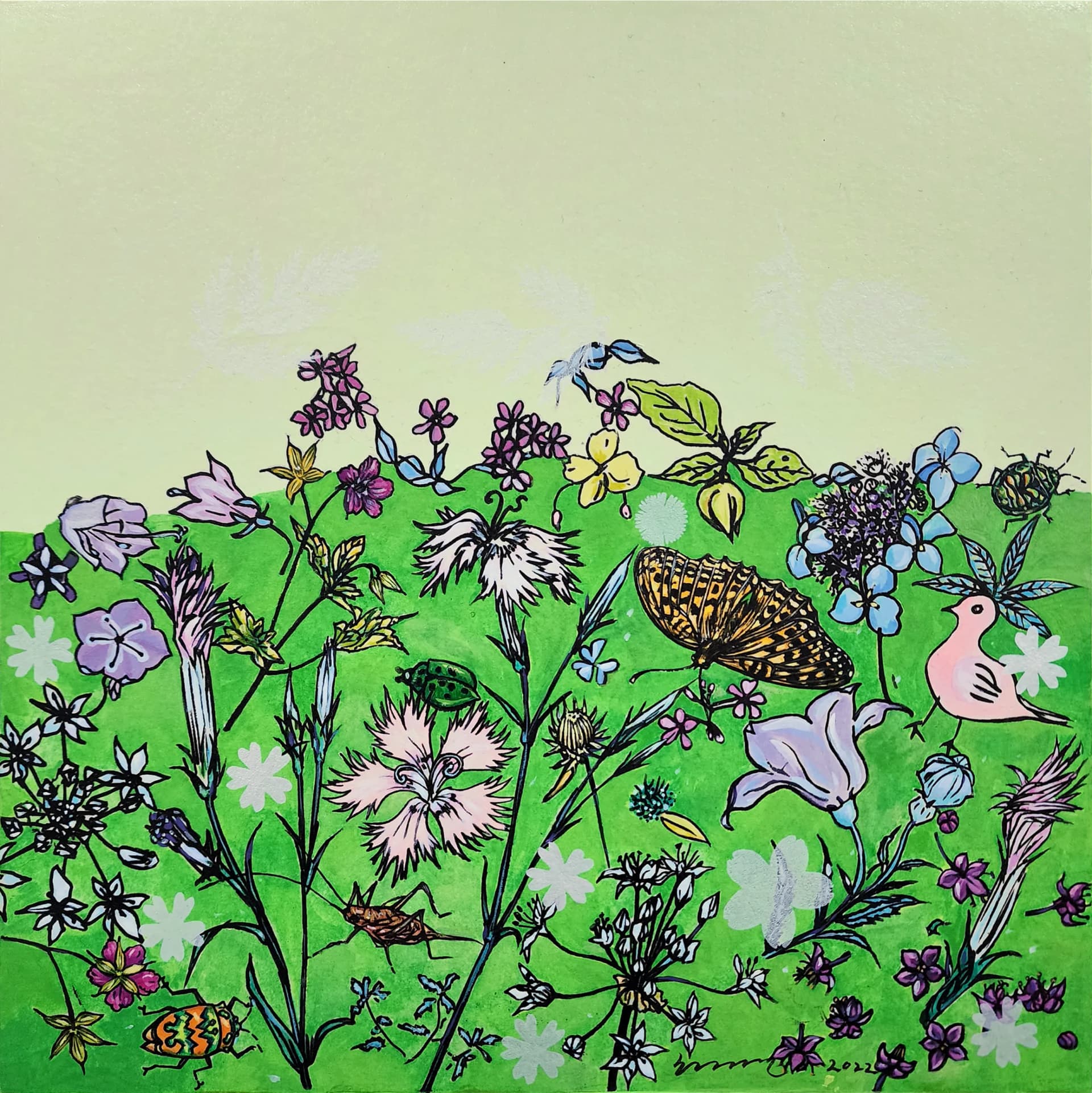
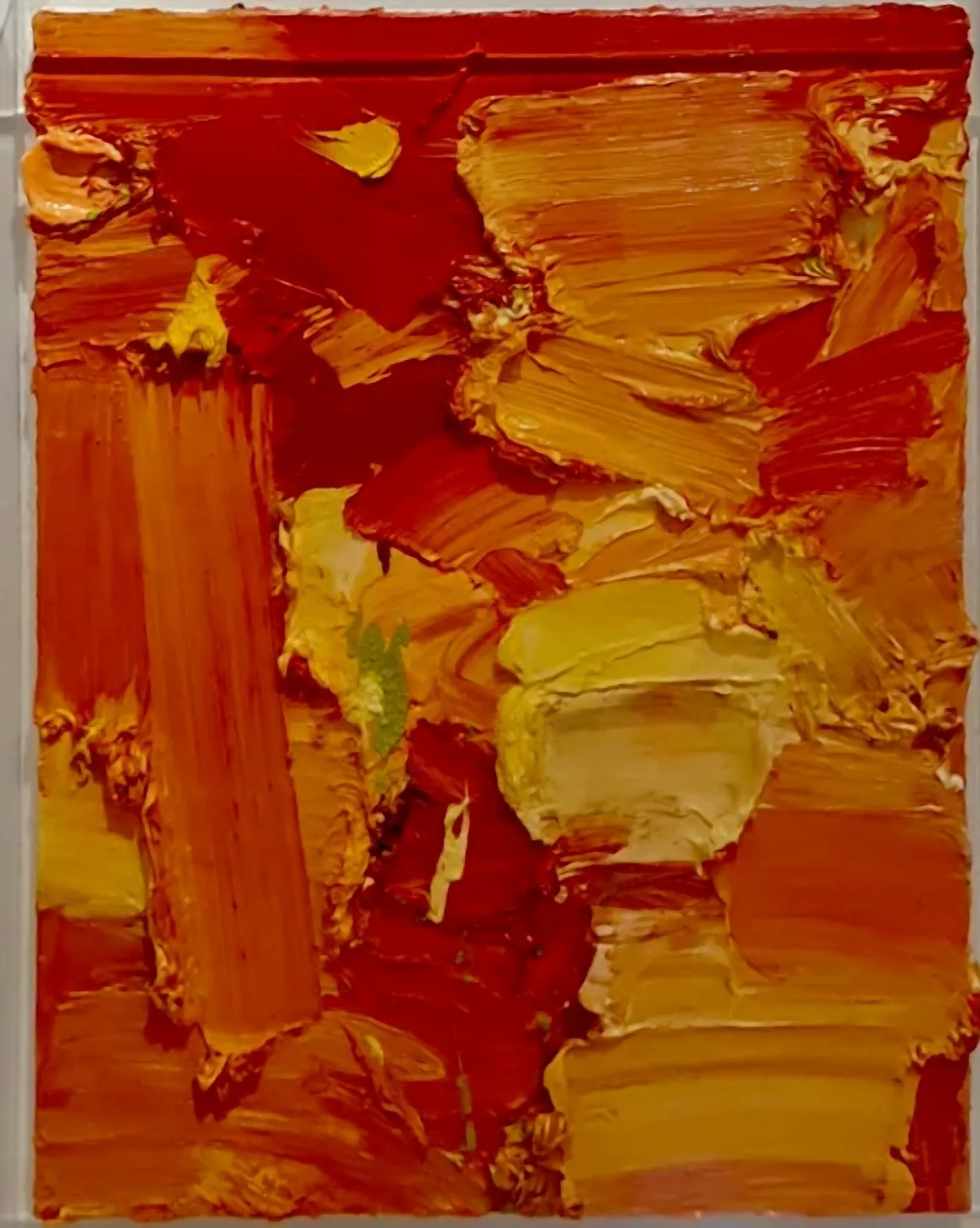
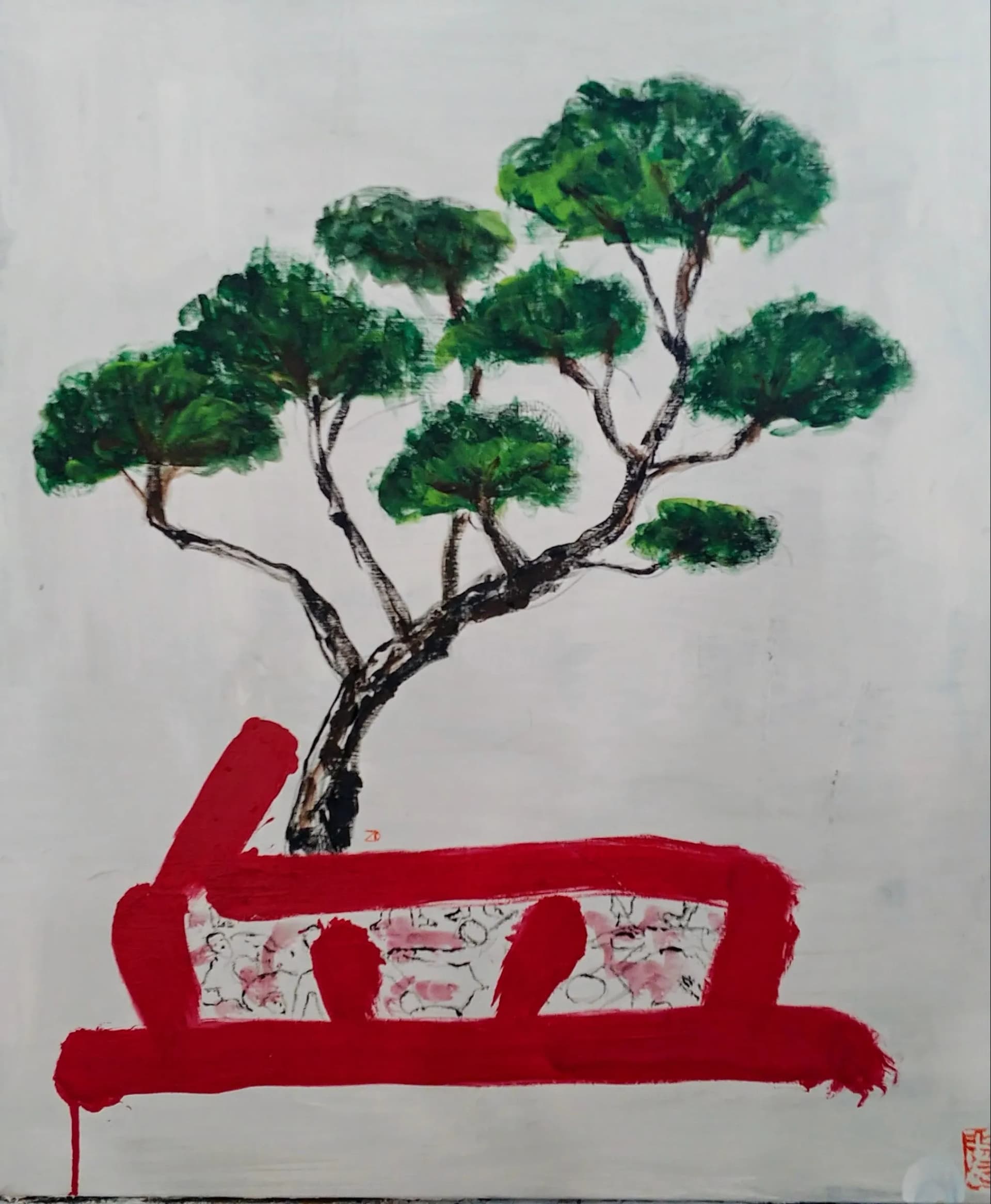
View all works by Lee Munhyeong →
Related Reads
Artists on the Same Path
Collecting Guides
Seed Art Festival
·