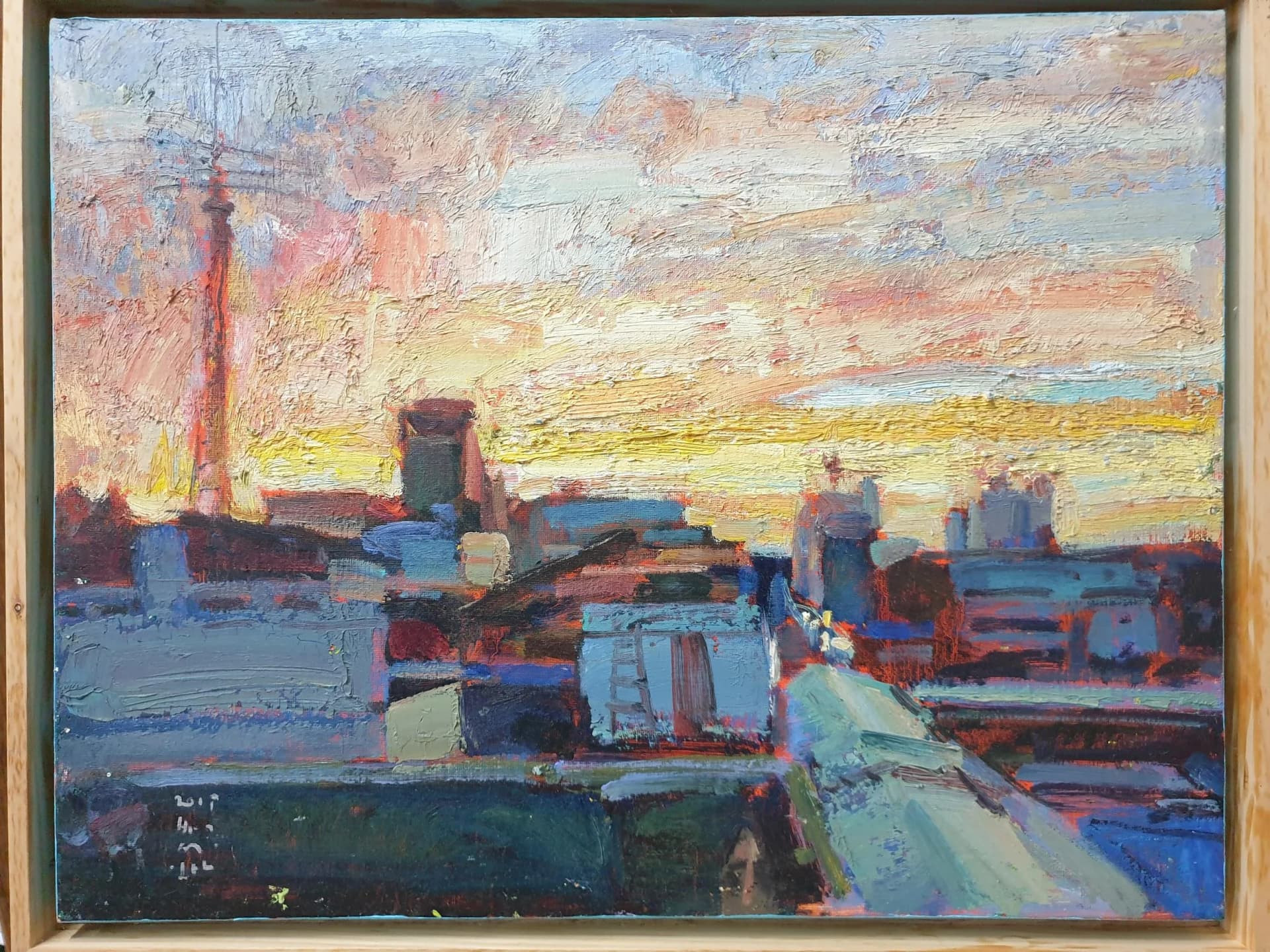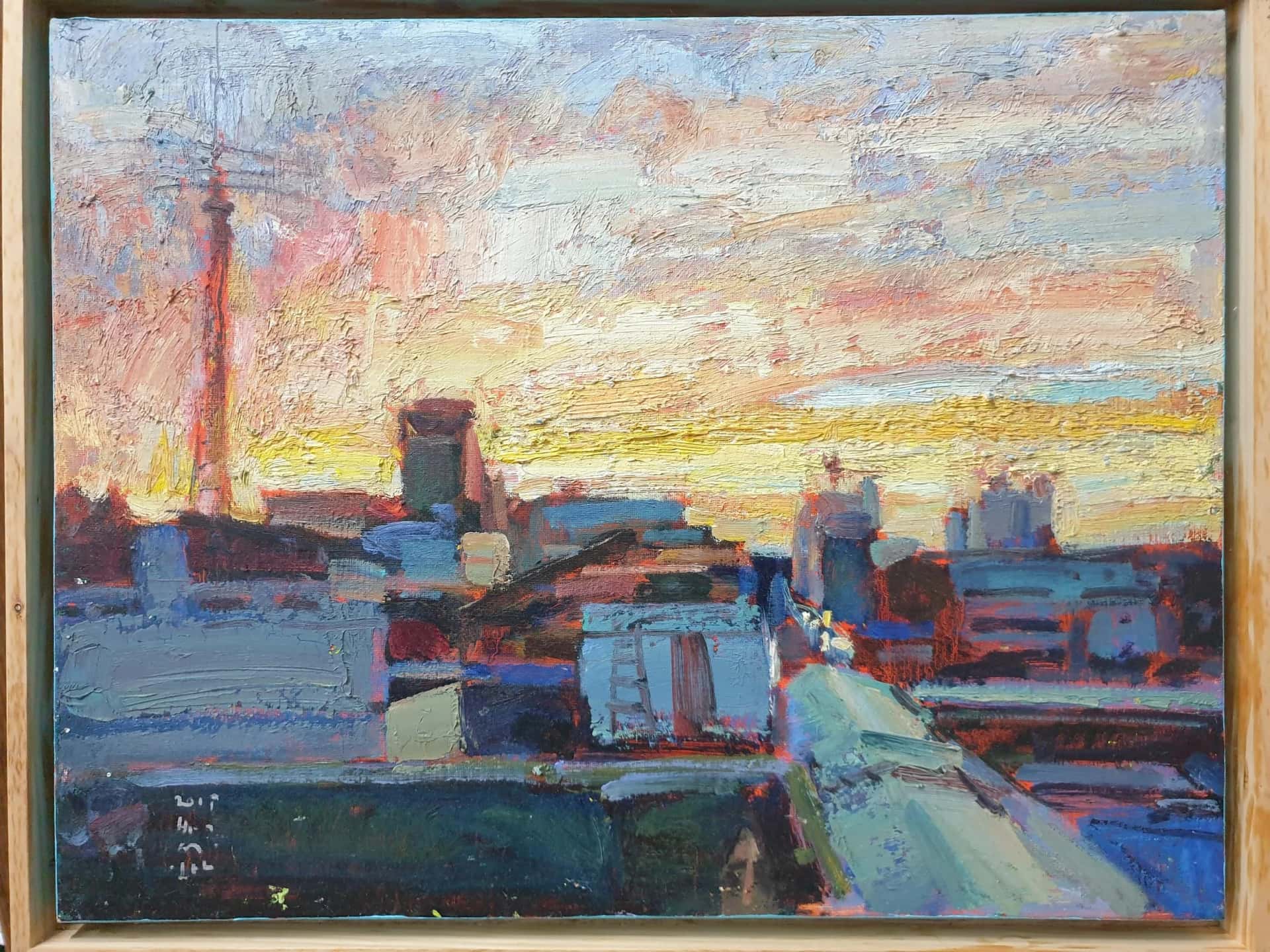
An artist rooted in Gwangju and South Jeolla. Markets, Jeonil Building rooftops, village rice mills — Park Seongwan draws out the sense of an era from the small, overlooked moments around him.
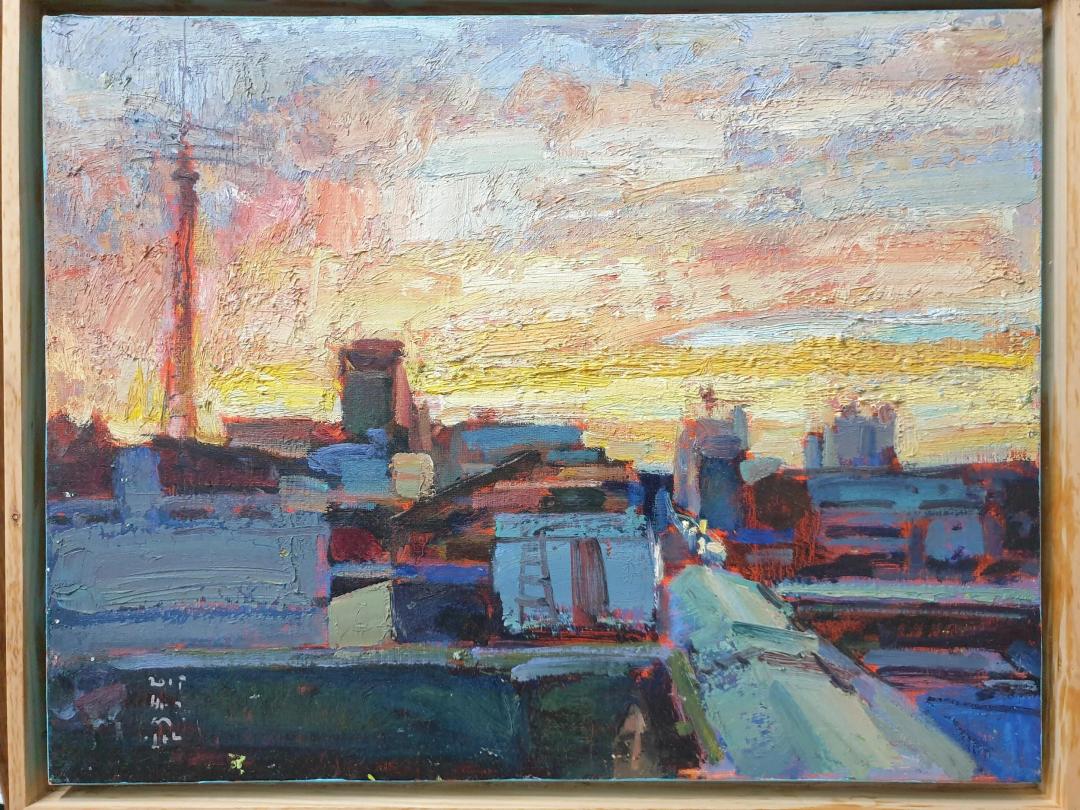
Park Seongwan has rarely left Gwangju and South Jeolla.
After graduating from Chonnam National University's Department of Fine Arts and completing a master's degree in Western painting at the same institution, he made Gwangju-Jeonnam the foundation of his life and work. Daein Market, Jeonil Building, the rice mill in Gangjaeng — everything captured on his canvas maps to a single point in Honam. Yet from that single point, he summons an entire era.
Thick, Powerful Brushwork and Memory
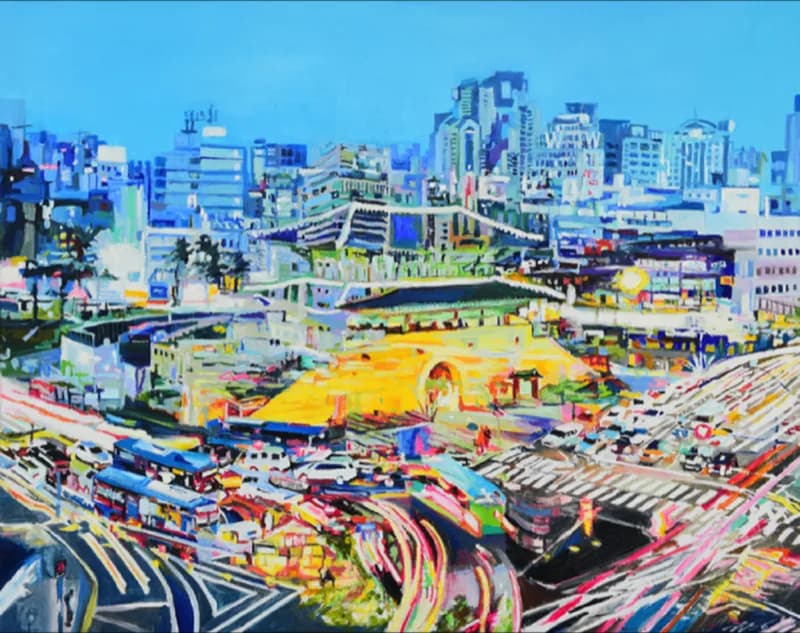
Bold strokes and vivid color. Compositions that bring fresh air to everyday scenes. His work draws out a sense of the era and a community's memory from ordinary landscapes and the trivial moments around them.
The Gwangju Biennale's local artist program described his work as "reinterpreting the small things of everyday life and the surroundings with an impressionist sensibility, focusing in particular on revealing 'our story.'"
From Construction Site Diaries to Candlelight Squares
The titles of his solo exhibitions alone reveal his concerns.
2012 Construction Site Picture Diary (Asia Culture Maru), 2015 UNDER CONSTRUCTION: Construction Site Diary (Space K Gwangju, Kumho Gallery). The work of recording neighborhoods that disappear behind construction barriers. 2021 April Moving Toward May (Chonnam National University Yongji Hall). 2024 People I Met at the Candlelight Square (Gallery Saenggak Sangja). Each exhibition title carries a distinct grain of time.
His group exhibitions trace a clear trajectory. 2010 Maninbo at the 8th Gwangju Biennale, 2020 We Were There for the 40th anniversary of May 18th (Owol Museum), 2022 Climate Justice (Catholic Lifelong Education Center), 2024 For a World Where All Are Equal (Donggok Museum). Locality and publicness, painterly sensibility and awareness of the era — all circle the same orbit.
In 2012, he participated in a residency at Malihom, Penang, Malaysia. In 2017, he held his solo exhibition From Berlin to Georgetown at China House in Penang. In 2012, he received the Grand Prize at the Eodeung Art Festival.
Jeonil Building, 2026
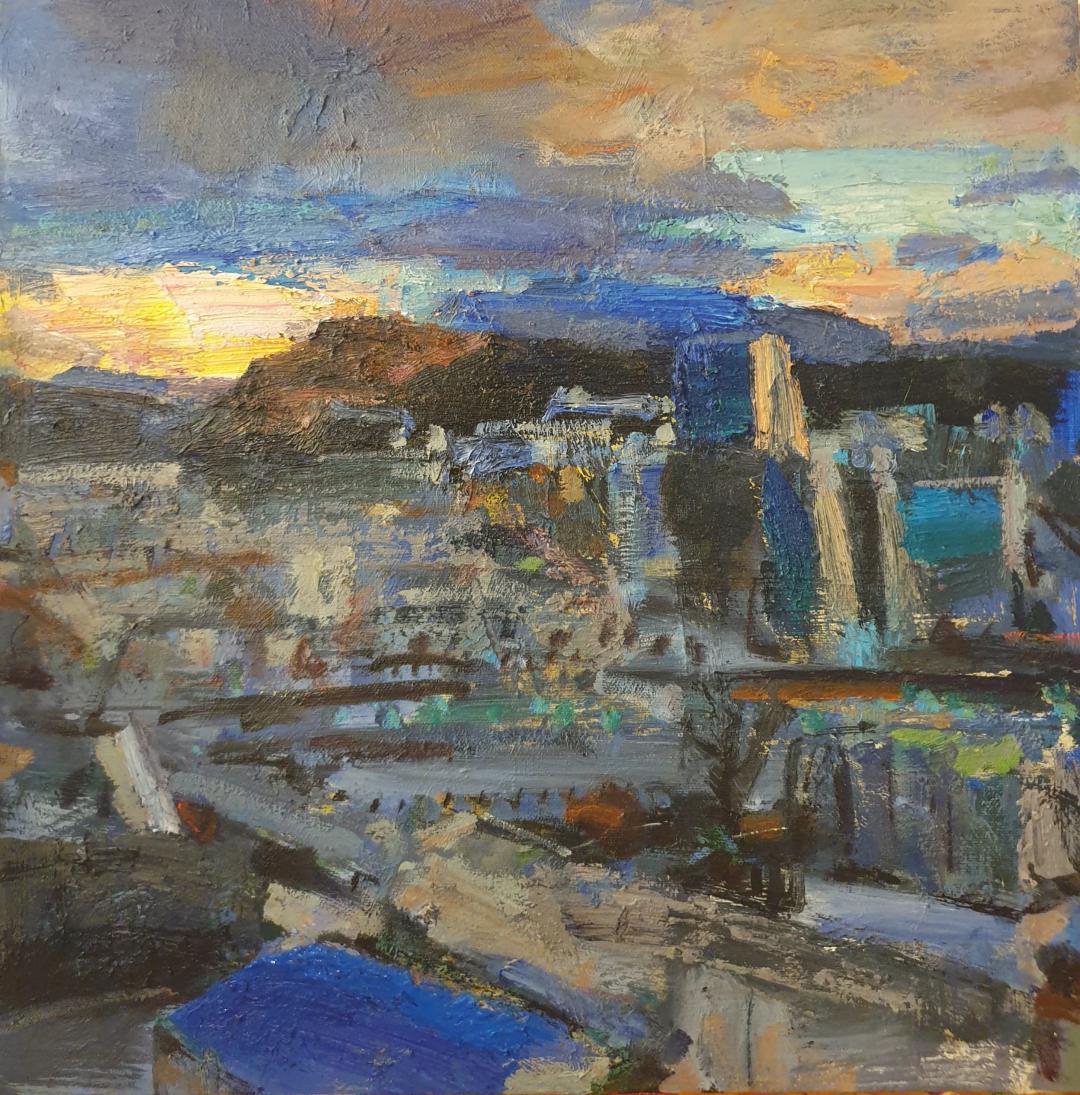
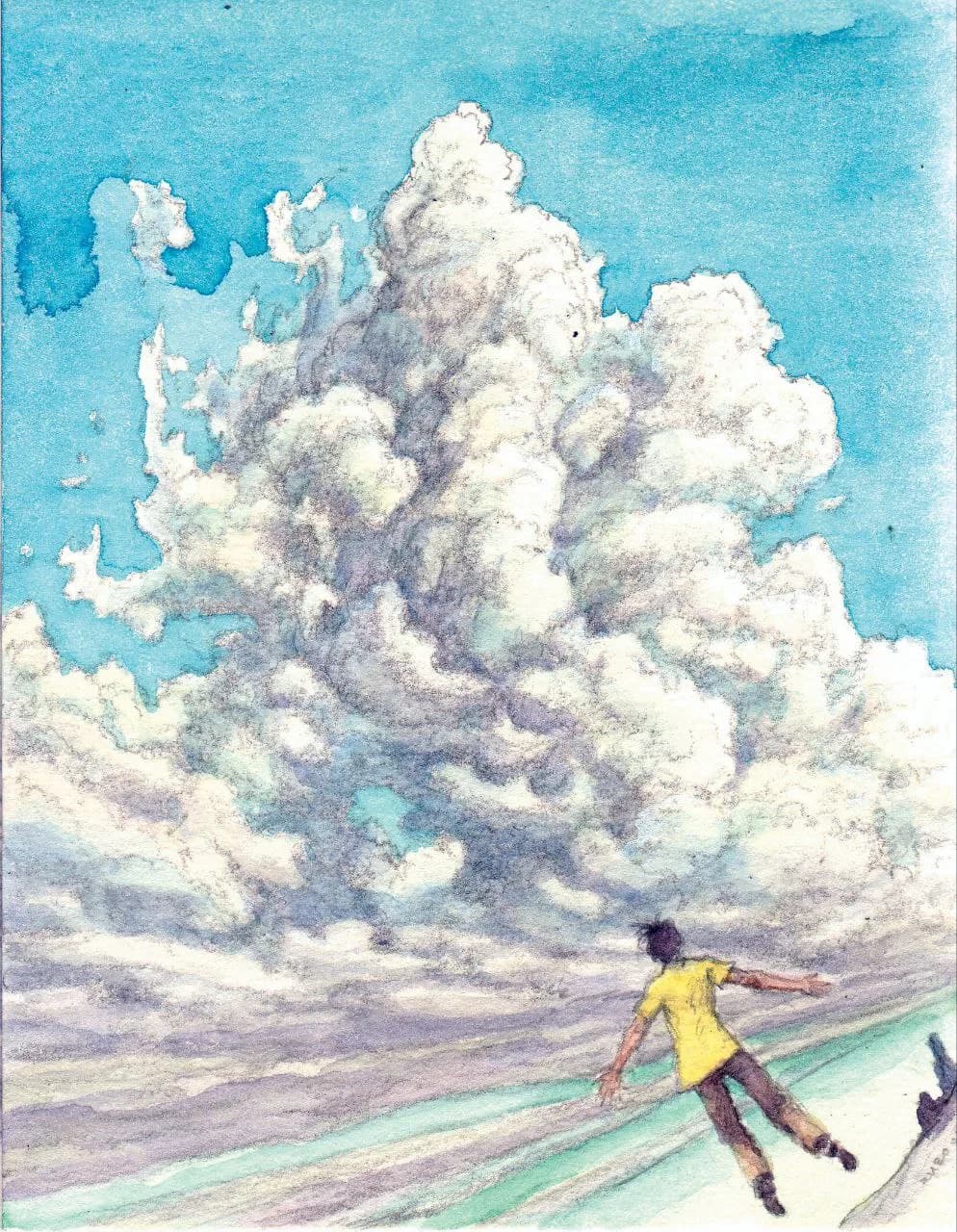
About his SAF 2026 work Mudeung from Jeonil Building, the artist wrote:
"I climbed to the rooftop of Jeonil Building, one of the symbols of Gwangju's May 18. Looking toward Mudeungsan, I saw the sunset light settle on the clouds. Clouds passed over Mudeung's summit, and up close, I could see Hyangnobong. Below Chosun University, the buildings entered the shadow and became a single mass. Only the clouds, only a few buildings, caught the sunset light, making a contrast against the shadow. On top of Jeonil Building, meeting that sunset light set against shadow, I take a note as a painting."
Jeonil Building, where bullet marks from May 1980 still remain. A 2026 sunset seen from that rooftop. Park Seongwan's canvas is both record and prayer.
The Rice Mill at Gangjaeng, a Red Mass
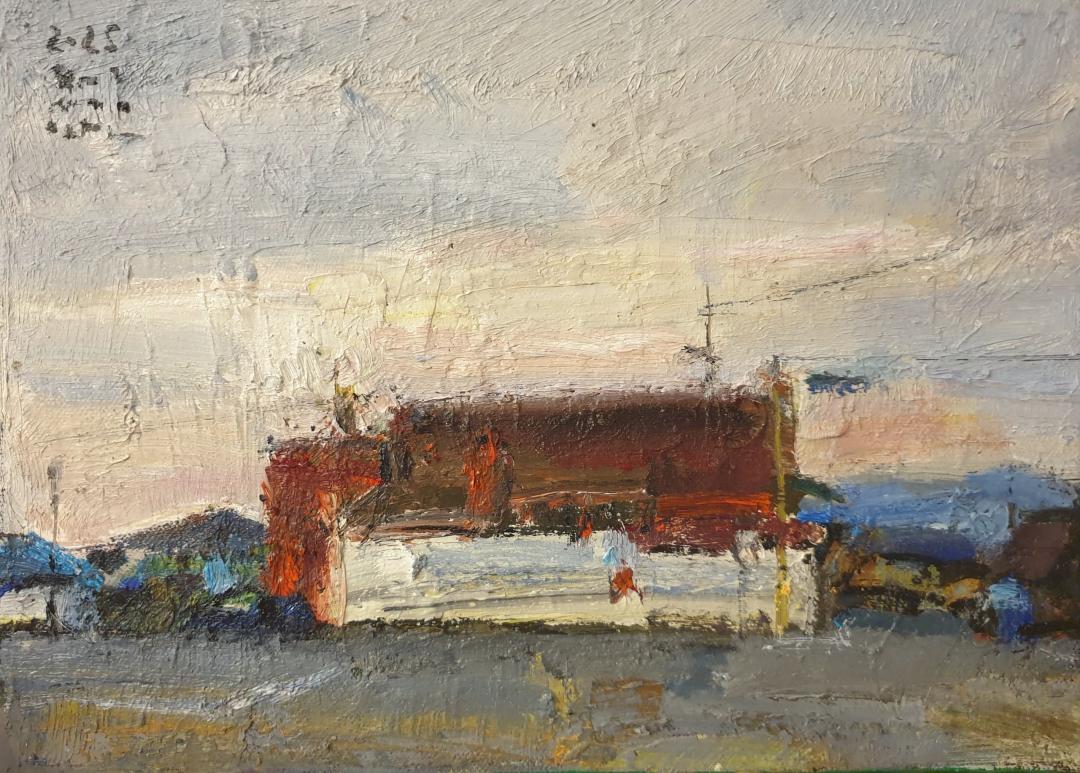
The backstory of Gangjaeng Rice Mill:
"There is a rice mill along the village road. Not the color of rusted steel plate, but painted red. Whether it was morning or afternoon I am not sure, but judging from the color temperature I guess it was morning. Probably while waiting for the morning bus to Gwangju on some errand, the red mass caught my eye and I took a photo. Later, flipping through the album, I felt the urge to move it onto a mass of paint, and after holding that time, it became a painting."
The act of calling up a scene that might otherwise pass by, and making it stand still in paint. It is the method that runs through all of Park Seongwan's work.
Three Works at SAF
Park Seongwan submitted three works.
- Daein Market Play — 2019 (sold)
- Mudeung from Jeonil Building
- Gangjaeng Rice Mill
84.9% of Korean artists are excluded from institutional finance. Sales of works by SAF-exhibiting artists build a mutual-aid fund that returns as low-interest loans to fellow artists facing financial discrimination.
Gwangju's May 18, Jeonnam's construction sites, a village rice mill. The places Park Seongwan has been moving into "our story" for decades now move, in turn, to another artist's rent and studio. A reincarnation of record, flowing from region to region.
The Work of Recording What Disappears
A neighborhood vanishes behind the construction barrier, the red paint of the rice mill fades, the bullet holes of Jeonil Building become an official monument.
Park Seongwan's canvas sits between all of these. The landscape that remained someone's morning, someone's bus stop — before disappearing, before being taxidermied. He moves it into a mass of paint. To not forget, and to give back.
Works by Park Seongwan
Related reading
If this piece helped, you may also enjoy these related articles:
View all works by Park Seongwan →
Related Reads
Artists on the Same Path
Collecting Guides
Seed Art Festival
·