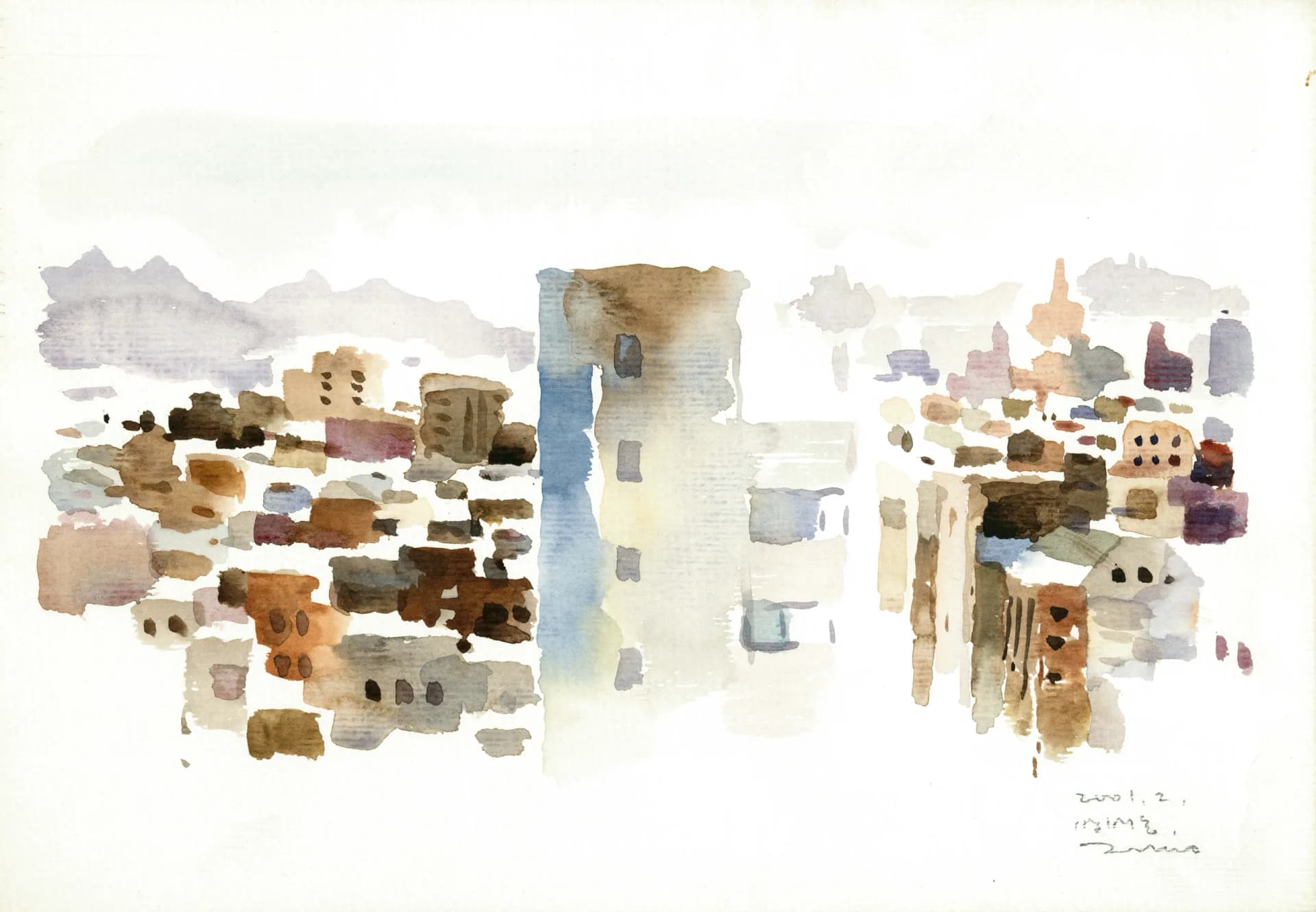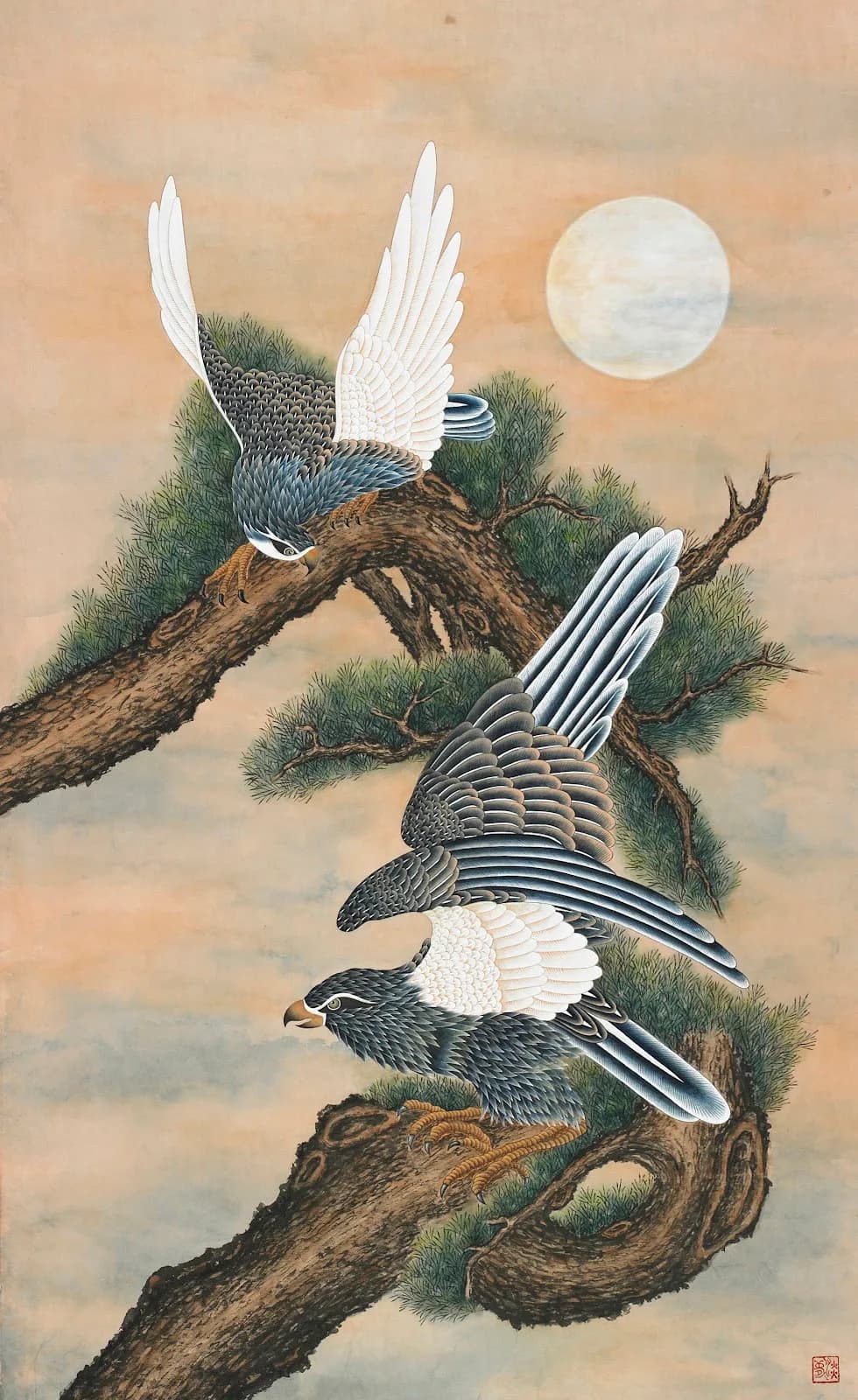
Buying from SAF is not simply a transaction. Your payment becomes a fund, which becomes 7x in loan capacity, reaching financially excluded artists at a fixed 5% annual rate. This traces the chain reaction one painting can start.
How Far Does One Painting Travel?
You buy a painting for ₩2M.
That money doesn't go only to the artist. The full sale amount enters the Korea Smart Cooperative's artist mutual-aid fund.
Here leverage happens. Partner financial institutions turn the fund into a loan pool roughly seven times its size. Your ₩2M becomes up to ₩14M in low-interest lending capacity.
And that money reaches, somewhere, an artist who was turned away at a bank. At a 5% fixed rate. Up to ₩10M. Without a credit-score gate.
That's the change a single painting can make.
Why This Structure Is Needed
Most people don't realize how severe Korean artists' financial-exclusion problem is. The numbers shift the picture.
The Korea Smart Cooperative's 2025 Artist Financial Crisis Report is a deep survey of 179 artists.
| Indicator | Figure |
|---|---|
| Exclusion rate from first-tier banks | 84.9% |
| Exposure to high-interest products (15%+ annual) | 48.6% |
| Creative-work stoppage among those who experienced debt collection | 88.3% |
| Mutual-aid loan repayment rate | 95% |
Think about what 84.9% means. Roughly 8.5 out of every 10 artists effectively can't use banks. The reason isn't moral; it's that bank credit underwriting is built around regular, fixed salaried income.
Artists work on project cycles. Income stops when a run ends; there's no income during preparation for the next show. The financial system reads this structural reality as a credit problem.
"When I said I was a theater actor, the loan officer called me 'unemployed'." — Actor, 50s
That's the reality. A working actor, classified as unemployed at the bank's counter.
Where Excluded Artists Go
When banks close, you look elsewhere. Savings banks, credit-card loans, private lenders. 48.6% of artists are exposed to products at 15%+ annual rates. 83.2% have used high-interest financial products.
High-interest lending isn't a choice. When rent is due, materials have run out, or a production budget is short, it becomes the only exit.
And when debt accumulates, collection begins. 88.3% of artists who experienced debt collection stopped making work.
"Collection calls disrupted rehearsals and performances. The psychological pressure made each day painful, and the next day frightening." — Theater practitioner, 40s
Debt blocks performances. Exhibitions. Creation.
How the SAF Model Works
SAF's mutual-aid model is an attempt to break this chain.
Fund formation. Artists contribute works; buyers purchase them; sale revenue enters the fund. Current fund size is about ₩125.34M.
Leverage. Partner financial institutions turn the fund into a loan pool roughly 7× its size. The leverage lets the fund support far more artists than the fund itself would.
Lending. 5% fixed annual rate, no credit-score gate, up to ₩10M per person. Loans issue on cooperative membership and a mutual-responsibility structure.
Repayment cycle. Repaid amounts return to the fund. The next artist benefits.
From December 2022 through 2026 to date, 354 loans have been issued. 150 artists have received support. Repayment rate: 95%.
If You Buy a ₩2M Work
A concrete simulation.
| Stage | Amount | Notes |
|---|---|---|
| Purchase | ₩2M | Enters the fund |
| Leverage (7×) | Up to ₩14M | Loan pool generated |
| Loan rate | 5% annual | Vs. savings-bank average 15–20% |
| People supported | 1–14 | For ₩1M–10M loan sizes |
As the fund grows, the leverage pool grows with it. Your purchase expands this cycle.
Artists Are Not Deadbeats
The strongest counter is the number.
95% repayment rate. Of 354 loans, 95% have been repaid on time. The subrogation rate (effective default rate) is around 5.10% — lower than the average delinquency rate on low-credit loans at typical financial institutions.
There is a stereotype that artists are unstable and untrustworthy. The financial system is built on that stereotype. SAF's numbers show the stereotype is wrong.
Given fair conditions, artists are reliable borrowers.
"Even though it's a system meant for ordinary people, I feel humiliated when my documentation is insufficient just because I'm an artist." — Film/broadcast professional, 30s
Removing that humiliation. Seeing artists as normal members of the financial system. That's what the SAF model proves.
A New Meaning for Collecting
You buy art for many reasons. Beauty. A favorite artist. Fit with your home's atmosphere. Investment value.
Buying at SAF adds one: social participation.
You choose an aesthetic object and, at the same time, place a bet on the sustainability of Korea's art ecosystem. From the moment the work hangs on your wall, that purchase becomes, somewhere, a resource protecting an artist's creative time.
One painting. The change it makes travels longer, and farther, than you'd think.
Related Guides

Explore Further

Related reading
If this piece helped, you may also enjoy these related articles:
Seed Art Festival
·