Artworks rarely break "suddenly" — they drift through direct sunlight, seasonal humidity swings, and wrong frames. Three things to avoid, and a seasonal checklist to keep a work for a generation.
Works of art rarely break "suddenly" — they degrade slowly. Direct sunlight, seasonal temperature and humidity swings, the wrong frame or glazing. Avoid these three and most works will stay safe for more than a generation.
This guide covers medium-specific rules, environmental basics, frame and glazing selection, and a checklist for moving and long-term storage.
Key Concerns by Medium
| Medium | Worst enemy | Target environment |
|---|---|---|
| Painting (oil) | Direct sunlight, extreme dryness | 18–22°C, 45–55% RH |
| Painting (acrylic) | Dust, surface scratches | Same as oil |
| Prints / drawings | Acidic paper, UV | Cool, UV-blocking glazing |
| Photography | UV, humidity | 15–20°C, 40–50% RH |
| Sculpture (metal) | Humidity corrosion | Dry environment |
| Sculpture (ceramic) | Vibration, impact | Stable base |
| Digital prints | UV fading | UV blocking, no direct sun |
One common rule matters most. Avoid direct sunlight and minimize humidity swings. Those two alone dramatically extend a work's life.
The Golden Range — 18–22°C / 45–55% RH
Museum environmental control is strict; at home, just approximate the golden range.
- 18–22°C: what humans find comfortable. Don't drift too far in summer AC or winter heating.
- 45–55% RH: Korean winter drops below 30%, summer monsoons rise above 70%. Those swings are the most harmful.
Simple fixes:
- Don't hang works near winter heaters. Direct heated air is dry and warps paper and prints.
- Run a dehumidifier in the monsoon. The primary cause of mold and moisture marks.
- Avoid direct AC drafts. Sudden surface-temperature swings cause cracks.
A smartphone-compatible temperature/humidity sensor (₩10–30K) placed near a work, logged for a week, tells you a lot.
Light — The #1 Determinant of a Work's Life
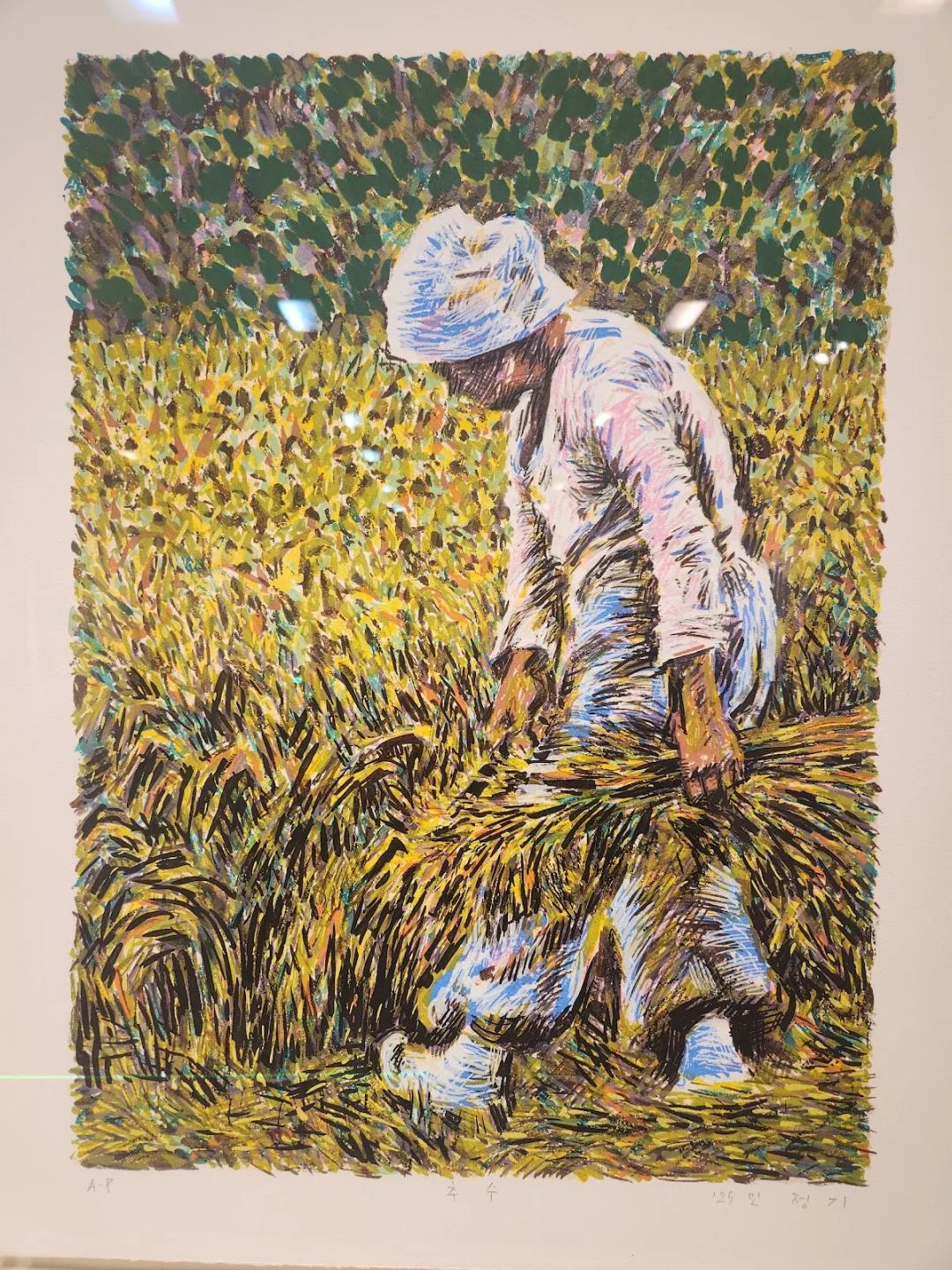
An hour of direct sunlight can equal 100 hours of fluorescent. UV fades works fast. Paper, photography, watercolor, and digital prints are especially vulnerable.
Three-step prevention:
- Don't hang valuable works on walls near windows or balconies.
- Use a UV-blocking glazed frame. 30–50% more than regular glass, but essential investment.
- UV window film as a secondary option.
LED is safe — essentially no UV. But older halogen or incandescent spots emit heat; keep them at least 50 cm from the work.
Frame and Glazing
A frame isn't decoration — it's the work's first protective layer.
- Mat: the paper border between work and glazing. Must be acid-free. Acidic mats leave brown stains within 10 years.
- Glass vs acrylic: glass resists scratches but is heavy and breakable. Acrylic (Plexiglas) is light and unbreakable but attracts dust via static. Acrylic for large works and shipping; glass typically for home display.
- UV-blocking glass: museum-grade (99% UV block) costs 2–3×, but on a valuable work it's a recovered investment.
When to replace: when the mat yellows or mold spots appear inside the glazing — usually a 10–15 year cycle.
Seasonal Checklist
Spring (Mar–May)
- Ventilate display walls (remove pollen dust)
- Brush dust off frame tops with soft brush
- Check for condensation (transitional-season temperature gaps)
Summer (Jun–Aug)
- Run dehumidifier; keep RH ≤55%
- Avoid direct AC draft
- Monsoon-season mold check (inside the frame)
Autumn (Sep–Nov)
- Same dust care as spring
- Review work positions before heating starts
Winter (Dec–Feb)
- Run humidifier; keep RH ≥40%
- Avoid direct heater flow
- Check wall wetting from window condensation
Moving and Long-Term Storage
A move is the most dangerous moment for a work. If professional fine-art shipping is too much, at least keep these packing principles.
Packing order
- Wrap surface in glassine (pH-neutral paper)
- Double-wrap bubble wrap (don't touch the surface directly)
- Protect frame corners with cardboard corner protectors
- Flat shipping box, standing upright (never stack flat)
- Mark "THIS SIDE UP" and "FRAGILE"
Long-term storage (1 month+)
- No sealed spaces. Air circulation matters.
- Vertical storage (no flat stacking).
- A room with small temperature/humidity swings. Avoid basement/attic.
- Check condition every three months.
Certificates and Warranties
Documents for appraisal, insurance, and transfer are as important as the work itself.
- Keep in one folder: COA, appraisal, receipts, artist emails
- Digital backup: scanned copies on cloud and external drive
- Work photos: front, back, and sides — at least two photos each, taken immediately after purchase
SAF works come with an artist-signed certificate by default. Never discard the certificate.
When to Consider Insurance
Personal collection insurance generally makes sense at work value above ₩15M. Annual premium is typically 0.3–0.7% of value.
- ₩20M work → ₩60–140K per year
- ₩50M work → ₩150–350K per year
For lower values, a valuables rider on household insurance can cover theft and fire. Check your existing household policy before buying separate coverage.
A Disposition Toward Keeping
84.9% of Korean artists are excluded from institutional finance. Sales of works by SAF-exhibiting artists cycle into a mutual-aid fund, returning as low-interest loans to fellow artists.
Caring for a work is ultimately respecting the time inside it. Time an artist spent on the plate, on the canvas, continues quietly on your wall. Extending that time — that is the collector's final role.
Related Guides
Further Reading

Start Collecting
Related reading
If this piece helped, you may also enjoy these related articles:
Seed Art Festival
·