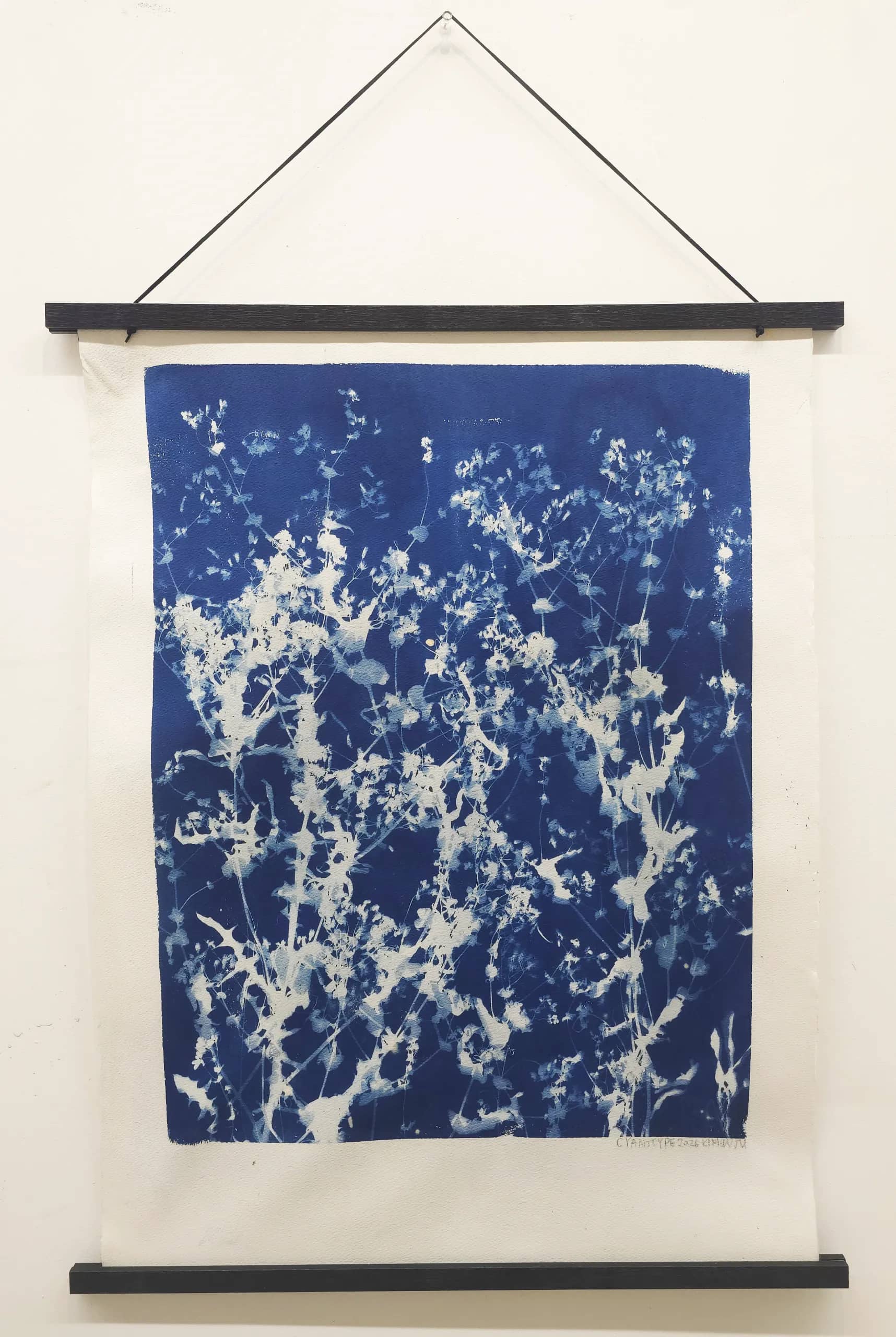
Small, fleeting things —
a wildflower, blooming and gone
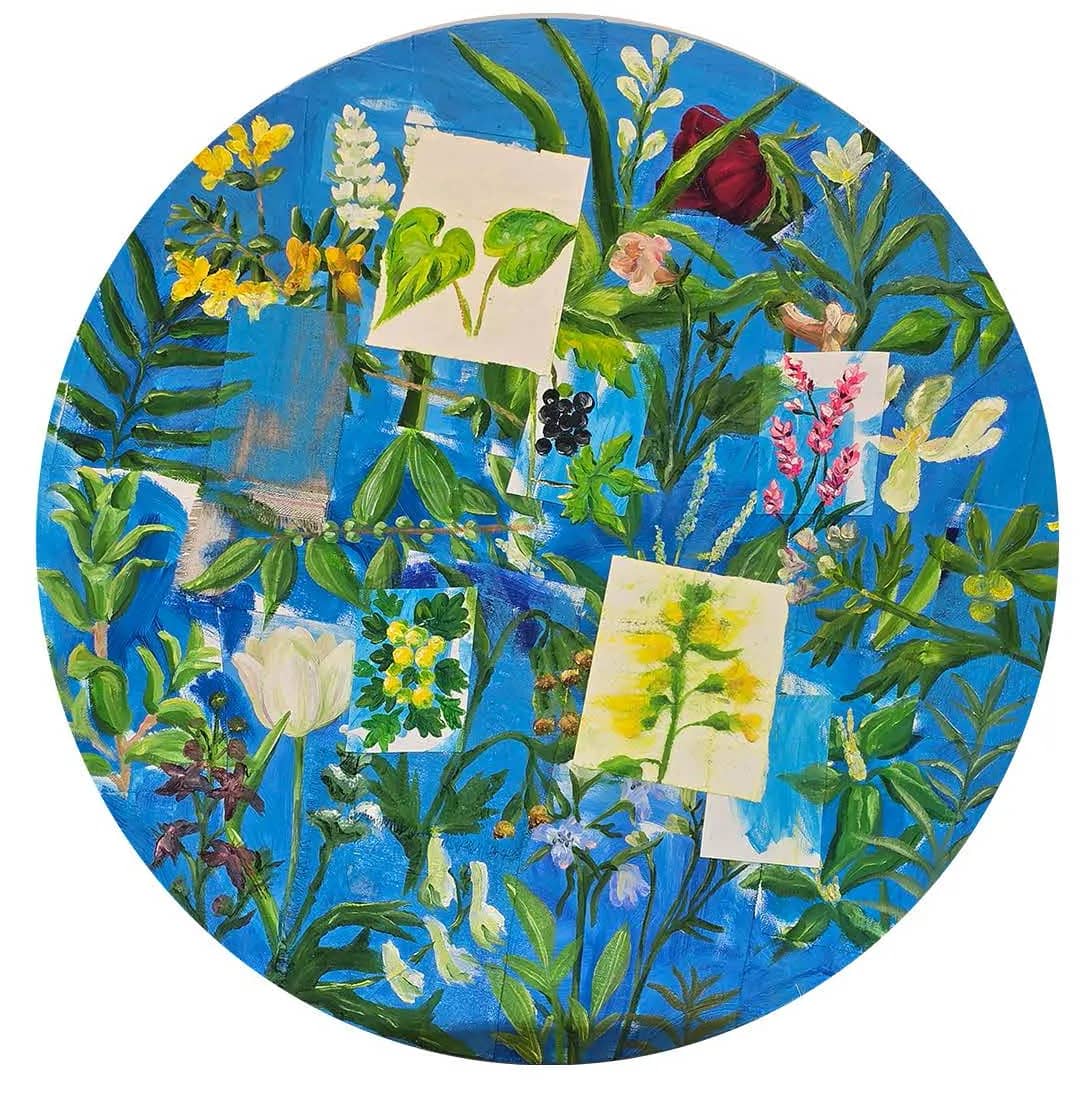
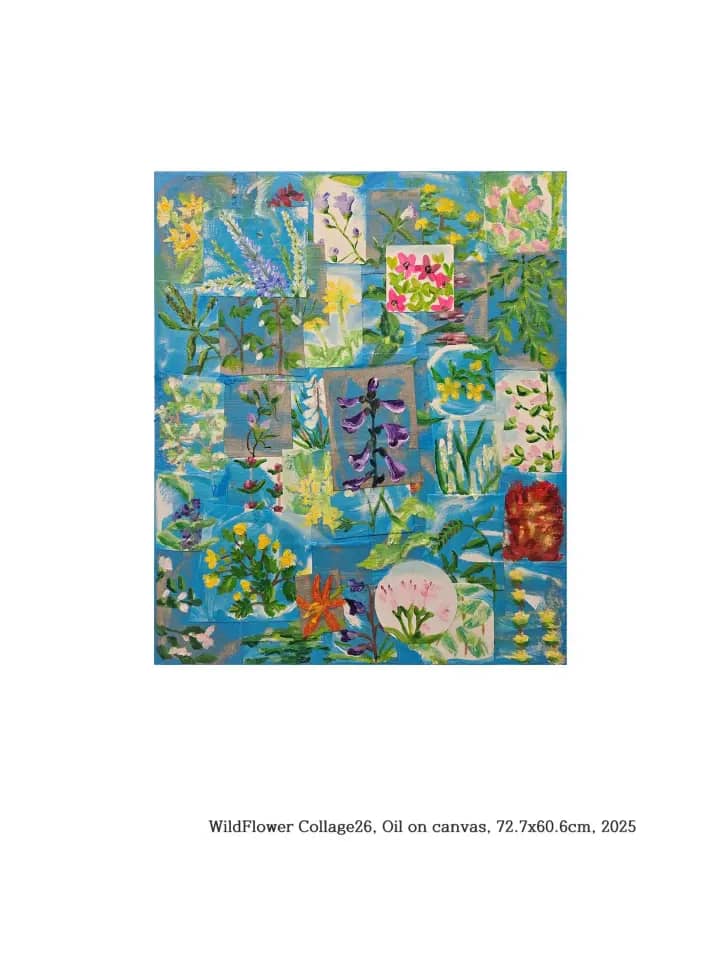
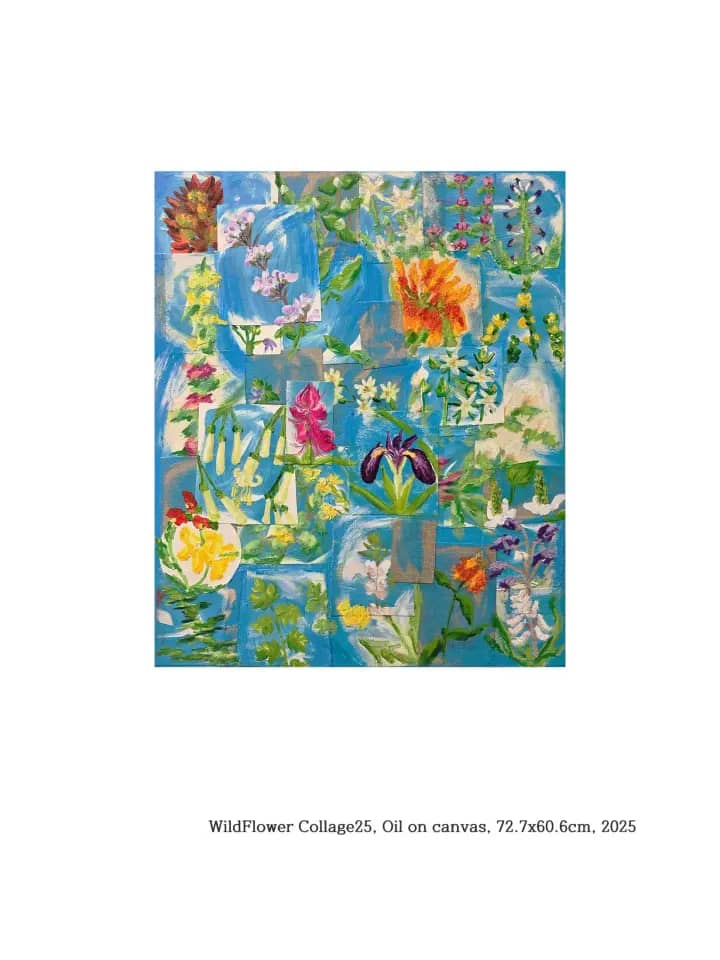
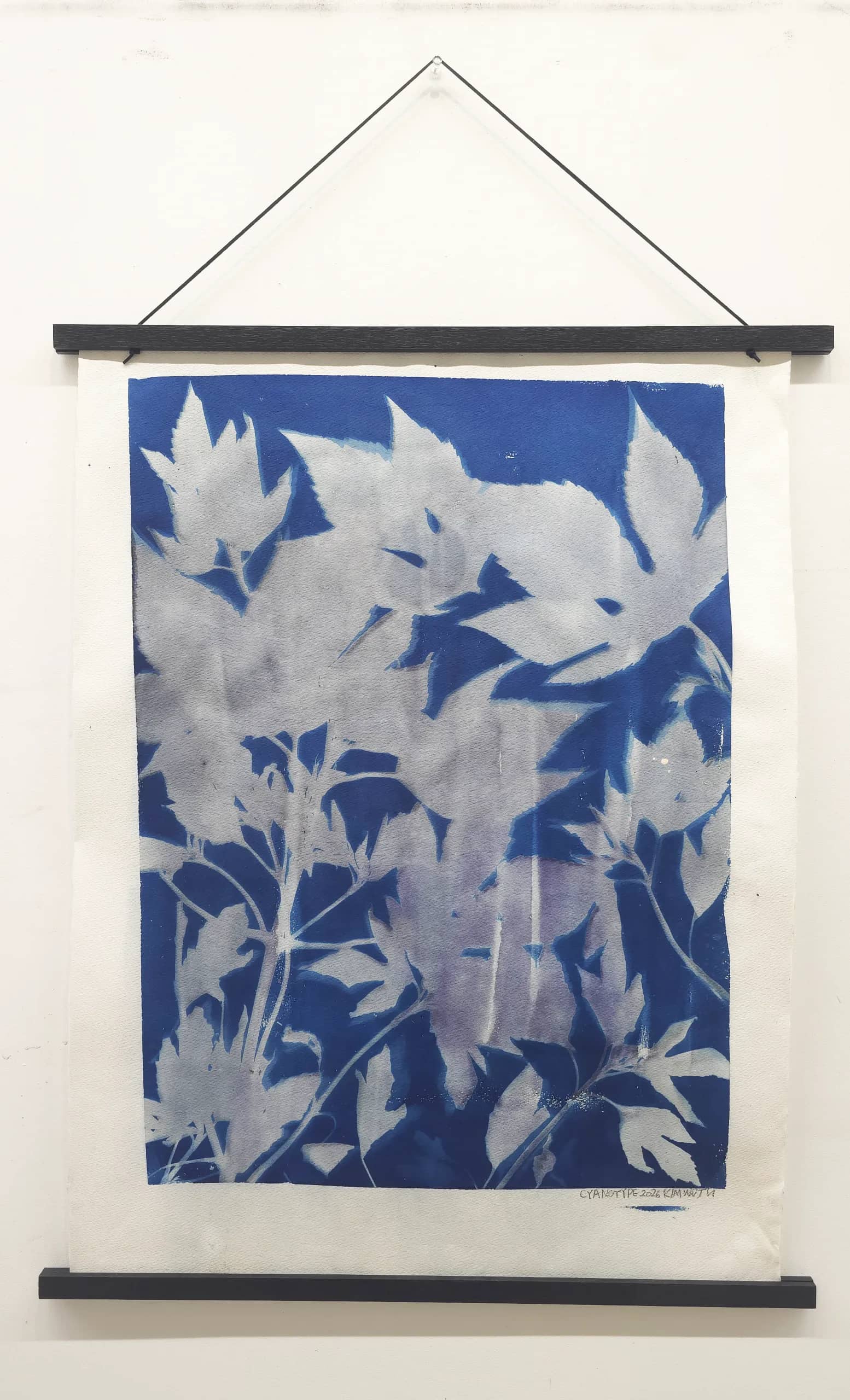
She paints the life and death of a wildflower.The time of the small and the passing, held on canvas.
The life and death of a wildflower —
painted as landscape
Kim Uju is an emerging painter who renders the blooming and withering of wildflowers, and the landscapes that hold them, in paint. She earned her M.F.A. from the Department of Painting at Hongik University Graduate School in 2013, and completed her doctoral coursework there in 2024.
Her subject is deliberately small. Where landscape painting has often reached for the grand vista, Kim turns toward the wildflower — the bloom no one planted, growing at the edge of a path and gone within a season. In her work that smallness is not a limitation but a way of seeing time: a flower that opens and fades carries, within a single short span, the whole arc of living and dying.
This concern took its clearest form in her 2023 solo exhibition 〈Wildflower Season 1〉 at the Hongik Museum of Art in Seoul, which followed her earlier solo show 〈Pictorial Impulse〉 at PiaLuxART Gallery in 2016. The phrase pictorial impulse names something at the centre of her practice: the urge to paint not because a scene is important, but because it asks, quietly, to be looked at and kept.
As a younger artist, Kim has built her practice through a steady run of group exhibitions — from the 2024 Bank of Korea emerging artists exhibition and the Seoul young-artist discovery projects, to earlier shows at the Kansong Art & Culture Foundation and POSCO Art Museum. Across these, the wildflower has remained her constant: small, ordinary, and exactly for that reason worth the length of a painting's attention.
Major themes
- 1
The life and death of wildflowers
A bloom that opens and fades within a season — the whole arc of living and dying, held in something small.
- 2
Landscape, made small
Not the grand vista but the edge of a path — landscape narrowed to where a wildflower actually grows.
- 3
The pictorial impulse
The urge to paint what quietly asks to be looked at and kept — the impulse named in her 2016 exhibition.
The artist's timeline
- 2013M.F.A., Dept. of Painting, Hongik University Graduate School.
- 2016Solo exhibition 〈Pictorial Impulse〉 (PiaLuxART Gallery, Seoul).
- 2023Solo exhibition 〈Wildflower Season 1〉 (Hongik Museum of Art, Seoul).
- 2024Completes doctoral coursework, Dept. of Painting, Hongik University Graduate School.
- 2024Group shows: Bank of Korea emerging artists exhibition; Seoul young-artist discovery projects 〈Soar〉 (Sewoon Hall) and 〈A Seed of Leaping〉 (Tapgol Art Museum).
Selected group exhibitions
- 2024 — Seoul young-artist discovery project 〈Soar〉 (Sewoon Hall); 〈A Seed of Leaping〉 (Tapgol Art Museum); Bank of Korea emerging artists exhibition (Bank of Korea Gallery)
- 2021 — 〈Space Simulation〉 (AI Museum × VR Museum)
- 2016 — 〈OLD & NEW〉 (Kansong Art & Culture Foundation); 〈Oktopsari〉 (Alternative Space Oktop)
- 2014 — 〈Flea market + Another Christmas〉 (POSCO Art Museum)
- 2013 — 〈Challenge〉 (Hongik Museum of Art)
Three essays —
on the wildflower, time, and the impulse
1On choosing the small
A wildflower is, by definition, what no one chose. No one planted it, no one tends it, and when it is gone no one records the loss. To make it the centre of a painting is already a quiet argument — that the unchosen and the overlooked are worth the full length of an artist's looking.
Kim Uju's practice begins from that argument. Where the grand landscape offers the eye a great deal at once, the wildflower offers almost nothing — and asks, in exchange, that you stay. The smallness of the subject sets the pace of the work: slow, attentive, returning again to the same modest thing until it gives up its weight.
2Life and death — the time inside a single bloom
To paint a wildflower honestly is to paint time. A bloom opens, holds for a few days, and fades; the whole cycle of living and dying is compressed into a single short season. The flower does not narrate this — it simply is it. In Kim's 〈Wildflower Season 1〉, that compressed arc is the real subject: not the flower as decoration, but the flower as a small clock.
Painting, oddly, is the right medium for this. The canvas stops a moment that in life cannot be stopped — the flower at the edge of fading — and holds it open. What is most fleeting in the world becomes, on the wall, the most durable: a passing thing made to stay long enough to be properly seen.
3〈Pictorial Impulse〉 — why paint at all
Kim Uju named her 2016 solo exhibition 〈Pictorial Impulse〉, and the phrase reads almost as a statement of method. The impulse it names is not grand. It is the small, recurring pull to put down in paint a thing that, by any practical measure, did not need painting — a wildflower at the roadside, unimportant to everyone but the one who stopped.
That impulse is, finally, an argument for attention itself. In a world that rewards the large and the loud, choosing to paint the small and the quiet is a way of insisting that looking closely is its own value. From the early 〈Pictorial Impulse〉 to 〈Wildflower Season 1〉 and the years of doctoral study between, Kim has stayed with that one insistence — and made of it a body of work.
From a flower no one planted to a canvas that asks you to stay, Kim Uju's work pursues a single question: what does it mean to give the small and the fleeting the full weight of our looking? She joins this campaign not as a subject of its cause but as a fellow artist in solidarity — offering her work so that those navigating financial exclusion today might find a way through.
Selected Works
5 works are featured here.
Kim Uju joined this campaign in solidarity with fellow artists. Every work sold flows directly into the artists' mutual-aid loan fund— a purchase becomes the next month's lifeline for an artist navigating financial exclusion today.