The surface of plastic,
the truth beneath it
Plastic is not just a material — it is a metaphor for disguise.A printmaker and drawing artist who peels back the surface of contemporary society.
Peeling back —
the surface, the disguise, the material
Min JeongSee is a printmaker and drawing artist who critically explores the surface and disguise of contemporary society through the materiality of plastic. She graduated from the Department of Printmaking at Hongik University, then pursued her M.F.A. in Printmedia at the School of the Art Institute of Chicago (SAIC) — an institution at the forefront of expanded printmaking practice — graduating in 2010. Her formation spans both the rigorous technical tradition of Korean printmaking and the conceptual breadth of American art school practice.
Plastic is central to her work not as spectacle but as analysis. The material is omnipresent in contemporary life precisely because it conceals: it wraps, coats, smooths, and presents surfaces that promise one thing and deliver another. In Min JeongSee's hands, plastic becomes a medium for interrogating the modes of disguise embedded in modern society — the packaging of consumer culture, the polished faces of institutions, the layered performances of everyday life.
Her practice has grown through a sustained body of titled series. Beginning with Plastic Beauty (2009, Chicago) and My One False Image — Plasticated Falsity (2010, Chicago), she developed the Plastic Society series (I and II, 2014–2015) — solo exhibitions that positioned the plastic surface as a societal condition — and Plastic Promise (Youngeun Museum, 2016), a milestone exhibition supported by Yongin Cultural Foundation. Works held at the Frans Masereel Centrum (Belgium), Purdue University (USA), the SOMA Museum Drawing Center, and the Joan Flasch Artist Book Collection (Chicago) attest to an international reach built steadily across residencies and exhibitions on multiple continents.
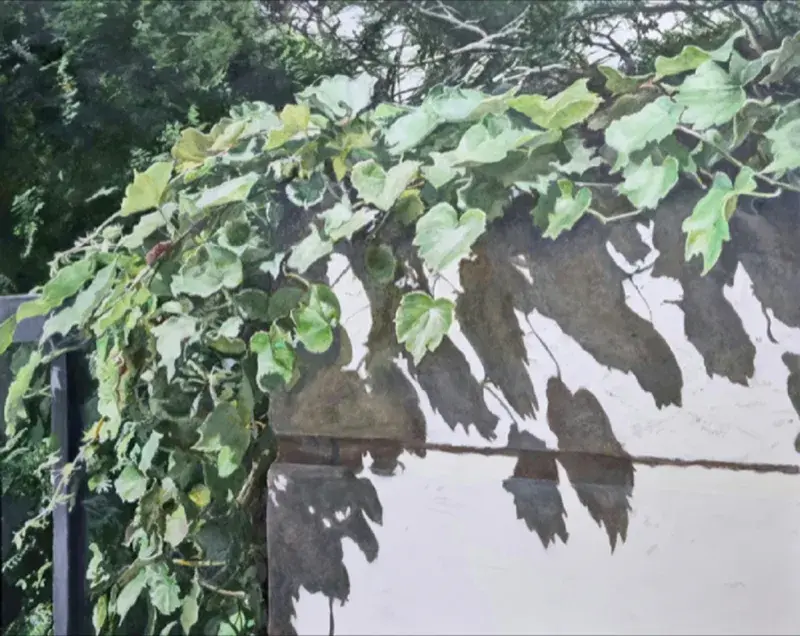
In recent years, her work has moved toward the relationship between light, surface, and representation: Representation After Light (Seoripul Hyu Gallery, 2024) and Light Traces_Repetition (2025) extend the plastic-surface inquiry into questions of how images form, repeat, and leave traces. Her selection as a Zoom-In artist at the 2025 Korea Galleries Art Fair (화랑미술제) marked a recognition of this sustained and evolving practice.
Min JeongSee joins SAF not as a subject of its cause but as a fellow artist in solidarity — contributing her work so that the proceeds may support the mutual-aid loan fund for artists navigating financial exclusion.
Three keys to the work
- 1
Plastic as metaphor
Plastic is not simply a medium — it is a critical lens. Its capacity to imitate, coat, and disguise makes it the perfect material for interrogating how contemporary society constructs and presents its surfaces.
- 2
Printmaking expanded
Trained in both Korean printmaking tradition (Hongik) and expanded Printmedia practice (SAIC), her work moves freely between prints, drawings, artist books, and installation — the medium chosen for what it can reveal, not what it can display.
- 3
Surface, light, and trace
In recent work, the inquiry into plastic's disguising surface has opened toward questions of light and representation — how images form, how they repeat, and what traces they leave behind.
The artist's timeline
- 2002B.F.A., Department of Printmaking, Hongik University.
- 2009Solo debut: Plastic Beauty, Base Space, Chicago. Multiple scholarships at SAIC (Korean Honor Scholarship, Thomas Baron Scholarship, Steve S. Kang Young Artist Award).
- 2010M.F.A. in Printmedia, SAIC (Chicago). Solo: My One False Image — Plasticated Falsity, Gallery X, Chicago. Works acquired by Joan Flasch Artist Book Collection.
- 2011Residency at Frans Masereel Centrum (Belgium); works acquired by the Centre.
- 2013Residency at MMCA Goyang Studio. Group show at Viridian Artists (New York).
- 2014Solo: Plastic Society I, Gallery AG, Seoul (supported by Seoul Foundation for Arts and Culture, Korea Mecenat).
- 2016Solo: Plastic Promise, Youngeun Museum of Contemporary Art (Yongin Cultural Foundation support). Works acquired by Youngeun Museum. Residency at Youngeun Museum.
- 2018Selected as SOMA Museum Drawing Center artist. Drawing portfolio acquired by SOMA.
- 2019Young Korean Artists group show, Purdue University (USA, Embassy of Korea support). Work acquired by Purdue University.
- 2024Solo: Representation After Light, Seoripul Hyu Gallery (Seocho Cultural Foundation), Seoul.
- 2025Selected as Zoom-In artist at Korea Galleries Art Fair (화랑미술제), COEX, Seoul. Kiaf 2025 participation.
- 2026Solo: Representation of Memory, Gallery Nut, Seoul.
Collections
- SOMA Museum Drawing Center, Seoul
- Youngeun Museum of Contemporary Art, Gyeonggi-do
- Frans Masereel Centrum, Belgium
- Purdue University, Indiana, USA
- Joan Flasch Artist Book Collection, Chicago, USA
- Hyundai Children's Book Art Museum, Gyeonggi-do
Three essays —
on plastic, surface, and critique
1Plastic as materiality — why this substance
Plastic is the material of contemporary life not because it is beautiful or durable but because it is infinitely adaptable — it can imitate almost any other substance, wrap any shape, be coloured to match any desire. It is the material of substitution, of the copy, of the surface that presents itself as something it is not. In this sense, plastic is already a kind of argument about the contemporary: a world in which surface is sovereign, and in which the gap between appearance and reality is not a problem to be solved but a condition to be managed.
Min JeongSee's engagement with plastic as both material and metaphor begins from this recognition. Her practice does not simply use plastic; it thinks through it. From the early Plastic Beauty and Plastic Society series, through to the later work on transparency, light, and representation, the recurring question is: what does a surface hide, and what does it reveal about what it hides? The answer is never simple — plastic can be transparent as well as opaque, fragile as well as persistent, honest as well as deceptive.
This complexity is what makes plastic a rich critical medium rather than a polemical one. The work does not condemn the surface; it attends to it — pressing on the material until it yields what it has been holding.
2Surface and disguise — the social critique
The word "disguise" (위장) that runs through discussions of Min JeongSee's work is not accidental. Contemporary society is characterized, above all, by the sophistication of its surfaces: the packaging of consumer goods, the graphic design of institutions, the curated faces presented on social media, the smooth exteriors of buildings and bureaucracies that conceal what happens within. Plastic — translucent, moldable, ubiquitous — is the material correlate of this condition.
Min JeongSee's practice works by holding the surface still long enough to see through it. Printmaking is a medium built on the idea of the transferred image — the press that moves an image from one surface to another, the matrix that underlies the print. In her hands, this structural feature of the medium becomes a critical tool: the print reveals the underside, the plate beneath the page, the pressure required to produce what appears effortless on the surface.
The Plastic Society series staged this most directly: placing plastic surfaces as social fact, asking what it would mean to live within a world of such surfaces. Plastic Promise pressed further — what is promised by a surface, and what is delivered? More recent work on light and representation extends the question into the realm of image-making itself: how does an image form on a surface, and what does it leave when it is gone?
3Printmaking, drawing, artist books — an expanded practice
Min JeongSee's formation at Hongik University and SAIC gave her access to two distinct traditions. At Hongik, one of Korea's leading printmaking programs, she absorbed the technical rigour and material discipline of Korean printmaking practice. At SAIC's Printmedia department — a program defined by its expansion of printmaking beyond conventional boundaries into installation, video, books, and performance — she encountered the conceptual breadth that would define her subsequent practice.
The artist book, a form she has pursued throughout her career and which has entered institutional collections including the Joan Flasch Artist Book Collection and Hyundai Children's Book Art Museum, is a particularly apt vehicle for her inquiry. A book is itself a surface technology — a device for sequencing images and texts, for presenting content through layers. In Min JeongSee's artist books, this structure becomes a way of building up and peeling back, of constructing a surface only to reveal what is beneath.
Residencies at Frans Masereel Centrum in Belgium — one of the world's foremost centres for printmaking and the graphic arts — and at MMCA Goyang Studio, 대구예술발전소, and 청주미술창작스튜디오 have embedded her practice in both the international printmaking community and the Korean contemporary art field. The range of these placements — from Belgium to Chicago to Seoul — reflects a practice that has always understood printmaking as a mobile, transferable discipline: one whose logic of impression and transfer applies wherever a surface exists.
Plastic is the surface of the contemporary world, and Min JeongSee has spent her career pressing on it — asking what it conceals, what it promises, and what trace it leaves behind. From Chicago to Seoul to Belgium, her practice has built an international body of work that holds the surface still long enough to see through it. She joins SAF not as a subject of its cause but as a fellow artist in solidarity — so that the field she has worked to expand might remain open to the generation that follows.
Selected Works
2 works are featured here.
Min JeongSee joined this campaign in solidarity with fellow artists. Every work sold flows directly into the artists' mutual-aid loan fund— a purchase becomes the next month's lifeline for an artist navigating financial exclusion today.