Like a tree, standing in one place
it witnessed history
From the history paintings of modern Korea to a forest of old trees.The time of people and nature, layered onto a single canvas.
History and nature —
the time held by a single tree
Son Jangseop (1941–2021) was born on Gogeumdo, an island in Wando, South Jeolla province, and graduated from Hongik University's Department of Western Painting. He began his career painting scenes from modern Korean history, building a practice rooted in historical consciousness and a steady attention to the lives of ordinary people.
Around 1980 he became a founding member of Reality and Utterance (현실과 발언), the group widely regarded as the opening of the Korean minjung art movement. Reality and Utterance set out to restore the social dimension of art, and Son took part in its exhibitions until the group disbanded in 1990. In 1985 he served as the first chair of the National Artists' Association (민족미술협의회).
Through the 1980s and into the 1990s his work carried a charged historical awareness and a quiet resistance to the contradictions of the present — history paintings, scenes of working life, and the faces of ordinary Koreans. 〈Window of History — June 25〉 (1990) belongs to this period.
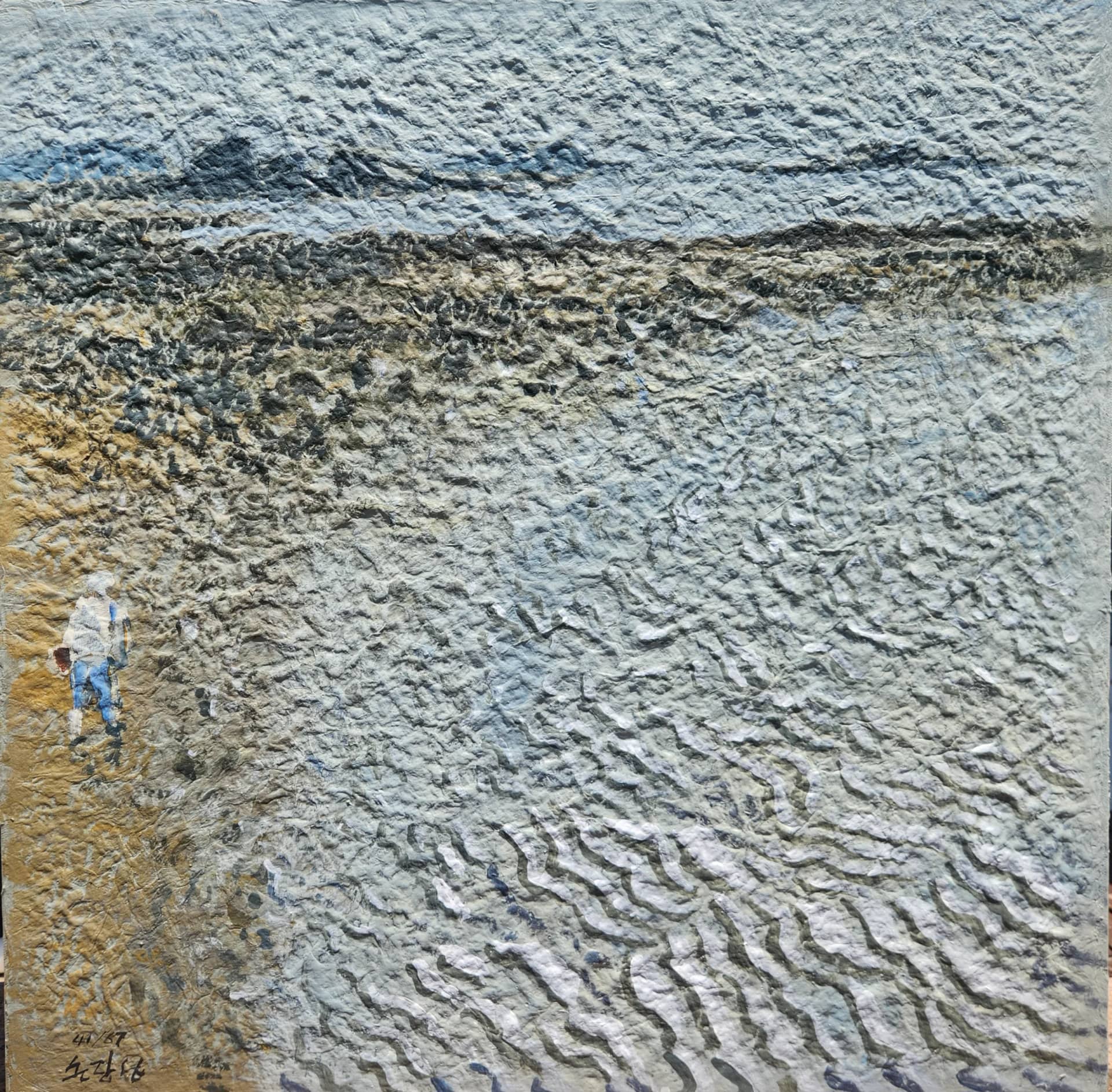
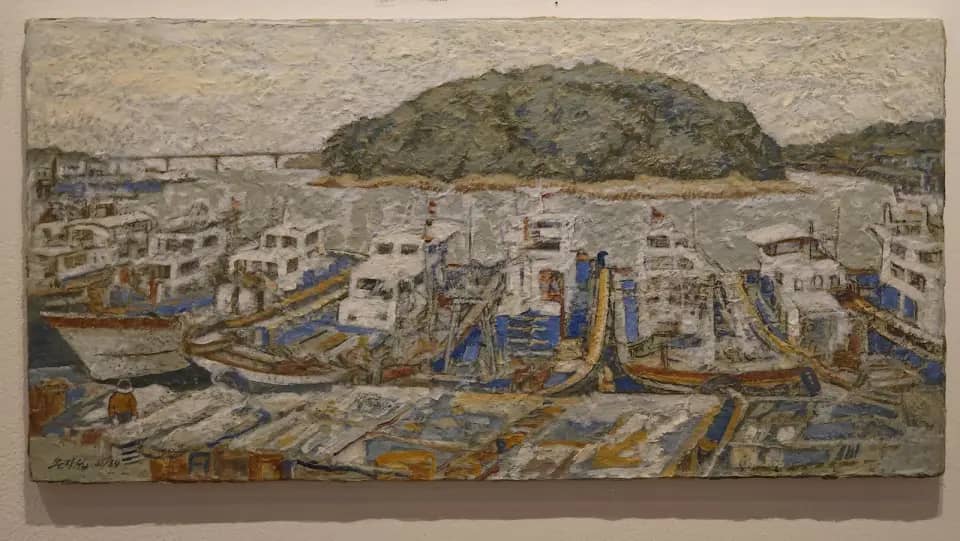
From the late 1990s, his subject shifted toward Korean nature. “Nature,” he said, “is the ground where the life of the people unfolds and history soaks in.” In the 2000s he built the sacred-tree (神木) series and a body of landscape paintings, traveling the country to paint its great old trees — the juniper of Ulleungdo, the ginkgo of Yongmunsa, the yew of Taebaeksan. In these canvases a tree that has stood in one place for centuries becomes the witness of an era, and the strength of nature stands in for the endurance of the people themselves.
In 2019–2020 the Gwangju Museum of Art held the retrospective Son Jangseop: Landscapes That Have Been History (Nov 2019 – Feb 2020), surveying six decades of his work — from early watercolors through 1980s minjung painting to the sacred-tree and landscape series. He passed away on June 1, 2021, at the age of eighty.
Major themes
- 1
History painting
Scenes of modern Korean history rendered with charged historical awareness — a witness to the contradictions of an era.
- 2
Reality and Utterance
A founding member of the group that opened Korean minjung art, and first chair of the National Artists’ Association in 1985.
- 3
Trees & landscape
The sacred-tree series and landscapes — old trees that stood in one place for centuries become witnesses of history.
The artist's timeline
- 1941Born on Gogeumdo, Wando, South Jeolla province.
- 1980Founding member of Reality and Utterance, the group that opened Korean minjung art.
- 1985Serves as the first chair of the National Artists’ Association.
- 1990Paints 〈Window of History — June 25〉; Reality and Utterance disbands.
- 1990s–Turns toward Korean nature and landscape as a ground where life and history soak in.
- 2000sBuilds the sacred-tree (神木) series, painting great old trees across the country.
- 2017Solo exhibition 《History, as Painting in Material Trace》, Hakgojae Gallery, Seoul.
- 2019Retrospective 《Landscapes That Have Been History》, Gwangju Museum of Art (Nov 2019 – Feb 2020).
- 2021Passes away on June 1, at the age of eighty.
Selected exhibitions & collections
- Solo exhibition: History, as Painting in Material Trace, Hakgojae Gallery, Seoul (2017)
- Retrospective: Son Jangseop: Landscapes That Have Been History, Gwangju Museum of Art (Nov 2019 – Feb 2020)
- His works are held in major public collections including the National Museum of Modern and Contemporary Art (MMCA), Korea.
Three essays —
on history, nature, and the tree
1Reality and Utterance — the opening of minjung art
Around 1980, a group of painters and critics formed Reality and Utterance (현실과 발언). It is widely regarded as the signal that opened the Korean minjung art movement — a turn away from pure formalism and toward an art that could speak to its own society. Son Jangseop was among its founding members.
For a generation, the question was what painting was for. Reality and Utterance answered by insisting that art carried a social dimension, and that the artist could attend to the conditions of ordinary life rather than turn away from them. Son took part in the group's exhibitions until it disbanded in 1990, and in 1985 he served as the first chair of the National Artists' Association.
Within this current, Son's contribution was a body of history painting: scenes of modern Korea built from a sustained historical awareness. He treated history not as backdrop but as subject — the ground on which the lives of ordinary people were lived and remembered.
2From history painting to landscape
Through the 1980s and 1990s, Son's work stayed close to history: scenes of labour, the faces of ordinary people, and paintings of the modern Korean past such as 〈Window of History — June 25〉 (1990).
From the late 1990s the subject shifted, but the conviction did not. “Nature,” Son said, “is the ground where the life of the people unfolds and history soaks in.” The landscape was not an escape from history but another way of holding it. A mountain, a shoreline, an old tree — each had stood through the same century his earlier paintings had depicted.
This continuity is the through-line of his work. Where the early history paintings looked at events directly, the later landscapes looked at what had endured those events. The witness was no longer a crowd or a figure, but the land itself.
3Like a tree — the sacred-tree series
In the 2000s, Son traveled the country to paint its great old trees — the juniper of Ulleungdo, the ginkgo of Yongmunsa, the yew of Taebaeksan. He called them sacred trees (神木): not because of any cult around them, but because a tree that has stood in one place for centuries has, in a literal sense, witnessed the history that passed beneath it.
In these canvases the tree carries the weight the human figure once carried in his history paintings. Its rooted endurance — the way it survives storm and season without moving — becomes an image of the people's own persistence. Critics have read the series as a statement that the true subject of history, the thing that endures and can change the world, is finally the people themselves.
The 2019–2020 Gwangju Museum of Art retrospective gathered six decades of this work under a single title — Landscapes That Have Been History. It was a fitting summary: in Son Jangseop's hands, a landscape is never only a landscape. It is time made visible.
From the founding of Reality and Utterance to the great old trees of his final decades, Son Jangseop's work pursued a single conviction: that history is carried not by the powerful but by those who endure — people, and the land that holds their time. Son passed away in 2021. His works join this campaign as the legacy he left behind, and the care he held all his life for people, history, and nature is carried forward here as mutual aid among fellow and younger artists.
Selected Works
2 works are featured here.
Son Jangseop passed away in 2021. His works join this campaign as the legacy he left behind, and every work sold flows directly into the artists' mutual-aid loan fund — so that the care he held all his life for people, history, and nature continues as a lifeline for an artist navigating financial exclusion today.