A single hand that
crosses every boundary
Painting and writing, illustration and clay — gathered into one practice.A versatile artist for whom no medium stands alone.
Many media —
one questioning hand
Choe Yeon-taek is a versatile artist active as a painter, a ceramic designer, and a writer. His practice does not settle into a single discipline; it moves, instead, across the seams between them — painting and the written word, picture-book illustration and pottery design, the image that explains a text and the text that completes an image.
Among his best-known work is illustration. He has illustrated essays that join drawing and prose, lending image to books such as One More Day (『하루를 더 살기로 했다』) and Mujeong (『무정』). In these projects the drawing is not decoration laid over finished text but a second voice running alongside it — a way of reading the same feeling twice, once in words and once in line.
The same impulse carries into clay. Working in ceramic design, he treats the surface of a vessel as another page — a place where image, form, and use meet. He is also recorded as having taken part in the design of tableware for the Blue House (청와대) and as having worked alongside the thinker and writer Shin Young-bok — a breadth of involvement that speaks to a practice unwilling to stay inside any one field.
What holds this range together is not a single style but a single attitude: that an image, a sentence, and an object can all be made by the same hand, and that the boundaries between them are there to be crossed rather than kept. In an art world that often rewards specialisation, Choe Yeon-taek has built a practice out of versatility itself.
Major themes
- 1
Image and text together
The drawing runs alongside the writing as a second voice — the same feeling read once in words and once in line.
- 2
Illustration as reading
From picture books to literary essays, his illustration gives a book a visual interior rather than a cover.
- 3
The vessel as a page
In ceramic design the surface of a vessel becomes another canvas — where image, form, and use meet.
A practice across media
- Painting — works on canvas and paper that anchor the rest of the practice.
- Illustration — book illustration for essays joining image and text, incl. One More Day (『하루를 더 살기로 했다』) and Mujeong (『무정』).
- Picture-book illustration — lending image to stories for younger readers.
- Ceramic design — treating the surface of a vessel as another page for image and form.
Selected involvements
- Book illustration: One More Day (『하루를 더 살기로 했다』) and Mujeong (『무정』).
- Recorded as having taken part in the design of Blue House (청와대) tableware.
- Recorded as having worked alongside the thinker and writer Shin Young-bok.
Three essays —
on image, text, and the space between
1Image and text — the drawn essay
Much of Choe Yeon-taek's reputation rests on a deceptively simple act: putting a drawing next to a sentence. In the illustrated essay, the two are not in a hierarchy. The text does not command the image to illustrate it, and the image does not merely ornament the text. They are set side by side, and the reader moves between them.
This is why his book work — in essays such as One More Day and Mujeong — reads less like illustration in the conventional sense and more like a second telling. A feeling stated in prose is restated in line; a thing named in a sentence is given a face. The effect is to slow the reader down, to make them read the same page twice in two different languages.
It is a quietly literary way of drawing. The line is asked not only to describe but to interpret — to decide what in a paragraph is worth holding still long enough to be seen. In that decision, the illustrator becomes a kind of reader, and the drawing becomes a record of how he read.
2Clay — the vessel as a third surface
Beside canvas and page, Choe Yeon-taek works in clay. Ceramic design asks a different kind of attention from painting: the image must live on a curved surface, must survive the kiln, must coexist with use. A vessel is not only looked at — it is held, filled, set down on a table.
He approaches that surface as a page all the same. The form of a vessel and the image on it are treated as one decision rather than two, so that function and picture arrive together. The discipline of the kiln — where nothing can be undone once fired — gives the work a finality that paper does not demand, and a different kind of patience answers it.
It is in this domain that his recorded involvement in the design of Blue House tableware, and his collaboration with the thinker and writer Shin Young-bok, belong. Whatever the precise extent of these projects, they point to the same disposition that runs through all his work: a willingness to carry a maker's eye from one medium into the next without treating the move as a departure.
3Versatility — a practice built on crossing
It would be easy to read Choe Yeon-taek's range as a list of separate careers — painter, illustrator, ceramic designer, writer. But the more accurate reading is that these are not four practices but one, seen from four sides. The connecting thread is an unwillingness to let a medium decide in advance what can be said.
An art world organised around specialisation tends to treat such breadth with suspicion, as if doing many things must mean doing none of them deeply. His work argues the opposite: that fluency across media is itself a depth — that the painter sees more clearly for having designed a vessel, and the illustrator reads more closely for having had to compose a page.
To stand before his work is to watch boundaries become permeable. A drawing wants to be read; a sentence wants a face; a vessel wants an image; an image wants a use. The same hand answers all of them, and in doing so makes the case that versatility, far from a dilution, can be a way of seeing the whole.
From the drawn essay to the designed vessel, Choe Yeon-taek's work has pursued a single question: how far can one hand travel between media before the travelling becomes the work itself? He joins this campaign not as a subject of its cause but as a fellow artist in solidarity — so that those who come after might work with a little less of the weight that financial exclusion places on Korean artists.
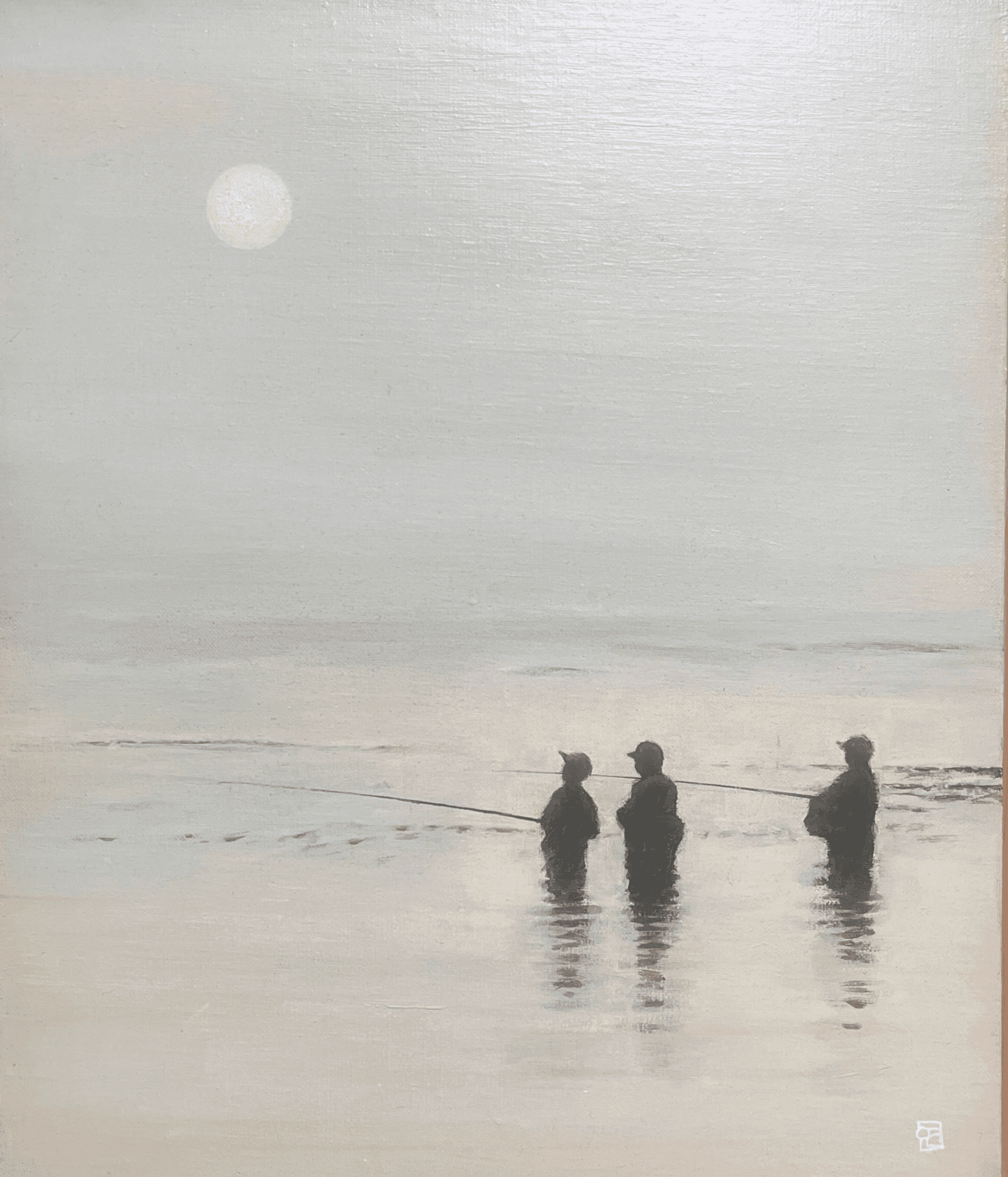
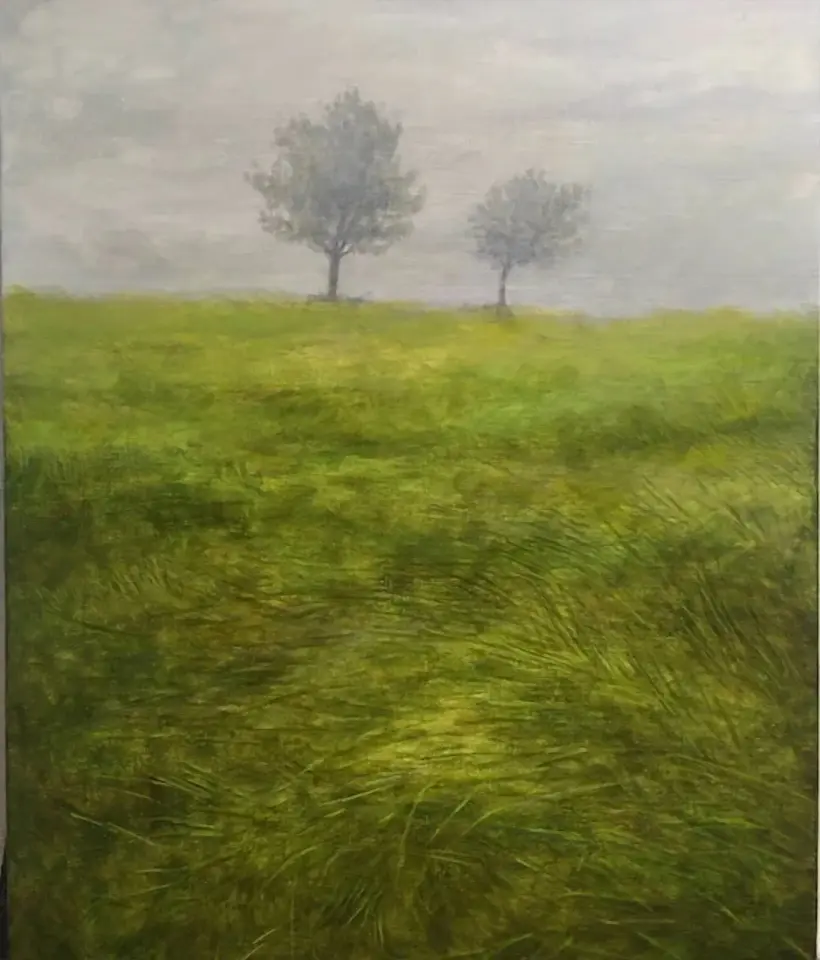
Selected Works
2 works are featured here.
Choe Yeon-taek joined this campaign in solidarity with fellow artists. Every work sold flows directly into the artists' mutual-aid loan fund— a purchase becomes the next month's lifeline for an artist navigating financial exclusion today.