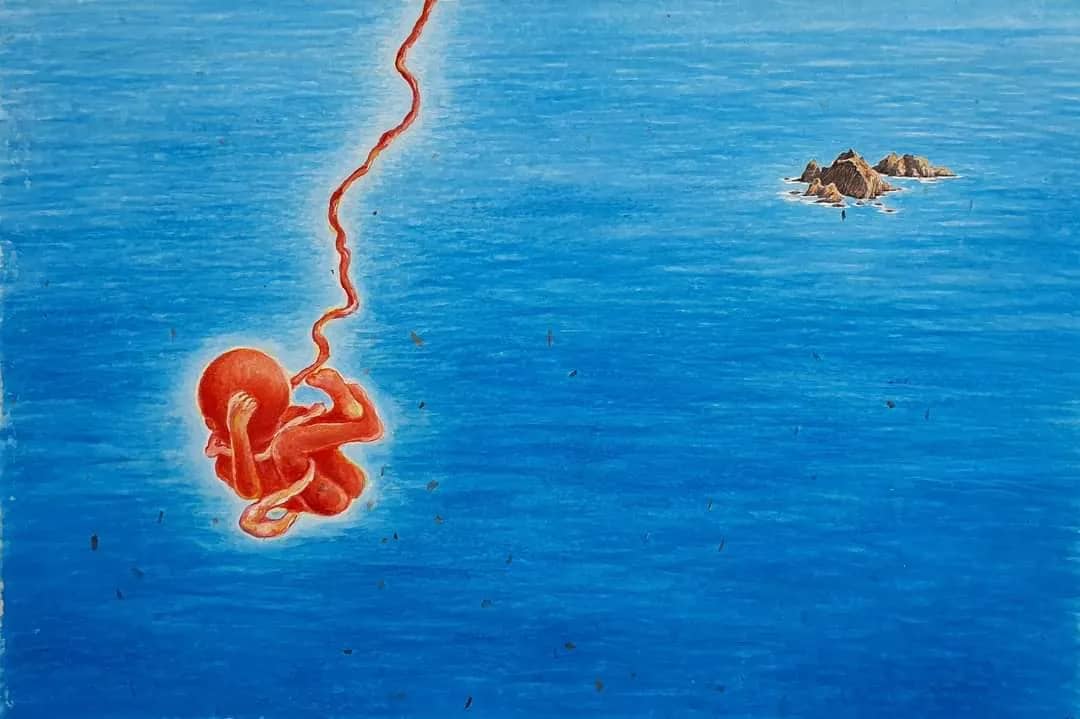
Fields of a wasteland,
inscribing the tragedies of an era
Mourning, testimony, and the desolate fields of a wasteland.A heavy, grieving register threaded through Korean minjung art.
Inscribing an era —
grief, testimony, the wasteland
Chilmoe Kim Gu is an artist who has inscribed the tragedies of an era and its social issues through painting, within the lineage of Korean minjung art. ‘Chilmoe’ is his art name. From his earliest work he has placed the grief of a time and the questions of a society at the center of the canvas rather than at its margins.
He began in the 1980s with the 〈1980s Representative Works Exhibition〉 (Geurim Madang Min, 1985) and the 〈40th Liberation Anniversary Memorial Street Solo Exhibition〉 (Ganghwa Market, 1985), and earlier still entered the field through the 〈Dong-A Art Festival〉 (MMCA, 1982) and the 〈Indépendant Exhibition〉 (MMCA, 1983). In 1986 he took part in 〈Fresh Statements by Young Generations〉 at Geurim Madang Min — a hub of the era's minjung art.
Across the following decades he built a body of solo exhibitions with a consistent thematic register: 〈It Hurts〉 (Namu Art, 2018), 〈Sad〉 (Hwain Art, 2020), and 〈Looking〉 (Namu Art, 2022)— a sequence of mourning and testimony. The titles read like a quiet litany: it hurts, it is sad, and still we look.
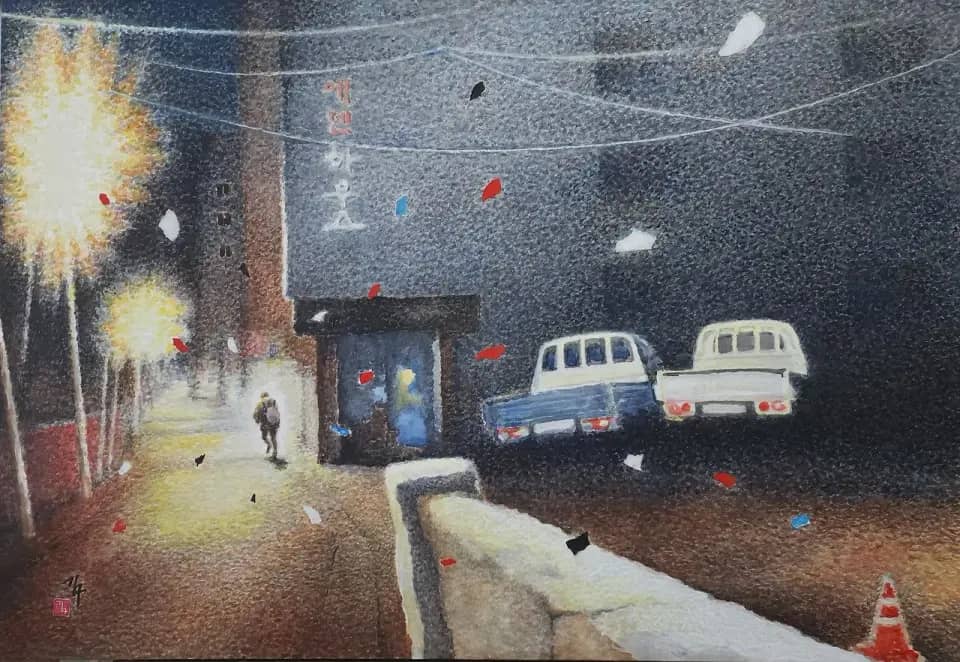
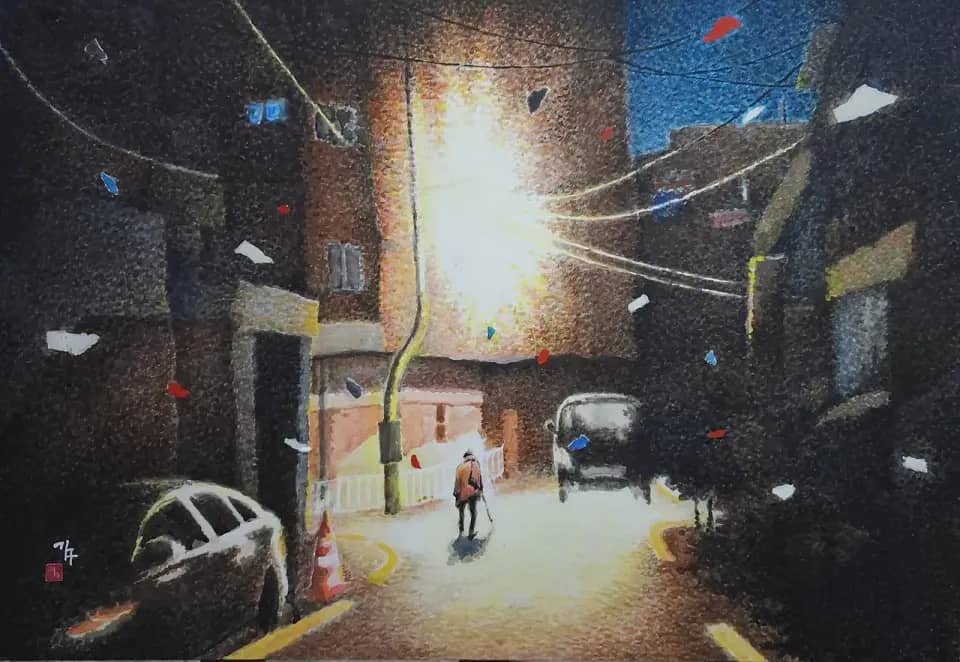
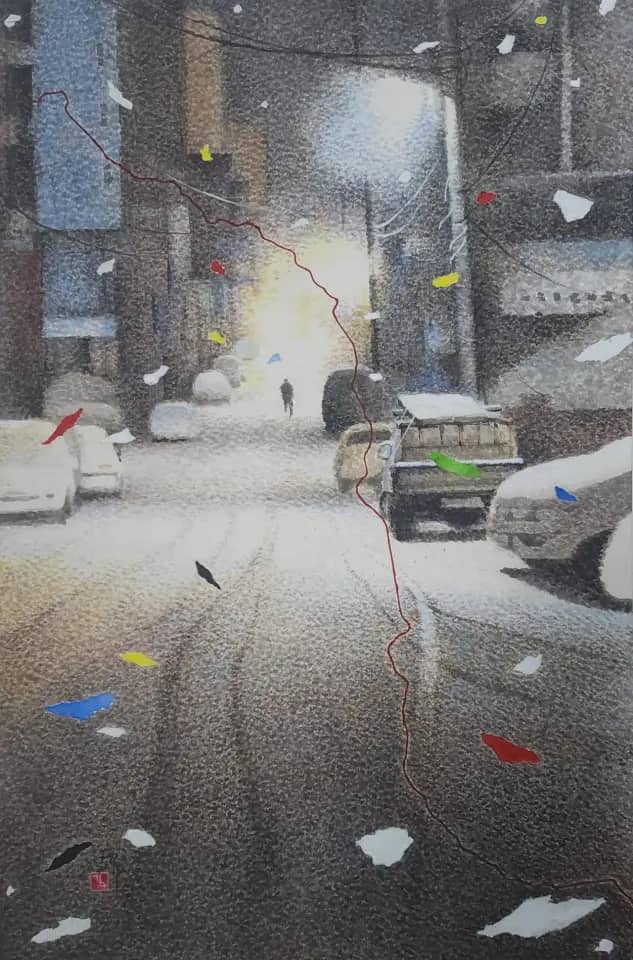
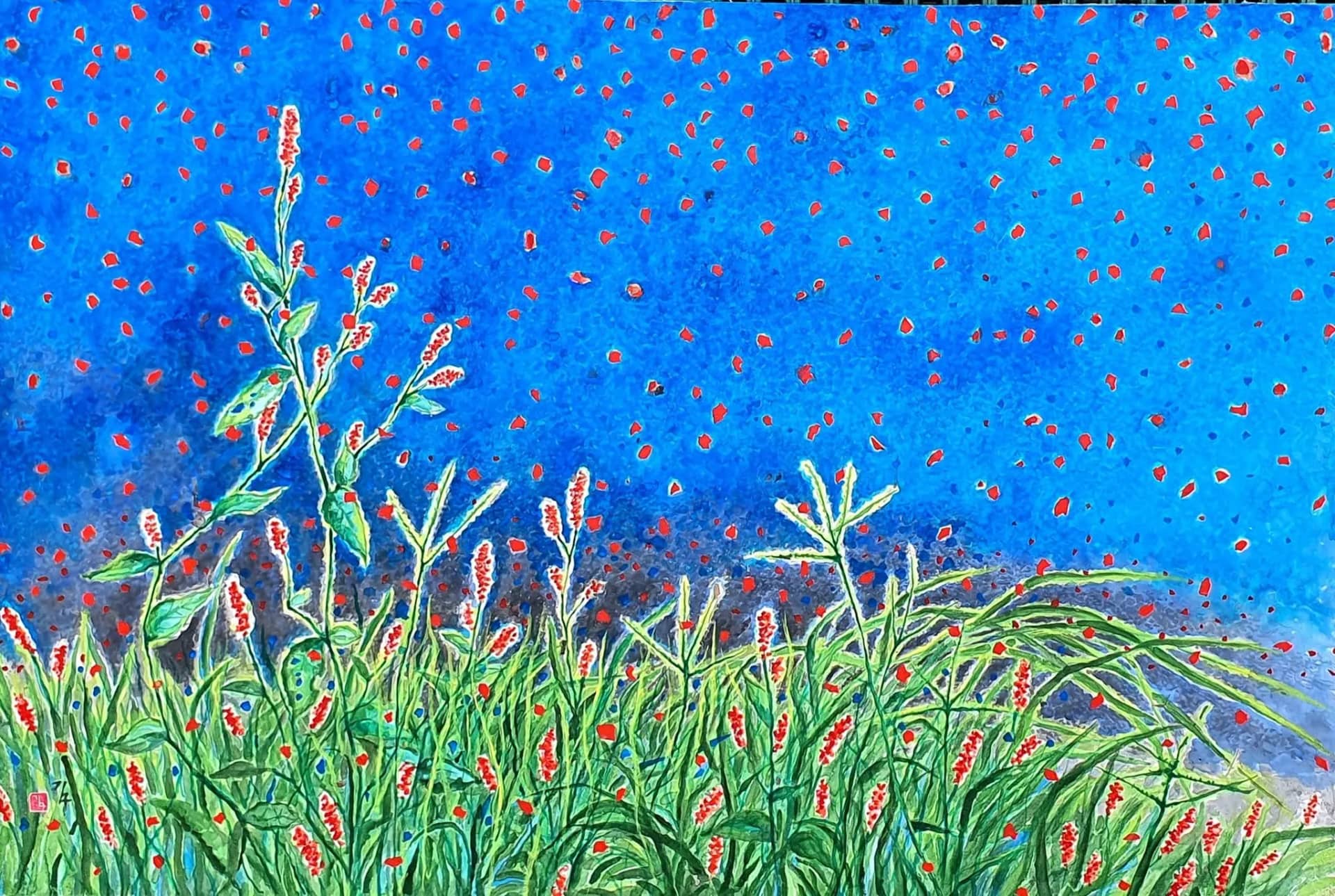
In recent years the desolate field has become his motif. 〈Wasteland: Field of Idols〉 (Namu Art, 2024) and 〈Wasteland: Field of Phantoms〉 (57th Gallery, 2025) extend a heavy, grieving register into a landscape emptied of consolation — the wasteland as a stage on which the weight of a time is laid bare.
Alongside his solo work he has continuously taken part in exhibitions addressing the era's grief and the themes of peace and reunification: the 〈10.29 Itaewon Disaster Memorial Exhibition〉, the 〈70th Anniversary of Armistice Curated Exhibition: Beloved Faces〉 (Imjingak), the 〈Kim Suyoung 100th Birthday Anniversary Exhibition〉, and the 〈DMZ International Invitational: Peace, Reunification, Wish〉 at Odusan Unification Tower — a practice of painting as mourning, testimony, and the carrying-forward of unresolved questions.
Major themes
- 1
Mourning and testimony
〈It Hurts〉, 〈Sad〉, and 〈Looking〉 form a sequence of grief — painting that mourns a time and bears witness to it.
- 2
The fields of a wasteland
〈Wasteland: Field of Idols〉 (2024) and 〈Wasteland: Field of Phantoms〉 (2025) — a heavy, grieving landscape emptied of consolation.
- 3
Social agenda and solidarity
The Itaewon disaster, division, peace and reunification — themes carried through exhibitions, and a solidarity that brought him to the 2023 SAF fundraising show.
The artist's timeline
- 1982Enters the field through the 〈Dong-A Art Festival〉 (MMCA).
- 1983〈Indépendant Exhibition〉 (MMCA).
- 1985〈1980s Representative Works Exhibition〉 (Geurim Madang Min); 〈40th Liberation Anniversary Memorial Street Solo Exhibition〉 (Ganghwa Market).
- 1986〈Fresh Statements by Young Generations〉 (Geurim Madang Min).
- 2013Solo exhibition 〈Back Alley Story〉 (Gyeongin Gallery).
- 2018Solo exhibition 〈It Hurts〉 (Namu Art); 〈DMZ International Invitational: Peace, Reunification, Wish〉 (Odusan Unification Tower).
- 2020Solo exhibition 〈Sad〉 (Hwain Art).
- 2021〈Kim Suyoung 100th Birthday Anniversary Exhibition〉 (Le Franc).
- 2022Solo exhibition 〈Looking〉 (Namu Art).
- 2023〈SAF Artist Support Fund Exhibition〉 (Indipress); 〈10.29 Itaewon Disaster Memorial Exhibition〉; 〈70th Anniversary of Armistice: Beloved Faces〉 (Imjingak).
- 2024〈Wasteland: Field of Idols〉 (Namu Art).
- 2025〈Wasteland: Field of Phantoms〉 (57th Gallery).
Selected exhibitions
- Solo exhibitions: 〈Back Alley Story〉 (Gyeongin Gallery, 2013), 〈It Hurts〉 (Namu Art, 2018), 〈Sad〉 (Hwain Art, 2020), 〈Looking〉 (Namu Art, 2022)
- Wasteland series: 〈Wasteland: Field of Idols〉 (Namu Art, 2024), 〈Wasteland: Field of Phantoms〉 (57th Gallery, 2025)
- Social & peace exhibitions: 〈10.29 Itaewon Disaster Memorial〉, 〈70th Armistice: Beloved Faces〉 (Imjingak), 〈Kim Suyoung 100th Anniversary〉, 〈DMZ International Invitational: Peace, Reunification, Wish〉 (Odusan Unification Tower)
- Early exhibitions: 〈Dong-A Art Festival〉 (MMCA, 1982), 〈Indépendant Exhibition〉 (MMCA, 1983), 〈Fresh Statements by Young Generations〉 (Geurim Madang Min, 1986)
- 2023 〈SAF Artist Support Fund Exhibition〉 (Indipress) — joining this campaign in solidarity
Three essays —
on the work and its weight
1Within the lineage of minjung art
Chilmoe Kim Gu's practice belongs to the lineage of Korean minjung art — the current that, from the 1980s, turned painting toward the collective and the social rather than the purely formal. His early steps trace that ground: the 〈Dong-A Art Festival〉 (MMCA, 1982), the 〈Indépendant Exhibition〉 (MMCA, 1983), and, at Geurim Madang Min — a gathering place of the era's minjung artists — 〈Fresh Statements by Young Generations〉 (1986).
In 1985 two exhibitions marked his arrival: the 〈1980s Representative Works Exhibition〉 at Geurim Madang Min, and a 〈40th Liberation Anniversary Memorial Street Solo Exhibition〉 staged in the open air of Ganghwa Market. To bring painting out of the gallery and into a marketplace was itself a gesture of the movement — art addressed to ordinary people, in the places where they live.
From these beginnings, the through-line of his work has been a refusal to look away. Whether the subject is a national grief or a quiet back alley, the canvas is asked to hold the weight of a shared condition — to keep, rather than to console.
2〈It Hurts〉, 〈Sad〉, 〈Looking〉 — a litany of mourning
Read together, the titles of three solo exhibitions form a quiet sequence: 〈It Hurts〉 (Namu Art, 2018), 〈Sad〉 (Hwain Art, 2020), 〈Looking〉 (Namu Art, 2022). It hurts; it is sad; and still, we look. The progression is not toward resolution but toward a steadier gaze — a decision to remain present before what wounds.
This register of mourning is inseparable from the social subjects he has carried into exhibition: the 〈10.29 Itaewon Disaster Memorial Exhibition〉, held in remembrance of lives lost; the 〈70th Anniversary of Armistice: Beloved Faces〉 at Imjingak, where the unhealed line of division becomes a face to be looked at; the 〈Kim Suyoung 100th Birthday Anniversary Exhibition〉, in homage to a poet of conscience.
Across these works, painting becomes an act of attention. To look — to bara-boda — is offered not as a passive verb but as a form of fidelity: a way of refusing to let grief pass unmarked.
3The wasteland — and a hand extended in solidarity
In his recent work the field of a wasteland has emerged as the central motif. 〈Wasteland: Field of Idols〉 (Namu Art, 2024) and 〈Wasteland: Field of Phantoms〉 (57th Gallery, 2025) extend the grieving register of the earlier solo shows into a landscape stripped of consolation — a ground on which the weight of a time is laid bare, neither resolved nor disguised.
That a wasteland can also be a field is the quiet tension the title holds: a place emptied out, and yet still a place where something might be planted. The motif keeps faith with the mourning that precedes it while reaching toward what is not yet there.
It is in that same spirit that, in 2023, Chilmoe Kim Gu took part in the SAF Artist Support Fund Exhibition at Indipress. He joins this campaign not as a subject of its cause but as a fellow artist in solidarity — one who, having attended so closely to loss, extends a hand toward the colleagues who come next.
From the street exhibition of 1985 to the wasteland fields of 2025, Chilmoe Kim Gu's work has pursued a single discipline: to attend to the tragedies of a time without looking away, and to keep them on the canvas. He joins this campaign not as a subject of its cause but as a fellow artist in solidarity — so that those who come after might work without the weight he has borne.
Selected Works
6 works are featured here.
Chilmoe Kim Gu joined this campaign in solidarity with fellow artists — having already stood with it at the 2023 SAF fundraising exhibition. Every work sold flows directly into the artists' mutual-aid loan fund— a purchase becomes the next month's lifeline for an artist navigating financial exclusion today.