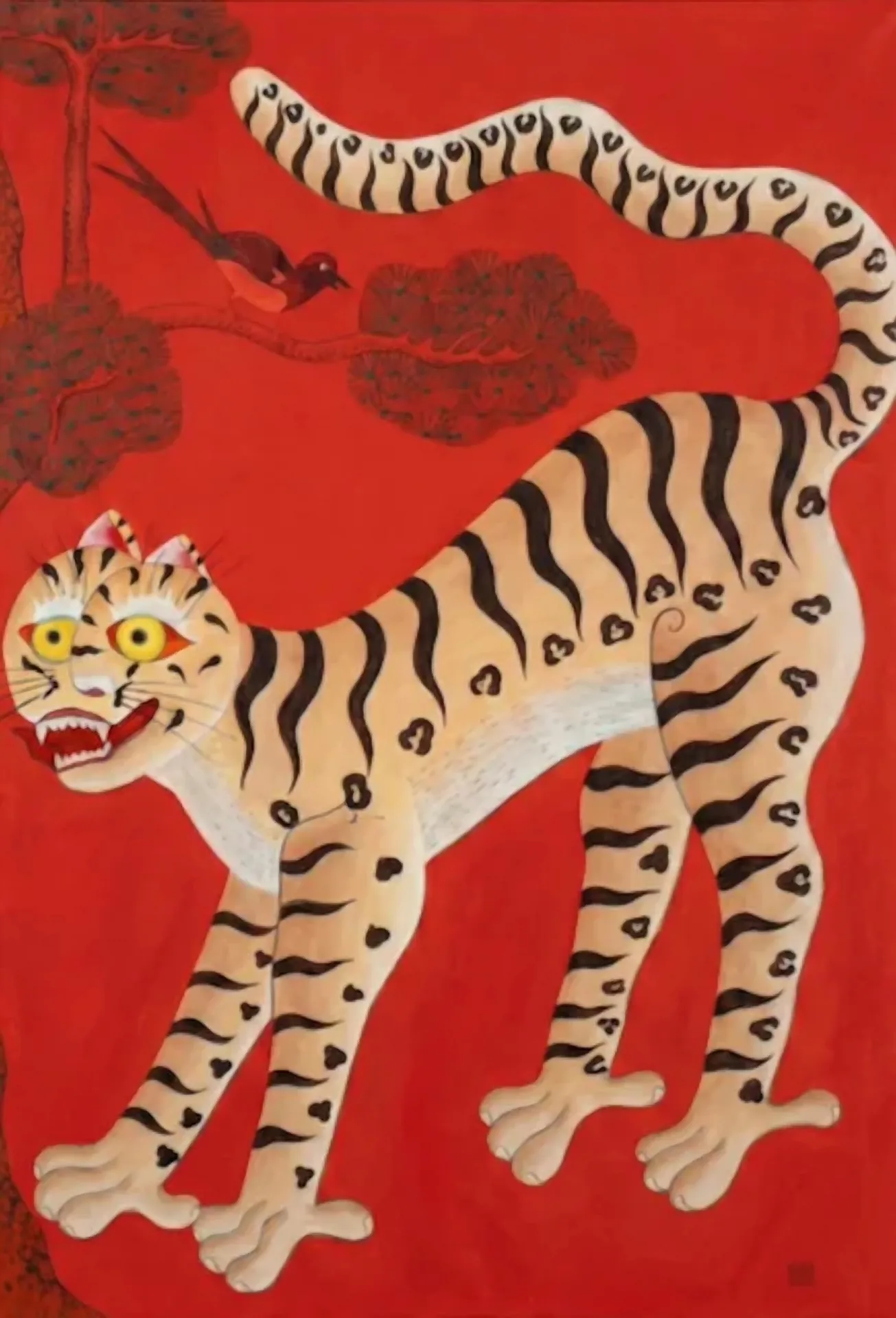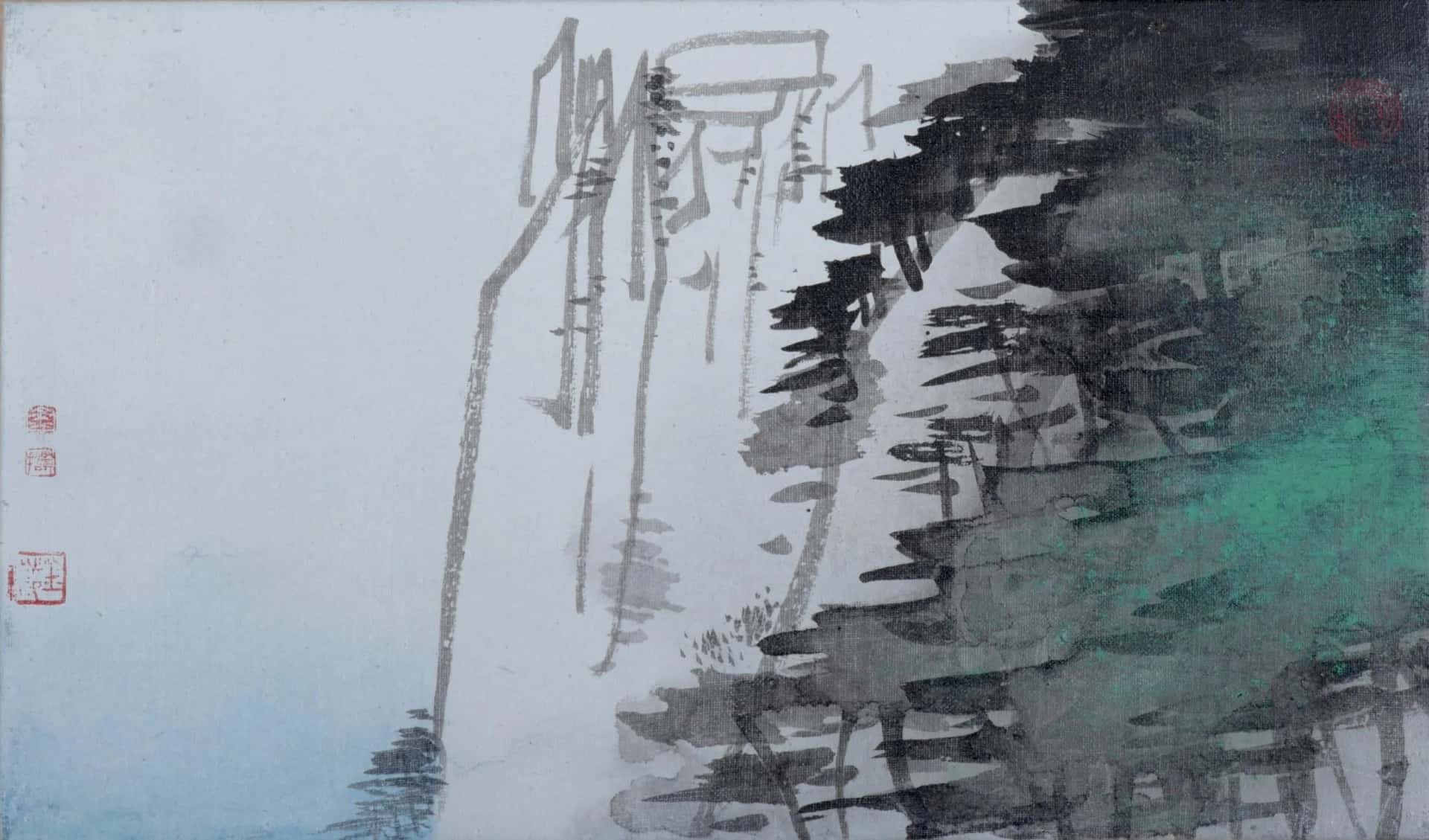
Korean traditional painting is far more than old-fashioned art. Materials like hanji, ink, powdered pigments, and mineral colors come alive in the hands of contemporary artists in entirely new ways. Through 25 Korean paintings in SAF 2026, this piece explores how traditional media meets a modern sensibility.
Korean Painting Between Tradition and the Contemporary — Ink and Pigment for Now
"Korean painting? You mean sansu or flower-and-bird paintings, right?"
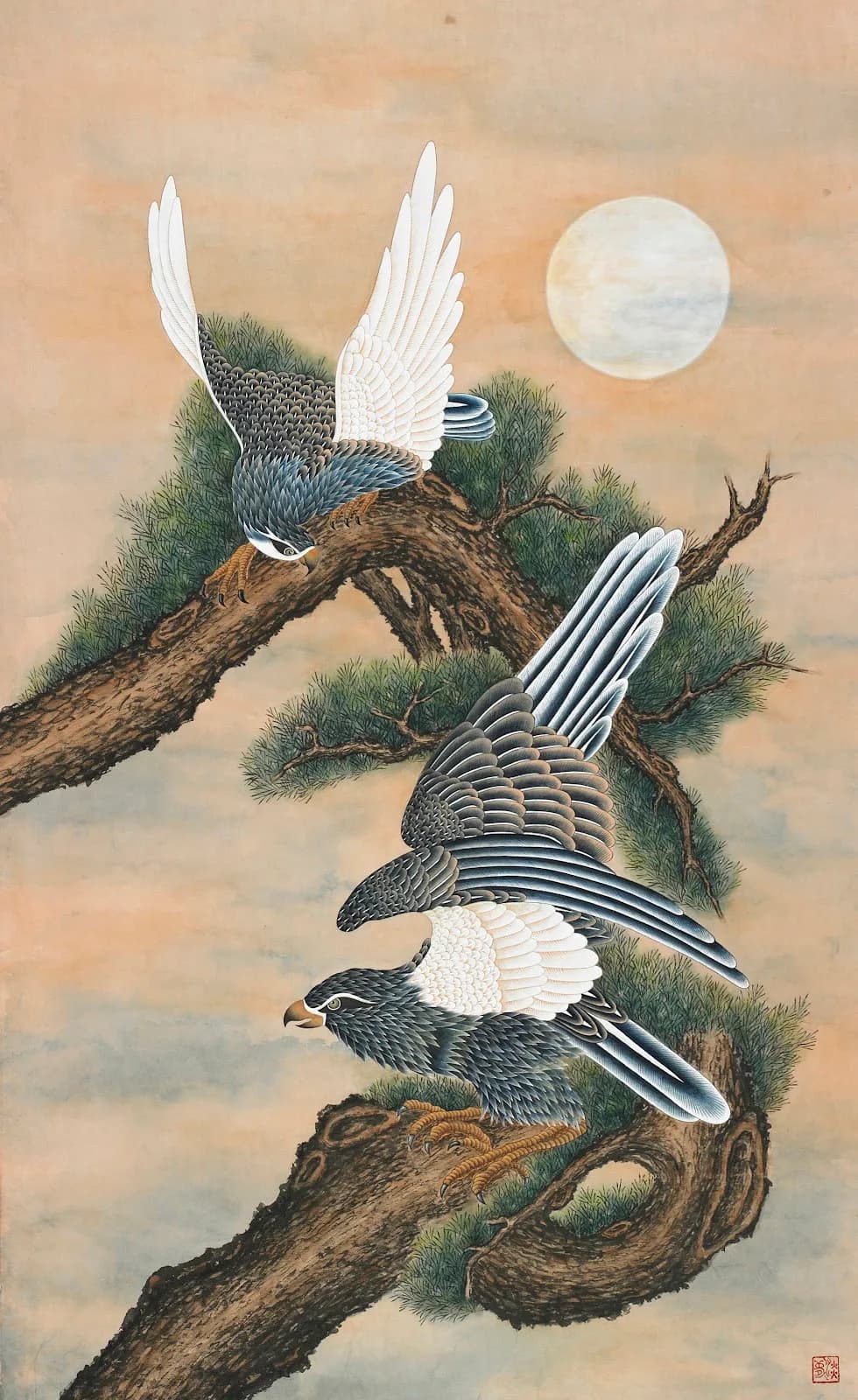
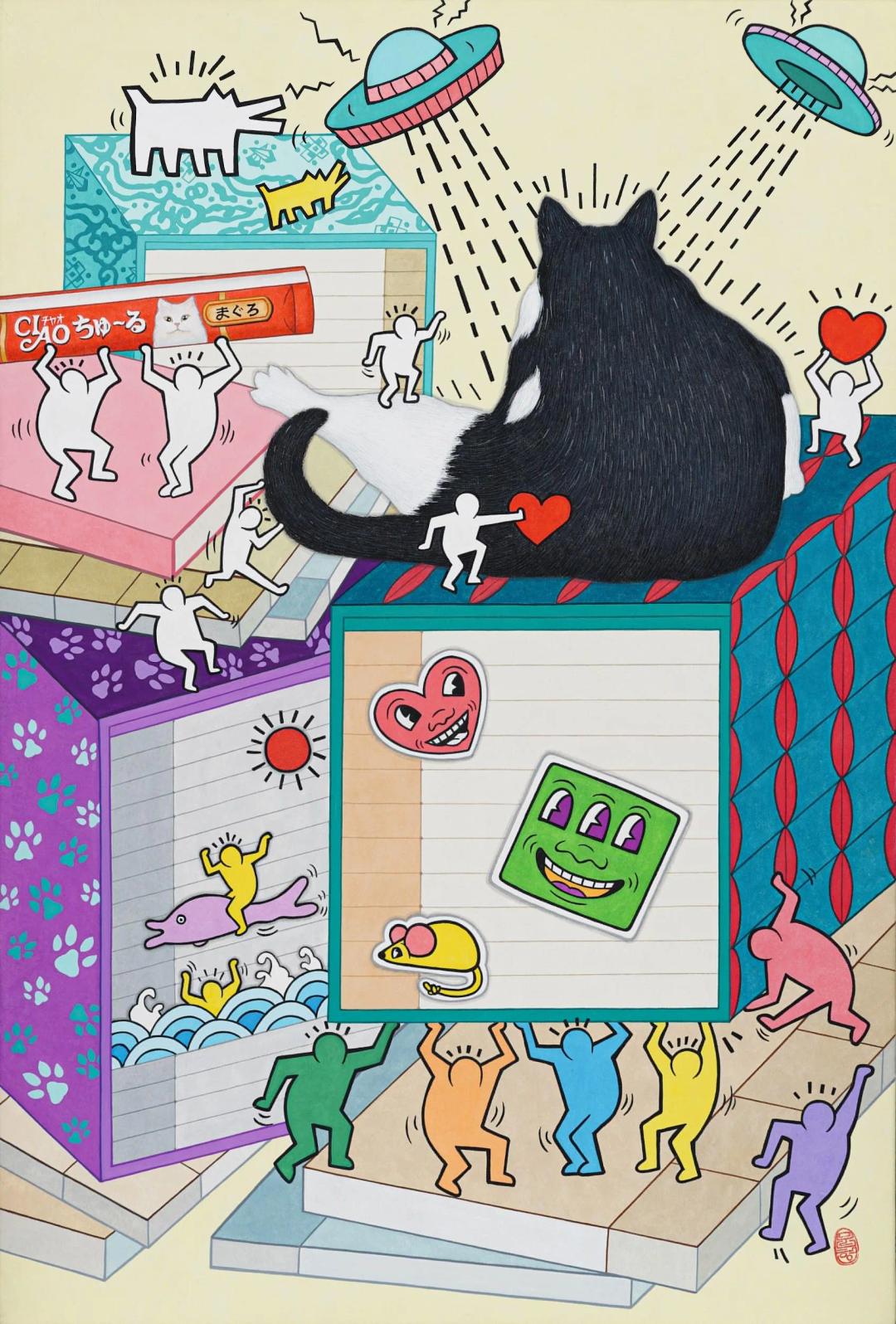
Half right, half wrong. Korean painting refers to material and method, not a particular subject. An ink-on-hanji eagle is Korean painting; a book-rack in powdered pigment on dyed hanji is also Korean painting.
What Is Korean Painting — Differences That Begin in Material
The difference between Western and Korean painting begins with the pigment itself.
Western painting mixes pigment into oil or synthetic resin (oil, acrylic). Korean painting uses materials from nature.
Principal materials
- Hanji / hwaseonji: paper from mulberry bark. Its thickness allows control over how far ink bleeds. Tough yet breathing.
- Ink (墨): a stick of compressed soot and animal glue. Ground in water. Density yields dozens of blacks.
- Bunchae (粉彩): mineral or shell pigment, finely ground, bound in glue. Clear color that endures.
- Seokchae (石彩): natural-mineral pigment, coarser particle, textural body.
- Sugan bunchae: bunchae washed (subi 水飛) to lift only the finest particles. Clearer, more refined color.
The resulting surface differs fundamentally from Western painting. Light is absorbed into the material — calm, subtle.
SAF 2026's 25 Korean Paintings — Material Through Actual Works
SAF's 25 Korean paintings show how varied "Korean painting" can be.
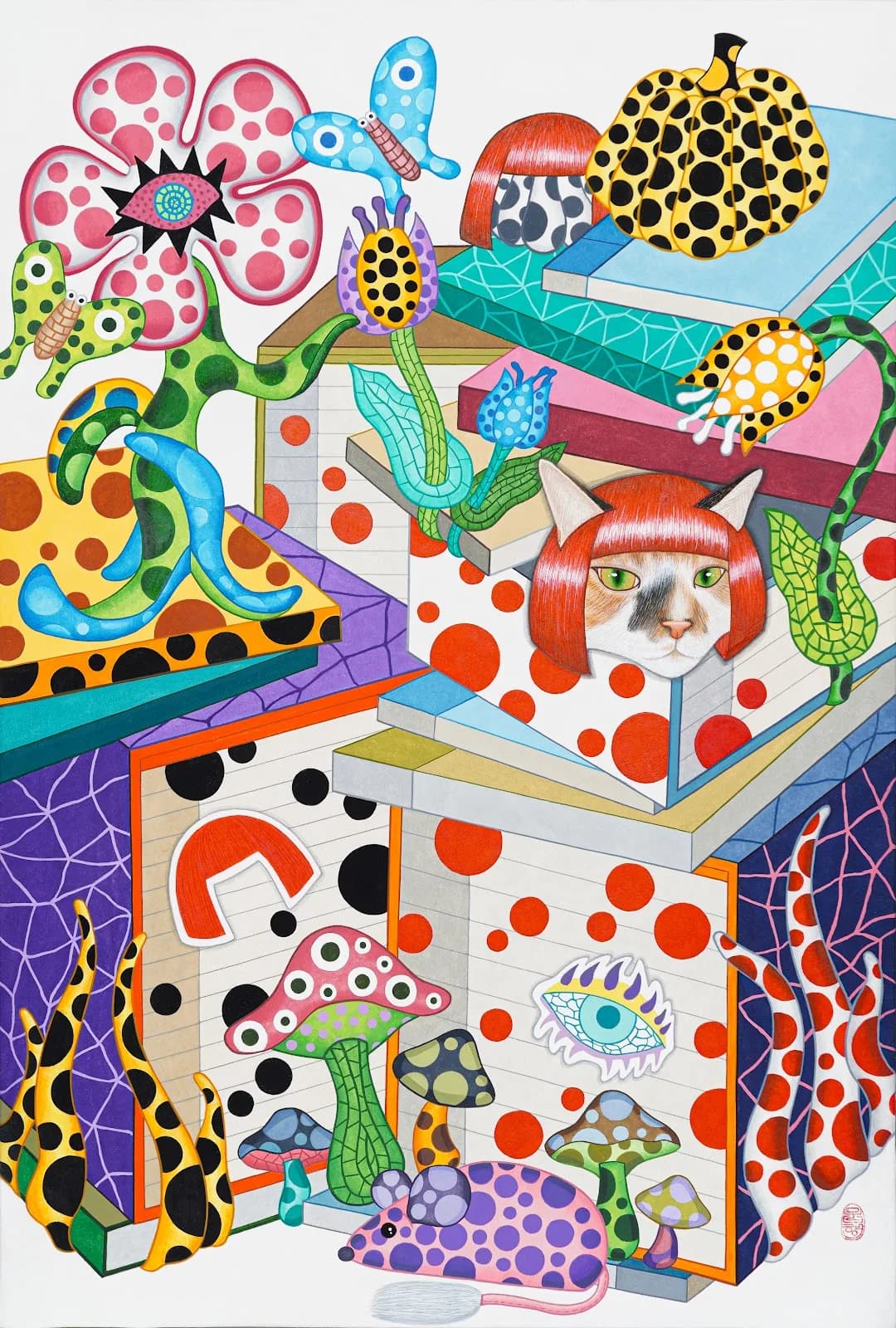
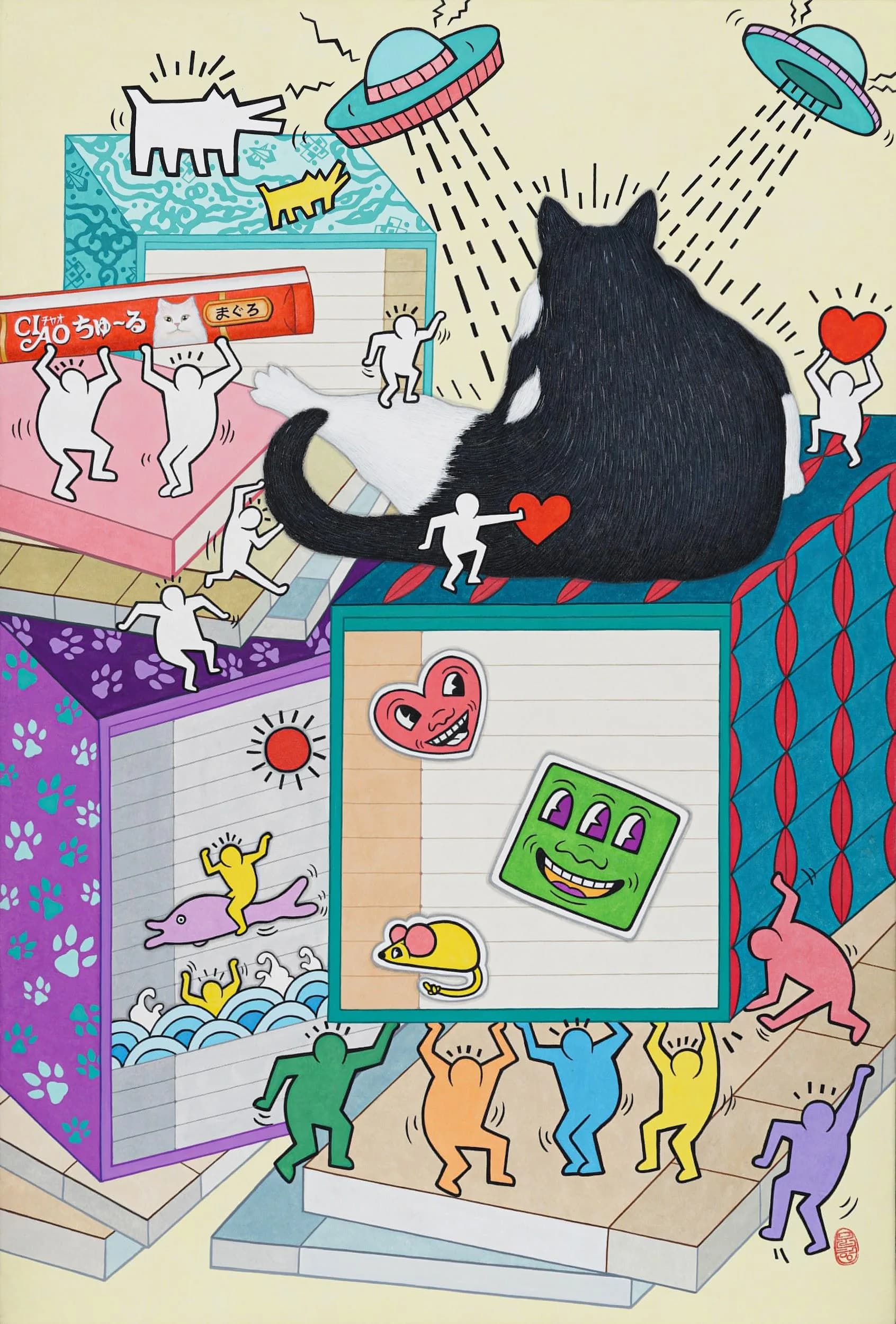
Lee Munhyeong layers contemporary artists' imagery onto traditional chaekgeori through ink and color on hanji — Chaekgeori × Yayoi Kusama, Chaekgeori × Henri Matisse. A Joseon-era book-shelf painting meeting Kusama or Matisse.
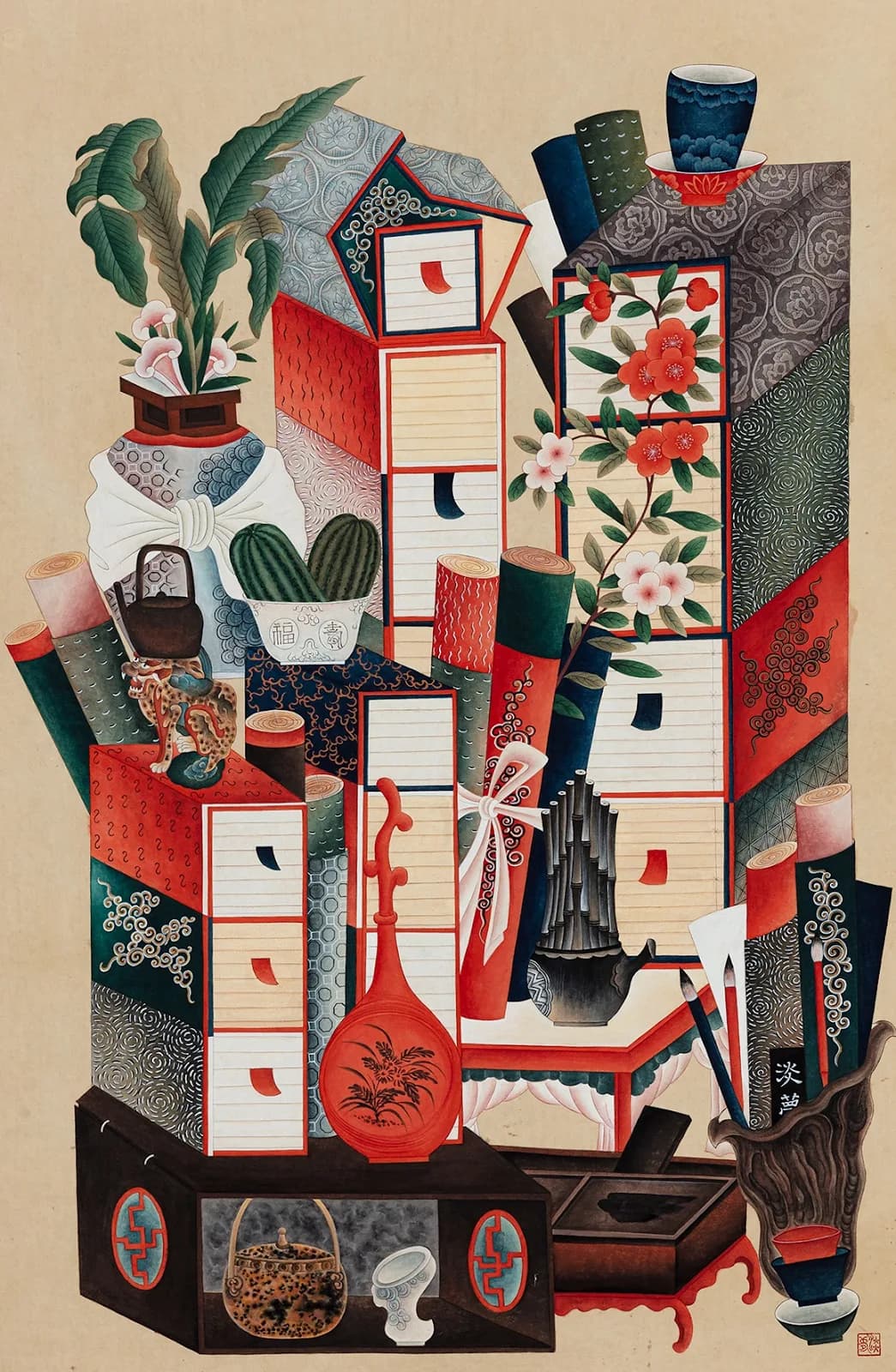
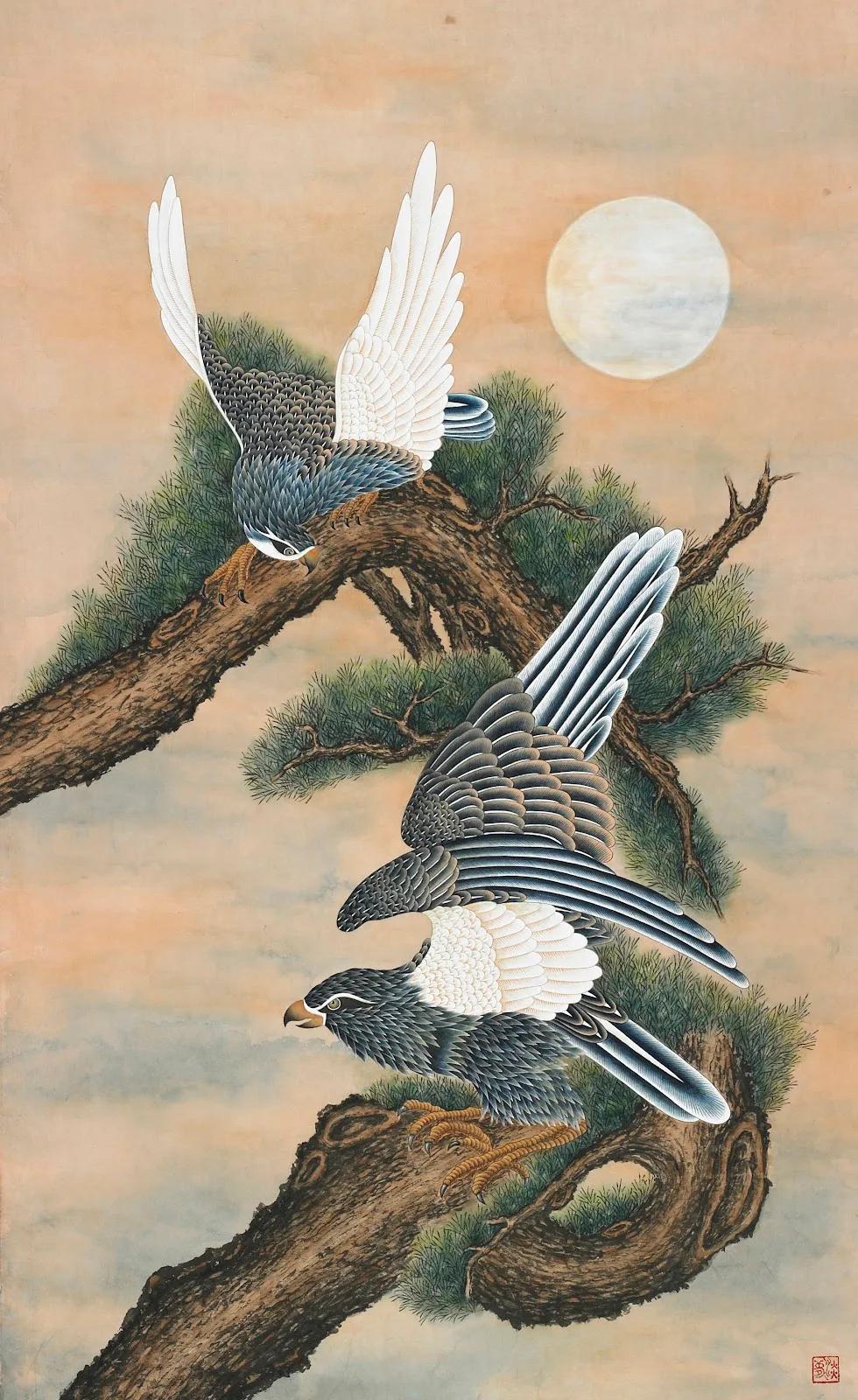
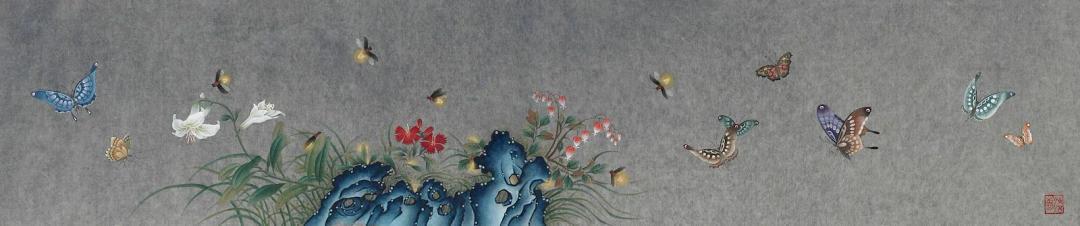
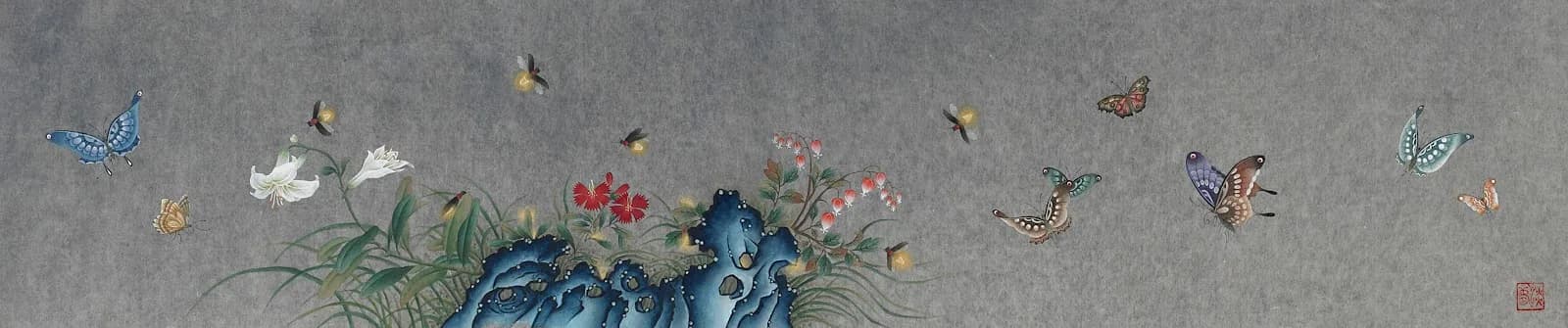
Sin Yeri uses a different approach. Chaekgeori (2020) is bunchae on dyed hanji; Night Firefly-Flower-Butterfly (2023) is bunchae on ink-dyed hanji. The paper itself is first dyed with ink, and then painting is laid on. The ground becomes an expression of material. Eagle (2025), 111×65 cm on dyed hanji in bunchae, goes for ₩5,000,000.
Seo Gongim's Hero uses sugan bunchae on hanji — the extra refinement of sugan bunchae gives a clearer, finer color.
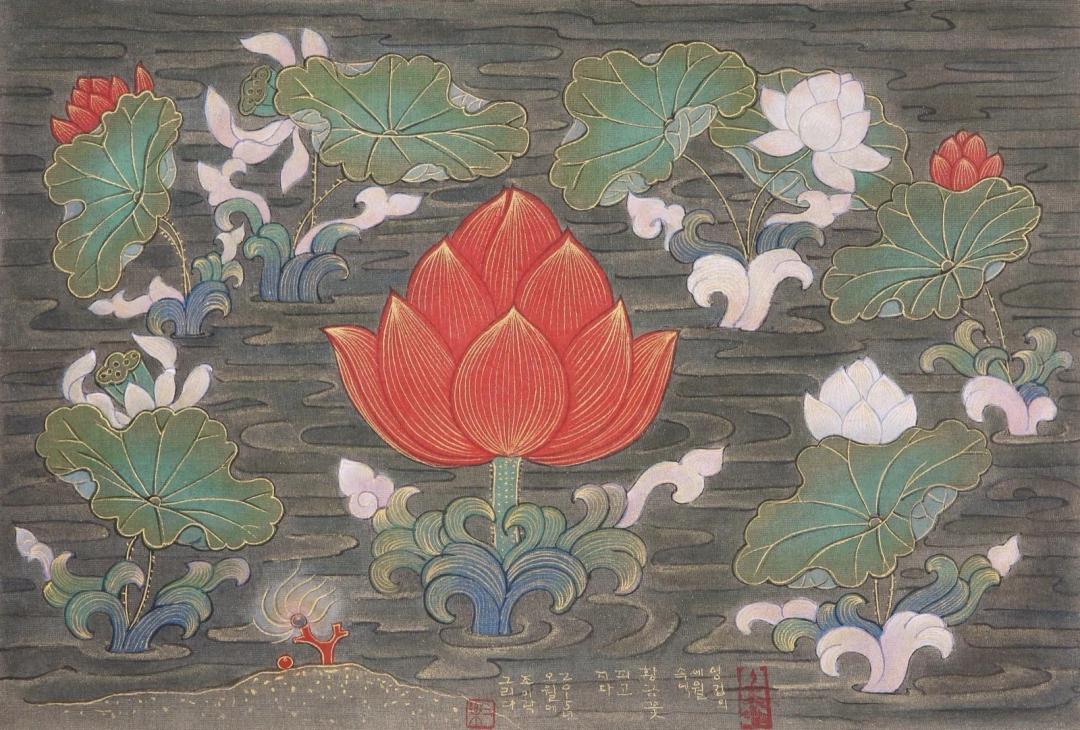
Jo Irak — Poppy (hanji with seokchae), Good-Luck Pouch (pink), Good-Luck Pouch (blue) (hanji with color). Traditional motifs reinterpreted with contemporary color. Seokchae's coarse grain adds a unique texture to flower and minhwa imagery.
Woo Yongmin's Horse of Byeongo 1 (2026) — 71×36 cm, ink on hanji, ₩700,000. Pure power of ink alone.
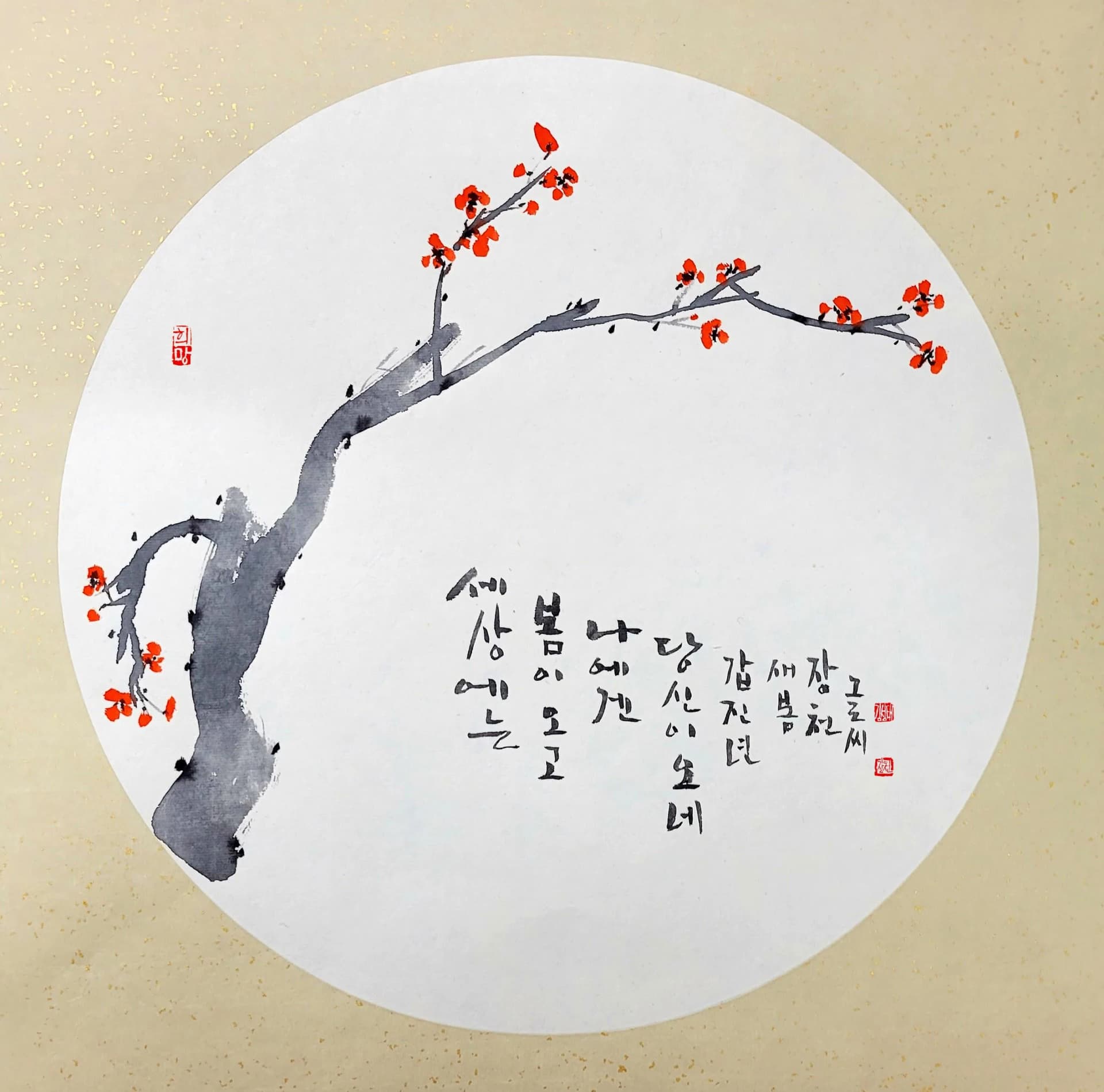
Jangcheon Kim Seongtae contributes two works — Plum Blossoms and This Year, Your Year — in ink and color on hwaseonji, carrying the Four Gentlemen tradition forward.
The Aesthetics of Yeobaek (餘白) — Emptiness That Speaks More
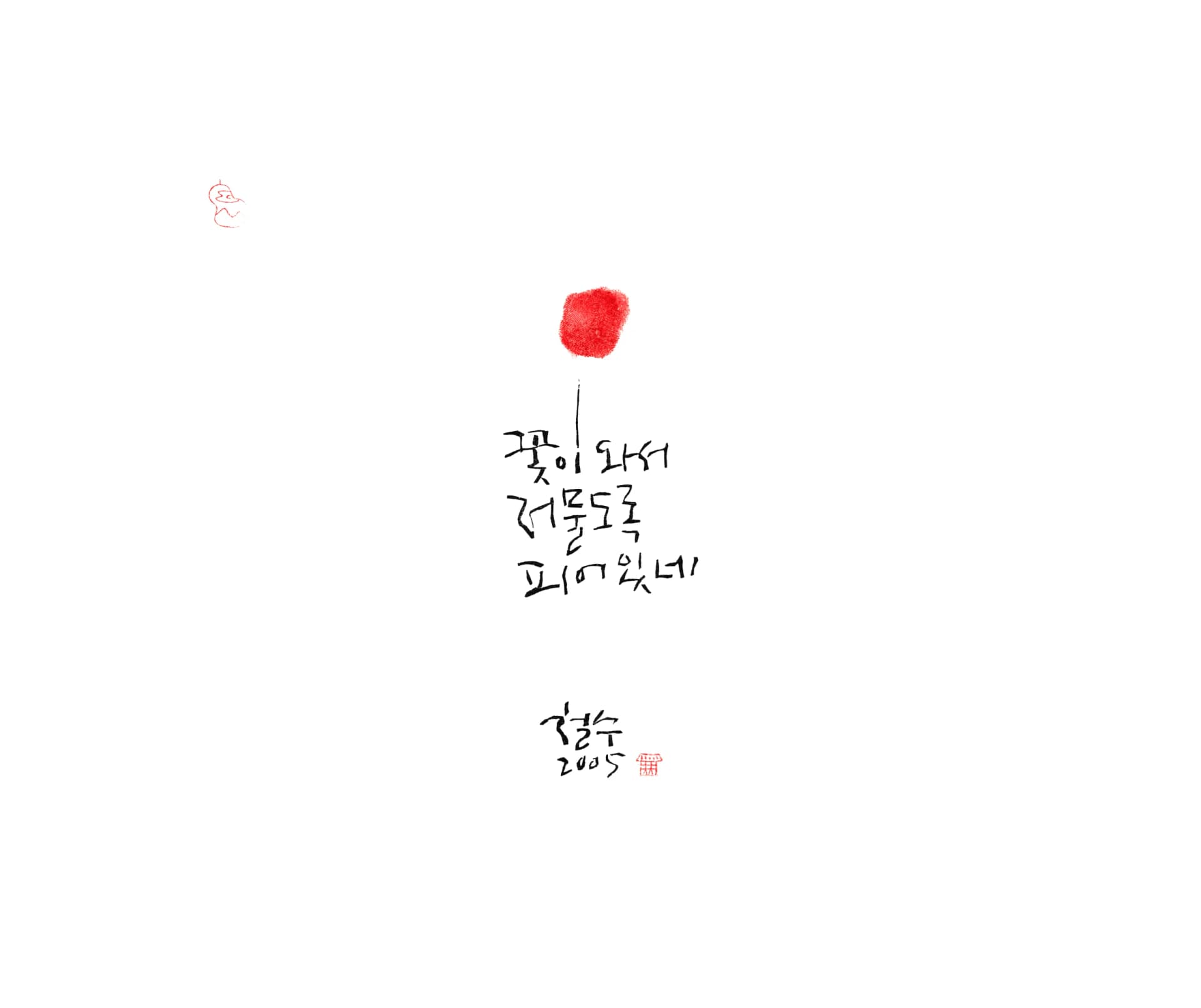
The first thing a newcomer to Korean painting notices is the space where nothing is painted. Unlike Western painting filling the canvas, Korean painting deliberately leaves space.
This is the aesthetics of yeobaek (negative space).
Empty space is not absence. It acts like air — strengthening the meaning of what is drawn. The tonal differences ink creates as it bleeds, and the white space around it — between these, the viewer's mind begins its dialogue with the work.
In East Asian aesthetics, the void is not lack but possibility. Because it is empty, it can become anything.
Ink Painting · Color Painting · Minhwa — Subgenres Within
Korean painting isn't one thing.
- Ink painting (sumukhwa): drawn in ink alone. Without color, density variation produces volume and texture. Woo Yongmin's horses belong here.
- Ink-and-color: ink structure with added color. Lee Munhyeong's Chaekgeori series.
- Color painting (chaesaekhwa): color-led. Jo Irak's flower paintings belong here.
- Minhwa: Joseon-era folk painting — chaekgeori, hwajodo, sipjangsaeng. Sin Yeri carries the minhwa tradition into contemporary work.
Why Korean Painting Now
The materials of Korean painting are slow and awkward. Ink must be ground; bunchae must be mixed with glue; hanji bleeds differently from Western canvas.
That awkwardness carries a different meaning now. In an environment filled with fast and stimulating things, there is something that paintings made slowly convey.
Sin Yeri dyeing hanji in ink and then laying bunchae on top. Lee Munhyeong importing contemporary artists into traditional iconography. These works carry forward material tradition without discarding it, while holding a living artist's gaze on now.
The materials don't change; what is said with them does. That's why Korean painting remains alive.
Meet the Artists

Further Reading
Related reading
If this piece helped, you may also enjoy these related articles:
Seed Art Festival
·