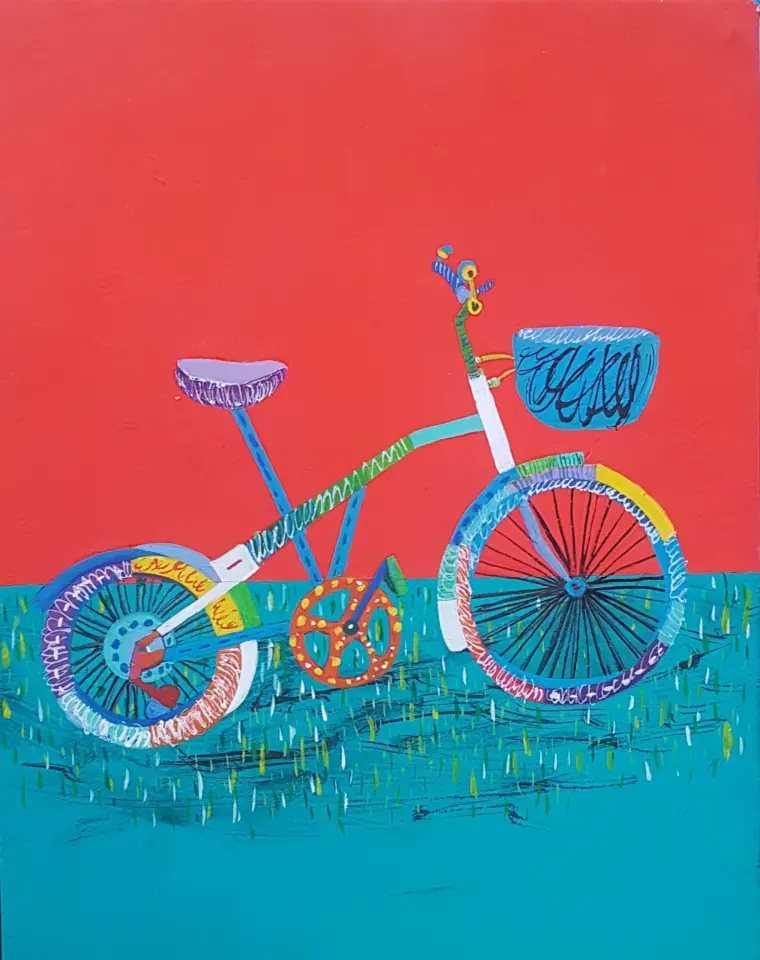
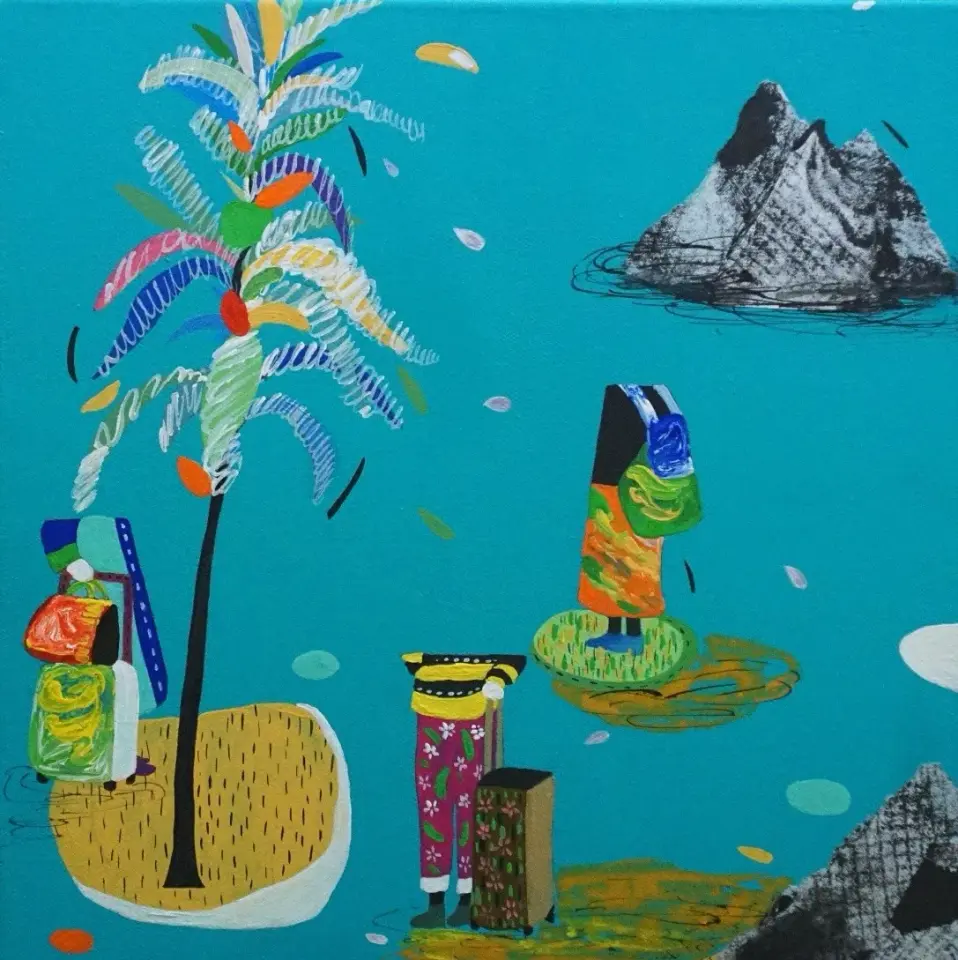
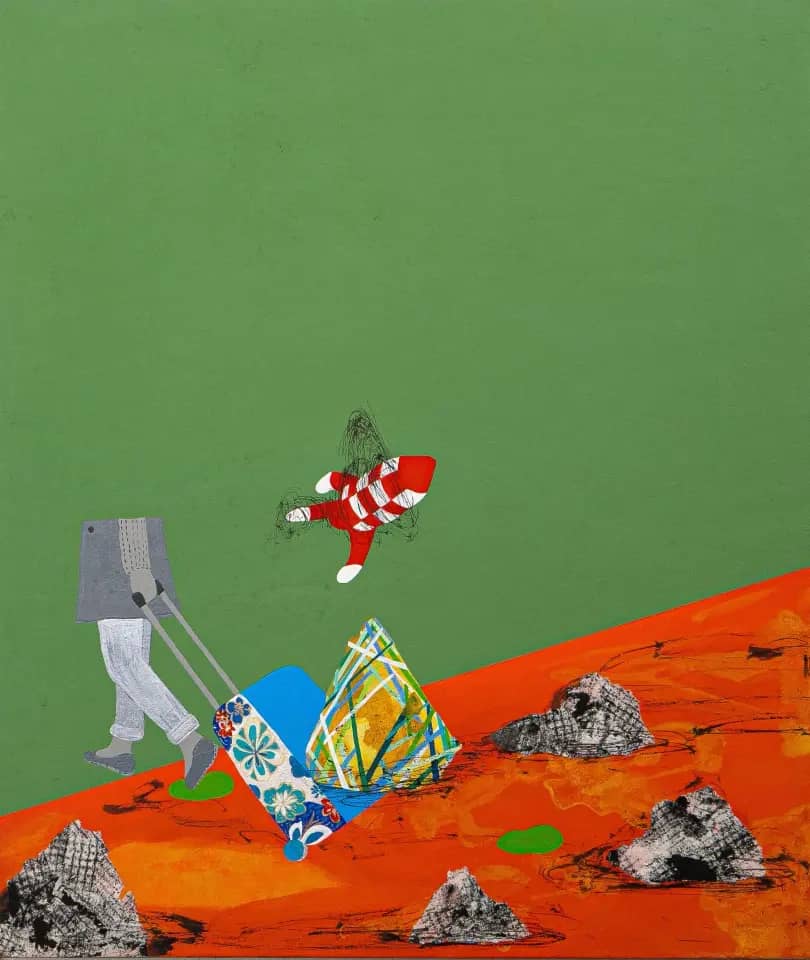
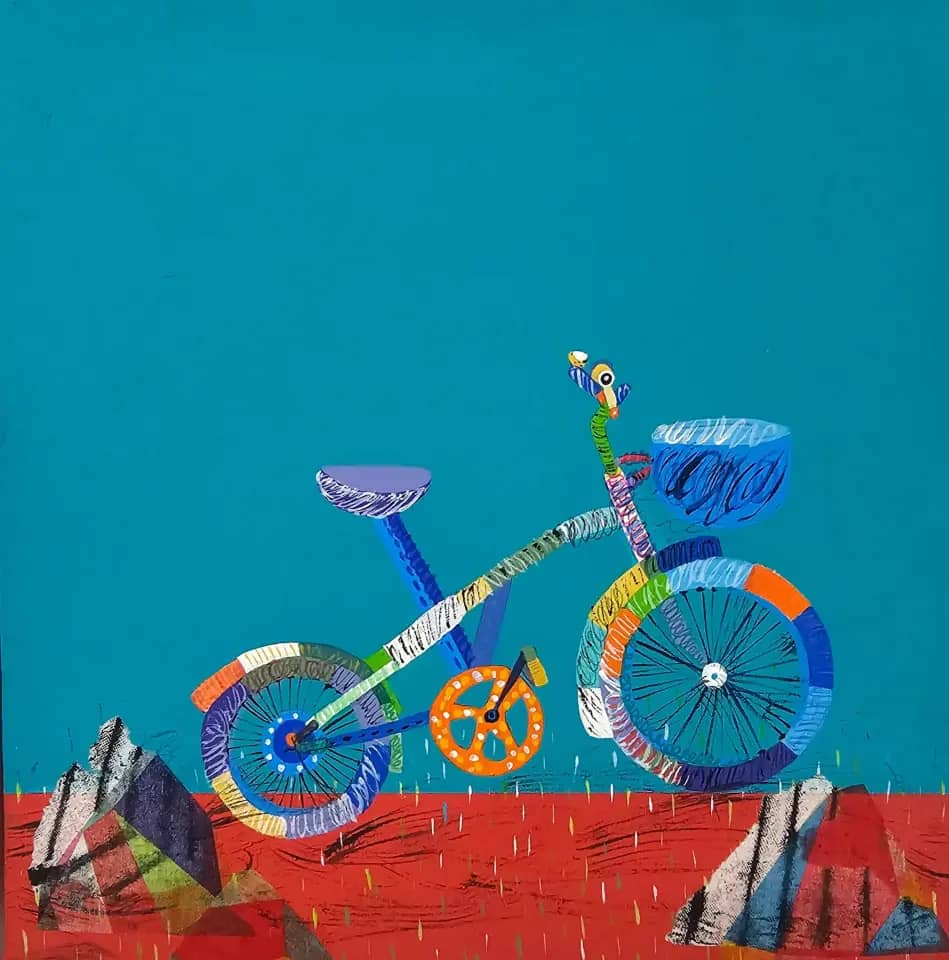
An empty suitcase
to depart toward oneself
The suitcase is not a tool for carrying luggage, but a refuge.A virtual space where the weight of the everyday is set down.
The suitcase —
a refuge of departure and recovery
An Eun-gyeong is a mid-career artist rooted in Korean ink painting (dongyanghwa). She earned her Ph.D. in Oriental Painting from the College of Fine Arts at Hongik University, and has taught as a visiting professor at the University of Ulsan and as a lecturer at Kyungsung, Chosun, and Ulsan Universities.
Across her practice, a single object returns again and again: the suitcase. In her words, the suitcase “is not simply a tool for carrying luggage, but something that holds the anxiety and isolation of modern life, a psychological refuge for the search toward a new self.” We live along the orbit of a repeating everyday — yet each of us, she suggests, keeps one empty suitcase of our own, ready to be packed and carried away at any moment.
Through the virtual space she builds inside the suitcase, An offers consolation for the weariness of the real. Her hope, in her own words, is that viewers might “set down, however briefly, the weight of the everyday, and experience a time of recovery that departs toward the self alone.” The tone of the work is warm: not escape, but rest; not flight, but return.
That sense of journey runs through her exhibition history as well. From Joy of Voyage and Only Dream-ing Traveler to The Journey to The Recovery, “Boundary” Travel, and the 2024 Rumination, the titles themselves trace a path of leaving and coming back — solo shows that have moved between Seoul, Tokyo, New York, and Ulsan.
Major themes
- 1
The suitcase as refuge
Not a tool for carrying luggage, but a vessel for modern anxiety and isolation — a psychological refuge for the search toward a new self.
- 2
A virtual space within
Inside the suitcase she builds a virtual space that consoles the weariness of the real — a place to set down the weight of the everyday.
- 3
The time of recovery
A warm gaze toward rest and return — a departure toward oneself rather than escape, rooted in the texture of Korean ink painting.
The artist's timeline
- 2007Solo exhibition, Gallery Spacs pause, Tokyo.
- 2008Solo exhibition 〈Joy within Deviation〉, Gallery Young, Seoul.
- 2009〈Joy of Voyage〉 — Gallery HOSI, Tokyo; Young Art Gallery, Seoul.
- 2012〈Only Dream-ing Traveler〉 — THE K Gallery & Hwabong Gallery, Seoul.
- 2014ARPNY Artist Residency Program, New York; Special Award, 18th Ulsan Art Exhibition.
- 2015Solo exhibition, THE WHEEL HOUSE, New York.
- 2016Solo exhibition, Caffebene Time Square, New York.
- 2017〈The Journey to The Recovery〉 — Gana Art Space, Seoul.
- 2022〈"Boundary" Travel〉 — Buk-gu Culture & Arts Center, Ulsan.
- 2024〈Rumination〉 — Gagi Gallery, Ulsan.
Awards & collections
- Special Award, 18th Ulsan Art Exhibition (2014); Selected, 28th Grand Art Exhibition of Korea (2008).
- Special Selection, 36th Gusangjeon & 9th Danwon Art Exhibition (2007); Special Selection, 34th Gusangjeon (2005).
- Collections: Ulsan Culture & Arts Center, University of Ulsan, Ulju World Mountain Film Festival, corporate and private collections.
Three essays —
on the suitcase and the journey
1Why a suitcase — the object as inner space
A suitcase is an everyday object, easy to overlook. We fill it, close it, carry it, and set it down. In An Eun-gyeong's work, that ordinary thing is turned inside out: the suitcase becomes not a container for clothes but a container for a state of mind. It holds, in her words, “the anxiety and isolation of modern life,” and at the same time offers “a psychological refuge for the search toward a new self.”
The choice is precise. A suitcase already belongs to the grammar of leaving; no one packs a bag to stay. By making it the central motif, An lets a single familiar form carry the whole weight of a wish — the wish to be able to go, even if one never does. The bag need not be used. It is enough that it exists, empty and ready, somewhere within reach.
2The orbit of the everyday — and the empty bag we keep
We live, the artist observes, along the orbit of a repeating everyday. The days turn; the route is fixed. And yet, she suggests, each of us keeps one empty suitcase of our own — ready to be packed and carried away at any moment. The painting does not ask us to break the orbit. It asks us to notice the bag that has been there all along.
Inside the suitcase, An constructs a virtual space — an interior that consoles the weariness of the real. This is the quiet argument of the work: recovery does not require escape. It requires only the knowledge that departure is possible. The image of the empty bag is, in this sense, generous. It does not demand a journey. It keeps the door open.
3From departure to recovery — a journey read through titles
Read in sequence, An Eun-gyeong's solo exhibitions trace an arc. The early shows speak the language of setting out: Joy of Voyage (2009), Only Dream-ing Traveler (2012). The voyage is still a dream, still a joy. Then the vocabulary shifts toward return and repair: The Journey to The Recovery (2017), “Boundary” Travel (2022), and most recently Rumination (2024) — to ruminate is to bring something back, to chew it over slowly, to take it in again.
The geography of these shows is itself a journey: Tokyo, Seoul, New York, Ulsan. Yet the destination the work keeps pointing toward is not a place on a map. It is the self — “a time of recovery that departs toward the self alone.” The suitcase, finally, is round-trip. One leaves in order to come back changed, lighter, restored.
An Eun-gyeong joins this campaign not as a subject of its cause but as a fellow artist in solidarity — offering her work so that another artist might find, today, the room to set down their own weight.
From Tokyo to New York to Ulsan, An Eun-gyeong's work has returned, again and again, to one quiet object and one quiet wish: that we might set down the weight of the everyday and depart, however briefly, toward ourselves — and come back restored.
Selected Works
5 works are featured here.
An Eun-gyeong joined this campaign in solidarity with fellow artists. Every work sold flows directly into the artists' mutual-aid loan fund— a purchase becomes the next month's lifeline for an artist navigating financial exclusion today.