Letters and signs,
an Esperanto of emotion
Painting, installation, new media, publishing — all at once.She maps the desires and identities of the urban dweller.
A common language —
letters, signs, and desire
Lee Eun-hwa is a mid-career artist who moves freely across painting, installation, new media, and publishing — a boundary-crossing practitioner and, at the same time, an art writer. Since the early 2000s she has explored letters and signs, the desires and identities of the urban dweller, and the workings of human emotion and psychology.
Her education was built across the United Kingdom. After a diploma in graphic design from Cavendish College in 2000, she earned a master's in Fine Art (Painting) from the University of the Arts London in 2001, a master's in contemporary art from the Sotheby's Institute of Art in London in 2002, and completed doctoral coursework in art history at the University of Manchester in 2009. That trajectory — from making to writing, from studio to scholarship — runs through her work like a watermark.
The 〈Emotional Esperanto〉 project, which she has carried since the mid-2000s, names her central question. If Esperanto was a language designed to be shared across borders, Lee imagines a common visual language for emotion — built from letters and signs rather than words. From Emotional Esperanto (Artspace Mieum, 2004) through Digilog (2016) and Monoticon (2017), the series develops a grammar in which feeling becomes legible as form.
In the 2020s her gaze turned more sharply toward the city and its appetites. Moneyscape(Coffee Esperanto, Seoul, 2022) and 〈The Room of Desire〉 (Young Eun Museum's Y.Park annex / Haslla branch, Yeongwol, 2023) read the contemporary metropolis as a landscape of desire — where money, longing, and identity overlap. Her 2024 project Tell Me The Story (Art Space J_Cube1, Seongnam) bound painting, record, and moving image into a single work, and in 2025 〈A Room of Hospitality: Welcome VIP〉 (a special invitational at the 12th Gyeongnam International Art Fair, CECO, Changwon) was completed only through the participation of its audience.
Across nine solo exhibitions and group shows at the Seoul Museum of Art, the National Museum of Modern and Contemporary Art, the Busan Museum of Art, and Sungkok Art Museum, Lee has consistently developed new formats that fuse art with other fields. Alongside her practice she writes widely on art — books such as Paintings with a Story, The Room of Paintings, A Journey to Nordic Art Museums, and The Minimum 100 Artworks for Today's Grown-ups — giving her work a second axis as a chronicler of art itself.
Major themes
- 1
Emotional Esperanto
A common visual language for feeling, built from letters and signs rather than words — emotion made legible as form.
- 2
The city of desire
Moneyscape and 〈The Room of Desire〉 read the contemporary metropolis as a landscape where money, longing, and identity overlap.
- 3
Across media, and into writing
Painting, installation, new media, and publishing fuse into new formats — and her art writing forms a second axis to the practice.
The artist's timeline
- 2000Diploma in graphic design, Cavendish College, UK.
- 2001MA in Fine Art (Painting), University of the Arts London.
- 2002MA in Contemporary Art, Sotheby’s Institute of Art, London.
- 2004Solo exhibition 〈Emotional Esperanto〉, Artspace Mieum.
- 2009Completes doctoral coursework in art history, University of Manchester, UK.
- 2016Solo exhibition 〈Digilog — Emotional Esperanto〉.
- 2017Solo exhibition 〈Monoticon — Emotional Esperanto〉.
- 2022Solo exhibition 〈Moneyscape〉, Coffee Esperanto, Seoul.
- 2023〈The Room of Desire〉, Young Eun Museum Y.Park / Haslla annex, Yeongwol.
- 2024〈Tell Me The Story〉, Art Space J_Cube1, Seongnam — supported by the Seongnam Cultural Foundation.
- 2025〈A Room of Hospitality: Welcome VIP〉, special invitational at the 12th Gyeongnam International Art Fair, CECO, Changwon.
Selected exhibitions, writing & collections
- Group exhibitions at the Seoul Museum of Art, the National Museum of Modern and Contemporary Art, the Busan Museum of Art, and Sungkok Art Museum.
- 〈The Metropolis of Desire〉, Busan Museum of Art (2016–17); the 3rd Sector of the Gwangju Biennale (2006); 〈Portfolio 2005〉, Seoul Museum of Art (2005); 〈Party〉, Sungkok Art Museum (2005).
- Group exhibition Nihon Shingen-ten, Tokyo Metropolitan Art Museum (2025).
- Books: Paintings with a Story, The Room of Paintings, A Journey to Nordic Art Museums, The Minimum 100 Artworks for Today's Grown-ups, and more.
- Collections: Haslla Art World, Artbooks Co., Ltd., and others.
Three essays —
on a language for feeling
1Emotional Esperanto — a grammar for feeling
Esperanto was invented as a neutral, shared language — a tongue belonging to no nation, designed so that strangers might understand one another. Lee Eun-hwa borrows that ambition and turns it toward emotion. Her recurring project 〈Emotional Esperanto〉 asks whether feeling, too, could have a common language: not words, but letters and signs arranged into a visual grammar.
The series unfolds across a decade. Emotional Esperanto at Artspace Mieum (2004) sets the premise; Digilog (2016) folds the digital and the analog into one another; Monoticon (2017) compresses emotion into an icon-like sign. In each, the work treats feeling not as something ineffable but as something that can be encoded — and therefore shared.
What holds the series together is a writer's instinct toward legibility. Lee does not paint emotion as expression; she sets it down as a system, a set of marks a viewer can learn to read. The result is a body of work that sits between picture and text — fitting, for an artist who is also a writer about art.
2Moneyscape and the room of desire — reading the city
In the 2020s Lee's subject sharpens into the city and its appetites. Moneyscape (Coffee Esperanto, Seoul, 2022) takes money itself as landscape — the contemporary metropolis seen as terrain shaped by capital, where value and longing are inseparable.
〈The Room of Desire〉 (Young Eun Museum's Y.Park / Haslla branch, Yeongwol, 2023) builds an interior for that longing. Desire, here, is not a moral failing but a structuring force of urban life — the engine of the identities city dwellers assemble for themselves. The exhibition reads the metropolis as a place where money, want, and selfhood overlap and blur.
These projects extend the logic of the Esperanto series outward, from the private grammar of feeling to the public grammar of the city. If emotion can be encoded, so can desire — and the encoded city becomes a text the artist invites us to read alongside her.
3Maker and chronicler — the second axis
Lee Eun-hwa works on two axes at once. On one, she makes — painting, installation, new media, the participatory room of 〈A Room of Hospitality: Welcome VIP〉 (2025), the bound media of Tell Me The Story (2024). On the other, she writes — books such as Paintings with a Story, The Room of Paintings, A Journey to Nordic Art Museums, and The Minimum 100 Artworks for Today's Grown-ups.
The two axes feed one another. Her writing carries the scholar's training of her doctoral years; her practice carries the writer's drive toward legibility. Across nine solo exhibitions and shows at major Korean museums, she has consistently built new formats that fuse art with other fields — and her books extend that fusion to the reading public.
It is a rare position: to be at once a contemporary artist developing new forms and a writer translating art for a wide audience. In both roles, the same impulse holds — to make the difficult feeling, the dense image, the distant museum, legible and shared.
From the early Esperanto works to the participatory rooms of the 2020s, Lee Eun-hwa's practice has pursued one question: how do you make a feeling, a desire, a city legible — and shared? She joins this campaign not as a subject of its cause but as a fellow artist in solidarity, so that the works offered here become part of a mutual-aid fund for artists facing financial exclusion today.
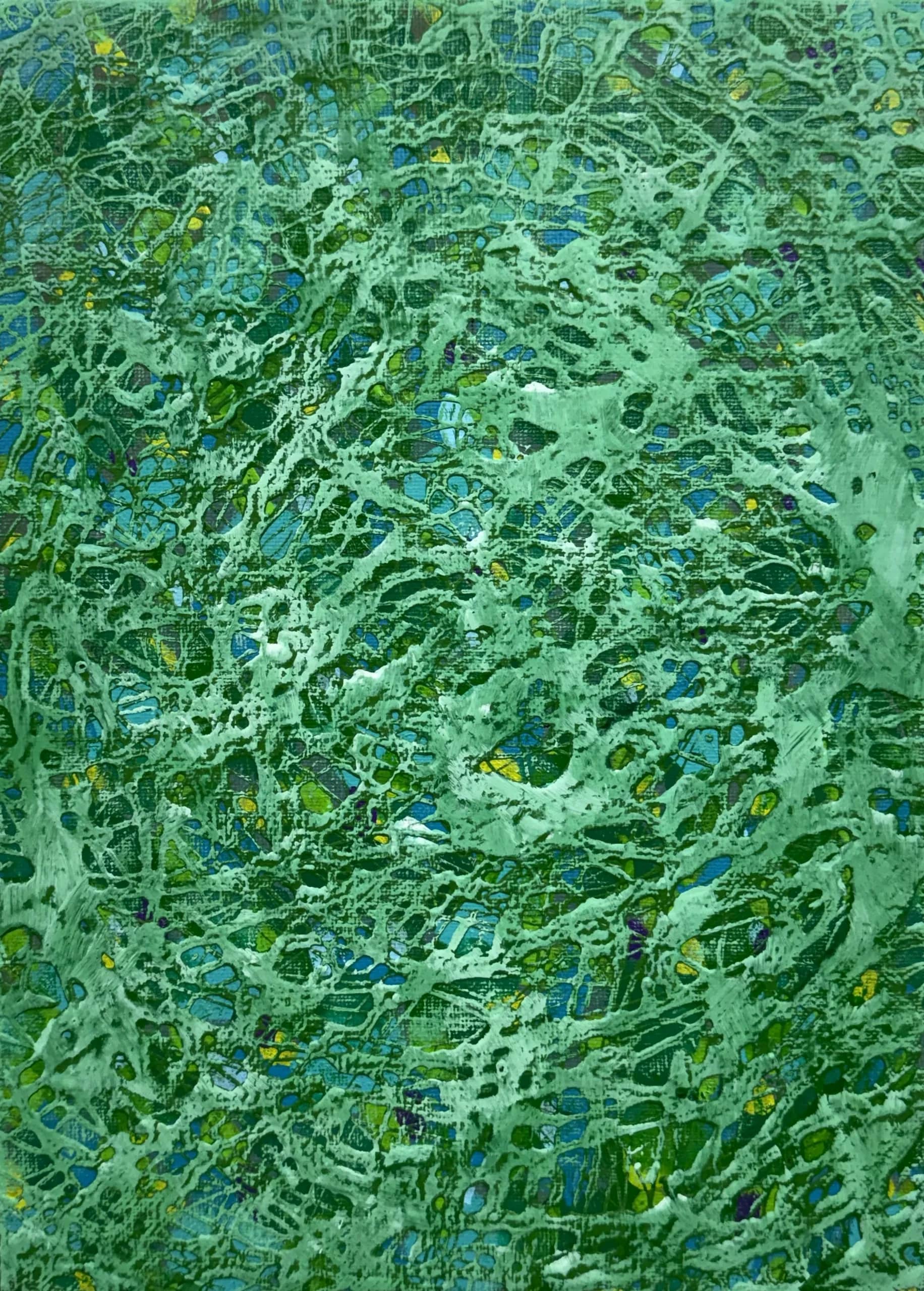
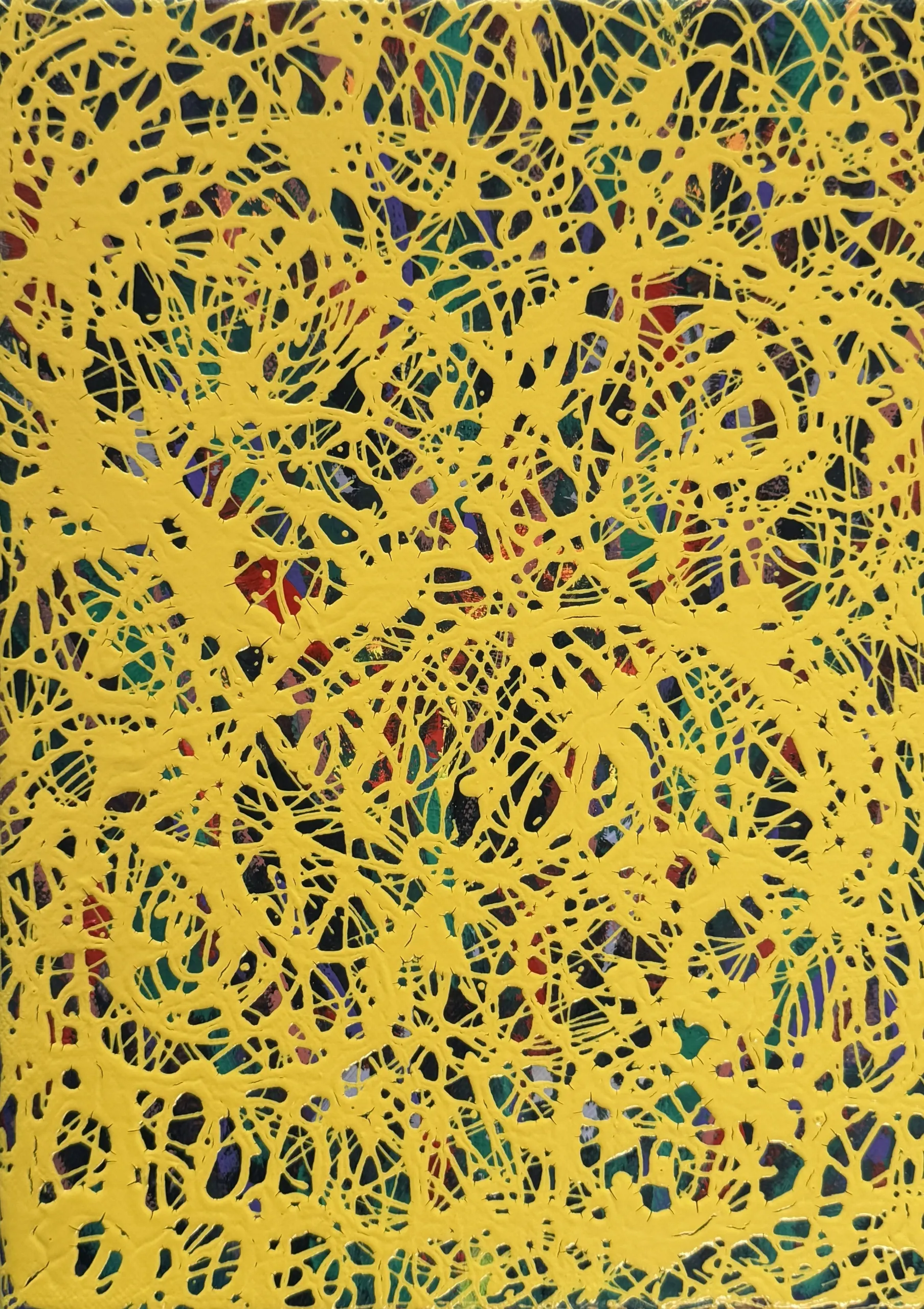
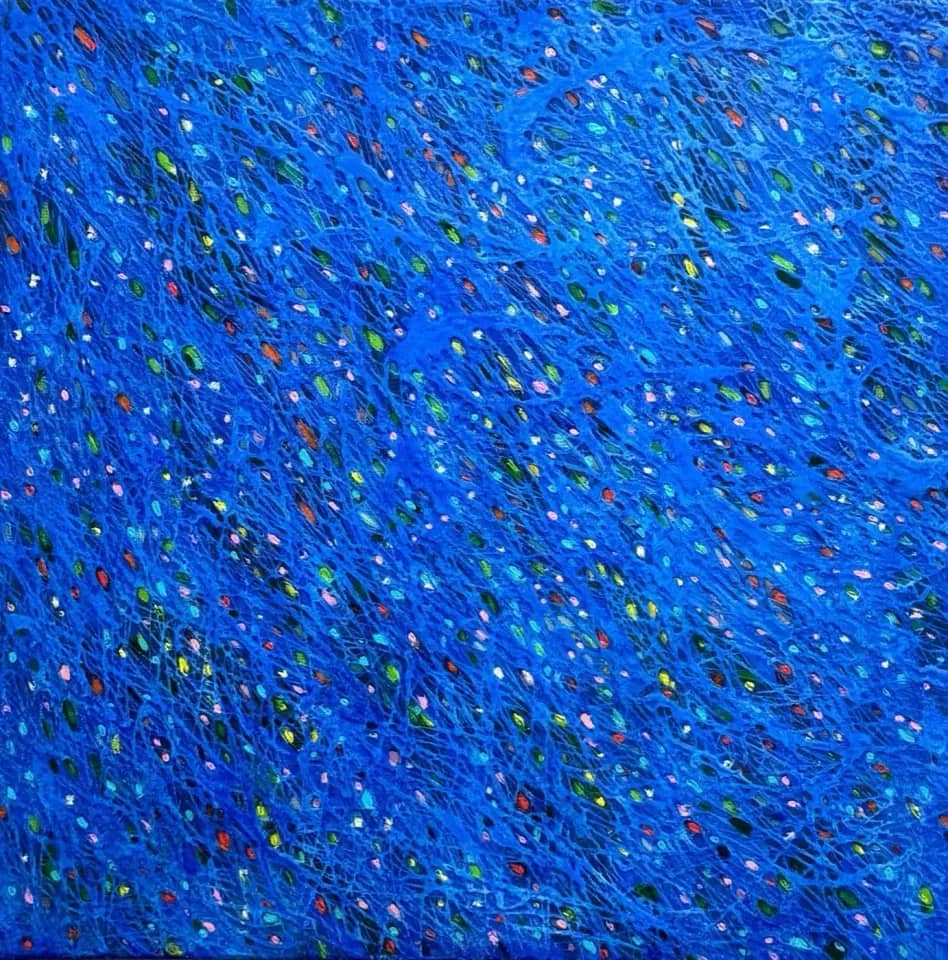
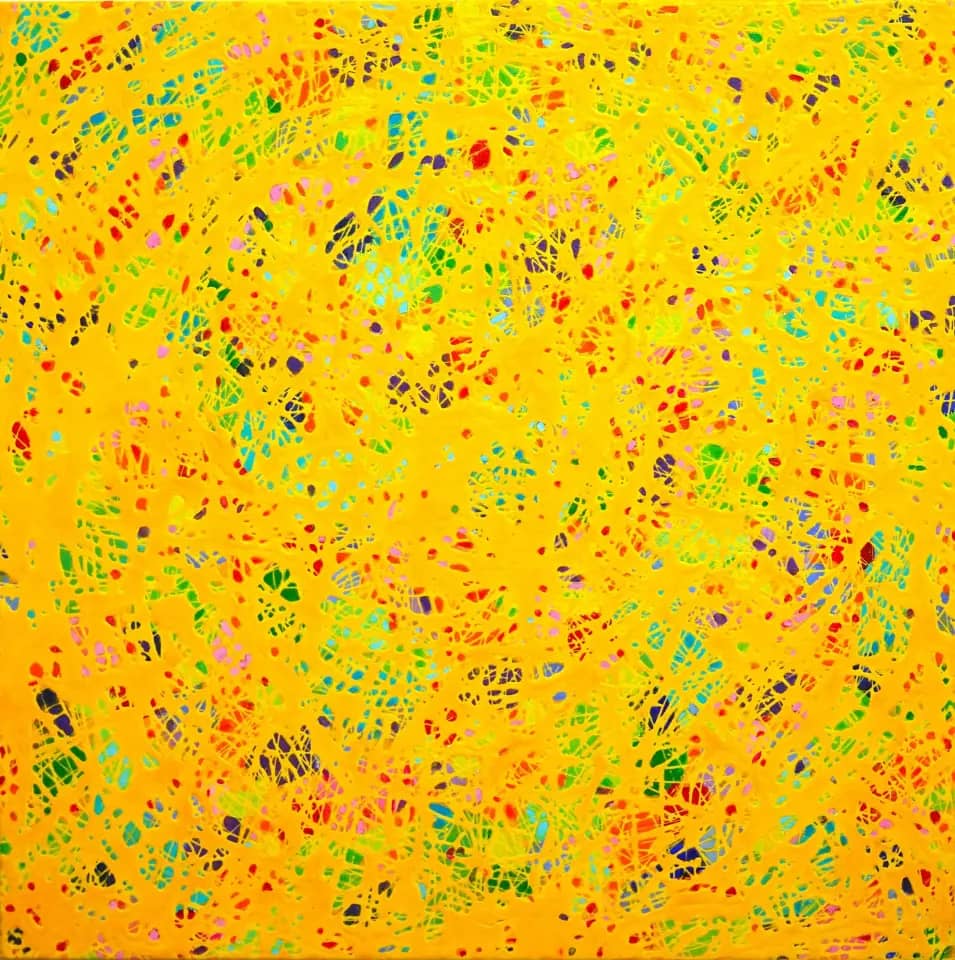
Selected Works
5 works are featured here.
Lee Eun-hwa joined this campaign in solidarity with fellow artists. Every work sold flows directly into the artists' mutual-aid loan fund— a purchase becomes the next month's lifeline for an artist navigating financial exclusion today.