Kim Gyuhak paints what wind leaves behind. *Wind and Light* series — rural scenes and childhood memories, held with a quiet, warm gaze.
Light tilts toward the edge of a field.
A quiet country lane. A village entrance with no one. In that stillness, wind passes. Kim Gyuhak's paintings catch the trace of that wind.
Hometown as Time
Kim Gyuhak paints memories of a childhood hometown.
Not only beautiful memories. Quiet, sometimes lonely, still. Yet inside that stillness, warmth. "Rural scenes and childhood memories, held with a still yet warm gaze." A sentence Incheon.in used to introduce his practice. One sentence that holds the whole series.
The work title: Wind and Light. What remains from hometown scenes. Not buildings or people but wind and light.
Snowfall
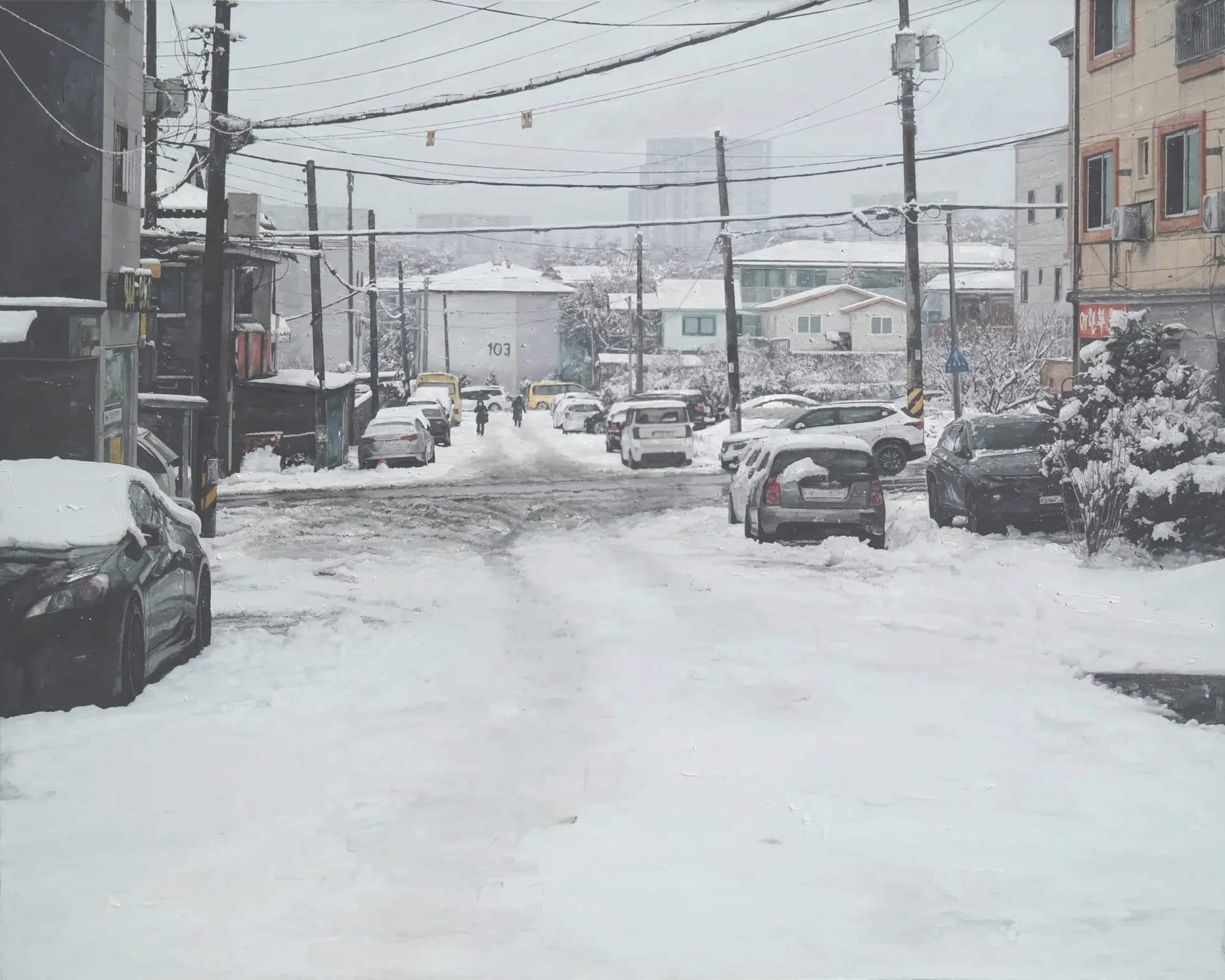
Snow fallen through the night on a cold wind makes a new world.
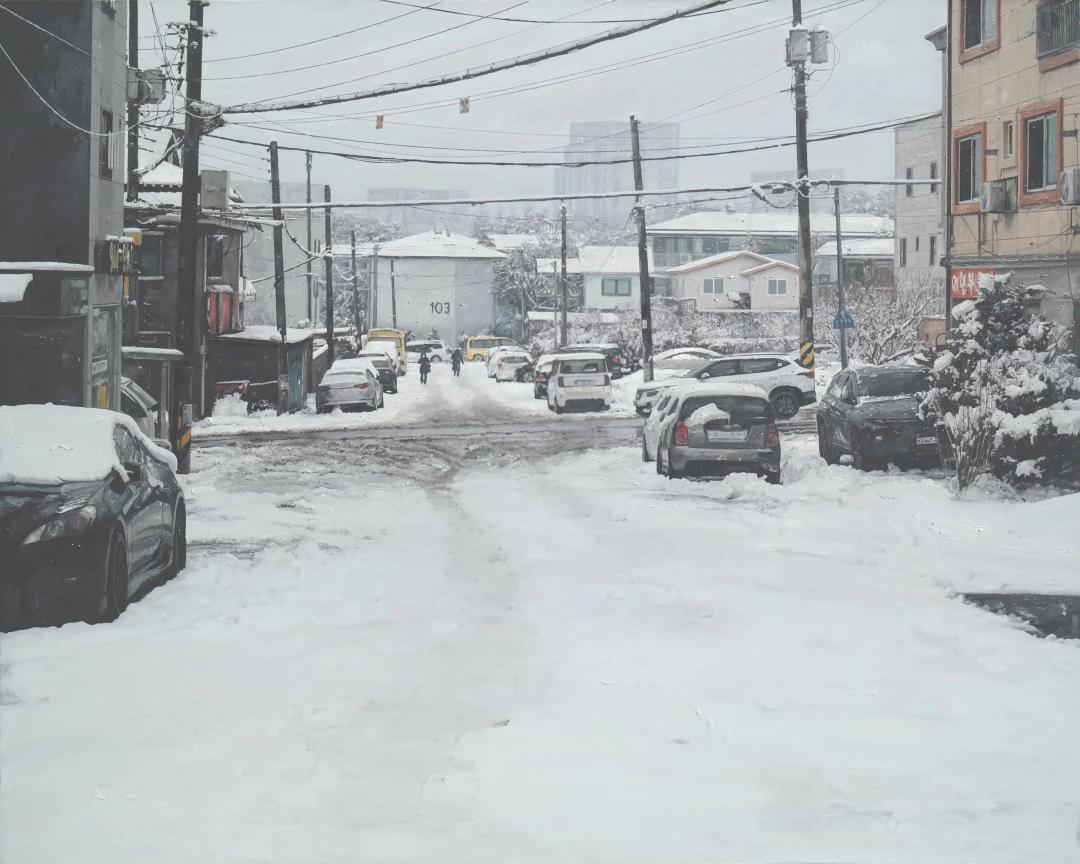
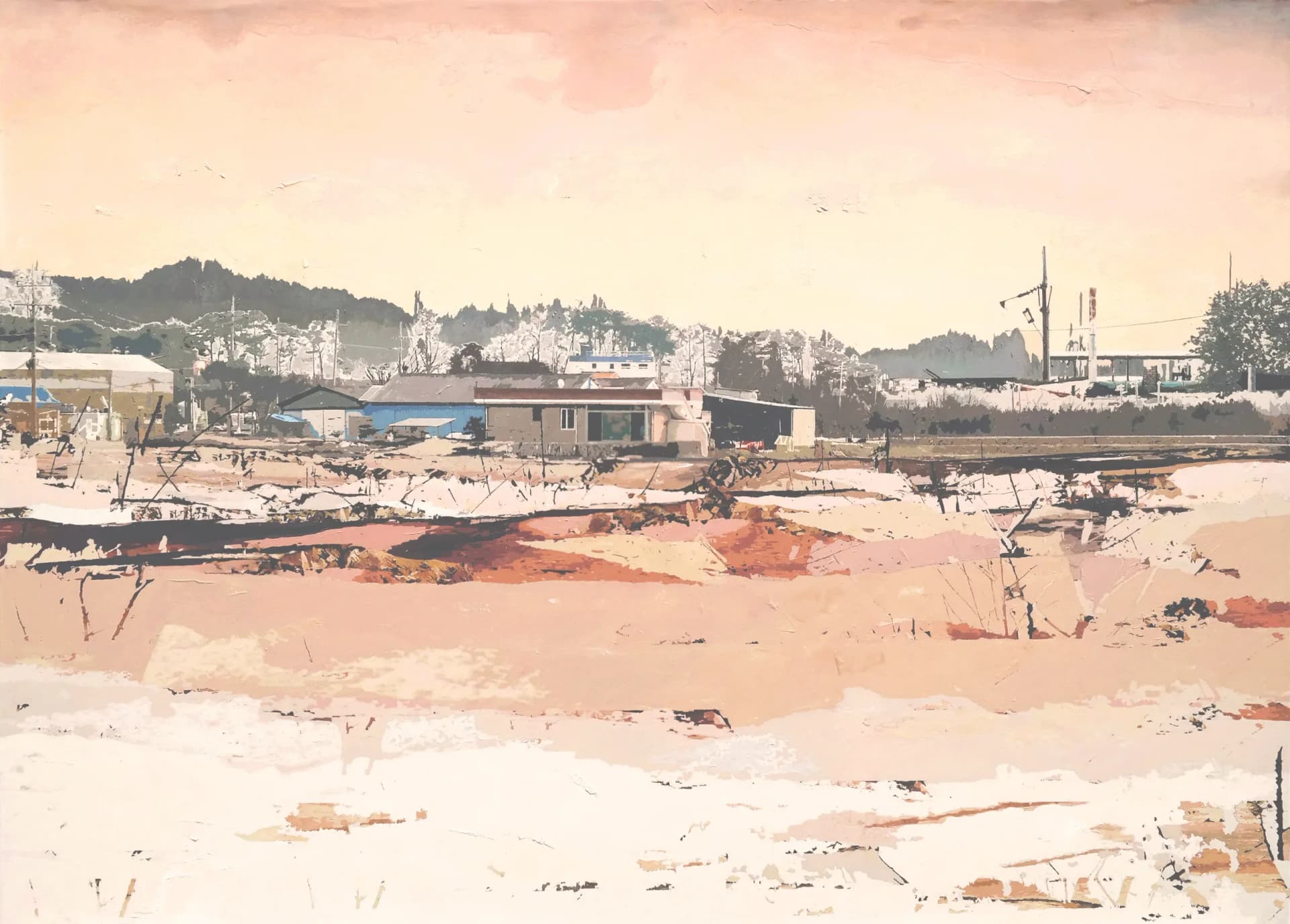
An artist note accompanies Wind and Light-127. "Roughly dressed, coffee in hand, I sit facing a white world stretched across the wide field." An everyday scene. At the end of that gaze — "Regret about dream and hope, not-entirely-comfortable traces of life already passed, buried under the white world of snow."
"Winter arrives like a season of despair. But hope and despair are held in one body: hope holds despair; despair holds hope." This is the philosophy Kim Gyuhak reads from landscape.
Paintings for What Disappears
The series numbers grow heavier as they rise.
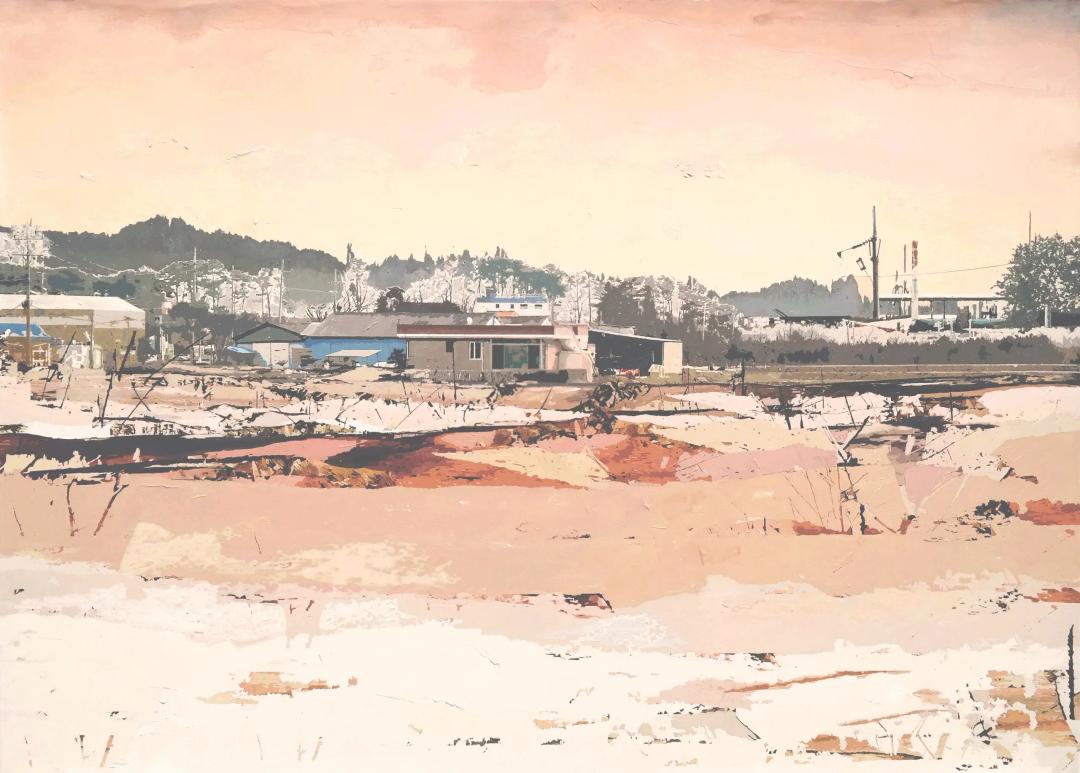
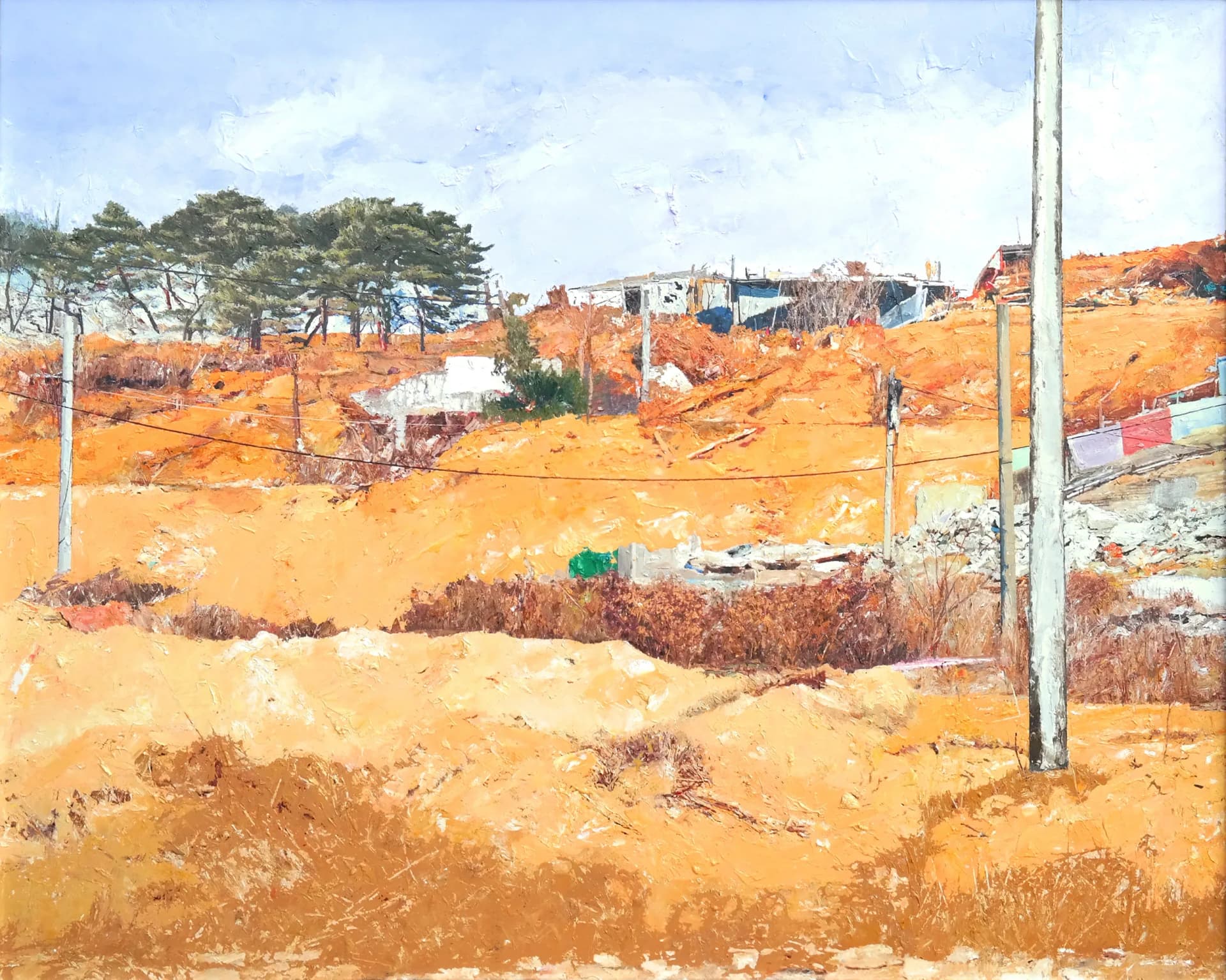
Wind and Light-57 shows red-clay mounds and a fence. A neighborhood where people lived, emptied in the name of development. "Around a fallen house where no one walks, the nameplate of someone who used to live here hangs alone." Kim Gyuhak writes. "I think of the things disappearing into past memory and ask: in this 'improved world,' what might we lose and what might we gain?"
This question is the core of the Wind and Light series.
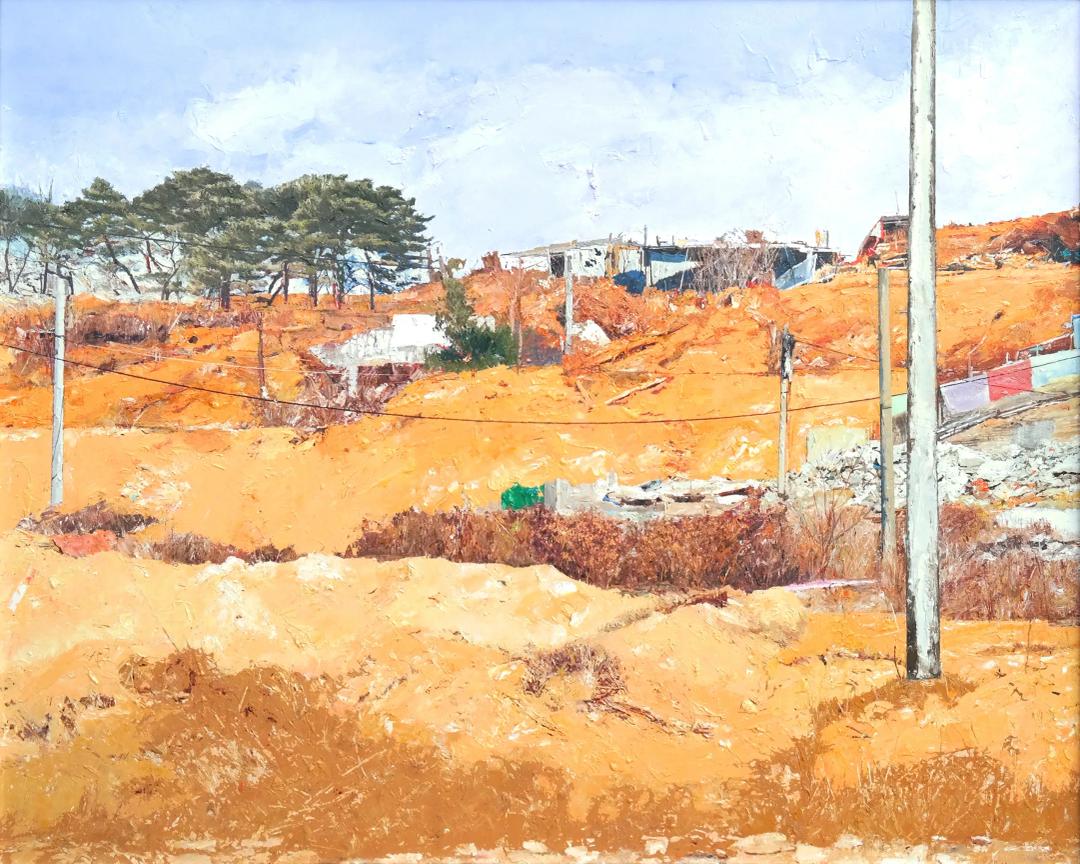
ASYAAF 2021 participation. Held by MMCA and Incheon Art Bank. Paintings that hold memory hang in public space.
Remembering as Solidarity
Contributing to SAF is likely the same reason.
Remembering what is disappearing. Turning eyes to what gets erased within development and modernization. That 84.9% of Korean artists are excluded from institutional finance is also a reality being erased in an invisible way. SAF-exhibiting artists build a mutual-aid fund through their work. The fund returns as low-interest loans to artists facing financial discrimination.
Remembering fellow artists' lives the same way one remembers a landscape. That is Kim Gyuhak's way.
The Wind Keeps Blowing
Light tilts again at the edge of the field.
Where wind has passed, nothing. And in that nothing, everything. The memory of a person who lived. Warmth the hometown left. Hope and despair buried in snow. Kim Gyuhak's paintings look long at that nothing.
Works by Kim Gyuhak
Related reading
If this piece helped, you may also enjoy these related articles:

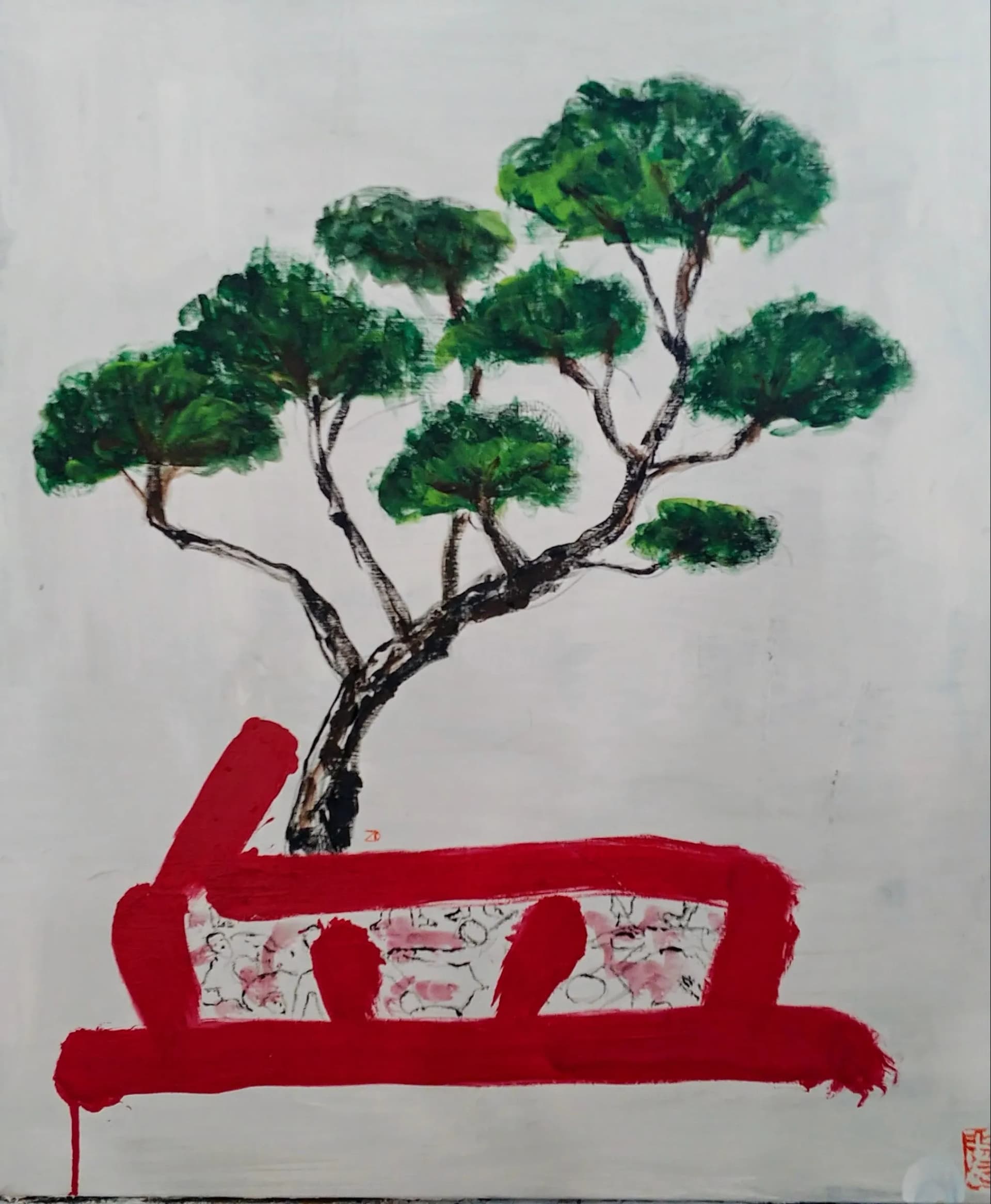
View all works by Kim Gyuhak →
Related Reads
Artists on the Same Path
Collecting Guides

Seed Art Festival
·